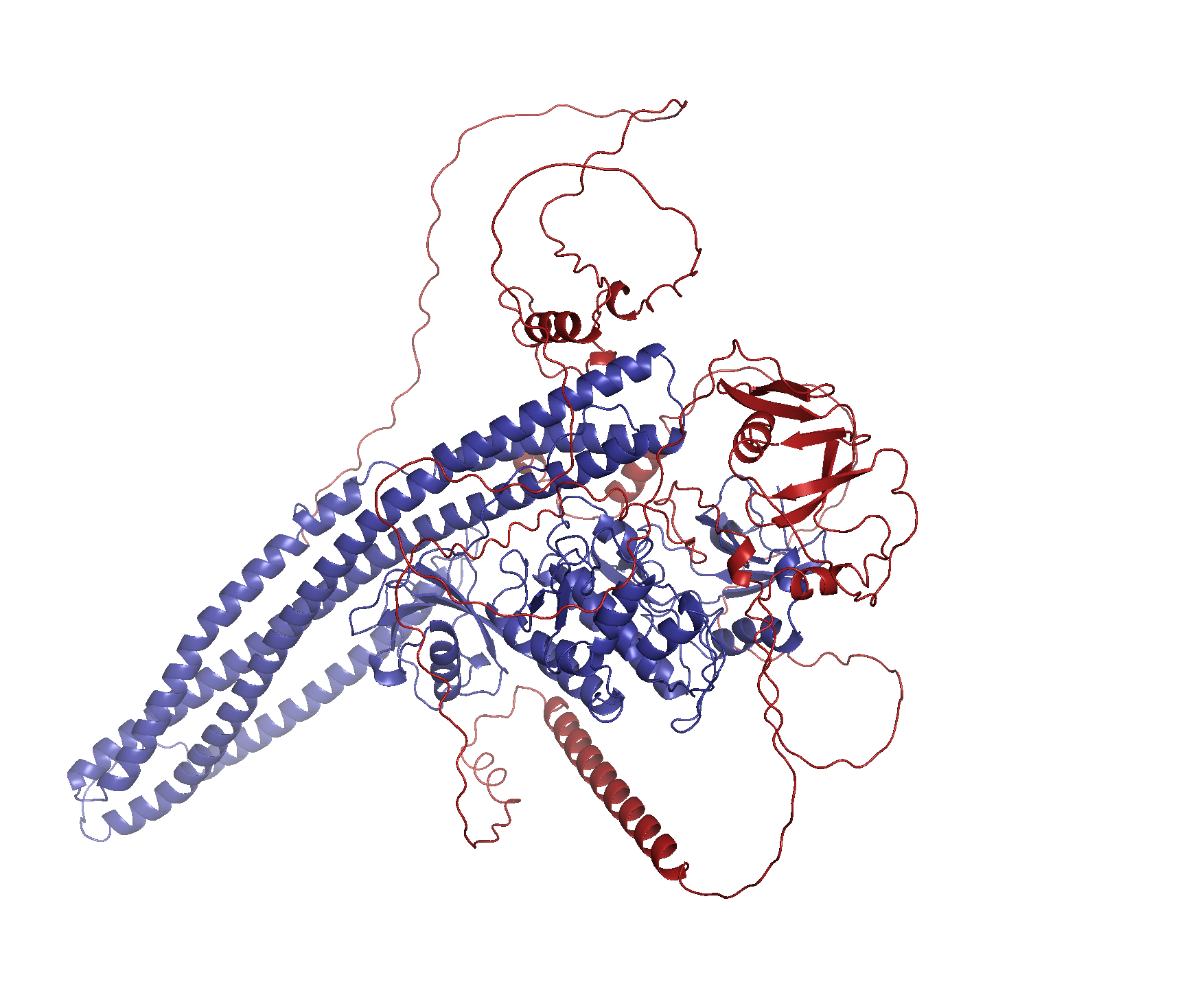
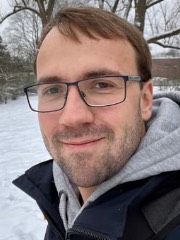
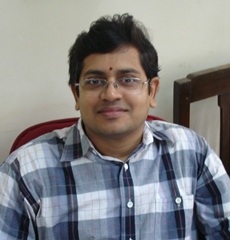
Gemma Atkinson is an Associate Professor at Lund University's Faculty of Medicine, leading the Atkinson Lab. She specializes in protein evolution and bioinformatics, focusing on antibiotic resistance, bacteriophages, and toxin-antitoxin systems. She manages LU-Fold, an infrastructure for high-throughput protein structure prediction using AlphaFold. Her research integrates computational tools with experimental methods to uncover microbial defense mechanisms. Key projects include developing bioinformatics tools (e.g., LoVis4u, webFlaGs) and investigating phage defense systems. She leads grants from the Swedish Research Council and the Knut and Alice Wallenberg Foundation. Her lab collaborates internationally, contributing to UN Sustainable Development Goals on health and innovation. Publications highlight advancements in toxin-antitoxin systems, antimicrobial peptides, and ribosome function. The lab's tools are widely used globally, aiding researchers in structural and functional genomics analysis.
M. Anton Ertl is an Associate Professor at TU Wien's Faculty of Informatics, Department of Compilers and Languages. His roles include teaching courses such as 'Compilers,' 'Efficient Programs,' and 'Stack-based languages.' He specializes in compiler back-ends, Forth, interpreters, programming languages, operating systems, and computer architectures. Ertl's research focuses on optimizing interpreters, compiler design, and hardware security, particularly addressing vulnerabilities like Spectre. His research interests span interpreter performance, compiler optimization, and Forth language evolution. Recent work includes exploring hardware-based Spectre mitigation, decompilers for Gforth, and stack-based language efficiency. He actively contributes to the EuroForth conferences as an editor and presenter. Ertl supervises students on topics like compiler construction, reverse engineering, and interpreter optimization. His academic contributions include over 50 publications, with a focus on virtual machine performance, compiler back-ends, and Forth-related advancements. He is a key figure in the Gforth project and regularly teaches advanced courses on programming languages and computer systems.
Dr. Vincenzo De Maio is a PostDoc Researcher at the Department of Computational Sustainability, Faculty of Informatics, Technische Universität Wien. His research spans quantum computing, edge computing, distributed systems, and sustainable computing, with a focus on hybrid quantum-classical systems and edge AI applications. Current projects: HPQC (2023–2025), ThEMIS FWF (2024–2027), TRITON FWF (2023–2027) Previous projects: RUCON (2016–2023), SWAIN (2021–2024) His research explores the integration of quantum computing with classical systems, particularly in software engineering, workflow decomposition, and hyperparameter optimization. He also works on edge computing for smart cities, environmental monitoring, and traffic safety applications. Recent publications analyze quantum compilation bottlenecks, hybrid quantum-classical workflow orchestration, and quantum neural network optimization. He supervises master's theses on topics like quantum edge benchmarking and hyperparameter tuning. Key collaborations with Prof. Ivona Brandic and others Active in IEEE/ACM conferences and Springer publications
Zhiyong (Johnny) Zhang is a Professor of Quantitative Psychology at the University of Notre Dame and serves as the Quantitative Area Director. He is the director of the Lab for Big Data Methodology and a Fellow at the Institute for Educational Initiatives. His primary research areas include Bayesian methods, network analysis, structural equation modeling, and statistical computing. Dr. Zhang holds a Ph.D. in Quantitative Psychology from the University of Virginia. His work focuses on developing advanced statistical methodologies and software for education, health, management, and psychology. He is the Editor of the Journal of Behavioral Data Science and an Associate Editor of Multivariate Behavioral Research. His research trends span Bayesian inference, neural network applications, mediation analysis, and methodological innovations in factor analysis and latent growth models. He has contributed to software tools like WebPower for statistical power analysis and RAMpath for structural equation modeling. Zhang has received prestigious awards, including Fellow status in the American Psychological Association and election to the Society of Multivariate Experimental Psychology. His advising and grants include mentoring students in quantitative methodologies and leading research on text mining, emotion recognition, and big data applications. The Lab for Big Data Methodology under his direction advances interdisciplinary statistical approaches.
Cesare Pautasso is a Full Professor at the Software Institute within the Faculty of Informatics at the Università della Svizzera italiana (USI) in Lugano, Switzerland. His research focuses on software composition techniques, Web 2.0 mashups, cloud computing, business process management, and RESTful API design. He has led projects like JOpera, a service composition tool, and contributed to frameworks such as Liquid Software for adaptive distributed systems. Education: PhD in Computer Science from ETH Zurich (2004) and a Computer Science Engineering Degree (cum laude) from Politecnico di Milano (2000). Research Interests include model-driven engineering, service-oriented architectures, and API analytics. He has authored over 200 publications and serves on numerous program committees, including IEEE and ACM. His work has been funded by grants from Swiss National Science Foundation (SNSF), EU projects like S-CUBE, and industry collaborations. Teaching and Training: Focuses on Web Development, Enterprise Architecture, and emerging technologies. Active in conferences as general chair of ECOWS 2011 and ICWE 2016. Labs/Teams: Leads research groups exploring API design, blockchain applications, and adaptive systems. Collaborates with institutions like HPI Potsdam and ETH Zurich on projects like FC4MC and API-ACE.
Dr. Yang Lu is a Research Fellow at the Sydney School of Public Health, University of Sydney. They also serve as the Lead Software Engineer for the OCEAN Project. Their work focuses on advancing process mining techniques applied to healthcare data, particularly in clinical process discovery, event log analysis, and improving healthcare outcomes through data-driven frameworks. Research Interests: Process Mining, Healthcare Informatics, Machine Learning, and Clinical Data Analysis. Their studies emphasize improving clinical workflows and decision-making through advanced data analysis and algorithm development. Publications highlight innovative approaches in detecting process drifts, analyzing clinical pathways in ICU settings, and enhancing event log quality for process mining applications. These contributions bridge computational methods with real-world healthcare challenges. Currently involved in the OCEAN Project, which likely relates to software engineering or data infrastructure for health informatics. No specific awards or grants are listed in the provided information.
Karim Jerbi is a Full Professor at the University of Montreal's Department of Psychology, within the Faculty of Arts and Sciences. He holds the Canada Research Chair (CRC) in Systems Neuroscience and Cognitive Neuroimaging (Junior 2) and leads interdisciplinary research programs. His affiliations include the CRM — Centre de recherches mathématiques, CERNEC — Centre de recherche en neuropsychologie et cognition, CRIUGM — Centre de recherche de l'Institut universitaire de gériatrie de Montréal, PhysNum — Laboratoire de physique numérique, BRAMS — Laboratoire international de recherche sur le Cerveau, la Musique et le Son, and CIRCA — Centre interdisciplinaire de recherche sur le cerveau et l'apprentissage. These affiliations emphasize his collaborative and interdisciplinary approach to neuroscience and neuroimaging. His research investigates cognitive functions and dysfunctions using advanced signal processing and machine learning applied to multimodal brain data. Key interests include neural oscillations, brain connectivity, and the interplay between cognitive processes and neuroimaging techniques like MEG and EEG. He explores topics such as sleep dynamics, decision-making, mindfulness meditation effects, and neurodegenerative disorders, bridging computational models with clinical applications. Jerbi's recent work highlights trends in AI-driven neuroimaging tools (e.g., MEEGNet, NeuroPycon), criticality in brain networks, and the impact of consciousness states on neural activity. His grants include leading the UNIQUE initiative (2019–2024) and co-directing projects like 'Partnership for Abundant Intelligences' (2024–2029), funded by organizations like FRQNT and SSHRC. These efforts aim to integrate AI, mathematics, and clinical research for transformative insights into brain function. Scientific Awards: Canada Research Chair (CRC) in Systems Neuroscience and Cognitive Neuroimaging (Junior 2). In advising, he has guided students in topics like AI-based biomarker identification, hypnosis dynamics, and motor intention decoding. His labs and teams, such as the CRM and CERNEC, focus on mathematical foundations of neural systems and neuropsychological cognition, respectively. Collaborations span diverse fields, including gériatrie, music cognition, and computational intelligence, reflecting his commitment to cross-disciplinary innovation.
Abdelhakim HAFID is a Full Professor at the University of Montreal , affiliated with the Faculty of Arts and Science and the Department of Computer Science and Operations Research . He leads the LRC — Laboratoire de recherche en réseaux de communication and is a member of several research centers including CIRRELT (interuniversity research center on enterprise networks, logistics, and transportation), the Cyberjustice Lab , and talents (AI for cybersecurity lab). His research focuses on Blockchain security , IoT , edge and fog computing , intelligent transport systems , and network resource management . He has supervised over 30 graduate students and led/co-led numerous research projects funded by agencies like NSERC , FRQNT , and MITACS . Notable projects include Blockchain Evolution: Quantum-Resistant Security (2025–2031) and Design and Management of Fog Networks (2019–2026). His work spans vehicular networks , mobile cloud computing , and machine learning for network optimization . He actively contributes to cybersecurity initiatives, including IoT authentication frameworks and AI-driven solutions for judicial systems (e.g., Cyberjustice ). Key Projects : Quantum-Resistant Blockchain Security (2025–2031) IoT Authentication via Blockchain and Intelligent SIM (2022–2026) Fog Network Design (2019–2026) Grants : NSERC Discovery Grants MITACS Acceleration Fellowships FRQNT Team Research Grants His lab collaborations include CIRRELT (logistics & transport) and Cyberjustice (digital law), reflecting interdisciplinary strengths in both technical and societal domains.
Dr. Peggy Gregory is a Senior Lecturer at the University of Glasgow’s School of Computing Science, specializing in empirical software engineering with a focus on human and socio-technical aspects. Her research explores agile methodologies, sustainability practices, and IT workplace dynamics through qualitative methods, often collaborating with industry partners. She chairs the XP Conference Series Steering Committee and co-founded the Agile Research Network, fostering long-term industry-academia collaborations. Key research interests include agile transformation, software project management, and ethical software engineering practices. Her education and professional background are not explicitly detailed in the provided text, but her extensive industry partnerships highlight practical relevance. Research grants include funding from the Agile Business Consortium (2017–2026), DSDM grants (2013–2016), and a Case Study Award for Responsible Research & Innovation (2013). Dr. Gregory leads projects on agility, sustainability, and IT practices, with current funded initiatives in all three areas. She advises doctoral students on topics like DevSecOps frameworks, social robotics integration, and sustainable software engineering. Notable contributions include developing an onboarding model for agile teams and studying leadership dynamics in agile software development. Her work bridges academia and industry, emphasizing practical impact through empirical studies. Recent publications focus on agile culture transformation, risk mitigation in re-engineering, and the ethical implications of digital technologies. She is actively involved in conferences such as XP and IVA, contributing to both research and community-building efforts.
Wei Li is a Professor at the School of Computer Science and Engineering, Beihang University (since 1986), and Director of the State Key Laboratory of Software Development Environment (since 1992). He has held visiting positions at institutions including the University of Minnesota and Universität Saarlandes. Education: Ph.D. in Computer Science, University of Edinburgh (1979–1983) B.Sc. in Mathematics, Peking University (1961–1966) Research Interests span Mathematical Logic, Concurrent Programming Languages, Satisfiability Problems, Artificial Intelligence, Software Crowdsourcing, and Big Data. His work includes foundational contributions to logical frameworks for belief revision and specification evolution, with applications in software trustworthiness and constraint satisfaction. Publication Trends reveal a focus on formal methods (R-calculus, open logic systems), software crowdsourcing, and phase transitions in constraint satisfaction problems. His research integrates theoretical rigor with practical applications in information science and engineering. Scientific Awards include: Chinese Government Award for Publishing (2017) Tsiolkovsky Medal (2007) National Prize of First Class for Achievements in Education (2005) Ho Leung Ho Lee Prize (1998) Academician, Chinese Academy of Sciences (1997) He also supervised 8 post-docs, 52 Ph.D., and over 100 graduate students.
Vincas Grigas is an Associate Professor at the Department of Digital Cultures and Communication , Faculty of Communication , Vilnius University. His work focuses on media and information literacy, book piracy dynamics, scholarly communication, and digital culture transformations. He holds a PhD and has extensive international collaboration through ERASMUS programs and research visits to institutions like HTWK Leipzig and the University of Osijek. Research Interests: Media and Information Literacy Book Piracy Mechanisms Scholarly Publishing Practices Digital Transformation of Publishing Accessibility in Publishing Recent work analyzes digital piracy's societal impacts, challenges in small-language publishing ecosystems, and the transition from print to digital scholarly journals. He co-authored Lithuanian Scientific Periodical Publishing: From Printed Journals to Digital Ecosystems (2024) and has published in Publishing Research Quarterly , Information & Media , and LOGOS . Awards : Recognized as the Best Lithuanian Young Librarian (2011) and winner of the EU Journalist Award for Diversity (Lithuania) . Holds roles in professional bodies like the Lithuanian Library Council and Crossref Board.
Dr. Heiko Bornholdt is a Researcher in the Computer Networks group at the Department of Informatics, University of Hamburg. He is affiliated with the Faculty of Mathematics, Informatics, and Natural Sciences. His research focuses on distributed communication middleware, overlay networking, and edge computing. He holds a doctoral degree and has been with the university since 2016. Position: Research Associate / Postdoc Office: Room F-622, Vogt-Kölln-Str. 30 Contact: heiko.bornholdt@uni-hamburg.de | +49 40 42883-2332 Research Interests Dr. Bornholdt’s work emphasizes distributed systems , particularly in the context of smart cities and IoT. Key areas include: Overlay networks for edge computing Decentralized privacy-preserving systems Efficient data discovery in IoT Latency-aware network protocols Publications Overview His recent work spans 20+ publications, with significant contributions to: Edge computing middleware (e.g., software-defined overlay networks) Secure communication in untrusted environments Smart urban data spaces Awards & Grants No specific awards mentioned, but active in funded projects including the EU-GDPR compliant blockchain research. Labs & Teams Part of the Computer Networks Team led by Prof. Mathias Fischer, collaborating with researchers like Kevin Röbert and Jeetesh Gupta.
Georges Louis Baron is a University Professor at Paris Cité University, specializing in digital technologies in education. His work spans educational informatics, digital literacy, programming in primary education, and the didactics of computer science. He is actively involved in research networks such as GTnum and projects like Adjectif.net, SUPERE-RCF, and RéVEA. His research interests include the integration of digital tools in teaching and learning, teacher training, and the evolution of ICT in education, particularly in the Global South. He has contributed extensively to academic discourse through publications, editorial roles, and collaborative research. The recent articles highlight a strong focus on digital transformation in education, the use of ScratchJr and Bee-Bot in early programming education, digital assessment tools, and equity in digital learning. His work bridges theory and practice, emphasizing pedagogical innovation and teacher collaboration. Notable scientific contributions include studies on student data literacy, digital humanities in education, and the socio-political dimensions of educational research. He has also contributed to understanding how mobile technologies are adopted in schools and how digital resources are co-created by teachers. While no formal list of students or awards is provided, his editorial roles and leadership in research projects suggest a significant mentoring and advisory role. He is actively engaged in shaping the future of digital education through scenario-based research and curriculum development.
Helen Roberts is a Professor in the Department of Geography and Earth Sciences at Aberystwyth University , where she has been a key figure since joining as a post-doctoral researcher in 1998 and becoming a Lecturer in 2005. She currently serves as Co-Director of the Aberystwyth Luminescence Research Laboratory (ALRL) and holds leadership roles in international bodies such as INQUA’s Stratigraphy and Geochronology Commission. PhD, University of Liverpool Her research focuses on luminescence dating of Quaternary sediments , with applications in understanding geomorphic change, coastal dynamics, paleoclimate, and human evolution . She has led major projects such as EQUATE and CREDit , funded by Horizon Europe and NERC, and has been involved in international drilling initiatives in Ethiopia and Italy. Her work integrates fieldwork, laboratory innovation, and data modeling to reconstruct environmental change over hundreds of thousands of years. Analysis of her recent publications reveals a strong emphasis on refining luminescence techniques (e.g., pIRIR, TL in calcite), applying them to critical paleoenvironmental archives (lake sediments, loess, glacial deposits), and linking climate variability to human evolution. Her interdisciplinary approach spans geochronology, sedimentology, and paleoanthropology. Fellow of the Learned Society of Wales (2023) Professor Roberts has supervised PhD students, including Svenja Riedesel, and secured significant research grants from NERC, UK Space Agency, and the Welsh Government. She actively contributes to scientific discourse through media engagement and public outreach. Her work supports UN Sustainable Development Goals related to climate action and life on land. She leads and participates in numerous international collaborations and professional committees, reflecting her standing in the Quaternary science community. She is involved in several research groups and laboratories, most notably the Aberystwyth Luminescence Research Laboratory , where she co-directs methodological development and application of luminescence dating techniques. Her team collaborates globally on projects involving terrestrial archives, paleoclimate modeling, and human evolution.
MP Gururajan is a Professor in the Department of Metallurgical Engineering and Materials Science at the Indian Institute of Technology Bombay (IIT Bombay), where he has been serving since May 2021. He previously held the positions of Associate Professor (2016–2021) and Assistant Professor (2009–2016), indicating a long-standing and active academic career at IIT Bombay. B.Sc (Physics), Madras University, 1994 M.Sc (Materials Science), Anna University, Madras, 1996 M.Sc. (by research), Indian Institute of Science, Bangalore, 1999 Ph.D., Indian Institute of Science, Bangalore, 2006 His research focuses on computational modeling of microstructural evolution, employing both atomistic (Monte Carlo, molecular dynamics) and continuum (phase field modeling) approaches. Key areas include phase transformations, deformation mechanisms, materials mechanics, and thermodynamics. His work bridges theoretical modeling with experimental validation in metallic systems. The selected publications reflect a consistent focus on phase field modeling, interfacial phenomena, and microstructure evolution under various thermomechanical conditions. Topics such as precipitate growth, grain boundary grooving, strain effects, and anisotropy are recurrent, demonstrating deep expertise in multiscale materials simulation. No scientific awards or fellowships are mentioned in the provided text. Prof. Gururajan leads an active research group (CMEGAT IITB) and has secured funding from national agencies including the Department of Science and Technology (DST), Defence Research and Development Organisation (DRDO-SASE), and industrial partners like Tata Steel and GE. Collaborative IMPRINT projects with TCS and GE Global Research highlight his engagement in indigenous software development and life prediction methodologies for advanced alloys. He maintains a research group website and is involved in both teaching and research supervision at IIT Bombay. His lab focuses on computational materials engineering, with emphasis on predictive modeling of microstructure and mechanical behavior.