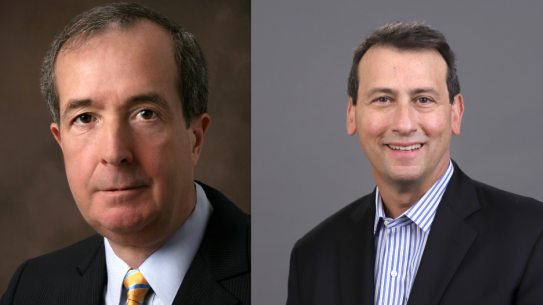
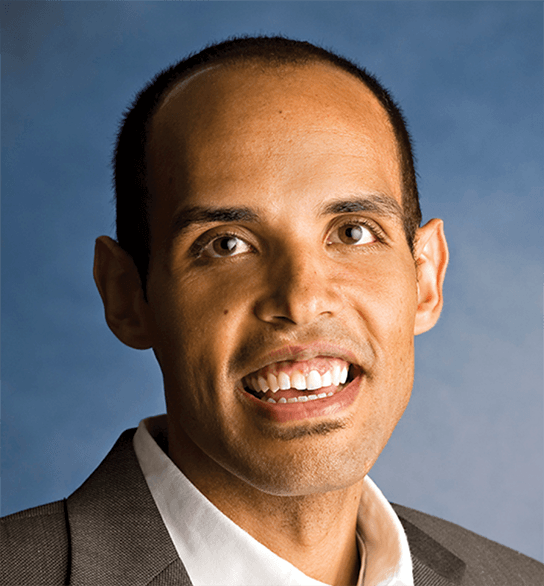
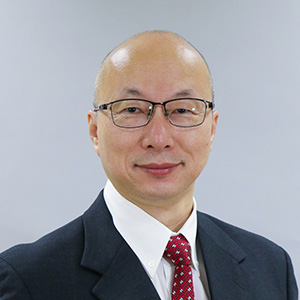
Marko Beko is a researcher affiliated with Lusofona University in Lisbon, Portugal. He is actively involved in projects related to wireless sensor networks, localization algorithms, and machine learning applications in telecommunications. His work spans areas such as GNSS-denied navigation, federated learning, and IoT network optimization. Research Interests Localization in wireless networks Machine learning for IoT UAV navigation systems Signal processing and network optimization Stochastic geometry in massive IoT Energy-efficient communication protocols Recent publications focus on deep learning methods for unmanned aerial vehicle (UAV) navigation, linear precoding for MIMO systems, and federated learning in rural environmental monitoring. His work demonstrates strong interdisciplinary connections between computer science, telecommunications, and aerospace engineering.
Thomas Marzetta is a Distinguished Industry Professor in the Electrical and Computer Engineering Department at NYU Tandon School of Engineering and Director of NYU WIRELESS. He holds a Ph.D. and SB from MIT (Electrical Engineering) and an MS from the University of Pennsylvania (Systems Engineering). Prior to NYU, he worked at Schlumberger-Doll Research, Nichols Research Corporation, and Bell Labs, where he was elected a Bell Labs Fellow. He originated Massive MIMO, a cornerstone of 5G technology, and authored the book Fundamentals of Massive MIMO . Research Interests: Massive MIMO, Wireless Communications Technology, 6G Innovation, Antenna Systems, and Education. Affiliations: NYU WIRELESS (focusing on 6G and Terahertz technologies) and the Center for Advanced Technology in Telecommunications (CATT). His work has been recognized with awards including the IEEE Communications Society Industrial Innovation Award (2017), Stephen O. Rice Prize (2015), and an Honorary Doctorate from Linköping University (2015). He leads projects like GreenTouch’s Large Scale Antenna Systems and advises on EU-sponsored initiatives. Marzetta’s research emphasizes energy efficiency, spatial multiplexing, and novel MIMO configurations, with contributions to next-generation wireless systems and holographic communication techniques.
Peter Scheiblechner is a Lecturer at Lucerne University of Applied Sciences and Arts' School of Engineering and Architecture, within the Department of Natural and Humanities Sciences (ING). He holds a PhD in Mathematics from the University of Paderborn (2007) and has held academic positions including Visiting Assistant Professor at Purdue University (2010-2011) and Postdoc at the Hausdorff Center for Mathematics (2011-2012). His business experience includes software development roles at companies like ClassWare GmbH and UBS in Switzerland. Education: PhD in Mathematics, University of Paderborn (2007) Master's in Mathematics (minor: Physics), Albert-Ludwigs University Freiburg (1997) Bachelor's in Mathematics (minor: Physics), Philipps-University Marburg (1993) High School Diploma, Martin-Luther-Schule Marburg (1991) Research Interests: Focus on applying statistics, data analysis, and machine learning to real-world problems; computational algebra/geometry/topology with complexity theory; algebraic and classical complexity theory. Active in projects like ENFLATE (flexibility markets), COSMOS Data Cockpit (personalized medicine), and topological data analysis. Publications: Over 10 peer-reviewed articles in journals like Journal of Symbolic Computation , Foundations of Computational Mathematics , and Communications in Contemporary Mathematics , with focuses on algorithmic algebraic geometry, complexity analysis, and topological computations. Awards: DFG fellowship (2008-2010), 3rd place in German Mathematics Competition (1991), and regional championship in Hessen (1985/86). Teaching: Teaches mathematics, physics, statistics, and numerical methods at bachelor and master levels, including courses on differential equations, linear algebra, stochastic processes, and engineering applications.
Prof. Miriam Clincy is a Professor of Mathematics, Physics, and STEM Teacher Training at Hochschule Esslingen University of Applied Sciences. She holds roles as University Representative for Higher Education and Associated Member of the Tübingen School of Education (TüSE). Her work focuses on innovative educational technologies, particularly online assessment systems like STACK in Moodle, and teacher training methodologies. Education: PhD in Physics, University of Edinburgh (2003) Physics Diploma (M.Sc. equivalent), Universität Heidelberg & University of Edinburgh (2000) Research Interests: Prof. Clincy bridges theoretical physics and STEM education. Key areas include online testing innovations, peer feedback systems, and teacher training through simulation-based assessments. She also maintains research on non-equilibrium systems from her earlier work in statistical mechanics. Publications: Recent work emphasizes educational technology (e.g., sandbox testing environments, Moodle integration) alongside foundational physics contributions in driven systems and phase transitions. Awards: Baden-Württemberg-Zertifikat für Hochschuldidaktik (2020) Advising & Grants: As Dean of Study (2019–2021), she oversaw TVET teacher training accreditation. Current projects include collaborative initiatives with the University of Tübingen and participation in the „Lehre hoch n“ network for educational innovation. Labs/Teams: Active in Hochschule Esslingen’s Basic Sciences faculty, contributing to curriculum development and assessment frameworks.
Professor Tim Gowers is a Professor of Mathematics at the University of Cambridge, affiliated with the Department of Pure Mathematics and Mathematical Statistics (DPMMS) within the Faculty of Mathematics. He is actively involved in the Cantab Capital Institute for the Mathematics of Information and the Combinatorics research group, contributing to Cambridge's renowned mathematical community. Professor Gowers' primary research focuses on Analysis and Combinatorics, with significant contributions to additive combinatorics, harmonic analysis, and their intersections with number theory and algebraic structures. His work demonstrates deep connections between discrete mathematics and analytic methods, often revealing fundamental structures in seemingly complex problems. His recent publications (2020-2025) show a continued emphasis on combinatorial problems in additive number theory and group theory, while also expanding into interdisciplinary research at the mathematics-AI interface, particularly in evaluating language models for mathematical reasoning and developing tools for formal verification. Professor Gowers maintains an active research program with numerous collaborations with leading mathematicians including Ben Green, Terence Tao, and Julia Wolf, publishing in top-tier journals such as the Annals of Mathematics and Geometric and Functional Analysis. Based in room C2.04 at DPMMS, he continues to contribute significantly to mathematical research and education at Cambridge, with his work influencing both theoretical developments and practical applications in computational mathematics.
Daniel Nagy is an Assistant Professor at the Department of Electronics and Computing within the Higher Polytechnic School of Engineering at the University of Seville. His research focuses on nanoelectronics, semiconductor device simulation, and TCAD technologies. He leads the ARQCOMP research group, specializing in computer architecture and novel transistor design. Education details are not explicitly provided in the texts, but his academic focus suggests advanced training in electronics engineering or related fields. His research interests include quantum transport phenomena, nanoscale device variability analysis, and computational modeling of FinFETs, nanowire FETs, and nanosheet transistors. He has extensively contributed to TCAD simulation frameworks such as NESS (Nano-Electronic Simulation Software), emphasizing open-source tools. Research Trends: His work emphasizes transistor scaling challenges for sub-2nm nodes, device variability mitigation, and the development of modular simulation tools. Key topics include nanosheet FET optimization, POM-based molecular memory systems, and benchmarking of emerging transistor architectures. His studies often bridge quantum mechanics (via Schrödinger equation modeling) with classical transport phenomena. No scientific awards are mentioned in the provided texts. He has advised no publicly listed PhD/Master’s students. His ARQCOMP group collaborates on next-generation electronic device architectures and simulation methodologies. Labs/Teams: The ARQCOMP group focuses on advancing computer architecture and nanoelectronic device simulation through interdisciplinary approaches, integrating computational physics, materials science, and electrical engineering.
Michael Alexander Riegler is a full-time Professor at Oslo Metropolitan University's Faculty of Social Sciences, specifically in the Department of Social Work, Child Welfare and Social Policy. While his formal academic affiliation focuses on social sciences, his research interests span interdisciplinary domains including computer technology, information and communication systems, medical technology, and mathematics/natural sciences. Current research projects: Strengthening solidarity for democratic unity across border (SOLIDEM) addressing trust erosion in European welfare states, and Artificial intelligence in assisted reproduction technology improving embryo/sperm selection Recent publications (2025) focus on AI applications in healthcare (wearable sensors, ECG reconstruction), anomaly detection in time-series data, multimodal healthcare data analysis, and psychiatric motor activity datasets
Joaquim Massana Raurich is a Senior Lecturer at the Department of Electrical, Electronic and Automatic Engineering , University of Girona. As a member of the Research Group in Control Engineering and Intelligent Systems (EXIT) , his work bridges Smart Cities , Energy Forecasting , and Healthcare Technology through Machine Learning and Automation Systems . Research Interests: Control Engineering, Smart Cities, Energy Forecasting, Healthcare AI Key Contributions: Development of public software for EEG-based disease detection, advanced load forecasting models, and AI-driven diabetes management systems His teaching spans Physics and Electronics , Automatic Regulation , and Control Systems at both undergraduate and master's levels. He has supervised internships and final projects while contributing to European/national projects like HIT2GAP and Pepper .
Tim Triche, Jr., Ph.D., is an Associate Professor at the Van Andel Institute in the Department of Epigenetics . He earned his A.B. in chemistry from Cornell University , followed by an M.S. in biostatistics and a Ph.D. in statistical genetics from the University of Southern California . Before joining Van Andel in 2017, he was a postdoctoral fellow at USC's Norris Comprehensive Cancer Center focusing on cellular senescence in blood disorders. As a key member of The Cancer Genome Atlas Research Network since 2011 with over a dozen high-impact publications in Nature , Cell , and NEJM , Dr. Triche specializes in epigenetics , biostatistics , and computational biology . His lab develops innovative approaches for pediatric AML research, integrating next-generation sequencing with clinical trial design to improve patient outcomes. His work emphasizes statistical learning for patient stratification, molecular profiling of hematological cancers, and interpretable machine learning in biomedical contexts. He leads the Bioinformatics and Biostatistics Core as faculty advisor and maintains active collaborations across institutions. 2025 Nature Cancer study on developmental heterogeneity in cancer susceptibility 2024 NAR methods paper on BISCUIT multi-omics tools 2023 PLOS One validation of MAX regulation in pituitary adenomas 2022 Nature Metabolism obesity subtyping analysis Scientific contributions include: Chan Zuckerberg Initiative grant (2022) for biomedical computing NCI SPORE grant (2021) as co-recipient Key role in Pediatric AML molecular mapping (2017)
Connor Bain is an Assistant Professor of Instruction in the Department of Computer Science at the McCormick School of Engineering, Northwestern University. He focuses on integrating computational thinking into STEM education, particularly in high school science classrooms. His work emphasizes teacher professional development, co-design approaches, and the use of block-based tools to scaffold student engagement. He holds a PhD in Computer Science and Learning Sciences from Northwestern University, along with dual Bachelor of Science degrees in Computer Science and Mathematics (both Honors) from the University of South Carolina. Education: PhD in Computer Science and Learning Sciences, Northwestern University, Evanston, IL BSCS in Computer Science (Honors), University of South Carolina, Columbia, SC BS in Mathematics (Honors), University of South Carolina, Columbia, SC Research Interests: Dr. Bain’s research bridges computational thinking and STEM pedagogy, exploring how teachers can effectively integrate CT practices through workshops, co-design initiatives, and curriculum development. He investigates the role of authentic tools and block-based programming in fostering student agency, as well as challenges in aligning CT with existing classroom frameworks. His work highlights the importance of teacher collaboration in designing inclusive and effective educational technologies. Publications Trends: Recent articles focus on teacher perceptions of CT-infused curricula and the impact of professional development programs. Earlier works explore the transition from block-based to text-based programming and the use of agent-based modeling in K-12 classrooms. These studies collectively advocate for iterative, teacher-centered approaches to educational technology adoption. Advising & Grants: No formal advisees or grants are listed in the provided texts. His contributions are primarily through curriculum design and teacher training initiatives. His CV is available for download for further details. Labs & Teams: While no specific lab is mentioned, his collaborations likely involve interdisciplinary teams within the McCormick School and partnerships with high school educators through co-design projects.
Caleb Kemere is an Associate Professor in the Departments of Electrical and Computer Engineering and Bioengineering at Rice University. His work bridges neuroscience, engineering, and computer science, focusing on neuroengineering, neural decoding, and real-time brain-computer interfaces. He holds a B.S. in Electrical Engineering (with Honors) and a B.A. in Economics from the University of Maryland, College Park, and a Ph.D. in Electrical Engineering from Stanford University. Before joining Rice in 2011, he was a postdoctoral fellow at the Keck Center for Integrative Neurosciences at UCSF. His research explores hippocampal function in spatial navigation and memory, signal processing for neural interfaces, and developing technologies like miniature microscopes and low-power sensors. He has pioneered frameworks such as Spyglass for reproducible neuroscience research and RealtimeDecoder for online neural decoding. Kemere has received prestigious awards including the NSF CAREER Award (2013), HFSP Young Investigator Award (2014), and BRAIN: EAGER Award (2015). His grants include a five-year NSF grant to study Deep Brain Stimulation (DBS) and a neural engineering IGERT grant. His lab, the Realtime Neural Engineering Lab (RNEL), develops tools for understanding and modulating neural activity. Ongoing work addresses closed-loop brain stimulation, environmental uncertainty modeling in foraging behavior, and sleep-based memory consolidation.
Mihai Anitescu is a full-time Professor in the Department of Statistics at the University of Chicago and a Senior Computational Mathematician at Argonne National Laboratory's Mathematics and Computer Science Division. He also holds an adjunct Associate Professor position at the University of Pittsburgh's Math Department and is a Senior Fellow at the Computation Institute (Argonne-University of Chicago). His research focuses on numerical optimization, uncertainty quantification, and computational statistics, with applications to materials science and power grid simulations. Education: Electrical Engineer (1992), Polytechnic University of Bucharest, Romania Ph.D. (1997), Applied Mathematical and Computational Sciences, University of Iowa Research Interests: He specializes in scalable Gaussian process analysis of spatiotemporal data, differential variational inequalities (DVIs) for phase field models in materials science, and uncertainty quantification for exascale simulations of advanced reactors. His work develops robust VI solvers for transitional phenomena modeling, including phase changes and hybrid discrete-continuum systems. Projects: He leads the MACSER project and previously led M2ACS, both funded by DOE-ASCR. His research includes mesoscale modeling of irradiated materials in collaboration with the Center for Materials Science of Nuclear Fuel (CMSNF) and Energy Frontier Research Center (EFRC). Software: He co-developed ScalaGAUSS (parallel processing for large-scale data analysis) and TreeCodeMatern (Matern kernel matrix-vector multiplication). These tools leverage optimization algorithms and numerical methods. Professional Roles: He served on the editorial boards of SIAM Journal on Optimization, Optimization Methods and Software, and Mathematical Programming. He has presented extensively at conferences like SciDAC and given seminars on stochastic optimization for energy systems.
Jiang Kan is a Lecturer at the Department of Computer Science, National University of Singapore. He earned his Ph.D. in Computer Science from NUS in 2023, following an MComp (2017) and B.Sc. (1994) from NUS and Shanghai Jiao Tong University respectively. His teaching portfolio includes courses like Introduction to Computing , Introduction to Programming , Database Systems and Management , and Systems Programming . Education: Ph.D., Computer Science, National University of Singapore, 2023 M.Comp., National University of Singapore, 2017 B.Sc., Shanghai Jiao Tong University, 1994 Research Focus: Jiang Kan specializes in sports analytics, integrating computer vision and probabilistic modeling to analyze sports strategies, player dynamics, and broadcasting data. His work includes tennis and soccer strategy analysis , event recognition in sports videos , and injury prediction models . Publication Trends: Recent articles (2023-2025) explore hybrid approaches combining deep learning with probabilistic model checking for sports analytics. Key contributions include automated court detection , fine-grained event analysis , and dynamic team strategy modeling in tennis and soccer. Teaching: He teaches foundational and advanced courses in programming, computer organization, software engineering, and databases to both full-time and part-time students.
Dr. Suman Rakshit is a Senior Lecturer at Curtin University's School of Electrical Engineering, Computing and Mathematical Sciences, with a dual role as a Research Fellow at SAGI-West. His primary research focuses on statistical methodologies for agricultural trials, including spatial variogram modeling and linear mixed models. He has also contributed to genome-wide association studies and developed an R-package for analyzing point patterns on linear networks. Dr. Rakshit holds a PhD in Statistics from Monash University and a Master's from IIT Kanpur. His professional experience includes roles as a Data Scientist at Horizon Power and Prima Consulting. His teaching spans multiple disciplines including Science and Engineering, and he is affiliated with the Office of the Provost. Research interests emphasize spatial statistics, experimental design for on-farm trials, and computational methods. Recent work explores team playing styles in Australian Football using clustering frameworks and addresses spatial dependency in plant pathogens. His publications span agricultural, ecological, and computational topics, with a focus on methodological advancements in spatial analysis.
Mike Domaratzki is an Associate Professor and Chair of the Department of Computer Science at Western University. His research focuses on bioinformatics, genomics, and theoretical computer science, with recent emphasis on machine learning tools for genomic prediction in crops. He has held academic roles at Western University and previously at the University of Manitoba and Acadia University. Education: (No explicit details provided in texts) Research Interests: Domaratzki’s work bridges computational methods and biological systems, including algorithm design for genomic analysis, machine learning applications in agriculture, and theoretical foundations of computing. His recent projects address challenges in imbalanced data classification and crop yield prediction using advanced neural networks. Teaching: He has taught a wide range of courses, including introductory programming, data structures, algorithms, bioinformatics, and automata theory across multiple institutions. Notable courses include COMPSCI 1026/1027 at Western, and COMP courses at the University of Manitoba/Acadia covering foundational CS topics and specialized areas like bionformatics algorithms. Publications: His work spans machine learning, genomics, and theoretical computer science, with recent trends emphasizing agricultural genomic applications and data-driven health analytics. Key themes include imbalanced data solutions, neural network architectures for genomics, and computational tools for biological data interpretation. Grants/Advising: No specific grants or student advising details are listed, though his teaching and research imply active involvement in mentoring. His lab focuses on interdisciplinary projects combining computational methods with biological datasets.