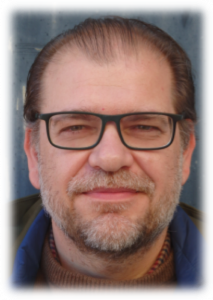
Pontus Giselsson is an Associate Professor at the Department of Automatic Control within the Faculty of Engineering, LTH at Lund University . His research focuses on optimization theory and its applications to control systems, machine learning, and robotics. He teaches advanced courses including: Optimization for Learning (Master’s level, held annually) Large-Scale Convex Optimization (PhD level, last held 2015) His research projects span: Scalable control of interconnected systems Nonlinear control theory Robot learning and control Cloud-native control systems Autonomous real-time systems Optimal transport and numerical optimization His scientific work emphasizes: Operator splitting algorithms Convergence analysis Low-rank optimization Applications to machine learning and control systems Pontus leads research initiatives in the RobotLab LTH and contributes to national projects such as WASP (Wallenberg AI, Autonomous Systems and Software Program) and ELLIIT (Excellence Center at Linköping–Lund in Information Technology).
Marko Tanasković (born December 6, 1986) is a researcher at Singidunum University with a PhD in Information Technology and Electrical Engineering from ETH Zurich (2015). His academic background includes master's (ETH Zurich, 2011) and bachelor's (University of Belgrade, 2009) studies in Electrical Engineering. Doctoral studies: Information Technology and Electrical Engineering, ETH Zurich (2011-2015) Master studies: Information Technology and Electrical Engineering, ETH Zurich (2009-2011) Basic studies: Electrical Engineering, University of Belgrade (2005-2009) Tanasković's research focuses on control systems , predictive modeling , and optimization algorithms for mechanical and electrical systems. His work addresses adaptive model predictive control (MPC), sensorless motor positioning, and data-driven approaches for nonlinear systems. Recent publications (2018-2024) demonstrate expertise in: Embedded control systems (rotor polarity detection) Drone forensics and autonomous navigation Industrial automation (LabVIEW applications) Biomedical sensor development ('Smart Anklet') Machine learning optimization (firefly algorithm)
Dr. MARIOROSARIO PRIST serves as a Researcher at the Department of Information Engineering within the Faculty of Engineering at Marche Polytechnic University (UNIVPM) in Ancona, Italy. His institutional affiliation is maintained through the Department of Information Engineering (quota 170) at Via Brecce Bianche, 60131 Ancona, with contact details including phone 071 220 4468 and email m.prist@staff.univpm.it. Dr. PRIST's research spans cutting-edge domains in artificial intelligence applications for industrial systems, with particular emphasis on neural network implementations, digital twin architectures, and Industry 4.0 technologies. His work demonstrates strong focus on lightweight AI frameworks for edge computing , anomaly detection in manufacturing processes , and resource optimization in production environments . The research portfolio reveals consistent innovation in adapting advanced machine learning techniques to practical industrial constraints, especially for small and medium enterprises. Analysis of his publication trends indicates a strategic shift toward implementing AI solutions on resource-constrained devices and bridging edge computing with cloud infrastructure for real-time industrial monitoring. Recent work emphasizes practical applications of Echo State Networks for process control and anomaly detection, while maintaining strong connections to additive manufacturing optimization and safety monitoring systems. His research consistently addresses the challenge of making advanced AI accessible for industrial implementation without requiring extensive computational resources. Dr. PRIST's work demonstrates significant contributions to the integration of cyber-physical systems in manufacturing environments, with particular expertise in translating theoretical AI concepts into practical industrial applications that enhance production efficiency, safety, and sustainability.
Yu Li is a Lecturer at the University of Picardie Jules Verne (UPJV) and a member of research unit UR 4290 “Optimization and Cryptography, AI – OCIA.” His office is located in room 302, reachable by internal telephone extension 5900. Research Interests Dr. Li’s research spans several inter-related domains: Optimization & Control Theory – developing dynamic optimization algorithms for industrial processes such as continuous casting in steel manufacturing. Cryptography & Security – investigating secure and dependable models for cloud and distributed systems. Artificial Intelligence & Robotics – integrating AI perception and decision-making into cloud-connected robotic platforms, including exoskeletons for rehabilitation and autonomous ground vehicles. Cloud & Fog Computing – designing middleware and domain-specific languages that seamlessly connect robotic devices with cloud and edge resources. Publication Trends Over the past decade, Dr. Li’s publication record reveals a clear evolution from foundational work in software architecture and component-based systems (2010-2016) toward cutting-edge applications in cloud/fog-enabled robotics and AI-driven cyber-physical systems (2017-2023). His studies increasingly emphasize real-world deployment, simulation-driven resource estimation, and human-centric interaction in rehabilitation robotics. Scientific Awards & Recognition No specific awards are listed in the provided materials. Advising & Funding No explicit information about supervised students or funded grants is available in the text supplied. Laboratories & Teams He carries out his research within the UR 4290 research unit “Optimization and Cryptography, AI – OCIA” at UPJV, focusing on collaborative projects that bridge mathematics, computer science, and robotics engineering.
Matthew Dennis is an Assistant Professor in Ethics of Technology at Eindhoven University of Technology (TU/e) , affiliated with the Philosophy & Ethics group and the EAISI institute. He co-directs the Eindhoven Center for Philosophy of Artificial Intelligence (ECPAI) and serves as Senior Research Fellow with the Ethics of Socially Disruptive Technologies (ESDiT) consortium. His research examines how emerging technologies challenge concepts of fairness, autonomy, well-being, and creativity , particularly in digital content consumption and AI-generated synthetic content. He contributes to debates on digital well-being, algorithmic ethics, and self-cultivation , with a focus on platform design and societal impact. Key Collaborations : European Parliament's Science-Media Hub, Royal Bank of Scotland, EIT Digital, Responsible Sensing Lab Academic Leadership : Co-edited Philosophy of Fame & Celebrity (Bloomsbury 2024), Values for a Post-Pandemic Future (Springer 2023), and Ethics of Self-Cultivation (Routledge 2018) Scientific Contributions : Published in Science and Engineering Ethics , Ethics & Information Technology , and Journal of Applied Philosophy Recognized with the Next Nature Fellowship (2024) , Dennis integrates French/German philosophy with practical technology ethics, currently co-designing a digital wellness space with What Design Can Do .
Habiba Farrukh is an Assistant Professor in the Department of Computer Science at the University of California, Irvine , where she directs the Security and Privacy of Emerging Computing Technology (SPECT) Lab . Her research focuses on security & privacy and mobile computing , using system design, machine learning, and human-centered approaches to address threats in emerging computing platforms. Ph.D. in Computer Science from Purdue University (advisor: Dr. Z. Berkay Celik) Research Trends : Her recent work spans XR security (UI attacks, eye gaze privacy), mobile/IoT security (magnetometer side-channels, secure group pairing), online abuse (toxic content against refugees), and wearable privacy . Publications appear at top venues like USENIX Security , IEEE S&P , and ACM CCS . Scientific Awards : Best Poster Runner-Up Award at MobiSys 2025 Outstanding Reviewer Award at VehicleSec 2024 Bilsland Dissertation Fellowship 2021-2022 Teaching : CS190: Introduction to Security & Privacy (Spring 2025) CS204: Usable Security and Privacy (Fall 204) CS295: Security and Privacy of Emerging Computing Platforms (Spring 2024)
Norbert Maggi is a Contract Professor affiliated with the University of Genoa, Italy. He contributes to teaching in multiple departments, including the Department of Pharmacy (DIFAR), Department of Experimental Medicine (DIMES), and the Department of Computer Science, Bioengineering, Robotics, and Systems Engineering (DIBRIS). His academic appointments span diverse fields such as Computer Engineering, Psychological Sciences, Pharmacy, and Biotechnology. His research focuses on metabolite profiling for plant characterization sustainable agrochemical applications bioactivity studies against plant pathogens health informatics initiatives interdisciplinary collaborations between Spain and Italy . Recent publications highlight his work on Ligurian aromatic plant ecotypes, garlic bioactivity, and the FAIR4Health to 1+MG Initiative transition. These studies employ techniques like NMR spectroscopy and targeted metabolomics to advance agricultural and health data research.
Ippei Obayashi is a Professor at Okayama University's Center for artificial intelligence and mathematical data science, with a visiting professorship at Tohoku University's Advanced Institute for Materials Research (AIMR). His academic career spans prestigious institutions including RIKEN, Tohoku University, and Kyoto University, where he earned his Doctor of Science degree. Okayama University, Center for AI and Mathematical Data Science, Professor (2021-present) RIKEN, Center for Advanced Intelligence Project, Researcher (2018-2021) Tohoku University, Institute for Advanced Materials Science, Associate Professor (2018) Tohoku University, Advanced Institute for Materials Science, Assistant Professor (2015-2018) Kyoto University, Research Fellow (2010-2015) Educational Background: Kyoto University, Graduate School of Science, Department of Mathematics and Mathematical Analysis (2006-2010, Doctoral) Kyoto University, Graduate School of Science, Department of Mathematics and Mathematical Analysis (2004-2006, Master's) Kyoto University, Faculty of Science (2000-2004, Bachelor's) Professor Obayashi's research focuses on topological data analysis (TDA) , particularly persistent homology and its applications, alongside dynamical systems theory. His work bridges pure mathematics with practical applications in materials science, where he has developed innovative methods to analyze complex material structures. He has made significant contributions to understanding magnetic materials, amorphous structures, and crystal formation through topological approaches, often integrating machine learning techniques with traditional mathematical analysis. His research has practical implications for energy materials, battery technology, and materials characterization. His publication record demonstrates a strong trend toward applying topological methods to solve real-world materials science problems, with increasing integration of machine learning techniques. Recent work shows sophisticated applications of persistent homology to analyze neutron scattering data, magnetic properties, and structural characteristics of materials, reflecting his ability to translate abstract mathematical concepts into practical analytical tools. Scientific Awards: JCS-JAPAN Excellent Paper Award, Ceramic Society of Japan (2020) 11th Sakuramai Research Encouragement Award, RIKEN (2020) Japan Society for Industrial and Applied Mathematics Best Author and Best Paper Awards (2017) 6th Fujiwara Hiroshi Mathematical Sciences Encouragement Award (2017) AIMR International Symposium Best Poster Award (2017) Professor Obayashi actively mentors graduate students through Okayama University's Graduate Student Program and leads research initiatives including the Japan Society for Industrial and Applied Mathematics Topological Data Analysis Research Group, which he chairs. His research is supported by multiple competitive grants, including Japan Society for the Promotion of Science (JSPS) funding for projects on mathematical data science and topological structure analysis. He collaborates extensively with researchers across disciplines, particularly in materials science and engineering. He is affiliated with the Center for artificial intelligence and mathematical data science (Angels) and the Cyber-Physical Engineering Informatics Research Division (Cypher) at Okayama University, where he leads efforts to develop and apply topological data analysis methods to complex scientific problems. His laboratory focuses on creating practical software tools like HomCloud for persistent homology analysis, bridging the gap between theoretical mathematics and applied scientific research.
Professor Shigeru Fujimura is affiliated with Waseda University as a faculty member of the Faculty of Science and Engineering , specifically in the Graduate School of Information, Production, and Systems . With a PhD in Engineering from Waseda University, his research focuses on intelligent informatics and system engineering , particularly in scheduling, optimization, and human-robot collaboration. His research spans multiple domains including: Deep Reinforcement Learning for combinatorial optimization Energy-efficient manufacturing systems Multi-agent collaboration frameworks Augmented Reality interfaces IoT business modeling Recent publications demonstrate expertise in graph neural networks , particle swarm optimization , and generative adversarial networks applied to industrial problems. He has received multiple awards including the Invention Encouragement Prize (2003) and IEEJ Paper Presentation Award (1994) .
Alaa Sheta is a tenured Professor of Computer Science at Southern Connecticut State University , New Haven, CT, USA. With over 180 refereed publications, three authored books, and extensive funded research, he is a globally recognized authority in machine learning, evolutionary computation, image processing, and robotics. Education B.E. Electronics & Communication Engineering, Cairo University, 1988 M.Sc. Electronics & Communication Engineering, Cairo University, 1994 Ph.D. Computer Science, George Mason University, USA, 1997 Research Interests Prof. Sheta’s research integrates machine learning , deep learning , and evolutionary algorithms to solve complex real-world problems. Core themes include image and signal processing for medical and industrial applications, autonomous robotics for navigation and inspection, big-data analytics for environmental and financial forecasting, and software reliability modeling using computational intelligence. His work frequently leverages meta-heuristic optimization techniques such as genetic algorithms, particle swarm optimization, and hybrid neuro-fuzzy systems. Publication Trends From 2015-2021, Prof. Sheta’s publications reveal a clear pivot toward deep learning and healthcare informatics , with multiple studies on obstructive sleep-apnea diagnosis using ECG and depth-sensor data, brain-tumor detection in MR images, and mobile-health applications. Earlier work emphasizes industrial process modeling , power-system optimization , and software effort estimation , reflecting sustained contributions across both theoretical algorithmic advances and high-impact interdisciplinary applications. Scientific Awards & Honors Best Poster Award, SGAI International Conference on Artificial Intelligence, Cambridge, UK, 2011 Senior Member, IEEE Vice-President, Arab Computer Society (2011) Associate Editor, International Journal of Advanced Computer Science and Applications (IJACSA) Associate Editor, International Journal of Computational Complexity and Intelligent Algorithms (IJCCIA) Advising & Grants Prof. Sheta has successfully supervised more than 30 master’s and Ph.D. students in the United States, United Kingdom, Jordan, and Syria. His research has been funded by the U.S. National Science Foundation , as well as agencies in Egypt, Saudi Arabia, and Jordan. He has also consulted for the Egyptian Ministry of Communication & IT (2002-2004) and UNDP Smart Schools project (2003). Labs, Workshops & Leadership He is the founder and chair of the Advanced Computation for Engineering Applications (ACEA) workshop series, held five times across Egypt, Jordan, and Saudi Arabia. He served as Program Chair of the Science and Information Conference 2013 in London and has held academic leadership roles such as Associate Dean (2008-2009) and Assistant Dean for Planning & Development (2006-2008) at Al-Balqa Applied University, Jordan.
Maarten Afschrift is an Assistant Professor at the Vrije Universiteit Amsterdam, affiliated with the Faculty of Behavioural and Movement Sciences, Department of Biomechanics. He holds additional roles at IBBA and AMS - Rehabilitation & Development. His research focuses on biomechanical modeling of human movement, particularly in musculoskeletal systems and gait analysis. He specializes in predictive simulations of locomotion, exoskeleton assistance, and the biomechanical implications of aging on movement strategies. Research Interests: Biomechanics of human movement and gait Musculoskeletal modeling and simulation Exoskeleton and assistive technology design Effects of aging on motor control and balance Predictive control strategies in human locomotion Recent Research Trends: His work emphasizes optimizing exoskeleton assistance for lower limbs, understanding metabolic energetics during walking, and modeling foot mechanics to improve gait simulations. Recent studies explore trade-offs between accuracy, speed, and stability in stepping tasks across age groups, leveraging computational frameworks like PredSim for predictive analysis. Teaching & Grants: He teaches courses on biomechanics of locomotion and contributes to editorial work in biomechanical journals. No specific grants or awards are listed, but his research is supported through institutional and collaborative projects. Labs/Teams: Active in interdisciplinary teams at IBBA and AMS, focusing on rehabilitation engineering and biomechanical innovations.
Prof. Christopher Habel is a Professor in the Department of Computer Science at the University of Hamburg, leading the WSV work area. His research focuses on spatial and temporal cognition, multimodal interaction, and accessibility technologies. He holds the formal title of Head of Department WSV and is affiliated with the Faculty of Mathematics, Computer Science and Natural Sciences. Habel's work bridges cognitive science, artificial intelligence, and human-computer interaction with an emphasis on assistive technologies for visually impaired individuals. Key research projects include the CINACS International Research Training Group, exploring auditory-haptic access to spatial graphics, and the development of multimodal comprehension systems integrating text, graphics, and tactile feedback. His contributions span theoretical frameworks in cognitive linguistics and practical implementations of verbal assistance systems for tactile maps and haptic graph exploration. Over 30 years of academic activity is reflected in his extensive publication record (1984–2015), with recent work emphasizing cross-linguistic studies, event recognition in virtual environments, and the design of multimodal interfaces for cognitive robotics. His research integrates computational models with empirical studies on human perception and language processing.
Dr. Eleftherios Doitsidis is an Associate Professor at the School of Production Engineering & Management of the Technical University of Crete (TUC) and a member of the Intelligent Systems & Robotics Laboratory. Previously, he served as faculty at the Department of Electronic Engineering at Hellenic Mediterranean University. His expertise spans multirobot systems, autonomous vehicle control, and computational intelligence. He holds a robust record of EU and national research project involvement. Research Interests: Specializes in multirobot team coordination, autonomous navigation systems for UAVs/AUVs, control systems design, and computational intelligence applications. Recent work focuses on energy-efficient path-planning for swarms, educational robotics frameworks like HYDRA, and digital twin integration in autonomous systems. Publications Trends: His 150+ publications address cutting-edge topics including: Autonomous vehicle control architectures Modular robotics for STEM education Optimization algorithms for multirobot systems Energy efficiency in manufacturing systems Advising & Projects: Lead researcher on numerous funded projects involving UAV/AUV missions, swarm robotics, and educational technology. Active in collaborative research with institutions like the University of South Florida. Labs & Groups: Leads the Intelligent Systems & Robotics Lab at TUC, developing advanced robotic platforms and educational tools. Maintains an open-access research portal at doitsidis.tuc.gr .
Bryan A. Jones serves as an Associate Professor and ECE ABET Coordinator in the Department of Electrical and Computer Engineering at Mississippi State University's Bagley College of Engineering. His educational background includes: Ph.D. in Electrical Engineering from Clemson University (2005) M.S. in Electrical and Computer Engineering from Rice University (2002) B.S.E.E. in Electrical and Computer Engineering from Rice University (1995) Dr. Jones' research focuses on robotics and real-time control systems, with specialized expertise in rapid prototyping for real-time environments and mechatronic system modeling. His work bridges theoretical control frameworks with practical implementation, emphasizing robust solutions for complex electromechanical systems. This research directly impacts industrial automation and advanced robotics development through efficient hardware-software integration. As ECE ABET Coordinator, he oversees accreditation compliance for all departmental engineering programs, ensuring alignment with national educational standards.
Lefteris Doitsidis is an Associate Professor at the School of Production Engineering and Management, Technical University of Crete. He holds a PhD in Production and Management Engineering from the same institution (2008), with prior academic positions at the Department of Electronics, Hellenic Mediterranean University. His professional journey includes visiting scholar roles at the University of South Florida, USA. Research focuses on robotic systems, including autonomous navigation of UAVs/AUVs, multirobot teams, computational intelligence, and educational robotics. He leads the Intelligent Systems and Robotics Laboratory, developing tools like HYDRA for STEM education and frameworks for industry 4.0 applications such as bin-picking and precision agriculture. His work integrates control systems optimization, energy efficiency in manufacturing, and digital twin technologies. Over 65 publications span journals, conferences, and books, emphasizing practical implementations like ROS-based autonomous vehicle testbeds and energy management systems for electric vehicles. Key contributions include UAV path planning algorithms, swarm robotics coordination, and sensor fusion techniques. Current research trends emphasize sustainability in manufacturing, educational robotics platforms, and autonomous systems validation through advanced algorithms like Deep Deterministic Policy Gradient.