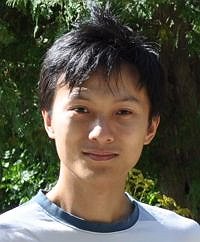
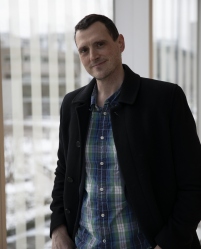
Ahmed Elbeltagi is an Assistant Professor in the Agricultural Engineering Department at Mansoura University's Faculty of Agriculture. His work focuses on hydrology, agricultural water management, and climate change adaptation. Specializes in data-driven modeling for water resource optimization Integrates machine learning with traditional hydrological models Active in climate change impact assessments on agricultural systems Recent research trends include: Developing open-source tools like Aqua-MC for irrigation simulation Applying hybrid deep learning models for evaporation prediction Advancing water quality assessment through multivariate analysis Exploring economic applications of wetlands in arid regions He collaborates with institutions across Egypt, India, China, and Saudi Arabia, with a focus on sustainable water management solutions.
Soumaya Cherkaoui is a Full Professor in the Department of Computer Engineering and Software Engineering at Polytechnique Montréal. Previously, she served as a Full Professor at Université de Sherbrooke and held industrial roles as an aerospace project manager. Her research integrates artificial intelligence with telecommunications, focusing on quantum computing, frugal edge intelligence, and applications in connected vehicles and IoT. Current Position: Full Professor, Polytechnique Montréal Prior Academic Role: Full Professor, Université de Sherbrooke Industry Experience: Aerospace Project Manager Research Interests: Convergence of AI and communications, quantum computing for networking, frugal intelligence at the edge, and applications in autonomous vehicles, industrial IoT, and smart grids. She leads government and industry-funded projects, including a $6 million quantum initiative in 2025. Recent Publication Trends: Her 2025–2024 work emphasizes quantum-enhanced anomaly detection (via QGANs), Open RAN slicing with quantum optimization, and reinforcement learning for secure cognitive radio networks. Topics span 5G/6G, vehicular networks, and zero-trust architectures. Scientific Awards: IEEE Communication Society Distinguished Lecturer (2020) ACM Mirela Notare Award (2023) IEEE Bio-Inspired Computing STC Leadership Award (2023) N2Women: Stars in Networking and Communications (2023) Best Paper Awards at IEEE ICC 2017, IEEE LCN 2021, ICCSPA 2024 Advising and Grants: Supervised 3 Master's students in 2024, with research on quantum GANs and federated learning for vehicular networks. Secured grants like the $6 million quantum project (2025) and participated in CFI-QC government funding (2022). Editorial and Leadership: Served as Associate Editor for IEEE, Wiley, and Elsevier journals. Chaired conferences like IEEE LCN 2019 and IEEE ICC2025, and held leadership roles in IEEE Communications Society committees.
Farinaz Koushanfar is a Professor in the Department of Electrical and Computer Engineering at the Jacobs School of Engineering, University of California San Diego (UCSD) . She holds the Siavouche Nemat-Nasser Endowed Chair and serves as Founding Co-Director of the Center for Machine-Intelligence, Computing and Security . Her affiliations include NSF Trust-Hub (Co-PI) and NSF TILOS AI Institute . She also serves on the Editorial Board of The Proceedings of the IEEE . Research Focus: Prof. Koushanfar leads research in secure and efficient computing , including robust/safe AI , hardware/system security , AI-based optimization , and cryptographically secure privacy-preserving computing . Her work pioneered logic obfuscation/locking for chip security, automated co-design of AI systems , watermarking/tracing of deep learning models , and physical proofs of provenance . She explores co-design with cryptographic constructs for privacy preservation and manages nonlinearities in ciphertext domains. Article Trends: Recent publications show expertise in neural watermarking (deepfakes, media authentication), zero-knowledge proof frameworks , Trojan attack defenses in ML models, secure federated learning , and hardware acceleration of cryptographic protocols . Her work combines machine learning , cryptography , and physical design security across 2022-2025 publications. Scientific Awards: Fellow of ACM Fellow of IEEE Fellow of National Academy of Inventors (NAI) Fellow of Kavli Foundation of NAS Inducted to NAI 2024 Fellows Advising & Leadership: She has advised multiple PhD students who became faculty at top universities (e.g., Stanford, Purdue). She chairs conferences like ACM WiSec 2024 and co-led the NSF SaTC decadal review. Her lab ( ACES Lab ) produces award-winning graduates like Bita Rouhani (DAC Under-40 Innovators) and Shehzeen Hussain (UCSD Best Dissertation Award).
Anton Ehrmanntraut is a researcher at the University of Würzburg, affiliated with the Chair of Computational Philology and Modern German Literary History. His work bridges computational methods with literary and linguistic analysis. Institution: University of Würzburg Role: Researcher Location: Emil-Hilb-Weg 23, Campus Hubland Nord Contact: anton.ehrmanntraut@uni-wuerzburg.de Research Focus: Computational Linguistics Digital Humanities German Literary History Natural Language Processing Computer Science Publishing Trends: Recent publications demonstrate a dual focus: (1) advancing NLP techniques for German texts (e.g., ModernGBERT, text normalization, literary pipelines) and (2) theoretical computer science contributions to complexity classes like UP, DisjNP, and DisjCoNP.
Cynthia D. Rudin is the Gilbert, Louis, and Edward Lehrman Distinguished Professor of Computer Science at Duke University, with joint appointments in the Departments of Electrical and Computer Engineering, Statistical Science, Mathematics, and Biostatistics & Bioinformatics. She directs the Interpretable Machine Learning Lab and has held previous positions at MIT, Columbia, and NYU. Her educational background includes: Undergraduate degree from the University at Buffalo PhD from Princeton University (2004) Research Interests: Dr. Rudin's research focuses on interpretable machine learning and its applications across multiple domains. Her work emphasizes creating machine learning models whose reasoning processes people can understand, which includes algorithms for extremely sparse models, interpretable neural networks, interpretable matching methods for causal inference, and dimension reduction for data visualization. She applies these techniques to critical societal problems in healthcare, criminal justice, materials science, and other domains. Her lab has developed practical code for sparse models such as decision lists, decision trees, and additive models that provably optimize accuracy and sparsity. Dr. Rudin's recent publications (2024-2025) demonstrate a strong focus on interpretable AI applications across diverse fields including healthcare (mortality risk scores, breast cancer prediction), materials science (metamaterials design), and environmental justice (location-based health analysis). Her work consistently emphasizes practical implementations with real-world impact, particularly in high-stakes decision-making domains where model transparency is critical. Scientific Awards: Squirrel AI Award for Artificial Intelligence for the Benefit of Humanity (2022) - often described as the "Nobel Prize of AI" INFORMS Society on Data Mining Prize (2024) Guggenheim Fellowship (2022) Three-time winner of the INFORMS Innovative Applications in Analytics Award (2013, 2016, 2019) Winner of the 2023 John M. Chambers Statistical Software Award for PaCMAP Winner of the 2024 Award for Innovation in Statistical Programming and Analytics Dr. Rudin has advised numerous PhD students and postdocs who have co-authored significant publications with her. Her lab has received substantial funding for projects applying interpretable machine learning to healthcare (seizure prediction in ICU patients), criminal justice (crime series analysis), and energy infrastructure (underground electrical distribution networks). Her work on the Series Finder algorithm has been adapted by the NYPD and has been running live in NYC since 2016. She directs the Interpretable Machine Learning Lab at Duke, which includes the Almost-Matching-Exactly Lab focused on interpretable causal inference. Her team develops practical code implementations for all their research, emphasizing usability and real-world application in critical domains.
Seung Eock Kim is a Professor in the Department of Civil and Environmental Engineering at Sejong University, Korea, where he has served since 1997. Previously, he held executive leadership as Senior Vice President (2015-2018) and brings industry experience from Daewoo Engineering. His academic credentials include a Ph.D. from Purdue University (1996), M.S. from KAIST (1990), and B.S. from Yonsei University (1983). Kim leads research in structural systems optimization with emphases on: Nonlinear inelastic analysis of steel/composite structures AI-driven structural design methodologies LRFD (Load and Resistance Factor Design) frameworks Advanced computational mechanics for infrastructure His recent publications (2024-2025) demonstrate strong focus on machine learning applications for structural health monitoring, nano-scale material characterization of steels, and sensor-based corrosion detection. This represents a strategic expansion into intelligent infrastructure systems beyond traditional mechanics. Awards and honors: National Research Laboratory designation (Ministry of Science, 2000) Elected Full Member of Korean Academy of Science and Technology (2011) He directs the Steel Structure Laboratory , where he developed the specialized nonlinear analysis software 3D-PAAP. His research has generated 132 SCIE-indexed publications with 1,599+ citations, including the influential CRC Press book LRFD Steel Design Using Advanced Analysis (1997).
Saikat Dutta is an Assistant Professor in the Department of Computer Science at Cornell University. He is affiliated with the Software Engineering Group and focuses on the intersection of Software Engineering and Machine Learning . His work aims to enhance the reliability of ML-based systems while applying ML techniques to solve software engineering challenges. PhD in Computer Science from University of Illinois Urbana-Champaign (Summer 2023) Postdoctoral Researcher at University of Pennsylvania Bachelor's in Computer Science and Engineering from Jadavpur University Research Interests: Dr. Dutta's research spans several key areas: Automated test generation and debugging for ML/DL libraries Using AI/ML for automated software engineering tasks Improving performance of regression tests in ML libraries Static and dynamic analysis for probabilistic programming Article Trends: His recent publications emphasize: Automated testing of ML systems Security vulnerability detection using LLMs Probabilistic program analysis Neurosymbolic learning frameworks Flaky test management in stochastic environments Stochastic regression test optimization Scientific Awards: Meta AI LLM Evaluation Research Grant (2025) Mavis Future Faculty Fellowship (2022-23) Facebook PhD Fellowship (2020-22) 3M Foundation Fellowship (2019-2020) Advising & Grants: Dr. Dutta actively recruits PhD students and postdocs. He leads research projects supported by grants from Meta AI and participates in program committees for top conferences like ICSE and ISSTA. His lab focuses on neurosymbolic systems and ML-based software verification.
Prof. Freek J. Beekman is a Full Professor and head of the Biomedical Imaging section within the Department of Radiation Science & Technology at Delft University of Technology (TU Delft), Faculty of Applied Sciences. He is a leading figure in biomedical imaging, with extensive contributions to nuclear imaging technologies, including SPECT, PET, and CT. His research spans detector development, image reconstruction algorithms, hybrid photonic imaging, and the application of artificial intelligence in medical imaging. Research Interests: His work focuses on advancing imaging modalities through innovations in hardware (e.g., multi-pinhole collimators) and software (e.g., deep learning for attenuation correction). He has pioneered ultra-high-resolution imaging systems, particularly for preclinical and clinical SPECT, and has developed integrated platforms like U-SPECT-BioFluo. His recent research explores glymphatic delivery of nanoparticles, infection imaging, and AI-driven reconstruction techniques, reflecting a strong translational focus. Publication Trends: His most recent publications (2021–2023) emphasize deep learning in SPECT, multi-isotope imaging, high-resolution ex vivo systems, and applications in neuroimaging and oncology. The articles demonstrate a consistent focus on improving image quality, resolution, and clinical utility through physics-informed and AI-enhanced methods. Scientific Awards: NWO Physics Valorization Prize Innovation of the Year Award by the World Molecular Imaging Society (2015, 2018) Edward Hoffman Memorial Award (2017) Bruce Hasegawa Memorial Award (2021) FOM Valorization Award (2013) TU Delft Entrepreneurial Award (2010) Advising and Grants: While specific student names are not listed, his leadership in large collaborative projects and supervision of numerous publications suggests active mentoring. He has secured significant funding through national and international grants, evidenced by his invention of over 20 patent families and successful technology transfer. His founding and leadership of MILabs BV (sold to Rigaku) highlights his impact on commercialization and industry-academia collaboration. Labs and Teams: He leads the Biomedical Imaging research group at TU Delft, which develops cutting-edge imaging systems such as VECTor (SPECT-PET) and EXIRAD-HE. His teams have produced technologies used globally in academic and pharmaceutical research, contributing to tracer development and therapeutic innovation.
Haochen Li is an Assistant Professor in the Department of Civil and Environmental Engineering at the University of Tennessee, Knoxville, within the College of Engineering. He leads the multidisciplinary Water Infrastructure Laboratory (Ψ Lab), which focuses on advancing urban water infrastructure through high-fidelity computational fluid dynamics (CFD), physical modeling, and physics-informed machine learning (ML). Education: PhD in Environmental Engineering, University of Florida, 2019 MS in Mechanical Engineering, University of Florida, 2019 MS in Civil Engineering, University of Florida, 2015 BS in Coastal Engineering, Hohai University, 2013 His research centers on environmental fluid dynamics , particularly multiphase and multiphysics flows in urban water systems. He investigates turbulence, particulate matter transport, pathogen fate, and chemical dynamics using advanced CFD simulations, volumetric particle image velocimetry (PIV), and AI-driven models. His lab develops open-source tools like InterAdsFoam for adsorption systems and integrates ML with CFD to optimize infrastructure design, retrofit, and regulatory frameworks. The recent publications reflect a strong trend toward hybrid CFD-ML frameworks for water infrastructure, with applications in clarifier design, stormwater basin optimization, and real-time sensing. His work emphasizes model validation, scalability, and practical deployment, including web-based tools for engineers. Scientific Awards: Rudolph Hering Medal, ASCE, 2023 Editor choice, Journal of Environmental Engineering ASCE, 2021 Editor choice, Journal of Environmental Engineering ASCE, 2020 Graduate School Fellowship, University of Florida, 2015 Academic Achievement Award, University of Florida, 2013 Haochen Li actively advises researchers and students in his lab, including Kai Liu, Mohamed Shatarah, and Ahmed Abdelmeguid. His team works on AI-empowered reactive flows, physics-informed ML, and CFD applications in energy and environmental systems. He has served as a reviewer for top journals and is a member of the ASCE/EWRI Computational Fluid Dynamics Committee. His lab is equipped with state-of-the-art HPC platforms and physical modeling facilities for experimental validation.
Maozhen Li is a Professor in the Department of Electronic and Electrical Engineering at Brunel University of London , within the College of Engineering, Design and Physical Sciences . He serves as the Vice-Dean of the NCUT Transnational Education (TNE) programme, overseeing a joint school with North China University of Technology. He has been at Brunel since 2002, progressing from Lecturer to Professor in 2013. Education: PhD, Institute of Software, Chinese Academy of Sciences (1997) Postdoctoral Research, School of Computer Science and Informatics, Cardiff University (1999–2002) His primary research interests lie in high performance computing, big data analytics, and artificial intelligence, with applications in smart grids, smart manufacturing, and cybersecurity. He focuses on developing interpretable, robust, and lightweight AI models, including work in causal AI, parallel machine learning, and edge computing. His research integrates advanced techniques such as deep learning, reinforcement learning, and blockchain for real-world system optimization. An analysis of his recent publications reveals a strong and consistent research trajectory in AI-driven solutions for environmental monitoring (e.g., PM2.5 prediction), industrial defect detection, IoT security, and intelligent transportation. His work frequently combines deep learning with graph-based modeling and federated or reinforcement learning, emphasizing scalability, efficiency, and robustness in distributed and edge environments. Scientific Awards and Recognition: Fellow of the Institution of Engineering and Technology (IET) Fellow of the British Computer Society (BCS) Shortlisted for the Computing UK BIG DATA EXCELLENCE AWARDS 2018 in the category of Most Innovative Big Data Solution Maozhen Li has successfully supervised 25 PhD students and examined over 30 PhD theses externally. He has secured significant research funding from EPSRC, the European Union (Horizon 2020), Innovate UK, and the Royal Society , with projects including Z-BRE4K, IoRL, and TDX-ASSIST. He serves as an Associate Editor for journals such as the Journal of Cloud Computing and the International Journal of Grid and High Performance Computing . Research Groups and Teams: He is affiliated with the Intelligent Engineering Frameworks (IEF) research group at Brunel, contributing to collaborative efforts in AI, IoT, and smart systems. His leadership in transnational education also fosters international research collaboration between Brunel and Chinese institutions.
Gias Uddin is an Associate Professor at York University's Lassonde School of Engineering and an Adjunct Professor at the University of Calgary . His research bridges Software Engineering (SE) and Artificial Intelligence (AI) , focusing on AI Trustworthiness Assessment (SE4AI) and AI-Driven Productivity Tools (AI4SE) . PhD in Software Engineering & AI, McGill University (2018) MSc in Software Engineering, Queen’s University (2008) BSc in Computer Science & Engineering, Bangladesh University of Engineering and Technology (2004) His research explores: Metamorphic Relations for LLM Hallucination Detection AI-Enhanced Software Documentation Foundational Models for Runtime System Modernization Developer-Centric AI Tooling Recent article trends show expertise in LLM Trustworthiness , Low-Code Platforms , and IoT Developer Communities . Awards include Distinguished Paper at FSE 2025 , multiple IBM Champion recognitions, and York Research Award . He leads the Data Intensive Software Analytics (DISA) Lab and mentors PhD students in SE-AI Intersections .
Yingfei Xiong is an active Associate Professor at Peking University, China, specializing in software engineering and programming languages. With a consistent research trajectory from 2013 through 2026, Xiong has established themselves as a prominent figure in the software engineering research community, regularly contributing to top-tier conferences including SPLASH, ICSE, ASE, and PLDI. Dr. Xiong's research primarily focuses on program synthesis, automated program repair, and software analysis techniques. Their work bridges theoretical programming language concepts with practical software engineering applications, particularly in developing novel approaches for code generation, bug fixing, and program optimization. The research demonstrates strong interdisciplinary connections between traditional software engineering, programming languages theory, and emerging AI techniques. Analysis of Xiong's publication trends reveals a clear evolution in research focus, beginning with foundational work in API transformations and program adaptation around 2013-2016, shifting toward program repair techniques from 2017-2020, and most recently incorporating machine learning and neural approaches into program synthesis and repair (2021-2026). The work consistently addresses practical challenges in software development while maintaining theoretical rigor, with increasing integration of AI techniques in recent years. Dr. Xiong has served in various leadership roles across the software engineering conference ecosystem, including program committee membership and session chair positions at major conferences. Their extensive service demonstrates recognition by peers as a subject matter expert in software engineering and programming languages research. While specific grant information isn't detailed in the provided text, the sustained publication record suggests successful research funding.
Dr Michael Boemo is an Assistant Professor at the University of Cambridge, holding dual appointments in the Department of Pathology and Department of Genetics. He leads research at the intersection of computational biology, DNA replication, and cancer genomics, developing machine learning tools to analyze replication stress and genomic instability. Academic Background: BA in Mathematics (Rutgers University), PhD in Physics (University of Oxford) Research Focus: Genomic instability in cancer, DNA replication/repair defects, computational modeling using machine learning and high-performance simulations Teaching: Lectures in Natural Sciences Tripos (mathematical biology, genetics, systems biology), module organizer for cancer biology and biological modeling His research group leverages nanopore sequencing and AI to map replication fork dynamics, revealing how stalled forks generate mutations in cancer cells and pathogens. Recent work examines extrachromosomal DNA replication vulnerabilities and transcription-replication conflicts. Dr Boemo collaborates across computational biology and cancer research domains, with publications spanning journals like Nature Methods, Cell, and PLoS Computational Biology. His lab develops tools such as DNAscent for replication fork analysis and explores therapeutic targeting of replication stress.
Jason Hein is an Associate Professor in the Department of Chemistry at the University of British Columbia's Faculty of Science. His research focuses on the development of automated reaction analysis technology and self-driving laboratories that integrate robotics with synthetic organic chemistry. Dr. Hein leads the Hein Lab, which pioneers innovative solutions for mechanistic organic chemistry, catalytic reaction mechanisms, and chemical manufacturing processes. His research interests center on creating modular robotic tools and integrated analytical hardware for automated reaction profiling, with applications in pharmaceutical manufacturing, battery materials processing, and sustainable chemistry. The lab's work combines advanced robotics, artificial intelligence, and process analytical technology to develop self-optimizing chemical systems that accelerate discovery and improve manufacturing efficiency. Analysis of Hein's recent publications reveals a strong focus on AI-driven laboratory automation, with particular emphasis on crystallization optimization for battery materials, computer vision for process monitoring, and interoperable software systems for self-driving laboratories. His work bridges fundamental mechanistic understanding with practical industrial applications, particularly in lithium extraction from waste brines and pharmaceutical process development. NSERC Postdoctoral Fellowship Dr. Hein's research program includes significant grant funding supporting the development of self-driving laboratory technologies and their application to challenging chemical problems. His lab actively collaborates with industry partners in pharmaceuticals and clean energy sectors to translate fundamental insights into deployable technologies. Current projects focus on battery-grade lithium carbonate production, continuous manufacturing processes, and AI-optimized chemical synthesis. The Hein Lab operates as a multidisciplinary research environment combining expertise in organic chemistry, robotics engineering, computer science, and data analytics to create the next generation of autonomous chemical discovery systems.
Benjamin Recht is a Professor in the Department of Electrical Engineering and Computer Sciences and Department of Statistics at the University of California, Berkeley. Previously, he was an Assistant Professor in the Department of Computer Sciences at the University of Wisconsin-Madison. Recht received his BS in mathematics from the University of Chicago and his MS and PhD from the MIT Media Laboratory, followed by a postdoctoral fellowship at Caltech's Center for the Mathematics of Information. His research interests span Machine Learning, Optimization, Control Theory, and Statistics , with a focus on both theoretical foundations and practical applications. Recht's work addresses fundamental questions in reproducibility, generalization, and robustness of machine learning systems, while also developing novel methods for control, computer vision, and data analysis. Recht's recent publications reveal a strong focus on reproducibility in machine learning , with papers like "The Mechanics of Frictionless Reproducibility" (2024), alongside continued contributions to statistical learning theory ("Interpolating Classifiers Make Few Mistakes", 2023) and computer vision ("Plenoxels", 2022; "K-planes", 2023). His work increasingly addresses societal implications of AI , including papers on systemic harm detection and post-deployment evaluation. NSF Career Award Alfred P. Sloan Research Fellowship 2012 SIAM/MOS Lagrange Prize in Continuous Optimization Presidential Early Career Award for Scientists and Engineers 2014 Jamon Prize 2015 William O. Baker Award for Initiatives in Research 2017 and 2020 NeurIPS Test of Time Awards Recht has advised numerous PhD students who have gone on to faculty positions at top universities and research roles at leading technology companies. His work on optimization algorithms has been widely influential, including the development of methods like HOGWILD! for parallel stochastic gradient descent. He co-founded the Conference on Learning for Decision and Control and has served on editorial boards for the Journal of Machine Learning Research and Mathematical Programming. His research group spans both theoretical and applied work, with connections to healthcare (adaptive medication tapering), computer vision (radiance fields), and social impact (systemic harm detection in deployed systems).