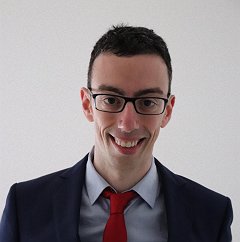
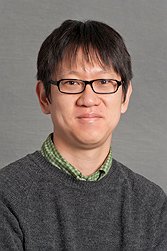
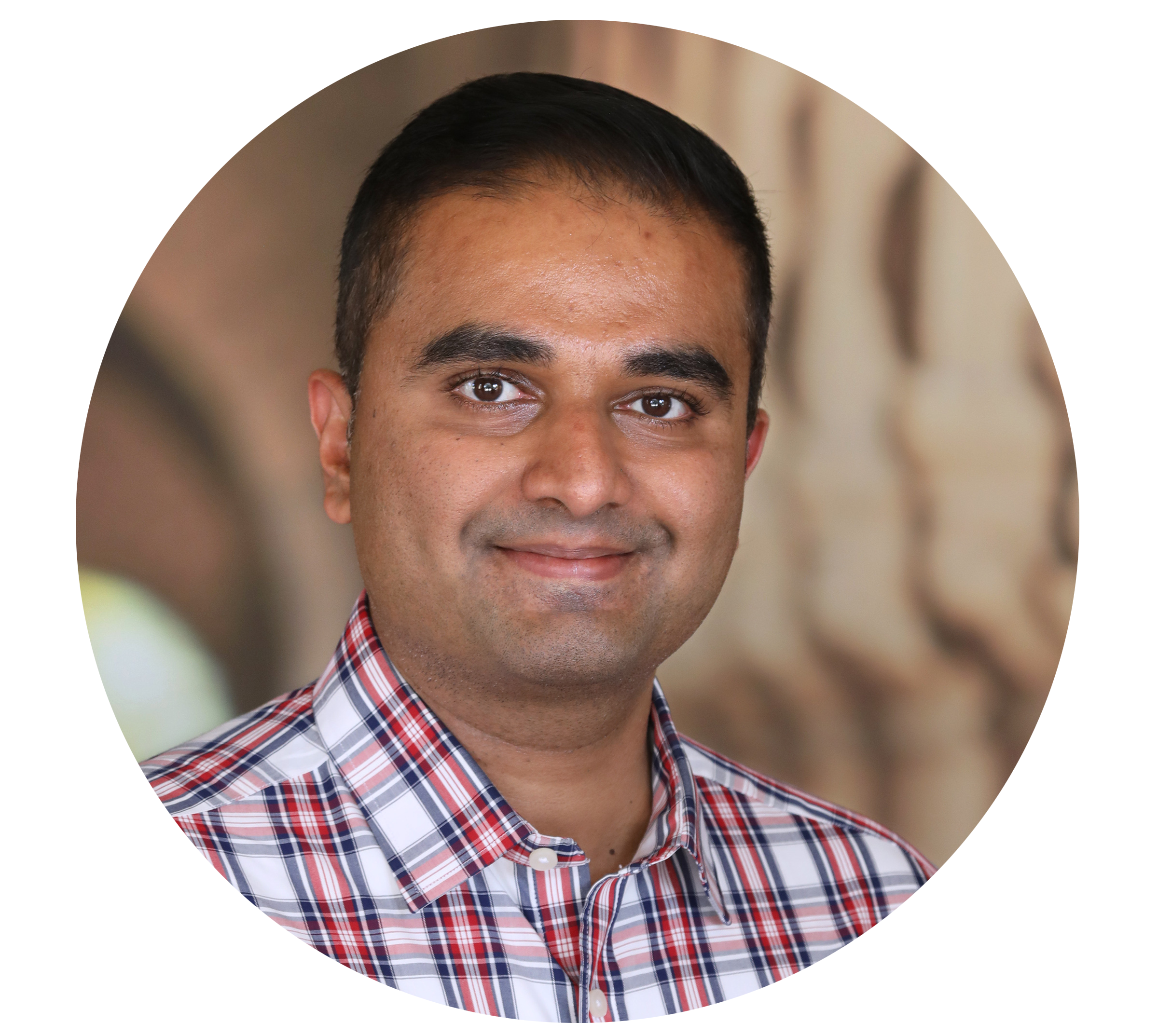
Didier Meuwly is a Full Professor of Forensic Biometrics at the University of Twente (since 2013) and Principal Scientist at the Netherlands Forensic Institute (NFI). His work focuses on automating and validating probabilistic evaluation of forensic evidence, particularly biometric traces. He has contributed to international standards via ISO Technical Committee 272 and served as Associate Editor for Forensic Science International . PhD in Forensic Speaker Recognition (University of Lausanne, 2000) Research spans forensic biometrics, likelihood ratios, AI validation, and gait/body analysis from surveillance footage. Recent work addresses ISO standards (21043), forensic AI explainability, and multimodal evidence evaluation. His publications emphasize empirical validation and statistical rigor. Key awards include: ENFSI Distinguished Forensic Scientist Award (2022) University of Lausanne Law Faculty Prize (2002) Active in global forensic networks, he chairs the ENFSI R&D Committee and collaborates across disciplines on digital evidence, biometric security, and forensic methodology.
R. Jayakrishnan , a Professor in the Department of Civil and Environmental Engineering at the Samueli School of Engineering , University of California, Irvine, is a leading researcher in transportation systems engineering. Ph.D., University of Texas, Austin, Civil Engineering, 1992 M.S., University of Texas, Austin, Civil Engineering, 1987 B.S., Indian Institute of Technology, Madras, India, 1985 His research focuses on dynamic traffic assignment , urban traffic simulation , and real-time information systems to improve congested traffic corridors. He is developing advanced dynamic simulation-assignment models for urban traffic networks. Recent publications highlight his contributions to: Crowdsourced delivery optimization using decomposition heuristics Eco-driving algorithms with V2I communication Multi-furniture placement applications via augmented reality Subscription mobility services cost-benefit analysis Agent-based lane-changing coordination systems These works demonstrate his interdisciplinary approach combining transportation engineering, optimization algorithms, and emerging technologies like AR and connected vehicles.
Travis D. Breaux is an Associate Professor in the School of Computer Science at Carnegie Mellon University, where he directs the Requirements Engineering Lab . His research bridges software engineering, privacy, security, and legal compliance, with a focus on developing formal methods to ensure software systems adhere to regulatory frameworks. He holds appointments in the Software and Societal Systems Department and directs the Masters of Software Engineering (MSE) Professional Programs. Breaux's research investigates privacy policy compliance , empirical extraction of legal requirements , and risk quantification in system design. His work employs AI, formal specification, and empirical methods to resolve ambiguities in policies and quantify privacy/security risks. Key themes include regulatory alignment, automated reasoning for compliance, and human factors in risk perception. Recent publications emphasize AI-driven requirements engineering , including LLM applications for goal modeling, legal requirement extraction, and automated question generation. His work consistently addresses the intersection of formal methods, policy analysis, and scalable compliance verification. Awards and Honors: NSF CAREER Award (2015) IEEE RE Distinguished Paper Award (2018) Distinguished Reviewer Awards (ICSE 2018, RE 2023) IEEE RE Most Influential Paper Award (Honorable Mention, 2016) Breaux advises PhD and Master's students in privacy engineering and requirements formalization. He has led NSF-funded initiatives including the Workshop on Designing Accountable Software Systems (DASS) . Current courses include Prompt Engineering and Artificial Intelligence for Software Engineering , focusing on LLM applications and AI ethics.
Elizabeth Brainerd is the Robert P. Brown Professor of Biology and Professor of Medical Science in the Department of Ecology and Evolutionary Biology at Brown University. She has been a leading figure in vertebrate biomechanics and evolutionary morphology since joining Brown in 2005, where she directs the Keck XROMM Core Facility. Previously, she served as Assistant Professor (1994-1999) and Associate Professor (2000-2005) at the University of Massachusetts Amherst. Her research focuses on biomechanics and evolutionary morphology, combining anatomical studies with engineering principles to understand animal movement. Brainerd is a pioneer of X-ray Reconstruction of Moving Morphology (XROMM) technology, which enables 3D visualization of skeletal movement in living animals. Her work spans diverse vertebrate groups including fish, amphibians, reptiles, birds, and mammals, with applications to feeding, breathing, and locomotion mechanics. Brainerd's research has been consistently supported by major NSF grants, including the development of microXROMM for high-resolution imaging of small animals. Her publications reveal a trajectory from foundational work on breathing mechanics to innovative applications of XROMM technology across multiple vertebrate systems, particularly in suction feeding mechanics and skeletal kinematics. Her scientific recognition includes: Fellow of the American Association for the Advancement of Science (2004) Distinguished Research Achievement Award from Brown University (2019) Fellow of the American Association for Anatomy (2020) Joseph S. Nelson Lifetime Achievement Award in Ichthyology (2021) Bidder Prize Lecture from the Society for Experimental Biology (2023) Brainerd has mentored 7 doctoral students and 5 MS students to completion, plus over 50 undergraduate researchers. She has served as President of both the International Society of Vertebrate Morphology (2016-2019) and the Society for Integrative and Comparative Biology (2019-2021). Her teaching includes undergraduate courses in Comparative Anatomy, Comparative Physiology, and Human Physiology, graduate courses in Muscle Architecture and Biomechanics, and medical education in Human Anatomy.
Prof. Dr. Chunyang Chen is a Full Professor at the Department of Computer Science, Technical University of Munich (TUM), Heilbronn, Germany. He holds the Chair of Software Engineering & AI, serves as a core member of the Munich Data Science Institute, board member of the Heilbronn Data Science Center, and Fellow at Fortiss. He also maintains an Adjunct Professor role at Monash University, Australia. Research Focus: His work bridges Software Engineering, Deep Learning, and Human-Computer Interaction (HCI), specializing in AI/ML, NLP, and program analysis for mobile app development, testing, and security. Key areas include LLM-assisted app development, robustness of deep learning models, and accessibility testing. Scientific Awards: Best Paper Honorable Mention in CHI 2024 Discovery Early Career Researcher Award (DECRA), Australian Research Council ACM SIGSOFT Early Career Researcher Award Facebook Research Award in Probability and Programming Dean's Award for Research Impact at Monash University Academic Leadership: He actively mentors PhD students, supervises postdocs, and leads research teams focusing on software security, automated testing, and LLM applications. His recent work explores the intersection of software security and large language models, with a special issue call for EMSE journal.
Gabriele Bavota is an Associate Professor at the Software Institute of Università della Svizzera Italiana (USI) in Lugano, Switzerland. He leads the SEART (Software Engineering Advanced Research Team) group and serves as Principal Investigator for the DEVINTA ERC starting grant focused on developer intelligence through mining software artifacts. Dr. Bavota's research spans Software Quality, Empirical Software Engineering, and Mining Software Repositories. His work has evolved from foundational studies on code smells and technical debt to cutting-edge research at the intersection of artificial intelligence and software development. He has made significant contributions to understanding API usage patterns, software quality metrics, and developer behavior through empirical studies of large software repositories. His recent publications reveal a strong focus on AI-assisted software development, with extensive research examining code generation, code summarization, and code review automation using large language models. He has also expanded his research to include quality assurance in game development (detecting game stuttering and low engagement events) and voice user interface testing. His work consistently bridges theoretical insights with practical applications for software developers. ACM SIGSOFT Distinguished Paper Award for API compatibility research (MSR 2019) ACM SIGSOFT Distinguished Paper Award for Hugging Face model documentation study (ICPC 2024) ACM SIGSOFT Distinguished Artifact Award for deep learning fault taxonomy (ICSE 2020) As an active member of the software engineering research community, Dr. Bavota serves on program committees for major conferences including ICSE, ASE, FSE, and MSR. He has held leadership roles such as Program Co-Chair for ICSME 2023 and Vision/Reflection Track Co-Chair for ICSE. His SEART research group develops practical tools like the SEART Data Hub that streamline large-scale source code mining and preprocessing for empirical software engineering research.
Shin Yoo is a tenured Full Professor in the School of Computing at Korea Advanced Institute of Science and Technology (KAIST), where he leads the Computational Intelligence for Software Engineering (COINSE) research group. He received his PhD from King's College London in 2009 under the supervision of Prof. Mark Harman. Currently, he serves as the General Chair for ASE 2025, which will be held in Seoul, Korea. Professor Yoo earned his PhD in Computer Science from King's College London (2009), following an MSc in Software Engineering with Distinction from the same institution (2006). His academic journey includes positions as Tenured Associate Professor (2021-2025), Associate Professor (2018-2021), and Assistant Professor (2015-2018) at KAIST, as well as Lecturer and Research Associate positions at University College London and King's College London. His research focuses on the intersection of software engineering and artificial intelligence, particularly in search-based software engineering, software testing, automated debugging, SE4AI (Software Engineering for AI), and AI4SE (AI for Software Engineering). Professor Yoo's work bridges theoretical foundations with practical applications, developing innovative techniques for fault localization, test case generation, and debugging using machine learning and genetic programming approaches. His research has significant implications for improving software reliability and development efficiency in both traditional software systems and AI-powered applications. Professor Yoo's recent publications demonstrate a clear trend toward leveraging large language models and deep learning techniques for software engineering tasks. His work spans fault localization, automated debugging, GUI testing, and program analysis, with increasing focus on the challenges and opportunities presented by AI systems. His research shows a consistent evolution from traditional search-based software engineering to AI/ML-enhanced approaches, reflecting the broader trends in the field. ACM SIGEVO HUMIES Silver Medal (2017) for human competitive application of genetic programming to fault localization research IEEE TCSE Most Influential Paper Award (ICST 2024) for work on mutation-based fault localization Professor Yoo has supervised five PhD students to completion, with his former students now holding positions as assistant professors, post-doctoral researchers, and software engineers at institutions including Kyoungpook National University, Max-Planck Institute Security & Privacy, Università della Svizzera Italiana, Roku Korea, and NUS. He currently serves as an associate editor for the Journal of Empirical Software Engineering and ACM Transactions on Software Engineering and Methodology, and has held significant leadership roles in major software engineering conferences including Program Co-chair for SSBSE (2014), ICST (2018), and ICSE NIER track (2020), General Chair for SSBSE (2022), and Testing & Analysis Area Chair for ICSE (2024). As leader of the Computational Intelligence for Software Engineering (COINSE) group at KAIST, Professor Yoo directs research that combines computational intelligence techniques with software engineering challenges. The group focuses on developing novel approaches to software testing, debugging, and analysis using search-based and AI-driven methods. Their work spans both theoretical foundations and practical implementations, with strong connections to industry challenges and applications.
Tse-Hsun (Peter) Chen is an Associate Professor in the Department of Computer Science and Software Engineering at Concordia University in Montreal, Canada. He serves as Director of the SPEAR lab (Software Performance, Analysis, and Reliability lab), which focuses on improving the quality of large-scale software systems through research in log analysis and AIOps, software performance analysis, software testing, and mining software repositories. His research group maintains extensive collaborations with industry partners including ERA Environmental, Ericsson, Microsoft, and BlackBerry. Dr. Chen received his PhD and MSc in Computer Science from Queen's University and his BSc in Computer Science from the University of British Columbia. Dr. Chen's research addresses critical challenges in modern software engineering, including leveraging Large Language Models to assist developers with development, debugging, and maintenance; helping developers debug production systems by utilizing rich software data; providing optimization suggestions by analyzing user usage data; improving software quality assurances in DevOps environments; and mining software development history for useful developer suggestions. His work spans Software Engineering, Performance Engineering, DevOps & AIOps, Software Testing, and Mining Software Repositories, with a strong emphasis on practical applications that bridge academic research and industrial practice. His recent publications (2024-2025) demonstrate a pronounced shift toward integrating Large Language Models into various aspects of the software engineering lifecycle, particularly in log analysis, fault localization, code generation, and performance testing. This trend reflects the growing importance of AI in software engineering research and practice. Gina Cody Research award (2022) Ranked as one of the most active software engineering researchers worldwide by an independent study published in JSS Dr. Chen has successfully advised numerous PhD and Master's students, many of whom have secured prestigious academic positions. Several of his graduated PhD students now hold tenure-track assistant professor positions at institutions including York University, University of Alberta, DePaul University, and IIT Gandhinagar. His SPEAR lab has developed research tools that have been integrated into industrial practice for ensuring the quality of large-scale enterprise systems. The SPEAR lab, under Dr. Chen's leadership, has established itself as a leading research group in software engineering, with particular expertise in software performance analysis, log analysis, and AI applications for software engineering. The lab maintains strong industry connections and has produced numerous high-impact publications in top-tier software engineering venues including ICSE, FSE, ASE, and TSE.
Dr. Alessandro Inversini is an Associate Professor at the EHL Hospitality Business School, part of HES-SO University of Applied Sciences Western Switzerland. His primary role involves teaching and researching in the Department of Global Hospitality Business, focusing on marketing, digital transformation, and sustainability within the hospitality and tourism sectors. Educational Background: No explicit educational details provided in the text. Research Interests: Explores the transformative impact of emerging technologies (e.g., AI, ChatGPT) on hospitality operations and customer experience. Advocates for regenerative and net-positive approaches to sustainability in the hospitality industry. Investigates CSR communication strategies on social media and cross-cultural dynamics in tourism reviews. Analyzes digital media’s role in B2B relationships and customer-centric frameworks. Article Trends: Recent works emphasize AI-driven changes in tourism, ethical digital transformation, and CSR practices. Key themes include regenerative hospitality, cultural review differences, and leveraging social media for transformative learning. Awards: No scientific awards explicitly listed. Advising & Grants: Guided research on regenerative hospitality in Lebanon and transformative homestay experiences in Malaysia. Contributed to international conferences like ENTER2016 and EuroCHRIE 2024. Labs/Teams: Collaborates with interdisciplinary teams on projects involving digital tools for rural development and ethical technology integration in hospitality.
Hari Subramonyam is an Assistant Professor (Research) at Stanford University's Graduate School of Education with a courtesy appointment in Computer Science. He serves as the Ram and Vijay Shriram Faculty Fellow at Stanford's Institute for Human-Centered AI (HAI) and is a core faculty member of Stanford HCI. Subramonyam earned his PhD in Information from the University of Michigan under advisor Eytan Adar. His research focuses on the intersection of Human-Computer Interaction (HCI) and Learning Sciences, specifically developing AI systems to augment human learning through cognitively informed design, co-design with educators, and transformative learning experiences. His work prioritizes ethical AI, responsible design practices, and human values in technology creation. Research spans generative AI for education, human-AI interaction paradigms, and accessible learning technologies. Subramonyam's publications demonstrate strong focus on human-centered AI systems for education, visualization, and creative applications. His recent work (2023-2025) concentrates on generative AI interfaces for writing assistance, educational tools, and collaborative systems, while maintaining consistent exploration of visualization techniques and AI transparency frameworks. Awards & Honors: Best Paper Award at CHI (2025, 2020, 2019) Honorable Mention Award at CHI (2025) Best Paper Award at IUI (2021) Ram and Vijay Shriram Faculty Fellow HAI Hoffman Yee Grant (2024) Cover Story in Interactions Magazine (2024) Advising & Grants: Leads 27 students including PhD advisee Neha Rajagopalan (co-advised) and diverse MS/BS researchers. Received HAI Hoffman Yee Grant (2024) for "Integrating Intelligence: Building Shared Conceptual Grounding for Interacting with Generative AI" as co-investigator. Teaches courses on data visualization (CS 448B) and educational technology design (EDUC 432). Labs & Leadership: Core faculty at Stanford HCI group, directing research on human-centered AI systems. Organizes workshops including "Tools for Thought" (CHI 2025) and "Human–AI Coevolution" (ICLR 2025). Maintains collaborations with National University of Singapore and University of Michigan.
J. Alex Halderman is the Bredt Family Professor of Computer Science & Engineering at the University of Michigan, directing both the Center for Computer Security and Society and the Michigan CSE Systems Lab. His work critically examines the societal impacts of security and privacy technologies through empirical research and policy engagement. Halderman's research spans computer security and privacy with emphasis on election integrity, censorship resistance, and the intersection of technology with law and policy. He investigates real-world vulnerabilities in systems ranging from voting infrastructure to encrypted communications, prioritizing measurable societal impact through forensic analysis and large-scale measurement studies. His publication record demonstrates consistent focus on high-stakes security challenges, particularly in democratic processes and user privacy. Notable contributions include internet-wide scanning tools (ZMap), forensic investigations of election systems, and foundational work on cryptographic vulnerabilities affecting global infrastructure. Scientific recognitions include: USENIX Security Best Paper Award (2024) USENIX Security Best Paper Award (2022) USENIX Security Best Paper Award and Internet Defense Prize (2022) IEEE Symposium on Security and Privacy Best Student Paper Award (2020) Pwnie Award for Best Crypto Attack (2016) ACM CCS Best Paper Award (2015) ACM IMC Applied Networking Research Prize (2015) ACM IMC Best Paper Award (2014) USENIX Security Best Paper Award and Test of Time Award (2012) USENIX Security PET Award Runner-up (2011) USENIX Security Best Student Paper Award (2008) Halderman advises a dynamic research group including current members Braden Crimmins, Erik Chi, and Dhanya Narayanan, with over two dozen alumni who have advanced the field. His leadership extends to developing practical security solutions like Let's Encrypt and conducting court-admissible forensic analyses of election systems. He directs the Michigan CSE Systems Lab, which pioneers research in computer systems security, and the Center for Computer Security and Society, which bridges technical research with policy impact through cross-disciplinary collaboration.
Pier Palamara is an Associate Professor of Statistical and Population Genetics at the University of Oxford's Department of Statistics, affiliated with the Centre for Human Genetics. He holds a PhD in Computer Science from Columbia University (2014) and completed postdoctoral training at Harvard Chan School of Public Health and the Broad Institute of MIT and Harvard. His research integrates statistics, computer science, and genetics to develop methods for analyzing large genomic datasets, focusing on evolutionary parameters, demographic history, complex trait genetics, and disease variation. Key research interests include reconstructing population movements via genetic data, studying natural selection and mutation rates in human genomes, and developing scalable algorithms for genomic analysis. He leads the Palamara Lab, which collaborates on projects like the Genomics England haplotype reference panel and the UK Biobank imputation. His lab's work is supported by grants and partnerships, and they develop software tools such as ASMC, Quickdraws, and Threads. Recent publications highlight contributions to Indo-European genetic origins, scalable mixed-model association methods, and ancient DNA analysis of European farmers. He advises graduate students and has mentored researchers in computational biology and statistical genetics.
Nigel Bosch is an Assistant Professor in the School of Information Sciences (iSchool) at the University of Illinois Urbana-Champaign, with a joint appointment in the Department of Educational Psychology. He is also a faculty affiliate at the National Center for Supercomputing Applications (NCSA) and Illinois Informatics. His primary research focuses on machine learning and human-computer interaction applications in education, with particular emphasis on affective computing, metacognition, and online learning environments. Bosch holds a PhD in Computer Science from the University of Notre Dame, followed by a postdoctoral research position at the National Center for Supercomputing Applications. His research explores machine learning applications in education, including automatic emotion measurement in programming education, metacognition analysis through natural language processing, and ethical implications of AI in learning. He also investigates wearable technologies for health monitoring and algorithmic bias mitigation in educational data. Bosch’s work is supported by grants from the National Science Foundation (NSF), the Institute of Education Sciences (IES), and the University of Illinois. He leads the (Human + Machine) Learning lab, which develops innovative technologies for educational analytics, AI ethics, and human-centered computing.
Lu Cheng is a Visiting Professor in the Department of Computer Science at the University of Helsinki, affiliated with the Vehtari Aki Professorship. He holds a Doctor of Philosophy in Natural Sciences from the University of Helsinki (2013). His research focuses on computational genomics, bioinformatics, and microbial genetics, with emphasis on DNA sequence analysis, nanopore sequencing technologies, and systems biology. He leads projects on alternative splicing in cancer and the impact of microbiota on human health. Notable contributions include the NanoBaseLib benchmark dataset and methods for RNA modification analysis. His work addresses UN Sustainable Development Goals related to good health and innovations in data science. Education: Doctor of Philosophy in Natural Sciences (2013), University of Helsinki; Doctoral degree in Natural Sciences (2013), University of Helsinki. Research Interests: Genomics, computational biology, microbial ecology, RNA sequencing technologies, and bioinformatics tool development. His projects explore bacterial population dynamics, host-pathogen interactions, and applications of machine learning in genomics. Advising: Supervises doctoral researchers including Guangzhao Cheng and Chengbo Fu. Active in grants such as the Academy of Finland Research Fellowship (2023-2025). Labs/Teams: Leads research groups focused on single-cell genomics and computational methods for biological systems.
Prof. Dr.-Ing. Michael Möhring is a Professor of Data Science at Reutlingen University's Faculty of Informatics. He serves as Prodekan for the Herman Hollerith Zentrum (HHZ) and leads research in data analytics, Industry 4.0, and process mining. Previously, he held roles as an IT consultant, project manager at Bosch Group/BSH, and academic researcher. Education: Dr.-Ing. (PhD) in Business Informatics M.Sc. in Business Informatics B.Sc. in Business Informatics Research Interests: Focuses on leveraging structured/unstructured data for industrial applications, enterprise architecture management, digital twins integration, and AI-driven decision support. Specializes in bridging technical systems with organizational processes in manufacturing and service industries. Lab Affiliations: AI-Real Lab AIDA Future Mobility Lab Internet of Things Lab Virtual Reality Lab Articles Trends: Recent work emphasizes practical implementations of AI in production failure analysis (language models), energy optimization systems (HollerithEnergyML), and technical debt management in SMEs. Consistently explores data integration challenges across manufacturing, service ecosystems, and digital twin frameworks. Grants & Collaborations: Active in EU-funded projects like 5G-PreCiSe and bwHealthApp. Collaborates with industry partners on digital transformation initiatives through HHZ's applied research programs.