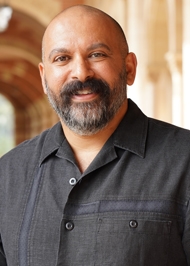
Adam Hollowell is an Adjunct Assistant Professor in the Program in Education at Duke University, where he also serves as Senior Research Associate at the Samuel DuBois Cook Center on Social Equity and Director of the Inequality Studies Minor. His teaching spans ethics, inequality studies, and history across Duke’s Kenan Institute for Ethics, Sanford School of Public Policy, and Department of History. Hollowell holds a Ph.D. from the University of Edinburgh (2009). His research focuses on inequality, higher education, public policy, and ethics, with notable work on pandemic impacts, telemedicine in education, and reproductive health access during crises. In Inequality Studies , Hollowell emphasizes understanding policies to drive social change, as highlighted in recent media coverage. His publications explore topics like student behavior shifts during the pandemic, telemedicine adoption in universities, and James Baldwin’s ethical challenges. He is a finalist for the Judith Deckers Prize (2024). Professionally, Hollowell leads projects such as Bass Connections on college contraception access and Story+ initiatives. His work bridges academia and public engagement, addressing systemic inequities through interdisciplinary approaches.
University of California, Los AngelesUnited States
H. Samy Alim is a Professor and David O. Sears Presidential Endowed Chair in the Division of Social Sciences at UCLA, holding a joint appointment in the Department of Anthropology. He serves as Associate Director of the Ralph J. Bunche Center for African American Studies and leads the UCLA Hip Hop Initiative. Alim’s research focuses on Hip Hop Culture, Black Language, and Culturally Sustaining Pedagogies, with over 25 years of scholarship in these areas. His work bridges academia and activism, emphasizing Hip Hop’s transformative role in global social justice movements. Alim earned his PhD in Anthropology from Stanford University (2003), following MA (2002) and BA (1999) degrees. His academic contributions include twelve authored/edited books, such as Freedom Moves (2023) and Articulate While Black (2012). His research spans Hip Hop’s linguistic innovations, racialized language politics, and its pedagogical potential in education. Key projects include ethnographic studies in Cape Town, South Africa, and collaborative initiatives like the UC Press Hip Hop Studies Book Series. He co-edits the Oxford Handbook of Language and Race and directs the Center for Race, Ethnicity, and Language. Alim has engaged with global Hip Hop artists (e.g., Chuck D of Public Enemy) to co-produce knowledge, emphasizing Hip Hop as a site of theorizing and activism. His teaching and research highlight intersections of language, race, and power, advocating for pedagogies that sustain cultural identities while fostering equity. Collaborations with organizations like Heal the Hood in South Africa reflect his commitment to community-driven scholarship.
Steven Jackson is a Professor of Information Science and Science and Technology Studies at Cornell University's Bowers College of Computing and Information Science, with additional graduate field appointments in Communication and Public Affairs. Since July 2023, he has served as Vice-Provost for Academic Innovation at Cornell, and previously held leadership positions as Chair of Information Science and Dean of William Keeton House. His work bridges academic research with significant institutional leadership in higher education innovation. Dr. Jackson's research focuses on critical intersections of technology, society, and the environment, with three primary strands: technology ethics, law and policy; maintenance, repair and sustainability; and technology, inequality and global development. His work draws from American pragmatism, political economy, and science and technology studies, integrating methods from sociology, anthropology, philosophy, and media studies. He is particularly interested in how computing practices meet social and material worlds, with implications for infrastructure, collaboration, sustainability, and cultural practice. His recent publications reveal a strong emphasis on repair as both theoretical concept and practical methodology, exploring 'ordinary hope' as a framework for technological engagement and examining unmaking as a necessary counterpart to design. The research spans diverse geographical contexts from the global North to South, addressing caste dynamics in computing, digital authoritarianism, and infrastructure challenges in developing contexts. Dr. Jackson has received significant recognition including an NSF CAREER award and more than twenty paper awards at leading computing and information science venues. His research has been supported by major organizations including the U.S. National Science Foundation, Social Science Research Council, Ford Foundation, Sloan Foundation, World Bank, Intel Research, Atkinson Center for Sustainability, and the Canadian Social Science and Humanities Research Council. As an advisor, Dr. Jackson has mentored numerous graduate students who have gone on to prominent positions at institutions worldwide. He currently advises Jen Liu, Amy Cheatle, Daniel Mwesigwa, Johan Michalove, and Ritik Batra, while his former students include Palashi Vaghela (Assistant Professor at Simon Fraser University), Samir Passi (Responsible AI Researcher at Microsoft), Maggie Jack (Assistant Professor at NYU), and Ranjit Singh (Senior Researcher at Data and Society). Dr. Jackson convenes the Computing On Earth Lab, an experimental collaboration bringing together social scientists, humanists, artists, and engineers to rethink the material and planetary foundations of computing. The lab reflects his commitment to interdisciplinary approaches that address computing's environmental impacts and sustainability challenges.
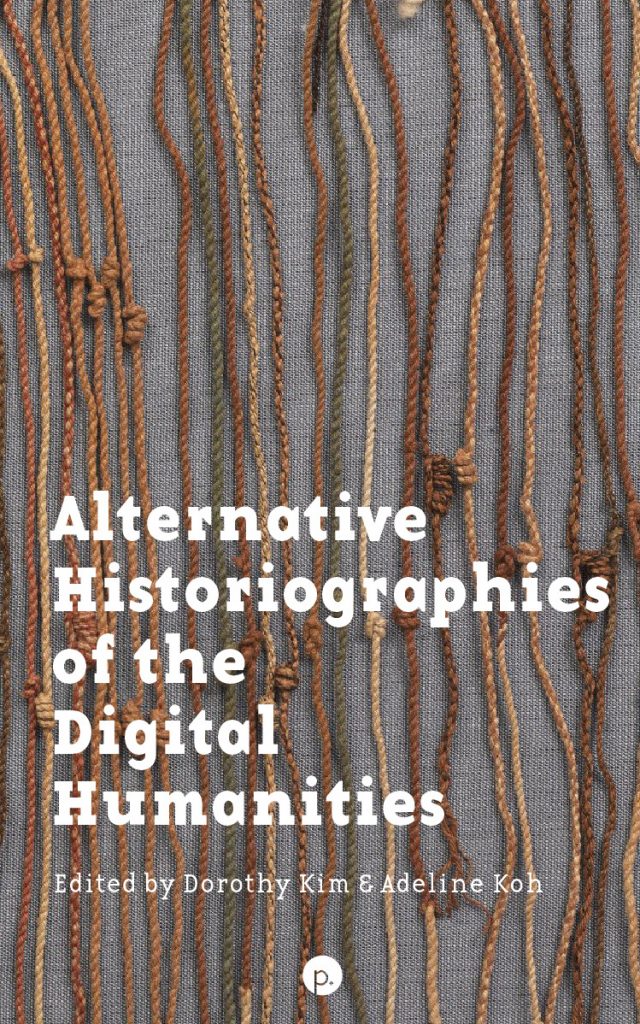
Dorothy Kim serves as Assistant Professor of English at Brandeis University with cross-appointments in the Department of Women's, Gender and Sexuality Studies and the Women's Studies Research Center. Her innovative scholarship bridges medieval literary studies, digital humanities, and critical race theory, examining how medieval history is weaponized by contemporary white supremacist movements and advocating for antiracist frameworks in academia. She earned her Ph.D. and M.A. from the University of California, Los Angeles and her B.A. from the University of California, Berkeley. Her educational trajectory reflects deep engagement with interdisciplinary approaches to literature and cultural studies. Kim's research centers on exposing the racialized foundations of medieval studies, particularly through projects analyzing digital white supremacy and medievalism's role in alt-right ideology. She pioneers methodologies connecting medieval women's literary cultures with contemporary trans feminism while interrogating Jewish/Christian difference in manuscript studies. Her work consistently challenges the field's historical whiteness and develops decolonial digital humanities practices. Her publication trends reveal a decisive shift toward critical race interventions in premodern studies, with increasing focus on database methodologies, sonic histories, and the material politics of medieval manuscript transmission. Recent works demonstrate how digital tools can either reinforce or dismantle racial hierarchies in academic knowledge production. Her distinguished honors include: 2023 Medieval Academy of America Article Prize in Critical Race Studies American Studies Association Digital Humanities Book Prize (2021) Society for Medieval Feminist Scholarship's Best Feminist Article Award (2021) AAUW Postdoctoral Fellowship (2018-2019) Folger Shakespeare Library Long-Term Fellowship (2025-2026) SSHRC, Ford Foundation, Fulbright, and Mellon fellowships Kim directs major collaborative projects including the NEH-funded An Archive of Early Middle English (161-manuscript database) and co-leads the Global Middle Ages Project. As co-director of RaceB4Race and the Reckonings Institute, she creates platforms for community archiving and social justice praxis. Her mentorship focuses on training students in critical digital methodologies through Brandeis' DH Lab while developing antifascist frameworks for humanities education. She currently leads the Brandeis University DH Lab housing her NEH project, co-edits Literature Compass's pre-1800 section, and develops two major book projects: Race, the Crusades, and the Katherine Group (based on her AAUW fellowship) and Music, Multimodal Manuscripts, and Remediating the Medieval Lyric for ArcPress.
Sebastian Thies is Professor and Chair for Ibero-American Literary and Cultural Studies at the University of Tübingen, where he has been employed since October 2012. He serves as Vice Director of the Interdisciplinary Centre for Global South Studies (ICGSS) and coordinates the BMBF/DAAD thematic network 'Futures under construction in the Global South'. His academic journey began with a PhD in Hispanic Studies from the University of Osnabrück in 2000, followed by positions at the University of Bielefeld where he progressed from Junior Professor for Hispanic Literary and Media Studies to Full Professor for Inter-American Studies. Thies' research focuses on Global South Studies, with particular emphasis on Latin American literature, film, and media. His work explores subjectivity formations, entangled temporalities, and political communication across borders. He has directed significant research initiatives including the doctoral studies program 'Entangled Temporalities in the Global South' and has co-edited major reference works such as The Routledge Handbook for Global South Studies on Subjectivities (2024). His extensive publication record demonstrates a consistent engagement with transnational cultural phenomena, particularly examining how Latin American cultural production intersects with global political and social dynamics. Thies frequently collaborates with international scholars, reflecting his commitment to transdisciplinary and transregional approaches to cultural analysis. Project Leader: Research Training Network 'Entangled Temporalities in the Global South' Vice Project Leader: Thematic network 'Literary Cultures of the Global South' Associated Investigator: BMBF-Area Studies Project 'The Americas as a Space of Entanglement' Project Leader: Research Group 'E Pluribus Unum? Ethnic Identies in Processes of Transnational Integration' Thies actively supervises doctoral students through the Interdisciplinary Centre for Global South Studies and has established collaborative networks across Latin America, particularly with institutions in Mexico and Colombia. His current research agenda focuses on 'Futures under construction in the Global South' and continues to explore the intersections of cultural production, political communication, and subjectivity formation in transnational contexts.
Charles Athanasopoulos is an Assistant Professor of African American and African Studies & English at The Ohio State University. His research focuses on intersections of Black rhetorics, media, and culture, with expertise in The Black Radical Tradition, Rhetorical Theory, and Cultural Critique. He earned his Ph.D. in Rhetoric & Communication from the University of Pittsburgh. His work analyzes racial progress, public symbols, and post/Ferguson America through lenses of iconoclasm and critical race theory. Education: Ph.D., Rhetoric & Communication, University of Pittsburgh. Research interests span Black American and Diasporic Cinema, Afro-Caribbean and Greek-Roma identity critiques. He has published in venues like Lateral: The Journal of the Cultural Studies Association and Western Journal of Communication. His 2024 book Black Iconoclasm explores dismantling racial symbols in public discourse. Recent articles address Fanonian thought, anti-racist campus rhetoric, and transnational Blackness studies. His publications critically engage with visual activism, film analysis, and decolonial theories. Current projects include studies on sonic rhetorics in Black women’s music and global race discourses in Mediterranean contexts.
Donald R. Davis, Jr. is Professor and Chair of the Department of Asian Studies at the University of Texas at Austin's College of Liberal Arts. With a PhD from the same institution, he has established himself as a leading scholar in Hindu law and Dharmaśāstra studies. His work bridges religious studies, legal history, and South Asian studies, making significant contributions to our understanding of law and religion in medieval India. Davis earned his PhD from the University of Texas at Austin, where he has built his academic career. His scholarly journey has been deeply rooted in the study of Sanskrit legal traditions and their intersection with religious practice. Professor Davis's primary research concerns the interaction of law and religion in medieval India. He examines both historical evidence for law and legal practice through inscriptions and regional language documents, as well as the Dharmaśāstra tradition as a system of religious law and jurisprudence. His work situates Sanskrit normative texts within historical contexts while exploring their conceptual frameworks. He maintains the Resource Library for Dharmaśāstra Studies and has published extensively on Hindu law, including books such as The Spirit of Hindu Law (2010) and The Dharma of Business (2017). Davis's recent publications demonstrate a continued focus on the intersection of law, religion, and ethics in Hindu tradition. His work explores caste, conservatism, marital ethics, and the historical development of legal thought in India. He frequently draws comparative connections between Hindu legal traditions and other religious legal systems, contributing to broader conversations in legal anthropology and comparative religious law. Professor Davis actively supervises graduate students interested in Dharmaśāstra traditions and their relevance to law, religion, history, politics, and economics in India. He encourages students with broader interests in comparative religious law (Jewish law, Islamic law, Roman law, etc.) and works with those studying various aspects of Hinduism and classical religions in India, particularly in normative and "mainstream" areas such as Vedānta, Pūrva-Mīmāṃsā, Epics, and Purāṇas.
Nicholas Wiltsher is an Associate Professor at the Department of Philosophy; Aesthetics at Uppsala University since 2019. His research focuses on aesthetics, philosophy of mind, and race/gender studies, exploring topics like imagination's role in art, gender norms in aesthetics, and electronic dance music's philosophical dimensions. He holds a PhD from the University of Miami and has held academic roles at institutions including Antwerp, Auburn, Porto Alegre, and Leeds. Education: PhD in Philosophy from the University of Miami. Previous affiliations include universities in Antwerp, Auburn, Porto Alegre, and Leeds. Research interests include: the interplay between art and imagination, aesthetic norms and gender, expression theory, philosophy of race and gender, and electronic dance music aesthetics. He critiques traditional disciplinary boundaries in aesthetics and advocates for interdisciplinary approaches. His recent publications (2023–2025) emphasize imagination's epistemic role, the aesthetic constitution of gender identities, and critiques of additive imagination theories. Earlier work (2016–2019) addressed electronic dance music's cultural ontology and Collingwood's expression theory. Awards: No scientific awards explicitly listed. Grants and advising: No grants or student advisees explicitly mentioned in sources. Labs/Teams: No specific research groups or labs mentioned, though his work engages interdisciplinary collaborations in aesthetics and cultural philosophy.
Otto Maduro is a Venezuelan-born Professor of World Christianity & Latin American Christianity at Drew University (Madison, New Jersey) since 1992. He chairs the Division of Church & Society in the Theological School and co-leads the Hispanic Institute of Theology and Hispanic D.Min. Program. Married to Dr. Nancy Noguera, they share a passion for social justice, music, and intercultural dialogue. His research focuses on liberation theology, social justice, and the intersection of religion with marginalized communities. Education: PhD (1977), MA (1975), and MA (1973) in Philosophy/Sociology of Religion from the Université Catholique de Louvain (Belgium), all summa cum laude. Licentiate in Philosophy from Universidad Central de Venezuela (1968). Research Interests: Liberation theology, social justice, ecological ethics, epistemological critiques, religious resistance, and LGBTQ+ rights. His work emphasizes global South perspectives, particularly Latin America’s socio-religious dynamics. Grants & Awards: Henry Luce III Fellowship (2006), Ford Foundation grants (2000–2002), Will Herberg Award (1997), and international recognition for his book Marxismo y Religión (1977). Professional Contributions: Associate editor of Concilium , Journal of Hispanic/Latino Theology , and others. Served on editorial boards of leading journals and as council member of PARAL, SSSR, and ACHTUS. Current Projects: Researching Pentecostal congregations among Latina/o immigrants in Newark and directing the Hispanic Summer Program in Religion & Theology.
Jonathan D. Gomez is an Assistant Professor and Undergraduate Studies Advisor in the Department of Chicana and Chicano Studies at San José State University (SJSU). He also serves as Faculty Director and Co-Facilitator of the SJSU Culture Counts Reading Series. Dr. Gomez holds a 2021-2022 Ford Foundation Postdoctoral Fellowship from UC Santa Cruz’s Department of Latin American and Latino Studies. Education: PhD in Sociology with an Emphasis in Black Studies (UC Santa Barbara, 2018); BA in Sociology with Honors (UC Santa Cruz, 2008); Transfer Student in Sociology (East Los Angeles College, 2005). His research centers Chicanx and Latinx spatial practices in postindustrial Los Angeles, exploring how marginalized communities reclaim urban spaces through cultural resistance. Key themes include critical pedagogy, decolonial theory, and the intersection of race, space, and cultural expression. His work bridges sociology, cultural studies, and urban theory, with notable contributions to understanding punk subcultures and Black radical traditions. His publications reflect a trajectory from early analyses of East LA punk scenes (2012) to contemporary explorations of transformative education and spatial justice. Recent works emphasize collective pedagogical frameworks rooted in decolonial praxis. Awards: Ford Foundation Postdoctoral Fellowship (2021-22) As an educator, Gomez designs courses on race, creative expression, and cultural studies. He actively engages in community-based scholarship through the Culture Counts series, fostering dialogues on race and culture. His advising and mentorship are central to his role, though specific grant details are not disclosed in the provided materials. Current initiatives include directing the Culture Counts Readings Series, which amplifies marginalized voices in cultural discourse.
David Bawden is a Professor in the Department of Library and Information Science (CityLIS) at City, University of London. With a publication record spanning over two decades, he has established himself as a leading scholar in information science, particularly known for his work on the philosophical foundations of information, knowledge organization, and information behavior. His research frequently intersects with Luciano Floridi's Philosophy of Information, which he has applied to library and information science theory and practice. Bawden's research interests focus on the theoretical underpinnings of information science, including information behavior, information literacy, knowledge organization, and the philosophical dimensions of information. His work often explores the conceptual frameworks that shape how we understand information in both physical and digital environments. He has made significant contributions to understanding information privacy through a philosophical lens and has examined temporal aspects of information in contemporary society. His recent publications demonstrate a continued focus on theoretical developments in information science, with particular attention to the implications of Floridi's work for library and information practice. Bawden's scholarship shows a consistent trajectory from examining historical aspects of information to contemporary challenges in the digital age, maintaining a strong theoretical orientation throughout. As a frequent collaborator with Lyn Robinson (also at City, University of London), Bawden has co-authored numerous papers exploring transitions between concepts of information across different domains, information overload, and the philosophical foundations of information science. His work has appeared in leading journals including the Journal of Documentation, Journal of the Association for Information Science and Technology, and Information Research. Bawden has been actively involved in the CityLIS program, contributing to innovative approaches to information science education including the development of curricula addressing data librarianship and the 'onlife' nature of contemporary information experience. His scholarship reflects a deep commitment to advancing the theoretical foundations of the field while maintaining relevance to practical information challenges.
Aisha Durham is a Professor of Communication at the University of South Florida's College of Arts and Sciences, with affiliations in Humanities & Cultural Studies and Women's & Gender Studies. She holds a Ph.D. from the University of Illinois at Urbana-Champaign (2007) and has held academic positions at Texas A&M University and the University of Georgia. Her research focuses on Black feminist thought, autoethnography, and media/cultural studies. She is the award-winning author of Home with Hip Hop Feminism: Performances in Communication and Culture and a co-editor of Home Girls Make Some Noise! Key research areas include Hip Hop Feminism, intersectionality, and qualitative methodologies. Durham has received prestigious awards such as the NCA Marsha Houston Award and the Ellis-Bochner Award for autoethnography. She contributes to public scholarship through podcasts, media analyses, and international talks for outlets like CNN and NPR. Her work emphasizes democratizing knowledge and addressing systemic inequities in academia and culture. Professional activities include editorial board roles, advisory positions (e.g., Smithsonian Anthology of Hip-Hop and Rap), and keynote speaking at institutions worldwide. Her recent publications explore pedagogical resistance, hiphop literacies, and Black feminist mentorship frameworks.
Joshua B. Guild is an Associate Professor in the Department of African American Studies at Princeton University. He is also an Associated Faculty member in the Program in Urban Studies and has been involved with the Center for Digital Humanities. His scholarly work bridges historical research with public engagement and digital innovation. His education includes a PhD in History and African American Studies from Yale University and an undergraduate degree from Wesleyan University, where he was a Mellon Mays Undergraduate Fellow. Professor Guild's research centers on 20th- and 21st-century African American social and cultural history, urban history, and the modern African diaspora. His interests include migration, black internationalism, black popular music, and the black radical tradition. He is deeply engaged in the digital humanities and public scholarship, organizing seminars and contributing to podcasts and public exhibitions. The recent publications and projects reflect a strong focus on urban Black communities, transnational migration, and cultural politics. Themes include the Great Migration, postwar New York and London, New Orleans after Katrina, and the Black 1980s. His work combines historical analysis with cultural critique and social justice advocacy. Scientific Awards and Fellowships: Mellon Mays Undergraduate Fellowship Andrew W. Mellon Foundation Fellowship Ford Foundation Fellowship Woodrow Wilson National Fellowship Foundation Award Charles Warren Center Fellowship (Harvard University) W.E.B. Du Bois Institute Fellow (Harvard University) Professor Guild has advised graduate students through seminars and collaborative projects, though no individual students are named. He has led initiatives supported by institutional grants, particularly in digital humanities and public engagement. His leadership in the 'Black Studies in the Digital Age' seminar and editorial work on the 'Black 1980s' special issue demonstrates his commitment to advancing the field through interdisciplinary collaboration. He is affiliated with the Program in Urban Studies and the Center for Digital Humanities at Princeton, where he contributes to shaping curricula and research directions in African American Studies and digital scholarship.
Nancy Mock is an Associate Professor in the Department of Global Health Systems and Development at Tulane University's School of Public Health & Tropical Medicine. She holds affiliated faculty status at the Stone Center for Latin American Studies. Her academic journey includes a B.S. in Biology from Yale University (1976), an M.P.H. in International Health from Tulane (1979), and a Dr.P.H. in International Health from Tulane (1985). Dr. Mock's research focuses on global health systems, evaluation methodologies, complex emergencies, and health systems in Latin America and Africa. Notable areas include Haiti's public health challenges and Rwanda's educational health programs. She has directed key institutions like the Center for International Resource Development and contributed to the Famine Early Warning System (FEWS). Her work is supported by major grants, including the Robert Wood Johnson Foundation Grant (2007), USAID's Regional Public Health Leadership Initiative (2006-2007), and Rwanda-focused projects (2000-2004). She has consulted for organizations such as the World Food Program, UNICEF, and the Pan American Health Organization. Fluent in French and Spanish, her overseas experience spans Honduras and extensive fieldwork in Africa and Asia.
Dr James Lamb is a Lecturer in Digital Education at the Moray House School of Education and Sport, University of Edinburgh, where he is affiliated with the Institute for Education, Community and Society (IECS) and Edinburgh Futures Institute. He teaches on the MSc in Digital Education and MSc in Education Futures programs, and serves as course organiser for several key courses including 'Learning Spaces and Digital Technologies', 'The Future of Learning Organisations', and 'Education and Digital Cultures'. As an active researcher, he contributes to the Centre for Research in Digital Education and leads the Hybrid Pioneers research group. Dr Lamb's educational background includes a PhD from the University of Edinburgh (funded by ESRC), an MSc with distinction from the University of Edinburgh, and a BA degree with distinction from Edinburgh Napier University. His doctoral research focused on 'Space, Sociomateriality, Sound: the Learning Spaces of Higher Education,' reflecting his longstanding interest in the relationship between physical environments and educational experiences. Dr Lamb's research primarily investigates the relationship between learning spaces and digital technologies, with particular attention to how sound features within educational contexts and how multimodal approaches can enhance teaching and assessment. His work bridges theoretical frameworks from postdigital studies, sociomaterial theory, and spatial analysis to examine how digital technologies transform physical and conceptual learning environments. He has developed innovative methodologies for studying learning spaces, including the use of 'digital multimodal postcards' that capture both visual and auditory dimensions of educational experiences. His research is characterized by a strong commitment to practical applications that can inform educational design and improve student learning experiences in both physical and digital settings. Dr Lamb's extensive publication record demonstrates a clear evolution toward increasingly sophisticated explorations of postdigital learning spaces. His recent work integrates concepts from architecture, music, and mobility studies to create a more holistic understanding of how learners inhabit and transform educational environments. A notable trend is his growing focus on sustainability, equity, and well-being within learning space design, reflecting broader shifts in educational priorities toward more humane and socially responsible approaches to technology integration. Dr Lamb actively supervises PhD students Edward Martin and Nick Hood, and is open to supervising projects related to learning spaces, sound in education, and multimodal teaching and assessment in higher education. His supervision approach emphasizes connecting theoretical frameworks with practical educational applications, encouraging students to develop innovative methodologies for investigating complex educational phenomena. Dr Lamb leads the Elektronisches Lernen Muzik project, which explores the relationship between music and learning, and is a co-author of the influential Manifesto for Teaching Online. He is also a key member of the Hybrid Pioneers research group, which investigates the challenges and opportunities of hybrid teaching and learning environments. These initiatives reflect his commitment to exploring the intersections between traditional educational practices and emerging digital possibilities.