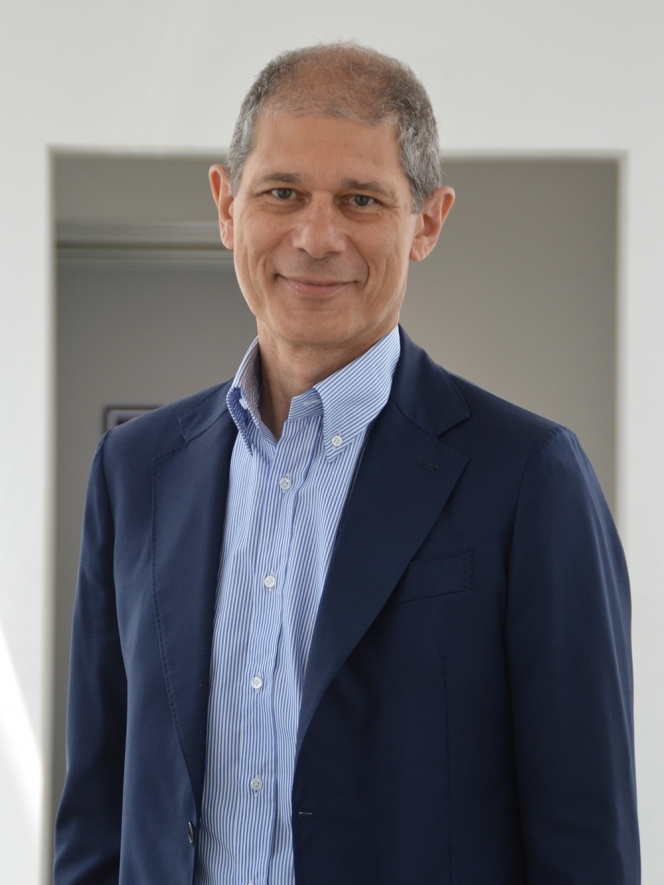
Prof. Sergio Ginebri is an Associate Professor at the Department of Jurisprudence, University of Rome Tre. He holds a PhD in Economics from Sapienza University of Rome and has extensive experience in fiscal policy, pension systems, and public finance research. His work focuses on topics like pension sustainability, social inequality, and the political economy of public debt. Education: PhD in Economics, Sapienza University of Rome (1988–1992) MA in Economics, University of Warwick (1987–1988) Laurea in Statistics and Demography, Sapienza University of Rome (1977–1984) Research Interests: Prof. Ginebri specializes in public policy, fiscal sustainability, and the social impacts of pension reforms. His research explores how demographic trends, wealth distribution, and political dynamics shape economic policies. Recent work includes analyses of longevity risks, pension equity, and fiscal policy integration in the EU. Key Projects: Coordinated studies on pension system sustainability (2002–2018) Developed models for forecasting public pension expenditure Contributed to EU tax policy observatories Awards: Recipient of the national PhD award (1994) and recognition for academic excellence in tax policy research (2001). Teaching: Teaches courses in political economy, public finance, and macroeconomics at undergraduate and graduate levels.
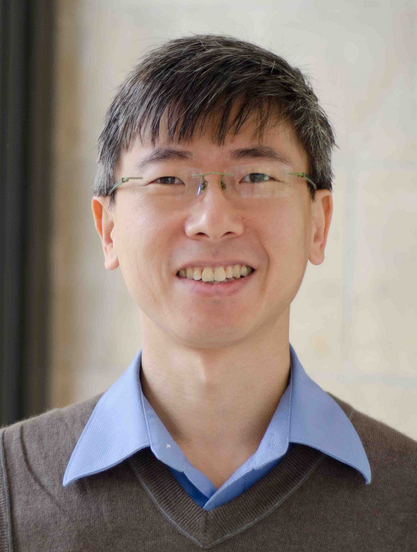
Yee Whye Teh is a Professor at the Department of Statistics, University of Oxford, and a research scientist at DeepMind. His work focuses on statistical machine learning, including probabilistic learning, Bayesian nonparametrics, deep learning, and Monte Carlo methods. He co-directs the ELLIS programme on Robust Machine Learning and has held roles such as Programme Co-chair for ICML 2017. Teh has delivered keynotes at UAI 2019, an IMS Medallion Lecture at JSM 2019, and the Breiman Lecture in 2017. His research emphasizes scalable inference algorithms, hierarchical models, and applications in genetics and natural language processing. Teh's educational background includes a PhD from the University of Toronto (2003) and a Master's from the same institution (2000). He has contributed to widely used software tools like the Sequence Memoizer and has been recognized for his work through prestigious lectureships. Research interests span Bayesian nonparametric models, MCMC methods, and their applications in genetics and data compression. His lab collaborates on projects like fragmentation-coagulation processes for genetic variation modeling and Mondrian forests for online learning. Teh advises students through Oxford's graduate programs, though he notes high demand for mentorship. His work often bridges theory and practice, addressing challenges in big data learning and small data problems.
Massachusetts Institute of TechnologyUnited States
Joshua D. Angrist is the Ford Professor of Economics at the Massachusetts Institute of Technology, where he has been a faculty member since 1996. He is also a co-founder and director of MIT's Blueprint Labs and a Research Associate at the National Bureau of Economic Research. Angrist shares the 2021 Nobel Prize in Economic Sciences with David Card and Guido Imbens for their methodological contributions to the analysis of causal relationships. Angrist received his B.A. from Oberlin College in 1982 and completed his Ph.D. in Economics at Princeton University in 1989. Prior to joining MIT, he taught at Harvard University and the Hebrew University of Jerusalem. His academic journey began somewhat unconventionally, as he left high school early after 11th grade, worked for over a year, and only later discovered his passion for economics through an inspiring teacher at Oberlin. Angrist's research focuses on developing and applying innovative econometric methods to answer important economic questions using natural experiments. His work spans labor economics, education economics, and causal inference methodology. He is particularly known for his contributions to instrumental variables methods and the Local Average Treatment Effect (LATE) framework developed with Guido Imbens. His research explores the economics of education and school reform, the impact of social programs on labor markets, and the effects of immigration and regulation. His recent publications reveal a continued focus on causal inference methods applied to education policy questions, labor market issues, and health economics. The trend shows increasing sophistication in research design, with particular attention to addressing selection bias and developing methods for external validity. His work spans theoretical econometric contributions alongside empirical applications in education, labor markets, and health. Sveriges Riksbank Prize in Economic Sciences in Memory of Alfred Nobel (2021) Fama Prize for Graduate Education (2018) Fellow of the American Academy of Arts and Sciences Fellow of the Econometric Society Angrist is deeply committed to teaching and mentoring. He has developed influential econometrics textbooks including 'Mostly Harmless Econometrics' and 'Mastering Metrics' with Jörn-Steffen Pischke. At MIT, he teaches courses including Labor Economics I (14.661), Econometric Data Science (14.32), and Labor Economics and Public Policy (14.64). He emphasizes selecting UROP students who have mastered foundational economics through courses like 14.64 and 14.32. Beyond MIT, Angrist co-founded Avela, a software startup using cutting-edge research to help schools improve enrollment and operations. Angrist co-founded and directs MIT's Blueprint Labs, which brings together researchers from economics, computer science, and education to develop innovative solutions for educational challenges. Through Blueprint Labs and Avela, his work bridges academic research with practical applications in education policy and technology.
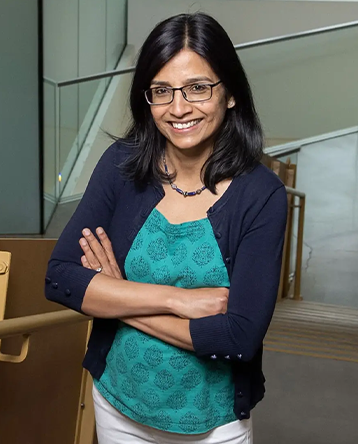
Aarti Singh is a Professor in the Machine Learning Department at Carnegie Mellon University and Director of the NSF AI Institute for Societal Decision Making. She leads research at the intersection of machine learning, statistics, and decision making, with applications to scientific and societal domains. Her work focuses on designing principled interactive algorithms for learning and decision making under uncertainty. Education: Ph.D. in Electrical Engineering, University of Wisconsin-Madison (2008) M.S. in Electrical Engineering, University of Wisconsin-Madison (2003) B.E. in Electronics and Communication Engineering, University of Delhi (2001) Research Interests: Professor Singh's research centers on developing interactive machine learning algorithms that go beyond finding input-output associations to make higher-level decisions about the most informative data and actions. Her work spans autonomous decision making, including active sampling, stochastic optimization, bandits, and reinforcement learning that are statistically optimal, computationally tractable, and robust. She also investigates human factors in decision making, designing algorithms that model and leverage human feedback while accounting for bias, memory effects, and calibration. Her research has applications in material science, cosmology, and peer review systems. Research Trends: Professor Singh's recent publications demonstrate a strong focus on reinforcement learning, particularly in developing more efficient and robust algorithms for decision making under uncertainty. Her work bridges theoretical foundations with practical applications, spanning from fundamental algorithm development to real-world implementation in scientific domains. There's a clear trajectory toward integrating human factors into decision-making algorithms, with significant contributions to peer review systems and preference learning. Scientific Awards: NSF Career Award United States Air Force Young Investigator Award A. Nico Habermann Faculty Chair Award Harold A. Peterson Best Dissertation Award Multiple paper awards Advising and Grants: Professor Singh has advised numerous PhD and master's students, many of whom have gone on to faculty positions or research roles at leading institutions. Her research is supported by prestigious grants from ONR, Simons Foundation, AFRL, ARL, and NSF. She serves as General Chair (2025) and Program Chair (2020) for the International Conference on Machine Learning (ICML) and has held leadership roles in multiple professional organizations. Research Team: Professor Singh leads a vibrant research group within the Machine Learning Department at CMU, with current PhD students working on topics including reinforcement learning, human-AI collaboration, and decision making under uncertainty. She also directs the NSF AI Institute for Societal Decision Making, which brings together researchers from multiple disciplines to develop AI systems that support human decision making in societal contexts.
David B. Shmoys is the Laibe/Acheson Professor of Business Management & Leadership Studies at Cornell University's School of Operations Research and Information Engineering (ORIE) and holds a joint appointment in the Department of Computer Science. He is a leading researcher in approximation algorithms, stochastic optimization, and computational sustainability. His work emphasizes data-driven decision-making in enterprise and society, with applications ranging from healthcare logistics to environmental conservation. Shmoys has advised 27 Ph.D. students and served as an editorial board member for top journals like Operations Research and Mathematics of Operations Research. Education: Ph.D. in Computer Science, University of California, Berkeley (1984). Postdoctoral positions at MSRI and Harvard University, followed by faculty roles at MIT before joining Cornell. Research Interests: Design and analysis of approximation algorithms for NP-hard problems, stochastic optimization, scheduling, facility location, and inventory management. Applications include computational sustainability, epidemiological modeling, and political districting optimization. Articles Trends: Focus on optimization under uncertainty, computational sustainability, and real-world applications like air ambulance routing, bike-sharing systems, and gerrymandering analysis. Notable works include the 2018 Wagner Prize-winning paper on bike-sharing analytics and the 2013 Lanchester Prize-winning textbook on approximation algorithms. Awards: Lanchester Prize (2013), Daniel H. Wagner Prize (2018), Fellowships from ACM, INFORMS, and SIAM, NSF Presidential Young Investigator (1987). Advising & Grants: Over 27 advised Ph.D. students, with former students at MIT, Waterloo, Brown, and D-Wave. Active in grants related to data science and sustainability. Labs/Teams: Involved in the Institute of Computational Sustainability at Cornell, focusing on applying algorithms to environmental challenges. Collaborates with organizations like Motivate (bike-sharing) and Ornge (air ambulance services).
Claire Célérier is an Associate Professor of Finance at the Rotman School of Management, University of Toronto, where she holds the Canada Research Chair in Household Finance. Her academic career spans prestigious institutions including the University of Toronto (where she advanced from Assistant to Associate Professor between 2016-2022) and the University of Zurich (2014-2016). She maintains an affiliation with the People's History Lab and actively contributes to academic discourse through conference organization including 'Race, Equity and Public Policy' (2023) and 'Banks, States and the People' (2024). Dr. Célérier's research explores how finance can benefit households through multiple lenses including behavioral economics, asset pricing, and financial history. Her work investigates innovation in finance, diversity and inclusion impacts, and historical perspectives on financial systems. She has developed significant expertise in household finance, banking, and the intersection of finance with social issues, particularly racial disparities in financial markets as demonstrated in her award-winning research on the Freedman's Savings Bank. Her scholarly output shows a clear trajectory from foundational work on security design and investor behavior toward increasingly socially relevant research on financial inclusion, racial equity, and household financial decision-making. Recent publications demonstrate her growing focus on historical contexts of financial systems and their contemporary implications, particularly regarding marginalized communities. Canada Research Chair in Household Finance (2024) Bank of Canada Governor's Award (2022) University of Toronto Top 5% Merit Award (2021) Petro Canada Young Innovators Award Program (2021) Multiple Rotman School of Management Teaching Awards (2019-2021) Ieke van den Burg Prize for Research on Systemic Risk (2015) Dr. Célérier has successfully secured substantial research funding including Insight Development Grants (CAD 54,500), Connaught Research Grant (CAD 10,000), and the Marianne and Marcus Wallenberg Foundation Grant (EUR 400,000). She mentors several PhD students including Andrada Bilan (2020), Alexey Vasilenko (2023), and Purnoor Tak (Expected 2026), and has supervised numerous master's theses at both University of Toronto and University of Zurich. Her service contributions include Rotman School of Management MBA program committee, executive committee, seminar coordination, and faculty recruiting committee.
Anna S. Mattila is the Marriott Professor of Lodging Management and serves as Professor-in-Charge of the Graduate Program at the School of Hospitality Management, Pennsylvania State University. Her research spans social media, service recovery, servicescape, prosocial behaviors, cross-cultural studies, and wellness in hospitality contexts. Education : B.S. and Ph.D. from Cornell University, M.B.A. from University of Hartford Mattila's work examines how emotions, cultural norms, and technological innovations like AI influence consumer decisions in hospitality. Her studies cover topics from robotic service interactions to sustainable food marketing and moral psychology in tourism. She has published extensively in journals such as International Journal of Hospitality Management and Journal of Consumer Marketing . Her recent articles focus on AI integration in hospitality, consumer trust in virtual influencers, upcycled food adoption, and the psychological effects of servicescape design. Key themes include ethical consumption, digital transformation, and cross-cultural consumer behavior. Advising : Supervised Anqi Luo's dissertation on service recovery in 2022 Mattila's office is located in 224 Mateer Building, University Park, PA. She contributes to advancing hospitality research through methodological consulting and the Penn State Biomarker Core Laboratory.
Paul Gölz is an Assistant Professor at Cornell University's School of Operations Research and Information Engineering (ORIE), with affiliations in Computer Science. His research focuses on computational social choice, algorithmic fairness, and AI ethics, addressing topics like democratic innovation, fair resource allocation, and AI systems for diverse users. Education: Undergraduate studies at Saarland University (Germany), PhD in Computer Science from Carnegie Mellon University, followed by postdoctoral research at Harvard University, UC Berkeley, and the Simons Laufer Mathematical Sciences Institute. His work has been recognized with awards including the JPMorgan Chase AI Research Fellowship (2021) and honorable mentions for prestigious dissertation awards (Dantzig and ACM SIGecom). Research Highlights : Developed Panelot, a tool for selecting citizens' assemblies using state-of-the-art algorithms. His work on fair refugee resettlement and apportionment methods has been featured in Operations Research and Nature . Recent projects include AI alignment distortion analysis and generative social choice mechanisms. Teaching : Teaches Optimized Democracy (Spring 2025) and Mathematical Programming (Fall 2024). Supervises PhD students in ORIE, focusing on interdisciplinary applications of optimization and social choice. Awards & Grants : Received a $40K Structural Democracy Fellowship (Crankstart) and an OpenAI grant for Democratic Inputs to AI. Active in policy briefs (e.g., mini-public selection strategies). Labs/Tools : Co-developed Panelot.org , a nonprofit platform for fair citizen assembly selection. Active in open-source tool development for social choice applications.
Swantje Falcke is an Assistant Professor in Economic and Social History at Utrecht University's Department of History and Art History. As part of the College of Humanities, her research focuses on migrant integration, naturalization, and the interplay between environmental change and migration patterns. Areas of Expertise: Migration and Societal Change, Pathways to Sustainability, In-Equality Studies Academic Background: PhD in Economics (2017) at Utrecht University, Post-Doc in Political Science at Maastricht University Her interdisciplinary work examines: Education-labor market mismatches among Dutch migrants Impact of German citizenship law reforms on naturalization Long-term effectiveness of refugee integration policies Environmental change effects on migration dynamics Scientific recognition includes: Duncan Black Award (2014) for political economy research NWO XS grant (2024) for environmental migration studies Her publications demonstrate methodological rigor, combining longitudinal analysis, policy evaluation, and empirical economic testing.
California Institute of Technology (Caltech)United States
Antonio Rangel is the Bing Professor of Neuroscience, Behavioral Biology, and Economics at the California Institute of Technology (Caltech), where he also serves as Head Faculty in Residence. He is a faculty member in the Division of Humanities and Social Sciences (HSS) with research focusing on the computational and neurobiological basis of value-based decision-making. Dr. Rangel received his educational training at prestigious institutions: B.Sc. from Caltech in 1993 M.S. from Harvard University in 1996 Ph.D. in 1998 Professor Rangel's research lies at the intersection of neuroscience, economics, and psychology, with a focus on understanding how the brain makes decisions. His work investigates the neural mechanisms underlying value computation, choice processes, self-control, and social decision-making. Using a multidisciplinary approach that combines functional magnetic resonance imaging (fMRI), eye-tracking, computational modeling, and behavioral experiments, his lab has made significant contributions to the field of neuroeconomics. His research has revealed how value signals are represented in the brain, how attention influences choice, and the neural basis of self-control failures. Professor Rangel has pioneered methods for studying decision processes with high temporal resolution using eye-tracking data, demonstrating how fixation patterns relate to value computations and choice outcomes. His work spans from theoretical frameworks of value-based decision-making to practical applications in behavioral public economics. Professor Rangel's work has been recognized with prestigious awards: 2019 NOMIS Distinguished Scientist Award 2018 Fellow of the Association for Psychological Science As an academic leader, Professor Rangel has mentored numerous students and researchers who have gone on to make their own contributions to neuroscience and economics. His lab, the Rangel Neuroeconomics Laboratory at Caltech, serves as a hub for interdisciplinary research, bringing together students and scholars from neuroscience, economics, psychology, and computer science. The lab has received significant funding to support its research on the neural basis of decision-making, including support from the NOMIS Foundation. The Rangel Neuroeconomics Laboratory is equipped with state-of-the-art facilities including fMRI analysis capabilities, eye-tracking systems, and computational resources for modeling decision processes. The lab fosters a collaborative environment where researchers apply methods from experimental economics and cognitive neuroscience to unravel the complexities of human decision-making.
Sarah Dean is an Assistant Professor in the Computer Science Department at Cornell University, affiliated with the College of Engineering. Her research focuses on the interplay of machine learning, optimization, and dynamics in real-world systems, particularly in control theory, recommendation systems, and ethical AI. Education: PhD in EECS, University of California, Berkeley (2021) Postdoctoral Research, University of Washington (2021-2022) Research Interests: Data-driven control systems, reinforcement learning, recommendation systems, user dynamics, algorithmic fairness, and the societal impacts of AI. She emphasizes foundational understanding of how learning systems interact with human and social processes. Recent Work Trends: Her articles explore topics like bilinear system identification, user participation dynamics in recommendation platforms, and ethical considerations in AI development. Recent work includes harm mitigation strategies and mathematical modeling of AI-human feedback loops. Awards: AI2050 Early Career Fellow (2024) Best Paper at ICML 2018 (Delayed Impact of Fair Machine Learning) Best Student Paper in Imaging Systems (OSA Congress 2018) Advising & Labs: Advises over 15 graduate and undergraduate students. Leads research on interactive ML systems, with contributions to projects like the 'MSGD' repository for streaming data learning. Active in the GEESE group, promoting socially responsible computing.
Felipe Csaszar is a Professor of Strategy and Chair of the Strategy Department at the University of Michigan's Ross School of Business. His research focuses on decision structures' impact on innovation, financial performance, and social outcomes, with particular attention to cognitive frameworks, organizational processes, and AI's role in decision-making. He holds a PhD and MA from the Wharton School, University of Pennsylvania. Education: PhD in Strategy, University of Pennsylvania (2009) MA in Strategy, University of Pennsylvania (2007) Research Interests: Strategic decision-making under AI integration Cognitive and structural drivers of innovation Organizational decision processes and design Formal modeling and empirical strategy research Editorial Roles: Senior Editor, Strategy Science and Management Science Former Editor, Organization Science Co-editor, Handbook of AI and Strategy Professional Experience: Prior role: Assistant Professor at INSEAD Previous career: CEO of an internet startup and Head of Research at an asset management firm Labs/Teams: Leading the Strategy Science division at INFORMS Co-chair of the SMS Behavioral Strategy division
Flavio Vasconcellos Comim is a Full Professor at IQS School of Management in Barcelona, Spain, holding the Chair of Ethics and Christian Thought (intercenter). His research focuses on the intersections of Sustainability, Economics, and Ethics. Fields of Interest : Human Development, Capability Approach, Social Exclusion, Regional Development, AI Ethics, Poverty Stigma (Aporophobia), Sustainable Development, Social Welfare, Justice, and Happiness. Recent research includes publications on youth HDI in Spain (2025), AI bias against the poor (2024), and critiques of Sen's social choice theory (2024). He leads projects like Big data applied to the study of aporophobia and Population Medicine and Sustainable Development collaborations with China. His academic output spans journals like Regional Studies , AI and Society , and Cambridge Journal of Regions, Economy and Society , with keywords spanning Economics, Machine Learning, Human Development, and Social Justice. No formal students or awards are listed in available records.
Martin T. Wells is the Charles A. Alexander Professor of Statistical Sciences at Cornell University, with joint appointments in the Department of Statistical Science, Department of Biological Statistics and Computational Biology, Department of Social Statistics, and as Professor of Clinical Epidemiology and Health Services Research at Weill Medical School. He serves as Editor-in-Chief of the ASA-SIAM Book Series and Co-Editor of the Journal of Empirical Legal Studies. Cornell University, Ithaca, NY Weill Cornell Medical College Research Interests span applied and theoretical statistics, Bayesian methods, biostatistics, clinical epidemiology, and computational biology. His work bridges disciplines like finance, legal studies, and health services research. Article Trends highlight advancements in Bayesian modeling, quantum cognition machine learning, tensor analysis, and misclassification correction, with applications in genomics, finance, and public health. Fellow of the American Statistical Association Fellow of the Royal Statistical Society Contributions include developing statistical software (e.g., rTensor), methodological innovations in clinical trials, and empirical legal studies on civil rights and the death penalty.
Andrew Postlewaite is the Harry P. Kamen Professor of Economics and Professor of Finance at the University of Pennsylvania's School of Arts and Sciences. He holds dual roles in the Department of Economics and the Ronald O. Perelman Center for Political Science and Economics. As a distinguished academic, he is a member of the American Academy of Arts and Sciences and serves as a director at the National Bureau of Economic Research (NBER). Additionally, he is the founding editor of the American Economic Journal: Microeconomics and a research associate at Penn's Population Studies Center and Institute for Law and Economics. Postlewaite's research focuses on game theory, behavioral economics, and social norms, with contributions to mechanism design, repeated games, and intergenerational transmission of preferences. His work bridges theoretical foundations with applied economic analysis, particularly in areas like consumer behavior, decision-making, and institutional design. He has held visiting positions at institutions including Caltech, Harvard, and Stanford, reflecting his academic prominence. His scholarly contributions include pioneering studies on future-oriented decision-making, interdependent valuations in markets, and equilibrium concepts in repeated games. Recent publications explore topics such as the impact of local media accessibility in the digital age and the welfare implications of consumption fluctuations. His editorial leadership at journals like Econometrica and International Economic Review underscores his influence in shaping economic discourse. Awarded prestigious fellowships and editorial roles, Postlewaite's career exemplifies a blend of rigorous theoretical research and practical applications in economics. His current research trends emphasize behavioral insights and the methodological underpinnings of economic models, reflecting a commitment to advancing both theory and real-world relevance.