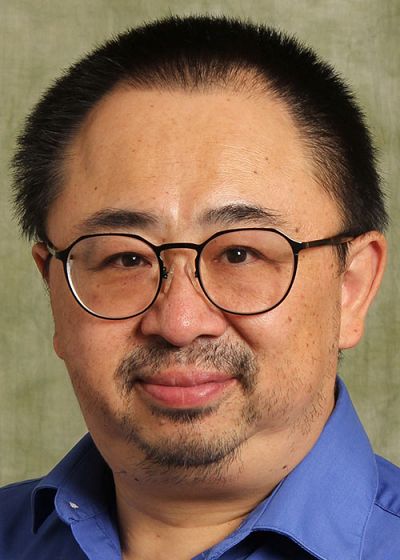
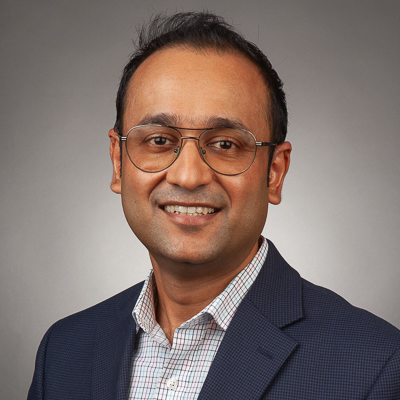
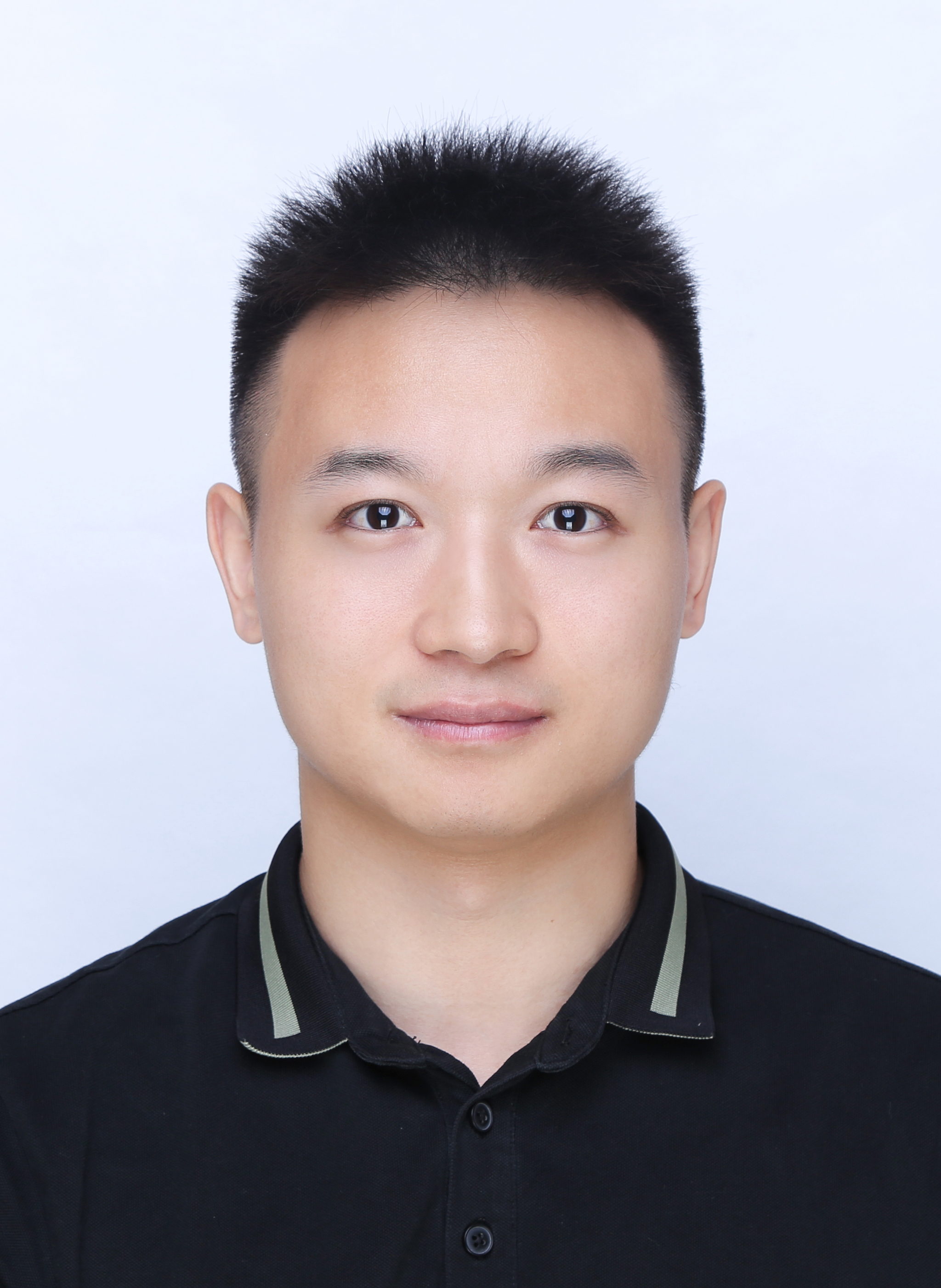
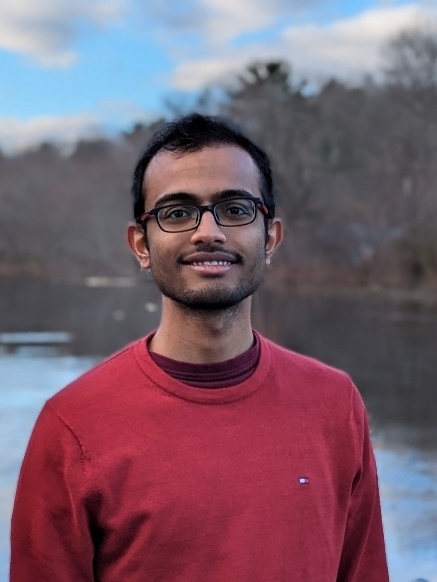
Stavrakakis Ioannis is a Professor at the Department of Informatics and Telecommunications, School of Science, University of Athens, where he has served since 2002. He previously held academic positions at Northeastern University (1994-1999) and University of Vermont (1988-1994). Ph.D., Electrical Engineering (1988), University of Virginia Diploma, Electrical Engineering (1983), Aristotle University of Thessaloniki His research focuses on network resource allocation algorithms , cooperative content dissemination , mobile ad hoc networks , and privacy-aware protocols . He leads the Advanced Networking Research (ANR) Group. Recent publications highlight trends in AI-driven network optimization , edge computing for VR , drone-assisted sensor networks , and privacy in vehicular systems . Key themes include game theory applications, energy-efficient protocols, and distributed learning frameworks. Contact: ioannis@di.uoa.gr
Professor Ling Li is a faculty member at Curtin University's School of Electrical Engineering, Computing and Mathematical Sciences (EECMS), within the Faculty of Science and Engineering. Their research focuses on interdisciplinary applications of machine learning, computer vision, and deep learning in structural engineering and materials science. Notable contributions include advancements in structural health monitoring, blast loading prediction, and 3D displacement measurement using monocular vision. Professor Li has authored numerous peer-reviewed articles and collaborates on projects involving civil infrastructure resilience, smart materials, and AI-driven solutions for engineering challenges. They hold an office in the New Technologies Building at Curtin Perth and can be reached at L.Li@curtin.edu.au.
Dr. Richard Molyet is a Senior Lecturer and Undergraduate Director in the Department of Electrical Engineering and Computer Science at the University of Toledo's College of Engineering. After retiring as Associate Professor in 2002, he returned to academia in 2005 as Visiting Professor and transitioned to Associate Lecturer in 2008. Education: Ph.D. in Engineering Science (1981) from University of Toledo His research spans Automatic Control , Robotics , Smart-Grid Systems , and Biomedical Applications . Recent publications focus on deep learning for medical diagnostics and hybrid power network optimization , while earlier work explored repetitive control algorithms and microprocessor-based motion analysis . Scientific Recognition: IEEE Third Millennium Medal (2000) IEEE-USA Professional Achievement Award (2002) University of Toledo Outstanding Teacher Award (2016) Currently advising 3 PhD students and multiple Master’s candidates, Dr. Molyet has served on numerous academic committees since the 1980s. He maintains an active role in IEEE Toledo Section's executive board for 39 years .
Per Lynggaard is a Professor of Electronics at the Technical University of Denmark (DTU) , leading the B.Eng. program in Electronics. Previously, he held an Associate Professor role at Aalborg University, combining academic excellence with a robust industrial career in technical-scientific research and development. Education: M.Sc. in Electrical Engineering and Information Technology (EE and IT) Ph.D. in Electronics from Aalborg University Research Interests: Focus on Integrated Circuit Design, Wireless Sensor Networks (WSN), Machine Learning, IoT, and Smart City Technologies . His work emphasizes energy-efficient systems, cybersecurity in IoT, AI-driven interference mitigation, and sustainable energy harvesting solutions. He has contributed to UN Sustainable Development Goals through projects addressing smart infrastructure and environmental monitoring. Projects & Collaborations: Leads and participates in EU-funded initiatives such as InnoTech (2023–2025) for green transition solutions and TransportTech (2023–2026) for Industry 4.0 logistics. Active in cybersecurity research via projects like Jamming Against Critical Wireless Communication , aiming to protect critical infrastructure. Awards: Recognized with multiple honors and rewards during his industrial career, though specific names are not listed. His work has been cited widely, with notable impact in IoT security and energy-efficient systems. Advising & Grants: Supervises Turnip T.N. in a PhD project on 6G security protocols. Engaged in securing funding for projects like F2D2: The Community for Dynamic Data (2021–2030), focusing on dynamic data systems and cybersecurity. Labs & Teams: Collaborates in interdisciplinary teams such as the InnoTech TaskForce and F2D2 Community , advancing IoT and AI integration. His research bridges academia and industry, with outputs spanning smart cities, healthcare IoT, and sustainable energy systems.
Dr. Davi V. Q. Rodrigues is an Assistant Professor in the Department of Electrical and Computer Engineering at the University of Texas at El Paso (UTEP). His research focuses on microwave/millimeter-wave circuits and signal processing for radar, communication systems, and smart living applications. He holds a B.S. in Communications Engineering from the Military Institute of Engineering (Brazil) and a Ph.D. in Electrical Engineering from Texas Tech University. Prior to academia, he served in the Brazilian Navy and Army, and worked at Uhnder, Inc., Abbott Laboratories, and Dell Technologies. His work emphasizes radar-based smart home, healthcare, and autonomous systems, with contributions in structural health monitoring, human activity recognition, and joint communication-sensing technologies. Dr. Rodrigues has received prestigious awards including the 2022 IEEE MTT-S Tom Brazil Fellowship and the 2023 Texas Tech Horn Distinguished Professors Award. His research group, the Microwave Circuits & Sensing Systems Group, develops algorithms and hardware for biomedical sensing, non-contact health monitoring, and 6G-enabled applications. He actively seeks motivated graduate students interested in radar systems, signal processing, and wireless technologies. Education: B.S., Communications Engineering, Military Institute of Engineering (2017) Ph.D., Electrical Engineering, Texas Tech University (2023) Research Interests: Microwave/mm-wave radar systems Human activity monitoring and gesture recognition Structural health monitoring 6G/ B5G communication-sensing fusion Passive and opportunistic RF sensing His publications span radar-based smart living solutions, biomedical sensors, and reconfigurable intelligent surfaces (IRS). He is an IEEE MTT-S member and has contributed to industry partnerships through collaborations with Uhnder and Dell Technologies. Current projects integrate AI-driven radar signal analysis and low-cost sensor networks for healthcare and infrastructure monitoring.
Dong S. Ha is a Professor in the Bradley Department of Electrical and Computer Engineering at Virginia Tech. As Founding Director of the Multifunctional Integrated Circuits & Systems (MICS) Lab, he focuses on advanced circuit design for energy harvesting, RF systems, and high-temperature electronics. His work spans analog/RF ICs, power management circuits, and wireless IoT solutions with machine learning integration. Education: PhD (1986) and MS (1984) in Electrical and Computer Engineering from the University of Iowa; B.S. (1974) in Electrical Engineering from Seoul National University. Research interests include energy harvesting (piezoelectric, thermal, RF), high-temperature RF circuits for oil/gas/spacecraft applications, and smart IoT systems. He actively seeks students for projects in RF design, energy harvesting, and embedded systems. His lab develops cutting-edge solutions for harsh environment communication, sustainable energy systems, and smart agriculture monitoring. Awarded IEEE Fellow (2008) for contributions to VLSI design/test. Key publications span energy harvesting circuits, GaN-based high-temperature systems, and low-power IoT architectures. Current projects include self-sustaining smart farm networks using federated learning and attack-resistant sensor systems. Labs/Teams: Leads MICS Lab focusing on integrated circuits and systems. Collaborates on cross-disciplinary projects involving machine learning, embedded systems, and sustainable energy. Active in industry partnerships for aerospace and automotive applications.
Amitabh Mishra is an Adjunct Professor at the University of Delaware. His research focuses on three core areas: computer-communication networks (wireless architectures, cross-layer design, mobile cloud computing), network performance analysis (stochastic models, numerical optimizations), and network security (vulnerability assessments, authentication protocols). He has contributed to interdisciplinary fields including IoT security, smart healthcare frameworks, and socio-technical systems analysis. His work spans technical domains like wireless sensor networks, tactical network management, and quantum dot material studies, alongside applied research in tourism economics, healthcare data analytics, and educational technology. Notable contributions include frameworks for energy-efficient physiological monitoring, secure IoT configurations, and machine learning-driven security protocols. Recent research highlights include: Developing secure mobile cloud computing paradigms Modeling Multipath TCP capacity bounds using stochastic theory Investigating AI applications for deepfake ethics and tourism marketing His publications span technical journals in computer networks, medical IoT systems, and interdisciplinary studies in cultural tourism and climate change resilience.
Yu Chen is a Professor in the Department of Electrical and Computer Engineering at Binghamton University, State University of New York. He leads the Ubiquitous Smart & Sustainable Computing (US2C) Lab and serves as Director of the Center for Information Assurance and Cybersecurity (CIAC). His research focuses on Trust, Security, and Privacy in Edge-Fog-Cloud Computing, IoT, and Smart Cities. Dr. Chen holds a PhD from the University of Southern California (2006), with prior research under Professors Kai Hwang and Anthony F. J. Levi. His work has been funded by NSF, DoD, AFOSR, and industrial partners, yielding over 200 publications. He is a Senior Member of IEEE and SPIE, and a member of ACM. Education: PhD in Electrical Engineering, University of Southern California (2006) Affiliations: Director, US2C Lab Associate Director, CIAC Research Interests: Smart Cities, Intelligent Surveillance, Edge-Fog-Cloud Computing, IoT Security, and Privacy-Preserving Technologies. His work emphasizes real-time systems, resilient edge architectures, and decentralized consensus protocols for IoT. Grants & Awards: Funded by NSF, DoD, AFOSR, NYS MDPI Computers 2019 Best Paper Award Best Student Poster Award (IEEE AIPR 2014) Students & Labs: Advised 19 students (PhD/Master’s). Key projects include secure edge video processing, ENF-based authentication, and blockchain for IoT. The US2C Lab explores smart city applications and edge computing resilience.
Professor Benjamin Eggleton is a distinguished academic and researcher at the University of Sydney, where he holds the position of Professor of Optical Physics and serves as Pro-Vice-Chancellor (Research). He is also the co-Director of the NSW Smart Sensing Network (NSSN) and has been instrumental in establishing major research centers including the University of Sydney Nano Institute (Sydney Nano, 2018-2022), CUDOS (ARC Centre of Excellence for Ultrahigh bandwidth Devices for Optical Systems, 2003-2017), and Sydney's Institute of Photonics and Optical Science (IPOS, 2009-2018). Professor Eggleton's research spans fundamental to applied science, with pioneering contributions to nonlinear optics and all-optical signal processing. His work focuses on the nonlinear optics of periodic media, slow-light in photonic crystals, ultrafast planar waveguide nonlinear optics, and chalcogenide glasses for telecommunications applications. His research aligns with the Faculty of Science Research Strengths in Fundamental Laws of Nature, Communication Technologies, and National Security. Key projects include Stimulated Brillouin Scattering in photonic chips, Quantum integrated photonics, All optical and non-linear signal processing, Mid-Infrared Photonics, and Air quality sensing using photonic sensors. His publication record is extensive, with over 500 journal publications (42,000 citations, h-index of 113 on Google Scholar). His recent work demonstrates a strong trend toward integrated photonics, particularly in chip-based microwave photonics, quantum applications, and biomedical sensing technologies. There's a clear emphasis on practical implementation of fundamental optical phenomena for real-world applications in communications, sensing, and defense. 2022 Academic of the Year for Defence Industry Awards 2020 W. H. Beattie Steel Medal of the Australian and New Zealand Optical Society 2020 Eureka Prize for Outstanding Science in Safeguarding Australia 2017 Vice Chancellors Award for Outstanding Research 2011 Eureka Prize for Leadership in Science 2007 Pawsey Medal from the Australian Academy of Science Professor Eggleton has held significant leadership roles including President of the Australian Optical Society (2008-2010) and Editor-in-Chief for Optics Communications (2007-2015) and currently serves as Editor-in-Chief for APL Photonics. He is a Fellow of multiple prestigious societies including the Australian Academy of Science (AAS), Optical Society of America (OSA), IEEE Photonics, SPIE, and the Australian Academy of Technological Sciences and Engineering (ATSE). His work has attracted substantial research funding through ARC Laureate and Federation Fellowships, and he leads major collaborative projects with industry and defense applications. His research group maintains strong connections with multiple institutes including the Sydney Environment Institute, Sydney Institute of Agriculture, and The University of Sydney Nano Institute, demonstrating the interdisciplinary nature of his work which bridges physics, engineering, and practical applications across multiple sectors.
Shaurya Agarwal is an Associate Professor in the Department of Civil, Environmental, and Construction Engineering at the University of Central Florida (UCF), where he has been a faculty member since 2018. He is the founding director of the URBANITY Lab (Urban Intelligence and Smart City Lab) and currently serves as the director of the Future City Initiative. Prior to joining UCF, he was an Assistant Professor in the Electrical and Computer Engineering Department at California State University, Los Angeles (2016–2018). Ph.D. in Electrical Engineering, University of Nevada, Las Vegas (2015) Postdoctoral Research, New York University (2016) B.Tech. in Electronics and Communication Engineering, Indian Institute of Technology (IIT), Guwahati Dr. Agarwal's research lies at the intersection of cyber-physical systems, intelligent transportation systems, and smart cities. He employs interdisciplinary methodologies integrating control theory, data-driven techniques, physics-informed machine learning, and mathematical modeling to address challenges in connected and autonomous mobility. His work emphasizes real-world applications such as traffic state estimation, signal-free intersections, and pedestrian safety using LiDAR perception. His recent publications demonstrate a strong trend in applying physics-informed deep learning and Koopman operator theory to model complex traffic dynamics. These works leverage both Lagrangian and Eulerian data frameworks and aim to improve accuracy under sparse sensor conditions. The research spans transportation, public health, and social systems, indicating a broad interdisciplinary impact. Dr. Agarwal is a senior member of IEEE and serves as an Associate Editor for IEEE Transactions on Intelligent Transportation Systems . His research has been funded by agencies including the Federal Highway Administration (FHWA), Florida Department of Transportation (FDOT), and Oculus. Senior Member, IEEE Associate Editor, IEEE Transactions on Intelligent Transportation Systems He actively mentors Ph.D. students in the Civil, Environmental, and Construction Engineering Department and leads the URBANITY Lab, a research team focused on next-generation urban mobility solutions. The lab develops real-time 3D object detection algorithms, operates a small-scale CAV test-bed, and explores hybrid approaches bridging theory, simulation, and practice.
MA Dong is an Assistant Professor at the School of Computing and Information Systems (SCIS) at Singapore Management University (SMU). He holds a PhD from the University of New South Wales (2020), and was a postdoctoral researcher at the University of Cambridge. His research focuses on mobile computing, wearable-based human sensing systems, and health monitoring using embedded machine learning. He is also a visiting researcher at the University of Cambridge since April 2025 and will join as an Associate Professor there in 2026. Education: PhD (UNSW), MEng and BEng (Central South University). Research Interests: Wearable systems for health monitoring (e.g., respiratory rate tracking, gait analysis), robust physiological sensing, tiny machine learning on embedded devices, and human-computer interaction through earables. His work emphasizes practical implementations of wearable technology for real-world scenarios, such as smart earbuds for authentication, health tracking, and activity sensing. Publications: Over 50+ peer-reviewed articles in top venues like MobiCom, PerCom, CHI, and Nature journals. Key topics include earable technology, ECG-text multimodal learning, and energy-efficient sensing systems. Awards: Google South Asia Research Award (2024), Mark Weiser Best Paper Awards (2024, 2025), and EPFL Engineering Ph.D. Summit recognition. Students: Advising PhD candidates Xiao Ma, PHAM Hung Manh, and Changshuo Hu. Also hosts visiting scholars from Shandong University and Beijing Institute of Technology.
Qi Chen is a Professor in the Department of Geography at the University of Hawaii at Mānoa, specializing in remote sensing and geospatial technologies. His office is located in Saunders Hall, and he teaches undergraduate and graduate courses including GEO 370 (UAV and Aerial Photography), GEO 388 (Introduction to GIS), GEO 470 (Remote Sensing), GEO 489 (Applied GIS), and GEO 762 (Research Seminar: Remote Sensing. His research focuses on transforming earth observation data into actionable knowledge for environmental monitoring. Primary interests include: LiDAR applications for vegetation analysis and biomass estimation Climate change impacts on land cover and coastal systems Machine learning integration with geospatial data High-resolution mapping of agricultural and forest ecosystems Drone and satellite-based environmental assessment Chen's recent publications (2020-2025) demonstrate a strong focus on advancing remote sensing methodologies, particularly through: AI-driven approaches (GANs for vegetation indices, deep learning for marine debris) Multi-sensor fusion (LiDAR with camera systems, hyperspectral-multispectral integration) Novel applications in precision agriculture and infrastructure monitoring Hawaii-specific environmental studies incorporating indigenous knowledge systems He leads the Smart Remote Sensing Lab (smartremotesensing.org) where he mentors graduate students in developing cutting-edge geospatial solutions for ecological and societal challenges.
Professor Adil Rasheed is affiliated with the Department of Engineering Cybernetics at the Faculty of Information Technology and Electrical Engineering , Norwegian University of Science and Technology (NTNU). His work focuses on integrating data-driven methods with physics-based modeling to create reliable hybrid systems for high-stakes applications. Research Interests : Bigdata Cybernetics, Hybrid Analytics / Modeling, Artificial Intelligence, Reduced Order Modeling, Computational Fluid Dynamics, Wind Energy, Autonomous Vessels, and Safe Reinforcement Learning. Digital Twin Applications : Professor Rasheed leads projects in Digital Twin technology for wind energy and smart greenhouses. His work includes autonomous marine navigation, federated learning for Industrial IoT, and predictive maintenance in offshore wind turbines using integrated data-driven models. Collaborative Efforts : He collaborates with industry partners on digital twin syncing for autonomous vessels, thermal zoning algorithms for building control, and anomaly detection in multivariate time series. His publications highlight the use of transformers, federated transfer learning, and corrective source terms in hybrid modeling.
Akarsh Prabhakara is an Assistant Professor in the Department of Computer Sciences at the University of Wisconsin–Madison, with an additional affiliation in the Department of Electrical and Computer Engineering. He earned his Ph.D. from Carnegie Mellon University in 2024, where he worked under Professors Anthony Rowe and Swarun Kumar. Ph.D., Electrical and Computer Engineering, Carnegie Mellon University, 2024 B.Tech, Electronics and Communication Engineering, National Institute of Technology Karnataka, 2018 His research focuses on building high-fidelity wireless systems for perception and communication, particularly in cyber-physical and robotic applications. He explores machine learning-driven RF systems, novel communication paradigms, wireless-robotics integration, and embedded wireless sensing. His work aims to enable robust perception in challenging environments such as smoke or fog using millimeter wave radar and deep learning. His recent publications in CVPR, ICRA, MobiCom, and ICCV demonstrate a strong trend in using neural methods for radar simulation, super-resolution, and wireless intelligence. Key themes include implicit neural rendering for radar, end-to-end learning for perception, and high-resolution point cloud generation from low-cost sensors. His scientific contributions have been recognized through publications in top-tier venues, though specific awards are not mentioned in the provided text. He is actively involved in mentoring and recruiting students for research in wireless and robotics. He teaches courses such as Intro to Computer Networks and Big Ideas in Wireless: Perception and Communication . He leads research projects like RadarHD, which enables lidar-like perception from mmWave radar, and is developing tools and datasets for community use. His lab emphasizes practical, real-world applications of wireless systems in robotics and autonomous systems.
Jose Costa Requena is a Researcher and Research Manager at Aalto University, serving as a Staff Scientist in the Department of Information and Communications Engineering within the School of Electrical Engineering. His work centers on advanced networking infrastructure for next-generation wireless systems. Education: Doctoral degree in Engineering and Technology, Helsinki University of Technology (2007) Licentiate degree in Engineering and Technology, Helsinki University of Technology (2004) Research Interests: Dr. Costa Requena specializes in 5G/6G mobile communication, network slicing, and IoT systems. His research bridges theoretical networking concepts with industrial applications, focusing on low-latency solutions, deterministic networking for robotics, and scalable data generation frameworks for distributed sensor networks. He actively develops experimental testbeds for validating novel communication architectures. Recent Publication Trends: His 2024-2025 publications reveal a concentrated effort on practical 5G/6G implementation challenges, including QUIC-based name resolution, time-sensitive networking for industrial automation, and Sub-THz backhauling solutions. These works consistently address reliability, latency, and scalability constraints in mission-critical applications. Scientific Awards: No specific awards are documented in the available information. Advising and Grants: He has supervised at least one thesis. As principal investigator, he leads major EU and nationally funded projects including FUWIRI 2+ (2025-2027), 6G-EXP (2023-2024), and ZERO-SWARM (2022-2024), focusing on wireless infrastructure innovation and 6G test network development. Labs and Teams: Costa Requena operates within Aalto's Networked Systems research group and maintains strategic collaboration with VTT Technical Research Centre of Finland, contributing to Finland's national 5G/6G test network initiatives in Otaniemi.