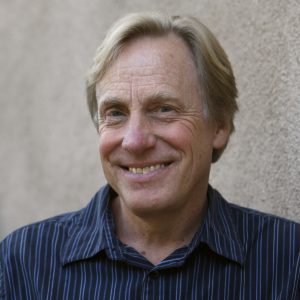
Anthony King is a Professor of War Studies (Security and Defence) at the University of Exeter and Director of the Strategy and Security Institute (SSI), established in 2010. He leads SSI’s flagship MA in Applied Strategy, focusing on practical strategy training through simulations and fieldwork. His research bridges sociology and anthropology, emphasizing social transformation in military and civilian contexts. He holds a Leverhulme Major Research Fellowship (2021–24) and has secured five ESRC grants. Education: BA Archaeology & Anthropology (University of Cambridge), MA Political Science (University of Michigan, 1991), PhD Sociology (University of Salford, 1995). Academic roles include Professor of Sociology at Liverpool University (1997–2006), Professor of War Studies at the University of Warwick (2016–2023), and return to Exeter in 2023. Research Focus: Military sociology, AI in warfare, urban conflict, command structures, gender in armed forces, and counter-insurgency. Recent work includes Urban Warfare in the Twenty-First Century (2025) and AI, Automation, and War (2025). Media Engagement: Regular contributor to BBC Radio, The Times, and The Economist, with over 100 media appearances since 2022 on issues like Ukraine and AI’s military implications. Advisory Roles: Advised NATO, British Army, and Royal Marines. Conducted audits on military culture post-Atherton Report. Currently recruiting PhD students in military sociology, security studies, and AI/military decision-making. Labs/Teams: Director of SSI, leading research on AI, security, and military-tech complexes. Collaborates with defense institutions globally.
António Manuel de Bastos Pereira is a Full Professor at the Department of Mechanical Engineering, University of Aveiro, Portugal. He has held significant leadership roles including Director of the Master's program in Welding Engineering and Director of the Research Unit Centre for Mechanical Technology and Automation (TEMA) from 2015 to 2024. Under his leadership, TEMA was classified with the highest rating by FCT and included in the European network of Key Enabling Technologies institutions. Dr. Pereira's research focuses on materials science, particularly the study of materials from composites to metals. His work spans advanced manufacturing technologies, surface engineering, and mechanical characterization of materials. He has published 97 articles in SCI journals with 2140 citations and an h-index of 29 (Scopus), demonstrating significant impact in his field. His research has led to the development of over 500 industrial projects worth approximately 100 million euros. His recent publications reveal consistent research trends in materials characterization, advanced manufacturing processes, and sustainable engineering solutions. Key themes include laser processing of materials, welding technologies, composite materials, surface treatments, and thermal engineering applications. His work often combines experimental and numerical approaches to solve practical engineering challenges, with growing emphasis on sustainable manufacturing methods and energy efficiency. Dr. Pereira has supervised numerous graduate students across various mechanical engineering topics, particularly in welding, materials processing, and mechanical design. He has been Principal Investigator for 39 scientific research projects and collaborated in 68 projects total, securing significant research funding. His project portfolio includes national and European initiatives focused on sustainable manufacturing, advanced materials, and innovative industrial processes. As Director of TEMA, he coordinated over 100 researchers within the Research Unit Centre for Mechanical Technology and Automation. TEMA is included in the "Portuguese Roadmap of Research Infrastructures of Strategic Relevance" and was selected to be part of the European network of institutions relevant within Key Enabling Technologies (KETs). Dr. Pereira also coordinated the thematic line "Innovative and Sustainable Industries" of LASI, Portugal's largest associated laboratory with around 500 PhD researchers. His leadership has positioned these research units as key players in technology transfer to small and medium enterprises across Portugal.
Professor John R. Hipp is a multi-departmental faculty member at the University of California Irvine's School of Social Ecology, holding appointments in Criminology, Law and Society; Urban Planning and Public Policy; and Sociology. With a Ph.D. from the University of North Carolina at Chapel Hill, he co-directs the Irvine Lab for the Study of Space and Crime (ILSSC) with Charis Kubrin and leads the Metropolitan Futures Initiative (MFI), an interdisciplinary project analyzing Southern California's socioeconomic landscape. Ph.D., University of North Carolina, Chapel Hill His research focuses on the spatial and temporal dynamics of crime, integrating social network analysis with neighborhood sociology. Key interests include spatial modeling, collective efficacy, and the interplay between built environments and criminal activity. Current work examines how the spatial distribution of social ties affects urban safety and the application of machine learning to crime pattern analysis. Recent publications analyze pandemic-era crime patterns, neighborhood social capital during transitions, and business mobility's impact on urban crime. His 2023 book The Spatial Scale of Crime received the James Short Senior Scholar Award. 2023 James Short Senior Scholar Award Professor Hipp has mentored numerous students now in academic positions nationwide, including Xiaoshuang Iris Luo at Akron University, Seth Williams at Louisiana State, and Young-An Kim at Florida State. His NSF-funded work with Carter Butts explores network structure's impact on adolescent substance use.
Dr. Tiffiany Howard is a Professor of Political Science at the University of Nevada, Las Vegas (UNLV), where she has served on the faculty since 2008. She also serves as Director of the Center for Migration, Demography, and Population Studies, leading research initiatives on migration patterns, demographic shifts, and environmental change. Her work bridges academic research with practical policy applications through collaborations with major institutions including the United Nations, International Criminal Court, Department of Defense, and Department of Homeland Security. Dr. Howard's educational background includes: Ph.D. Joint in Political Science and Public Policy, University of Michigan (Ann Arbor) LL.M. University of London-University College London (Specialization in Human Rights Law) M.A. Political Science, University of Michigan (Ann Arbor) B.A. Political Science, Florida A & M University, with honors Her research spans multiple critical areas in contemporary political science. Dr. Howard specializes in international security, with particular focus on the neuropolitics of terrorism and violent extremism, examining how cognitive processes contribute to radicalization. Her work on migration and refugee policy analyzes demographic shifts and their political implications, especially regarding Latino populations in Nevada. She also conducts significant research on gender and race studies, exploring the intersections of identity, particularly focusing on Afro-Latinos and the Black-Hispanic identity. Her scholarship on the racial wealth gap and Black entrepreneurship provides critical insights into economic disparities and potential pathways for improvement. Analysis of Dr. Howard's publications reveals a consistent trajectory connecting political violence, state failure, and demographic shifts. Her early work established foundations in understanding state failure as a root cause of terrorism, while more recent publications have evolved to examine neurocognitive aspects of radicalization and the specific challenges facing Black communities in business and wealth accumulation. Her research demonstrates interdisciplinary integration, combining political science with neuroscience, economics, and public health perspectives to address complex societal challenges. Dr. Howard has received numerous prestigious awards and fellowships: Council on Foreign Relations-International Affairs Fellowship (2019-2020) Geneva Center for Security Policy-Associate Fellowship (2020) Asser Institute-Visiting Fellowship (2020) Congressional Black Caucus Foundation-Senior Research Fellowship (2019) Marjorie Barrick Scholar Award (2013) Faculty Diversity Award for Excellence in Research and Scholarship (2011) Through her role as Director of the Center for Migration, Demography, and Population Studies, Dr. Howard oversees multiple research initiatives examining demographic trends and their policy implications. She has secured significant grant funding from various sources including the Ford Foundation, Department of Defense, and Department of Education. Her community engagement extends beyond academia through volunteer work with the Junior League of Las Vegas, Alpha Kappa Alpha Sorority, Inc., and her parish, St. Elizabeth Ann Seton, demonstrating her commitment to applying scholarly insights to real-world challenges.
Riccardo Cantoro is an Associate Professor in the Department of Control and Computer Science (DAUIN) at Politecnico di Torino, where he is a member of the College of Computer, Film and Mechatronics Engineering and the College of Mechanical, Aerospace and Automotive Engineering. He is affiliated with the CAD - Electronic CAD & Reliability Group and the CARS@PoliTO Interdepartmental Center for Automotive Research and Sustainable Mobility. His work bridges academic research and industrial applications through multiple commercially funded projects. Scientific Disciplinary Sector: IINF-05/A - Information Processing Systems ERC Sectors: PE7_4, PE6_2, PE6_11, PE6_12 His research focuses on functional safety, functional testing, and microprocessor testing, with a strong emphasis on embedded systems and reliability. He applies machine learning and formal methods to enhance test efficiency and system robustness, particularly in automotive and safety-critical domains. His work integrates computer-aided design, fault modeling, and resilience assessment in both hardware and AI systems. The recent publications highlight a trend toward data-efficient and intelligent testing methodologies, combining machine learning (e.g., TabPFN, active learning) with traditional electronic design automation. Topics include microcontroller performance screening, CNN resiliency, FeFET device testing, and system-level test optimization, reflecting a cohesive research agenda in trustworthy computing and hardware reliability. Scientific Awards: No awards explicitly mentioned in the provided texts. Advising and Grants: Dr. Cantoro supervises numerous PhD students in Computer and Systems Engineering, focusing on functional safety, test methodologies, and AI for CAD. He leads multiple industry-funded research projects, including collaborations with Infineon Technologies and Dana-TM4 Italia, on topics such as ATPG tools, speed monitor modeling, and power module reliability. His role as Scientific Manager/Head underscores his leadership in applied research and technology transfer. Labs and Teams: He is a core member of the CAD - Electronic CAD & Reliability Group (DAUIN) and contributes to the CARS@PoliTO center, fostering interdisciplinary research in automotive systems and sustainable mobility.
Carlos José De Oliveira E Silva Rodrigues serves as Associate Professor at the University of Aveiro's Department of Social, Political and Territorial Sciences, where he held departmental leadership from 2015-2024. As coordinator of both the Center for Asian Studies and Master in Chinese Studies programs, he bridges European and Asian academic communities while maintaining active research through the Governance, Competitiveness and Public Policy (GOVCOPP) research unit. His educational background centers on Social Sciences, with PhD-level expertise applied across interdisciplinary domains. Rodrigues' research portfolio demonstrates deep engagement with territorial innovation frameworks and China-related studies, reflecting dual specializations developed through extensive fieldwork and policy analysis. Scientific interests converge on territorial innovation systems with emphasis on triple helix dynamics (university-industry-government interactions), science and technology policy, and EU-China relations. His work examines how socioeconomic development pathways emerge from institutional arrangements, with particular focus on smart specialization strategies in peripheral European regions and China's global soft power initiatives through sports diplomacy and infrastructure projects. Recent publications (2022-2024) reveal three dominant trajectories: 1) Critical analysis of EU-China relations through cognitive dissonance and strategic ambiguity lenses, 2) Territorial innovation models addressing regional disparities in Portugal's Centro region, and 3) China's global influence via Health Silk Road initiatives and football diplomacy. Methodologically, his work combines policy analysis with comparative case studies across Europe, Africa, and Asia. Coordinator, Center for Asian Studies (University of Aveiro) Coordinator, Master in Chinese Studies Program Former Department Head (2015-2024) Active contributor to GOVCOPP research unit Participant in multiple national/international R&D projects Administrative leadership complements research activities, with departmental governance experience informing studies on university roles in regional competitiveness. Current projects examine quadruple helix innovation frameworks while maintaining longstanding engagement with Portuguese-China bilateral relations through both academic and policy channels.
Dagmar Kutsar is an Associate Professor in Social Policy at the University of Tartu’s Faculty of Social Sciences, within the Institute of Social Studies. Her career spans over four decades in academia, focusing on social well-being, family dynamics, and child vulnerability. She holds a PhD in Social Sciences (1995) from the University of Tartu. Her research emphasizes poverty, social exclusion, and generational challenges, with particular attention to children’s subjective well-being. Notable roles include Programme Director for the Sociology Doctoral Programme (2014–2015) and leadership in the TU Family Research Unit (1991–2001). She has authored/co-authored over 170 publications, including edited volumes like Child Vulnerability and Vulnerable Subjectivity (2024) and national reports on mental health (2023). Administratively, she chairs the Estonian Human Development Report Committee and serves on international boards such as the International Journal of Emotional Education and the International Commission on Couple and Family Relations. Awards include the University of Tartu Small Medal (2011) and Badge of Distinction. Her work bridges research and policy, addressing child protection, migration impacts, and pandemic effects. Collaborations span Europe, with projects funded by the European Commission and Estonian agencies. She leads interdisciplinary teams studying family structures, intergenerational solidarity, and social inclusion.
Dr Hafsa Ahmed is a Senior Lecturer in the Department of Global Value Chains and Trade at Lincoln University, New Zealand. As a certified futurist and member of the Association of Professional Futurists, her work focuses on stakeholder-centric value creation and futures thinking to enable meaningful change in complex environments. She bridges academia and industry, advancing scholarship while delivering practical solutions for more equitable and distributive societies. Dr Ahmed's educational background includes: PhD from Lincoln University, New Zealand New Zealand Certificate in Adult and Tertiary Teaching from Ara Institute of Canterbury PCG Com from Lincoln University MBA from Osmania University, Hyderabad, India BE from Osmania University, Hyderabad, India Certificate of Proficiency - Te Pia I from Lincoln University Dr Ahmed's research focuses on stakeholder engagement, organizational change, and strategic foresight. Her work examines how stakeholder ecosystem relationships across not-for-profit, public, and private sectors can foster more equitable societies. She specializes in futures thinking to enable meaningful change in complex environments, with particular interest in psychological ownership, community embeddedness, and resilience in business contexts. Her research bridges theoretical frameworks with practical applications for sustainable development. Her recent publications reveal a strong trend toward integrating futures thinking with stakeholder management and sustainable development. She has increasingly focused on the United Nations Sustainable Development Goals, particularly how business education can contribute to achieving these goals. Her work shows a progression from traditional organizational change management toward more holistic approaches that consider long-term societal impacts and multi-stakeholder collaboration. Dr Ahmed has received numerous accolades for her contributions: Best Paper Stream Award (Public sector and Not for Profit), 2018 Australia and New Zealand Academy of Management Best Case Study (ANZAM Case Study Competition), 2017 Australia and New Zealand Academy of Management Best Case Study (ANZAM Case Study Competition), 2012 Australia and New Zealand Academy of Management ANZAM PELT Grant in 2021 Lincoln University Critic and Conscience Award 2022 Lincoln University Excellence in Education Award 2023 Member of the New Zealand Order of Merit for services to ethnic communities and women As an educator, Dr Ahmed chairs the Faculty Postgraduate Committee at Lincoln University and has been instrumental in developing industry-academia partnerships. She conceived and led the "Industry Influencers @ LU" podcast series to make academic research accessible to businesses and create collaborative research opportunities. She also leads the "Spill the beans" podcast series for the Australia and New Zealand Academy of Management, providing a platform for researchers to share management expertise. Dr Ahmed is actively involved in community initiatives, serving as Chair of Canterbury Interfaith Society and a Trustee on the Board of Ako Ōtautahi – Learning City Christchurch. She co-founded the Lady Khadija Charitable Trust, which supports vulnerable groups and promotes social cohesion through media projects. Her work extends to supporting ethnic women's empowerment and community recovery following the Christchurch terror attack.
Dr. Dorota Ciołek is a Professor at the University of Gdańsk, affiliated with the Faculty of Economics and the Department of International Economics and Economic Development. Her research focuses on economic growth, regional development, innovation systems, territorial cohesion, and public policy analysis. She holds a habilitation degree and is actively involved in academic consultations and institutional roles. Her research interests span institutional factors influencing economic growth in Central and Eastern Europe, the effectiveness of EU Cohesion Policy, and the spatial dimensions of economic disparities. She has extensively studied regional innovation systems, urbanization impacts on innovation, and the role of territorial capital in regional competitiveness. Her recent publications analyze the legal frameworks governing property expropriation in Poland and the interplay between regional embeddedness and firm innovation. She has also explored labor market dynamics during the pandemic, emphasizing spatial interactions in Poland. No scientific awards are explicitly listed. Her advising and grants section remains underdeveloped in the provided data. She contributes to academic governance through her role in the Faculty of Economics and maintains an active research agenda with over 50 publications since 2002.
Anne JOYEAU is a Professor at Université de Rennes 1, affiliated with the CREM UMR CNRS 6211 research unit. Her work focuses on Human Resource Management , Social Responsibility , and Workplace Ethics , analyzing how organizations implement sustainable and ethical HR practices. Director of studies for multiple Master's programs in Human Resources Management Program Director for Master Management des Ressources Humaines (initial and continuing education) Her research explores skills management , diversity , and social standards , with a particular interest in reconciling organizational demands with employee wellbeing. Collaborative publications with Philippe Robert-Demontrond and Gwénaëlle Poilpot-Rocaboy address topics like time-sharing HR roles , shared employer networks , and inclusive territory development . Teaching activities include Skills and Career Management , Qualitative Methods , and Labor Law . Academic collaborations span institutions like Presses de l’EHESP, Fondation Rennes 1, and AGRH congresses.
Alexandra Ambrósio Polido is a Full Researcher at the Department of Social, Political and Territorial Sciences, University of Aveiro (Portugal), affiliated with the GOVCOPP research unit. She holds a PhD in Environment and Sustainability Sciences from NOVA University Lisbon (2016) and completed the Robert Bosch Stiftung Postdoctoral Academy for Transformational Leadership. Her work focuses on environmental policies, strategic environmental assessment (SEA), and urban sustainability transformation, emphasizing institutional governance structures and policy effectiveness. Key Roles: Principal Investigator of FCT-funded projects: ENVISION (€250k, 2021–2024) and POWER.US (€50k, 2023–2024). Recipient of FCT CEEC Junior Researcher grant (2019–2023). Teaches Environment and Development Strategies at MSc level at DCSPT, UA. Supervises 2 Postdocs, 2 PhD students, and co-supervises additional researchers. Research Interests: Her landmark studies explore the transformative capacity of environmental assessments and their role in empowering communities. Key themes include sustainable urban systems, policy implementation in lagging regions, and stakeholder dynamics in environmental decision-making. She has published 9 ISI/Scopus-indexed articles (6 as first/corresponding author), 3 book chapters, and over 30 conference contributions. Impact & Collaboration: Policy Brief influencing the Portuguese Centro Region’s 2021–2027 Strategy (cited in CCDR Centro documents). Contributed to the ESIF impact project (€92k, 2022) analyzing regional sustainable development. Editorial roles: Reviewer for 39+ articles in journals like Journal of Cleaner Production and Scientific Committee Member of Guaju . Recent Projects: Current work investigates power dynamics in environmental assessments (POWER.US) and sub-national policy tools for sustainability (ENVISION). Her research bridges academia and policymaking, with a focus on transforming governance practices for ecological and social resilience.
Javad Keypour is a Lecturer at the Department of Law, School of Business and Governance, Tallinn University of Technology (since September 2024). He previously held roles such as Senior Expert of Energy Law (April–August 2024) and Junior Research Fellow (2019–2024). His research focuses on energy law, EU legal frameworks, energy security, and geopolitical dynamics. He holds a PhD (2024) and M.A. (2019) from Tallinn University of Technology. Education includes a PhD in Law (2024), M.A. in International Relations (2019), and prior degrees in Chemical Engineering (B.Sc., M.Sc.). He has conducted extensive research on energy policy, including projects on gas market regulation, flaring reduction in Iran, and Caspian energy dynamics. His work bridges legal analysis with geopolitical strategy, emphasizing EU energy security and legal adaptation during energy transitions. Research interests span energy law, EU policy, geopolitical energy dynamics, and sustainable development. Notable awards include the 2022 School of Business and Governance Best Research Article Award. He has supervised two master’s theses and contributed to projects like Georgia’s strategic asset legislation. His publications analyze EU hydrogen strategies, Crimea’s energy implications, and post-Soviet energy geopolitics. Key administrative roles include Editor-in-Chief of Energy Diplomacy Journal since 2015 and previous positions in energy think tanks. Public outreach includes interviews on EU energy policy with Estonian Public Broadcasting and The Geopolitical Puzzle podcast.
Christos Kassimeris serves as Professor of International Relations at the European University Cyprus (EUC) within the Department of Social and Behavioral Sciences, School of Humanities, Social and Education Sciences, where he has maintained continuous faculty appointment since 2005 following prior research work at the University of Reading (2002-2005). His academic credentials include: PhD in International Relations (University of Reading, 2002) MA in International Security (University of Reading, 1997) BA in Sociology (University of Reading, 1996) Professor Kassimeris specializes in the political sociology of football, critically examining racism, discrimination, and identity construction through sports, particularly in European and Cypriot contexts. His research extends to Greek and Cypriot foreign policy analysis, European integration dynamics, and small state behavior in international relations, employing interdisciplinary frameworks from political science and cultural studies. Recent trajectories demonstrate expansion into geopolitical analyses of global initiatives like China's Belt and Road while maintaining core focus on sport-politics intersections. Publication trends since 2021 reveal dual thematic strands: sustained investigation of football's role in societal discrimination (with transatlantic comparative perspectives) and emerging geopolitical scholarship on international economic initiatives. Keyword analysis shows consistent anchoring in International Relations and Political Science , with subfield evolution from European football identity politics toward broader geopolitical strategy frameworks. Research leadership includes EU-funded projects: CRiTERIA (2021-2024) as Project Coordinator (EC Research Executive Agency) HEUREKA (2021-2023) as Research Member (EC Humanitarian Aid) BRISWA (2017-2018) as Consulting Expert (Erasmus+) DARIAH (2008-2010) as Research Member (FP7) He contributes to academic discourse through editorial board membership for Soccer & Society and European Journal of Futures Research .
João Carlos Correia Leitão is an Associate Professor of Economics at the Department of Management and Economics, Faculty of Social and Human Sciences, University of Beira Interior (UBI), Portugal. He holds the title of Associate Professor with Habilitation (Agregação) and serves as Vice-Rector for Finance, Administrative Modernization, and Community Engagement. He is a researcher and Deputy Coordinator at NECE - Research Centre for Business Sciences, an external researcher at CEGIST - Instituto Superior Técnico (IST), and an associate researcher at ICS - University of Lisbon. Additionally, he is a visiting professor at the University of Bergamo, Italy. His academic background and research interests center on: Entrepreneurship and Innovation Public Policy and Regional Development Sustainable Development and Urban Competitiveness Intellectual Capital and Organizational Leadership Economics of SMEs and Innovation Ecosystems His recent publications reflect a strong focus on innovation systems, intellectual capital, regional economic structures, and leadership in public and entrepreneurial contexts. The works include comprehensive literature reviews, empirical studies on Portuguese startups, and policy-oriented analyses of industrial districts and sustainable tourism. These contributions demonstrate a multidisciplinary approach bridging economics, management, and social sciences. Scientific awards and distinctions include: Prémio Nacional de Inovação baseada no Conhecimento (2017) Emerald Literati Award (2019) Prémio ERICS for Internationalization in Social Sciences (2020) Best Paper Award at IECER Conference (2012) Top Peer Reviewer Recognition (2018, 2019) Appointment as Counsellor Economist by the Ordem dos Economistas (2024) He has directed and coordinated several academic programs, including the UBIExecutive Business School, the ESG-MBA, and multiple international master’s degrees in entrepreneurship and innovation. He has also served as an external expert for the European Commission, United Nations, and national agencies. His leadership extends to strategic planning, having coordinated regional development strategies for intermunicipal communities and rural associations. He is actively involved in research labs and teams, including NECE - Research Centre for Business Sciences and CEGIST at IST, and contributes to policy councils such as EIT Food’s RIS Policy Council and the Strategic Council of the Ordem dos Economistas.
Dr. Christoph Sajons is a labor and migration economist at the University of Mannheim's Institute for SME Research. He studied at Freiburg (Germany) and Yale University (USA), earning his PhD at Universitat Pompeu Fabra (Barcelona) in 2012. Since 2020, he leads the "Labor Market and Self-Employment" research unit, focusing on migrant entrepreneurship, labor market integration, and innovative empirical methods. Education: PhD in Economics (2012), Universitat Pompeu Fabra MA in Economics, Freiburg & Yale University His research spans five key areas: Migrant labor market participation and self-employment pathways Experimental analysis of equality in digital economies Applied econometric studies of citizenship impacts Refugee integration through smartphone-based field research Policy evaluation frameworks for SME resilience Recent publications analyze Google Trends data misuse, SME crisis resilience, and refugee skill investments. He actively collaborates with interdisciplinary teams and contributes to regional policy development in Baden-Württemberg. Professional Memberships: Verein für Socialpolitik European Society for Population Economics Connect via email: christoph.sajons@uni-mannheim.de .