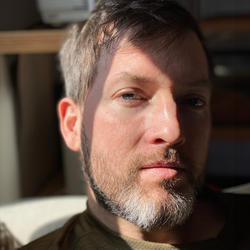
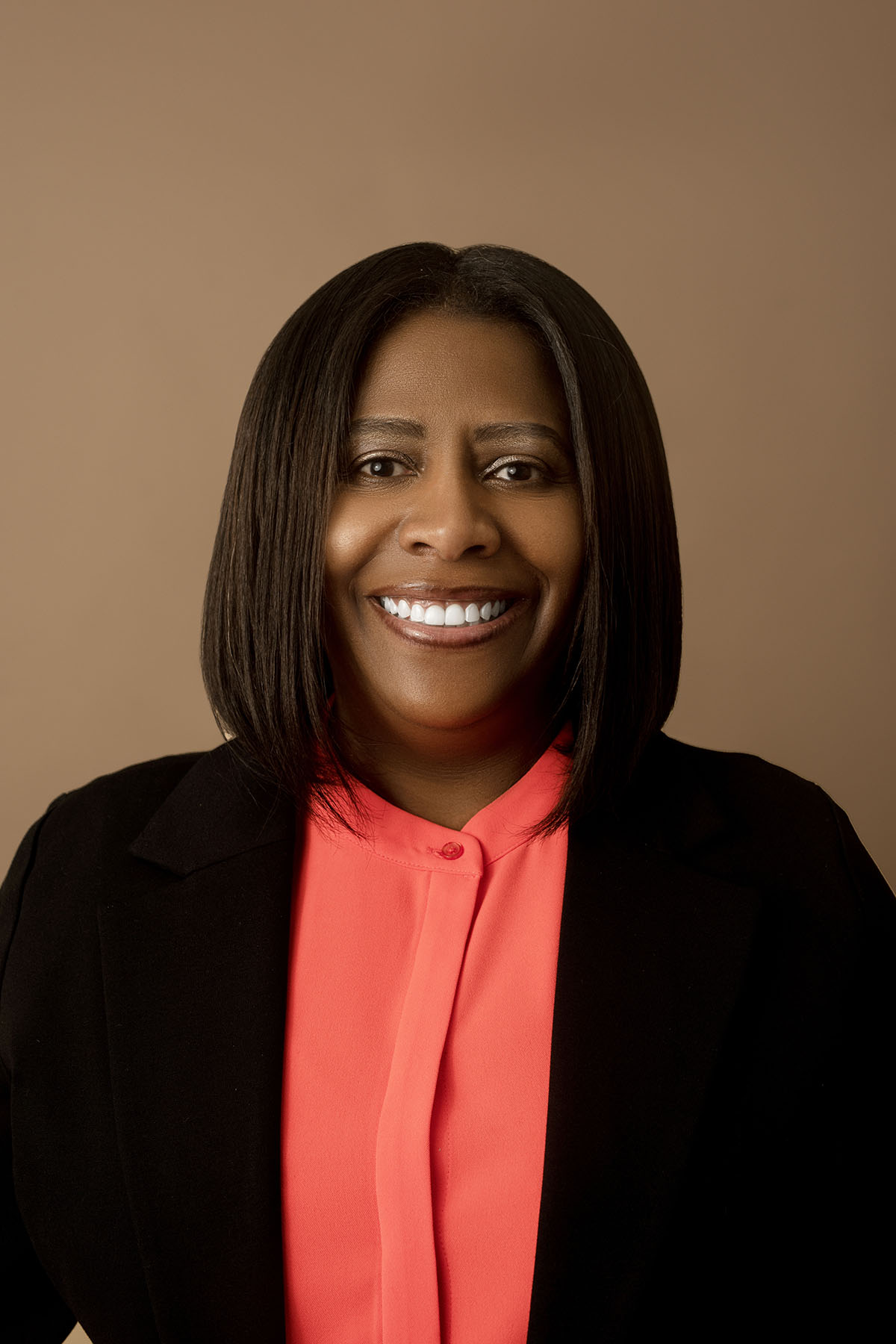
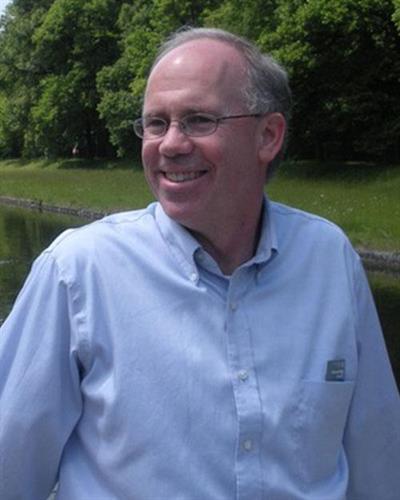
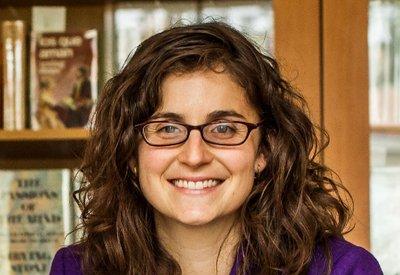
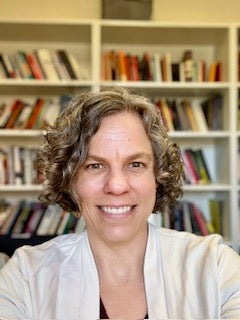
Jonathan Schroeder is a Lecturer in the Department of Literary Arts and Studies at the Rhode Island School of Design (RISD). Trained as an Americanist at the University of Chicago, his research and teaching focus on histories of race, colonialism, emotion, and the movement of Enlightenment knowledge systems to the Americas. He combines literary scholarship with interdisciplinary approaches in affect theory, historical epistemology, and environmental humanities. Education: AB, Dartmouth College MA, Brown University PhD, University of Chicago Schroeder's work bridges literary history with the materialist turn, examining how frameworks of knowledge justified colonial hierarchies and shaped modern subjectivity. His research also explores the intersections of democracy, tyranny, and kinship through the biographical lens of the Jacobs family. Scientific Awards: Anisfield-Wolf Book Award for Nonfiction (2025) National Endowment for the Humanities Fellowship American Antiquarian Society Fellowship John Carter Brown Library Fellowship Huntington Library Fellowship Library Company of Philadelphia Fellowship Schroeder’s publications and grants reflect a commitment to uncovering marginalized narratives, particularly in African American literature and transnational migration studies. He currently serves as a fellow at the Radcliffe Institute for Advanced Study.
James Darsey is a Professor of Communication at Georgia State University, specializing in rhetorical theory, GLBTQ+ studies, and social movements. He is renowned for his award-winning book *The Prophetic Tradition and Radical Rhetoric in America* (1997), which earned multiple accolades including the National Communication Association's Diamond Anniversary Book Award. His research spans cosmopolitan rhetorics, prophetic discourse, and LGBTQ+ identity formation. He has delivered guest lectures at institutions such as the University of Texas and Notre Dame, and founded the Southern Colloquium on Rhetoric, fostering regional academic collaboration. Key awards include the Winans/Wichelns Award, the Marie Hochmuth Nichols Award, and a National Endowment for the Humanities Fellowship. His publications, including analyses of James Baldwin and Barack Obama, reflect his interdisciplinary focus on power, identity, and historical memory. Education: Ph.D., University of Wisconsin, Madison (1985) Scientific Awards: Diamond Anniversary Book Award Winans/Wichelns Award for Scholarship in Rhetoric and Public Address Marie Hochmuth Nichols Award Randy Majors Award B. Aubrey Fisher Award National Endowment for the Humanities Fellowship
Jennifer J. Baker is an Associate Professor in the Department of English at New York University's College of Arts and Science. Holding a Ph.D. in English from the University of Pennsylvania (2000), her academic focus spans 18th- and 19th-century American literary, cultural, and intellectual history. Key research areas include literature and science, environmental literature, transatlantic Romanticism, and Civil War literature. She is currently working on a reception history of Herman Melville’s Moby-Dick , examining its rise to canonical status through Cold War politics and academic culture. Education: Ph.D. in English, University of Pennsylvania (2000) Her upcoming book American Romanticism and the Evolutionary Idea (Stanford UP, 2026) investigates how evolutionary theories intersected with Romantic concepts in 19th-century American literature. Previous publications include Securing the Commonwealth: Debt, Speculation, and Writing in the Making of Early America (Johns Hopkins UP, 2006). Recent research includes articles on Herman Melville, Emerson, Nathaniel Hawthorne, and Judith Sargent Murray, reflecting her interdisciplinary approach combining literary analysis with financial history, scientific thought, and cultural studies. Faculty Fellowship, NYU Center for the Humanities (2014-15) Heyman Prize, Yale University (2004) Morse Fellowship, Yale University (2005) Andrew W. Mellon Dissertation Fellowship (1997-98) She serves on the Board of the Melville Society Cultural Project and has held academic appointments at Yale University and the McNeil Center for Early American Studies.
Circe Sturm is Professor of Anthropology at the University of Texas at Austin's College of Liberal Arts and affiliate faculty in Native American and Indigenous Studies. With 25 years of teaching experience spanning the University of Oklahoma and UT Austin, her scholarship examines race-sovereignty-citizenship intersections in Native and African American communities through settler colonial frameworks. Education: Ph.D., University of California, Davis Her research critically analyzes racial formation , tribal sovereignty , and indigenous identity politics across Native North America, Central America, and Europe. Fieldwork with Cherokee and Freedmen communities informs her exploration of dominance-resistance dynamics and subjectivity within colonial structures, consistently bridging academic theory and social justice praxis. Recent publications (2016-2023) demonstrate evolving engagement with ontological anthropology, Black-Indigenous relations, and demographic politics of race. Key themes include sovereignty recognition struggles, racial classification systems, and the material consequences of settler colonial logics across legal, demographic, and cultural domains. Author of award-winning books Blood Politics (2002) and Becoming Indian (2011), her work is widely cited by scholars, tribal citizens, legal professionals, and journalists. Public intellectual contributions include New York Times features and NPR interviews. Sturm has mentored generations of students through courses including Cultural Anthropology, Mapping Indigenous Austin, and Oral History of Native Texas. Her public lectures for entities like the US Forest Service and New York Public Library demonstrate deep commitment to community-engaged scholarship beyond academia.
Nikki M. Taylor is a Professor of History and Chair of the Department of History (2017-2023) at Howard University's College of Arts & Sciences. Her research focuses on African-American history in the nineteenth century, particularly Urban History, African American Women's History, and the History of American Slavery. Dr. Taylor earned her Ph.D. in U.S. History from Duke University (2001) and B.A./M.A. from University of Pennsylvania and Duke University. She employs Black feminist theory to analyze resistance narratives and trauma studies in historical contexts. Research Focus : Lethal resistance by enslaved women, Margaret Garner's historical legacy, 19th-century Black political thought, and institutional racial violence. Grants : Principal Investigator for $5 million Mellon Just Futures grant (2021-2024) and $480k Mellon Mays Undergraduate Fellowship Program grant (2018). Her accolades include Howard University Distinguished Faculty Award (2021), Fulbright Fellowship, Social Science Research Council Fellowship, and Woodrow Wilson Fellowship. She has been featured in multimedia platforms like the Marc Steiner Show and 'This Is America' discussions.
Jo-Marie Burt is an Associate Professor at the Schar School of Policy and Government at George Mason University. She holds affiliations with the Carter School for Peace and Conflict Resolution, Women and Gender Studies, and serves as a Senior Fellow at the Washington Office on Latin America (WOLA) . Her work spans comparative politics, transitional justice, and political violence in Latin America, with a focus on Peru and Guatemala. Education: Ph.D. in Political Science, Columbia University (1999); B.A., College of the Holy Cross (1986) Burt’s research examines post-conflict accountability, including high-profile trials in Peru (Fujimori) and Guatemala (Ríos Montt). She co-edited Politics in the Andes and authored Silencing Civil Society (2007), which analyzes state and insurgent violence in Peru. A 2011 recipient of Peru’s Award in Merit (Grand Official) , she advocates for victim rights and serves on advisory boards for human rights organizations in Guatemala and Uruguay. Her 15 most recent publications focus on transitional justice, perpetrator prosecutions, gender-based violence, and civil society activism in post-authoritarian regimes. Supported by grants from Fulbright, Open Society, and the MacArthur Foundation, she is completing a book titled In Pursuit of Justice in Post-Genocide Guatemala . Burt also contributes to media outlets like The New York Times and BBC World , blending academic rigor with public engagement. Scientific Awards: Honorable Mention, WOLA-Duke Book Award (2007) Award in Merit (Grand Official), Government of Peru (2011) Burt’s career bridges academia, advocacy, and policy, with a focus on dismantling systems of impunity and advancing human rights through judicial and societal mechanisms.
Dr. Wendy Wong serves as an Assistant Professor of Instruction in the Intellectual Heritage program within Temple University's College of Liberal Arts. Her academic focus centers on U.S. History, particularly the intersections of foreign relations, print media, and slavery in Early America. Education Ph.D. in History Research Focus Dr. Wong's scholarship critically examines Early American diplomatic history through the lens of print culture and transnational connections. Her work reveals how foreign relations shaped national identity during the Revolutionary and Early Republic eras, with special emphasis on Haitian-American interactions and the role of media in political discourse. Current projects explore the Embargo Act of 1807 and John Adams' diplomatic legacy. Publication Trends Her recent publications demonstrate sustained engagement with U.S. foreign policy formation, particularly Haiti's influence on early American statecraft. Contributions to reference works like the SHAFR Guide and Encyclopedia of Greater Philadelphia highlight her expertise in diplomatic history and urban cultural institutions. Awards No scientific awards were documented in the source material. Professional Activities Dr. Wong serves as editor for the Revolution to Civil War chapter in the SHAFR Guide Online and consulted for the American Philosophical Society's Revolutionary City digital-history project. She teaches Intellectual Heritage I: The Good Life and Intellectual Heritage II: The Common Good, though specific student advising details were not provided. Research Infrastructure No dedicated laboratories or research teams were mentioned in the available documentation.
James Rice serves as the Walter S. Dickson Professor of English and American History in the Department of History at Tufts University's School of Arts and Sciences. Appointed in 2016 and serving as Department Chair from 2018-2024, he holds a prominent position in early American historical scholarship. His academic credentials include a BA in History from Colorado College (1985), followed by an MA (1989) and PhD (1994) in History from the University of Maryland, College Park. Prior to Tufts, he taught at SUNY Plattsburgh, Washington College, and Tübingen University. Rice's research dismantles traditional boundaries between American history and Native American history, colonial history and prehistory, and national histories across North America. His work bridges historical scholarship with environmental studies and interdisciplinary approaches, currently focusing on two major book projects: a comprehensive synthesis of Native American environmental history spanning from Oaxaca to the Arctic since first human habitation, and a critical reassessment of England's first permanent American colony titled Founding Massacres: Violence, Ambition, and the Birth of Virginia . His publication record reveals a sustained emphasis on Indigenous perspectives in colonial America, with recurring themes of environmental change, intercultural violence, and political diplomacy. Recent works increasingly integrate environmental history frameworks with ethnohistorical methods, particularly examining Powhatan expansionism, Bacon's Rebellion, and captivity narratives within broader Atlantic World contexts. His scholarly recognition includes: OAH Binkley-Stephenson Award for best article in the Journal of American History (2015) State University of New York Chancellor’s Award for Excellence in Scholarship (2016) Professional service demonstrates significant field leadership through editorial board membership for Environmental History journal (2025-2029), prize committee roles for the American Society for Environmental History and American Society for Ethnohistory, and advisory positions including the Commonwealth of Virginia's 2019 Commemoration Historian Council and Historic Jamestowne project. His teaching portfolio at Tufts spans advanced seminars on North American history, colonial America, and environmental humanities.
Caitlin C. Rosenthal is an Associate Professor in the Department of History at the University of California, Berkeley's College of Letters and Science. A historian specializing in 18th and 19th century U.S. history, she is renowned for her interdisciplinary approach that blends qualitative and quantitative methods across business history, economic history, and labor history. Her research focuses on the development of management practices, particularly those based on data analysis, with special attention to the historical relationship between violence and innovation. Her groundbreaking work examines how accounting and management techniques evolved, including their disturbing applications on slave plantations. Rosenthal's scholarship bridges historical analysis with contemporary concerns about data practices and ethical business conduct. Her influential book Accounting for Slavery: Masters and Management (Harvard University Press, 2018) won the Simkins Award from the Southern Historical Association and the first book prize from the Economic History Society. It was featured as one of 'Five Books' best economics books of 2018 and was incorporated into the New York Times' 1619 Project. The book explores how plantation management contributed to modern business practices while examining the troubling intersection of violence and innovation. Simkins Award of the Southern Historical Association First book prize of the Economic History Society Carol D. Soc Graduate mentoring award (2019) Hellman Faculty Fellowship (2018-2020) American Cultures Innovation in Teaching Prize (2016) Rosenthal teaches undergraduate courses on the history of capitalism and data practices, including 'The History of American Capitalism' (which won the American Cultures Innovation in Teaching Prize in 2016) and 'Calculating Americans,' which examines the evolution of data practices from the U.S. Census to medical records. She actively mentors graduate students on topics related to data and economy, having received the Carol D. Soc graduate mentoring award in 2019. Her educational background includes a PhD in History of American Civilization from Harvard University, an AM in History from Harvard, and a BA in Political Science summa cum laude from Rice University.
Elena A. Schneider is an Associate Professor of History at the University of California, Berkeley, holding the Sonne Chair in Latin American History. Her research focuses on Cuba, the Caribbean, and the Atlantic World, emphasizing colonialism, slavery, and the experiences of marginalized communities. She specializes in histories 'from below,' particularly the roles of African-descended peoples in imperial conflicts and diasporic movements. Education: PhD in History (Princeton University), MA in History (Princeton University), AB in History & Literature (Harvard University). Her first major work, The Occupation of Havana (2018), examines the British siege of Havana (1762-1763) and its impact on colonial empires and enslaved populations. The book has received multiple prestigious awards, including the James A. Rawley Prize and the Bryce Wood Award. Current research includes maritime marronage in the Caribbean and Afro-Cuban returnees to West Africa in the 19th century. Teaching interests span imperialism, slavery, race, and revolution in Latin America and the Atlantic World, integrating art, film, and music into pedagogy. She advises graduate students on diverse topics in Latin American, Caribbean, Indigenous, and Atlantic histories. Recent publications explore themes like enslaved agency, transatlantic migration, and colonial military dynamics. Awards include the Hellman Fellowship (2017) and the Naomi Wulf Prize (2013). Research fellowships include the NEH Postdoctoral Fellowship (2011-2013) and the Huntington Library's Kemble Fellowship (2022-2023).
David Kazanjian is a Professor of English and Comparative Literature at the University of Pennsylvania's School of Arts & Sciences. He serves as Graduate Chair for the Comparative Literature and Literary Theory program (2024-25, 2026-2028), and has held prestigious fellowships including the Institute for Advanced Study (Princeton, 2026), Vartan Gregorian Center (NYPL, 2025), and Berlin Prize. His scholarship bridges transnational American studies, Armenian diaspora studies, political philosophy, and postcolonial theory. PhD in Rhetoric, University of California, Berkeley M.A. in Critical Theory, University of Sussex B.A. in Modern Thought and Literature, Stanford University Kazanjian's research examines dispossession through legal archives, transnational Armenian cultural politics, and 19th-century social movements. His work spans early American literature, Latin American colonialism, trauma theory, and Marxist analysis of freedom discourses. Recent publications address dispossession in colonial New England/Yucatán, Armenian diaspora representation, and improvisational freedom practices in the Atlantic world. His editorial roles include co-editing NYU Press's America and the Long 19th Century series and Social Text journal. 2022 Penn Provost's Award for Outstanding Mentorship of Ph.D. Students Berlin Prize, American Academy of Berlin As co-director of the Tepoztlán Institute for Transnational History of the Americas (2017-19) and affiliations with Penn's Gender & Sexuality Studies, Latin American Studies, and Middle East Center, Kazanjian fosters interdisciplinary scholarship. He teaches courses on capitalism theories, early American literature, and critical theory. His lab and collective work includes the Tepoztlán Institute and Social Text editorial collective, focusing on transnational historical methods and diasporic cultural analysis.
Paul D. Halliday is the Julian Bishko Professor of History and Professor of Law at the University of Virginia, jointly appointed in the Department of History within the College of Arts and Sciences and the Law School . He is a leading scholar in legal history, with a focus on British, imperial, and global legal developments from 1500 to 1850. BA, Wesleyan University, 1983 MA, University of Chicago, 1988 PhD, University of Chicago, 1993 His research centers on the history of legal institutions, particularly habeas corpus, judicial authority, and the role of law in empire. Halliday challenges traditional narratives by emphasizing how judicial power evolved from royal prerogative rather than as a check on monarchy. His work bridges legal doctrine, archival practice, and material culture, with current projects exploring the sensory and spatial dimensions of law, including courthouse architecture and archival procedures. His publications reveal a consistent engagement with themes of liberty, authority, and legal continuity across time and space. Notably, his book Habeas Corpus: From England to Empire (2010) has had a profound impact, influencing the U.S. Supreme Court in Boumediene v. Bush (2008), and reshaping scholarly understanding of habeas corpus as a tool of imperial governance. His recent work extends into South Asian and Caribbean legal histories, emphasizing global legal interconnectedness. Inner Temple Book Prize (2011) for Habeas Corpus: From England to Empire Sutherland Prize, American Society for Legal History (2009) for co-authored Virginia Law Review article At UVA, Halliday teaches courses such as History of English Law , Law’s Empire , and Global Legal History . He advises graduate students in legal history and is a core member of GLH@UVA (Global Legal History at the University of Virginia), an interdisciplinary community that includes faculty and students from history and law. This group fosters collaborative research, professional development, and regular discussions on works in progress, contributing to a vibrant intellectual environment.
James Sidbury is the Andrew W. Mellon Distinguished Professor of Humanities and Professor of History at Rice University, with affiliation to the Center for African and African American Studies. His research focuses on race, slavery, and identity formation in the English-speaking Atlantic world from the 17th to 19th centuries. He holds a PhD, MA, and BA from Johns Hopkins University (1991, 1980s). His current projects include a synthetic study of racial identity formation during the American Revolution era, examining how African, European, and Indigenous peoples developed racialized self-conceptions between 1750-1815. He also explores Sierra Leone's colonial history and co-edits an anthology on the urban black Atlantic during the slave trade era. Key research areas include Atlantic history, Native American history, and Southern history. His work analyzes non-elite populations' historical consciousness and collective identity formation. Recent publications address ethnogenesis, colonial interactions, and race in transatlantic contexts. Awards: Andrew W. Mellon Distinguished Professorship Grants/Fellowships: Not explicitly listed in text Labs/Teams: Collaborates with Center for African and African American Studies and co-editors with Jorge Cañizares-Esguerra and Matt Childs
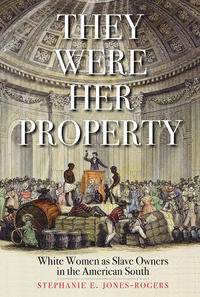
Stephanie E. Jones-Rogers is an Associate Professor in the Department of History at the University of California, Berkeley, and a Chancellor's Professor of History (2024-2027). She serves as Director of the African and African-American History Writer's Workshop, which she founded in 2021 to support interdisciplinary research on African-descended peoples. PhD in History from Rutgers University (2012) MA in US History from Rutgers University (2007) BA in Psychology from Rutgers University (2003) Her research focuses on gender and American slavery, colonial and 19th-century legal/economic history, and the intersection of women's roles with systems of bondage. She is currently working on two books: Women of the Trade (W.W. Norton, 2024) reinterpreting the British Atlantic slave trade through women's roles, and Women, American Slavery, and the Law (W.W. Norton, 2024) examining gender's influence on slave/property law evolution. Her publications span journal articles, book chapters, and digital essays that explore white women's economic investments in slavery, enslaved women's labor, and legal frameworks enabling bondage. Articles demonstrate expertise in gendered economic roles, matrilineal descent laws, and post-slavery policy impacts. Lapidus Center Harriet Tubman Prize (2020) Julia Cherry Spruill Prize (2020) Charles S. Sydnor Award (2020) Los Angeles Times Book Prize in History (2019) She mentors graduate students in African-American history, slavery law, and women's history. Her website and Berkeley Blog contain additional scholarship and commentary.
Lanie Millar is an Associate Professor of Spanish and Portuguese in the School of Global Studies and Languages at the University of Oregon, with affiliations across multiple academic units including African Studies, Black Studies, Comparative Literature, IRES, Portuguese, and Romance Languages. She teaches courses in Spanish and Portuguese literature with a focus on the Global South, Caribbean, Latin American, and African contexts. Her educational background includes: Ph.D. in Comparative Literature, The University of Texas at Austin (2011) M.A. in Spanish, Middlebury College (2003) B.A. in English and Spanish, Baylor University (2002) Millar is a comparative scholar of the Global South working in Spanish and Portuguese, with particular expertise in the Luso-African-Brazilian world and the Caribbean. Her research focuses on South-South comparison and transnational solidarity networks, drawing from literary and cultural studies, postcolonial studies, and theories of racialization. She has made significant contributions to understanding the poetics of disappointment in Cuban and Angolan narratives after the Cold War, as well as examining feminist solidarities and revolutionary masculinities in cultural memories of African empires. Her work demonstrates how literature from the Global South creates new formal and affective relationships to histories of revolution, decolonization, and racialization. Millar's scholarly output reveals consistent engagement with revolutionary narratives across the South Atlantic, particularly examining connections between Cuba, Angola, Brazil, and Mozambique. Her work increasingly focuses on gender dimensions within postcolonial contexts while maintaining a strong emphasis on literary form as political expression. The trajectory of her publications shows a deepening exploration of transnational solidarity networks and the cultural dimensions of decolonization movements across the Global South. Millar has received research support from prestigious institutions including the Kluge Center at the U.S. Library of Congress and the Luso-American Development Foundation/Arquivo Nacional Torre do Tombo in Lisbon, Portugal. Her 2024 translation of Mário Pinto de Andrade's works represents a significant contribution to making foundational African decolonization thought accessible to English-speaking audiences. As an educator, Millar teaches a diverse range of courses including Caribbean Crossings, Theorizing the Plantation, Runaways Rebellions and Revolutions in the Black Atlantic, and Afro-Latin American Literature. Her teaching portfolio demonstrates a commitment to interdisciplinary approaches that connect literary studies with broader questions of race, empire, and decolonization. She has developed specialized courses examining Hispanic cultures through literature, narrative techniques, and the Chinese diaspora in Latin America, reflecting her broad scholarly interests and multilingual capabilities in Spanish and Portuguese.