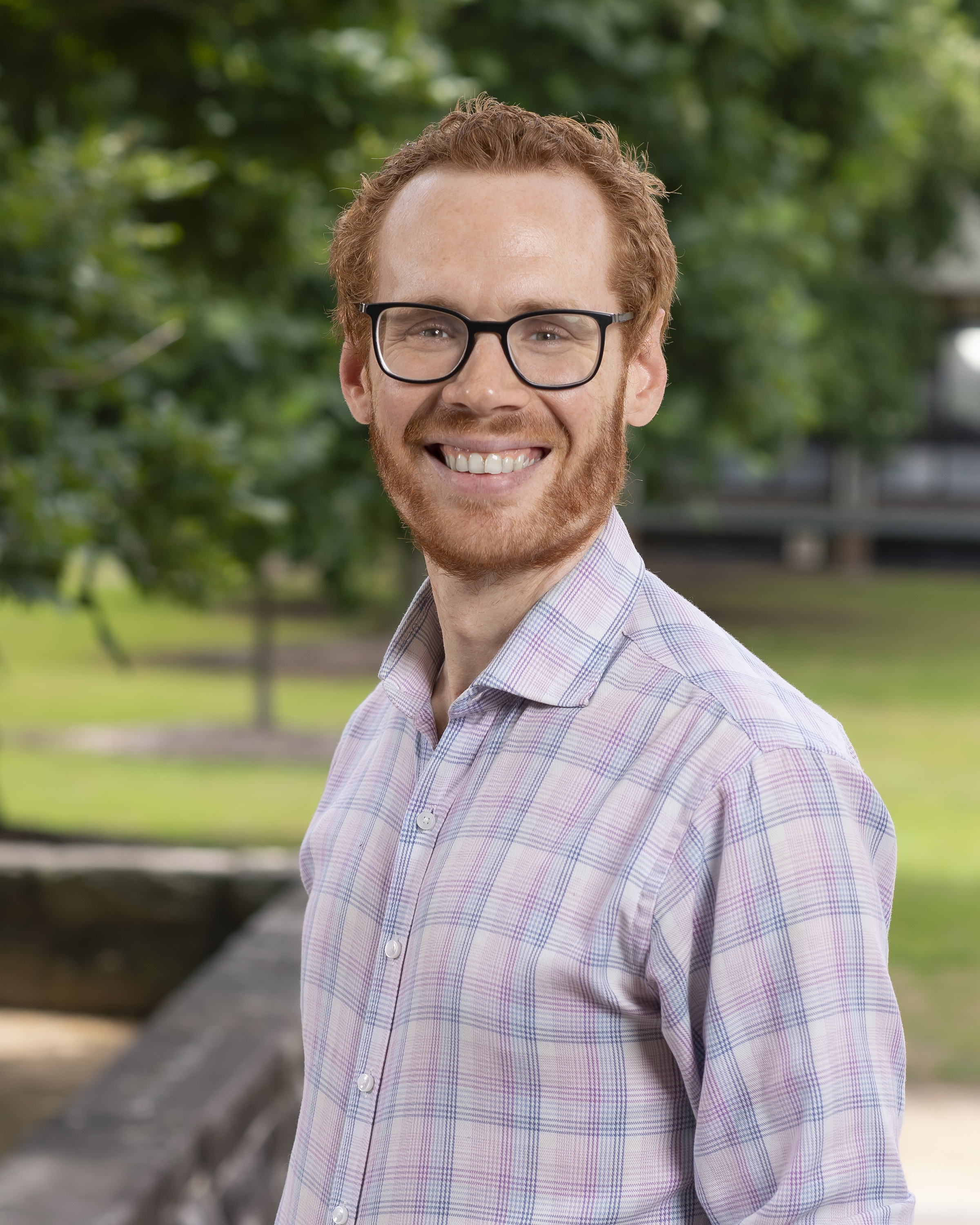
Karen Hayes is a Lecturer in Occupational Therapy at the School of Allied Health, Exercise and Sports Sciences, Charles Sturt University. With over two decades of clinical experience, she focuses on rural health equity, workforce development, and spatial justice in non-urban healthcare systems. Education: BaAppSc(Occupational Therapy)(Hons), University of Western Sydney; MHlthSc(Education), University of Sydney; GCertAppHlthBPsych, University of Newcastle Research: Rural occupational therapy services, spatial justice, workforce maldistribution, disaster resilience, and interprofessional education Awards: Senior Fellow Higher Education Academy (2024), Change One Thing Award (2023), Best Oral Presentation (2022), Best Presentation (2024) Her recent research examines the persistent shortage of occupational therapists in rural areas, spatial analysis of healthcare access, and simulation-based training for rural practice readiness. She advocates for systemic policy reforms to address geographic disparities in care provision. Key collaborations include work with institutions like the University of Western Sydney and active engagement in rural health conferences and policy groups. Her teaching philosophy emphasizes hands-on learning, critical thinking, and cultural awareness to prepare students for rural practice challenges.
Dr. Michael Stevens is a Senior Lecturer at University of New South Wales (UNSW) Canberra , where he focuses on advanced manufacturing and biomedical device control systems . His work bridges digital manufacturing for SMEs with smart artificial heart technologies , emphasizing industry collaboration and translational research. Specializes in physiological control systems for rotary blood pumps Develops unobtrusive fall detection systems for dementia patients Leads international projects on total artificial heart development Education : B.Eng (Medical - First Class Honours), Queensland University of Technology (2010) PhD in Physiological Control for Biventricular Assist Devices, University of Queensland (2014) Research Trends show consistent focus on: Machine learning for biomedical diagnostics (2018–2025) mmWave radar and thermal sensors in patient monitoring (2021–2024) Computational fluid dynamics in artificial heart modeling (2016–2024) Physiological control algorithms for rotary blood pumps (2011–2025) Scientific Awards : UNSW Scientia Education Award (2021) for contextual teaching Heart Foundation Runner-up for "Smart Artificial Hearts" pitch (2021) ARC PGC Supervisor Award (2017) for mentoring Grants & Supervision : Holds over $6 million in competitive funding including MRFF and ARC grants. Currently supervises 4 PhD students while maintaining industry partnerships with VitalCare and BiVACOR. Labs & Facilities : Works across UNSW Engineering labs and Graduate School of Biomedical Engineering platforms, including mock circulation loops and high-performance computing clusters for CFD simulations.
Dr. Ali Kashani is a Senior Lecturer at the University of New South Wales (UNSW) within the School of Civil and Environmental Engineering. His research focuses on sustainable and low-carbon concrete materials, robot-aided construction (particularly 3D printing), and Circular Economy-aligned applications. Leadership in cementitious materials innovation Expertise in 3D printing for construction Advocate for waste valorisation and carbon capture Dr. Kashani has secured approximately $7 million in research funding and holds a patent in lightweight concrete foam. His work spans 70+ publications with 9,000+ citations, including media coverage in the Sydney Morning Herald and The Fifth Estate. He actively contributes to professional organizations such as MECLA, RILEM, and ASTM. Recent research trends include AI and optimization algorithms for sustainable concrete mix design, chloride diffusion modeling, and 3D printing performance analysis. His publications often address waste material integration, durability assessment, and eco-friendly construction practices. Scientific Awards: National and NSW Awards for 'Excellence in Concrete' (Technology and Innovation) from the Concrete Institute of Australia Churchill Fellowship for Digital Construction and 3D Printing sponsored by AVJennings Dr. Kashani serves as Co-Chair of the cement and concrete working group at MECLA and contributes to RILEM and ASTM committees. His email is ali.kashani@unsw.edu.au , and his office is located in the Civil Engineering Building (H20), Level 2, Room CE204, UNSW.
Renee Crawford is an Associate Professor at Monash University’s School of Curriculum Teaching & Inclusive Education . With a career spanning higher education and secondary music teaching, she advocates for technology-integrated pedagogy and curriculum innovation. Her work bridges music education, teacher development, and sociological perspectives on educational inclusion.
Dr. Ghazal Bargshady is a Lecturer at the University of Canberra , with expertise in Affective Computing , Artificial Intelligence , and Healthcare Technology . Her roles include teaching units such as Computer Vision, Data Analytics, and Soft Computing, as well as supervising PhD and Master by Research students in AI-driven projects for healthcare and road safety. Education: She earned her PhD in Artificial Intelligence and Computer Vision from the University of Southern Queensland in 2020. Research Interests: Dr. Bargshady specializes in Computer Vision Deep Learning Biosignal Processing Facial Expression Analysis Human Factors in AI Wearable Sensors Multimodal Data Fusion Brain–Computer Interfaces Her work addresses real-world challenges in pain assessment, depression recognition, and driver safety using cutting-edge AI models. Article Trends: Her recent publications focus on Transformer architectures , fNIRS signal analysis , multimodal pain detection , and depression severity estimation via facial video data. These studies highlight her contributions to AI in healthcare , transportation safety , and biomedical signal processing . Teaching Activities: Dr. Bargshady has lectured units including Programming for Data Science , Computer Vision , and Soft Computing , emphasizing practical AI applications.
Professor Timo Dietrich is a leading academic and behavior change expert at Griffith University's Griffith Business School, specializing in social marketing and public health interventions. He holds a PhD in Social Marketing from Griffith University (2015) and has over 15 years of experience in designing evidence-based programs addressing youth substance use, mental health, and education. As founder of Blurred Minds, he co-created scalable resources like the Blurred Minds Academy to tackle vaping, alcohol, and cannabis education in schools. His work emphasizes co-creation frameworks such as CBE (Co-create-Build-Engage) and builds on over 100 peer-reviewed publications. Education: Doctor of Philosophy (Social Marketing), Griffith University (2012–2015) Master of International Business, Griffith University (2010–2011) Bachelor of Business Administration, Griffith University (2004–2007) Research Focus: The CBE framework, gamification, virtual reality applications in prevention programs, and co-design methodologies. His projects address youth substance use prevention, mental health promotion, and workplace well-being in agriculture. Recent work includes AI-powered social media campaigns and VR-based alcohol prevention tools. Grants & Impact: Secured over $1.5 million in research funding for initiatives like the Blurred Minds Academy (reaching 415,000+ students) and the Farmer Knowledge Network. His research has informed Queensland's state education policies and global prevention programs. Labs & Teams: Leads Social Marketing @ Griffith and collaborates with global partners through the Griffith Institute for Tourism. Active in advisory roles for NGOs and government agencies on behavior change strategies.
Professor Aniruddha Desai is a Research Professor and Director of the Centre for Technology Infusion (CTI) at La Trobe University. He holds a Bachelor’s in Industrial Electronics, a Master’s in Micro-electronics, and a PhD in Computer Science. His expertise spans microelectronics, AI, IoT, and sensor networks, with a focus on socially impactful applications like transportation, healthcare, and precision agriculture. Research Interests: Ultra-low power systems Micro-nano electronics AI/ML and edge computing IoT and sensor networks Transportation and logistics Major Projects: Led multi-million-dollar R&D programs in areas such as smart cities, energy management, and smart farming. Notable collaborations include the IIT Kanpur - La Trobe University Research Academy and the Asian Smart Cities Research and Innovation Network. Awards: Recipient of the 2016 Vice-Chancellor’s Award for Research Excellence and the 2020 Victorian Tall Poppy Award for Science. Served on advisory panels for the Australian Research Council and provided expert testimony in parliamentary inquiries. Labs/Teams: Directs the CTI, which delivers technology-based innovations to industry and government. Co-founded the Asian Smart Cities network to advance urban technology solutions.
Dr. Boyin Ding is an Associate Professor at the University of Adelaide , serving as Academic Director at Haide College and researcher in the Mechanical Engineering department within the Faculty of Sciences, Engineering and Technology. He leads the Wave Energy Research initiative established in 2014, while also contributing to Robotics and Biomechanics through his work with the Flinders Medical Device Research Institute. Research Areas: Ocean Wave Energy Harvesting Control Systems for Renewable Energy 6DOF Robotic Testing Spine Biomechanics Transnational Education Programs Key Collaborations: Australia-China Joint Research Centre for Offshore Wind & Wave Energy Acoustics, Vibration and Control Research Group Scientific Awards: Australian Endeavour Fellowship Malcolm Kinnaird Engineering Excellence Award (2012) His recent publications focus on hybrid offshore energy systems, nonlinear hydrodynamics in wave energy converters, and biomechanical testing technologies. He has developed control algorithms for floating offshore wind-wave systems and pioneered 6DOF robotic platforms for medical applications. As an eligible PhD supervisor, he actively collaborates with global industries and academic institutions.
Associate Professor Christine Preston at the University of Sydney's Faculty of Education and Social Work specializes in primary science education with a focus on early childhood development. She maintains active classroom experience through her kindergarten science teaching and leads research on science diagrams, toy-based learning, and teacher professional development. Her work integrates embodied learning and representational pedagogies to enhance conceptual understanding in STEM subjects. Dr. Preston's research examines innovative approaches including citizen science integration, digital technologies, and adaptive curriculum design. She currently lectures in primary science and technology education, while supervising doctoral candidates exploring computational thinking and marine biology education. Her scholarly contributions emphasize practical classroom applications and teacher support resources. Award recognition includes multiple Excellence in Teaching awards (2007, 2016) and the 2001 NSW Quality Teaching Award. She maintains active membership in international science education associations including ASTA, ESERA, and NSTA, serving on editorial boards for science education journals.
Dr. Amanda Gigliotti is a Senior Lecturer at the School of Education, University of Wollongong , with expertise in technology-enhanced learning and teacher design practice. Her research investigates how educators integrate technology into pedagogy, focusing on design decisions and professional development. Current role (2025–present): Senior Lecturer, University of Wollongong Previous appointments: Lecturer (2023–2024), Career Development Fellow (2020–2023) PhD in Education (2020), Bachelor of Primary Education (Honours) (2011) Her work emphasizes inclusive digital learning , with grants totaling $292,797.25 as lead investigator. She co-authored 6 journal articles, 2 book chapters, and 2 reports, often collaborating on topics like online curriculum design and WIL simulations. Key awards include the University of Wollongong's Vice Chancellor (Early Career) Award for teaching excellence. She chairs UOW’s Early Career Researcher Committee and founded ASSH’s Early Career Academic Network, mentoring over 100 international academics.
Professor Matthew Simpson is a leading figure in applied mathematics at the School of Mathematical Sciences, Faculty of Science, Queensland University of Technology (QUT). He holds the position of Professor of Applied Mathematics and is an Australian Research Council (ARC) Future Fellow, reflecting his sustained research excellence. His work bridges mathematical theory and biological applications, particularly in cell migration, tissue invasion, and multiscale modeling. BE (Environmental) Honours 1, University of Newcastle (1995–1998) PhD (with Distinction), Environmental Engineering, University of Western Australia (2000–2003) Research Fellow, Department of Mathematics and Statistics, University of Melbourne (2003–2006) ARC Postdoctoral Fellow, University of Melbourne (2006–2009) Lecturer (2010–2011) and Senior Lecturer (2011–2013), QUT Associate Professor (2013–2014), QUT Professor and ARC Future Fellow (2014–present), QUT Matthew Simpson’s research focuses on mathematical and computational modeling of biological systems , particularly collective cell motion, diffusion processes, and reaction-diffusion dynamics. His interests span multiscale modeling , random walk processes , cell biology , and numerical and computational mathematics . He develops and analyzes models to understand phenomena such as wound healing, cancer progression, and tissue engineering. His recent publications (2023–2025) demonstrate a strong trend toward integrating data-driven modeling , likelihood-based inference , and equation learning with traditional mechanistic models. These works emphasize parameter identifiability , uncertainty quantification , and prediction robustness in biological contexts. Themes include sharp-fronted wave propagation, mechanical cell interactions, tumor spheroid formation, and generalized diffusivity in food drying, showcasing the breadth and depth of his modeling expertise. Among his key accolades are: J.H. Michell Medal (2012) – Awarded by ANZIAM for distinguished research by an early-career applied mathematician in Australia and New Zealand. ARC Future Fellowship (2013–2017) – For the project 'New data-driven mathematical models of collective cell motion' (FT130100148). Professor Simpson has also played significant editorial and leadership roles, including: Executive Associate Editor, Journal of Engineering Mathematics Academic Editor, PLoS ONE Editorial Board Member, ANZIAM Journal Co-chair of the 2015 ANZIAM meeting He has supervised PhD students on topics such as moving boundary problems, first-passage times, stochastic simulations, and curvature-dependent growth in biological systems. His research projects have been funded by competitive Australian grants (ARC DP and FT schemes), including studies on 3D cell migration, ghrelin’s role in cell invasion, and epithelial-to-mesenchymal transition in cancer and wound healing. He is actively involved in developing computational tools for biological modeling and promoting best practices in scientific publishing.
Prof Scott Crowe is a leading academic and clinical researcher in radiation oncology medical physics, affiliated with the Royal Brisbane and Women’s Hospital and the Hudson Institute of Medical Research (HBI) Cancer Care Services. His work bridges clinical practice and advanced research in radiotherapy technologies. Clinical Role: Clinical Lead for Cancer Care Services at HBI, overseeing radiation oncology medical physics. Education: Post-doctoral fellowship at Queensland University of Technology (QUT). Research Interests focus on: 3D Printing: Developing patient-specific phantoms and devices for radiotherapy applications (e.g., lung, vaginal, and oral molds). Dosimetry: Advancing measurement techniques (ionization chambers, Monte Carlo simulations) and addressing challenges like small field dose corrections, skin dose enhancement, and secondary cancer risk assessment. Adaptive Radiotherapy: Real-time motion adaptation systems, including Radixact Synchrony and TomoTherapy, to improve treatment accuracy. Quality Assurance: Statistical process control for beam energy variations, gamma evaluation methods, and machine performance checks. Publication Trends highlight his expertise in integrating 3D printing with dosimetry, optimizing adaptive radiotherapy workflows, and improving quality assurance protocols. His work spans Monte Carlo simulations , proton therapy , and image-guided radiotherapy . Supervision: Mentors higher degree research students in radiation oncology physics. Conferences: Regular presenter at international scientific meetings. Labs & Collaborations: Manages the radiation oncology medical physics research portfolio at Royal Brisbane and Women’s Hospital, collaborating with Hudson Institute on clinical translation projects.
Associate Professor Peter Sutton is an academic at the University of Queensland (UQ), holding roles as Deputy Head of School (Teaching and Learning) and Associate Professor in the School of Electrical Engineering and Computer Science. His research focuses on Engineering Education, Embedded Systems, Reconfigurable Computing, and Electronic Design Automation. He has contributed to curriculum design, remote lab management during the pandemic, and hardware-software co-design for embedded systems. Sutton completed his undergraduate studies at UQ and earned advanced degrees at Carnegie Mellon University, with over three decades of experience in computer systems research and education. Education Bachelor of Science, University of Queensland Bachelor (Honours) of Engineering, University of Queensland Masters of Science (Coursework), Carnegie Mellon University Doctor of Philosophy, Carnegie Mellon University Research Interests Sutton’s work spans engineering pedagogy, embedded system design, and reconfigurable computing. Recent projects include adapting hands-on labs for remote learning during the pandemic and optimizing FPGA-based architectures for data compression and encryption. His contributions to cache optimization and multiprocessor systems highlight his expertise in hardware-software integration. Publications His 50+ publications cover topics like FPGA implementations of neural networks, code compression techniques for VLIW processors, and embedded system design tools. Notable contributions include frameworks for reconfigurable system-on-chip development and methods to enhance debugging practices in post-novice students. Labs & Teams He collaborates within UQ’s School of Electrical Engineering and Computer Science, contributing to research groups focused on embedded systems and engineering education innovation.
Dr. Patrick W. C. Ho is a Lecturer in the Department of Electrical & Computer Systems Engineering (ECSE) at Monash University Malaysia School of Engineering. He holds a PhD in Electronics Engineering from the University of Nottingham Malaysia Campus (2016), with research focusing on non-volatile FPGA architectures using memristors. His academic journey includes roles as a Scholarly Teaching Fellow and unit coordinator for courses like ECE2131 Electrical Circuits and ECE4063 Large Scale Digital Design. He has industry experience with Intel Microelectronics and Altera Corporation, alongside teaching A-level Physics at Methodist College Kuala Lumpur. Education: BEng (First Class Honours) in Engineering (2009) MSc in Science (2012) PhD in Electronics Engineering (2016) Research Interests: Dr. Ho specializes in memristor-based non-volatile memory systems, VLSI design, and FPGA architectures. His work bridges hardware design with emerging materials, as seen in his Q1 journal article on memristive LUTs. Collaborations with CAD-IT expand his focus into AI, image processing, and object recognition. Recent projects include studies on memristor substrate performance (2023–2026) and UAV communication reliability (2021–2024). Teaching and Industry Engagement: As ECSE’s Industrial Training Advisor and IAP representative, he actively connects academic curricula with industry needs. His teaching spans foundational engineering courses and advanced digital design modules. Labs and Collaborations: Active in CAD-IT partnerships for student FYP co-sponsorship. Research groups focus on nanotechnology, machine learning integration in UAV systems, and memristor material analysis.
Rafiuddin Ahmed is a Professor at James Cook University , specializing in Accounting . With over two decades of academic contributions, his work focuses on management accounting, financial governance, and educational pedagogy, particularly in the Australian service sector and South Asian contexts. Key research areas: Accounting Education, Management Accounting, Sustainability, Educational Technology His publications span topics like cost allocation systems, capital structure dynamics, and innovative teaching methods such as LEGO® Serious Play. Recent work explores intersections between eco-control systems, sustainable development goals (SDGs), and digital entrepreneurship in Bangladesh. Google Scholar highlights 35+ works, including 2024 studies on Halal cloud kitchens and eco-control systems, showing evolving interests in digital transformation and climate-responsive accounting practices. Earlier works (2003-2015) analyze public sector accounting reforms, group learning, and cost shifting strategies. Collaborations include scholars in accounting, finance, and management across Australia, Bangladesh, and Singapore. No explicit awards or student advisement information is documented in available sources.