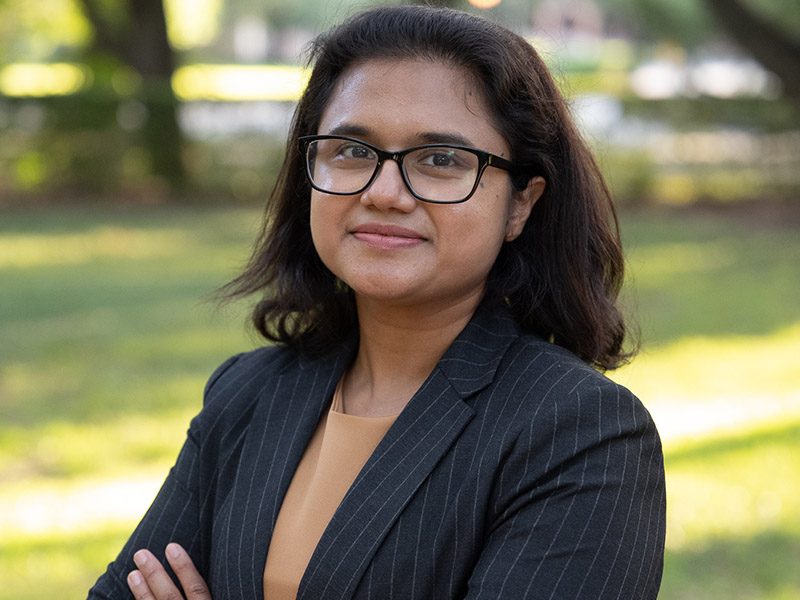
Julie Shah is the H.N. Slater Professor at the Department of Aeronautics and Astronautics and leads the Interactive Robotics Group at MIT’s Schwarzman College of Computing . She focuses on creating robots that work effectively alongside humans in dynamic environments, combining expertise in artificial intelligence, human factors, and systems engineering. BS, SM: Aeronautics and Astronautics (MIT) PhD: Autonomous Systems (MIT) Her research explores human-robot collaboration , emergent communication , and trust calibration in automated systems, with applications in manufacturing, surgery, and space exploration. Recent publications highlight advancements in language-guided abstraction , human-in-the-loop policy adaptation , and ethics-aware AI . Julie Shah has received prestigious accolades including the NSF CAREER award and recognition in the MIT Technology Review TR35 . Her lab’s work on industrial human-robot collaboration was named one of the 10 Breakthrough Technologies of 2013 by Tech Review. She previously worked at Boeing Research and Technology , where she developed innovative methods for human-robot teamwork in safety-critical domains. Her lab at MIT continues to push boundaries in robot locomotion , situational awareness , and sociotechnical systems .
Vishnu Prabhu is an Assistant Professor at the University of Central Florida , affiliated with the School of Modeling, Simulation and Training. His research focuses on data-driven decision-making in healthcare , health systems modeling , and IoT solutions to improve patient, clinician, and system outcomes. He previously served as an Assistant Professor at UNC Charlotte. Prabhu employs simulation and stochastic modeling to tackle public health challenges such as Emergency Department Crowding and Healthcare-Acquired Infections . He also explores Extended Reality (AR/VR) , wearables , and non-pharmacological interventions for pain and mental health management, conducting multiple clinical trials in these areas. His recent publications and projects emphasize hybrid modeling , digital health tools , and workforce optimization in healthcare systems. Prabhu has secured grants for initiatives like ED-SHIFT (NIOSH/CDC) and AI applications for pneumonia detection (NSF SBIR). Education : Ph.D. and M.S. in Industrial Engineering (Clemson University), B.Tech. in Mechanical Production Engineering (University of Kerala). Projects : Co-Investigator for ED-SHIFT, Principal Investigator for AI-driven pneumonia detection, Co-Founder of NSF SBIR Phase I.
Dr. Pratima Saravanan is an Assistant Professor in the School of Industrial Engineering and Management at Oklahoma State University, where she has been employed since July 2023. Previously, she held concurrent appointments as a Postdoctoral Fellow at the Center for Health Data Science and Analytics at Houston Methodist Hospital (2021-2023) and as a Lecturer at Texas A&M University's Department of Industrial & Systems Engineering (2022-2023). Her educational background includes: PhD in Industrial Engineering with a focus on Human Factors from The Pennsylvania State University (2021) MS in Industrial Engineering from The Pennsylvania State University (2020) MS in Bioengineering from The Pennsylvania State University (2018) BE in Biomedical Engineering from PSG College of Technology, India (2015) Dr. Saravanan's research spans cognitive sciences, human factors in healthcare, and clinical decision-making. She specializes in understanding human performance in complex systems, particularly in healthcare settings and emergency response scenarios. Her work integrates methodologies from human factors engineering, cognitive psychology, and data science to improve system design and human performance. She leads the Cognitive Performance Lab at Oklahoma State University, which focuses on studying human cognitive performance in various contexts including healthcare and emergency response. Her recent publications demonstrate a strong focus on cognitive workload assessment, stress monitoring in healthcare professionals, decision-making processes, and prosthetic rehabilitation. Her work increasingly incorporates advanced analytical methods including machine learning, topic modeling, and physiological measurements to understand human performance in complex environments. She has published extensively on ICU nurse stress during the pandemic, firefighter decision-making, and prosthetic prescription methodologies. Dr. Saravanan teaches courses including Work Design, Ergonomics, and Human Performance; Economic Decision Analysis; and Doctoral Research and Dissertation. She is currently involved in funded research projects including 'A Multi-level Investigation of Factors Influencing Community Health Program Efficacy' through the InSPIRE Program in the College of Education and Human Sciences, and 'Occupational Stress and Cognitive Workload among Urban and Wildland Fire Fighters: A Comparison Study' with the University of Texas Health Science Center at Houston.
Dr Martin Stacey is a Senior Lecturer at De Montfort University's Faculty of Computing, Engineering and Media, where he works within the School of Computer Science and Informatics. His interdisciplinary background combines psychology and artificial intelligence to inform both teaching and research activities focused on human-computer interaction and information design. His educational background includes a BA in Experimental Psychology from the University of Oxford, an MS in Psychology from Carnegie-Mellon University, and a PhD in Artificial Intelligence from the University of Aberdeen. His research spans cognitive science, design methodology, and human factors engineering. Stacey's research interests center on design thinking , design processes , and human-design tool interaction . His work examines how designers use representations of information, factors influencing problem structuring, causal modeling of design processes, and the role of object references in design. His interdisciplinary approach integrates psychology, sociology, AI, and philosophy to compare design processes across industries. Analysis of his recent publications reveals a consistent focus on the epistemology of design processes, with increasing attention to method ecosystems, knowledge representation in engineering, and the philosophical foundations of design. His work bridges theoretical design research with practical applications in biomedical engineering, digital governance, and stress monitoring systems. As an academic supervisor, he currently advises PhD student Yee Mei Lim. His professional service includes membership on the Advisory Board for Design Computing and Cognition conferences (2006-2014) and extensive peer review activities for leading design and engineering journals.
David F. Dinges, Ph.D., is Professor of Psychiatry at the University of Pennsylvania's Perelman School of Medicine. He serves as Director of the Unit for Experimental Psychiatry, Chief of the Division of Sleep and Chronobiology, and Associate Director of the Center for Sleep and Circadian Neurobiology. His affiliations include the Neuroscience Graduate Group, Psychology Graduate Group, and multiple interdisciplinary research centers. Education: A.B. in Psychology, St. Benedict's College (1971) M.S. and Ph.D. in Physiological Psychology, Saint Louis University (1974, 1976) M.A. (Honorary), University of Pennsylvania (1993) Dr. Dinges leads translational research on neurobehavioral regulation by sleep and circadian biology, using methodologies including cognitive testing, neuroimaging, electrophysiology, and biomarker analysis. His work examines vulnerability to sleep loss, recovery dynamics, and fatigue countermeasures in safety-critical occupations including spaceflight, aviation, and healthcare. He developed the widely used Psychomotor Vigilance Test (PVT). His publications focus on sleep physiology, neurobehavioral performance, and fatigue risk management in operational environments. Core themes include biomarker discovery, individual differences in sleep vulnerability, and technological solutions for fatigue mitigation. Awards: NASA Distinguished Public Service Medal (2007) Distinguished Scientist Award, Sleep Research Society (2018) Nathaniel Kleitman Distinguished Service Award (2017) Pioneer Award, National Space Biomedical Research Institute (2016) He directs the Unit for Experimental Psychiatry laboratory, which conducts controlled studies in the Hospital of Pennsylvania's Sleep and Chronobiology Laboratory and field research in extreme environments. His team develops neurobehavioral technologies for clinical and occupational applications, supported by NASA, NIH, and FAA grants. He mentors trainees at all career stages.
Benjamin James Knox serves as an Adjunct Associate Professor at the Norwegian University of Science and Technology (NTNU), with his work based at the Gjøvik campus. His research bridges cybersecurity with cognitive science, focusing on human factors in cyber defense operations. He maintains an active research profile with numerous publications through NTNU's institutional repository. Dr. Knox's research interests center on the intersection of human cognition and cybersecurity, with significant contributions in cognitive agility for cyber operators, neuroergonomic approaches to threat identification, and the psychological dimensions of cyber warfare. His work explores how cognitive processes, emotional states, and team dynamics influence cyber situational awareness and decision-making in high-stakes environments. Recent research has expanded into extended reality training environments, individual risk assessment for cybersecurity personnel, and the application of digital twins for critical infrastructure protection. His publication record demonstrates consistent output across multiple high-impact venues including Frontiers in Education, IEEE Access, and Lecture Notes in Computer Science. Dr. Knox frequently collaborates with researchers across European institutions, particularly in Norway, Lithuania, and Germany, indicating strong international research networks. His work with NATO Science and Technology Organization highlights the strategic relevance of his research to defense applications. While specific laboratory affiliations aren't detailed in the available information, his publications suggest involvement with cyber defense simulation environments and neuroergonomic testing facilities. His recent focus on extended reality and digital twin technologies indicates engagement with advanced simulation platforms for cybersecurity training.
Dr. Tobias Grundgeiger is an Associate Professor in Human-Computer Interaction at Julius-Maximilians-University Würzburg, where he serves as an Academic Councillor in the Faculty of Human Sciences. He leads research in the Institute for Human-Computer-Media, specifically within the Psychological Ergonomics group under Prof. Dr. Jörn Hurtienne. Additionally, he holds an Associate Professor/Honorary Research Fellow position at The University of Queensland, Brisbane, Australia. His educational background includes: PhD studies at The University of Queensland, Brisbane, Australia (2007-2010) Psychology studies at the University of Regensburg (2001-2006) Habilitation/Associate Professor qualification in Human-Computer Interaction (2022) Dr. Grundgeiger's research focuses on the interaction between people and technology in socio-technical systems, particularly in healthcare environments such as hospitals, control rooms, and aviation. His work examines how technology can be designed and integrated into complex systems to maximize user benefits while maintaining safety. A secondary research interest explores technology's role in relation to dying and death, aiming to develop technologies that transform engagement with these experiences into meaningful, eudaimonic encounters. His methodological approach combines empirical studies in real-world settings with theoretical frameworks from activity theory, embodied interaction, and psychological need satisfaction. His recent publications reveal a strong focus on AI applications in anesthesiology, human-AI teaming, augmented reality interfaces, and interruption management in safety-critical contexts. A significant portion of his work examines how technology can support clinicians during high-stress medical procedures while maintaining workflow integrity. His research demonstrates how cognitive aids, documentation assistants, and monitoring systems can be designed to align with clinical workflows rather than disrupt them. Dr. Grundgeiger is actively involved in several major research projects, most notably as contact person for the CASSANDRA project (2022-2025), which develops an AI team member for anesthesiology. This €1.34 million project, funded by the German Federal Ministry of Education and Research, aims to create a voice-based virtual agent that supports anesthesia teams through automated documentation and clinical decision support. His teaching responsibilities span both undergraduate and graduate levels, covering Human-Computer Systems, Psychological Ergonomics, Healthcare Usability & User Experience, Eye-Tracking methods, and Theories of Human-Computer Interaction. His pedagogical approach emphasizes practical applications of theoretical concepts in real-world settings.
Professor Shujun Li is a distinguished academic at the University of Kent , where he has served as a Professor of Cyber Security since November 2017. He is also the Director of the Institute of Cyber Security for Society (iCSS) , a UK government-recognized Academic Centre of Excellence in Cyber Security Research (ACE-CSR), and leads the Cyber Security Research Group at Kent's School of Computing. His research spans interdisciplinary cyber security , focusing on human-centric approaches, privacy, digital forensics, multimedia computing, and AI applications. He actively collaborates across disciplines such as Electronic Engineering, Psychology, Sociology, Law, and Business. Previously held roles include Deputy Director of Surrey Centre for Cyber Security (2014–2017) at the University of Surrey. Key projects include EPSRC-funded initiatives on human-centric cyber security and privacy. His recent publications highlight expertise in areas like data privacy , deepfake analysis , password security , and MaaS (Mobility-as-a-Service) vulnerabilities , with contributions to journals such as IEEE Transactions on Dependable and Secure Computing and Frontiers in Big Data . Scientific Honors: Two Best Paper Awards ISO/IEC Certificate of Appreciation (2012) Fellow of BCS Senior Member of IEEE Member of ACM As a principal/co-supervisor, he has guided students including Mohamad Imad Mahaini , Nandita Pattnaik , and Ali Raza . He also serves on editorial boards and advisory groups like the Scientific Board of RISCS and the Steering Committee of ARES .
David J Hornsby is Professor of International Affairs at the Norman Paterson School of International Affairs , Carleton University, where he also serves as Vice-Provost and Associate Vice-President (Academic) and Associate Vice-President (Teaching and Learning) . He previously held academic leadership roles as Head of the Science, Technology, Engineering and Public Policy (STEaPP) Department at University College London (UCL) and Assistant Dean of Humanities (Teaching and Learning) at the University of the Witwatersrand (Wits), Johannesburg. He currently retains honorary professorships at both UCL and Wits. Education Ph.D., University of Cambridge, UK Fulbright Scholar, The Fletcher School, Tufts University Research Interests Professor Hornsby’s research is strongly interdisciplinary, bridging the biological and social sciences. He focuses on the politics of science , international political economy , and foreign policy analysis —particularly Canadian and South African foreign policies. A second major strand of his scholarship interrogates pedagogy and the philosophy of higher education , with emphasis on socially just teaching practices, large-class innovations, online and open education, and post-pandemic university transformation. Recent publications (2020-2025) reveal a concentrated effort to re-imagine higher education after COVID-19. Collectively these works analyse: Equitable and inclusive online learning infrastructures Large-class pedagogies in International Studies The civic role of the “citizen scholar” Policy frameworks for resilient universities Global South perspectives on educational technology Scientific Awards & Honours While no specific awards are itemised in the provided text, Professor Hornsby is noted as an “award-winning lecturer” and a former Fulbright Scholar , recognitions that underscore his distinction in both scholarship and teaching. Advising & Grants No individual student names or grant details are supplied; however, his leadership roles at three institutions imply extensive supervision and grant management responsibilities. Editorial & Board Memberships Board Member, Canadian Foreign Policy Journal Board Member, Digital Policy Studies Board Member, Center for Engaged Learning Open Book Series Co-editor, Palgrave book series Political Pedagogies Laboratories & Teams While no named laboratory is mentioned, Professor Hornsby’s cross-institutional honorary affiliations and editorial board service indicate active participation in multiple scholarly networks focused on science policy, international studies pedagogy, and higher-education innovation.
Timofey Aleksandrovich Berezner is a Lecturer and Junior Research Fellow at the National Research University Higher School of Economics (HSE), affiliated with the Faculty of Social Sciences and Department of Psychology. He serves as Deputy Head of the Department for student-related affairs and conducts research at the Laboratory for Cognitive Psychology of Digital Interface Users (HSE UX Lab). Since joining HSE in 2019, he has developed expertise in cognitive psychology, metacognition, and human-computer interaction. Education includes: Master's in Psychology (HSE, 2023) Bachelor's in Psychology (HSE, 2021) Professional retraining in Psychotherapy (2023-2024) Multiple professional development courses including Cognitive Science (Sofia, 2021), AI fundamentals (2024), and Schema Therapy (2023) Research focuses on: Cognitive processes in digital interfaces and learning environments Metacognitive regulation in decision-making and executive control Perceptual factors (disfluency effects, font psychology) AI-human cognition interactions His work bridges cognitive neuroscience with practical applications in UX design and education. Publication analysis reveals strong emphasis on: Metacognitive regulation mechanisms Perceptual influences on cognition Cognitive load measurement (NASA-TLX adaptation) Empirical studies of disfluency effects Human-AI interaction challenges Awards and Recognition: Best Teacher (2025) HSE High Professional Potential Group - New Researchers (2022-2023) Departmental commendation (2022) Winner of HSE Science Battles (2022) Professional activities include: Doctoral research on perceptual factors in metacognition Teaching cognitive psychology courses Membership in HSE UX Lab researching digital interface cognition External roles as AI-trainer at YandexGPT and lecturer at RANEPA
Pietro Arico is an Assistant Professor at the Department of Computer, Control and Management Engineering, Sapienza University of Rome, and Chief Technology Officer at BrainSigns. He holds a PhD in Bioengineering from University of Bologna (2014) and an M.Sc. in Biomedical Engineering from Sapienza University of Rome (2010). Biomedical Engineering Education Expertise in Brain-Computer Interfaces (BCI) Specializes in biosignal processing and machine learning His research focuses on: Passive BCI Systems: Real-time assessment of mental states (workload, attention, stress) using EEG, ECG, and other biosignals in operational environments like driving and aviation. Signal Processing Innovation: Development of algorithms for artifact removal and feature extraction in non-laboratory settings. Hybrid BCI Applications: Integration of EEG and EMG for rehabilitation systems targeting post-stroke patients. Recent work trends emphasize: Real-time mental workload monitoring in clinical and automotive contexts. Artifact correction techniques for EEG data in naturalistic environments. Neurophysiological characterization of mixed reality embodiment. Scientific awards include: 2024 - MINDTOOTH paper selected for AIIC National Conference 2014 - Award 'Massimo Grattarola' for BCI research 2014 - Scientific Prize 'I Guidoniani' for mental load studies 2013 - Finalist for Scientific Award 'I Guidoniani' He teaches Biosignal Processing , Biological System Models , and Biosignal Processing and Electromagnetic Fields in Sapienza's MSc programs in Biomedical Engineering and Medicine and Surgery HT.
Elin Anna Topp is a Senior Lecturer in the Department of Computer Science at Lund University's Faculty of Engineering (LTH), holding the title of Excellent Teaching Practitioner (ETP) and serving as Head of Department. She manages projects including NEXTG2COM (a Vinnova Competence Centre) and contributes to Lund's Natural and Artificial Cognition and AI and Digitalization profile areas. Her research centers on establishing common ground between humans and machines through Artificial Intelligence, Cognitive Science, and Human-Robot Interaction. She develops robotic systems that communicate effectively with users in industrial/service robotics and autonomous system monitoring (e.g., drones, self-driving cars), focusing on resolving ambiguities from mismatched human-robot expectations. This work stems from her PhD research on Human Augmented Mapping and addresses critical needs for flexible, human-comprehensible interfaces in increasingly autonomous systems. Recent publications (2023-2025) reveal strong thematic cohesion in human-robot interaction for autonomous systems, with dominant trends in situational awareness assessment (UAV operations), conflict simulation (autonomous driving), and conversational interfaces. Her work consistently bridges cognitive theory with practical robotics applications, emphasizing human-centered design for safety-critical domains. Scientific recognition includes: Excellent Teaching Practitioner title from LTH's Pedagogical Academy (2022-present) She actively shapes graduate education as WASP Graduate School Management member (since 2019) and COMPUTE Graduate School Steering group member, coordinating specialized courses like WASP's Interaction, Collaboration, and Visualisation. Major research funding comes from AISA (AI-powered situational awareness, 2023-2026) and NextG2Com (2024-2028), supporting her work on shared autonomy and digital infrastructure. Her leadership extends to supervising PhD projects including 'Get a Grip - Accurate robot–human handovers'. Topp co-manages RobotLab LTH infrastructure and collaborates across Lund's robotics ecosystem through initiatives like Robotics Week for schools and the Natural and Artificial Cognition conference series, fostering interdisciplinary teams spanning computer science, engineering, and cognitive science.
Professor Masahiko Munechika is affiliated with Waseda University's School of Creative Science and Engineering as a faculty member. He holds a Doctor of Engineering from the University of Tokyo and has been actively involved in quality management, safety engineering, and healthcare systems research for over 30 years. Current academic rank: Professor Primary research domains: Quality Management, Healthcare Safety, Social Systems Engineering Research focus spans multiple disciplines: Healthcare Safety Engineering: Systematically analyzing medication incidents, developing error-proofing methodologies, and establishing business continuity protocols during disasters Quality Management Systems: ISO 9001 implementation in healthcare, standardization frameworks, and cross-industry application of quality principles Kansei Engineering: Investigating how package design elements influence consumer perception and product evaluation Article trends demonstrate consistent focus on medical error prevention (2013-2021), disaster response systems (2016-2021), and quality management methodologies (2014-2024). Recent publications extend quality control principles to architectural coatings evaluation (2024) and process standardization in healthcare. Scientific recognitions include: Deming Prize Committee membership (2004-2024) Multiple Best Paper Awards (2012-2019) Nikkei Quality Control Literature Award (2010, 2015) Industrial Standardization Commendation (2015) As an educator , he has contributed to medical safety education and developed standardized clinical training tools including Kiken Yochi Training sheets and PCAPS (Patient Condition Adaptive Path System). His work spans both theoretical and applied domains across healthcare , manufacturing , and public infrastructure sectors.
Jan-Willem van 't Klooster is an Associate Professor affiliated with the Digital Society Institute, TechMed Centre, and BMS Lab at the University of Twente. His research bridges Artificial Intelligence, Human-Computer Interaction, and Health Informatics, focusing on social robotics, virtual reality, and e-health technologies. Education: PhD in a field related to Artificial Intelligence or Human-Computer Interaction. His work explores the societal context of AI, with a focus on physiological computing, mental workload detection, and user experience in digital systems. Recent projects include AI-reinforced social robotics for rheumatic disease patients and VR-based emotion assessment using multimodal data. Scientific awards include the Best Conference Paper Award (2019). He has contributed to datasets like Perceived Mental Workload Detection using Multimodal Physiological Data and served as an editor for conference proceedings such as IHCI 2024. His research trends emphasize neurostimulation, wearable device validation, and mobile e-coaching applications. Scientific Awards Best Conference Paper Award (2019) Van 't Klooster engages in public outreach, including media appearances on the Dutch CoronaMelder app and its societal impact. He actively participates in academic activities like invited talks on social robotics and oral presentations at international conferences.
Steven C. Mallam is an Associate Professor at the University of South-Eastern Norway within the Department of Maritime Operations, Faculty of Technology, Natural Sciences and Maritime Studies. His academic journey began with a Master of Science specializing in work safety and ergonomics from Memorial University of Newfoundland, followed by a PhD in Human Factors from Chalmers University of Technology in Sweden. Dr. Mallam leads research at the Ocean Industries Concept Lab, focusing on the critical intersection of human performance and emerging technologies in maritime contexts. Dr. Mallam's research spans several interconnected domains centered on human factors in complex maritime systems. His work examines how humans interact with increasingly automated technologies, particularly in navigation and collision avoidance systems. He investigates the application of virtual and augmented reality for training and operational support, measuring their impact on situation awareness, performance, and safety. A significant portion of his recent work addresses the human dimensions of autonomous shipping, exploring transparency requirements, supervision challenges, and the evolving role of navigators. He also conducts important research on maritime cybersecurity from a human factors perspective, examining how crews manage cyber incidents and how security operation centers can be optimized for human performance. Dr. Mallam's publication record demonstrates consistent high productivity across multiple high-impact journals and conferences in human factors, ergonomics, and maritime safety. His recent work (2023-2025) shows particular emphasis on autonomous shipping human factors, virtual/augmented reality applications, and maritime cyber resilience. His research employs diverse methodologies including systematic reviews, experimental studies, cognitive task analysis, and simulator-based research, often in close collaboration with industry partners. Dr. Mallam actively contributes to advancing human factors practice in high-risk industries through initiatives like the Human Factors Network for High-Risk Industries in Canada. His work bridges theoretical human factors principles with practical maritime applications, making significant contributions to improving safety and performance in one of the world's most critical transportation sectors. As an educator, Dr. Mallam integrates his research findings directly into maritime education programs, ensuring students receive cutting-edge knowledge about human factors in contemporary and future maritime operations. His teaching likely emphasizes practical application of human-centered design principles and prepares students for the evolving technological landscape of maritime industries.