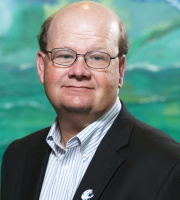
Sean PowersView profile
Professor
Sean Powers serves as the Angelia and Steven Stokes Endowed Professor in Environmental Resiliency and Director of the Stokes School of Marine and Environmental Sciences at the University of South Alabama, while also holding the position of Senior Marine Scientist at the Dauphin Island Sea Lab. His dual roles bridge academic leadership and frontline marine research in the Gulf of Mexico ecosystem. Dr. Powers completed his Ph.D. at Texas A&M University in 1997, establishing the foundation for his expertise in marine fisheries and ecosystem dynamics. This advanced training equipped him for his current focus on conservation science and resource management. His research program centers on fisheries ecology with emphases on conservation and restoration of coastal shellfish and finfish populations. Powers investigates ecological relationships of estuarine fishes and benthic invertebrates supporting commercial and recreational fisheries, aiming to generate actionable science for habitat restoration and sustainable management. His work frequently addresses human impacts on marine ecosystems and climate change adaptation strategies, with particular attention to Gulf of Mexico fisheries. Analysis of his recent publications reveals consistent focus on red snapper, red drum, and oyster reef systems through integrated approaches combining field surveys, biophysical modeling, and long-term monitoring. Key themes include artificial reef efficacy, oil spill impacts on marine communities, and fisheries management responses to regulatory changes, demonstrating strong interdisciplinary collaboration across ecology, conservation, and policy domains. Dr. Powers currently mentors eight graduate students across Ph.D. and master's programs while securing major research funding from Alabama Department of Conservation and Natural Resources, NOAA, U.S. Fish and Wildlife Service, and NOAA RESTORE Science Program. His active grants address ecosystem-based fisheries management, artificial reef monitoring, oyster restoration, and estuarine fish dynamics. Embedded within the Dauphin Island Sea Lab research infrastructure, Powers leverages extensive field access to Gulf of Mexico ecosystems while maintaining strong partnerships with state and federal management agencies to ensure his science directly informs conservation decisions.