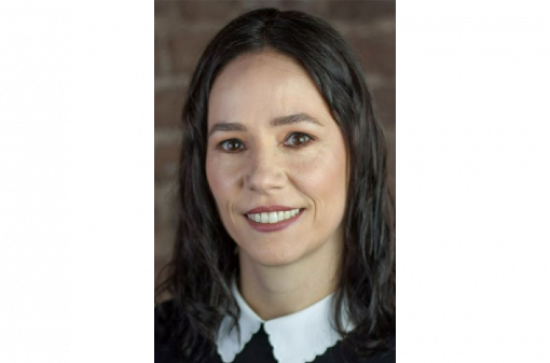
Prof. Anya Belz is Full Professor of Computer Science at Dublin City University's School of Computing and Science Lead at ADAPT Research Centre. A leading NLP researcher with PhD-level expertise, she specializes in natural language generation, evaluation methodologies, and multimodal systems. Recipient of multiple best paper awards and NAACL Test of Time Award nomination. Research innovations include foundational work on statistical language generation (deployed in weather forecasting systems), comparative evaluation frameworks, vision-language integration, and reproducibility quantification. Current EPSRC-funded ReproHum project coordinates 20 global labs studying evaluation consistency. Achievements : Developed industry-deployed generation systems for accessibility applications Pioneered cross-modal alignment techniques for image description Authored 100+ publications spanning generation, evaluation, and reproducibility
Aura Istrate is a Lecturer/Assistant Professor in Urban Planning & Sustainable Urbanism at the School of Architecture, Planning and Environmental Policy at University College Dublin (UCD). With an international background spanning multiple continents, she conducts interdisciplinary research on sustainable urban development, focusing on active mobility, nature-based solutions, and climate-neutral cities. She teaches GIS and urban planning modules while coordinating several significant research projects across European and Asian contexts. University College Dublin, School of Architecture, Planning and Environmental Policy Primary Coordinator of C-NEWTRAL (Horizon MSCA-DN 2024-2028) Co-Leader of REALLOCATE (Horizon Europe project 2023-2027) Principal Investigator for BIODIVERSA+ projects (NatureScape and NBS4AQUAMISSION) Educated at the University of Architecture and Urban Planning 'Ion Mincu' in Bucharest (BA and MA) and the University of Liverpool (PhD), Dr. Istrate further enhanced her teaching credentials with a Professional Certificate in University Teaching & Learning from UCD. Her academic journey reflects a strong foundation in architectural and urban planning principles combined with specialized expertise in sustainable urbanism. Dr. Istrate's research focuses on smart and sustainable urbanism, particularly examining active mobility, livable streets, green public spaces, and nature-based solutions in urban planning. Her work employs participatory, geospatial, and mixed methods to inform smart communities and the transition to climate-neutral cities. She has practical international experience in urban design and planning, with ongoing collaborations spanning European and Asian countries, currently teaching and researching across cultures in UCD and UCD's International Colleges (CDIC). Her recent publications reveal a strong focus on street vitality, urban heat adaptation, and nature-based solutions. The research demonstrates methodological diversity combining quantitative spatial analysis with qualitative community engagement approaches. Her work spans multiple geographic contexts, with particular expertise in Chinese urban environments and European cities, showing how urban planning concepts need to be contextualized for different cultural settings. The articles consistently address climate adaptation challenges through innovative approaches like urban nature games and fine-grained street classification systems. Dr. Istrate serves as a PhD thesis supervisor and is actively involved in major research initiatives including C-NEWTRAL (as Primary Coordinator), REALLOCATE (as Co-Leader), and BIODIVERSA+ projects (as PI for NatureScape and NBS4AQUAMISSION). Her grant portfolio includes Horizon Europe projects and other significant funding that supports interdisciplinary research on climate-neutral urban development. She has coordinated multiple teaching modules including Planning Design & Development, GIS & Planning, Intro to Spatial Planning, and Local Planning Studio. She leads international research collaborations and maintains active partnerships across various European and Asian countries. Her work bridges academic research with practical urban planning applications, particularly through her focus on research-by-design approaches and participatory methods that engage communities in the planning process. She has served as a lecturer, tutor, or teaching assistant across departments of Architecture, Planning, Environmental Studies, Global Studies, and Human Geography in Ireland, the UK, Czechia, Sweden, China, and Romania since 2010.
Dr. Andrew Hines is a Researcher at the School of Computer Science, University College Dublin, specializing in machine learning applications for signal processing in speech, audio, and video domains. His work focuses on Quality of Experience (QoE) modeling, speech quality assessment, and immersive media analysis. He has held leadership roles in European COST Actions like Qualinet and CryptoAction, and previously worked in industry as a Director of Engineering. University: University College Dublin Role: Director of Research, Innovation and Impact Key Collaborations: IEEE (Senior Member), Audio Engineering Society (Ireland) Research interests center on machine learning for QoE optimization, audio-visual integration, and healthcare applications like heart sound classification and stroke rehabilitation. His recent publications explore self-supervised learning, neural speech codecs, and contextual factors in speech/audio quality assessment. Scientific contributions include awards like IEEE Senior Membership, and his work spans both academic research and industrial engineering in finance and aviation sectors. He leads the QxLab research team at UCD and develops open-source platforms such as WARP-Q and AQP for quality metrics.
David Lillis is an Associate Professor in the School of Computer Science at University College Dublin (UCD). His research focuses on Natural Language Processing (NLP), Artificial Intelligence (AI), and their applications in legal and forensic contexts. He leads projects like CeADAR (Ireland’s Applied AI Center) and the Transpire project, collaborating with organizations such as Corlytics and the Department of Enterprise, Trade and Employment. He holds adjunct roles as a Guest Professor at Beijing University of Technology’s Data Mining and Security Lab and has been a Fulbright Scholar at the University of New Haven’s Cyber Forensics Research and Education Group. Education: B.A. (Hons) in Law and Accounting, University of Limerick Higher Diploma in Computer Science, UCD M.Sc., Ph.D. in Computer Science, UCD Professional Certificate in University Teaching & Learning, UCD Research Interests: Legal AI, digital forensics, machine learning, multi-agent systems, and information retrieval. Recent work includes NLP for regulatory analysis, crop yield prediction via neural networks, and AR-driven decision support systems. Grants & Projects: Principal Investigator: Transpire (AI Platform for Regulation) SFI Funded Investigator: CONSUS (Crop Optimization) PI: CeADAR Technology Centre Teaching roles include Deputy Programme Director for Software Engineering at Beijing-Dublin International College (BDIC) since 2014. Labs & Groups: UCD Forensics and Security Research Group, ML-Labs (SFI Centre for ML Training), and the Data Mining and Security Lab (BJUT).
Dr. Lucy Hederman is an Associate Professor in Computer Science at Trinity College Dublin (TCD), affiliated with the O'Reilly Institute. Her research focuses on leveraging data and documents to support clinical decision-making, particularly in healthcare knowledge work. She has led interdisciplinary projects addressing data integration for rare diseases (e.g., ANCA-vasculitis, MND) and socio-technical challenges in adopting patient-generated health data (PGHD) into clinical practice. Dr. Hederman has secured over €xxxk in research funding and leads the Heterogeneity and Interoperability (H&I) challenge in the SFI-funded ADAPT 2 Centre. Her educational background includes advanced studies in computer science and healthcare informatics, though specific degree details are not explicitly stated in the text. She has supervised 4 PhDs, 2 research MScs, and co-supervised 6 PhDs, while currently mentoring 8 graduate students. Her career includes founding TCD spinouts PBOC and BIOLOGIT, which align with her research in health informatics and technology. Key research interests include: Interdisciplinary collaboration between clinicians, researchers, and technologists Data harmonization for multi-national clinical studies (e.g., FAIRVASC, Precision-ALS) Development of clinical decision support systems (CDSS) Design of mobile health (mHealth) tools for underserved populations Recent work emphasizes FAIR principles for healthcare data and socio-technical factors influencing PGHD adoption. She has contributed to over 70 peer-reviewed publications and actively participates in initiatives like the EU-funded TRANSFORM project and HRB Primary Care Research Centre. Dr. Hederman’s professional memberships include the Irish Computer Society, ACM, and Healthcare Informatics Society of Ireland. Her research has impacted healthcare practices in Ireland, with many MSc student projects influencing local health services.
Professor Markus Helfert is a leading academic in Digital Service Innovation and Digital Transformation at Maynooth University's School of Business . He serves as Director of the Innovation Value Institute , Hub for Data and Digital Research, and holds Science Foundation Ireland Principal Investigator roles at Lero – The Irish Software Research Centre and Adapt Research Centre. His research spans Service Innovation , Artificial Intelligence , Intelligent Transportation Systems , FinTech , and Enterprise Architecture , with active involvement in European Standardisation initiatives.
Jonathan McCarthy is a Professor and Director of the LLM Business Law Programme at University College Cork (UCC), serving as Deputy Director for Graduate Research in the School of Law. He holds a BCL and LLM from UCC and earned his PhD there in 2018. His research focuses on financial law and corporate governance, particularly regulatory frameworks for FinTech and SME support. He has taught at UCC since 2015 and previously at University of Limerick. Education: BCL (University College Cork) LLM (University College Cork) PhD (University College Cork, 2018) Research interests emphasize EU financial regulation, digital finance innovation, and corporate rescue mechanisms for SMEs. His work explores the efficacy of legal processes for start-ups and the adaptation of traditional frameworks to emerging technologies like blockchain and distributed ledger systems. He frequently reviews submissions for journals and publishers in his field. Teaching spans courses such as Company Law, Digital Finance Regulation, and Corporate Law at both undergraduate and postgraduate levels. He also serves as an external examiner for the Dublin Business School's LLB program. Professional development includes certifications in research integrity, universal design for learning, and connected curriculum strategies. Grants and funding include an Irish Research Council Government of Ireland Postgraduate Scholarship and the Ronan Daly Jermyn Scholarship during his doctoral research on SME rescue procedures in Ireland. His work combines qualitative analysis with policy advocacy for improved legal frameworks. Labs/Teams: Active in cross-disciplinary research within UCC's School of Law, collaborating on projects related to FinTech regulation and EU policy implementation.
John Byabazaire is a Research Fellow at the School of Computer Science, University College Dublin (UCD). He holds a PhD in Computer Science from UCD (2024), following a BSc (Gulu University, 2013) and MSc (Waterford Institute of Technology, 2018). His research focuses on IoT systems for data collection, remote sensing, AI-driven end-to-end system management, and fog analytics. He has held academic roles including Assistant Lecturer at Gulu University (2018–2019) and teaching roles at UCD since 2019, including Occasional Lecturer and Senior Teaching Assistant. His research spans smart agriculture, data quality in IoT, and education technology. Notable contributions include frameworks for yield mapping in precision agriculture, trust-based data validation in IoT, and machine learning approaches for livestock health monitoring. He has secured grants like the National ICT Initiatives Support Program (Uganda Government, 2019–2020). Teaching includes courses on cloud computing, web development, and distributed systems. His articles emphasize IoT data quality, agricultural analytics, and educational technology innovation. He actively promotes technology adoption in African education and agriculture sectors through collaborative projects.
John Breslin is a Personal Professor in Electronic Engineering at the College of Science and Engineering, University of Galway, serving as Director of the TechInnovate and AgInnovate programmes. Associated with two Taighde Éireann – Research Ireland Centres, he is a Principal Investigator at Insight Centre for Data Analytics (specializing in data analytics) and a Funded Investigator at VistaMilk (Agri-Technology), while also leading the EDIH Data2Sustain project. With an h-index of 50, over 12,000 citations, and 300+ peer-reviewed publications including seminal books on the Social Semantic Web, he ranks among Ireland's most influential researchers in digital technologies. Breslin's research fundamentally bridges Semantic Web technologies, AI-driven data analytics, and practical innovation. His co-creation of the SIOC framework—implemented across 65,000+ websites by entities like Yahoo and Boeing—demonstrates real-world impact in social data interoperability. Current work leverages blockchain and federated learning for sustainable Agri-Technology through VistaMilk, while his TechInnovate programmes translate academic research into commercial ventures across healthcare, smart manufacturing, and energy systems. Analysis of his 15 most recent publications reveals dominant themes in AI-enhanced security (35% of works), blockchain applications for sustainability (27%), and multimodal AI for healthcare (20%). His team pioneers privacy-preserving techniques for IoT and medical devices, neurosymbolic visual reasoning frameworks, and federated learning architectures addressing data heterogeneity—directly supporting his roles in national research infrastructures like Insight and VistaMilk. John has received several prestigious awards: IIA Net Visionary Award (twice) ITAG Outstanding Contribution to the ICT Sector Award Galway Chamber President’s Award Best Irish-Published Book Award (2020 for Old Ireland in Colour) Multiple Best Paper Awards He leads major research initiatives funded by Taighde Éireann – Research Ireland: Insight Centre for Data Analytics (as Principal Investigator) VistaMilk SFI Research Centre (as Funded Investigator) EDIH Data2Sustain (as Principal Investigator) His entrepreneurial programs TechInnovate and AgInnovate have mentored 200+ startups, securing €50M+ in follow-on funding. Breslin co-founded PorterShed (Galway City Innovation District) and serves on Scale Ireland's Steering Group, creating Ireland's most active regional innovation ecosystem outside Dublin. He maintains active industry partnerships with Vodafone, Boeing, and agricultural cooperatives through VistaMilk's testbed facilities.
Lucy Collins is an Associate Professor in the School of English, Drama and Film at University College Dublin (UCD), where she has been a faculty member since 2008. She previously taught at Trinity College Dublin and the University of Cumbria. Her academic affiliations include the UCD College of Arts and Humanities, where she served as Associate Dean for Graduate Studies from 2020 to 2023. BA (Mod), Trinity College Dublin MRes, History of the Book, University of London PhD, Trinity College Dublin Prof Dip, University Teaching & Learning, University College Dublin Fulbright Postdoctoral Fellow, Harvard University Her research focuses on poetry and poetics, with particular emphasis on Irish, British, and American poetry since 1900. Key areas include ecocriticism, gender studies, the history of the book, and genetic criticism. She has published major works such as Contemporary Irish Women Poets: Memory and Estrangement (2015), Poetry by Women in Ireland 1870–1970 (2012), and The Irish Poet and the Natural World (2014). She is a co-founder of the Irish Poetry Reading Archive and academic lead on the Poetry as Commemoration project. Her recent scholarly output reflects a sustained engagement with environmental themes in poetry, archival practices, and intersections between literature, fashion, and identity. Articles such as 'Poet, Editor, Anarchist: Lola Ridge’s New York Networks' (2023) and 'Hidden Collections: The Value of Irish Literary Archives' (2020) demonstrate her interdisciplinary reach across literary history, cultural studies, and digital humanities. Fulbright Postdoctoral Scholarship MARBL Travelling Fellowship SMC Teaching Fellowship Trinity Award Wake Forest University Archives Travelling Fellowship Lucy Collins has supervised numerous graduate students and coordinated key modules including Dissertation, Irish Literature in English, and Reading Contemporary Poetry. She has received external funding and led research projects related to poetry, commemoration, and archival access. Her professional service includes editorial roles for Irish University Review and Canadian Journal of Irish Studies , and committee membership in IASIL, ASLE-UKI, and the International Yeats Society. She has also served as an external examiner for MA programs at several UK institutions.
Professor Donna Marshall is a Full Professor and Vice-Principal for Research & Innovation at the College of Business, University College Dublin (UCD). She serves as the Executive Director of the UCD Earth Institute: People, Work, Society initiative and is a multi-award-winning Sustainable Supply Chain scholar. Professor Marshall is ranked among the top supply chain researchers globally, with over one hundred research outputs in prestigious journals including MIT Sloan Management Review, Journal of Business Ethics, and Production and Operations Management. Her educational background includes a BSc and PhD from the University of Bath, UK. Professor Marshall has extensive experience in academic leadership, having served as Head (Vice Principal) of Research, Innovation and Impact for the UCD College of Business from September 2018 to June 2021. Professor Marshall's research focuses on sustainable supply chains, with particular emphasis on climate crisis response, ethical sourcing, supply chain transparency, and the bio-circular economy. She is passionate about bringing systemic change to broken supply chains and addressing the world's biggest crises of climate chaos and exploitation of people and planet. Her current research projects include sustainable supply chains in fashion with Fashion's Responsible Supply Chain Hub (FReSCH), sustainable bio-circular economy initiatives, and transparency in complex supply chains including controversial industries. She has secured research funding with multiple national and international teams amounting to over €30 million. Her recent publications reveal a strong trend toward examining power dynamics, justice issues, and transparency in supply chains, particularly in the fashion industry. She has also made significant contributions to understanding issue-washing (including greenwashing and biowashing) and developing frameworks for sustainable biocircularity. Her work increasingly focuses on just transitions and ensuring that sustainability efforts authentically address social and environmental challenges rather than merely creating the appearance of progress. Harold E. Fearon Award for Best Paper in Journal of Supply Chain Management (2014) Nevi Healthcare Best Paper Award Runner up at IPSERA Conference (2015) Multiple teaching awards for her innovative approaches to supply chain education Former President of the International Purchasing and Supply Education and Research Association (IPSERA) Professor Marshall has extensive teaching experience across undergraduate, Masters, and PhD levels. She created and directed the QS-world ranked UCD MSc in Supply Chain Management, which evolved into the MSc in Sustainable Supply Chain Management in 2023. She serves on the editorial boards of multiple high-ranking journals and provides pro bono advisory services to international organizations, companies, NGOs, and government bodies. Her teaching philosophy emphasizes individualized learning, inclusivity, and life-long learning, with a focus on creating safe, encouraging environments for her diverse international student body. She leads several research teams and initiatives including Fashion's Responsible Supply Chain Hub (FReSCH) and works closely with industry partners to translate research into practical applications for more sustainable and just supply chains.
Peter Stone is an Associate Professor of Political Science (Political Theory) at Trinity College Dublin, affiliated with the School of Social Sciences & Philosophy. He holds a B.A. from Pennsylvania State University (1993), an M.A. (1996), and a Ph.D. (2000) from the University of Rochester. His career includes roles at Stanford University (2003–2010) and Tulane University (2010–2011) before joining Trinity College Dublin in 2011. His research focuses on political theory, democratic theory, and the philosophy of social science, with a specialty in the role of lotteries in decision-making. He authored The Luck of the Draw: The Role of Lotteries in Decision Making (Oxford University Press, 2011) and edited Lotteries in Public Life: A Reader (2011). His work critiques and develops theories of democratic equality, justice, and the application of random selection in governance. Stone’s articles appear in journals like Journal of Political Philosophy , Journal of Theoretical Politics , and Politics, Philosophy, and Economics . He is a member of the American Political Science Association, the Bertrand Russell Society, and other professional organizations. His awards include the Bertrand Russell Society Book Award (2017) and the Lee Eisler Service Award (2022). He has advised on constitutional assemblies and participated in projects like Ireland’s Citizens’ Assemblies. His research on sortition and democratic innovation explores how lottery-based methods can enhance representation and fairness. Beyond academia, he enjoys swing dancing, Leonard Cohen’s music, and poker.
Sinead O'Keeffe is a Research Fellow at the University of Limerick in the Faculty of Science and Engineering , specifically within the Department of Electronic and Computer Engineering . Her research bridges the technical domain of optical fiber sensor development with critical applications in radiation therapy and sports medicine. Primary Research Themes Medical radiation dosimetry using optical fiber sensors Brachytherapy dose monitoring systems Sports injury prevention in Gaelic football and running Mental health literacy in rural farming communities Key Technical Contributions Development of scintillation-based dosimeters Characterization of perfluorinated polymer fibers 3D printed sensor systems for clinical and rehabilitation applications Interdisciplinary Applications Prostate cancer radiotherapy dose measurement Mental health intervention programs for athletes Work-family conflict analysis in Irish farming Email: sinead.okeeffe@ul.ie
Mags Crean is an Assistant Professor in Social Policy at Maynooth University, within the Department of Applied Social Studies under the Faculty of Social Sciences. She holds degrees from University College Dublin, including a PhD in Social Justice. Her research focuses on educational inequalities, poverty, equality, social class, care, health, ageing, and critical education. She has extensive experience in community and NGO sectors addressing policy areas like housing, health, and education. Notably, she served as an Independent county councillor, emphasizing participatory policy processes. Crean's research projects include roles as Principal Investigator for 'Dementia Advocacy: A human rights and social justice lens' and co-PI for 'Zero Tolerance Meath community prevention project'. She has led evaluations of social inclusion programs and dementia services. Her 2008 UCD Egalitarian World Initiative scholarship highlights her commitment to civil society roles. Professional service includes board memberships with Purple House Cancer Support, Wicklow Inclusion and Disability Committee, and East Coast Regional Drugs & Alcohol Task Force. Teaching focuses include Advanced Social Policy, Ageing and Social Policy, and Education Inequalities at undergraduate and postgraduate levels.
Dr. Sandrine Peraldi is an Assistant Professor in Linguistics at the School of Languages, Cultures and Linguistics, University College Dublin (UCD). She currently serves as Head of Linguistics and Deputy Head of School, and coordinates the Graduate Diploma in Localisation. With a PhD from Paris Diderot University, her career includes over a decade as Research Director at ISIT in Paris, where she led interdisciplinary research and international collaborations. Her educational background includes: PhD in Theoretical, Descriptive and Automatic Linguistics, Paris Diderot University MLitt, Paris Diderot University Master’s in Language Industry and Specialised Translation Certification in University Teaching and Learning, UCD Dr. Peraldi's research focuses on Corpus Linguistics, Terminology, Discourse Analysis (especially in professional contexts), Intercultural Communication , and Translation Studies , with a strong emphasis on machine translation and post-editing. Her work bridges cognitive, technological, and professional dimensions of language use. Her recent publications reveal a clear trajectory toward the multimodal analysis of virtual workplace communication, particularly how engagement and non-verbal cues function in online meetings. She has also contributed significantly to metaphor analysis in political discourse and the integration of corpus tools in translation workflows. Her scientific contributions are recognized through active participation in peer review for journals such as Meta , TEANGA , and International Journal of Organisations , and editorial leadership as former Editor-in-Chief of the Bulletin du CRATIL . She has secured major funding from the European Commission (TransCert, QUALETRA, PICT, AGORA), UKRI-AHRC, and the National Forum for Teaching and Learning. She supervises PhD students and leads research projects such as the Interactional Variation Online project. She is also involved in professional service through the Human Research Ethics Committee and the EMT assessor network. Dr. Peraldi leads several research and teaching initiatives, including the ENEOLI Cost Action on lexical innovation and the development of scenario-based intercultural learning resources.


/prod01/channel_3/media/tcd/scss/headshots/Lucy-Hederman-BW-1.jpg)