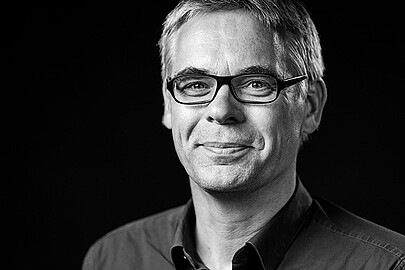
Prof. Alexander Lawall is a Professor of Cyber Security at IU University of Applied Sciences, where he also directs the Bachelor and Master courses in Cyber Security. Formerly, he served as the head of information security management at the REHAU Group, a global private-sector role. He holds a PhD from the Technical University of Dresden, followed by a career in information security architecture and leadership. His research focuses on system/network security, web/cloud security, IoT security, and Industry 4.0. Key themes include access control models, cross-organizational process management, and rights management frameworks. His work bridges academic and industrial cybersecurity challenges, with publications in reputable conferences and journals. Publications span hypergraph-based access control (2016), cloud resource management (2015), and cross-organizational process modeling (2014). He has contributed to advancing cybersecurity in distributed and collaborative environments, particularly through agent-based and formal language approaches. No scientific awards are explicitly mentioned. He has advised no students listed here, but his academic leadership includes curriculum development in cybersecurity education. His professional trajectory reflects a blend of academic research and industry expertise.
Prof. Dr. Miroslaw Malek is a Professor and Chair of Computer Architecture and Communication at the Humboldt University of Berlin's Institute of Computer Science. His research focuses on parallel/distributed systems, dependability, real-time systems, and embedded systems. He leads the Computer Architecture Research Group (ROK) and has supervised numerous PhD students across multiple institutions. Malek's work emphasizes fault management, network reliability, and proactive system design. His academic roles include advising on over 25 PhD theses and co-authoring influential books like Responsive Computer Systems . He holds a prominent position in the field, with extensive contributions to service availability, failure prediction, and fault-tolerant computing. Key affiliations include the Faculty of Mathematics and Natural Sciences and the Institute of Computer Science at Humboldt University. Research Interests: - Parallel/distributed/embedded systems - Dependability and real-time responsiveness - Web service architecture and fault tolerance - Network reliability and failure prediction Notable Achievements: - Developed consensus-based frameworks for responsive systems - Pioneered failure prediction methods using hidden Markov models - Authored/co-authored over 30 books and 200+ peer-reviewed publications - Supervised 25+ doctoral students at UT Austin and Humboldt University - Active in international workshops and symposiums on dependability and fault tolerance Labs/Teams: - Computer Architecture Research Group (ROK) at Humboldt University - Collaborations with TU Berlin, Duke University, and University of Minnesota
Prof. Dr.-Ing. André Nitze is a faculty member at the Brandenburg University of Technology in the Department of Economics . His research focuses on Internet of Things (IoT) , Digital Business Models , Software Architectures , Cloud Computing , Mobile Computing , and Predictive Analytics . He leads research projects on municipal LoRaWAN infrastructure, rural on-demand transport systems, and user-centered digitalization for sustainable development. Area of Expertise: IoT Applications, Software Engineering, Digital Transformation Current Research: Sustainable Municipal LoRaWAN, Rural Mobility Solutions Projects: risKI - KatKomm (2024-2026): Protocol development for disaster communication InNoWest (2023-2027): Subproject leader for digital sustainability OSLO (2023): Rural on-demand transport software architecture Awards: Best Paper Award at ICDS 2024 for work on LoRaWAN infrastructure Education & Supervision: M.Sc. and B.Sc. in Business Informatics Supervised over 15 theses including topics on GIS analysis, sensor networks, and AI applications
Professor Marion Mayer is a faculty member at ASH Berlin (Alice Salomon Hochschule Berlin), where she serves as Professor of Social Work with a focus on counseling. She is based in Room 414 and can be reached at T +49 30 99245-445 or via email at marion.mayer@ash-berlin.eu. Her work is situated within the College of Social Work at this institution dedicated to social, health-oriented, and educational practice. Mayer's research interests span counseling methods and qualitative counseling research in social work, with particular emphasis on psychosocial counseling methods focused on individual support. She investigates counseling in child and youth welfare, prevention of sexual violence, internet-based counseling settings, gender and intersectionality, and qualitative research methods including Grounded Theory. Her work explores the positioning of counseling within broader social and political contexts, examining how counseling practices respond to contemporary challenges including right-wing extremism and populism. Analysis of Mayer's publications reveals consistent focus on the temporal dimensions of counseling practice, the embodiment of counseling processes, and the political dimensions of social work. Her research demonstrates increasing attention to digitalization of counseling services, particularly for children and youth, while maintaining strong connections to foundational counseling theories and practices. She frequently examines counseling as situated in boundary spaces ('the between') where multiple social forces intersect. Mayer has been actively publishing from 2008 through 2021, with particular productivity in 2019-2020. Her work appears in both German and international publications, often collaborating with colleagues on interdisciplinary projects. She has contributed to edited volumes and journals focused on social work, counseling, and professional practice.
Prof. Dr. Mathias Ropohl is a University Professor for Chemistry Education at the Faculty of Chemistry, University of Duisburg-Essen, a position he has held since 2017. Previously, he served as a Junior Professor for Chemistry Education at the Leibniz Institute for Science and Mathematics Education (IPN) in Kiel from 2013 to 2017. His academic career is grounded in both rigorous research and practical teaching experience, including prior roles as a secondary school teacher in chemistry and geography. Current Affiliation: Professor of Chemistry Education, Faculty of Chemistry, University of Duisburg-Essen Previous Roles: Junior Professor at IPN Kiel; Secondary School Teacher Education: Doctorate in Chemistry, University of Duisburg-Essen (2010); Teaching Certification in Chemistry and Geography His research focuses on formative assessment in inquiry-based learning, media use in science education, and the optimization of learning opportunities for pre-service and in-service chemistry teachers. He employs empirical and design-based research methods to improve diagnostic practices, feedback mechanisms, and teacher training curricula. His work emphasizes coherence in science instruction and the integration of digital tools in education. The 15 most recent publications reflect a strong trend in educational diagnostics, teacher feedback, inquiry learning, and curriculum design. Key themes include the use of digital learning ladders, adaptive learning tasks, conceptual strand maps, and strategies for inclusive science education. These works span journals and edited volumes in chemistry education, science teaching, and educational psychology, highlighting interdisciplinary and practical applications. Scientific and Academic Service Contributions: Chair (since 2025) and board member (since 2023) of the Interdisciplinary Center for Educational Research (IZfB) Board member of the Center for Teacher Education (ZLB) since 2022 Member of the Senate Commission for Teaching, Studies and Continuing Education (2021–2022) Deputy Chairman of the Examination Board for Chemistry/Biotechnology Teacher Training since 2019 Member of the Faculty Council of the Faculty of Chemistry since 2018 Strand Chair at ESERA (2018–2022), Member of NARST International Committee (2020–2022) Ropohl actively leads and participates in national and international research projects such as CoSMaS, FLaME, FinChen, DECoSTE, PICoSTE, and OER@IPN. These projects focus on improving teacher education, developing formative assessment tools, and enhancing science instruction through coherence and technology. He supervises research teams and collaborates across institutions to bridge research and classroom practice. He has no explicitly listed PhD or master’s students in the provided text but collaborates extensively with researchers and educators. His leadership in academic service and curriculum development underscores his role as a key figure in German and international science education communities.
Justus Bogner is a researcher at the Institute of Software Engineering (ISTE) and leads the division for Software Engineering for AI- & Microservice-Based Systems (SE4AI&MS) at the University of Stuttgart. His work focuses on empirical software engineering , microservices , AI-based systems , and software evolvability . He has contributed extensively to understanding architectural migration, technical debt in AI systems, and quality assurance methodologies. His research spans various subfields including service-oriented architecture , RESTful API design , design patterns , and software maintainability metrics . Recent publications highlight empirical comparisons between JavaScript and TypeScript, frameworks for microservice migration, and systematic studies on AI engineering challenges. Bogner's work often bridges academic research with industry practices through collaborations with IEEE and Springer, though no specific awards or student advisories are mentioned in the provided text.
Zafar Kurbanov is a Researcher at the Leibniz Institute of Agricultural Development in Transition Economies (IAMO), where he joined the Department of Agricultural Sector Framework Conditions and Policy Analysis in January 2019 as a doctoral student within the SUSADICA project. He previously taught economics and research methods at Westminster International University in Tashkent (WIUT) and holds a master's degree in environmental and resource economics from the University of Rhode Island, USA, funded by a Fulbright scholarship. His educational background includes: Master's in Environmental and Resource Economics, University of Rhode Island (USA), Fulbright Scholarship recipient Kurbanov's research centers on agricultural decision-making in Central Asia, employing experimental economics and econometric methods to analyze how social, institutional, economic, and behavioral factors shape farmer behavior. His primary focus areas include land property rights, time/risk preferences, sustainable agricultural practices, and digital tools like social media groups for agricultural extension. His work bridges behavioral economics with practical agricultural policy, emphasizing evidence-based solutions for Kazakhstan and Uzbekistan. His 15 most recent publications (2020-2025) reveal a cohesive research trajectory: early work established methodologies for measuring time preferences and investment behavior, while recent studies expand into digital agriculture (social media adoption) and institutional analysis (land tenure systems). Key trends include methodological rigor through field experiments, regional specificity to Central Asia, and policy-oriented outputs targeting agricultural resilience and sustainable development. As an active participant in the SUSADICA structured doctoral program, Kurbanov contributes to IAMO's Central Asia research cluster through conference presentations (e.g., IAMO Annual Meeting, REECAP) and policy briefs. His work operates within collaborative frameworks involving IAMO colleagues and international partners like Akmal Akramkhanov and Nodir Djanibekov.
Michael Cochez is an Assistant Professor in the Learning and Reasoning group at the Faculty of Science, Vrije Universiteit Amsterdam . His research focuses on Machine Learning , Knowledge Graph Embedding , and Prototype-Based Ontologies , with applications in Scalable Hierarchical Clustering , Ontology Matching , and Knowledge Evolution . He teaches Intelligent Systems , Data Mining , and Machine Learning courses. His research explores integrating Knowledge Graphs into end-to-end ML models , addressing challenges in Approximate Query Answering and Knowledge Representation . He has also contributed to Multi-Agent Systems and Cloud Communication through projects like Graphino.nl (his consultancy business). His students include Jiawen Chen (supervised thesis on Smart Semantic Multi-channel Communication ).
Uta Fuhrmeister serves as an Academic Councillor (Akademische Rätin) and Senior Lecturer at the University of Education Schwäbisch Gmünd since 2021, within the Department of Social Pedagogy and Early Childhood Education. She concurrently leads the practice office (Leiterin des Praxisamtes), overseeing practical training integration for students in early childhood education and social pedagogy programs. Her academic credentials include a Diploma in Educational Science and doctoral degree (Dr. phil.) from Johannes Gutenberg University Mainz, completed between 2004 and 2007. Prior professional experience spans child and youth welfare services (2001-2007), policy advisory for education and family in the Evangelical Lutheran Church of Mecklenburg's Diakonisches Werk (2007-2010), and teaching in early childhood educator training programs and social pedagogical high schools (2010-2021). Dr. Fuhrmeister's research centers on theory-practice transfer in educational contexts, with specialized focus on early childhood education, social pedagogy, and reform-oriented approaches including Freinet pedagogy. Her work examines practical implementation of innovative teaching methodologies and their impact on educator training, emphasizing context-sensitive solutions for contemporary educational challenges. Her scholarly output, including foundational work on Freinet pedagogy within reform education movements, demonstrates consistent engagement with pedagogical innovation. These publications collectively highlight her commitment to developing frameworks that strengthen educator competencies and improve learning environments for young children. As head of the practice office, she designs field placement systems, mentors students during practical phases, and maintains institutional partnerships to ensure high-quality experiential learning. This administrative role directly shapes the professional development pipeline for future early childhood and social pedagogy practitioners through structured theory-practice integration.
Prof. Dr. Dennis Kundisch is Chair of Digital Markets at the Faculty of Economics (Department 3: Business Information Systems) , University of Paderborn. His research explores behavior of human and machine actors in digital markets through economic lenses, focusing on platform economy, business model innovation, and interdisciplinary methods like online experiments. Research Pillars: Platform governance, gamification, observational data analysis, business model taxonomies, and digital transformation in cultural/industrial sectors Recent publications analyze Cultural Data Ecosystems , Platform Launch Strategies , and Asymmetric Review Dynamics , showcasing his team's engagement with both theoretical frameworks and practical case studies. Collaborations include the Software Innovation Campus Paderborn (SICP) and industry partnerships. Awards: Best Paper Award Nominee (HICSS), Dean's Young Scholar (University of Paderborn), Best Reviewer Award (ICIS)
Milena Damrau is a researcher at the Department of Mathematics Education within the Faculty of Mathematics, Informatics and Statistics at Ludwig-Maximilians-Universität München (LMU). Her work focuses on how students develop mathematical competencies, particularly in proof validation and understanding general validity, while integrating technology-oriented approaches into teacher professional development. Research Focus: Mathematical proof comprehension, digital media integration in instruction, Bayesian reasoning education Projects: Contributor to the SFB-Transregio 419 SHARP on simulation-based learning and the KoKon project on digital tool utilization Recent Publications: Explored proof validation in secondary education, covariational reasoning in Bayesian tasks, and instructional quality profiles with digital tools Her research trends emphasize bridging cognitive development with didactic strategies, leveraging simulations for diagnostic competency training, and addressing student errors in probabilistic visualization. She collaborates across disciplines with biologists, medical educators, and psychologists in the SHARP initiative. Network: Active in international conferences (PME, EARLI, GDM) and local teacher training programs, including the LMU-NYU cooperation on adaptive simulations.
Britta Kohler is an Adjunct Professor at the University of Tübingen's Faculty of Economics and Social Sciences, Department of School Education. She serves as the Representative for Studies and Teaching at the Institute of Educational Science since October 2022 and coordinates two Master's programs: Educational Science for Teacher Education (M.Ed.) and School Research and School Development (MA). Her academic career spans over three decades with continuous contributions to educational research and practice. 1984-1989: Teacher training at Pädagogische Hochschule Heidelberg 1991-1994: Studies in Educational Science, Psychology, and Sociology at Eberhard-Karls-Universität Tübingen 1997: PhD at Ludwig-Maximilians-Universität München 2004: Habilitation at Pädagogische Hochschule Schwäbisch Gmünd 2009-present: Academic Councilor and Senior Academic Councilor at University of Tübingen 2015: Appointment as Adjunct Professor Professor Kohler's research focuses primarily on homework practices, educational assessment, and school development. Her work examines how teachers assign and review homework, how students engage with homework tasks, and how homework practices can be improved. She also investigates oral grading systems, management of classroom heterogeneity, and the development of effective full-day schools. Her research combines theoretical frameworks with practical applications, making significant contributions to both academic discourse and classroom practice. Analysis of Professor Kohler's recent publications (2021-2025) reveals a strong emphasis on contemporary educational challenges, particularly the intersection of traditional homework practices with emerging technologies like AI. Her work increasingly addresses how digital tools are transforming homework completion and academic integrity. She maintains a consistent focus on practical applications of research findings for teachers, parents, and educational policymakers, often publishing in practitioner-oriented journals alongside academic venues. 2004 Prize from the German Society for Educational Science (DGfE) for outstanding work by young educational scientists As coordinator of two Master's programs and academic advisor in school pedagogy, Professor Kohler plays a significant role in shaping future educational professionals. She serves as a reviewer for multiple educational journals including 'Unterrichtswissenschaft,' 'Schweizerische Zeitschrift für Bildungswissenschaften,' and 'bildungsforschung.' Her editorial work includes serving as co-editor of 'Lernende Schule' since 2025 and previously editing educational content for 'Schulmagazin 5-10' from 2015-2025. Professor Kohler's work extends beyond traditional academic boundaries through media engagement, having participated in interviews with Deutschlandfunk, Badische Neueste Nachrichten, and Table Media discussing contemporary educational issues. Her research often involves collaborative projects with school practitioners and international educational researchers, particularly with Japanese educational institutions as evidenced by her comparative work on school systems.
Prof. Dr. Martin Prominski is a W3 Professor of Urban Landscape Development at Leibniz University Hannover, leading the Department of Designing Urban Landscapes within the Institute for Open Space Development. He has served as Dean and Vice Dean of the Faculty of Architecture and Landscape, demonstrating significant academic leadership. His research focuses on climate-resilient urban design, biodiversity enhancement, and the Anthropocene's impact on landscape architecture. Prominski actively participates in transdisciplinary projects like the Urban Climate Future Lab (UCFL) and the Good Coast Lower Saxony initiative, emphasizing sustainability and ecological integration. Education highlights include a Dipl.-Ing. from TU Berlin (1996), a Master in Landscape Architecture from Harvard University (1998), and a doctoral degree from TU Berlin (2003). His academic career includes roles as Junior Professor (2003–2008) and Head of Student Advisory Services. Prominski is a key figure in professional organizations such as the German Academy for Urban and Regional Planning (DASL) and the Board of the International Building Exhibition (IBA) Parkstad. Research interests span design research methodologies, locality patterns in urban water systems, and adaptive infrastructure. Notable projects include Sino-German collaborations on urbanization and the EU-funded LANDLABS initiative. He lectures globally, addressing topics like climate adaptation and the role of design in sustainability. His work bridges theory and practice through studios like Studio Urban Landscapes, emphasizing transdisciplinary approaches to urban challenges. Prominski's contributions include over 50 publications and editorial roles in journals like JoLA and Urban Challenge, solidifying his influence in landscape architecture discourse.
Dieter A. Fensel is a Full Professor at the Institute of Computer Science, Faculty of Computer Science, University of Innsbruck, Austria . He has held academic positions at the University of Karlsruhe, Vrije Universiteit Amsterdam, and the University of Amsterdam. He founded the Digital Enterprise Research Institute (DERI) in Galway and Innsbruck and co-founded the Semantic Technology Institute International (STI2). His work spans semantic technologies, knowledge engineering, and intelligent systems. PhD in Political Science, University of Karlsruhe (1993) Habilitation in Applied Computer Science, University of Karlsruhe (1998) Masters in Computer Science (TU Berlin) and Social Science (FU Berlin) His research interests focus on the Semantic Web, ontologies, knowledge representation, web services, and intelligent systems. He investigates how semantics can enhance data interoperability, service composition, and knowledge sharing in distributed environments. His work bridges formal methods with practical applications in e-commerce, tourism, and digital enterprises. He emphasizes the role of semantics in enabling machine-understandable content and automated reasoning across domains. The research trends in his publications and projects reveal a consistent focus on semantic technologies, from foundational work on knowledge representation (e.g., KARL language) to large-scale EU projects on data ecosystems (PlanetData, BYTE), travel (EuTravel), and energy (ENTROPY). His work evolved from theoretical AI and knowledge engineering to applied semantic web services, linked data, and digital innovation in societal domains. His scientific awards include: Carl-Adam-Petri-Award of the Faculty of Economic Sciences, University of Karlsruhe (2000) As an academic advisor, Dieter Fensel has supervised over 25 PhD students and served on numerous Master’s and PhD committees. He has led more than 100 national and international research projects with total funding in the hundreds of millions of euros, including major grants from the EU’s 7th Framework Program, Horizon 2020, and Science Foundation Ireland. These projects span domains such as big data, ambient assisted living, transportation, and digital services. He co-founded and led several research labs and teams , including: Digital Enterprise Research Institute (DERI), Galway and Innsbruck Semantic Technology Institute (STI) Innsbruck Semantic Technology Institute International (STI2) Co-founder of the European Semantic Web Conference (ESWC) and International Semantic Web Conference (ISWC) These organizations foster global collaboration in semantic technologies and have become central hubs for research, innovation, and community building in the field.
Gyunam Park is a Research Group Lead and Process and Data Scientist at Fraunhofer FIT and a Scientific Assistant at the Chair of Process and Data Science at RWTH Aachen University, a leading institution in computer science and engineering. He is actively involved in both research and teaching, contributing to the advancement of process mining, data science, and artificial intelligence. His work bridges academic research and industrial applications, particularly in SAP ERP systems and digital twins of organizations. Research Interests: Gyunam Park’s research focuses on Action-Oriented Process Mining (AOPM) , Object-Centric Process Analysis , and Responsible Machine Learning . He aims to transform process mining insights into actionable management decisions, ensuring transparency, fairness, and compliance. His work enables organizations to monitor operational constraints, generate corrective actions, and assess their impact using data-driven methods. Publication Trends: His recent publications emphasize object-centric approaches to process mining, predictive monitoring, constraint checking, and integration with AI planning. There is a strong trend toward preserving structural information in event logs, improving machine learning performance, and applying these techniques to real-world systems like SAP ERP and after-sales service processes. Scientific Awards: No awards are explicitly mentioned in the provided text. Advising and Grants: While no formal students are listed, Gyunam Park leads research projects and collaborates with industry partners such as Samsung Electronics and SAP. His projects involve root cause analysis, resource optimization, and educational data mining. He has developed open-source tools like ProAct and OCPA , indicating active grant or institutional support for software development and research dissemination. Labs and Teams: He is a core member of the Process and Data Science (PADS) group led by Prof. Wil van der Aalst at RWTH Aachen University and leads a research group at Fraunhofer FIT. These teams focus on cutting-edge research in process mining, data science, and AI, with strong industry collaborations and regular contributions to top conferences and journals.