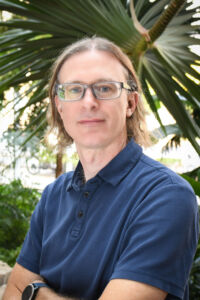
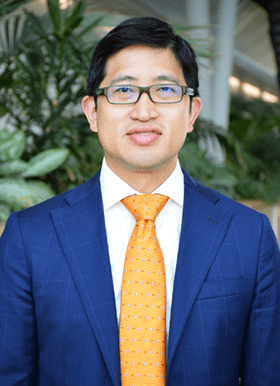
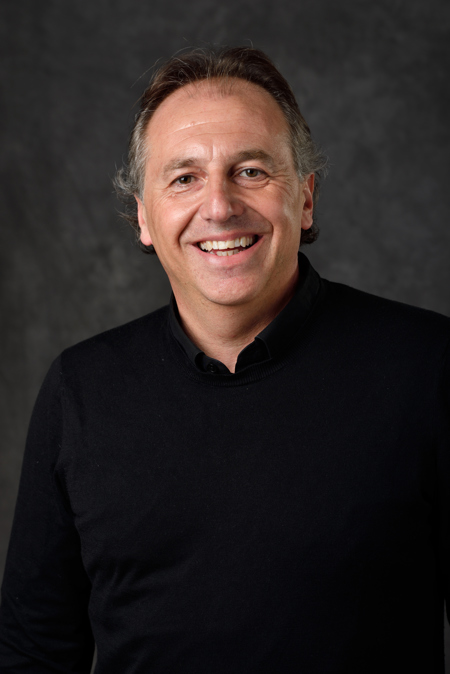
Jim Luedtke is a Professor in the Department of Industrial and Systems Engineering at the University of Wisconsin-Madison. His research focuses on operations research, integer programming, and stochastic optimization methods for solving discrete and uncertain decision problems. Educational Background: BS in Industrial Engineering from University of Wisconsin-Madison MS in Operations Research from Georgia Institute of Technology PhD in Industrial and Systems Engineering from Georgia Institute of Technology Postdoctoral Research at IBM T.J. Watson Research Center His work spans applications in power systems optimization, healthcare analytics, and network design, with particular emphasis on developing cutting-edge algorithms for chance-constrained and multistage stochastic programming problems. Recent publications demonstrate strong focus on Benders decomposition techniques, Lagrangian dual methods, and distributionally robust optimization frameworks. Scientific Awards: NSF CAREER Award (2010) for "Risk Management via Stochastic Programming: Models, Computation, and Applications"
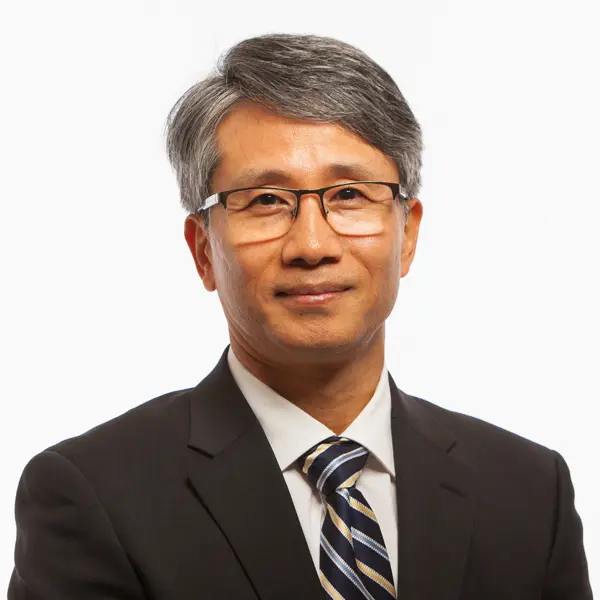
Joseph Pak is Professor of Biblical Studies at Taylor University in the Biblical Studies, Christian Ministries, Intercultural Studies & Philosophy Department . A New Testament scholar with a PhD from Dallas Theological Seminary, he invests his life in training the next generation of Christian leaders. Education PhD, New Testament Studies – Dallas Theological Seminary STM, New Testament Studies – Dallas Theological Seminary MDiv, School of Divinity – Liberty University BS, Electrical Engineering – Virginia Tech Research Interests Pak’s research centers on the New Testament , particularly the epistles of James and 2 Peter , exploring themes of self-deception in theology , wealth and poverty in early Christianity , Scriptural inspiration , and false believers . He also examines the intersection of contemporary philosophical discussions with biblical hermeneutics and theological ethics. Publications & Translations He has authored the monograph False Believers in the New Testament and the volume What the Bible Says about the Dangers of Self-Deception: An Exegetical Approach . Additionally, Pak translated six influential Christian works from English into Korean, including Daniel Fuller’s The Unity of the Bible and Everett Ferguson’s The Background of Early Christianity , thereby bridging Korean and Western evangelical scholarship. Professional Service & Outreach Regular presenter at the Evangelical Theological Society national conferences Contributed 10 New Testament introductions to The Abide Bible (Thomas Nelson, 2020) Has taught courses at Southern Baptist Theological Seminary , Liberty University , Midwestern Baptist Theological Seminary , and Taylor University Joseph Pak’s overarching passion is to know, love, and serve Jesus while equipping students to lead with biblical integrity.
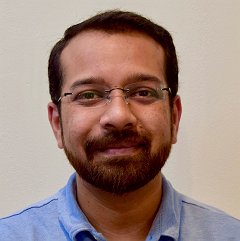
Muhammad Ali Gulzar is an Assistant Professor in the Computer Science Department at Virginia Tech and an Amazon Scholar at Amazon Web Services. His research focuses on improving developer productivity through automated debugging and testing for applications in emerging domains, including data-intensive software such as dataflow programs, ML/AI applications, and computational notebooks. Education Ph.D. in Computer Science from University of California, Los Angeles (Google Ph.D. Fellow 2017-2020) Research Interests Gulzar's research spans three primary areas: (1) automated tracking-code localization techniques in web applications, (2) re-engineering testing and debugging for data-intensive applications, and (3) advancing current testing and debugging practices in Federated Learning Applications. His work addresses the challenges of debugging in complex systems where traditional approaches fail due to the scale and distributed nature of modern applications. His research has significant implications for improving software quality, developer productivity, and accessibility in web applications. Research Trends Recent publications demonstrate a strong focus on debugging and testing challenges in emerging application domains. His work bridges traditional software engineering with machine learning, data-intensive systems, and web technologies. Notably, he has made significant contributions to Federated Learning debugging (FedDebug), accessibility challenges in ad-driven web applications, and semantic caching for Large Language Models. His approach often combines novel algorithmic insights with practical implementations that address real-world challenges in software development and maintenance. Scientific Awards Google Ph.D. Fellow (2017-2020) $1.1 million NSF award for Federated Learning research ACM CCS 2024 Distinguished Artifact Award Advising and Grants Gulzar leads a productive research group with multiple students contributing to publications in top-tier venues. His NSF-funded research on Federated Learning demonstrates his ability to secure competitive funding for innovative projects. His advising style appears to emphasize practical impact alongside theoretical contributions, with students often taking lead roles in publications. Current research directions include debugging techniques for Large Language Models, accessibility challenges in modern web applications, and novel testing approaches for distributed data processing systems.
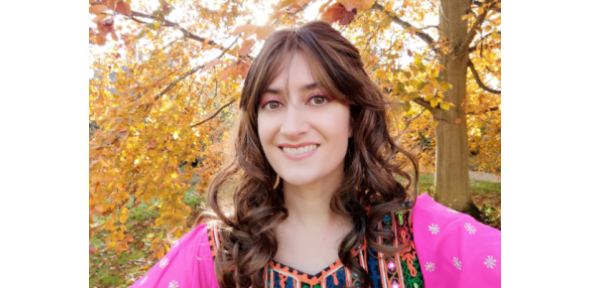
Dr Rebecca Mitchell is an Affiliated Lecturer in the French Section of the Faculty of Modern and Medieval Languages and Linguistics at the University of Cambridge, based at the Raised Faculty Building on Sidgwick Avenue. Her academic journey includes undergraduate studies in Modern and Medieval Languages at Cambridge, an MA in Translation and Interpreting from the University of Kent, and a PhD from Cambridge focused on syntactic variation in Gabonese French. Her educational background comprises: PhD in Linguistics (University of Cambridge) MA in Translation and Interpreting (University of Kent) Undergraduate degree in Modern and Medieval Languages (University of Cambridge) Dr Mitchell's research centers on the sociolinguistics of sub-Saharan Africa, examining language attitudes, endangerment, policy, planning, and healthcare communication. She also investigates traditional belief systems through Sub-Saharan African anthropology, emphasizing the intersection of language, culture, and power structures in Central and West African contexts. Her work consistently addresses decolonization themes and linguistic justice. Analysis of her publications reveals a dual trajectory: recent works (2023-2025) prioritize public engagement through initiatives like National Linguistics Day and educational advocacy, while earlier research (2004-2019) establishes foundational contributions to African linguistics, particularly Gabonese French syntax, language policy, and endangerment in Central Africa. No scientific awards are documented in the provided materials. She has supervised undergraduate courses since 2012 including Fr1 (Introduction to French Literature, Linguistics, Film and Thought), Fr2 (Structures and Varieties of French), Li14 (History of the French Language), and Li12 (History of Ideas about Language). Dr Mitchell currently cannot accept new doctoral students but maintains active engagement through curriculum development and public lectures. Her public engagement initiatives, notably National Linguistics Day launched in 2024, constitute a significant platform for promoting linguistic science through school talks, Civil Service workshops, and national events like the Language Show, positioning her as a key bridge between academic linguistics and public understanding.
Professor Markus Helfert is a leading academic in Digital Service Innovation and Digital Transformation at Maynooth University's School of Business . He serves as Director of the Innovation Value Institute , Hub for Data and Digital Research, and holds Science Foundation Ireland Principal Investigator roles at Lero – The Irish Software Research Centre and Adapt Research Centre. His research spans Service Innovation , Artificial Intelligence , Intelligent Transportation Systems , FinTech , and Enterprise Architecture , with active involvement in European Standardisation initiatives.
Albert M. Lai, PhD, is a Professor of Medicine and Computer Science & Engineering at Washington University in St. Louis, serving as Chief Research Information Officer (CRIO) for the School of Medicine and Deputy Director of the Institute for Informatics, Data Science and Biostatistics (I²DB). He leads WashU Medicine's data warehousing and informatics services, driving innovation in clinical research infrastructure. His expertise spans biomedical informatics, natural language processing (NLP), and telemedicine. Dr. Lai is also Deputy Faculty Lead for WashU’s Digital Transformation initiative, focusing on secure AI integration with sensitive healthcare data. He holds affiliations with the Institute for Public Health, Siteman Cancer Center, and the Center for Applied Health Informatics (CAHI). Research Interests: Dr. Lai develops informatics infrastructure to support clinical trial prescreening, leveraging NLP and machine learning for phenotype extraction from EHR data. He also explores telemedicine, mobile health applications, and EHR-driven cardiovascular health interventions for cancer survivors. His recent work addresses AI ethics in healthcare, including responsible data sharing and bias mitigation in generative AI models. Key Contributions: Over 77 peer-reviewed publications across clinical informatics, AI in healthcare, and pandemic response strategies. His projects include EHR-based cardiovascular health tools, SARS-CoV-2 surveillance in schools, and machine learning models for predicting transplant outcomes. Active mentorship of PhD/MSTP students in translational informatics and data science. Labs/Teams: Leads the Informatics Services Core and collaborates with the CRITICAL consortium for intensive care analytics. Engages in multi-institutional initiatives like the Greater Plains Collaborative for cancer data integration.
Dr. Oussama AMMAR is a Full Professor of Strategy and serves as Dean of Programs at Montpellier Business School since November 2020. He leads the development and internationalization of academic programs, overseeing operations including student mobility, career services, and quality initiatives. Previously, he held roles as Dean of the US Campus of SKEMA Business School in Raleigh, North Carolina, and Associate Dean of Undergraduate Programs at SKEMA’s Lille campus. His academic leadership spans faculty management, curriculum design, accreditation compliance, and strategic planning. His research focuses on business model innovation, strategic management in SMEs, and change management. Notable contributions include studies on Alibaba’s strategic capabilities, gender leadership in IT sectors, and participative innovation in organizations like SNCF. He has also explored synergies between economic intelligence and knowledge management to enhance organizational absorption capacity. Dr. AMMAR’s career includes over 20 years of teaching strategic management across diverse audiences. His academic leadership roles at both Montpellier Business School and SKEMA reflect his expertise in global academic governance and program development. He holds a global perspective shaped by roles in France, the US, China, and Brazil.
Thomas Berger is a Professor at the University of Hohenheim , affiliated with the Faculty of Agricultural Sciences and leading the Department of Economics of Land Use . He also contributes to the Computational Science Hub and Hohenheim Tropics initiatives. Focus Areas: Climate change adaptation, land-use modeling, biodiversity-productivity trade-offs, agent-based simulation, and machine learning in agricultural systems. Key Projects: Simulation frameworks for smallholder resilience in Ethiopia, bioeconomic modeling in the Amazon, and hybrid intelligence applications in European agricultural policy. Recent Publications: 2025 study on climate change effects on insecticide reduction in Germany, 2024 work on reconciling biodiversity with productivity via hybrid models, and 2023 methodological contributions to surrogate modeling and seasonal forecast integration. Research Trends: Interdisciplinary integration of climate science, agricultural economics, and computational modeling, with increasing emphasis on AI-assisted decision support systems and sustainability policy validation. Teaching & Outreach: Offers Agricultural Economics seminars and Hohenheim Tropics discussions, requiring advance email registration for office hours.
Dr. XiaoYue Cathy Liu is an Associate Professor in the Department of Civil & Environmental Engineering at the University of Utah. She holds a PhD in Transportation Engineering from the University of Washington and advanced degrees in Transportation Planning and Electronics Engineering. Her research focuses on sustainable transportation systems, shared mobility, public transit optimization, managed lanes, and intelligent transportation systems. She actively serves on committees including the Transportation Research Board's Highway Capacity Quality of Service (HCQS) Committee and chairs its Technology Transfer Subcommittee. She also advises the Utah Model Advisory Committee and previously served on Salt Lake City’s Transportation Advisory Board. Dr. Liu is a licensed professional engineer in Utah. Education: PhD, Transportation Engineering, University of Washington (2013) MA, Transportation Planning & Management, Texas Southern University BS, Electronics & Electrical Engineering, Beijing Jiaotong University Graduate Certificate, Global Trade & Logistics, University of Washington (2011) Research Interests: Electric vehicle infrastructure and charging networks Smart transportation systems and agent-based modeling GIS-based asset management for transportation infrastructure Snowplowing operations optimization and winter maintenance Managed lanes and high-occupancy toll (HOT) lane analysis Public transit equity and accessibility Her recent publications emphasize data-driven approaches to transportation challenges, including EV demand forecasting, drone delivery networks, and resilience in interdependent transit systems. She collaborates on projects addressing Utah’s unique transportation needs, such as optimizing snowplow routes and integrating renewable energy into public transport systems. Professional Contributions: Board member, Utah Model Advisory Committee Former Chair, Salt Lake City Transportation Advisory Board (2013-2016) TRB Managed Lane Committee member TRB Transit Capacity & Quality of Service (TCQS) Committee member (2016-2019) Dr. Liu’s work bridges transportation engineering with computational methods, focusing on equity, sustainability, and operational efficiency. She leads research initiatives involving large-scale modeling, geospatial analytics, and interdisciplinary solutions for modern mobility challenges.
Joshua Ignatius is a Professor of Business Analytics at the Aston Business School, part of the College of Business and Social Sciences at Aston University. He focuses on research areas including supply chain analytics, prescriptive analytics, electronic commerce, and operations management. His work often addresses challenges such as information asymmetry in supply chains, user recommender systems, and logistics optimization. He is currently accepting PhD students in topics like Information Asymmetry in Supply Chains, User Recommender Systems, and Supply Chain Analytics. His research interests are centered on leveraging data-driven approaches to improve decision-making in supply chain and operational contexts. This includes studying disruption risk management, dynamic data modeling, and the integration of AI in cloud services. He also explores strategic decisions in e-commerce logistics, customer segmentation strategies, and environmental sustainability. Recent publications highlight his contributions to supply chain resilience, optimal security in cloud computing, and sustainable manufacturing processes. For instance, his 2025 work on supply chain network viability addresses disruption risks through dynamic data strategies. Another key area is the analysis of customer behavior in product upgrades, utilizing online review data to inform quality differentiation strategies. Dr. Ignatius has collaborated on projects involving platform information sharing, manufacturer encroachment, and logistics sourcing for e-commerce firms. His research often bridges theoretical frameworks with real-world applications, emphasizing practical solutions for operational challenges. He holds a strong record of supervising PhD students and guiding projects that combine academic rigor with industry relevance. His work frequently appears in leading journals such as the European Journal of Operational Research and Journal of Operations Management.
Bruno Basso serves as the Hannah Distinguished Professor in the Department of Earth & Environmental Sciences at Michigan State University, based in 307A Natural Science Building. He teaches GLG 446: Water and Food and maintains active research in sustainable agricultural systems, with contact via 517-353-9009 or basso@msu.edu. His work bridges academic research with practical farm applications across the US Midwest. His core research interests include: Food Security and Plant Resilience mechanisms Soil Science with emphasis on organic carbon dynamics Precision Agriculture technologies (drones, remote sensing) Climate-Smart Agriculture practices Nitrogen and phosphorus use efficiency Yield stability analysis through spatial-temporal modeling Regenerative agriculture impacts on greenhouse gas emissions Ecosystem services valuation in crop-livestock systems Analysis of his 2023-2025 publications reveals a dominant focus on quantifying climate benefits from regenerative practices using multi-model ensembles. His work consistently addresses scalability for farmer adoption, with strong emphasis on N₂O emissions mapping, soil carbon durability, and yield stability zones. Key methodological innovations include hybrid SAR-remote sensing integration and AI-driven nutrient prescription systems, primarily applied across Midwest corn-soybean systems. No scientific awards were documented in the provided materials. While specific advising details are absent, his leadership in the LTAR cropland common experiment and Soil Inventory Project indicates active mentorship of graduate researchers. His research likely attracts significant USDA and NSF funding given the scale of field experiments and modeling initiatives focused on decarbonizing agriculture. Dr. Basso co-leads the Soil Inventory Project at Kellogg Biological Station, developing integrated sampling, data repository, and modeling frameworks for regenerative agriculture. His team combines ground observations, remote sensing, and biophysical modeling to quantify soil carbon and greenhouse gas fluxes, collaborating with farmers, industry partners, and international researchers to translate science into on-farm practices.
Dr. Seema A. Imam is a tenured Professor at the National College of Education (NCE) within National Louis University (NLU). She specializes in Elementary, Middle Level, and Special Education, with a focus on technology integration, culturally responsive pedagogy, and Islamic education. Dr. Imam has held leadership roles, including Co-Chair of NCE (2016-2018), Chair of the Faculty Senate (2009-2010), and Co-Chair of the University Leadership Council. She teaches in NLU’s MA in Teaching programs and has advised multiple doctoral candidates. Education: Ed.D. in Islamic Education (2015), Graduate Theological Foundation Ed.D. in Curriculum & Social Inquiry (2001), National Louis University M.A. in Educational Administration (1987), Northeastern Illinois University B.A. in Elementary & Learning Disabilities Education (1975), Northeastern Illinois University Research interests include diversity in education, technology’s role in teaching, and Islamic schooling. Her work spans international curriculum development and advocacy for Muslim students. Notable publications explore student belonging in Islamic schools and pedagogical strategies for inclusive classrooms. Dr. Imam has received awards for leadership, including the 2024 ISNA Lifetime Service Award and the 2015 Mary McLeod Bethune Educational Leadership Award. Her advising includes doctoral chairs for Azra Naqvi and Michael Kuhn. Grants and professional development efforts focus on Islamic school leadership and curriculum renewal. Dr. Imam co-founded an Islamic school and has consulted globally on educational policy, blending practical experience with academic rigor. Labs/Teams: Active in the Islamic Schools League of America (ISLA), serving on its national board for over a decade. Leads workshops on curriculum integration and educational technology for international audiences.
Dominic Furniss serves as Professor of Plastic and Reconstructive Surgery at the University of Oxford's Nuffield Department of Orthopaedics, Rheumatology and Musculoskeletal Sciences (NDORMS), concurrently holding an Honorary Consultant Plastic Surgeon position. His clinical expertise centers on hand surgery and supermicrosurgery for lymphoedema treatment. His educational background includes undergraduate medical studies at Trinity College, Cambridge (Junior and Senior Scholar, first-class degree in genetic pathology) followed by clinical training at Oxford University Clinical School. He completed basic surgical training in London before returning to Oxford's Plastic Surgery Department in 2003. Professor Furniss leads pioneering research into genetic and non-genetic causes of hand conditions through multiple initiatives including the Furniss Group, Centre for OA Pathogenesis, and Hand Research Group. His work spans molecular genetics of Dupuytren's disease, carpal tunnel syndrome epidemiology, and kidney stone disease mechanisms. Recent investigations extend to AI applications in health data through the PHAIR study and causal inference methods in genetic epidemiology. Analysis of his 2024-2025 publications reveals a strategic shift toward large-scale epidemiological studies of hand injuries, interdisciplinary genetic research, and AI integration in surgical practice. These works bridge orthopaedics, genetics, and medical informatics with significant real-world clinical implications. His major scientific recognitions include: Pushpa Chopra Award Plenary Prize of the MRS Wellcome Trust Intermediate Fellowship (first awarded to a plastic surgeon) Professor Furniss has secured substantial research funding including the NIHR Clinical Lectureship (2007) and Wellcome Trust Fellowship (2012). He directs multiple research streams: RAMBOH-1 studies, Molecular Genetics of Carpal Tunnel Syndrome project, and HAWAII initiative. His team actively investigates public perceptions of health data sharing for AI through the PHAIR study while advancing supermicrosurgical techniques for lymphoedema. He maintains active leadership in the Athena SWAN gender equality initiative as a Self-assessment team member, demonstrating commitment to inclusive academic culture.
Rafał Latała is a distinguished Professor at the Institute of Mathematics, Faculty of Mathematics, Informatics and Mechanics, University of Warsaw, where he has held a full professorship since 2013. He is also a Corresponding Member of the Polish Academy of Sciences since 2016 and an AMS Fellow since 2013. His academic career spans over 25 years at the University of Warsaw, progressing from Instructor (1994-1997) to Assistant Professor (1997-2003), Associate Professor (2003-2012), and finally to his current position as Professor. Additionally, he held a part-time professorship at the Institute of Mathematics of the Polish Academy of Sciences from 2009-2012. His educational background includes a PhD in Mathematics from the University of Warsaw (1997) with a dissertation on estimation of moments of sums of independent random variables under the supervision of Professor Stanisław Kwapien, a Habilitation degree in Mathematics (2002), and the title of Professor awarded by the President of Poland (2009). He completed his MSc in Mathematics at the University of Warsaw in 1994. Latała's research focuses on the intersection of probability theory and geometric analysis, with particular expertise in convex geometry, functional analysis, asymptotic geometric analysis, and the theory of log-concave measures. His work bridges theoretical mathematics with applications in high-dimensional statistics and random matrix theory. He has made significant contributions to understanding moment inequalities, concentration phenomena, and the geometric structure of high-dimensional random objects. His recent work demonstrates increasing sophistication in handling complex relationships between different norms of random vectors and matrices. His publication record shows a consistent focus on probabilistic methods in geometric settings, with recent articles demonstrating advanced techniques for analyzing random matrices, log-concave measures, and canonical processes. The research trajectory reveals increasingly sophisticated methods for bounding norms and moments in high-dimensional spaces, with applications spanning theoretical mathematics to statistical learning theory. Kolmogorov Lecture 2024 Prize of the Foundation for Polish Science in mathematics, physics, and engineering sciences 2023 Orlicz Lecture 2023 Institute of Mathematics of the Polish Academy of Sciences Prize 2014 AMS Fellow since 2013 Foundation for Polish Science Grant Mistrz 2007-2011 Prime Minister Award for Habilitation Thesis 2003 Invited Speaker at International Congress of Mathematicians 2002 Latała has supervised five PhD students to completion (Rafal Meller, Marta Strzelecka, Jakub Wojtaszczyk, Radoslaw Adamczak, and Rafal Lochowski) and four MSc students (Maciej Bartczak, Dariusz Matlak, Tomasz Tkocz, and Marcin Lis). His editorial service includes positions at Probability Surveys (2024-26), The Annals of Probability (2015-20), and Studia Mathematica (2006-present). He has organized numerous international conferences including the High Dimensional Probability X conference in 2023 and served on various professional committees including the Central Commission for Academic Degrees and Titles.
Bruno Echauri Galván serves as Associate Professor in the Department of Modern Philology at the University of Alcalá (UAH), Spain, teaching core translation courses including Introduction to Translation Theory and English-Spanish Translation across multiple degree programs in Alcalá de Henares and Guadalajara. His research centers on Translation Studies and Reception Theory, with significant contributions to intersemiotic translation (particularly in children's literature), healthcare interpreting, and film adaptation reception. As an active member of the Research Group on Interdisciplinary Reception Studies, he investigates cultural reception, literary reception, and translation through frameworks including cultural mediation, censorship studies, and myth reception. Recent publications (2021-2024) demonstrate consistent innovation in translation pedagogy, including color-based translation assessment tools, service-learning translation projects, and pandemic-era teaching adaptations. His work on collaborative writing projects, mental health communication, and Carver-Lish translation controversies reveals methodological diversity across literary, audiovisual, and healthcare domains. Dr. Echauri Galván has participated in multiple research initiatives including the JOB AND MOVE student network project (2018), Homopoly strategic partnership (2016), and InterMed healthcare mediation project (2011), where he contributed expertise in intercultural communication and translation standards. He maintains active research leadership through the Interdisciplinary Reception Studies group, examining reception phenomena across cultural, literary, musical, and translational contexts while addressing contemporary issues like censorship and myth criticism.