Zakir Durumeric is an Assistant Professor of Computer Science at Stanford University, leading the Stanford Empirical Security Research Group. His research focuses on Internet security, trust, and safety, emphasizing large-scale network measurement and open-source tool development. He founded Censys, a platform providing global Internet device data, and maintains tools like ZMap, ZGrab, and Retina. Research interests include cybercrime prevention, censorship analysis, disinformation tracking, and platform governance for online harassment. Notable contributions include studies on the Mirai botnet, TLS certificate ecosystems, and vulnerabilities like Heartbleed and Logjam. Awards include the IRTF Applied Networking Research Prize (2015) and a Test of Time Award (2022). Teaches courses: CS155 (Computer & Network Security), CS356 (Systems & Network Security), and CS249i (Modern Internet). Advises over 20 students, including Catherine Han, Kimberly Ruth, and Liz Izhikevich. Develops open-source software such as ZMap Toolkit and ASdb, and maintains datasets like CrUX Top Million Websites. Recent work explores toxic online behavior, misinformation ecosystems, and regional censorship mechanisms in China. His lab’s tools are widely adopted in academia and industry for security research and policy guidance.
Professor Ian Marsh is a Professor of Finance at Bayes Business School, University of London. He has held this position since 1998 with a temporary leave at the Bank of England between 2001–2003. His research focuses on credit risk transfer markets, foreign exchange dynamics, and macroeconomic exchange rate modelling. He holds a B.Sc. from Sheffield, an M.Sc. from Birkbeck, and a PhD in Economics from Strathclyde. Marsh's research explores three core areas: macroeconomic exchange rate models, FX/equity market microstructure, and credit derivatives. His work on short-selling bans in the UK won the 2011 INQUIRE Prize. He has supervised over 10 PhD students, including Jason Cen and Kwabena Duffuor, focusing on topics like international finance and microstructure analysis. Key publications include the 2012 Handbook of Exchange Rates and influential studies on central bank interventions and credit default swaps. His work is published in top journals like the Journal of Financial Economics and Journal of International Money and Finance . Marsh serves on editorial boards including the Journal of Banking and Finance , and consults for institutions like the Bank of Finland on credit risk innovations. His media engagements include BBC and Financial Times commentary on financial market policies.
Dr. Jeffrey Morgan is a Researcher at Cardiff University's School of Social Sciences, specializing in multidisciplinary research at the intersection of computer science, social science, and geography. His work emphasizes human-computer interaction, visualization, and big data analytics. He holds a Research Software Engineer role, combining technical expertise with academic inquiry. Key research interests include AI-driven patent analysis, IoT applications in rural citizen science, and geospatial Twitter demographics. He has contributed to studies on Hadoop infrastructure optimization and social media conflict detection, often collaborating with institutions like Xiamen University and the University of Bremen. His publications span topics like energy-efficient big data processing, digital geography of Welsh identity, and scalable social media analysis frameworks. Notable projects include COSMOS (a cloud-based social media analysis platform) and studies on post-devolution cultural narratives in Wales. Award-winning work includes computational Twitter analysis for detecting online community tensions and geotagging behavior patterns. His research often bridges technical innovation with societal impact, addressing challenges in rural technology deployment and digital sociology.
Theodora Varvarigou is a Professor in the Department of Electrical and Computer Engineering at the National Technical University of Athens (NTUA). She holds a B.Eng. from NTUA and M.Eng. and Ph.D. degrees from Stanford University. Her career includes research at AT&T Bell Labs and roles at the Technical University of Crete. From 2008-2012, she served as director of NTUA's 'Technoeconomic Systems' postgraduate program. Her research focuses on Cloud Computing, Multimedia Content Processing, Social Networking Technologies, and emerging areas like blockchain, edge computing, and cybersecurity. She has published over 200 papers and led numerous European research projects, emphasizing scalable systems, data management, and smart infrastructure applications. Her work spans technical innovations such as intrusion detection systems, edge resource optimization, and blockchain-based solutions for IoT, healthcare, and smart cities. Recent publications highlight advancements in AI-driven resource allocation, privacy-preserving blockchain designs, and predictive analytics for edge computing environments. Professor Varvarigou has contributed to interdisciplinary initiatives, including cohort data harmonization in biomedical research and social media analytics for urban planning. Her teaching includes courses on digital systems, network programming, and fault-tolerant systems.
Amir Asif is a Professor at the Lassonde School of Engineering, York University, and concurrently serves as Vice President, Research and Innovation. His academic leadership roles include Dean of the Gina Cody School of Engineering and Computer Science at Concordia University (2014-2020). He specializes in signal processing, communications, and their applications in healthcare, power grids, and distributed systems. Asif holds a PhD from Carnegie Mellon University and a Harvard certification in executive leadership. Education: PhD, Electrical and Computer Engineering, Carnegie Mellon University (1996) MS, Electrical and Computer Engineering, Carnegie Mellon University (1993) BSc, University of Engineering and Technology Lahore (1990) Harvard Certificate in Leadership for Senior Executives (2018) Research Interests: Asif’s work spans signal processing for medical imaging (e.g., ultrasound elastography), smart grid optimization, and cybersecurity in power systems. His recent publications address hydrogen energy systems, EMG-based gesture recognition, and resilient control frameworks against cyberattacks. Grants & Leadership: He leads NSERC-funded projects on federated learning and resilient algorithms. He chairs the Ontario Council of University Research and serves on TRIUMF Innovations and the Richmond Hill Board of Trade. His grants include SSHRC funding for equity initiatives and NSERC support for distributed signal processing. Teaching & Mentorship: Asif has supervised over a dozen graduate students and taught courses like Digital Communications and Statistical Signal Processing Theory. Notable advisees include Arash Mohammadi (PhD, 2014) and Nick Sajadi (PhD, 2017).
Jean Walrand is a Professor in the Department of Electrical Engineering and Computer Sciences (EECS) at the University of California, Berkeley. His research focuses on communication networks, performance evaluation, game theory, and stochastic networks. He has authored several influential books, including Communication Networks: A Concise Introduction and Probability in Electrical Engineering and Computer Science , and holds numerous patents in network resource management. Ph.D. in EECS from UC Berkeley IEEE Fellow and recipient of the Stephen O. Rice Prize INFORMS Lanchester Prize for operations research contributions His research interests span communication networks, queueing theory, congestion control, wireless network scheduling, and economic models for network resource allocation. Walrand's work has significantly impacted network design and optimization, particularly in distributed algorithms and game-theoretic approaches. His recent publications emphasize network architecture, delay variability reduction, and distributed optimization algorithms. Walrand has mentored over 20 Ph.D. students, including notable contributors to wireless networks and network economics. IEEE Koji Kobayashi Award (2012) ACM Sigmetrics Achievement Award (2013) INFORMS Lanchester Prize for Communication Networks book As advisor to students like Libin Jiang and Hoi-Sheung Wilson So, Walrand has shaped research in wireless MAC protocols, bandwidth trading, and network security. His technical reports and patents address practical challenges in switch fabric design, bandwidth allocation, and power management.
Alexandra Collins is an Associate Professor in Environmental Sustainability at the Centre for Environmental Policy, part of the Faculty of Natural Sciences at Imperial College London. Her work focuses on integrating environmental decision-making with societal benefits through ecosystem services and natural capital frameworks. She is affiliated with the Grantham Institute, Human Behaviour and Experience Network, and Ocean Plastic Solutions Network, among others. Education: BSc Biological Sciences (University of Bristol), MSc Environmental Technology (Imperial College London), PhD Environmental Research (Imperial College London). She has held roles including a NERC Policy Fellowship and a Knowledge Exchange Fellowship with Defra. Research interests include holistic approaches to environmental challenges, societal benefits from green/blue spaces, participatory methods in decision-making, and co-production of knowledge. Current projects include the NERC-funded CAMELLIA project (urban water management) and the EU-funded HEART project (blue-green technologies for urban health). Her work emphasizes interdisciplinary systems thinking and stakeholder engagement. Publications span evidence-based policy, ecosystem service valuation, and climate-resilient infrastructure. She has collaborated with governments (UK, EU), NGOs, and international organizations to translate research into actionable strategies. Her recent work addresses barriers to flood adaptation, Indigenous inclusion in water governance, and multi-use offshore systems. Advising & Grants: Supervises PhD research on cultural ecosystem services and participatory catchment management. Co-investigator on major grants including £4.2M NERC CAMELLIA project. Active in developing decision-support tools for green infrastructure investments through the Nature Smart Cities initiative. Labs/Teams: Core member of the Centre for Environmental Policy, leading interdisciplinary teams on urban sustainability and environmental governance. Engages with cross-sectoral partnerships to bridge science-policy-practice gaps.
Aida Jebali is a Professor of Operations and Supply Chain Management at SKEMA Business School's Digitalization Academy. She holds a PhD and Habilitation (HDR) from Grenoble Institute of Technology and has held faculty positions at ESIEE Paris, University of Sharjah, Masdar Institute, and Prince Sultan University. Her research focuses on supply chain resilience, pandemic planning, healthcare operations, and maritime logistics. Education: 2023: HDR in Industrial Engineering, Université Grenoble Alpes 2004: PhD in Industrial Engineering, Grenoble INP 2000: Master of Science in Industrial Engineering, Grenoble INP 1999: National Engineer Diploma, Ecole Nationale d'Ingénieurs de Tunis Research Interests: Pandemic resilience in supply chains Maritime logistics and quay crane optimization Emergency medical service design Healthcare operations and operating room scheduling Environmental sustainability in supply chains Recent Contributions: Her work addresses critical challenges such as pandemic-induced disruptions, ambulance relocation systems, and carbon-efficient supply chains. Recent studies include optimizing production under pandemic conditions and resilience strategies for food supply chains. Awards: High Level Scientific Stay (French Ministry of Foreign Affairs, 2009 & 2007) PhD Scholarship Award (French Ministry of Foreign Affairs, 2000) PhD Supervision: Co-director: G. Pinto, H. NOUIRA, R. BOUJEMAA Jury Member: L. WANG Research Affiliations: Senior Editor of IMA Journal of Management Mathematics and active reviewer for top journals such as International Journal of Production Economics .
Dr. Mario Tenuta is a Senior Industrial Research Chair in 4R Nutrient Management and Professor of Soil Ecology at the University of Manitoba's Faculty of Agricultural and Food Sciences. His research focuses on soil ecology, nematology, and mitigating greenhouse gas emissions from agricultural systems. He leads the Applied Soil Ecology Lab, conducting impactful studies on nutrient management, soil health, and crop-nematode interactions. Dr. Tenuta holds a PhD from the University of Western Ontario and has held the Canada Research Chair in Applied Soil Ecology (2006–2017). **Education**: Post-Doctoral Fellowship (Nematology), UC Davis, USA PhD (Plant Science), University of Western Ontario, Canada MSc (Soil Science), University of Guelph, Canada BSc (Botany & Physical Geography), University of Toronto, Canada **Research Interests**: His work addresses soil ecology challenges such as nitrogen cycling dynamics, cover crop effects on emissions, and nematode management in crops like soybean and potato. Key projects include 4R nutrient management practices, fall nitrification inhibition, and surveying pest nematodes across Canadian prairies. **Key Publications**: Recent work explores green ammonia applications, nitrous oxide emission reduction via 4R practices, and nematode distribution in Manitoba. Over 200 peer-reviewed articles highlight his contributions to sustainable agriculture and climate science. **Awards**: - Senior Industrial Research Chair (University of Manitoba) - Canada Research Chair (2006–2017) - Pioneering research recognized globally in soil science and environmental policy. **Labs & Teams**: Directs the Applied Soil Ecology Lab, collaborating with industry partners on projects like the NICCEE Living Lab Green Ammonia initiative. His team develops diagnostic tools for crop diseases and integrates field surveys with molecular analyses.
Yonghwi Kwon is a Visiting Assistant Professor in the Department of Computer Science at the University of Virginia. His research focuses on software systems security, cyber forensics, and software engineering. He received the CAREER Award for developing dynamic defenses against cyber threats. His work emphasizes securing software from cyber attacks, recovering forensic evidence, and improving software testing and reverse engineering techniques. Key research areas include memory safety mechanisms, automated vulnerability detection in web applications and mobile systems, and forensic analysis of phishing campaigns. He has pioneered frameworks like CMASan for memory allocator-aware sanitization and Racedb for detecting race conditions in database-backed systems. His contributions span cloud security automation, kernel exploitation analysis, and embedded system fuzzing. Notable achievements include the 2025 CAREER Award supporting his dynamic defense research, and impactful publications in areas like Android information leakage detection (DryJIN), Bluetooth protocol fuzzing (BTFuzzer), and autonomous driving bug discovery (Drivefuzz). His work bridges theoretical computer science with practical cybersecurity solutions.
Hemant K. Bhargava is a Distinguished Professor at the Graduate School of Management, University of California Davis, where he holds the Jerome and Elsie Suran Chair in Technology Management. He serves as Associate Dean for Academic Affairs and Director of the Center for Analytics and Technology in Society (CATS), and previously served as Associate Dean for Instructional Programs (2010–2013) and Faculty Chair. He co-founded and was the first Academic Director of the UC Davis Master of Science in Business Analytics (MSBA) program. His educational background includes: Ph.D. in Decision Sciences, The Wharton School, University of Pennsylvania (1989) MBA, Indian Institute of Management Bangalore (1986) B.S. in Mathematics, University of Delhi (1984) Bhargava is a leading scholar in technology management, information systems, and decision analytics. His research focuses on the economics of digital goods and platforms, pricing strategies, AI in business, healthcare IT, and platform ecosystems. He builds economic models to study operations, marketing, and competitive strategy in tech-driven markets, with applications in healthcare, media, electric vehicles, and generative AI. His recent publications reveal a strong trend toward platform business models, data sharing, AI’s impact on research and education, and healthcare cost transparency. He explores how digital platforms shape competition, how data can be leveraged across markets, and how real-time decision tools can reduce prescription drug costs. His work bridges theory and practice, often involving collaboration with industry and policy makers. His scientific awards include: INFORMS Journal on Computing Test of Time Award (2023) INFORMS CIST Best Paper Award (2021) Google Research Excellence Gift (2017–18) Distinguished Alumni Award, IIM Bangalore (2024) INFORMS ISS President's Service Award (2023) Global 100 Top Academic Data Leaders (2020) Bhargava has played a pivotal role in academic leadership and program development. He co-founded the Theory in Economics of Information Systems (TEIS) workshop and has served on editorial boards of top journals including Management Science (where he is Department Editor for Information Systems), Operations Research, and Marketing Science. He has advised numerous campus initiatives, including the UC Davis Data Lab and Religions of India Initiative. His grants and collaborations include work with Google and healthcare organizations on real-time price transparency tools. He leads the Center for Analytics and Technology in Society (CATS), which focuses on the societal implications of data and AI. He also co-founded the MSBA program and continues to shape the future of business education in the age of AI through strategic planning committees.
Professor Chee Yew Wong is a leading academic in supply chain management at Leeds University Business School (LUBS), where he holds the position of Professor and serves as Director for Research & Innovation in the Analytics, Technology and Operations department. He previously held a Chair in Logistics and Supply Chain Management at Hull University Business School and has served as a visiting professor in Thailand and China. His work bridges academia and industry, with over nine years of professional experience in operations and supply chain roles across multinational corporations and SMEs. His educational background includes a PhD in Supply Chain Management from Aalborg University, Denmark; an MSc in Manufacturing Management from Linköping University, Sweden; a BEng in Mechanical Engineering from the University of Technology, Malaysia; and a PG Certificate in Higher Education from Hull University, UK. Professor Wong's research centers on intelligent, responsible, and sustainable solutions for global supply chains. Key interests include digital supply chains, supply chain analytics, green logistics, human rights in supply chains, resilience, and circular economy models. He leverages technologies such as blockchain, machine learning, and IoT to enhance transparency, integration, and performance in complex supply networks. The analysis of his recent publications reveals a strong trend toward digital transformation, sustainability, and ethical governance in supply chains. His work increasingly emphasizes data-driven decision-making, environmental and social risk assessment, and the role of technology in enabling responsible global sourcing. Many projects focus on real-world applications in industries such as healthcare, fashion, retail, and manufacturing, often through Knowledge Transfer Partnerships with industry leaders. Best Reviewer Award, Operations and Supply Chain Management Division, Academy of Management Conference, Chicago, USA (2018) Prof. Xiande Zhao's Best Paper Award, International Conference on Operations and Supply Chain Management, Kaifeng, China (2017) Finalist for the Jack Meredith Best Paper Award, Academy of Management Conference, Anaheim, USA (2016) Emerald Best Paper Award, Supply Chain Management: an International Journal (2006) Professor Wong has successfully supervised 10 PhD students and 4 post-doctoral researchers, and has examined over 15 PhD dissertations internationally. He leads multiple research grants, including projects funded by Innovate UK, UKRI, ESRC, and the British Council, focusing on digital transformation, human rights, and green supply chain innovation. His collaborations span academia, government, and industry, demonstrating a strong commitment to impactful, applied research. He is actively involved in the Centre for Operations and Supply Chain Research, the Adaptation Information Management and Technology group, and the Centre for Decision Research at LUBS. These research groups support interdisciplinary work in analytics, digital technologies, and sustainable operations, fostering innovation and knowledge exchange across sectors.
Professor Jason Dykes is a leading figure in the field of information and geovisualization at City, University of London, where he holds the position of Professor in the Department of Computer Science and co-directs the giCentre , a renowned research centre in visualization. He is affiliated with the School of Mathematics, Computer Science and Engineering and maintains an active research and teaching profile. His academic journey includes a PhD in Geography from the University of Leicester and extensive leadership in both research and education. Education: PhD in Geography, University of Leicester, 2000 MSc in Geographic Information Systems, University of Leicester, 1991 BA/MA in Geography, University of Oxford, 1989 Jason Dykes' research is centered on designing visual methods and tools for exploring, analyzing, and presenting information, with a strong emphasis on geographic data. His work integrates cartography, information visualization, GIScience, and human-computer interaction , leading to the development of innovative techniques such as geowigs, ODmaps, BallotMaps, and AttributeSignatures. He has published extensively in top-tier journals like IEEE Transactions on Visualization & Computer Graphics, with over 20 papers in the last decade, and co-authored the seminal book Exploring Geovisualization (2005). His research is supported by major funders including EPSRC and the EU, with projects like RAMP VIS (Covid-19 response) and VALCRI (criminal intelligence). The most recent articles highlight a consistent trend in applied and human-centered visualization , focusing on responsive design, education, pandemic modeling, and novel visual metaphors for complex data. His work increasingly emphasizes methodological rigor, design exposition, and the role of visualization in interdisciplinary and emergency contexts. Scientific Awards and Recognition: National Teaching Fellow, Higher Education Academy (2005) Best Paper Awards at GIS Research UK (consecutive years) Honorable Mentions, IEEE InfoVis (2009, 2010, 2016, 2018) Security Innovation Commercialisation Award (EU, 2022) Research Supervisor of the Year, City Student Union (2020) Innovations in Teaching Award and multiple teaching grants at City Jason Dykes has supervised eight PhD students to completion and advised many others, including notable researchers like Roger Beecham, Sarah Goodwin, and Susanne Bleisch. His teaching includes modules such as Visualizing Society and Data Presentation. He has received significant grant funding from UK research councils and the EU for projects like DIVA, VALCRI, and RAMP VIS. His service to the community includes leadership roles in IEEE VIS, ICA Commission on GeoVisualization, and editorial positions at IEEE TVCG and the Journal of Visualization and Interaction. He leads the giCentre , a dynamic research group that fosters innovation in visualization, and has been instrumental in establishing the field’s educational and methodological foundations through participation in Dagstuhl seminars and publications on visualization pedagogy.
Keith D. Koper is a Professor in the Department of Geology & Geophysics at the University of Utah and serves as Director of the University of Utah Seismograph Stations (UUSS). He is also the editor-in-chief of The Seismic Record . His work integrates academic research with operational seismic monitoring and public safety initiatives across Utah and the Intermountain West. Education: PhD in Geophysics, Washington University, 1998 BA in Math, Geology, and ISP, Northwestern University, 1993 Dr. Koper's research focuses on array seismology, forensic seismology, deep Earth structure (especially the inner core), earthquake rupture imaging, ambient seismic noise, and seismic hazards in the Intermountain West, including mining-induced and urban earthquakes. His work combines observational seismology with advanced signal processing and machine learning techniques to improve detection, discrimination, and imaging capabilities. He has led or contributed to major projects involving the Wasatch Front, Yellowstone, and regional seismic networks. His recent research emphasizes machine learning for earthquake detection, high-resolution relocation of aftershock sequences (e.g., Magna 2020, Bluffdale 2019), microseism generation in lakes, and fine-scale imaging of the Earth's inner core using seismic reflections. His studies often involve interdisciplinary collaboration, particularly with mining engineering and geodesy. Dr. Koper's research has been consistently funded by federal and state agencies, including the National Science Foundation (NSF), U.S. Geological Survey (USGS), Department of Energy (DOE), Air Force Research Laboratory (AFRL), and the Utah Department of Public Safety. His publications reflect a strong trend toward integrating computational methods with traditional seismological analysis to tackle complex problems in both natural and induced seismicity. Scientific Service and Leadership: Editor-in-Chief, The Seismic Record Director, University of Utah Seismograph Stations Secretary, U.S. Air Force Seismic Review Panel Former Chair and Vice-Chair, Utah Seismic Safety Commission Dr. Koper mentors graduate students in seismology and geophysics, including recent advisees Sean Hutchings and Alysha Armstrong. His research group actively engages in both fundamental and applied seismological research, with strong ties to national labs such as Sandia. The group is involved in deploying portable seismic arrays, analyzing large datasets, and developing new algorithms for event detection and classification. The University of Utah Seismograph Stations, under his leadership, plays a critical role in monitoring seismicity in Utah and Yellowstone, producing real-time earthquake information, ShakeMaps, and public outreach materials. The station also contributes to national and international efforts in nuclear test monitoring and volcanic hazard assessment.
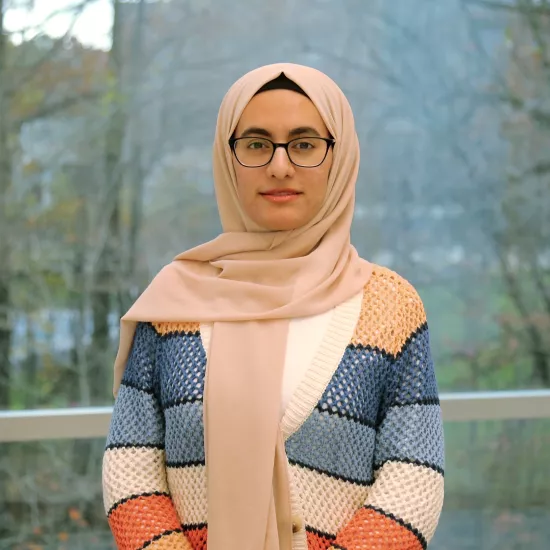
Samar Sabie is an Assistant Professor at the Institute of Communication, Culture, Information and Technology (ICCIT) at the University of Toronto, where she also serves as Program Director for the Technology, Coding, and Society (TCS) program. She holds a graduate appointment at the Daniels Faculty of Architecture, Design, and Landscape, reflecting her interdisciplinary work bridging technology, design, and social justice. She leads the Open Design Collaboratory, a research space focused on critical and community-centered design practices. Education: Doctor of Philosophy, Department of Information Science, Cornell University/Cornell Tech, 2022 Master of Science, Department of Computer Science, University of Toronto, 2017 Master of Architecture, John H. Daniels Faculty of Architecture, Landscape, and Design, University of Toronto, 2015 Honors Bachelor of Science (Architecture and Computer Science), University of Toronto, 2011 Her research investigates design as a socio-material practice that fosters community adaptive capacity toward sustainable change. Drawing from architecture, software engineering, ethnography, and philosophy, she explores participatory design , unmaking , and design for social justice . Her work critically engages with how communities resist, adapt, and reimagine technology in contexts of displacement, scarcity, and inequality. Her recent publications, appearing in top venues like CHI , CSCW , and DIS , reveal a strong thematic focus on unmaking as a design strategy for emancipation and agonism, mobility justice , e-waste practices , and cultural memory through design. These works collectively emphasize community agency, ethical ambiguity, and the political dimensions of design. Scientific Contributions: Director, Open Design Collaboratory Program Director, Technology, Coding, and Society (TCS) Graduate Faculty, Daniels Faculty of Architecture, Design, and Landscape Current Courses: CCT204 Design Thinking I, CCT477 Understanding Users Samar Sabie actively mentors students and collaborates on research focused on humanitarian technology, critical making, and design education. Her projects often involve community engagement, participatory methods, and interdisciplinary teams. She has collaborated with and advised early-career researchers such as Dina Sabie, Awais Hameed Khan, and Taneea Agrawal on topics ranging from IDP shelter dynamics to mobility justice advocacy. Her research is supported by her deep engagement with socio-technical challenges in marginalized contexts, and she continues to push the boundaries of how design can serve as a tool for equity, care, and resistance. Future work appears to be evolving toward deeper philosophical inquiries into destruction, care, and the limits of technology.