Shujian Yu is an Assistant Professor at the Department of Artificial Intelligence , part of the Faculty of Science at Vrije Universiteit Amsterdam. He is also affiliated with the Network Institute . His research focuses on Information Theory , Machine Learning , and Deep Neural Networks , with applications in causal discovery, brain network analysis, and generalization bounds. Key research interests include: Information-Theoretic Methods for ML interpretability and robustness Transfer entropy and causal inference in complex systems Feature selection and dimensionality reduction techniques Brain network-based psychiatric diagnosis (e.g., schizophrenia analysis) He teaches courses on Data Mining Techniques , Deep Learning , and Introduction to Reinforcement Learning . Recent work explores hierarchical state space models, Cauchy-Schwarz divergence applications, and Granger causality in chemical processes. His collaborations span interdisciplinary fields including neuroscience and industrial engineering. Publications emphasize theoretical foundations while addressing practical challenges in ML generalization, adversarial robustness, and sequential decision-making.
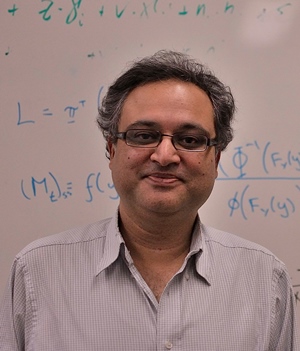
Yangfeng Ji is an Associate Professor in the Department of Computer Science at the University of Virginia, where he has been since 2018. Previously, he held a postdoctoral position at the Paul G. Allen School of Computer Science & Engineering, University of Washington, from 2016 to 2018. He earned his PhD in Computer Science from the Georgia Institute of Technology in 2016. His research focuses on Natural Language Processing (NLP) and Machine Learning, with an emphasis on ethical AI, bias mitigation, and model interpretability. Education: PhD in Computer Science, Georgia Institute of Technology, 2016 Postdoctoral Researcher, Paul G. Allen School of Computer Science & Engineering, University of Washington, 2016–2018 Research Interests: Dr. Ji’s work addresses critical challenges in NLP and Machine Learning, including fairness and bias in Large Language Models (LLMs), model interpretability through techniques like saliency estimation and rationale evaluation, and the development of robust evaluation frameworks. His contributions span topics such as gender representation vectors in LLMs, allocational harms, and improving temporal awareness in recommendation systems. He also explores data selection methods for model fine-tuning and secure data appraisal techniques. Recent Research Trends: His publications emphasize addressing biases and fairness in LLMs, enhancing model interpretability via contrastive activation analysis, and improving robustness through adversarial training and data selection. Key themes include mitigating vulnerabilities in model explanations and optimizing latent spaces for out-of-distribution detection. Scientific Awards: No awards explicitly mentioned in the provided information. Advising and Grants: No advisees or grant details provided in the text. Dr. Ji’s research group focuses on collaborative projects in ethical AI and NLP applications. Labs/Teams: No specific lab or team affiliations explicitly stated in the text.
Rob J Hyndman is a Professor of Statistics at Monash University, Australia, specializing in forecasting, time series analysis, and computational statistics. He holds roles such as Director of the International Institute of Forecasters (2005–2018) and Editor-in-Chief of the International Journal of Forecasting . His academic qualifications include a BSc(Hons) and PhD from the University of Melbourne. Research interests focus on forecasting methodologies, anomaly detection, and demography. Notable projects include energy analytics, hierarchical forecasting, and applications in healthcare and environmental data. He has supervised over 30 PhD/Master’s students and led major initiatives like the ARC Training Centre in Optimisation Technologies (OPTIMA). Key awards include the Pitman Medal (2021), Moran Medal (2007), and Australian University Teaching Awards. His work contributes to UN Sustainable Development Goals, particularly in sustainable energy and health systems. Active collaborations span global institutions, and he develops influential R packages like fpp3 , vital , and forecast . He organizes events like the WOMBAT workshop, promoting open-source tools for analytics.
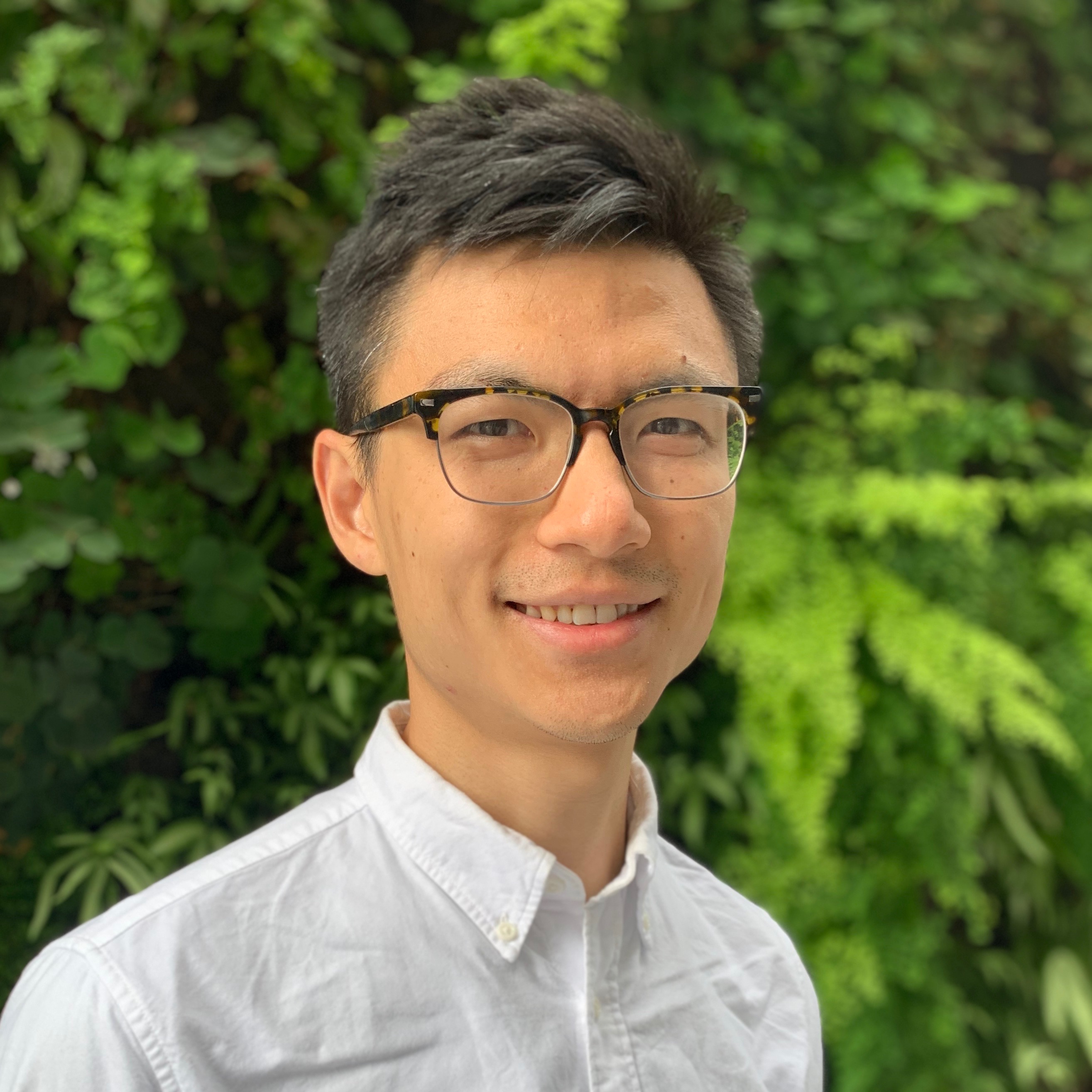
Tresnia Berah is a Research Fellow affiliated with the MaThRad team. Her research focuses on branching processes, structured Markov processes, and Jump Stochastic Differential Equations (SDE) modeling the evolution of sequential proton tracks. She collaborates with Prof Andreas Kyprianou and Dr Emma Horton on ongoing projects. No university affiliation, department, or formal educational background is explicitly stated in the provided text. Current research interests emphasize theoretical and applied aspects of stochastic processes and mathematical modeling in physics-related contexts. No scientific awards, published articles, or student advisement records are mentioned. Affiliation details beyond the MaThRad team remain unspecified.
Javier Amezcua is a researcher specializing in data assimilation, numerical weather prediction, and atmospheric dynamics, affiliated with the University of Maryland. He holds a PhD in Atmospheric Sciences from the University of Maryland (2012), focusing on sequential data assimilation and numerical weather forecasting. His work bridges advanced statistical methods with meteorological modeling, particularly in ensemble Kalman filters, model error estimation, and tropical climate dynamics. Research interests include: Development of ensemble-based data assimilation techniques for improving weather and climate models Integration of observational data (e.g., infrasound, satellite) to enhance atmospheric wind field estimation Study of model error dynamics and their impact on forecast accuracy Applications in renewable energy, such as wind resource prediction and statistical-dynamical downscaling Notable contributions include advancements in ensemble transform filters, weak-constraint 4D ensemble variational methods, and the implicit equal-weights particle filter. Collaborations span institutions like the University of Reading, the Norwegian Meteorological Institute, and the European Centre for Medium-Range Weather Forecasts. His thesis explored sequential data assimilation methodologies, including the Ensemble Transform Kalman-Bucy Filter and the effects of time-stepping schemes in atmospheric models. Ongoing work emphasizes interdisciplinary applications of data assimilation in epidemiology and hydrology.
Asim Ansari is the William T. Dillard Professor of Marketing at Columbia University’s Columbia Business School. His research focuses on Internet Recommendation Systems, Digital Customization, Social Network Modeling, and Bayesian Methods for Customer Data. He holds affiliations with the Data, Media and Society; Financial and Business Analytics; and Foundations of Data Science centers. Professor Ansari has been recognized with the Paul Green Award (1994) and the Dean’s Award for Teaching Excellence (2009). His work has been nominated for prestigious awards including the O’Dell Award and Long Term Impact Award. He serves as an Associate Editor for Management Science and Quantitative Marketing and Economics , and is on the editorial boards of Marketing Science and the Journal of Marketing Research . His research explores cutting-edge topics such as generative models for consumer behavior, probabilistic machine learning applications in marketing, and the dynamics of consumer choices. His work bridges statistical methods with real-world marketing challenges, emphasizing data-driven strategies for businesses and consumer insights.
Emmanuel Candès is the Barnum-Simons Chair in Mathematics and Statistics at Stanford University, where he is also a Professor of Statistics and, by courtesy, of Electrical Engineering. He is a member of the Institute of Computational and Mathematical Engineering at Stanford. Previously, he was the Ronald and Maxine Linde Professor of Applied and Computational Mathematics at the California Institute of Technology. His educational background includes: PhD in Statistics from Stanford University (1998) Diplome Ingenieur from Ecole Polytechnique (1993) Candès' research spans computational harmonic analysis, statistics, information theory, signal processing, and mathematical optimization with applications to imaging sciences, scientific computing, and inverse problems. His recent work focuses on conformal prediction, uncertainty quantification, and causal inference, with applications across diverse fields including genetics, machine learning, and artificial intelligence. He has made significant contributions to compressive sensing and mathematical signal processing. His recent publications demonstrate a strong focus on developing statistically rigorous methods for uncertainty quantification, particularly through conformal prediction frameworks. These works address challenges in high-dimensional statistics, machine learning validation, and causal inference across various application domains including genomics, natural language processing, and imaging sciences. His notable scientific achievements include: Alan T. Waterman Award from NSF IEEE Jack S. Kilby Signal Processing Medal (2021) Princess of Asturias Award for Technical and Scientific Research (2020) MacArthur Fellow (2017) Election to the National Academy of Sciences (2014) Election to the American Academy of Arts and Sciences (2014) Candès has served as Chair of the Statistics Department at Stanford (2016-2019) and is currently serving as Director of the Data Science Institute. His research has been supported by numerous grants from the National Science Foundation and other funding agencies. He has given over 60 plenary lectures at major international conferences across mathematics, statistics, biomedical imaging, and physics. As a leading researcher in mathematical statistics and computational mathematics, Candès maintains an active research group focusing on theoretical and applied aspects of statistical learning, signal processing, and optimization. His work bridges theoretical foundations with practical applications across scientific disciplines.
Mark Coates is a Professor in the Department of Electrical & Computer Engineering at McGill University, specializing in Machine Learning and Signal Processing. His research focuses on learning in networks, robust algorithms, and applications such as breast cancer detection, sensor networks, and communication systems. He holds a B.E. from the University of Adelaide and a Ph.D. from the University of Cambridge. His postdoctoral work at Rice University furthered his expertise in distributed systems and signal processing. Education: B.E. in Computer Systems, University of Adelaide, Australia (1995) Ph.D. in Engineering, University of Cambridge, UK (1999) Research Interests: Machine Learning and Bayesian Inference Particle Filtering and Sequential MCMC Graph Convolutional Neural Networks Microwave Breast Cancer Detection Distributed Estimation and Tracking Coates leads a research group exploring cutting-edge technologies in signal processing and AI, with notable contributions to graph-based learning, particle flow algorithms, and healthcare applications. His work bridges theoretical foundations and practical implementations, including software tools for particle filtering and network analysis.
Satoru Takahashi is a Professor and Provost’s Chair in the Department of Economics at the National University of Singapore (NUS), affiliated with the Institute of Operations Research and Analytics (IORA), part of NUS’s Smart Nation Research Cluster. His research focuses on Microeconomic Theory and Game Theory, particularly exploring equilibrium analysis, strategic interactions, and robustness in complex game environments. Education: PhD in Economics, Harvard University Research Interests: His work delves into advanced topics such as supermodular games, repeated games, and incomplete information scenarios. He examines how strategic complementarities, payoff uncertainties, and information structures influence equilibrium outcomes, contributing foundational insights to game theory and its applications in economics. Publications: Recent works include studies on Blackwell equilibria, robustness in supermodular games, and Nash equilibria under fat-tailed distributions, reflecting his expertise in theoretical and applied game theory. Labs/Teams: As part of IORA, he collaborates on interdisciplinary projects addressing complex decision-making challenges in the context of smart cities and national innovation strategies.
Steven Wu is an Assistant Professor in the School of Computer Science at Carnegie Mellon University, with a primary appointment in the Software and Societal Systems Department and affiliations in the Machine Learning Department, Human-Computer Interaction Institute (HCII), CyLab, and the Theory Group. His research focuses on algorithms and machine learning, particularly in responsible AI, privacy, bias, and uncertainty. He has received funding from NSF CAREER, Okawa Foundation, Amazon, Google, and others. Research Interests: Foundations of responsible AI (privacy, bias, uncertainty) Interactive learning (imitation, reinforcement learning) Causal inference, game theory, econometrics, and language modeling Grants and Awards: NSF CAREER Award Okawa Foundation Award Amazon Research Award Google Faculty Research Award J.P. Morgan Faculty Awards Advising: Supervises PhD, master's, and undergraduate students across multiple programs, with notable alumni now at Amazon, Stanford, Tsinghua, and others. Leads the Tartan Federer team, which won all four tracks of The Vector Institute's MIDST challenge in 2025. Labs and Collaborations: Active in CyLab (CMU's cybersecurity institute) and the Theory Group, focusing on privacy-preserving machine learning and algorithmic fairness.
Xin T. Tong is Associate Professor in the Department of Mathematics at the National University of Singapore, specializing in uncertainty quantification, machine learning, and operations research. His research develops theoretical foundations and methodologies for structured problem-solving in high-dimensional settings. Current investigations focus on ensemble Kalman methods, Bayesian inverse problems, sampling algorithms, and stochastic optimization with non-i.i.d. data. Research emphasizes mathematical analysis of algorithm efficiency and structure-aware computational methods. Professional background includes postdoctoral work at NYU's Courant Institute and Ph.D. from Princeton University.
Prof. Leszek Borzemski is a Professor at the Department of Computer Science and Systems Engineering, Wrocław University of Science and Technology. His research focuses on web performance analysis, distributed systems, data mining, and quality of service (QoS) management. He has organized international conferences such as the 28th International Conference on Systems Engineering (ICSEng 2021) and contributed to proceedings like Advances in Systems Engineering . His work encompasses spatio-temporal forecasting of web performance using methods like Turning Bands and Sequential Gaussian Simulation, as well as algorithm design for request distribution in cluster-based systems. He has also explored business-oriented admission control for e-commerce websites and fuzzy logic-based adaptive systems. Prof. Borzemski's publications span over two decades, with notable contributions in IEEE Transactions, Cybernetics and Systems, and conference proceedings. His research bridges theoretical data analysis with practical applications in networking and web infrastructure optimization.
Dr. Steve Dusseau is a Professor of Industrial & Manufacturing Engineering at Indiana Tech's Talwar College of Engineering and Computer Sciences. He founded the Industrial and Manufacturing Engineering program at Indiana Tech in 1996 and has over 30 years of university teaching experience. Ph.D., Engineering Management, University of Missouri–Rolla (Missouri S&T) (1996) MBA, Northwest Missouri State University (1993) B.S., Metallurgical Engineering, Michigan Technological University (1989) His research and teaching focus on Six Sigma methodologies , applied probability and statistics , and engineering management . He has developed three sequential Six Sigma courses (IME 2110, IME 3110, IME 3120) forming a comprehensive quality engineering curriculum. Key professional contributions include 15+ years of industry experience at General Motors and Wire Rope Corporation of America, and founding Hire Standard Consulting. He teaches foundational courses like University Experience (IIT 1000) and advanced statistical problem-solving (MA 2025). Active in academic advising for the Industrial and Manufacturing Engineering and Engineering Management Master's programs, Dr. Dusseau maintains extensive office hours for student support. His career bridges industry expertise with educational leadership.
Ben Boukai is a Chancellor's Professor in the Department of Mathematical Sciences at Indiana University and serves as Co-Director of the Biostatistics Ph.D. Program. His research focuses on mathematical statistics, with primary expertise in sequential analysis, where he develops parametric and non-parametric methodological frameworks for statistical inference problems. His work increasingly addresses random effects in nonlinear models applicable to statistical pharmacokinetics and econometrics, integrating hierarchical Bayesian modeling with structured parametric approaches. Key research areas include: Statistics Biostatistics Mathematical Statistics Sequential Analysis Bayesian Statistics Nonlinear Models Resampling Methods No scientific awards or student advisees were documented in the provided text. He maintains an active leadership role through the Biostatistics Ph.D. Program and conducts methodological research on resampling schemes for evaluating parameter estimate properties in small and large samples.
Susan M. Sanchez is a Distinguished Professor at the Naval Postgraduate School (NPS) in Monterey, California, and Co-Director of the SEED Center for Data Farming. She holds a Ph.D. in Operations Research from Cornell University (1986). Her academic career includes roles at the University of Arizona and the University of Missouri-St. Louis, as well as a visiting scholar position at INSEAD in France. Her research focuses on design of experiments, data-intensive statistics, and robust selection, with applications in military operations, healthcare, and manufacturing. She has authored over 80 publications and secured grants from the National Science Foundation and U.S. Department of Defense agencies. Key achievements include the 2013 INFORMS Military Application Society’s Koopman Prize, INFORMS Fellow designation (2017), and Titan of Simulation (2016). She co-founded the SEED Center, advancing simulation experiments and data farming for decision-making. She has advised over 50 students and served on thesis committees, with notable contributions to funded projects like 'Resources to Readiness' (U.S. Marine Corps) and 'Enhancing STORM Analytic Utility' (U.S. Navy). Her work spans logistics, energy systems, and unmanned vehicle analysis, with a focus on operational efficiency and resilience. Professional affiliations include INFORMS Simulation Society, Military Operations Research Society, and NATO Science & Technology Organization. The SEED Center and MOVES Institute collaborations underscore her commitment to interdisciplinary research.