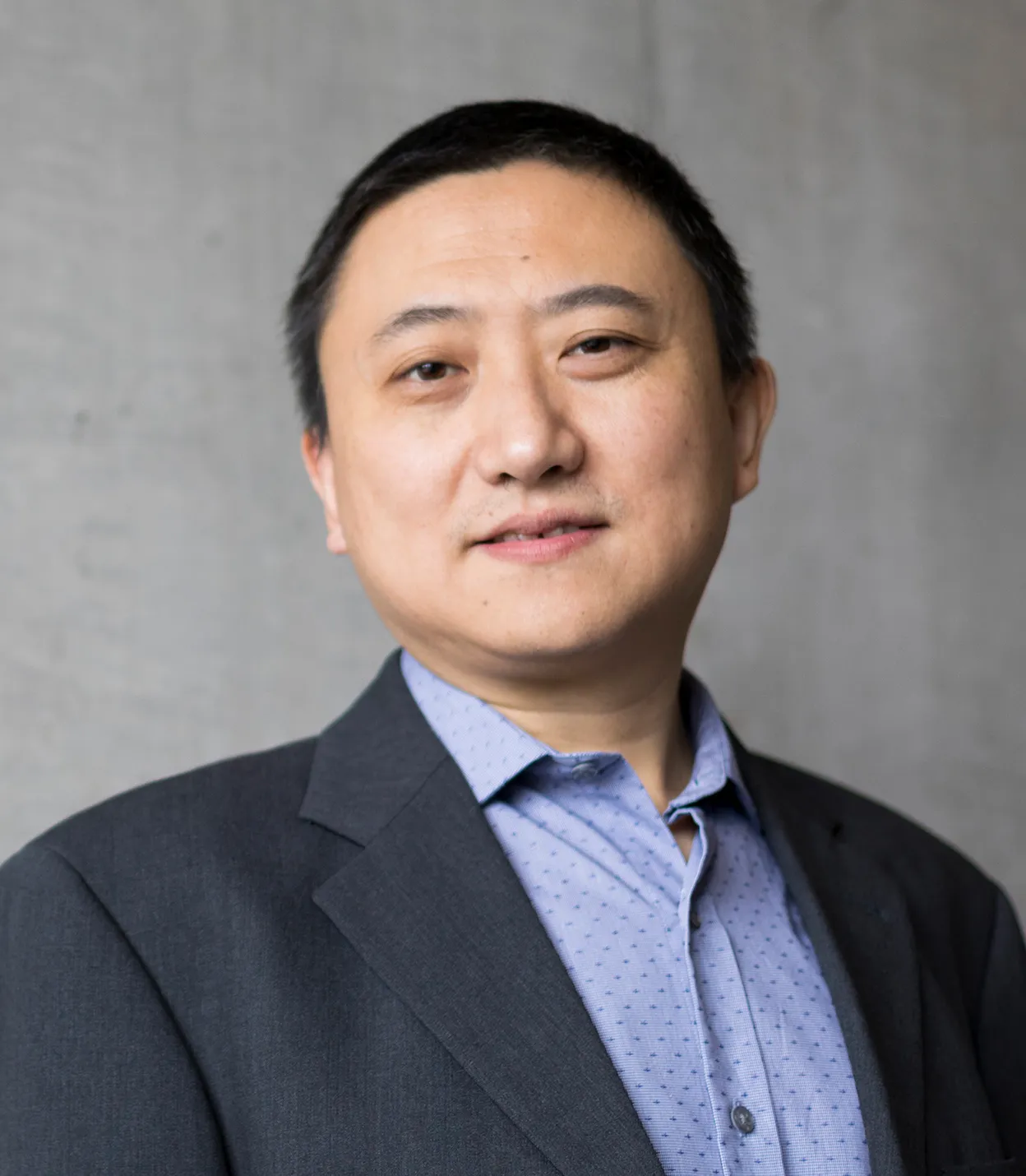
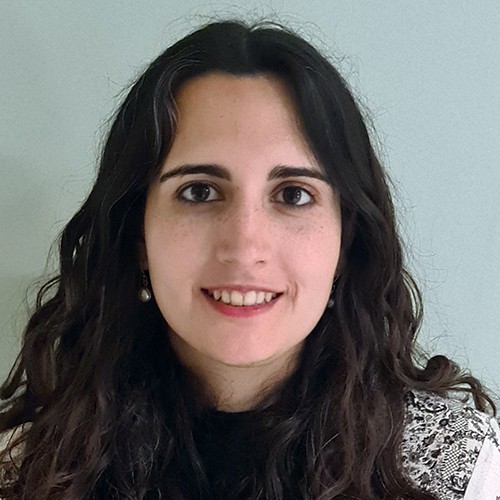
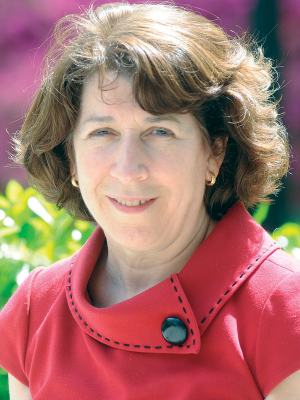
Dr. Reuben Ng is an Assistant Professor at the Lee Kuan Yew School of Public Policy, National University of Singapore, and Lead Scientist at the Lloyd’s Register Foundation Institute for the Public Understanding of Risk. He holds a PhD in Public Health from Yale University, an MSc in Management Research from the University of Oxford, and degrees from NUS and NTU in Psychology. His research focuses on ageism, social gerontology, and quantitative social science, with a particular emphasis on leveraging behavioral insights and data analytics for evidence-based policymaking. He has contributed to Singapore’s Smart Nation initiatives and advised on risk communication strategies. Over $3.2M in research grants as PI and $4M as PI/Co-PI/Co-I. 50+ peer-reviewed publications and 85 conference presentations globally. Awards include the International Fulbright Science and Technology Award and the Harkness Fellowship. Dr. Ng serves on advisory boards in finance, defense, education, and sustainability. He leads workshops blending data analytics, behavioral insights, and design thinking. His work has been featured in major media outlets like The New York Times, The Guardian, and CNN, and he is ranked in the top 2% of global scientists by Stanford University.
Ao.Univ.Prof. Dipl.-Ing. Dr.techn. Andreas Rauber is an Associate Professor at TU Wien's Research Department E-Commerce. His work focuses on digital preservation, machine learning, and reproducible research. He leads projects like EOSC-Life (FAIR principles in life sciences) and PLANETS (long-term data access). Key affiliations include the Network Lab and TU Wien's Institute for Software Technology. His research emphasizes data citation frameworks, secure data infrastructure (OSSDIP), and ethical AI practices. He has advised over 20 PhD/Master’s students in areas like adversarial ML and privacy-preserving systems. Notable contributions include DBRepo (semantic databases) and the DBRepo infrastructure for relational data. He collaborates internationally on initiatives like EOSC support offices and cultural heritage projects linking ethnomusicology datasets.
Friedolin Merhout is an Assistant Professor in the Department of Sociology at the University of Copenhagen, holding a tenured-track position. He serves as Director of Graduate Studies for the interdisciplinary MSc in Social Data Science and coordinates the Welfare, Inequality, and Mobility research group. His affiliations include the Copenhagen Center for Social Data Science (SODAS). Education: B.A. from Freie Universität Berlin (Germany), Ph.D. from Duke University (USA) Roles: Director of Graduate Studies, Research Group Coordinator, Faculty Member His research focuses on computational and experimental methods to study intergroup relations using digital trace, text, survey, and administrative data. Key themes include political polarization, radicalization, and the impact of digital media. Recent work combines Google search data with military records to explore discrimination-radicalization links and uses online experiments to address polarization. His publications span computational sociology, political behavior, and research methodology, with notable contributions on Russian IRA influence on U.S. voters and the efficacy of mobile platforms to reduce polarization. He leads the Crowdsourced Replication Initiative, examining variability in social science research outcomes. Office hours are Tuesdays 15:00–16:00 in room 16.1.49.
Dr. Nan Liu is a Senior Lecturer in Real Estate at the University of Aberdeen Business School, where she has been a faculty member since 2012. She serves as Head of the Real Estate group and is actively involved in research and teaching. Her office is located in the Edward Wright Building, Dunbar Street, Aberdeen. Position: Senior Lecturer Institution: University of Aberdeen School: Business School Department: Real Estate Email: nan.liu@abdn.ac.uk Phone: +44 (0)1224 272211 Dr. Liu's research focuses on residential and commercial real estate, with a strong emphasis on sustainability and innovation. Her key interests include Environmental, Social, and Governance (ESG) factors in real estate, energy efficiency, flexible working spaces, tokenisation of real estate assets, investment behaviours, and governance of the built environment. She also explores urban studies and housing market dynamics, particularly in Scotland. Her recent publications (2025–2012) demonstrate a consistent focus on ESG in commercial real estate, green building premiums, flexible workspace tenancy, housing market transparency, and the impact of economic cycles on energy efficiency. She has published in top journals such as Urban Studies , Energy , Journal of Property Research , and International Review of Financial Analysis . Her work often combines empirical analysis with policy implications, especially in the context of sustainability and urban transition. Dr. Liu is actively involved in research funding and supervision. She currently supervises PhD students in real estate, including Fernanda Antunes, whose project focuses on coworking dynamics. She has secured research grants from the RICS Research Trust and the Carnegie Trust for Scottish Universities for projects on distributed ledgers in real estate and cladding issues in high-rise buildings, respectively. She teaches courses such as Land and Property Economics (PO2009), Principles of Property Valuation (PO2509), and Real Estate Research (BU5030), contributing to both undergraduate and postgraduate programs. Her academic leadership includes coordinating courses and guiding the Real Estate research group. Dr. Liu is affiliated with the Centre for Real Estate Research at the University of Aberdeen, which supports interdisciplinary research in property markets, sustainability, and urban development. She collaborates with colleagues such as Professor Hutchison and has co-authored multiple publications with researchers like Y. Zhao and D. Lo.
Dr. Ramya R Aroul is an Assistant Professor in the Department of Finance and Real Estate at the Naveen Jindal School of Management, The University of Texas at Arlington. She has previously held faculty positions at Texas A&M University-Commerce and École hôtelière de Lausanne, Switzerland. Her academic journey began with a PhD in Finance and Real Estate from UTA in 2014. Research Interests: Financial distress and valuation in asset markets Sentiment in real estate markets Sustainability in residential real estate Endogeneity and simultaneity in hedonic valuation Climate risk and household wealth ESG and REIT performance Her recent publications (2020–2024) reveal a consistent focus on real estate finance, with particular emphasis on distressed sales, green building impacts, market sentiment (especially during crises like COVID-19), and ESG factors in REITs. She employs advanced econometric methods to study pricing anomalies, sustainability premiums, and investor behavior across residential, commercial, and hospitality real estate sectors. Scientific Awards and Honors: Red Pen Award, Journal of Sustainable Real Estate (2023) Champion who impacted Student Learning and Success, Maverick Advantage Distinction (2023, 2022) Augustine "Chuck" Arize Junior Faculty Award, Texas A&M University-Commerce (2019) James R. Webb ARES Foundation Doctoral Student Award (2013) Multiple teaching and research awards from UT Arlington and professional associations Dr. Aroul actively mentors students, serving as advisor and dissertation committee member for several PhD candidates. She has secured competitive research grants, including a $16,000 Research Enhancement Program (REP) award for climate risk research. She is deeply engaged in service, holding editorial board positions at Journal of Real Estate Literature and Journal of Sustainable Real Estate , and serving on the Board of Directors of the American Real Estate Society. Her professional memberships include the Financial Management Association and active participation in women-in-real-estate initiatives.
Dr Duncan Hodges is a Senior Lecturer in Cyberspace Operations at Cranfield University, affiliated with the Centre for Electronic Warfare Information and Cyber within Cranfield Defence and Security. His research spans cybersecurity, digital identity, offensive cyber operations, and natural language processing applications in security. His research interests include: Identity in cyber and natural spaces Offensive cyber activity and information warfare Natural Language Processing in cybersecurity Insider threat detection Smart home and IoT security Hodges' recent publications (2015–2022) reflect a strong focus on behavioral biometrics, identity cues, privacy, and cyber-enabled crime. His work combines technical innovation with social science insights, especially in understanding human factors in cybersecurity. Key themes include keystroke dynamics, smart home vulnerabilities, and personality inference from digital behavior. Scientific Awards and Fellowships: ESRC NCRM Fellow on Digital Identity Visitor at the Alan Turing Institute Research Leadership and Grants: Lead PI on EPSRC project: 'People Powered for Desirable Social Outcomes' CO-I on EPSRC project: enabling sensitive disclosures via conversational agents Two projects funded by the Centre for Research and Evidence in Security Threats (CREST) Collaborations with EPSRC, ESRC, Innovate UK, and Defence Science and Technology Labs (DSTL) Labs and Research Groups: He is part of the Information Operations Group at Cranfield and collaborates with the Cyber Security Centre at the University of Oxford and the Alan Turing Institute .
Cecilio Angulo Bahón is a full Professor at the Polytechnic University of Catalonia (UPC), affiliated with the Barcelona School of Industrial Engineering (ETSEIB) and the Department of Systems, Automatics and Industrial Informatics Engineering . He leads research in Artificial Intelligence and Robotics , with significant contributions to healthcare data analytics, digital twins, and human-robot collaboration. His research spans machine learning for medical data harmonization, generative adversarial networks in health informatics, and evolutionary algorithms for control systems. Recent publications focus on synthetic healthcare data generation, climate-resilient agriculture , and UMAP-based data analysis . His work bridges AI theory with practical applications in industrial and healthcare domains. Scientific awards include the Sant Jordi 2023 Digital Polytechnic Initiative Award . He has supervised doctoral candidates like Carlos Flores-Vázquez and N. Raya, with key collaborations at the IDEAI-UPC Intelligent Data Science and AI Research Group and the Institute of Robotics and Industrial Informatics (CSIC-UPC).
Dr. Stefan Walzel is a researcher at the Institute of Sport Economics and Sport Management (Section Sports Business Administration) at German Sport University Cologne. With a PhD in Sport Science (2010) and a diploma in Sport Economics, he focuses on Corporate Social Responsibility (CSR) in sports, commercialization impacts, and UN Sustainable Development Goals (SDGs) . His work intersects sport studies , organizational ethics , and sustainability frameworks . PhD in Sport Science (German Sport University Cologne, 2010) Diploma in Sport Economics (German Sport University Cologne, 2005) Student exchange at Victoria University of Technology (Melbourne, 2004-2005) Studies in Business Administration (Distance Learning University Hagen, Humboldt University Berlin, 1997-2002) His research explores CSR implementation in sports, governance practices, and sustainability challenges in major sporting events. Projects include CSR-Score Card and co-hosting event sustainability analysis , with findings published in journals and anthologies. Recent works address ethical sponsorship strategies and SDG alignment. Notable scientific awards include the EASM Distinguished Service Award (2022) . He serves on editorial boards and academic councils, with over 74 publications and 8 projects. Collaborations span researchers like Sebastian Uhrich, Kirstin Hallmann, and Christoph Breuer. He actively contributes to international sports policy discussions and industry knowledge transfer.
Bing Han is a Professor of Finance and the TMX Chair in Capital Markets at the Joseph L. Rotman School of Management, University of Toronto. He holds a PhD in Finance from UCLA and a PhD in Mathematics from the University of Chicago. Research Interests : Behavioral Finance, Asset Pricing, Investment Strategies, Risk Management, and Real Estate Finance. His work bridges mathematical rigor with empirical finance, focusing on market anomalies, investor sentiment, and liquidity dynamics. Publication Trends : His recent work explores option pricing discrepancies, social transmission of consumption beliefs, and cross-border information flows. Articles highlight applications of behavioral biases, volatility modeling, and macroeconomic forecasting using financial instruments. Scientific Awards & Honors : Lifetime Achievement Award (2021) Outstanding Paper Award (2018) Best Paper Award (2016) Outstanding Paper in Asset Pricing Research (2013) CBA Foundation Research Excellence Award (2010) Advising & Grants : Available for Masters/PhD supervision and industry projects. Secured sponsored research funding on Sentiment Risk and Hedge Fund Returns (2016-2017). Previously taught at University of Chicago, Ohio State, and University of Texas at Austin.
Siddhartha Sharma is an Assistant Professor at the Kelley School of Business, Indiana University , specializing in Information Systems & Operations Management . His research explores the intersection of digital distribution , media market transformations , and consumer behavior . Sharma’s academic contributions include empirical analyses of e-commerce platforms , livestream marketing , and digitization’s impact on traditional industries . His work often employs field experiments , econometric modeling , and data-driven decision-making to evaluate strategic implications of technological shifts. His recent publications focus on print book cannibalization by e-books , retail media dynamics , and delivery time optimization , reflecting trends in digital-physical channel interactions , platform economics , and consumer engagement . Specific scientific awards or educational backgrounds are not detailed in the provided texts. Sharma collaborates extensively with researchers from Carnegie Mellon University , University of Texas at Dallas , and Kelley School of Business , addressing challenges in digital disruption and marketplace design .
Jia Xue is an Associate Professor at the Factor-Inwentash Faculty of Social Work, University of Toronto, with a joint appointment in the Faculty of Information. She joined U of T in 2018 as an Assistant Professor and was promoted in 2025. Her research focuses on computational approaches to social justice issues, including intimate partner violence, rape myth culture, and AI ethics. She holds a Ph.D. from the University of Pennsylvania, a law degree from Tsinghua University, and postdoctoral training at Harvard University. Her research lab, the Artificial Intelligence for Justice (AIJ) Lab, develops AI tools to study social ills like image-based sexual abuse and school bullying. Key projects include AI-powered chatbots for sexual violence victims and analyzing biases in algorithmic systems. Funded by grants from Connaught, SSHRC, and CIHR, her work bridges social work, computer science, and policy analysis. Jia has authored over 50 peer-reviewed articles in journals like Journal of Interpersonal Violence and Child Abuse & Neglect . Awards include the Ontario Early Researcher Award (2025) and Deborah K. Padgett Early Career Achievement Award (2025). She leads initiatives at the Schwartz Reisman Institute for Technology and Society, focusing on tech’s societal impacts. Teaching emphasizes ethical big data use in social justice contexts. Recent work includes pandemic-related social media analysis and developing interventions for marginalized populations. Her interdisciplinary approach combines machine learning, policy analysis, and qualitative research to address systemic inequities.
Maria Del Rio-Chanona is an Assistant Professor in the Department of Computer Science at University College London (UCL), where she conducts interdisciplinary research at the intersection of network science, machine learning, and economic modeling. She is also a member of the External Faculty at the Complexity Science Hub since January 2025, reflecting her ongoing engagement with complex systems research. Her academic background includes a PhD in Mathematics from the University of Oxford, where she was part of the Institute for New Economic Thinking at the Oxford Martin School, and undergraduate studies in Physics at UNAM, Mexico. Her research interests center on understanding socioeconomic transformations using computational methods. She specializes in applying Large Language Models (LLMs), Agent-Based Models (ABMs), and network analysis to study the impacts of generative AI, the net-zero transition, and global crises like the COVID-19 pandemic on labor markets, economic resilience, and public discourse. Her work often involves analyzing large-scale digital trace data, including online labor platforms and social media, to uncover behavioral and structural shifts. The recent publications reveal a consistent focus on labor market dynamics in the face of technological disruption. Her work examines how generative AI reshapes demand for freelance skills, reduces public knowledge sharing on platforms like Stack Overflow, and influences mental health discourse in relation to employment decisions. She also investigates broader economic modeling, including pandemic shock propagation and employment transitions during decarbonization. Among her scientific recognitions is the Emerging Scientific Award from the Complex Systems Society in 2023. She has collaborated with international policy organizations such as the International Monetary Fund (IMF) and the International Labour Organisation (ILO), underscoring the policy relevance of her research. Maria Del Rio-Chanona has held prestigious research positions, including as a James S. McDonnell Foundation (JSMF) Postdoctoral Fellow at the Complexity Science Hub and a Visiting Fellow at the Growth Lab, Harvard Kennedy School. These roles have enabled her to lead and contribute to high-impact interdisciplinary projects. While no current advisees are listed, she actively engages with PhD opportunities and interdisciplinary research networks. She is involved in multiple research initiatives, including the development of HuBERT, an NLP algorithm for extending the Seshat Global History database, and projects studying labor transitions in net-zero scenarios. Her work on the HiST-LLM benchmark for historical knowledge in LLMs highlights her innovative integration of AI with social science.
Kathleen R. McKeown is the Henry and Gertrude Rothschild Professor of Computer Science at Columbia University and the Founding Director of Columbia's Data Science Institute (2012-2017). She has been a faculty member since 1982 and served as Department Chair (1998-2003) and Vice Dean for Research in the School of Engineering and Applied Science. Her research focuses on natural language processing , text summarization , natural language generation , and social media analysis . Current projects include neural methods for extractive/abstractive summarization, electricity usage message generation via reinforcement learning, and social media sentiment analysis in low-resource languages like Uyghur. She leads the Columbia NLP Group and developed the long-running Newsblaster system (2001-present) for automated news tracking and multi-document summarization. Key scientific awards include NSF Presidential Young Investigator (1985) NSF Faculty Award for Women (1991) AAAI Fellow (1994) ACM Fellow (2003) ACL Founding Fellow (2012) Columbia Great Teacher Award (2010) Anita Borg Woman of Vision Award (2010) She has held leadership roles in major academic organizations: President of the Association for Computational Linguistics (1992), Vice President (1991), Secretary-Treasurer (1995-1997), and board member of the Computing Research Association with secretary role.
Anthony Clark is an Assistant Professor of Computer Science at Pomona College, where he has been teaching since 2020. Previously, he served as an Assistant Professor at Missouri State University from 2016 to 2020. He directs the ARCS (Autonomous Robotics and Complex Systems) Lab, which focuses on improving the robustness and adaptability of autonomous robots, particularly small-scale systems that can navigate unpredictable terrain and adapt to potential damage. Clark earned his Ph.D. in Computer Science from Michigan State University in 2016, where he worked under Dr. Philip K. McKinley, and his B.S. in Computer Engineering from Kansas State University, graduating magna cum laude. His research centers on making autonomous robots more robust and adaptive through optimization algorithms and multimodal systems. He specializes in evolutionary robotics, computer vision, neural networks, and simulation methods for developing control systems that leverage multiple locomotion mechanisms. His recent work demonstrates strong trends across several domains: developing hybrid locomotion systems (wheel/leg transformations), applying deep learning to terrain classification and pathfinding, using simulation environments for training, and exploring pretraining techniques for evolutionary robotics. His research shows a consistent focus on bridging simulation and real-world applications while addressing challenges in robot adaptability and robustness. Faculty Excellence in Teaching, Missouri State University (2018) Best Paper Award, Workshop on Evolutionary and Reinforcement Learning (2013) Best Paper Award, ALIFE Conference, Behavior and Intelligence Track (2012) Outstanding Reviewer, Elsevier (2018) Master Advisor Certification, Missouri State University (2017) Clark has advised numerous undergraduate and graduate students through the ARCS Lab, with current research involving projects like the Adabot (a robot with multiple locomotion mechanisms) and thermal semantic segmentation for aerial field robots. His teaching portfolio includes courses on data structures, algorithms, neural networks, computer systems, and mobile robotics. He has also served as a Visiting Associate at Caltech's ARC Lab from 2023-2024, working with Dr. Soon-Jo Chung. The ARCS Lab develops simulation environments, optimizes control systems, and fabricates physical robots. Current projects include the Adabot with its geared coaxial shaft mechanism for hybrid locomotion, thermal semantic segmentation using satellite data, and creating dynamic simulation environments with Unreal Engine 5. The lab emphasizes practical applications of theoretical research while training students in both hardware and software aspects of robotics.
Riccardo Resciniti is a Full Professor at the University of Sannio, working within the Department of Law, Economics, Management and Quantitative Methods (DEMM). His academic position falls under the SECS-P/08 classification for Business Economics and Management. Based in De Simone Palace at the University, Professor Resciniti maintains an active research profile with over 180 publications spanning more than two decades. Professor Resciniti's research primarily focuses on contemporary marketing challenges, with particular expertise in brand activism, consumer behavior in cross-border contexts, and international business strategies. His recent work examines how brands engage in political and social issues, analyzing consumer perceptions of authenticity in activist branding. He has conducted significant research on cross-border acquisitions, investigating how psychic distance and corporate reputation affect consumer reactions to international mergers and acquisitions. His publication record shows a clear evolution from early work on e-commerce internationalization and biotechnology industry analysis toward more recent, high-impact research on brand activism. The 2022-2024 period has been particularly productive, with multiple publications examining the nuances of authentic brand activism and consumer responses to politically engaged brands. Professor Resciniti frequently collaborates with researchers including Antonella Cammarota, Vittoria Marino, and Michela Matarazzo, forming a productive research team that has generated numerous publications in marketing and business journals. His research methodology often combines quantitative experimental designs with qualitative text analysis, as evidenced by his Instagram comment analysis in recent brand activism studies. His work on cross-border acquisitions represents a significant contribution to understanding consumer behavior in international business contexts, particularly regarding how consumers react to foreign ownership of domestic brands. This research has practical implications for companies engaging in international expansion through acquisition strategies.