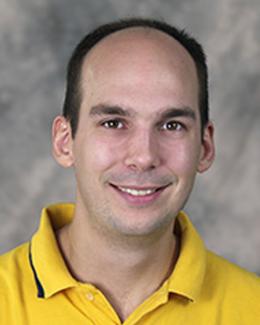
David TemperleyView profile
Professor
David Temperley is a Professor of Music Theory at the Eastman School of Music (University of Rochester), where he has been teaching since 2000, progressing from Assistant Professor to Associate Professor and finally to Professor in 2015. His academic career also includes visiting positions at the University of Pennsylvania, Ohio State University, Columbia University, and New York University. He holds a Ph.D. in Music Theory from Columbia University (1996), an M.A. in Composition from Columbia University (1992), and a B.A. in History from Swarthmore College (1985). Dr. Temperley's research spans multiple areas at the intersection of music theory, cognition, and computational modeling. His work focuses on: Music cognition and perception Computational models of musical structure Analysis of popular music, particularly rock Relationships between music and language Rhythm and meter in various musical traditions Corpus-based approaches to music analysis His research demonstrates a consistent interest in applying quantitative and computational methods to understand musical structures and processes. He has pioneered corpus studies in music theory, examining large collections of musical works to identify patterns and principles that might not be evident from individual case studies. His work often bridges theoretical music analysis with empirical cognitive science approaches. Dr. Temperley has received several prestigious awards including the Society for Music Theory Emerging Scholar Award (2003), the University of Rochester Bridging Fellowship (2009), and the University of Rochester Provost's Multidisciplinary Award (2012). These awards recognize his innovative interdisciplinary approach that connects music theory with cognitive science and computational modeling. As an educator, Dr. Temperley has taught a wide range of courses in music theory, analysis, counterpoint, and music cognition at both graduate and undergraduate levels. His teaching reflects his research interests, emphasizing both traditional theoretical approaches and contemporary empirical methods. He has supervised numerous graduate students in their research, particularly in areas combining music theory with cognitive science. Dr. Temperley is also an active composer with numerous performances of his works, including chamber music for various instrument combinations and piano compositions. His compositional work informs his theoretical research and vice versa, creating a productive dialogue between creative practice and scholarly inquiry.