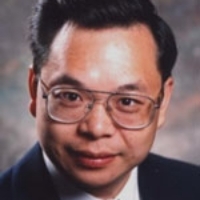
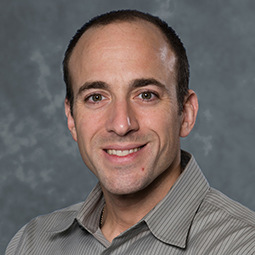
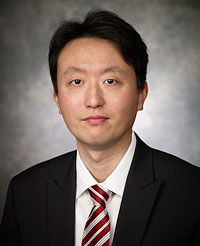
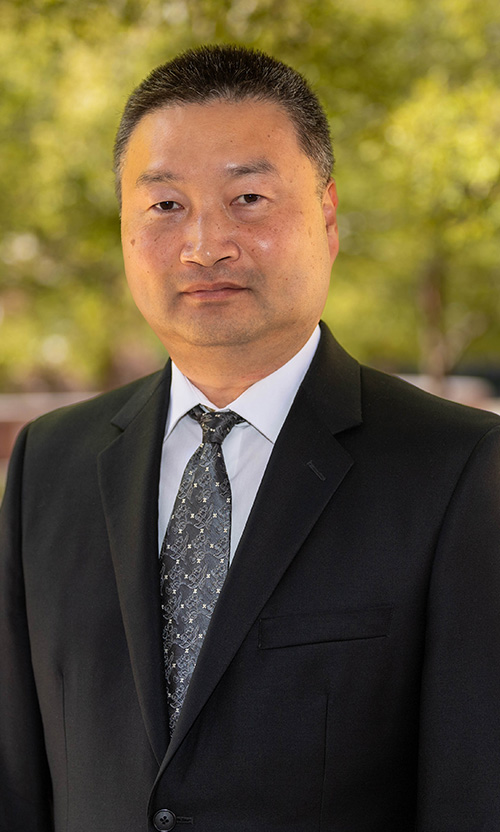
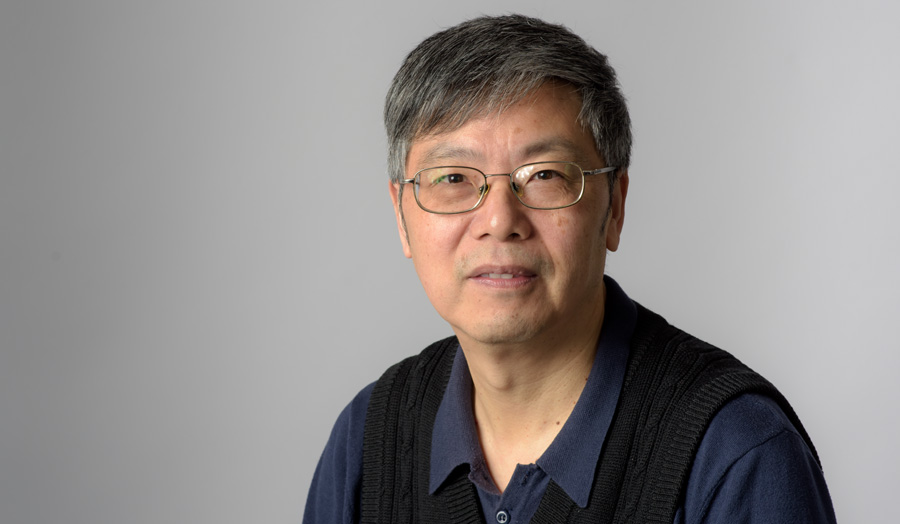
Simon Yang is a Professor in the School of Engineering at the University of Guelph, part of the College of Engineering and Physical Sciences. His research focuses on artificial intelligence, robotics, sensors, control systems, and bio-inspired intelligence. He has contributed to advanced robotics applications, including mobile robot navigation, underwater vehicle control, and agricultural automation. Dr. Yang holds editorial roles for journals such as the International Journal of Robotics and Automation and IEEE Transactions on Cybernetics . His work bridges theoretical advancements with practical implementations in areas like sensor networks, machine learning, and multi-agent systems. Recent projects include developing robust control frameworks for autonomous systems, digital twin applications, and bio-inspired neural network algorithms. His research emphasizes real-world challenges in robotics, environmental monitoring, and precision agriculture, with a focus on integrating AI-driven solutions for enhanced decision-making and system reliability. Professional contributions include advisory roles in multiple journals and conference committees, reflecting his leadership in the field.
Lingxi Li is a Professor at the Elmore Family School of Electrical and Computer Engineering at Purdue University's Indianapolis campus. His research focuses on modeling complex systems, connected and automated vehicles, intelligent transportation systems, and parallel intelligence. He holds a Ph.D. from the University of Illinois at Urbana-Champaign (2008), and master's and bachelor's degrees from the Chinese Academy of Sciences (2003) and Tsinghua University (2000). Research Interests: Dr. Li's work bridges control systems, transportation engineering, and AI, with emphasis on human-machine interaction, autonomous vehicle systems, and scenario-based traffic modeling. His projects include developing frameworks for Industry 5.0 collaboration, enhancing traffic flow prediction through parallel learning, and advancing safety in micro-mobility systems like e-scooters. Recent Publications: Over 15+ articles (2023-2025) explore topics such as game-theoretic vehicle interaction modeling, vision-language systems for autonomous driving, and acoustic SLAM technologies. These studies reflect a focus on real-world validation and system integration in smart transportation. Labs & Initiatives: Leads research in autonomous mining systems and scenario engineering for intelligent vehicles, leveraging parallel intelligence concepts. Collaborates on projects like ParallelWorkforce (Industry 5.0 frameworks) and SceNDD++ (naturalistic driving datasets).
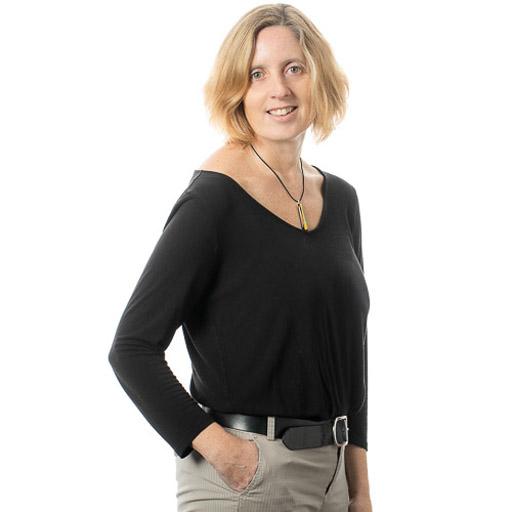
Professor Yue Rong is a Full Professor at Curtin University's Department of Electrical and Computer Engineering, within the School of Electrical Engineering, Computing and Mathematical Sciences. He holds editorial roles at IEEE Transactions on Signal Processing and IEEE Wireless Communications Letters. His research focuses on signal processing for communications, underwater acoustic systems, wireless networks, and healthcare IoT. Rong has authored over 140 journal and conference papers and received multiple awards, including the 2010 Young Researcher of the Year Award. Education: B.E. (Electrical Engineering), Shanghai Jiao Tong University (1999) M.Sc. (Electrical Engineering), University of Duisburg-Essen (2002) Ph.D. (Electrical Engineering), Darmstadt University of Technology (2005) Research Interests: Rong's work spans cooperative MIMO communications, underwater acoustic systems, OFDM modulation, radar-based healthcare monitoring, and secure wireless protocols. His innovations include adaptive modulation schemes for underwater environments and radar-based vital signs detection. Recent trends in his publications emphasize AI-driven signal processing for healthcare IoT and underwater optical communication systems. Awards: Best Paper Awards (WCSP 2011, APCOMM 2010) Chinese Government Award (2004) DAAD/ABB Fellowship (2001-2002) Grants & Labs: His research is supported by grants focusing on UAV-enabled data collection and underwater network optimization. He leads projects in the Distributed Data Fusion and Emerging Technologies (DDFE) lab, advancing radar-cardiography and wearable health monitoring systems.
Md Sakib Hasan is an Assistant Professor in the Department of Electrical and Computer Engineering at the University of Mississippi. He holds a Ph.D. in Electrical Engineering from the University of Tennessee-Knoxville (2017). His research focuses on hardware acceleration, neuromorphic computing, and memristor-based systems. Research interests span: AI hardware accelerators and energy-efficient computing Biomimetic systems and bio-inspired electronics Hardware security through chaotic systems and PUFs Recent publications demonstrate strong emphasis on: Neuromorphic architectures for computer vision and temporal processing Biomembrane-based computing systems Chaotic cryptography and secure hardware design
Dr. Jason D. Bakos is a Professor in the Department of Computer Science and Engineering at the University of South Carolina's Molinaroli College of Engineering and Computing. His research focuses on high-performance domain-specific architectures, including reconfigurable computing, embedded systems, and machine learning acceleration. He has held academic positions since 2005, progressing from Assistant to Associate Professor before becoming a full Professor in 2017. Education : Ph.D., Computer Science, University of Pittsburgh (2005) B.S., Computer Science, Youngstown State University (1999) Research Interests : Dr. Bakos specializes in computer architecture at multiple levels (circuit, micro-architectural, and system) with a focus on VLSI design, reconfigurable computing, high-performance computing, and applications in embedded systems. His recent work includes FPGA acceleration of machine learning algorithms, structural health monitoring systems, and real-time signal processing. Awards : 2018 Teaching Award in Computer Science and Engineering 2009 NSF CAREER Award Multiple design competition awards for innovative chip and circuit designs Grants & Funding : He leads and co-leads projects funded by NSF, Savannah River National Laboratory, and industry partners like Texas Instruments. Recent grants focus on edge computing for real-time machine learning, FPGA-based accelerators, and corrosion analysis of nuclear materials. Labs & Teams : His research group collaborates on projects involving embedded systems, FPGA design, and interdisciplinary applications in structural engineering and bioinformatics. He advises a dynamic team of graduate students and post-doctoral researchers.
Wooram Park is an Associate Professor in the Department of Mechanical Engineering at the University of Texas at Dallas (UT Dallas), affiliated with the Erik Jonsson School of Engineering and Computer Science. He leads the Robotics and Intelligent Systems Laboratory (ROBINS Lab) and holds a PhD from Johns Hopkins University (2008), along with MS and BS degrees from Seoul National University (2003 and 1999). His research focuses on robotics, biomedical robotics, computational structural biology, and image processing. Key projects include flexible needle steering for medical applications, haptic feedback systems, and advanced algorithms for motion planning and image reconstruction. He has received notable awards such as the Creel Fellowship (2007) and Critics’ Choice Award in ArtBot Design (2004). His work spans theoretical contributions in stochastic systems and practical innovations like vibratory magnetic robots (Vimbot) and wearable haptic devices. The ROBINS Lab emphasizes interdisciplinary research at the intersection of mechanical engineering, computer science, and biomedical applications.
Dr. Tao Shu is an Associate Professor in the Department of Computer Science and Software Engineering at Auburn University. His research focuses on cybersecurity, wireless communication systems, federated learning, and IoT applications. He holds a Ph.D. in Electrical and Computer Engineering from the University of Arizona, and M.S. and B.S. degrees in Electronic Engineering from South China University of Technology. Dr. Shu's work emphasizes secure communication and distributed learning systems, including projects funded by the NSF such as a novel method to prevent cyberattacks on Low Earth Orbit (LEO) satellites. He has been recognized for academic excellence, including being named to Auburn University’s 2020 promotion and tenure list. His research interests span cybersecurity mechanisms for autonomous vehicles, privacy-preserving federated learning, and resource allocation in metaverse environments. He explores innovative solutions for sensor spoofing detection, adversarial machine learning, and energy-efficient IoT systems. Dr. Shu is affiliated with Auburn’s Center for Artificial Intelligence and Cybersecurity Engineering and actively contributes to interdisciplinary projects. His publications reflect a strong focus on practical applications of theoretical advancements in wireless systems and secure data transmission.
Dr. Tingkai Wang is a Senior Lecturer in the School of Computing and Digital Media at London Metropolitan University. His research focuses on mobile robots, intelligent systems, artificial intelligence, control systems, image/signal processing, and virtual reality. He teaches the Programming for Computer Science module and has led projects like the Virtual Environment and Simulation System (2000-2002) and Navigation and Control of Mobile Robots (1995-1998). His work emphasizes interdisciplinary approaches, combining expert systems, neural networks, and fuzzy logic to address challenges in autonomous systems. Notable contributions include AGV navigation algorithms, hybrid control systems, and predictive modeling. Over 30 publications span robotics, control engineering, and AI applications. He collaborates internationally and has presented at venues like the International Conference on Intelligent Systems Engineering and the IEEE Conference on Engineering in Medicine and Biology. Dr. Wang’s expertise bridges theoretical modeling and practical implementation, with applications in manufacturing automation, environmental monitoring, and industrial management systems. His current research continues exploring adaptive control mechanisms and AI-driven robotics solutions.
Yue Zhao is an Associate Professor in the Department of Electrical and Computer Engineering at Stony Brook University, with an affiliated appointment in Applied Mathematics and Statistics. Prior to this, she held postdoctoral positions at Stanford University and Princeton University. She earned her Ph.D. from UCLA in 2011 and B.E. from Tsinghua University in 2006. Her research focuses on smart grid systems, renewable energy integration, machine learning applications in power systems, and game-theoretic approaches to electricity markets. Key areas include transportation electrification, demand response mechanisms, and cyber-physical security of grid infrastructure. She teaches courses on digital signal processing, convex optimization, and communication systems. Her work spans over 50 publications in top journals and conferences like IEEE Transactions on Power Systems and ACM e-Energy. Notable contributions include dynamic state estimation frameworks for inverter-based resources, incentive-compatible market mechanisms for renewable aggregation, and cyber attack detection methodologies. Dr. Zhao advises a research group focused on interdisciplinary challenges in energy systems. Current openings exist for Ph.D. students with strong analytical backgrounds. Sponsors include NSF, DOE, and industry collaborators.
Alisa Piekny, PhD, is a Professor of Biology and Associate Dean of Research and Infrastructure at Concordia University's School of Health. Her research focuses on cytoskeleton regulation during cell division, migration, and polarity, particularly in cancer cells. She employs human cell cultures, iPSCs, and collaborative drug discovery approaches to advance anti-cancer therapies and nanotechnology-based diagnostic tools. Education: PhD (University of Calgary), Post-Doc (IMP Vienna and University of Chicago). Research interests include anillin protein dynamics, microtubule-actomyosin interactions, and nanoparticle-cell interactions. Her work bridges cell biology with translational medicine, emphasizing cytokinesis mechanisms and their hijacking in cancer. Recent publications highlight innovations in drug delivery systems, fluorescent nanoparticle imaging, and molecular tools for live-cell cytokinesis analysis. Collaborations span nanotechnology, cancer biology, and developmental biology, yielding insights into cell fate regulation and therapeutic targeting. Her research has been recognized through interdisciplinary projects at the interface of biology and materials science, with a focus on practical medical applications.
Jason Trelewicz is a Professor at Stony Brook University’s Department of Chemical & Molecular Engineering and holds joint faculty status at Oak Ridge National Laboratory. His research focuses on interface-engineered materials for extreme environments, leveraging advanced processing, characterization tools, and multiscale modeling. He received his Ph.D. in Materials Science from MIT (2008) and previously served as Research Director at MesoScribe Technologies. His work emphasizes fusion materials, nanocrystalline alloys, additive manufacturing, and radiation effects. Awards include the DOE Early Career Award (2017), NSF CAREER Award (2016), and multiple best paper awards (2022). His lab, the Engineered Microstructures and Radiation Effects Laboratory, explores topics like ceramic composite moderators and plasma-facing materials. Education: Ph.D., Materials Science & Engineering, MIT (2008) Affiliations: Oak Ridge National Laboratory (Joint Faculty) Key research areas include thermal-mechanical evaluation of fusion reactor components, alloy design for additive manufacturing, and radiation tolerance of nanocrystalline materials. He has pioneered studies on helium bubble dynamics in tungsten and stability of doped nanocrystalline alloys. Awards: DOE Early Career Award, NSF CAREER Award, 2022 Best Paper Awards in Nuclear Materials and Asian Ceramics. Grants/Projects: Supported by DOE, NSF, and collaborative initiatives with Japan (FRONTIER). His group investigates corrosion behavior in 3D-printed steels and develops novel composite moderators for high-temperature reactors. Ongoing work includes multiscale modeling for fusion materials and in-situ TEM studies of irradiation effects.
Cara M. Nunez is an Assistant Professor in Mechanical and Aerospace Engineering at Cornell Engineering. Her research focuses on haptic interfaces, sensory perception, and human-robot interaction. Research Areas: Development of wearable haptic devices for sensory feedback Human perception of tactile stimuli under cognitive load Multimodal interaction combining haptic, audio, and visual cues Medical applications of haptic guidance systems Key publications explore smartphone-based sensory assessment, affective mediated touch, and haptic guidance for medical procedures. Her work appears in robotics and human-computer interaction venues.
Andreas Peter Burg is a Tenured Associate Professor at the École Polytechnique Fédérale de Lausanne (EPFL), where he leads the Telecommunications Circuits Laboratory (TCL) within the School of Engineering. He holds multiple academic and administrative roles at EPFL including Associate Professor in Teaching (SEL, EDMI, EDEE), Director of SEL Management, and Member of the Doctoral Program Committee for Electrical Engineering. Dr. Burg received his Dipl.-Ing. degree in 2000 and Dr. sc. techn. degree in 2006 from ETH Zurich. His academic career includes positions as SNF Assistant Professor at ETH Zurich (2009-2011) before joining EPFL in January 2011 as a Tenure Track Assistant Professor, where he was promoted to Tenured Associate Professor in June 2018. His research focuses on circuits and systems for telecommunications , with particular expertise in silicon implementation of communication technologies, communication algorithms optimization for hardware, low-power VLSI signal processing, and digital integrated circuits. His work bridges theoretical communication concepts with practical circuit implementations, addressing challenges in wireless and wired communication systems. His recent publications (2024-2025) demonstrate a strong focus on next-generation communication technologies including 6G systems, advanced error correction coding, wireless sensing applications, and ultra-low power circuit design. These works span multiple subfields from LDPC and polar code decoding to RF signal processing and machine learning applications in wireless systems. Willi Studer Award (2000) ETH Medal for diploma thesis (2000) ETH Medal for Ph.D. dissertation (2006) Swiss National Science Foundation Assistant Professorship grant (2008) Dr. Burg has been involved in the development of more than 25 ASICs throughout his career and co-founded Celestrius, an ETH spinoff in MIMO wireless communication. His laboratory work focuses on practical implementations of communication algorithms with emphasis on power efficiency and hardware optimization. Current research directions include 6G technologies, wireless sensing applications, and novel error correction techniques for next-generation communication systems.
Yves Leterrier is a Senior Scientist and lecturer at École Polytechnique Fédérale de Lausanne (EPFL), where he has been a faculty member since 1993. He works in the Laboratory for Processing of Advanced Composites (LPAC) within the Institute of Materials at the School of Engineering. His academic career spans over three decades with significant contributions to sustainable materials science and polymer composite technologies. Senior Scientist, Laboratory for Processing of Advanced Composites (LPAC) Teaching roles in SMX and EDMX programs PhD program committee member for Materials Science and Engineering Author of over 300 technical articles including 145 peer-reviewed journal papers Leterrier's research focuses on sustainable materials and processes, particularly in polymer composites, multilayer and hybrid materials, photopolymerization and sol-gel processes, mechanics of thin films on polymers, and roll-to-roll process methods. His work bridges fundamental materials science with practical applications in flexible electronics, renewable energy, and sustainable packaging. He has pioneered techniques for creating bioinspired surfaces, diffusion-barrier coatings, and cost-effective manufacturing processes for advanced materials. His recent publications reveal a strong emphasis on water permeation monitoring in bioelectronic implants, fluorine-free superhydrophobic surfaces, and biobased composites using nanocellulose. His research shows a clear trajectory toward sustainable materials solutions with applications in medical devices, flexible electronics, and environmentally friendly packaging. The consistent theme across his work is the development of reliable, high-performance materials through innovative processing techniques and composite design. Leterrier actively contributes to the academic community through editorial roles, including serving on the editorial board of Applied Surface Science since 2012 and as Associate Editor for Frontiers in Materials since 2014. He coordinates EPFL's Minor on 'Engineering for Sustainability' and has been President of the EPFL Materials Science Library commission since 2000. His leadership extends to industry collaboration through multiple funded research projects. His current research portfolio includes significant projects such as BioPack (biobased packaging materials), FLEXCAN (flexible encapsulation of active implants), 3DP4PEACE (sustainable 3D printing), and DuPrintProtect (advanced manufacturing). Previously, he led projects including XinoCaps, UltraCeal, SUNLITE, and REFLEX, demonstrating consistent funding success across diverse materials science applications. He also serves on the board of the French Adhesion Society and has organized international symposia on materials and micro-technologies. Leterrier leads the Laboratory for Processing of Advanced Composites, where his team develops cutting-edge materials processing techniques. His work on photo-hyphenated methods, UV nanoimprint lithography, and electro-fragmentation analysis represents the laboratory's focus on innovative characterization and manufacturing approaches for advanced materials.
Dr. Maxime Cordeil is a Senior Lecturer in Human Centred Computing at the School of Electrical Engineering and Computer Science, The University of Queensland. His research focuses on Virtual and Augmented Reality technologies for data interaction, interactive visualization systems, and AR interfaces for industry applications. He has authored over 60 publications in top-tier venues such as ACM CHI and IEEE VR, and was nominated as Australia's Field Leader in Computer Graphics in 2021 and 2022. Research Interests: Data visualization, immersive analytics, medical imaging, collaborative systems, and human-computer interaction. Current Projects: Includes embedded visualizations for sports performance, interactive machine learning in 3D environments, and mixed-reality applications in forensic science. PhD Supervision: Actively guiding students in topics like immersive gesture exploration, AR for digital health, and collaborative VR systems. His work bridges theory and practice, with tools like IATK (Immersive Analytics Toolkit) and the MADE-Axes hardware system. He collaborates with industry partners like Raytracer and CSIRO, focusing on applications in space exploration, underwater training, and remote operations. Awards: Multiple best paper recognitions at ISS and CHI, plus industry-driven research grants. Labs: Leads the Immersive Analytics research group at UQ, specializing in embodied interaction and spatial computing.