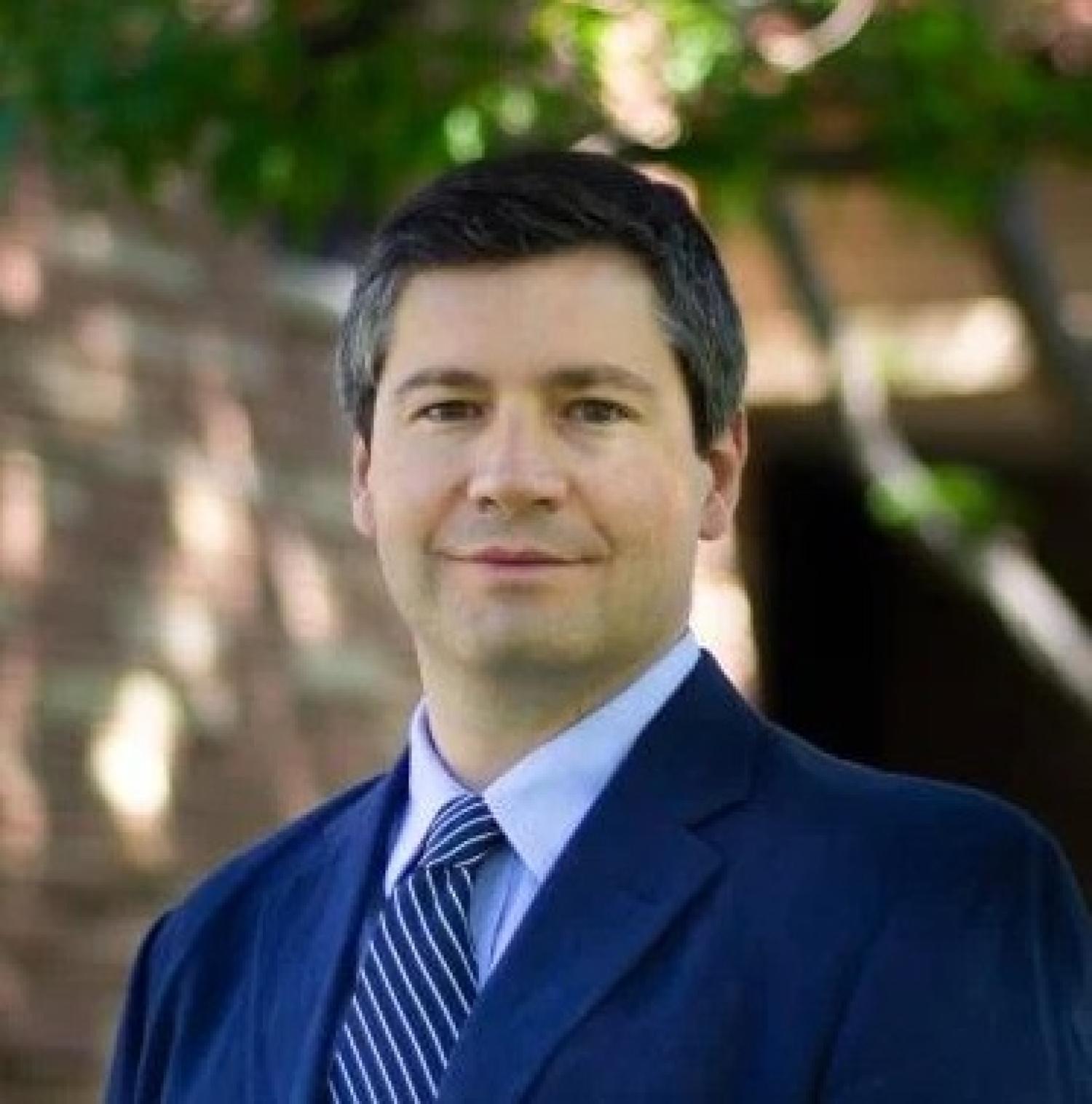
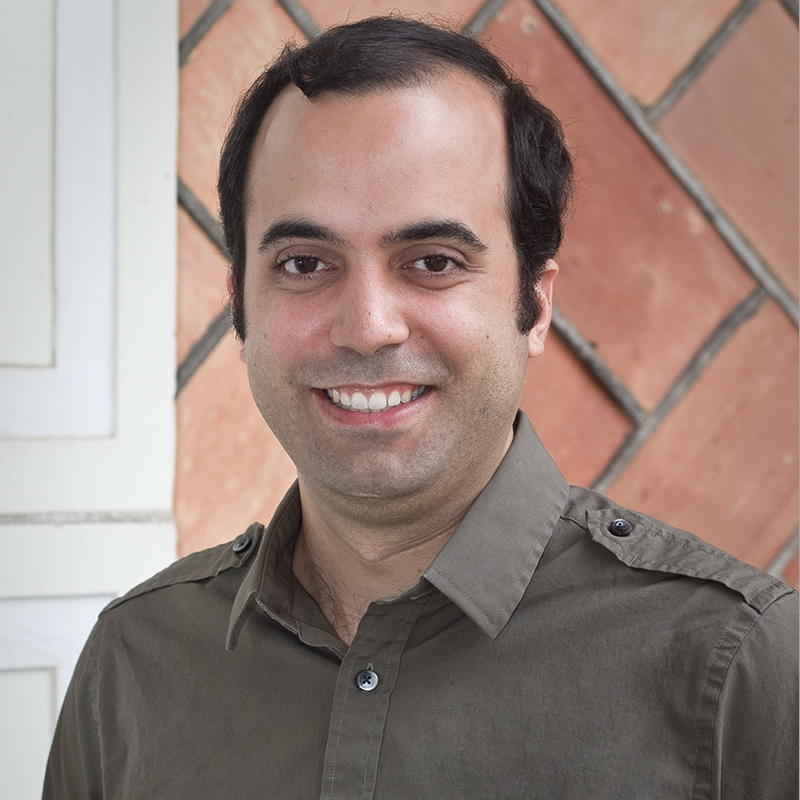
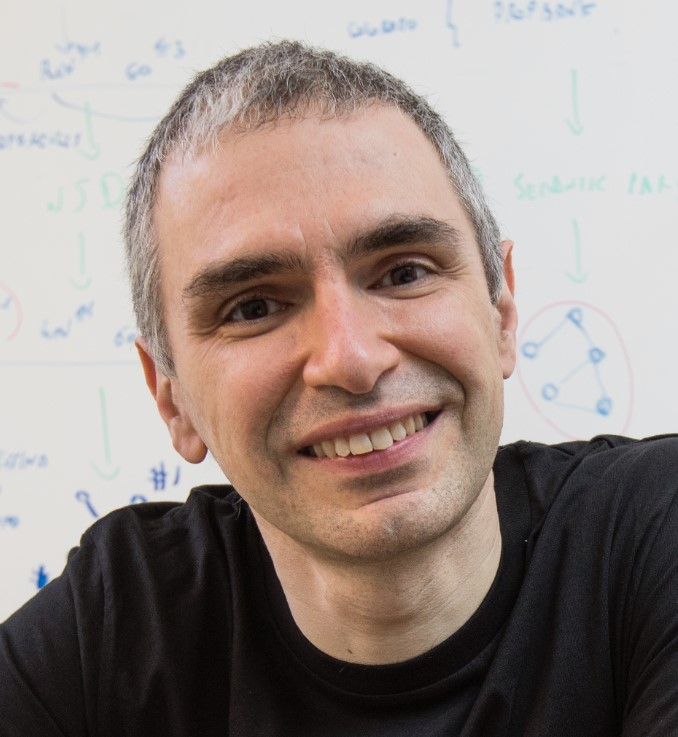
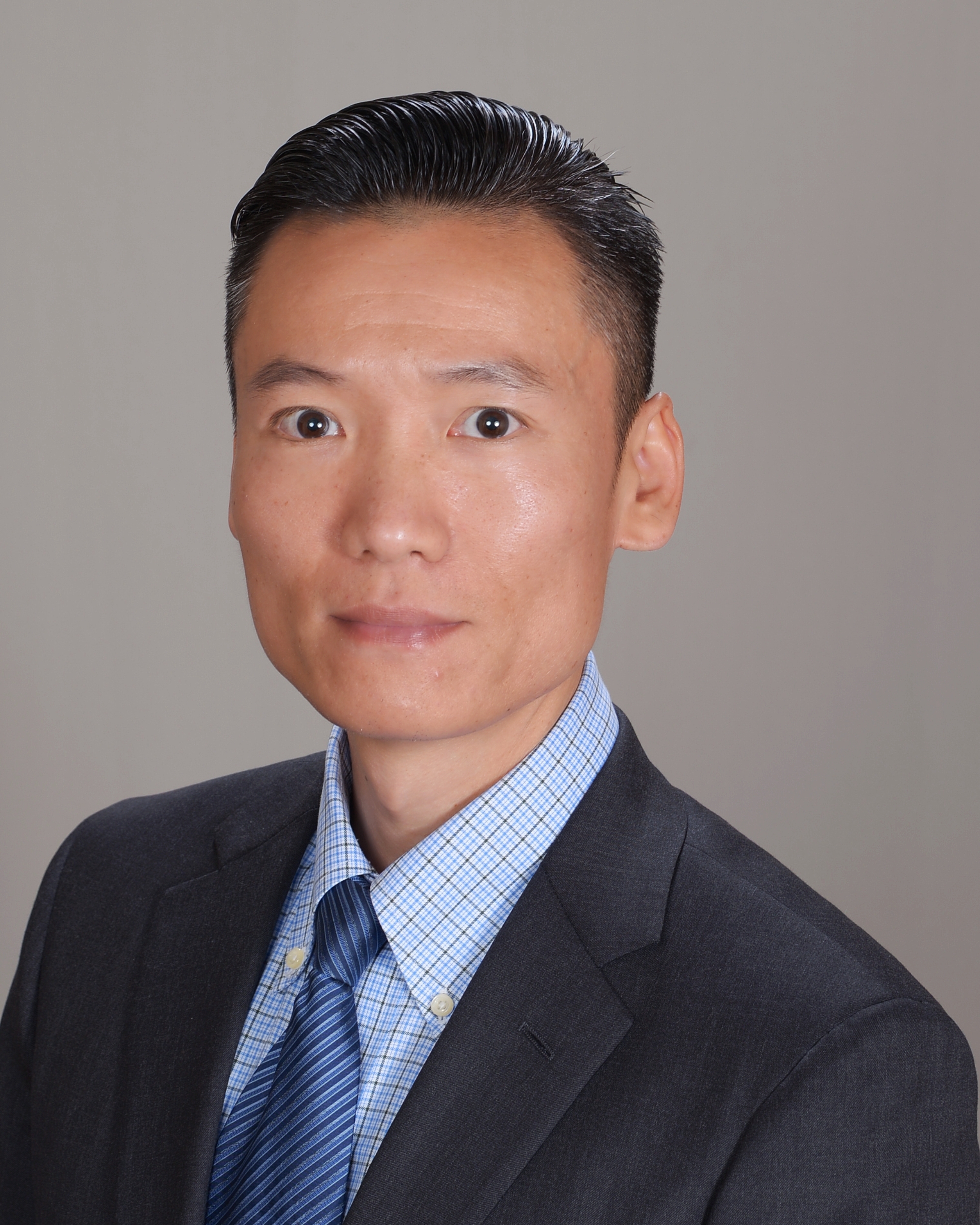
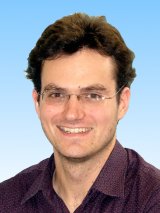
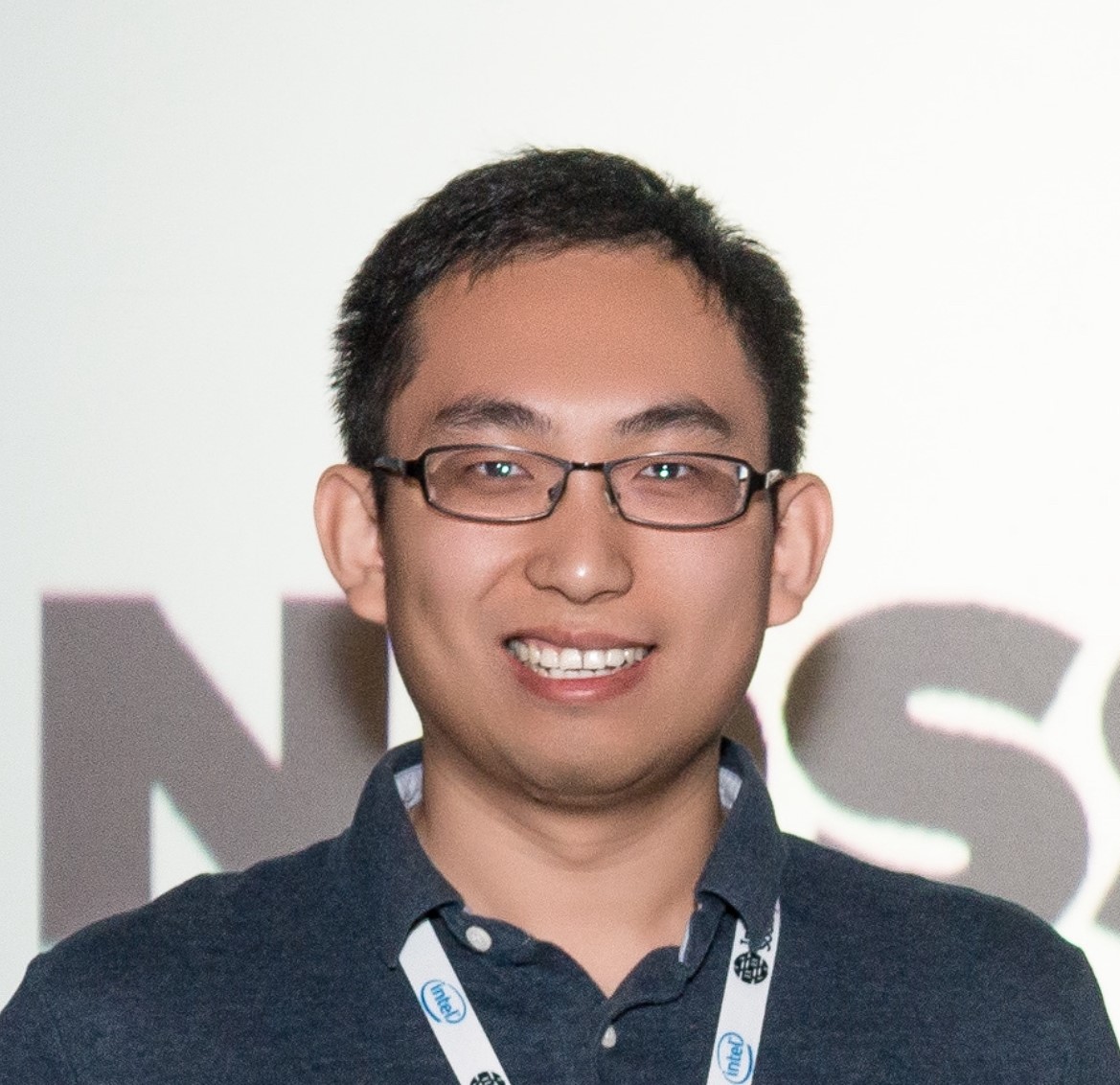
Pieter van Goor is a Research Fellow at the Australian National University (ANU), affiliated with the School of Engineering and the Systems Theory and Robotics (STR) group. He holds a PhD in Control Theory (completed 2022) and dual bachelor's degrees (BEng/BSc, 2018). His research focuses on equivariant systems theory, state estimation, and robotics applications. Key contributions include equivariant observer design, Lie group-based control, and geometric data fusion. Education: Bachelor of Engineering (Research & Development) (Honours) in Mechatronics (ANU, 2018) Bachelor of Science in Mathematics (ANU, 2018) PhD in Control Theory (ANU, 2022) Research Interests: Equivariant systems theory, nonlinear control, robotics applications, state estimation on Lie groups, sensor fusion, and geometric control methods. His work emphasizes symmetry exploitation in filter design and observer construction for systems with inherent geometric structures. Grants & Collaborations: Active collaborations include work with Robert Mahony and institutions like the IEEE. Research spans theoretical frameworks (e.g., equivariant filters) and applied systems (e.g., ArduPilot autopilot, event cameras). Labs/Teams: Member of the Systems Theory and Robotics (STR) group at ANU, focusing on advanced control theory and robotics.
Pierre Vandergheynst is a Full Professor at the Swiss Federal Institute of Technology Lausanne (EPFL) in the Department of Electrical Engineering, with a courtesy appointment in Computer and Communication Sciences. He serves as EPFL’s Vice-Provost for Education since 2015 and leads the Signal Processing Laboratory 2 (LTS2). His research spans harmonic analysis, sparse approximations, mathematical data processing, and applications in signal/image processing, computer vision, machine learning, and graph-based data analysis. PhD in Mathematical Physics (1998), Université catholique de Louvain Postdoctoral Researcher at EPFL (1998-2001) Assistant Professor at EPFL (2002-2007) His research explores geometry/symmetry in high-dimensional data, redundant dictionaries for dimensionality reduction, and computational harmonic analysis on manifolds. Recent work focuses on protein structure modeling, geometric deep learning, and graph-based signal processing. Key article trends include graph neural networks for protein analysis, geometric deep learning in neuroscience, and structured knowledge priors in neural models. His 2023-2025 publications emphasize interpretable AI, long-range dependencies in graphs, and molecular representation learning. Scientific Awards: IEEE Signal Processing Magazine Best Paper Award (2023) Signal Processing Society Best Paper Award (2022) Apple ARTS Award (2007) De Boelpaepe Prize, Royal Academy of Sciences of Belgium (2009-2010) He has supervised over 30 PhD theses and contributed to foundational work in graph signal processing, compressive sensing, and geometric deep learning. His lab develops tools for data science on non-Euclidean structures, with applications in medicine, astronomy, and wireless systems.
Robert MacCurdy is an Assistant Professor at the Department of Mechanical Engineering, University of Colorado Boulder . He leads the Matter Assembly Computation Lab (MACLab) focused on automating robot design and fabrication. His research bridges computational design and advanced manufacturing to create "robots that walk out of the printer." The lab develops tools like OpenVCAD , an open-source volumetric multi-material geometry compiler.
Judy Hoffman is an Associate Professor in the College of Computing at Georgia Institute of Technology, with a joint appointment in the School of Interactive Computing and affiliation to the Machine Learning Center . She received tenure in April 2025 after joining Georgia Tech as an Assistant Professor. Her research focuses on enabling AI systems that are reliable, fair, and resource-efficient. PhD in Electrical Engineering and Computer Science (2016, UC Berkeley) Postdoctoral Fellowships at Stanford (2017) and UC Berkeley (2018) Former Research Scientist at Facebook AI Research Her work intersects computer vision and machine learning , with specialization in domain adaptation , adversarial robustness , and algorithmic fairness . She has published over 40 peer-reviewed articles, including the award-winning DeCAF (ICML 2024 Test of Time Award) and co-founded Women in Computer Vision (2015), which has sponsored ~40 women annually to premier conferences. ICML Test of Time Award (2024) NSF CAREER Award (2022) PAMI Distinguished Young Researcher (2023) Samsung AI Researcher of the Year (2021) Dr. Hoffman has served as Program Chair for CVPR 2023, Associate Editor for T-PAMI (2021-2023), and co-organizer of workshops at major AI conferences. She has delivered over 70 invited talks and contributes to open-source projects like cycada_release (567 stars) and lsda (47 stars).
Mario Berges is an Associate Professor in the Department of Civil and Environmental Engineering at Carnegie Mellon University (CMU), with a courtesy appointment in Electrical and Computer Engineering. He holds leadership roles as Co-Director of the IBM Smart Infrastructure Analytics Lab and Director of the Intelligent Infrastructure Research Lab (INFERLab). His work focuses on applying information/communication technologies to enhance the operational efficiency and resilience of built environments amid evolving resource constraints and climate changes. Education: PhD in Civil & Environmental Engineering from CMU (2010). Research Interests: Berges' research integrates smart infrastructure systems, energy efficiency, and machine learning. Key areas include non-intrusive load monitoring (NILM), structural health monitoring of pipelines, building automation systems, and urban heat risk modeling. He develops data-driven frameworks for energy disaggregation, sensor placement optimization, and real-time infrastructure diagnostics. Awards: Recognized with the 2010 FIATECH Outstanding Early Career Researcher Award and 2015 Dean’s Early Career Fellowship from CMU. Grants & Labs: Leads INFERLab, collaborating with IBM on smart infrastructure projects. His work spans academic-industry partnerships focused on building analytics, smart grid technologies, and sensor networks. Future Directions: Expanding research into AI-driven energy systems, resilient urban infrastructure, and cross-disciplinary solutions for climate adaptation.
Roberto Navigli is a Full Professor in the Department of Computer, Control and Management Engineering at Sapienza University of Rome, where he leads the Sapienza NLP Group. He has held academic positions at Sapienza since 2007, progressing from Researcher to Associate Professor, and now Full Professor. Navigli is internationally recognized for his groundbreaking work in multilingual natural language processing and computational semantics. His research spans multiple areas within Natural Language Processing, with a particular focus on multilinguality , lexical semantics (Word Sense Disambiguation and induction), sentence-level semantics (Semantic Role Labeling and Semantic Parsing), and Large Language Models . As the leader of the Minerva LLM project, he pioneered the development of the first pretrained LLM in Italian. His creation of BabelNet, the largest multilingual encyclopedic computational dictionary covering 271 languages and about 14 million concepts, represents a landmark achievement in computational linguistics. Professor Navigli's recent publications demonstrate a strong focus on advancing multilingual capabilities of language models, addressing challenges in semantic understanding across languages, and developing robust evaluation frameworks. His work on Italian LLM optimization, lexical ambiguity in machine translation, and cross-lingual safety gaps reflects his commitment to building more accurate and reliable language technologies that work effectively across diverse linguistic contexts. AAAI Fellow (2025) EurAI Fellow (2024) ELLIS Fellow (2024) ACL Fellow (2023) Outstanding Paper Awards at ACL 2024, ACL 2023, and NAACL 2021 Best Resource Paper Award at ACL 2022 Prominent Paper Awards from the Artificial Intelligence Journal (2023, 2017) META Prize 2015 for BabelNet Professor Navigli has successfully secured substantial research funding, including two prestigious ERC Grants (MultiJEDI ERC Starting Grant 2010-2016 and MOUSSE ERC Consolidator Grant 2017-2023, totaling around 3 million euros), PI of PRIN 2017 and PRIN 2020 projects (overall 1.4 million euros), and a Google Focused Research Award (around 300k$). He has mentored over 30 PhD students, many of whom have gone on to successful careers in academia and industry. His leadership extends to major international conferences, serving as General Chair of ACL 2025 and Program Co-Chair of ACL-IJCNLP 2021. As the director of the Sapienza NLP Group and co-leader of the Transversal Project on Large Language/Multimodal Models in the FAIR (Future Artificial Intelligence Research) project, Professor Navigli oversees a vibrant research ecosystem focused on advancing the state-of-the-art in natural language understanding across languages. His spinoff company, Babelscape, translates academic research into practical applications for industry.
Sara Stymne is a Senior Lecturer in Computational Linguistics at the Department of Linguistics and Philology, Uppsala University, where she has been working since 2012. She initially joined as a post-doc (2012-2015), then worked as a researcher (2015-2017), and served as an assistant professor (2017-2023) before her current position as Senior Lecturer. Prior to Uppsala, she was a researcher at Linköping University's Department of Computer and Information Science. Dr. Stymne earned her PhD in Computational Linguistics from Linköping University in 2012 with the thesis 'Text Harmonization Strategies for Phrase-Based Statistical Machine Translation,' following a Licentiate degree in Computational Linguistics (2009) and a Master's degree in Cognitive Science (2006), both also from Linköping University. During her doctoral studies, she spent the autumn of 2010 and spring of 2009 at Xerox Research Centre Europe in Grenoble, France. Her primary research interests focus on cross-lingual natural language processing and digital humanities, with particular emphasis on multilingual dependency parsing. Dr. Stymne is passionate about applying computational linguistics to solve research questions in other fields, including language history, literary analysis, and political science. Her earlier work concentrated on machine translation, with specific interests in discourse-aware translation, compound processing, and error analysis. She has made significant contributions to the development of language technology tools for analyzing dialogue, narrative, and stylistic features in literature. Analysis of Dr. Stymne's recent publications reveals a strong focus on cross-lingual and cross-domain natural language processing. Her work spans multiple subfields including dependency parsing across genres and topics, discourse relation analysis in low-resource languages like Egyptian Arabic, direct speech identification in Swedish literature, and causality detection in governmental documents. A notable trend is her application of NLP techniques to digital humanities problems, particularly in analyzing literary texts and historical language change. Her research often involves creating and utilizing specialized datasets for specific linguistic phenomena across multiple languages. Dr. Stymne actively supervises graduate students, having guided numerous master's and bachelor's theses on topics ranging from speech recognition to multilingual parsing and causality detection. She leads or participates in several research projects including 'Fictional prose and language change' (funded by VR, 2021-2023) and 'Enabling climate-resilient development' (funded by Marianne and Marcus Wallenberg Foundation, 2023-2027), demonstrating her commitment to interdisciplinary research with practical applications. Her work has resulted in several notable software resources including uuPronPred for cross-lingual pronoun prediction, uuparser for dependency parsing, and Docent for document-level machine translation. Within the Computational Linguistics and Language Technology group at Uppsala University, Dr. Stymne contributes to multiple research initiatives focused on developing language technology tools for digital humanities applications. Her team works closely with literary scholars and historians to create computational methods for analyzing large corpora of literary texts, particularly focusing on Swedish literature across different historical periods. Her research bridges the gap between theoretical computational linguistics and practical applications in the humanities, creating new methodologies for quantitative analysis of literary and historical texts.
Elena Maria Baralis is a Full Professor at the Department of Control and Computer Science (DAUIN) at the Polytechnic University of Turin. She serves as Pro-Rector, member of the Board of Directors (without voting rights), member of the Academic Senate (without voting rights), and coordinator of the University's Permanent Observatory for Monitoring the Academic Sector. She chairs the Control and Computer Engineering Department and previously chaired the Computer Engineering School from October 2012 to October 2018. Her research interests focus on database systems and data mining, specifically explainable AI, bias detection in data analytics, and machine learning algorithms for big data. Her work spans various application domains including predictive maintenance, Industry 4.0, and healthcare. Recent publications demonstrate her expertise in speech processing, bias mitigation, and innovative neural network architectures like Kolmogorov-Arnold Networks. Her research output shows a clear trend toward addressing fairness and explainability in AI systems while exploring novel approaches to speech and language understanding. Professor Baralis has received significant recognition including becoming a Fellow of the Academy of Sciences of Turin in 2017. She has served as Editor-in-Chief for IEEE Internet of Things Journal (2016-2019) and Knowledge and Information Systems (2014-present). She actively mentors doctoral students including Claudio Savelli (researching Machine Unlearning), Eleonora Poeta, Giuseppe Gallipoli, Alkis Koudounas, and others. Her research is supported by numerous projects including AI4CTI (Artificial Intelligence for Cyber Threat Intelligence, 2025-2028), Smart manufacturing driven by Machine Learning in Industry 4.0 (2019-2020), and I-REACT (2016-2019).
Dr. Liang Cheng is the Department Chair and Professor in the Department of Electrical Engineering and Computer Science at the University of Toledo. He leads a department with ~700 students across CS, CSE, and EE programs. His research focuses on Cyber-Physical Systems (CPS), IoT, AI/ML, and intelligent infrastructure, supported by over $30M in funding from NSF, DOE, DOT, and industry. Notable projects include CPS Breakthrough initiatives and underground sensing systems. He co-edited a multidisciplinary book on Underground Sensing and contributed to smart grid cybersecurity. Dr. Cheng has held leadership roles at Lehigh University, shaping faculty governance and equity policies. His 100+ publications span networking, real-time systems, and sensor networks. He advises on funded projects totaling $30M+ and has pioneered pedagogical approaches in computer science education. Research Interests: Cyber-Physical Systems (CPS): Focuses on autonomous drones, energy systems, and real-time infrastructure Networking: Expertise in TSN, DTN, and wireless protocols Cybersecurity: SCADA systems, PLC attack detection, and blockchain energy modeling Underground Sensing: Geo-sensing via wireless signals and subsurface tomography Grants & Projects: Over 20 sponsored projects including NSF CPS Breakthrough (2018-2023), ABB smart grid projects, and DARPA-funded EDIFY systems. Key contributions include reconfigurable wireless architectures and network calculus tools for real-time systems. Teaching: Courses span senior design, compiler design, parallel computing, and wireless sensor networks. Developed pedagogical patterns for non-CS programming education. Awards: Recognized for leadership in academic governance and interdisciplinary research collaboration.
Professor Hanumant Singh leads the Electrical and Computer Engineering department at Northeastern University, with a joint appointment in Mechanical and Industrial Engineering , and serves as Program Director for the Master of Science in Robotics. He earned his Ph.D. from MIT/WHOI Joint Program in 1995 and has conducted over 60 expeditions globally, focusing on marine geology, polar studies, and coral reef ecology. His research emphasizes field robotics , including SLAM, underwater manipulation, and imaging in extreme environments. He developed the Seabed AUV and Jetyak ASV , widely used in scientific research. His labs include the Field Robotics Lab and the Institute for Experiential Robotics . Research Interests: Machine Learning for Fisheries SLAM with dynamic objects Underwater imaging and manipulation Autonomous surface and aerial systems Polar and marine robotics Awards: ICRA Best Student Paper Award, IEEE Oceanic Engineering Society Distinguished Faculty Award (2025), Lifetime Achievement Award (2022), and IEEE Fellow status. His work has been featured in Nature Geoscience , Polar Biology , and media outlets like WGBH. Students & Collaborations: Advises students like Srinidhi Pattala (MS Robotics) and Dennis Giaya (PhD Computer Engineering). Collaborates with institutions on projects such as Antarctic sea ice thickness estimation and deep-sea submersible missions.
Grégoire Ithier is a Senior Lecturer in Physics at the Department of Physics, Royal Holloway, University of London. His research focuses on quantum engineering, decoherence, thermalization, mesoscopic physics, and random matrix theory. He leads the 'TypDyn' project exploring typical dynamics of embedded quantum systems, and co-leads the Leverhulme Trust-funded 'Generation and detection of quantum signals' initiative. His work bridges theoretical and experimental domains, including superconducting circuits and cryogenic microwave engineering. Ithier's research tools include advanced numerical methods (e.g., exact diagonalization) and statistical techniques (e.g., random matrix theory). Key Projects: TypDyn: Studies typical dynamics in embedded quantum systems (2015–present) QSimFP: Quantum simulators for fundamental physics (2020–2024) A new statistical theory of disordered quantum systems (2020–2024) His experimental work involves superconducting qubits, Josephson devices, and nano-superfluidic cavities. Grants include STFC and Leverhulme Trust funding. Recent publications address quantum thermalization, many-body systems, and random Hamiltonian analysis.
Michael McAlpine is a Professor in the Mechanical Engineering department at the University of Minnesota . He also holds affiliations with the Biomedical Engineering and Electrical and Computer Engineering departments. His research focuses on 3D printing functional materials & devices , Nanoscale inks , Biomedical devices , Bioelectronics , and Flexible Microsystems . Research Interests : 3D Printing, Biomedical Engineering, Nanotechnology, Flexible Electronics, Microfluidics Labs : ME 361/363 Contact : mcalpine@umn.edu , (612) 626-3303, ME 117 Recent Research Trends include 3D Printed Biomedical Devices , Flexible Electronics , and Bioprinting Applications . His work spans from Spinal Organoid Formation to Programmable Drug Release Capsules . Scientific Award : Circulation Research 2020 Best Manuscript Award
Alanson Sample is an Associate Professor in the Department of Electrical Engineering and Computer Science at the University of Michigan (since 2018), leading the Interactive Sensing and Computing Lab. His research focuses on Human-Computer Interaction, Cyber-Physical Systems, and wireless technology innovations. He holds a PhD in Electrical Engineering from the University of Washington (2011), with prior postdoctoral work there developing implantable medical devices. Before academia, Sample held senior roles at Disney Research (2013-2018) as Executive Lab Director and Principal Research Scientist, leading teams in Robotics, AI, Computer Vision, and HCI. Earlier, he worked at Intel Labs (2008-2013) on energy harvesting for wearables and IoT. Key research themes include wireless power systems, embedded sensing, and privacy-aware technologies. Over 150+ publications span topics like magnetic sensing (MagDesk), acoustic gesture recognition (HandSAW), and privacy-preserving activity tracking (PrivacyMic). His work bridges academic and industry innovation, particularly in scalable interactive systems and medical technology. Notable projects include the Quasistatic Cavity Resonance wireless charging system, RFID-based sensing platforms (WISP), and wearable health monitoring devices. His lab develops hardware-software co-design frameworks for energy-efficient embedded systems. Current research emphasizes medical applications, smart infrastructure, and ubiquitous computing interfaces.
Perla Maiolino serves as an Associate Professor in Engineering Science at the University of Oxford and Principal Investigator of the Soft Robotics Lab (SRL) within the Oxford Robotics Institute. Her academic foundation includes BEng, MEng, and PhD degrees in Robotics and Automation from the University of Genoa, where she pioneered CySkin technology for distributed tactile sensing in robots—later exhibited at the Science Museum in London. She expanded her expertise during a 2017-2018 postdoctoral fellowship at Cambridge University's Biologically Inspired Robotics Lab, focusing on soft robotics and tactile perception. Dr. Maiolino's research centers on developing artificial skin systems, soft robotic actuators, and distributed sensing architectures. Her work bridges biological inspiration with engineering innovation to create robots capable of safe human interaction and dexterous manipulation in unstructured environments. Key contributions include compliant beaded-string jamming mechanisms for anthropomorphic fingers, monolithic 3D-printed soft pneumatic arms (JAMMit!), and distributed time-of-flight sensor networks for robotic self-awareness. Recent publications (2024-2025) reveal a strong convergence of tactile sensing with machine learning, featuring optical flow for gesture recognition, diffusion models for artificial skin simulation, and zero-shot sim-to-real transfer techniques. Her team has made significant advances in multi-modal sensing integration, variable stiffness actuation, and scene flow estimation for robots operating in dynamic surroundings. Scientific Awards No specific awards were documented in the provided institutional materials. Advising and Grants While her leadership of the Soft Robotics Lab implies active student supervision and grant management, detailed information about advisees or funded projects was not included in the source documentation. Labs and Teams As Principal Investigator of the Soft Robotics Lab at Oxford Robotics Institute, Dr. Maiolino directs research on tactile perception systems, soft actuation mechanisms, and sensor-integrated robotic structures. The lab's work focuses on applications requiring safe physical interaction, including healthcare robotics and human-robot collaboration scenarios, with emphasis on multi-material 3D printing and embedded sensing technologies.
Qi Alfred Chen is an Assistant Professor in the Department of Computer Science at the University of California, Irvine (UCI), within the Donald Bren School of Information and Computer Sciences. He also holds affiliations with the Department of Electrical Engineering and Computer Science (EECS), the Institute of Transportation Studies at UC Irvine (ITS-Irvine), the Center for Embedded and Cyber-physical Systems (CECS), the Institute for Software Research (ISR), and the UC Irvine Cybersecurity Policy & Research Institute (CPRI). His research focuses on network and systems security, with particular emphasis on autonomous vehicle and IoT security. Dr. Chen received his Ph.D. from the University of Michigan in 2018. His educational background has prepared him for his current research in security of critical computer systems. His work bridges theoretical security principles with practical implementations in real-world systems. Chen's research interests center on network and systems security , with a major focus on smart systems and IoT security , particularly in transportation and autonomous vehicle systems . His work addresses security challenges through systematic problem analysis and mitigation, discovering and mitigating security problems in next-generation transportation systems, smartphone OSes, network protocols, DNS, GUI systems, and access control systems. His research has high impact in both academic and industry contexts, with over 10 top-tier conference papers, a DHS US-CERT alert, multiple CVEs, and coverage in major news media like Fortune and BBC News. His publication record shows a clear evolution from foundational work on network protocols and smartphone security toward increasingly sophisticated security analyses of autonomous vehicle systems and AI-powered transportation technologies. The research trajectory demonstrates growing technical sophistication and real-world impact, with recent work focusing on physical-world adversarial attacks against autonomous driving perception systems, LiDAR spoofing, and security of multi-sensor fusion in autonomous vehicles. NSF CAREER Award (2022) on securing the AI stack in emerging autonomous and connected CPSs Chancellor's Award for Excellence in Undergraduate Research Mentorship, UC Irvine (2021) 5th place nation-wide at National CCDC competition (2021, as faculty advisor) 1st place (Gold Medal) at CCDC Western Regional competition (2021) ProQuest Distinguished Dissertation Award, University of Michigan (2019) Dr. Chen has mentored numerous successful students, including PhD candidates and undergraduates who have gone on to positions at major tech companies like Meta, Uber, Amazon, and Intel. His research group has secured significant funding, including an NSF CAREER award, and has made substantial contributions to the field through high-impact publications and vulnerability disclosures. He is also the co-founder of the ISOC VehicleSec Symposium and has organized the AutoDriving CTF contest at DEF CON. Chen leads the AV & IoAT Security Research Group at UCI, focusing on security challenges in autonomous vehicles and the broader Internet of Autonomous Things. His team has developed numerous attack demonstrations and security analyses that have received significant media attention and influenced industry practices. The group maintains an active YouTube channel showcasing their security research.