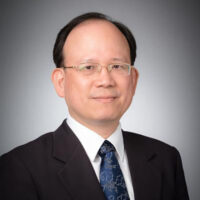
Dr. Chih-Hung (James) Chen is a Professor in the Department of Electrical & Computer Engineering at McMaster University. His research focuses on noise-related issues in semiconductor devices, low-noise circuit design for medical and communication applications, and thermal noise characterization in nano-scale transistors. He holds senior member status in IEEE and is a licensed Professional Engineer in Ontario. Education: Ph.D., McMaster University, 2002 M.A.Sc., Simon Fraser University, 1997 B.Sc., National Central University, Taiwan, 1991 Research interests include biomedical technologies, microelectronics & VLSI, and digital/smart systems. He has collaborated with companies like Sony Corporation, United Microelectronics Corporation, and Focus Microwaves. His work is supported by grants from the Canada Foundation for Innovation (CFI), NSERC, and the Ontario Innovation Trust (OIT). Notable achievements include serving on the International Advisory Committee of the International Conference on Noise and Fluctuations (2015) and as an editor for the Journal of Low Power Electronics and Applications since 2022. Teaching includes courses like Analysis and Design of RF ICs for Communications and Electronic Devices and Circuits 2. His research lab focuses on advancing noise measurement techniques and designing ultra-low-power analog circuits for emerging applications.
Kirsten Emilie Moselund is a Full Professor of Electrical and Microengineering at École Polytechnique Fédérale de Lausanne (EPFL) and Head of the Laboratory of Nano and Quantum Technologies (LNQ) at Paul Scherrer Institut (PSI) since 2022. She bridges quantum and classical technologies through interdisciplinary research collaborations across the ETH domain. Her leadership spans multiple groups in quantum computing and nanotechnology, including the ETHZ-PSI Quantum Computing Hub. Education: M.Sc. in Engineering (2003) and Ph.D. in Microelectronics (2008), both from EPFL and Technical University of Denmark (DTU) Her research focuses on semiconductor device innovation, including low-power electronics , cryogenic electronics , and integrated photonics , with an emphasis on III-V on silicon monolithic integration for hybrid quantum-classical systems. Key subfields include topological devices , nanophotonics , and neuromorphic computing . Recent publications highlight advancements in III-V photonic integration , nanoscale lasers , and optoelectronic device physics , reflecting her expertise in bridging materials science with quantum engineering. Notably, her work on hybrid photonic-plasmonic nanolasers earned an ERC Starting Grant . As an academic leader, Moselund has directed multiple Ph.D. theses and contributed to over 100 publications with 25 patents filed. She serves on technical committees for major conferences like IEDM and participates in European and Swiss research initiatives. Labs & Teams: Lead the LNQ laboratory at PSI with six research groups Professional Memberships: Wissenschaftliche Beirat of IHP Microelectronics, Kuratorium IMS Chips
Shenyi Liu is a Doctoral Researcher at Aalto University's Department of Electrical Engineering and Automation , focusing on advanced semiconductor packaging and reliability engineering. Active in the Electronics Integration and Reliability research group, Liu contributes to developing innovative interconnect solutions for MEMS and power electronics. Email: shenyi.liu@aalto.fi Research Interests center on low-temperature bonding technologies , 3D packaging architectures , and failure mechanism analysis in electronic components. Key methodologies include solid-liquid interdiffusion (SLID) bonding and thermal-mechanical stress characterization. Publication Trends show expertise in MEMS integration , interconnect reliability , and power component packaging , with recent work addressing TSV interconnects, die-attach fatigue cracks, and Cu-Sn-In bonding systems. Collaborations span materials engineering and applied physics domains.
Azad J Naeemi is a Professor holding the Dean's Professorship in the School of Electrical and Computer Engineering at the Georgia Institute of Technology. He serves as Editor-in-Chief of the IEEE Journal on Exploratory Computational Devices and Circuits and Associate Director for Computation of the NSF-supported National Nanotechnology Coordinated Infrastructure (NNCI). His educational background includes a B.S. in Electrical Engineering from Sharif University (1994) and M.S./Ph.D. in Electrical and Computer Engineering from Georgia Tech (2001/2003). Prior to academia, he worked as a design engineer in Tehran (1994-1999) and as a research engineer at Georgia Tech's Microelectronics Research Center (2004-2008). Professor Naeemi's research spans nanotechnology with focus on emerging nanoelectronic devices, spintronics, ferroelectric devices, and design technology co-optimization for CMOS/beyond-CMOS technologies. His work bridges materials, devices, circuits, and systems, particularly investigating integrated circuits based on nanoscale devices and interconnects. Educational research includes experiential learning environments for engineering education. Recent publications (2024-2025) demonstrate strong emphasis on spin-orbit torque MRAM, ternary content addressable memories, ferroelectric/antiferroelectric devices, and plasmonic circuits. Key trends include energy-efficient hardware accelerators, neuromorphic computing applications, and compact modeling for advanced technology nodes. His scientific honors include: IEEE Solid-State Circuits Society James Meindl Innovators Award (2022) IEEE Electron Devices Society Paul Rappaport Award (2008) NSF CAREER Award (2013) SRC Inventor Recognition Award (2010) Multiple Georgia Tech teaching awards Professor Naeemi leads research supported by NSF (including NNCI infrastructure) and SRC. His editorial role with IEEE JXCDC positions him at the forefront of exploratory computational devices. He previously served as General Co-Chair for the IEEE International Interconnect Technology Conference (2013). His work connects with Georgia Tech's Microelectronics Research Center and national nanotechnology initiatives through the NNCI network, focusing on computational infrastructure for nanoscale device characterization and design.
Michal Lipson serves as the Eugene Higgins Professor of Electrical Engineering and Professor of Applied Physics at Columbia University's Fu Foundation School of Engineering and Applied Science. Elected to both the National Academy of Engineering and National Academy of Sciences, she pioneered critical building blocks in silicon photonics that have transformed the field, with over 50,000 related publications annually. Her research has generated more than 250 scientific publications and 45 issued patents. Lipson's research focuses on nanophotonics and silicon photonics, where she demonstrated the ability to tailor electro-optic properties of silicon in landmark 2004 and 2005 Nature papers. Her work has enabled the development of photonic devices and circuits that now form the foundation of over 1,000 papers published yearly. She investigates novel optical phenomena while developing practical applications that address major bottlenecks in microelectronics. Her research spans fundamental physics to practical device implementation, with particular emphasis on integrated photonic systems. Analysis of her recent publications reveals a strategic expansion from foundational silicon photonics into emerging applications including quantum information processing, machine learning acceleration, biomedical sensing, and topological photonics. While maintaining core expertise in silicon-based devices, her work increasingly incorporates 2D materials, heterogeneous integration, and novel optical phenomena to push performance boundaries. The research demonstrates consistent progression from fundamental device physics to system-level implementations with practical applications. National Academy of Engineering (2025) National Academy of Sciences MacArthur Fellowship Blavatnik Award Optica's R.W. Wood Prize IEEE Photonics Award John Tyndall Award NAS Comstock Prize in Physics Thomson Reuters Top 1% Highly Cited Researcher (annually since 2014) Professor Lipson has mentored an exceptional research group, graduating 40 PhD students and 2 MS students, with numerous postdocs and visiting researchers. Her alumni occupy prominent positions including professorships at major universities (Rochester, Ottawa, UNICAMP, Johns Hopkins), leadership roles at Intel, Bell Labs, and startups she co-founded (HyperLight, Voyant Photonics). Her laboratory has received substantial research funding supporting cutting-edge work in nanofabrication, optical characterization, and device development. Current research directions include quantum photonics, AI-accelerated optical systems, and novel materials integration. The Lipson Research Group operates state-of-the-art facilities for nanophotonic device design, fabrication, and characterization. The team comprises principal investigators, postdoctoral researchers, PhD students, and administrative staff working collaboratively across disciplines including electrical engineering, materials science, physics, and applied physics. The group maintains strong industry partnerships while pursuing fundamental scientific advances in light-matter interactions at the nanoscale.
Ye (Sarah) Sun is an Associate Professor in the Department of Mechanical Engineering at the University of Virginia (UVA), part of the School of Engineering and Applied Science. She joined UVA in 2021 after serving as an Associate Professor at Michigan Technological University. Her work focuses on wearable sensors, robotics, smart health systems, and cyber-physical systems. She leads the WEARLab research group. Education: Ph.D. in Electrical Engineering from Case Western Reserve University (2021), B.S. in Instrumentation Engineering from Tianjin University (not specified). Research interests include wearable electronics, health monitoring, and human-technology interaction. Her interdisciplinary approach integrates engineering innovations with healthcare applications. Notable projects involve self-powered triboelectric sensors and optical fiber-based health monitoring systems. Recent publications highlight advancements in photodiode technologies for high-frequency applications, including millimeter-wave generation and photonic integrated circuits. Awards include the NSF CAREER Award (2018) and NSF BRITE Award (2022). She has organized major conferences and holds editorial roles in health technology journals. Grants include NSF funding for cyber-physical systems and smart health initiatives. Her lab collaborates on projects involving wearable robotics and connected health solutions, with a focus on real-world applications in healthcare and IoT.
Snorre Aunet is a Professor at the Department of Electronic Systems at the Norwegian University of Science and Technology (NTNU), with additional roles as an Adjunct Professor at the Department of Informatics, University of Oslo. His academic career spans institutions in Norway, Germany, and the USA, including sabbaticals at Bielefeld University and University of California, San Diego. Education: Electronics Engineering (Trondheim Technical College, 1987), Informatics (UiO, 1993), and Physical Electronics (NTNU, 2002) Research Focus Dr. Aunet specializes in ultra-low-power mixed-signal integrated circuits and nanoscale CMOS technologies . His work includes innovative MEMS transducer designs for energy harvesting, digital IC development, and robust circuit solutions for emerging semiconductor challenges. Recent Publications His recent contributions include advancements in MEMS technology for sustainable energy systems, editorial leadership at NorCAS conferences, and policy discussions on the European Chips Act. These reflect expertise in both cutting-edge design and strategic technology development. Scientific Recognition 2019: Elected to Norwegian Academy of Technical Sciences (NTVA) 2015: Best Paper Award at Asia Symposium on Quality Electronic Design 2006: IEEE Senior Member (Electron Devices Society) 2003: Best Poster Award at Int'l Conf. on Evolvable Systems Leadership & Grants He has chaired multiple IEEE conferences and contributed to projects like Robust Ultra-Low-Power Circuits for Nano-Scale CMOS (NTNU/University of Paderborn). His career combines academic leadership with industry collaboration through Nordic Semiconductor and international research councils.
Mervi Paulasto-Kröckel is a Professor in the Department of Electrical Engineering and Automation at Aalto University, specializing in Electronics Integration and Reliability. With a doctoral degree in Engineering and Technology from Helsinki University of Technology (1995) and a Master's degree from the same institution (1990), her work focuses on microelectronics packaging, MEMS, and sustainable electronic manufacturing. Doctoral Degree: Engineering and Technology, Helsinki University of Technology (1995) Master's Degree: Engineering and Technology, Helsinki University of Technology (1990) Her research explores advanced packaging techniques like SLID bonding, reliability of microbumps, and thermally conductive materials. Recent work includes buried aluminum nitride for silicon-on-insulator and fatigue crack analysis in IGBT modules. Her publications emphasize low-temperature processes, interdiffusion, and MEMS reliability. Awards include the JVST A Best ALD Paper Award (2021) and a Best paper award (2000). She leads projects like PowerizeD and 3DPiezoMems, focusing on digitalization and 3D MEMS development. Best paper award (2000) JVST A Best ALD Paper Award (2021)
Professor David R. Clarke is the inaugural Extended Tarr Family Professor of Materials at Harvard School of Engineering and Applied Sciences. He is a Senior Fellow of the Hong Kong Institute for Advanced Study (HKIAS) and member of the US National Academy of Engineering. PhD in Physics (University of Cambridge) B.Sc. in Applied Sciences (Sussex University) ScD (University of Cambridge) His research spans fundamentals and applications of ceramics, metals, semiconductors, and polymers, focusing on mechanical properties, thermal barrier coatings, dielectric elastomers, oxidation fundamentals, and microelectronics reliability. Recent work explores electro-adhesive forces and nanopore evolution in yttria-stabilized zirconia. With over 500 publications in journals like Nature and Advanced Materials, Clarke's work has been cited >50,000 times (h-index 107). He holds 13 patents and has advised students across MIT, UC Berkeley, and Harvard. 2008 Japanese NIMS Award 1993 Humboldt Senior Scientist Award Distinguished Life Member, American Ceramic Society Teaching includes undergraduate courses on heat transfer and materials design, plus graduate courses on dislocations and composites. His lab recently worked on quantum dot displays and fatigue crack sensing technologies.
Paras N. Prasad is a SUNY Distinguished Professor with joint appointments in Physics, Chemistry, Medicine, and Electrical Engineering at the University at Buffalo. He serves as Executive Director of the Institute for Lasers, Photonics and Biophotonics (ILPB), which he founded in 1999. Dr. Prasad holds the Samuel P. Capen Chair of Chemistry and has pioneered interdisciplinary research at the interface of photonics, nanotechnology, and biomedicine. Education: BSc, Bihar University, India (1964) MSc, Bihar University, India (1966) PhD, University of Pennsylvania (1971) Postdoctoral Fellow, University of Michigan (1971-74) Research Focus: Dr. Prasad's multidisciplinary research spans photonics, nanophotonics, and biophotonics, with emphasis on nonlinear optical processes in nanostructured materials. His work develops photonic technologies for information processing, medical imaging, and cancer therapy through nanoparticle-based drug delivery systems and diagnostic platforms. The ILPB laboratory features state-of-the-art instrumentation for advanced optical research. Publication Trends: Recent articles demonstrate strong focus on nanomedicine applications, particularly cancer theranostics using functional nanoparticles. Key themes include drug delivery systems, chiral photonic materials, bioimaging technologies, and nanoparticle synthesis techniques. The research consistently bridges fundamental materials science with translational medical applications. Honors and Awards: SPIE Gold Medal (2016) IEEE Photonics Society William Streifer Award (2021) American Chemical Society Peter Debye Award (2018) OSA Michael Feld Biophotonics Award (2017) IEEE Pioneer Award in Nanotechnology (2017) Fellow of National Academy of Inventors (2016) Guggenheim Fellowship (1997) Leadership: As ILPB Executive Director, Dr. Prasad leads multidisciplinary teams developing photonic technologies with applications in healthcare, energy, and communications. His research has generated nine spin-off companies, including Nanobiotix currently in advanced cancer therapy trials.
Professor John D. Cressler is a tenured faculty member at the Georgia Institute of Technology, holding a position within the School of Electrical and Computer Engineering in the College of Engineering. His research focuses on cutting-edge semiconductor technologies, particularly silicon-germanium heterojunction bipolar transistors (SiGe HBTs) for mixed-signal applications spanning RF, microwave, mm-wave, analog, and digital domains. His research interests center on atomic-scale bandgap engineering for next-generation semiconductor devices, with emphasis on SiGe HBT technology development, radiation-hardened circuits for space applications, cryogenic electronics, and device-circuit interactions. His team explores fundamental device theory, broadband noise analysis, profile optimization, 2-D/3-D simulation, compact modeling, and radiation effects. Current projects include Europa-surface mission electronics, D-band/sub-THz systems, and radiation-tolerant receiver designs. Analysis of his 15 most recent publications (2024-2025) reveals a dominant focus on radiation-hardened electronics for space applications (40% of works), millimeter-wave circuit design (30%), and SiGe HBT reliability optimization (30%). Key trends include Europa mission electronics development, D-band/sub-THz circuit innovation, and advanced radiation mitigation techniques using SiGe BiCMOS technology. Professor Cressler teaches multiple courses including ECE 3040 (Microelectronic Circuits), ECE 3450 (Semiconductor Devices), ECE 6444 (Silicon-Based Heterostructure Devices and Circuits), and the interdisciplinary IAC 2002 course on Science, Engineering and Religion. His research is supported by industrial collaborations and Georgia Tech facilities including the Georgia Electronic Design Center (GEDC), NanoTECH, and C-STAR.
Kwantae Kim is an Assistant Professor at the Department of Electronics and Nanoengineering within Aalto University's School of Electrical Engineering . He leads the Tiny Systems and Circuits (TSirc) Group , focusing on power-efficient analog/mixed-signal ICs for biomedical and neuromorphic sensor systems. IEEE Senior Member (2025) Collaborates with institutions across Europe, Asia, and America Specializes in ultra-low-power AI-embedded IoT platforms His research emphasizes Tiny, Sensory, Intelligent, and Wireless IoT systems through: Development of energy-efficient IC architectures Democratizing access to advanced chip design Hardware-software co-design for edge computing Recent publications highlight innovations in: Spoken-language-understanding SoCs Temporal-sparsity-aware keyword spotting Open-source silicon frameworks Awards include: 2025 IEEE Senior Member 2023 Best Poster Award (AICAS) 2019 Samsung HumanTech Silver Award Research partnerships span: Prof. Tobi Delbruck (UZH/ETH Zurich) Prof. Hoi-Jun Yoo (KAIST) Prof. Shih-Chii Liu (UZH) Prof. Sohmyung Ha (NYU Abu Dhabi)
John M. Nichol is an Assistant Professor in the Department of Physics and Astronomy at the University of Rochester, where he has conducted experimental quantum research since 2016 following postdoctoral work at Harvard University. His work bridges fundamental quantum mechanics and applied quantum computing development. Education: B.A. in Physics, St. Olaf College (2006) Ph.D. in Physics, University of Illinois at Urbana-Champaign (2013) Postdoctoral Associate, Harvard University Nichol's research centers on experimental quantum information processing using semiconductor nanostructures, with primary focus on electron spin qubits in quantum dots. His lab investigates quantum coherence mechanisms, develops noise-resilient control protocols for spin qubits, and explores quantum information transfer across spin chains. Key initiatives include engineering novel materials for extended qubit lifetimes, implementing dynamical decoupling techniques to combat decoherence, and studying many-body quantum phenomena in engineered spin systems. This work directly addresses scalability challenges in solid-state quantum computing. Analysis of Nichol's 2021-2025 publications reveals dominant themes in semiconductor spin qubit optimization, with 80% of papers addressing coherence preservation through charge noise mitigation and advanced control methods. His research increasingly integrates hybrid quantum systems, combining spin qubits with acoustic wave devices and superconducting resonators. Recurring subfields include Si/SiGe heterostructure engineering, quantum fluctuator characterization, and quantum simulation using spin chains - reflecting a strategic focus on overcoming material limitations in quantum hardware. Scientific Awards: National Science Foundation CAREER award Google Research Scholar Award Leonard Mandel Faculty Fellow Award Nichol's research program is supported by competitive grants including the NSF CAREER award (funding coherence enhancement research) and Google Research Scholar Award (supporting quantum control innovations). His laboratory trains graduate students in nanofabrication, cryogenic measurement techniques, and quantum device characterization, with emphasis on translating fundamental discoveries into practical quantum computing components. Current projects focus on long-distance quantum state transfer and error-corrected multi-qubit operations. The Nichol Lab operates specialized facilities for quantum dot device fabrication and millikelvin transport measurements at the University of Rochester. His team collaborates with materials scientists on heterostructure growth and theorists on quantum simulation protocols, maintaining strong ties with semiconductor industry partners for advanced material development. Recent expansions include acoustic wave integration platforms for hybrid quantum systems.
Debbie Senesky is an Associate Professor at Stanford University in both the Aeronautics and Astronautics Department and the Electrical Engineering Department, as well as a Senior Fellow at the Precourt Institute for Energy. She serves as the Principal Investigator of the EXtreme Environment Microsystems Laboratory (XLab) and Site Director of nano@stanford. Dr. Senesky received her B.S. in mechanical engineering from the University of Southern California (2001), followed by M.S. (2004) and Ph.D. (2007) degrees in mechanical engineering from the University of California, Berkeley. Prior to joining Stanford, she held positions at GE Sensing (formerly NovaSensor), GE Global Research Center, and Hewlett Packard. Her research focuses on developing nanomaterials and electronic systems capable of operating in extreme environments, including high-temperature conditions for Venus exploration, microgravity synthesis of nanomaterials, and harsh environment electronics. Dr. Senesky's work bridges multiple disciplines, connecting aerospace engineering, electrical engineering, materials science, and space technology to solve challenges in extreme environment applications. Dr. Senesky has made significant contributions to the field of high-temperature electronics, GaN-based sensors, graphene aerogel synthesis in microgravity, and materials for space applications. Her recent publications demonstrate a strong focus on practical applications of these technologies, particularly for space exploration and extreme environment sensing. Presidential Early Career Award for Scientists and Engineers (PECASE), NASA (2025) Emerging Leader Abie Award from AnitaB.org (2018) Early Faculty Career Award from NASA (2012) Gabilan Faculty Fellowship Award (2012) Sloan Ph.D. Fellowship (2004-2006) Dr. Senesky actively advises students at all levels, from undergraduate to postdoctoral researchers, and has established herself as a leader in promoting diversity in STEM through her role as Faculty Advisor for the Stanford Chapter of the National Society of Women Engineers. Her collaborative approach is evident in her numerous interdisciplinary projects and partnerships with NASA, industry, and other research institutions. She directs the EXtreme Environment Microsystems Laboratory (XLab), which focuses on developing technologies for operation in extreme environments including high temperature, radiation, and microgravity conditions. The lab's work has applications for space exploration, particularly for Venus missions, as well as terrestrial applications requiring robust electronics.
Muhannad S. Bakir is the Dan Fielder Professor in the School of Electrical and Computer Engineering at Georgia Institute of Technology, and Director of the 3D Systems Packaging Research Center . His research focuses on heterogeneous integration , electrical/photonic interconnects , thermal modeling , and electronics for healthcare , with over 180 publications and 12 U.S. patents. Research areas include: Advanced cooling and power delivery for emerging systems Biosensor-CMOS integration 2.5D/3D IC packaging Polylithic integration technology Nanofabrication for microsystems Scientific accolades include: 2018 IEEE EPS Exceptional Technical Achievement Award 2013 Intel Early Career Faculty Honor Award 2012 DARPA Young Faculty Award 2011 IEEE CPMT Outstanding Young Engineer Award Best paper awards at IEEE ECTC, IITC, and CICC 2020 Georgia Tech Doctoral Thesis Advisor Award His lab explores integrated 3D systems with emphasis on co-design of thermal, power, and electrical networks for machine learning and healthcare applications.