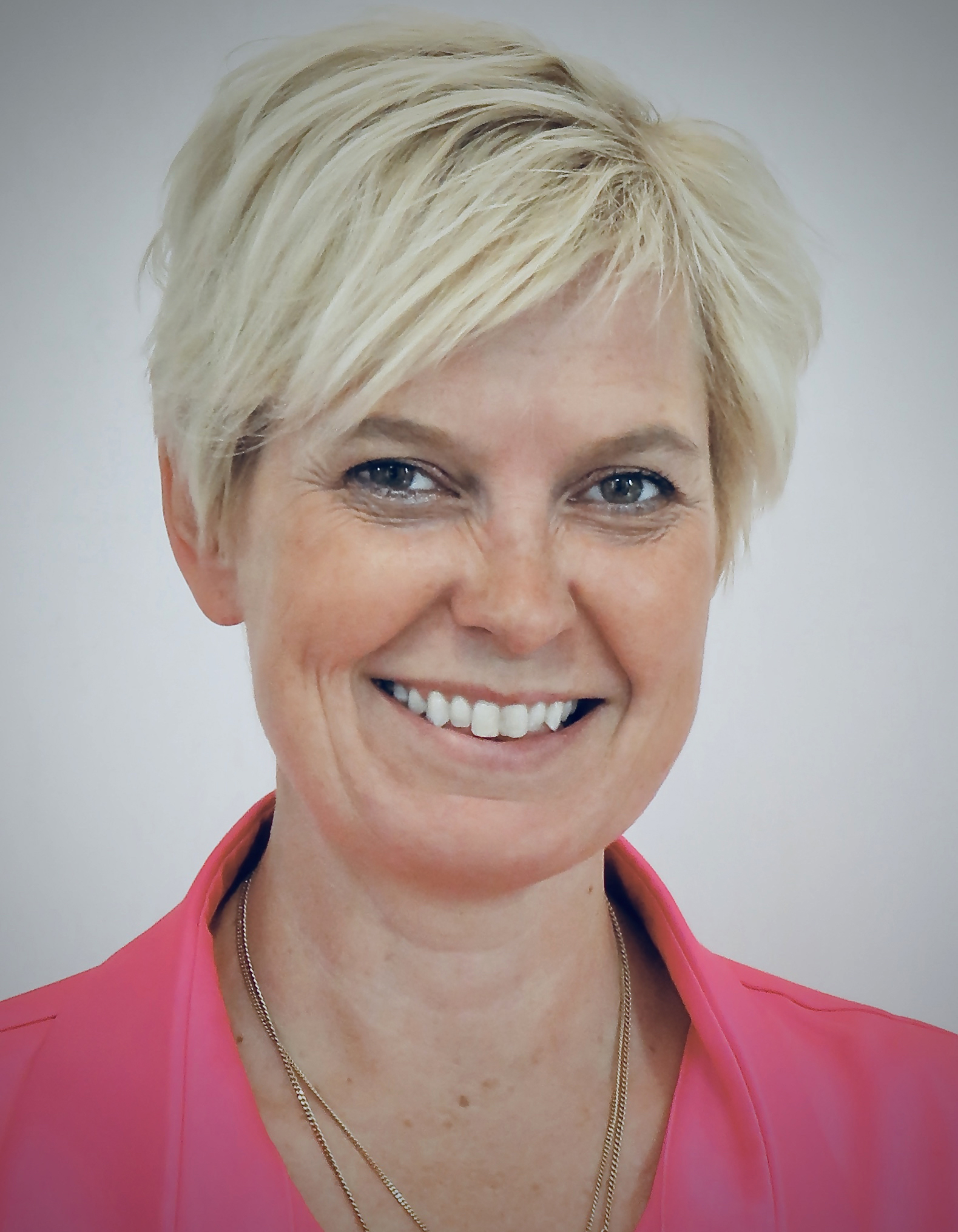
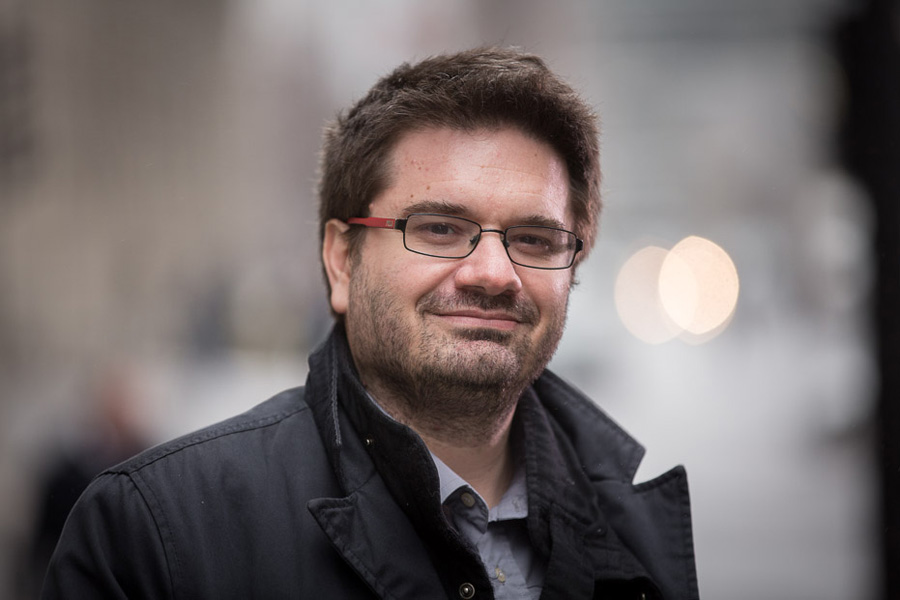
Dr. Andrei Sarua is a Senior Lecturer at the School of Physics, University of Bristol, specializing in advanced materials and device physics. His research integrates nanotechnology, spectroscopy, and semiconductor engineering for applications in sensing and thermal management systems. Research Focus Dr. Sarua's interdisciplinary work spans: Development of bio/chemical sensors using nitride FET structures and electro-optical characterization Nano-optics and plasmonics for spectroscopic applications Micro-Raman spectroscopy for thermal analysis in high-power semiconductor devices (HFETs/LEDs) 3D thermal modeling of transistor packaging and novel material interfaces Defect/strain characterization in III-V nitride semiconductors via Raman/PL spectroscopy His research demonstrates strong emphasis on materials innovation, with recent publications exploring nanoscale stress control, satellite-based chemical detection, and CubeSat imaging systems. Awards and Honors Great Western Research Fellow (Competitively awarded, 2007-2010) Leadership and Funding Principal Investigator for: EPSRC Raman Spectrometer Upgrade project (2020-2022) H2020 NanoMedTwin consortium on biomedical nanotechnology (2018-2021) Coordinates the Materials & Devices research group and serves as EPSRC grant reviewer.
David Micheron is a Senior Lecturer at UiT The Arctic University of Norway, affiliated with the Department of Physics and Technology. His work spans two distinct research domains: optical nanoscopy and STEM education . Micheron contributes to photonic chip development for biomedical imaging and explores pedagogical strategies for large-group physics instruction. Research Focus : Photonic chip-based super-resolution microscopy, histopathology applications, and STEM education innovations Teaching : Course development for introductory physics (FYS-0100, FYS-1002, FYS-1003) and former FYS-2008 Measurement Techniques Collaborations : Active in the Optical Nanoscopy research group and Realfagsdidaktikk i høyere utdanning (Physics Education in Higher Education) Micheron’s publications highlight advances in on-chip nanoscopy for biomedical analysis and student-active learning methodologies.
Kristoffer Almdal is a Professor in the Department of Chemistry, Technical University of Denmark (DTU), specializing in Physical Chemistry with a focus on Polymers and Functional Interfaces. He has held significant leadership roles including Head of Section at DTU and Head of Department at Risø National Laboratory, and has been a professor at DTU since 2008, indicating continued active status. PhD in Polymer Chemistry and Analysis, University of Copenhagen (1985–1989) MSc in Physical Organic Chemistry, University of Copenhagen (1977–1985) His research centers on polymer synthesis, particularly anionic polymerization, and the self-organization of block copolymers—linear and branched—with applications in functional materials, sensors, and biomaterials. He investigates mesophase structures, rheology, polymer degradation, and interfaces in composites using advanced analytical methods like small angle scattering and size exclusion chromatography. Recent publications (2024–2025) highlight work in eco-friendly nanogels for wound care, fatigue in epoxy resins, biomass-derived carbon aerogels for energy storage, and phase change materials in 3D-printable construction. These reflect a strong trend toward sustainable, multifunctional materials with applications in healthcare, energy, and construction. The research integrates fundamental polymer physics with practical engineering challenges, often through interdisciplinary collaboration. Kristoffer Almdal actively supervises PhD students in diverse projects, including: Synthesis of ABC-miktoarm star block copolymers Ion pairing in polyelectrolytes 3D printing with phase change materials Acoustic polymer lenses for ultrasound Block copolymer patterning of 2D materials He has delivered invited and keynote talks on polymer degradation, elongational flow, and self-organization, demonstrating recognition in the field. His work contributes to UN Sustainable Development Goals related to sustainable materials and clean energy. While no specific awards are listed, his extensive publication record (433 outputs), patents, and leadership in funded research projects underscore his impact. He is involved in multiple research groups and collaborative networks focused on polymer science, materials engineering, and sustainable technologies. His lab emphasizes cross-disciplinary innovation, bridging chemistry, physics, and engineering to develop next-generation functional materials.
Peter Bobbert is a Full Professor in the Department of Applied Physics at Eindhoven University of Technology, leading the Molecular Materials and Nanosystems research group. He serves as Associate Scientific Director of the Center for Computational Energy Research (CCER) since 2017 and holds a part-time professorship in Theory of Organic and Hybrid Nanoelectronics at the University of Twente since 2016. Bobbert earned his academic degrees at Leiden University: BSc in Theoretical Physics MSc in Theoretical Physics cum laude PhD in Theoretical Physics (minor in Mathematics) from Lorentz Institute His research centers on charge transport and spin dynamics in organic and perovskite materials, with applications in photovoltaics, OLEDs, OFETs, and spintronics. He develops computational models for disordered semiconductors and device stability, bridging theoretical physics with energy conversion engineering. Past work includes quantum phase transitions and semiconductor excitation theories. Analysis of his publications (2005-2013) reveals persistent focus on organic electronics through computational physics frameworks. Key trends involve mobility modeling in disordered systems, magnetoresistance mechanisms, and operational degradation processes. His work consistently integrates industry collaboration (notably Philips Research) and aims to commercialize simulations for energy applications via CCER. No scientific awards are documented in the provided text. While student advisees aren't listed, Bobbert co-founded Simbeyond with Philips Research to commercialize organic device modeling software. His CCER leadership involves strategic development of computational energy research initiatives, though specific grants remain unmentioned. Bobbert operates within the Molecular Materials and Nanosystems group under the Institute for Complex Molecular Systems (ICMS) and EIRES Research. His CCER role drives ambition to establish a global computational hub for energy transition solutions, emphasizing cross-institutional research infrastructure.
Florian Bocchese is a Materials Science researcher at the University of Liège's Faculty of Science, Department of Physics, specializing in advanced thin film deposition and plasma processing. His work focuses on magnetron sputtering techniques for functional coatings and nanostructured materials, with significant contributions to low-emissivity glass technology and space instrumentation. His research interests bridge plasma physics, nanomaterials engineering, and surface science, particularly in developing doped ZnO films for optoelectronic applications and cryogenic sensors for gravitational-wave detection. Bocchese employs both experimental validation and computational modeling to optimize deposition processes and material properties. Recent publications reveal a strong emphasis on industrial applications of thin films, with 5 of 9 total research outputs published between 2022-2023 focusing on magnetron sputtering optimization, coating durability testing, and novel sensor development. His work demonstrates consistent collaboration with international teams across physics and engineering disciplines. Bocchese completed his Doctor of Sciences thesis in 2023 on magnetron-sputtered multilayers for low-emissivity applications under supervisor S. Lucas, with committee members including R. Sporken and international experts. His professional activities include presentations at major conferences like Plasma Surface Engineering (PSE) and Reactive Sputter Deposition events. As Principal Investigator for the FSR-Cofin project 'Modeling and experimental validation of the deposition of doped ZnO' (2018-2022), he led research on zinc oxide deposition modeling with 100% focus on doped materials and process validation. His work contributes to UN Sustainable Development Goals related to sustainable materials and clean energy technologies.
Ketil Røed is a Professor in the Department of Physics at the University of Oslo, specializing in electronics and radiation effects. His work focuses on FPGA and embedded systems development for high-energy physics experiments and space applications, with significant contributions to CERN's ALICE experiment and radiation testing methodologies. His research interests span FPGA and embedded system development , radiation effects in electronic components , irradiation testing methodologies , radiation physics , Monte Carlo radiation transport calculations , and instrumentation for high-energy physics and space applications . His expertise bridges theoretical radiation physics with practical electronics engineering, particularly in developing radiation-hardened systems for extreme environments like particle accelerators and space missions. Røed's scientific contributions include: Senior Fellowship at CERN Leiv Eiriksson Mobility Programme grant from The Research Council of Norway Active participation in major international collaborations (ALICE, RADSAGA, NorLHC) He serves as Study Programme Coordinator for Electronics, Informatics and Technology at UiO and contributes to educational initiatives like the CaNoRock program. His experimental work involves leading radiation testing projects and developing instrumentation for space missions including QB50 and NorSat-1. Current projects include the ALICE FoCal upgrade, G-CHASER rocket program, and RADSAGA Innovative Training Network focused on radiation effects in space and accelerator environments.
Elena Blokhina is an Associate Professor at the School of Electrical and Electronic Engineering, University College Dublin. She holds a Habilitation à Diriger des Recherches (HDR) from UPMC Sorbonne Universités, a PhD in physical and mathematical sciences, and an MSc with highest honors in physics from Saratov State University. Her research focuses on quantum computing, semiconductor quantum devices, and cryogenic electronics for quantum systems. Research Focus : Quantum computing architectures, semiconductor qubit design, and cryogenic integrated circuits Awards : IEEE Senior Member (2013), SFI Funded Investigator (2018), Ulysses Award (2013) Professional Roles : Visiting Professor at Sorbonne University (2014, 2017, 2021), Deputy Editor-in-Chief of IEEE Transactions on Circuits and Systems I (2018-2021) Her publications span quantum dot integration, cryogenic CMOS design, and topological qubit encoding strategies. She leads the Circuits and Systems Research Group at UCD and co-organizes international quantum computing workshops.
Prof. Dr. Donat Josef As is a Professor in the Department of Physics at the University of Paderborn’s Faculty of Science, leading the Optoelectronic Semiconductors group focused on Group III-Nitrides (GaN, AlN, InN). He is a member of the Center for Optoelectronics and Photonics (CeOPP) and heads the research area Optoelectronic Materials and Devices. Research Focus: Fabrication and characterization of cubic III-nitride semiconductors via molecular beam epitaxy (MBE), enabling advanced optoelectronic devices (e.g., field-effect transistors, quantum dot emitters, THz detectors). Notable Achievements: Developed the first field-effect transistor using cubic AlGaN/GaN and demonstrated single-photon emissions from cubic quantum dots up to 200 K. His recent projects include TRR 142 (Tailored Nonlinear Photonics) and ultrafast acoustics for light emission modulation. He has received an ERC grant for his groundbreaking work. His research intersects semiconductor physics, nanotechnology, and quantum photonics. Key Publications: Investigated dielectric properties of cubic GaN, remote epitaxy of nitrides on graphene-covered substrates, and many-body optical effects in AlGaN alloys. Prof. As teaches courses including Materials Physics and Analysis , Lab Project , and Halbleiterepitaxie (semiconductor epitaxy). His lab explores device structures for extreme environments and high-frequency applications.
Navaneetha Krishnan Ravichandran is an Assistant Professor in the Department of Mechanical Engineering at the Indian Institute of Science (IISc), Bangalore. His research focuses on nanoscale energy transport in materials, particularly in insulators, semiconductors, and metals. He leads the Nanoscale Energy Transport Lab (NETLab), which develops experimental and computational tools to study phonon and electron transport phenomena. Education: B.Tech./M.Tech., IIT Madras; M.S. and Ph.D., Caltech; Postdoc, Boston College Awards: Infosys Young Investigator (2022-2023), PMRF, Dow-Resnick Fellowship His research interests include thermal properties of crystalline solids, phonon-phonon interactions, and the development of high-thermal-conductivity materials for sustainable lighting. Recent work highlights the role of scattering selection rules in phonon dynamics and the optimization of materials like boron arsenide for enhanced thermal management. Key grants: SERB Core Research Grant, MATRICS, IQTI seed grant Lab facilities: Transient Grating experiments, access to IISc's supercomputing resources Navaneetha has advised multiple Ph.D. students and collaborates on interdisciplinary projects in quantum technologies and energy sciences.
Sergei Kalinin is the Weston Fulton Professor in the Department of Materials Science and Engineering at the University of Tennessee, Knoxville. He is affiliated with the Tickle College of Engineering and the Institute for Advanced Materials, Structures, and Integration (IAMM). His research focuses on atom-by-atom fabrication via electron beams, AI-driven microscopy, and nanoscale electromechanical phenomena. Kalinin holds a PhD from the University of Pennsylvania and has been recognized with prestigious awards, including the Blavatnik National Award for Young Scientists and the RD100 Award. He leads efforts in developing self-driving labs and integrating high-performance computing with microscopy. His work bridges machine learning, materials discovery, and automation, with a focus on ferroelectric systems and novel SPM techniques. Education: PhD, University of Pennsylvania Research Interests: Kalinin’s work spans advanced microscopy techniques, AI applications in materials science, and functional material design. He explores atom-scale fabrication ( e.g., using STEM), electrochemical reactivity on ferroelectric surfaces, and high-throughput characterization of perovskites and 2D materials. His lab develops automated workflows for microscopy and materials discovery, emphasizing Bayesian optimization and reward-driven algorithms. Scientific Contributions: Kalinin’s recent work includes pioneering “Atomic Forge” for defect engineering, machine learning for automated SPM, and understanding ferroelectric nanoscale behavior. He collaborates with Oak Ridge National Lab (ORNL) and has published extensively on self-driving labs, phase diagrams, and nanoscale domain dynamics. Grants & Labs: His funding supports initiatives in AI-driven microscopy, combinatorial libraries, and semiconductor innovation. Key platforms include the Design-to-Deployment Continuum for Microscopes and the Automated Materials Discovery Platform.
Orlando Hernandez is an Associate Professor in the Department of Electrical and Computer Engineering at The College of New Jersey. He holds a Ph.D. in Electrical Engineering from Southern Methodist University (2002), an M.S.E.E. (1993) and B.S.E.E. (1991) from the University of South Florida. Prior to his academic career, he held industry positions at Texas Instruments and Maxim Integrated Products from 1993-2003, serving in design management roles for imaging systems, ASIC development, and microcontroller technologies. His research focuses on high-performance VLSI architectures for computer vision applications, including color image segmentation, digital signal processing, embedded systems, and mixed-signal design. Key research areas include hardware acceleration for image compression algorithms, real-time traffic monitoring systems, autonomous robotics, and advanced encryption implementations. His work consistently bridges theoretical algorithms with practical hardware implementations. Professional affiliations include Senior Membership in the Institute of Electrical and Electronics Engineers (IEEE). He has secured multiple research grants including a $93,320 National Science Foundation award for image processing instrumentation and several industry-sponsored equipment grants from Texas Instruments and Xilinx.
Dr. Ruiyun Fu serves as Assistant Professor in the Department of Electrical and Computer Engineering within Mercer University's School of Engineering. Her expertise spans power electronics, renewable energy systems, and semiconductor device modeling. Education: PhD in Electrical Engineering, University of South Carolina (2013) MS in Electrical Engineering, Huazhong University of Science and Technology (2007) BS in Electrical Engineering, Huazhong University of Science and Technology (2004) Her research focuses on power semiconductor device modeling (particularly SiC-MOSFET & GaN-FET), grid-connected power converters , renewable energy conversion systems , and high-frequency resonant inverters . She has developed innovative approaches for DC network protection using Z-source circuit breakers and advanced wireless power transfer techniques. Analysis of her 15 most recent publications reveals strong emphasis on DC power network security (33% of articles), semiconductor device modeling (27%), and wireless power transfer optimization (20%). The work demonstrates consistent progression from fundamental device modeling toward grid integration challenges, with increasing focus on cybersecurity aspects in recent years. Dr. Fu maintains active leadership in professional societies including IEEE Power Electronics Society, IEEE Industry Applications Society, and IEEE Women in Engineering. She serves as regular reviewer for multiple IEEE transactions and conferences including ECCE, APEC, and PES-GM. Her educational contributions include pandemic-responsive laboratory adaptations and STEAM outreach initiatives for women, reflecting commitment to both technical innovation and engineering education advancement.
Thomas Ernst is a Chief Scientist and VP Research at CEA LETI since 2018, leading long-term research strategy and partnerships in microelectronics. He co-led the French Electronics Program (2022–2027) and previously worked at CEA-Leti within the Crolles Alliance (2002–2007), developing advanced transistor technologies. His career began with a research contract at STMicroelectronics (1997–2000) during his PhD at CNRS, where he published groundbreaking work on ultra-thin SOI transistors. Key Contributions: Development of SiGe/Ge transistors, strained SOI technology, and the first functional multichannel GAA transistor (now industry-standard for 2–3nm CMOS). Research Focus: Microelectronics, nanoelectromechanical systems (NEMS), CMOS scaling, and device modeling. Awards: CEA Fellow (2022), IEEE Senior (2015), and multiple IEEE/ESSDERC Best Paper awards.
Sara Bals is a Full Professor in the Department of Physics at the Faculty of Science, University of Antwerp, Belgium. She has held this position since 2018, following her progression from Assistant Professor (2007-2012), Associate Professor (2012-2014), to Professor (2014-2018). She serves as the head of EMAT (Electron Microscopy for Materials Science), which comprises 7 principal investigators, about 25 postdoctoral researchers, and more than 30 PhD students. Additionally, she coordinates the "Nanolab" Centre of Excellence, composed of 6 research groups. Dr. Bals earned her Bachelor's degree in Physics from the University of Antwerp (1995-1997) with Great Distinction, followed by a Master's degree (1997-1999) with Greatest Distinction. She completed her PhD in Physics at the same institution (1999-2003) with Greatest Distinction and special honors, focusing on superconducting thin films and tapes under Professor Gustaaf Van Tendeloo. From 2003-2004, she conducted postdoctoral research at the National Center for Electron Microscopy in Berkeley, USA, working with Professor Christian Kisielowski on electron tomography for materials science. Sara Bals is an internationally recognized expert in electron tomography and advanced electron microscopy techniques for nanomaterials characterization. Her research focuses on developing and applying electron tomography to study functional nanomaterials at the atomic scale. By combining state-of-the-art electron microscopy with advanced 3D reconstruction algorithms, her group measures the positions and chemical nature of individual atoms in nanomaterials. A significant advancement in her work involves performing these measurements under realistic conditions, including heating, liquid, or gas flow experiments to investigate nanomaterials under working conditions. Her research spans multiple areas including chiral nanomaterials, in situ 3D characterization of nano materials, atomic resolution electron tomography, quantitative electron tomography, and the study of nanoparticles and ultra-small clusters using aberration-corrected (S)TEM. Her publication record demonstrates a strong focus on advancing electron microscopy techniques and applying them to cutting-edge nanomaterials research. The most recent publications show increasing emphasis on chiral nanostructures, perovskite materials, in-situ characterization techniques, and advanced computational methods for image reconstruction. Her work bridges fundamental materials science with practical applications in energy conversion, catalysis, and optoelectronics. Dr. Bals has received numerous prestigious awards and honors for her contributions to science: 2021: ACS Nano Lectureship Award 2020: Elected member of the Royal Flemish Academy of Belgium for Science and the Arts (Natural Sciences) 2020: European Microscopy Society Award 2018-2024: ERC Consolidator Grant (PE5 - Synthetic Chemistry and Materials) 2017-2020: Francqui Research Professor 2016: Laureate of the Academy for Natural Sciences awarded by the Royal Flemish Academy 2015: Finalist of the Science Talent of 2015 competition 2013-2018: ERC Starting Grant (PE4 - Physical and Analytical Chemical Sciences) As principal investigator, Dr. Bals has secured significant research funding, including two European Research Council grants (Starting and Consolidator). She serves as promotor for numerous European and national projects. Her mentorship has guided the research of many PhD students and postdoctoral researchers within EMAT. Her group's expertise in nanoscale characterization is essential for investigating beam-sensitive materials like perovskites under working conditions. Dr. Bals leads the EMAT research group, a world-renowned center for electron microscopy of materials. The group specializes in advanced electron microscopy techniques, particularly electron tomography for 3D characterization of nanomaterials. As coordinator of the "Nanolab" Centre of Excellence, she oversees a collaborative effort involving 6 research groups focused on nanoscience and nanotechnology research.
Federico Rosei is Professor and Director of the Centre for Energy, Materials and Telecommunications (Centre EMT) at Institut National de la Recherche Scientifique (INRS) in Varennes, Canada. He holds the UNESCO Chair in Materials and Technologies for Energy Conversion, Saving and Storage and has been a Canada Research Chair (senior) since 2016. Previously, he served as Director of Centre EMT from 2011 to 2019 and held junior and senior Canada Research Chairs since 2003. His educational background includes a Laurea degree (1996) and PhD (2001) from University of Rome I, followed by postdoctoral work as a Marie Curie Fellow at the University of Aarhus, Denmark (2000-2002). He also held visiting positions including Gledden Fellow and Professor at Large at the University of Western Australia (2008-2012). Professor Rosei's research spans multiple cutting-edge areas in materials science and nanotechnology, with particular focus on quantum phenomena at the nanoscale. His work bridges fundamental surface science with practical applications in renewable energy technologies. He has made significant contributions to understanding and developing multiferroic materials, quantum dots for energy applications, and novel nanofabrication techniques. His research integrates experimental surface science with theoretical modeling to create advanced materials for optoelectronic and photonic devices. Analysis of his recent publications reveals a strong emphasis on energy conversion technologies, particularly solar energy applications. His work consistently bridges fundamental nanoscale phenomena with practical device applications, showing evolution from basic surface science toward increasingly complex functional materials systems. The publications demonstrate expertise across multiple disciplines including materials chemistry, condensed matter physics, and electrical engineering, with a growing emphasis on sustainable energy solutions in recent years. Fellow of the Royal Society of Canada Fellow of the European Academy of Science Fellow of the American Physical Society Fellow of the Optical Society of America NSERC EWR Steacie Memorial Fellowship Rutherford Memorial Medal, Royal Society of Canada Friedrich Wilhelm Bessel Award from Alexander von Humboldt Foundation Khwarizmi International Award from Government of Iran Outstanding Engineer Award from IEEE Canada Professor Rosei has supervised numerous graduate students and postdoctoral fellows, though specific names aren't listed in the provided text. His research has been supported by significant grants including multiple Canada Research Chairs (junior and senior), the UNESCO Chair, and various international collaborations. He has co-organized 96 symposia/workshops/conferences across 21 countries, demonstrating extensive international engagement. His editorial roles include Associate Editor of Journal of Materials Chemistry C and advisory board membership for six international journals. As Director of the Centre for Energy, Materials and Telecommunications at INRS, Professor Rosei leads a multidisciplinary research team focused on developing next-generation materials for energy applications. His laboratory combines advanced characterization techniques with nanofabrication capabilities to investigate quantum phenomena in novel materials systems. The research environment fosters collaboration between chemists, physicists, and engineers working on cutting-edge problems in sustainable energy technologies.