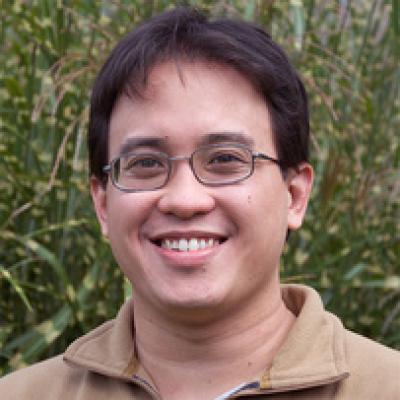
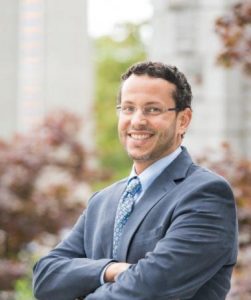
Mark Y. Liberman is the Christopher H. Browne Distinguished Professor of Linguistics and Trustee Professor at the University of Pennsylvania. He holds a joint appointment in the Department of Linguistics and the Department of Computer and Information Science. His roles include Director of the Linguistic Data Consortium (LDC), Faculty Director of Ware College House, and former Director of the Institute for Research in Cognitive Science. Education: A.B. in Linguistics and Applied Mathematics from Harvard University (1965–1969), M.S. (1972) and Ph.D. (1975) in Linguistics from MIT. Research focuses on corpus-based phonetics, clinical linguistics applications, tonal phonology, formal models for linguistic annotation, and computational linguistics. He explores speech production, prosody, and interdisciplinary topics like language evolution and neurobiology of speech. Recent articles highlight advancements in speech biomarkers for neurodegenerative diseases, autism analysis, and computational linguistics. Awards include Fellowships from the AAAS and Linguistic Society of America. He advises graduate students and leads large-scale language resource initiatives like LDC, contributing to open-access linguistic datasets. Labs/Teams: Linguistic Data Consortium (LDC), Institute for Research in Cognitive Science (IRCS), and collaborations in computational linguistics and neuroscience.
Mark Steedman is a Professor in the School of Informatics at the University of Edinburgh, where he conducts research in Artificial Intelligence, Computational Cognitive and Social Science, and Natural Language and Speech Processing. He is affiliated with the Institute for Language, Cognition and Computation (ILCC), the Centre for Speech Technology Research (CSTR), and the Human Communications Research Center (HCRC). He also holds an adjunct professorship in Computer and Information Science at the University of Pennsylvania. His research focuses on Combinatory Categorial Grammar (CCG) , computational linguistics , prosody and intonation , temporal semantics , gesture in communication , and computational music analysis . He has authored foundational books including Surface Structure and Interpretation , The Syntactic Process , and Taking Scope . The recent publications reflect a strong trend toward integrating formal grammatical frameworks like CCG with modern neural and distributional models, particularly in semantic parsing, entailment reasoning, and cognitive modeling. His work bridges symbolic and statistical approaches in NLP, often focusing on robust, wide-coverage parsing and semantic interpretation. Best Paper Award at AACL/IJCNLP 2023 for 'Smoothing Entailment Graphs with Language Models' Best Paper Award at ACL 2023 for 'Extrinsic Evaluation of Machine Translation Metrics' Influential Paper Award 2017 from IFAAMAS for 'Animated Conversation' Mark Steedman has supervised numerous PhD students and collaborated widely across institutions. He leads research in formal grammar applications to cognitive modeling, dialogue, and multimodal communication. His lab contributes to CCG software and semantic parsing tools, and he continues to be actively involved in advancing the integration of symbolic and neural AI.
Professor Bernd Möbius is a leading academic in Phonetics and Phonology at the Department of Language Science and Technology, Saarland University. His research bridges phonetic theory with speech technology applications, focusing on text-to-speech systems, prosody modeling, and computational simulations of speech processes. Current research projects: DFG SFB 1102, C1: Information density and phonetic structure predictability DFG SFB 1102, C4: Slavic intercomprehension and surprisal theory (INCOMSLAV) Research Themes: Key areas include text-to-speech synthesis, speech prosody analysis, experimental methods in speech production/perception, information density in phonetics, and cross-linguistic studies of Slavic-Germanic languages. Scientific Contributions: Recent work explores Parkinson-induced dysarthria detection, breath noise acoustics, surprisal-driven speech behaviors, multilingual BERT models for idiomaticity, and perceptual consequences of acoustic adjustments.
Alan Ritter is an Associate Professor at the School of Interactive Computing , Georgia Institute of Technology, with additional affiliation to the Machine Learning Center . His research focuses on Natural Language Processing , particularly robust models across domains/languages with fewer labels and efficient resource use, plus data-driven dialogue agents for open-topic conversations. Research Interests : Robust NLP models, cross-lingual transfer, resource-efficient learning, dialogue systems, cultural bias measurement, and privacy-aware language models Students : Mentors Ph.D. students in Georgia Tech's ML and CS programs, including Junmo Kang, Yang Chen, and Duong Minh Le. Alumni include Fan Bai (Ph.D. 2023), Yang Chen (Ph.D. 2024), and Andrew Li (M.S. 2024). Awards : NSF CAREER Award, Amazon Research Award, ACL 2024 Best Social Impact Paper, IUI 2009 Best Student Paper. Recent Work : Studies training budget allocation between supervised and preference-based finetuning, cross-lingual information extraction, cultural bias in LLMs, and privacy risk mitigation in social media disclosures. Service : Served as Program Chair for NAACL 2025, Area Chair for multiple top-tier conferences (COLM, EMNLP, ACL, EACL, AAAI). Email : alan.ritter@cc.gatech.edu
Min Yen Kan is an Associate Professor and Vice Dean of Undergraduate Studies at the National University of Singapore's School of Computing, Department of Computer Science. With a PhD from Columbia University (2002), he leads the Web Information Retrieval / Natural Language Processing Group (WING.NUS) and serves as ACL Ethics Committee co-chair. His research spans Natural Language Processing , Large Language Models , Digital Libraries , and Information Retrieval , with specific focus on scientific discourse analysis, fact verification, and multimodal systems. Current projects include Scholarly Document Information Extraction (TRL 6), Task-Oriented Dialogue Systems (TRL 4), and Recommendation Systems (TRL 5). Recent publications reveal strong trends in LLM limitations (bias, hallucination, evaluation), conversational recommendation systems , and misinformation detection . His work consistently bridges theoretical NLP with real-world applications in digital libraries and scientific communication. Award highlights include: CIKM 2019 Best Paper Award ACL Distinguished Service Awards Vannevar Bush Best Paper Award (JCDL 2012) ACM Distinguished Speaker designation Kan mentors PhD students with placements at Google and USTC, and serves as associate editor for Information Retrieval and survey editor for Journal of AI Research . His lab WING.NUS develops practical tools like SciWING for scientific document processing and FANG for fake news detection. Media engagements include commentary on AI regulations in Southeast Asia and workforce implications in the AI era.
Sara Stymne is a Senior Lecturer in Computational Linguistics at the Department of Linguistics and Philology, Uppsala University, where she has been working since 2012. She initially joined as a post-doc (2012-2015), then worked as a researcher (2015-2017), and served as an assistant professor (2017-2023) before her current position as Senior Lecturer. Prior to Uppsala, she was a researcher at Linköping University's Department of Computer and Information Science. Dr. Stymne earned her PhD in Computational Linguistics from Linköping University in 2012 with the thesis 'Text Harmonization Strategies for Phrase-Based Statistical Machine Translation,' following a Licentiate degree in Computational Linguistics (2009) and a Master's degree in Cognitive Science (2006), both also from Linköping University. During her doctoral studies, she spent the autumn of 2010 and spring of 2009 at Xerox Research Centre Europe in Grenoble, France. Her primary research interests focus on cross-lingual natural language processing and digital humanities, with particular emphasis on multilingual dependency parsing. Dr. Stymne is passionate about applying computational linguistics to solve research questions in other fields, including language history, literary analysis, and political science. Her earlier work concentrated on machine translation, with specific interests in discourse-aware translation, compound processing, and error analysis. She has made significant contributions to the development of language technology tools for analyzing dialogue, narrative, and stylistic features in literature. Analysis of Dr. Stymne's recent publications reveals a strong focus on cross-lingual and cross-domain natural language processing. Her work spans multiple subfields including dependency parsing across genres and topics, discourse relation analysis in low-resource languages like Egyptian Arabic, direct speech identification in Swedish literature, and causality detection in governmental documents. A notable trend is her application of NLP techniques to digital humanities problems, particularly in analyzing literary texts and historical language change. Her research often involves creating and utilizing specialized datasets for specific linguistic phenomena across multiple languages. Dr. Stymne actively supervises graduate students, having guided numerous master's and bachelor's theses on topics ranging from speech recognition to multilingual parsing and causality detection. She leads or participates in several research projects including 'Fictional prose and language change' (funded by VR, 2021-2023) and 'Enabling climate-resilient development' (funded by Marianne and Marcus Wallenberg Foundation, 2023-2027), demonstrating her commitment to interdisciplinary research with practical applications. Her work has resulted in several notable software resources including uuPronPred for cross-lingual pronoun prediction, uuparser for dependency parsing, and Docent for document-level machine translation. Within the Computational Linguistics and Language Technology group at Uppsala University, Dr. Stymne contributes to multiple research initiatives focused on developing language technology tools for digital humanities applications. Her team works closely with literary scholars and historians to create computational methods for analyzing large corpora of literary texts, particularly focusing on Swedish literature across different historical periods. Her research bridges the gap between theoretical computational linguistics and practical applications in the humanities, creating new methodologies for quantitative analysis of literary and historical texts.
Roberto Navigli is a Full Professor in the Department of Computer, Control and Management Engineering at Sapienza University of Rome, where he leads the Sapienza NLP Group. He has held academic positions at Sapienza since 2007, progressing from Researcher to Associate Professor, and now Full Professor. Navigli is internationally recognized for his groundbreaking work in multilingual natural language processing and computational semantics. His research spans multiple areas within Natural Language Processing, with a particular focus on multilinguality , lexical semantics (Word Sense Disambiguation and induction), sentence-level semantics (Semantic Role Labeling and Semantic Parsing), and Large Language Models . As the leader of the Minerva LLM project, he pioneered the development of the first pretrained LLM in Italian. His creation of BabelNet, the largest multilingual encyclopedic computational dictionary covering 271 languages and about 14 million concepts, represents a landmark achievement in computational linguistics. Professor Navigli's recent publications demonstrate a strong focus on advancing multilingual capabilities of language models, addressing challenges in semantic understanding across languages, and developing robust evaluation frameworks. His work on Italian LLM optimization, lexical ambiguity in machine translation, and cross-lingual safety gaps reflects his commitment to building more accurate and reliable language technologies that work effectively across diverse linguistic contexts. AAAI Fellow (2025) EurAI Fellow (2024) ELLIS Fellow (2024) ACL Fellow (2023) Outstanding Paper Awards at ACL 2024, ACL 2023, and NAACL 2021 Best Resource Paper Award at ACL 2022 Prominent Paper Awards from the Artificial Intelligence Journal (2023, 2017) META Prize 2015 for BabelNet Professor Navigli has successfully secured substantial research funding, including two prestigious ERC Grants (MultiJEDI ERC Starting Grant 2010-2016 and MOUSSE ERC Consolidator Grant 2017-2023, totaling around 3 million euros), PI of PRIN 2017 and PRIN 2020 projects (overall 1.4 million euros), and a Google Focused Research Award (around 300k$). He has mentored over 30 PhD students, many of whom have gone on to successful careers in academia and industry. His leadership extends to major international conferences, serving as General Chair of ACL 2025 and Program Co-Chair of ACL-IJCNLP 2021. As the director of the Sapienza NLP Group and co-leader of the Transversal Project on Large Language/Multimodal Models in the FAIR (Future Artificial Intelligence Research) project, Professor Navigli oversees a vibrant research ecosystem focused on advancing the state-of-the-art in natural language understanding across languages. His spinoff company, Babelscape, translates academic research into practical applications for industry.
David Alvarez-Melis is an Assistant Professor of Computer Science at Harvard University's John A. Paulson School of Engineering and Applied Sciences (SEAS). He leads the Data-Centric Machine Learning (DCML) group and holds affiliations with the Kempner Institute, Harvard Data Science Initiative, and the Center for Research on Computation and Society. His research focuses on making machine learning more data-efficient and trustworthy, with applications in natural and medical sciences. He also serves as a researcher at Microsoft Research New England. Affiliations: SEAS, Kempner Institute, Harvard Data Science Initiative, CRCS Education: PhD in Computer Science (MIT), MS in Mathematics (NYU Courant), BSc in Applied Mathematics (ITAM) Research Interests: Optimal Transport, dataset distillation, interpretable AI, medical imaging, robustness, and large language models. His work bridges theory and applications, emphasizing geometric and probabilistic methods. Recent Trends in Publications: Focused on advancing optimal transport for data manipulation, distributional deep equilibrium models, and repurposing LLMs for specialized domains. Key themes include synthetic dataset generation, gradient flows in probability spaces, and robust interpretability frameworks. Awards: Aramont Fellowship, Dean’s Competitive Fund, Top Reviewer awards at major conferences (ICLR, NeurIPS, ICML). Grants: Supported by the Aramont Fund and Harvard’s Dean’s Fund. His lab advises students across Harvard and MIT, with notable contributions to medical imaging, NLP, and foundational ML theory. He actively mentors interns and fosters collaborations with industry and academia.
Anders Søgaard is a Professor at the University of Copenhagen , affiliated with both the Department of Computer Science and the Department of Communication. His research bridges Natural Language Processing and Machine Learning with a focus on AI ethics , explainability , and human-AI interaction . Primary Affiliation: Department of Computer Science, University of Copenhagen Secondary Affiliation: Department of Communication, University of Copenhagen Email: soegaard@di.ku.dk, soegaard@hum.ku.dk Research Interests His work spans Natural Language Processing , Machine Learning , and AI ethics , with recent studies addressing: Trustworthiness in AI systems Explainable AI (XAI) frameworks Multilingual model fairness and alignment Human-AI collaboration in reasoning tasks Ethical implications of social robots Mental health analytics using ML Recent Publications His 2025 output highlights trends in: AI ethics (e.g., fairness metrics, trustworthy systems) Multilingual model analysis (knowledge retention, cross-lingual transfer) Human-centric AI (gaze data, cultural considerations) Applications in healthcare and social good
Lyle Ungar is a Professor at the Department of Computer and Information Science at the University of Pennsylvania . He is affiliated with multiple graduate groups, including Genomics and Computational Biology in the School of Medicine , Operations, Information and Decisions in the Wharton School , and Psychology in the School of Arts and Sciences . His research focuses on explainable machine learning , deep learning , and natural language processing for psychology and medical research , analyzing social media and sensor data to understand well-being, empathy, and stress. His work spans bioinformatics , applied economics , and group decision-making . Recent publications examine LLM-based tutoring , cross-cultural translation , and AI in palliative care , showing trends in reinforcement learning , mobile health , and health data analytics . He has contributed to Google Scholar , PubMed , and DBLP with over 15 papers since 2023. Scientific Awards : 2019 Alan I. Leshner Leadership Institute Public Engagement Fellow His students include Vitoria Aquino Guardieiro , Yihao Li , and co-advised researchers like Shreya Havaldar with Eric Wong. He leads projects at interdisciplinary centers such as the Annenberg Public Policy Center , Center for Cognitive Neuroscience , and Institute for Translational Medicine .
Prof. Dr. Gülşen Eryiğit is a Professor at Istanbul Technical University within the Faculty of Computer and Informatics , Department of Artificial Intelligence and Data Engineering . She founded and directs the ITU Natural Language Processing Group , Turkey's leading team in Turkish-language NLP, and serves as Senior Action Editor for ACL RR , Director of ITU TÖMER (Turkish Language Teaching Center), and Co-Chair of the EU UniDive Cost Action WG3. Education: PhD in Computer Engineering from ITU (2007), MSc and BSc from ITU and Marmara University Research: Focuses on Natural Language Processing for Turkish, including dependency parsing , coreference resolution , multiword expressions , and language education technology Her recent work involves multilingual transfer learning , LLM applications for Turkish text simplification, and gamification for morphology education. She has received prestigious awards like the Siemens Excellence Award and TÜBİTAK's Above Threshold Award . Her research has produced 65+ publications and 29+ projects funded by EU, TÜBİTAK, and industry partners. Scientific Awards: Siemens Excellence Award (2007) Above Threshold Award (TÜBİTAK, 2015) Certificate of Appreciation (EU 7th Framework, 2012) Thank You Plaque (ITU, 2017) The ITU NLP Group under her leadership has developed Turkey's first licensed NLP software exported internationally. She collaborates with European institutions through COST actions and participates in ACL, CoNLL, and LREC conferences. Her lab focuses on language technology for Turkish , including sign language processing and social media normalization.
Freda Shi is an Assistant Professor at the David R. Cheriton School of Computer Science at the University of Waterloo and a Faculty Member at the Vector Institute, where she holds a Canada CIFAR AI Chair. She joined the University of Waterloo in July 2024 after completing her Ph.D. at the Toyota Technological Institute at Chicago. Educational Background: Ph.D. in Computer Science, Toyota Technological Institute at Chicago (2024), advised by Professors Karen Livescu and Kevin Gimpel Bachelor's degree in Intelligence Science and Technology (Computer Science Track) with a minor in Sociology, Peking University (2018) Dr. Shi's research focuses on computational linguistics and natural language processing, particularly on deeper understandings of natural language and the human language processing mechanism. She is especially interested in learning language through grounding, computational multilingualism, and related machine learning aspects. Her work aims to inform the design of more efficient, effective, safe, and trustworthy NLP systems. She leads the CompLING Lab at the University of Waterloo, which investigates how language models process spatial relationships and acquire linguistic structures through grounded experiences. Her publication record shows a consistent trajectory of high-impact research, with recent work focusing on spatial reasoning in vision-language models, multilingual chain-of-thought capabilities, and grounded language acquisition. She has published in top-tier conferences including ACL, EMNLP, ICLR, and NAACL, with several papers receiving notable recognition including Best Paper Nominee status at multiple venues. Her research bridges theoretical linguistics with practical NLP applications, demonstrating how linguistic insights can improve AI systems. Scientific Recognition: Canada CIFAR AI Chair (2024) Google Ph.D. Fellowship Thesis of Distinction for her doctoral work Multiple Best Paper Nominee awards at major NLP conferences Dr. Shi teaches CS 784: Computational Linguistics and CS 486/686: Introduction to Artificial Intelligence at the University of Waterloo. She actively contributes to the NLP research community through conference participation, program committee service, and collaborative projects. Her research has significant implications for creating more robust, human-like language understanding systems and advancing the field of grounded language learning in artificial intelligence.
Ekaterina Shutova is an Associate Professor at the Institute for Logic, Language and Computation (ILLC) within the Faculty of Science at the University of Amsterdam. She concurrently holds a Visiting Associate Professor position in the Computer Science Department at Stanford University. She leads the Amsterdam Natural Language Understanding Lab and heads the NLP & Digital Humanities research unit at ILLC. An ELLIS Scholar, she earned her PhD from the University of Cambridge Computer Laboratory and Pembroke College. Her research has been funded by ERC, Innovate UK, British Academy, Leverhulme Trust, Google, Meta, and Deloitte. Her research spans natural language processing and machine learning, with core interests in: Few-shot learning for NLP Multilingual and cross-lingual systems Joint modeling of language and vision Cognitive processing and semantic representation Figurative language interpretation Computational social science applications Her recent publications (2024-2025) predominantly focus on multimodal learning, cultural alignment in AI, metaphor processing, and evaluation methodologies for language models. These works reflect a trend toward integrating cognitive science with multilingual systems and ethical considerations. Awards & Fellowships: ERC Consolidator Grant (2025) ELLIS Scholar Outstanding Paper Award at ACL 2023 Finalist for Outstanding Certification by TMLR Runner-up Best Paper Award at NAACL-HLT 2016 Research Leadership: She directs the Amsterdam Natural Language Understanding Lab, supervising 8 PhD students, 1 MSc student, and 34 alumni. Her projects include an ERC-funded initiative on globally accessible language technology and an AI Democratization grant for hate speech detection.
Brendan O'Connor is an Associate Professor in the Manning College of Information and Computer Sciences (CICS) at the University of Massachusetts Amherst. His research focuses on computational social science and natural language processing (NLP), particularly exploring how social factors influence language technologies and using text analysis to understand societal trends. His work includes studies on racial bias in NLP, political event analysis, and social media linguistics. He holds a PhD in Machine Learning from Carnegie Mellon University (2014) and dual MS/BS in Symbolic Systems from Stanford University (2006). Education: PhD in Machine Learning, Carnegie Mellon University (2014) MS in Symbolic Systems, Stanford University (2006) BS in Symbolic Systems, Stanford University (2006) Research interests span AI ethics, social media analysis, and computational methods for studying language and society. Notably, he investigates racial disparities in NLP systems, linguistic variation in African American English, and event detection in news and social media. His work has been recognized with NSF CAREER and Google Faculty awards, and his research has been cited thousands of times. His lab, the Statistical Social Language Analysis Lab, develops tools for analyzing large-scale text data. He is affiliated with the Center for Data Science, Center for Intelligent Information Retrieval, and Computational Social Science Institute. Recent projects include analyzing global news coverage of critical events and developing frameworks for zero-shot argument explication. Awards and Honors: NSF CAREER Award Google Faculty Research Award Best Paper Award Advising and Grants: O'Connor has advised projects on social media polling representativeness and demographic analysis. His grants include collaborative research on sociopolitical event extraction and bias mitigation in AI systems. He has also contributed to platforms like Rookie for news archive exploration and ezCoref for coreference resolution. Labs/Teams: Leads the Statistical Social Language Analysis Lab and collaborates with the UMass NLP Group and Harvard Institute for Quantitative Social Science. His work bridges NLP with social science methodologies, emphasizing transparency in algorithms and causal inference using text data.
Dr. Muhammad Abdul-Mageed is an Associate Professor in the School of Information at The University of British Columbia, with joint appointments in Linguistics and an associate membership in Computer Science. He holds the Canada Research Chair in Natural Language Processing and Machine Learning. His research focuses on deep learning, socio-pragmatics, and speech/language technologies, particularly for Arabic and African languages. He leads the UBC Deep Learning & NLP Group and co-directs SSHRC-funded grants like I Trust AI and Ensuring Full Literacy. He is a founding member of the Center for Artificial Intelligence Decision making and Action and a member of the Institute for Computing, Information, and Cognitive Systems. His work spans automatic speech recognition, machine translation, computational socio-pragmatics, and low-resource language technologies. Notable projects include developing Arabic speech recognition systems, multidialectal Arabic benchmarks, and tools for African language processing. He has authored over 100 peer-reviewed papers and leads initiatives like the NADI Arabic Dialect Identification shared task and the NileChat project for culturally-aware LLMs. His research aims to create equitable, socially-aware AI systems for health, social media, and information management.