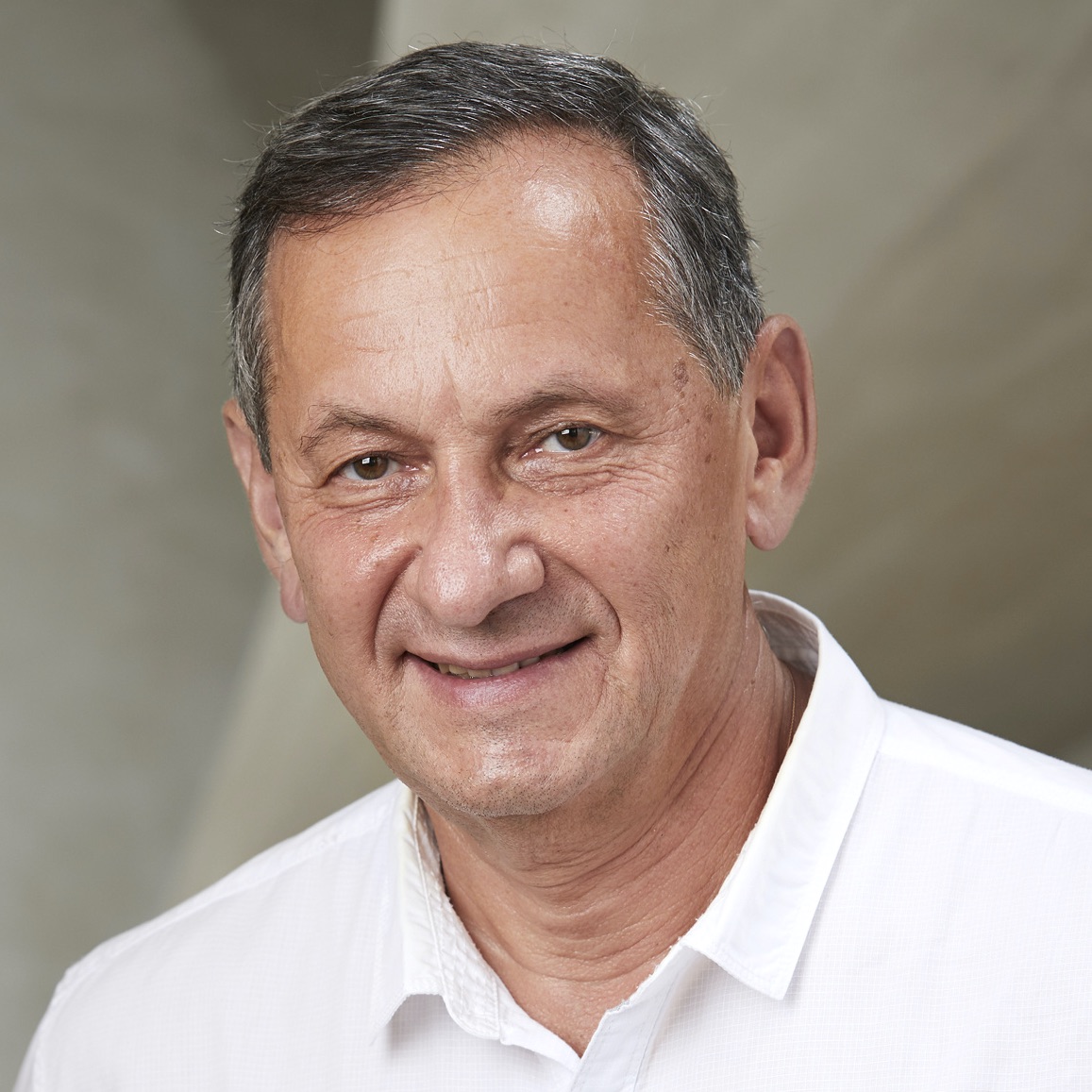
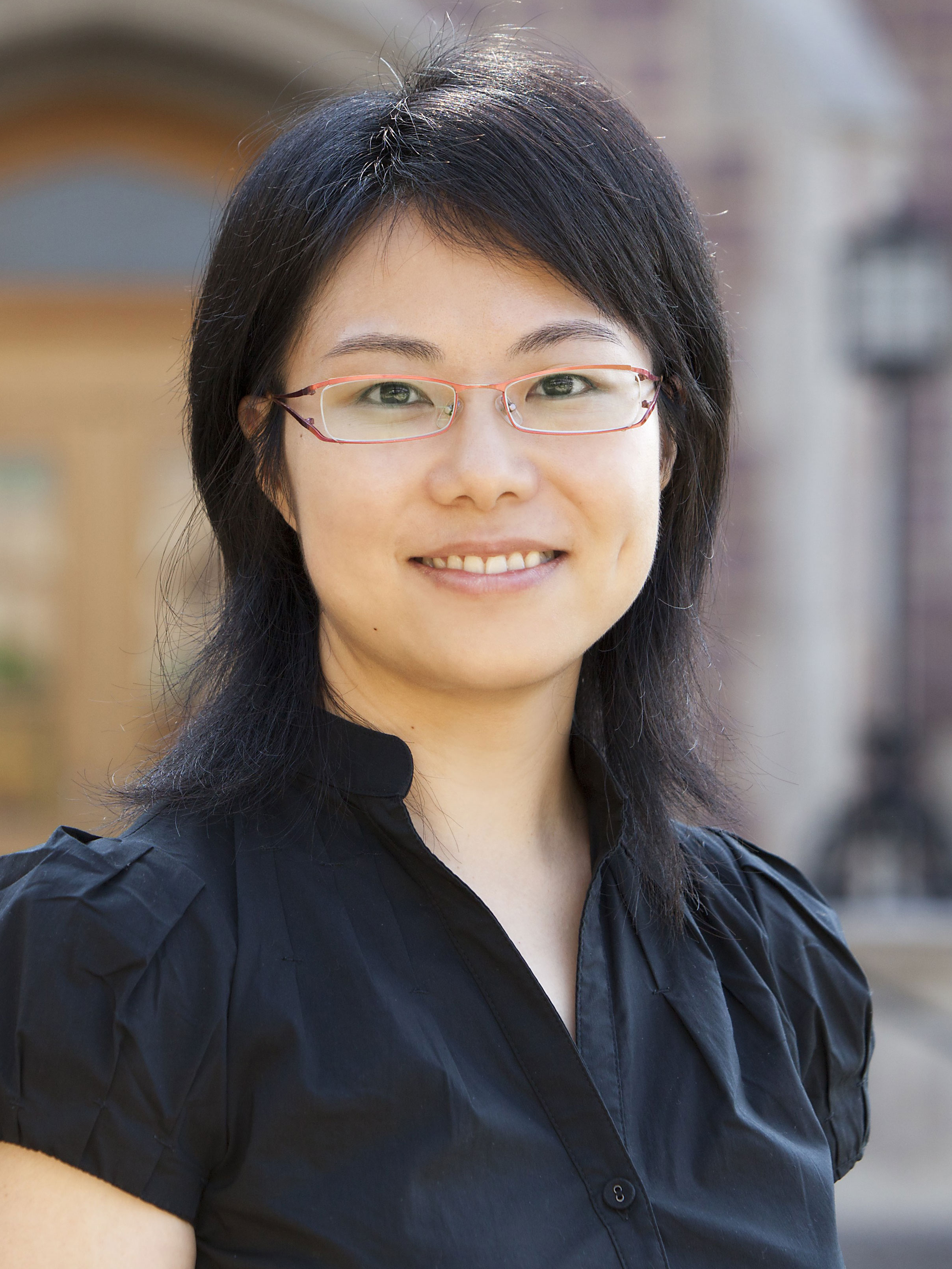
Nectarios Koziris is a Professor at the Department of Computer Science , National Technical University of Athens (NTUA) , and former Dean of the School of Electrical and Computer Engineering . His research focuses on Parallel and Distributed Systems , Computer Architecture , and Cloud Computing . Key Research Themes: Compiler-OS-Architecture Interaction, Datacenter Hyperconvergence, Sparse Matrix Optimization, Quantum Computing, FPGA Virtualization Leadership: Founder of ~okeanos (Europe's largest public Cloud IaaS), Co-founder of GFOSS , Member of IEEE Computer Society Greece, Advisor to Arrikto Inc. His work has led to over 180 publications with 5800+ citations (h-index 33) , including two Best Paper Awards (IPDPS 2001, CCGRID 2013) and Intel Recognition (2015). He has supervised 12 PhD students and participated in 15+ EU projects as coordinator or consortium partner. Scientific Leadership: Program Co-Chair for Europar 2012 , Organizer for IPDPS , ICPP , SC conferences, and active member in Cloud Computing Expert Groups for the European Commission.
Dr. Giulia Rubino is a Royal Commission 1851 Fellow and Proleptic Lecturer in the School of Physics at the University of Bristol. Her academic credentials include a BSc, MSc, and PhD, establishing her expertise in quantum physics and related disciplines. She maintains an active research presence with numerous publications and collaborations across international institutions. Dr. Rubino's educational background, though not detailed in specific institutions, demonstrates a strong foundation in physics through her BSc, MSc, and PhD qualifications. Her career progression has led to her current prestigious position at the University of Bristol, where she contributes significantly to quantum research. Her research program spans three interconnected pillars: Indefinite Quantum Causality , where she explores how causal structures might need to be both dynamic (as required by general relativity) and indefinite (due to quantum theory); Integrated Photonics Technologies , where she applies quantum optics principles to develop sophisticated photonic circuits; and Quantum Thermodynamics , where she addresses fundamental questions about defining work in quantum systems. Her work on indefinite causal structures challenges conventional space-time understanding, with significant implications for both foundational physics and quantum information processing. In experimental physics, she bridges quantum foundations and technologies through state-of-the-art photonic implementations. Her theoretical contributions to quantum thermodynamics address critical gaps in understanding work definitions for nanoscale quantum devices. Dr. Rubino's publication record reveals a clear research trajectory focused on quantum foundations and information processing. Her most recent work (2024-2025) shows increasing sophistication in quantum thermodynamics and causal structure experiments, with notable papers on quantum work fluctuation frameworks and quantum key distribution. The consistent theme across her publications is the exploration of quantum phenomena that challenge classical notions of causality, time, and thermodynamics, often with practical applications to quantum technologies. Her scientific recognition includes the prestigious Royal Commission 1851 Fellowship , awarded to exceptional early-career researchers with potential for significant contributions to their fields. This fellowship supports her innovative research at the University of Bristol and recognizes her standing in the quantum physics community. While specific student names aren't listed in the available information, Dr. Rubino's position as Lecturer suggests active involvement in mentoring graduate students. Her collaborative research approach is evident in her numerous co-authored publications with researchers from multiple institutions, indicating strong research networks. Her grant portfolio likely includes the Royal Commission fellowship and potentially other research council funding supporting her quantum physics investigations. Dr. Rubino is affiliated with the Quantum Engineering Technologies and Theoretical Physics research groups at the University of Bristol. Her work contributes to the university's strong reputation in quantum information science, particularly in the experimental realization of quantum phenomena that challenge conventional understanding of space-time and thermodynamics. She appears to be involved in sophisticated photonic circuit development and quantum information processing experiments that require specialized laboratory facilities.
Giorgio Scorzelli is a researcher at the University of Utah, serving as Director of Software Development for the Center for Extreme Data Management, Analysis, and Visualization (CEDMAV) and the National Science Data Fabric (NSDF) . He specializes in extreme data management, scientific visualization, and computational topology, with a focus on scalable solutions for climate science, materials science, and neuroscience datasets. His work emphasizes democratizing data access through platforms like OpenVisus , enabling efficient analysis of petascale and exascale data. Key contributions include orchestrating cyberinfrastructure, optimizing parallel I/O, and developing real-time visualization systems for heterogeneous resources. Notable scientific contributions include the NSF Grant #2127548 for NSDF development . His projects integrate cloud computing, geo-distributed storage, and FAIR digital objects to lower barriers to data democratization. Giorgio's research spans multi-resolution algorithms , computational topology , and 3D geometric modeling , with applications in infrastructure security, archaeological reconstruction, and biomedical imaging. His work bridges abstract mathematical frameworks (e.g., Boolean algebras, chain complexes) with practical software solutions.
Borja Garcia de Soto is an Associate Professor at New York University (NYU) and a Global Network Associate Professor in the Department of Civil and Urban Engineering at NYU's Tandon School of Engineering. He directs the S.M.A.R.T. Construction Research Group at NYU Abu Dhabi, focusing on construction automation, cybersecurity in the AEC industry, artificial intelligence, lean construction, and BIM. His research bridges technological innovation with practical construction challenges, emphasizing digital fabrication and smart infrastructure. He holds a PhD in Civil Engineering from ETH Zurich, an MSc in Engineering and Project Management from UC Berkeley, and dual MSc/BSc degrees in Civil Engineering from Florida International University (FIU), graduating cum laude. Research Interests: Construction automation, cybersecurity threats in AEC, AI applications, lean construction methodologies, BIM integration, digital twins, and robotic systems. Publications: Over 50 peer-reviewed works on topics spanning neural networks for construction scheduling, digital fabrication productivity, cybersecurity risk modeling, and BIM-based optimization tools. Awards: Honorary Fellow of ISTeA (2023), ALEC Innovation Day Partner of the Year (2023), SciRoc Competition Winner (2021), ICE Publishing Award (2016), and ETH Zurich Construction & Infrastructure Prize (2015). Editorial Roles: Associate Editor for Automation in Construction , Journal of Construction Robotics , and Smart and Sustainable Built Environment . Professional: Licensed Professional Engineer (California, Florida) with industry experience in structural engineering and project management.
Elizabeth I. Winston is a Professor of Law and Co-Director of the Law and Technology Institute at the Columbus School of Law, The Catholic University of America. Since joining in 2006, she has taught Contracts, Patent Law, and Trademarks and Unfair Competition, earning the Outstanding Professor of First Year Classes award from students in 2007 and 2009. Education: J.D., University of Virginia School of Law S.B., Massachusetts Institute of Technology Research Interests: Professor Winston’s scholarship centers on the intersection of law and technology, with a focus on intellectual property law , patent law , trademark law , and contracts . She explores how legal frameworks adapt to technological innovation, particularly in areas like standard-essential patents, patent pledges, and the challenges posed by the digital and space economies. Her articles reveal a consistent engagement with innovation policy , private ordering , and international trade implications of intellectual property. From analyzing patent boundaries to questioning the patentability of seeds, her work interrogates the balance between incentivizing innovation and ensuring public access. Scientific Awards & Recognition: Outstanding Professor of First Year Classes, Catholic University Columbus School of Law (2007, 2009) Speaking & Outreach: A frequent speaker at premier venues including the Federal Circuit Judicial Conference, DOJ-FTC-USPTO seminars, and university forums nationwide, she translates complex IP issues for diverse audiences. Institute Leadership: As Co-Director of the Law and Technology Institute, she helps shape interdisciplinary research and curricular initiatives that bridge law, policy, and emerging technologies.
Renaud Pacalet is a Researcher at Institut Mines-Télécom – Télécom Paris , affiliated with the Communications and Electronics (Comelec) Department and the System on Chip (LabSoc) research team under the Information Processing and Communication Laboratory (LTCI). His work spans hardware security, embedded systems, and software-defined radio (SDR) architectures. Current Research: Hardware security, side-channel attacks (power, timing, fault injection), RISC-V security analysis using gem5, FPGA scheduling for cloud data centers, and model-driven design methodologies. Past Research: Hardware acceleration for ray tracing, SDR front-end processing, SoC security, and memory bus protection (SecBus project). Teaching: Courses on Digital Systems, Computer Architecture, and Hardware Security at EURECOM, including lab sessions on side-channel attacks and fault analysis. Email: renaud.pacalet@telecom-paris.fr Contact: Télécom ParisTech, Campus SophiaTech, 450 route des Chappes 06410 Biot, France
Daye Nam is an Assistant Professor in the Department of Informatics at the University of California, Irvine, where they design, build, and evaluate AI tools for developers using natural language processing techniques. Their work sits at the intersection of software engineering, artificial intelligence, and human-computer interaction, with a strong focus on creating useful and usable tools that make software development more accessible, efficient, and enjoyable. Education PhD in Software Engineering, Carnegie Mellon University (2018-2024) MS in Computer Science, University of Southern California (2016-2018) BS in Computer Science, Yonsei University (2012-2016) Research Interests Dr. Nam's research focuses on designing, building, and evaluating AI tools for programmers at all levels, with an emphasis on making these tools both useful and usable. Their work spans several key areas including machine learning for software engineering (ML4SE), developer experience, and human-AI interaction. They employ a user-centered approach that involves conducting empirical studies to understand programmers' needs, building and training machine learning models based on those insights, creating tools for programmers, and evaluating them using human-computer interaction methods. Their research has particular relevance to AI-powered developer tools, API documentation and discovery, and educational applications of AI for programming students. Publications and Research Trends Dr. Nam's recent publications demonstrate a clear trajectory toward understanding and improving how developers interact with AI systems. Their work increasingly focuses on empirical studies of developer-AI interaction, particularly with large language models for code generation and understanding. There's a strong emphasis on understanding trust in AI systems among developers, measuring the actual impact of AI on development speed, and designing tools that balance automation with user control. Their research methodology often combines log analysis, user studies, and the development of novel AI-powered tools that address specific developer pain points. Scientific Awards and Honors Best Tool Paper Award at ASE ACM Student Research Competition 2nd Place SIGSOFT CAPS Student Travel Award for FSE ACM SIGSOFT NSF Travel Award NSF Travel Award for ICSE SIGSOFT Best Research Award from University of Southern California Teaching and Service Dr. Nam teaches SWE 233: Intelligent User Interfaces at UC Irvine, guiding students through the design and evaluation of AI-powered interfaces for software development. They have previously served as a Teaching Assistant and Co-Instructor for Foundations of Software Engineering at Carnegie Mellon University. In terms of service, they've been on program committees for major software engineering conferences including ICSE, ASE, and FSE, and have reviewed papers for journals like TOSEM and Empirical Software Engineering. They've also been active in student support programs, organizing and mentoring for graduate applicant support initiatives.
Marcello Pietri is a Researcher (td art. 24 c. 3 lett. A) and Contract Professor at the Department of Engineering Sciences and Methods (DISMI) at the University of Modena and Reggio Emilia. His work focuses on Information Processing Systems, with expertise in IoT, Edge Computing, and Digital Twins. He teaches courses like 'Sistemi Informativi' (Information Systems) for the Engineering Management program, emphasizing database design, SQL, and web application development with Python. His research explores advanced topics including Digital Twin integration in Industry 5.0, Fluid Computing in IoT ecosystems, and Smart City data fusion using 5G MEC architectures. He collaborates with institutions like the DIPI Lab (Distributed and Pervasive Intelligence Group), contributing to projects on telecom security, energy forecasting, and human-centric manufacturing systems. Recent publications highlight innovations in operator digital twins for workplace well-being, distributed data mesh models for IoT-edge-cloud systems, and adaptive monitoring algorithms for large-scale cloud environments. His work bridges theoretical advancements with practical implementations, addressing challenges in scalability, real-time data processing, and interdisciplinary collaboration.
Arjun Mukherjee is a Lecturer at the Department of Computer Science , University of Houston , where he teaches courses in Machine Learning , Data Mining , Natural Language Processing , and Data Structures . His research focuses on Bayesian Inference , Data Mining , Natural Language Processing , Sentiment Analysis , Opinion Spam , and Web Mining , with a strong emphasis on deception detection and social media analysis. His recent publications explore advanced techniques in LLM-generated content detection synthetic data applications cross-domain deception modeling temporal user behavior analysis , reflecting his commitment to addressing modern challenges in digital content authenticity and machine learning robustness. Dr. Mukherjee has developed educational materials for graduate-level courses, including a well-structured Machine Learning course (COSC 6342) covering probabilistic inference, supervised/unsupervised learning, and neural networks. He earned his Ph.D. from the University of Illinois at Chicago in 2014, with a thesis titled Probabilistic Models for Fine-Grained Opinion Mining: Algorithms and Applications .
Guannan Liu is an Assistant Professor of Computer Science at the Colorado School of Mines, specializing in cybersecurity and network security. He holds a Ph.D. in Computer Engineering from Virginia Tech (2023) and a BS from Purdue University (2016). His research focuses on system/network security, human-factor security, cloud computing security, and user authentication mechanisms. He has identified critical vulnerabilities in online services, collaborating with major tech firms to address resource mismanagement issues. Dr. Liu's work has been published in top-tier security conferences. He actively seeks motivated students for cybersecurity research projects. His honors include a Student Travel Grant for DSN 2022 and academic recognition through Dean’s List distinctions. His research bridges theoretical insights with practical impact, particularly in identifying real-world system vulnerabilities through comprehensive measurements. Key areas of exploration include container registry typosquatting, cloud gaming service misuse, DNS query analysis, and acoustic side-channel attacks on IoT devices. His interdisciplinary work integrates software engineering, artificial intelligence, and network measurement techniques to enhance security across diverse systems.
Roles & Affiliations: Professor and President's Chair Professor in Computer Science and Engineering at Nanyang Technological University (NTU), Singapore. Member of the IEEE and IET, with roles in editorial boards of major journals like IEEE Transactions on Network Science and Engineering and IEEE Communications Surveys & Tutorials. Current positions: Editor-in-Chief of IEEE Transactions on Network Science and Engineering, Area Editor in multiple journals including IEEE Communications Surveys and Tutorials. Education: Ph.D. (2008) and M.Sc. (2005) in Electrical and Computer Engineering from the University of Manitoba, Canada. B.Eng. (1999) in Computer Engineering from King Mongkut's Institute of Technology Ladkrabang, Thailand. Research Interests: Focuses on mobile generative AI, edge general intelligence, quantum networking, incentive mechanisms, and wireless communication systems. Explores applications in 6G, IoT, UAV networks, and secure communication. Recent Articles & Trends: 15 most recent articles highlight advancements in generative AI for wireless networks, quantum computing integration, secure communication protocols, and AI-driven network optimization. Key themes include semantic communication frameworks, RIS-aided systems, and federated learning in edge networks. Awards: Over 20+ prestigious awards including IEEE Fellow (2017), IET Fellow (2022), Stuart Meyer Memorial Award (2024), and multiple best paper awards at top conferences like IEEE WCNC and IEEE ICC. Advising & Grants: Advisor to numerous students (not listed explicitly). Active in funding initiatives for AI in wireless systems, quantum networks, and low-altitude economy networking. Leads projects on GenAI for networking and 6G innovations. Labs & Teams: Research focuses on CCDS labs at NTU, collaborating on projects like GenAI for ISAC, mobile edge computing, and secure federated learning systems.
Dr. Vladimir Vlassov is a full Professor in Computer Systems at the Division of Software and Computer Systems (SCS) , Department of Computer Science (CS) , School of Electrical Engineering and Computer Science (EECS) , KTH Royal Institute of Technology , Stockholm, Sweden. He leads the AVA project in ALEC2, an AI-powered system for mental health care. He is a member of the Distributed Computing research group (DC@KTH) . Education & Roles: Holds a PhD and is a member of ACM and IEEE. Previously visited MIT (1998) and UMass Amherst (2004). Teaches courses on Data Mining , Distributed Systems , and Concurrent Programming . Research Interests: Focus on scalable AI, Cloud computing, distributed systems, and NLP for mental health. Projects include ExtremeEarth (Copernicus data analytics) and EMJD-DC (distributed computing PhD program). Grants & Projects: Principal Investigator in ALEC2 (adaptive mental health care) and ExtremeEarth (EU H2020). Led EU projects like ENCORE (manycore systems) and PaPP (embedded systems). Labs & Teams: Directs the Distributed Computing group, contributing to Hopsworks (machine learning feature store) and Maggy (hyperparameter optimization).
Xuan Zhang serves as Associate Professor in Electrical and Computer Engineering at Northeastern University, leading the Sensory AI Lab since joining in January 2024. Her research bridges computer architecture, integrated circuits, and artificial intelligence to develop miniaturized AI systems for autonomous physical platforms. She earned her PhD in Electrical and Computer Engineering from Cornell University in 2012. Her educational background forms the foundation for her interdisciplinary work spanning hardware and software co-design. Dr. Zhang's research focuses on artificial intelligence hardware, machine vision sensors, and security for autonomous systems. She pioneers techniques for efficient in-sensor computing, analog circuit optimization via machine learning, and hardware-level privacy preservation. Her work addresses critical challenges in energy efficiency, robustness, and security for edge AI deployment, particularly in resource-constrained environments like medical devices and autonomous vehicles. Analysis of her 2023-2025 publications reveals three dominant trends: (1) hardware-accelerated privacy mechanisms for sensors, (2) machine learning-driven analog circuit design automation, and (3) energy-efficient architectures for neural network inference. These works consistently target real-world applications in healthcare, autonomous systems, and semiconductor design. Her accolades include the prestigious NSF CAREER Award (2020) and leadership in a $10 million federal semiconductor initiative. She contributes to national efforts in AI-powered chip design through the National Center for the Advancement of Semiconductor Technology. Dr. Zhang advises graduate researchers in the Sensory AI Lab, securing significant funding for projects spanning hardware security, in-sensor computing, and autonomous system assurance. Her lab collaborates with federal agencies and industry partners on cutting-edge semiconductor research. The Sensory AI Lab operates at the hardware-software interface, developing novel architectures for intelligent edge devices. Current projects include optical privacy preservation, robust analog design tools, and energy modeling frameworks for in-sensor visual computing systems.
Matthew Chapman Caesar is a Professor at the University of Illinois, holding concurrent roles in the Siebel School of Computing and Data Science, Electrical and Computer Engineering, Information Trust Institute, Coordinated Science Lab, and Center for Digital Agriculture. His research focuses on networking, cyber-physical systems, IoT, and drone technologies. He has received the NSF CAREER Award in 2011. Research interests include software-defined networking, low-latency systems, drone swarm coordination, federated learning, and metaverse challenges from an IoT perspective. His work bridges theoretical foundations with practical applications in urban monitoring, autonomous systems, and immersive education. Recent publications explore topics such as cloud-based IoT education, obstacle-aware UAV deployment, and federated learning in drone systems. Grants and collaborations span military communications, Latin-American innovation, and metaverse computing. He is affiliated with the National Center for Supercomputing Applications (NCSA), leveraging high-performance computing for his interdisciplinary projects.
Role & Affiliation: Jean-Christophe BACH is an Associate Professor at IMT Atlantique's Computer Science department since 2015. He leads the PASS research group (IRISA) and focuses on software security, model-driven engineering, and cybersecurity applications. Previously, he held roles as a teaching assistant (ATER) at University of Lille (2014–2015) and completed his PhD on model transformations at Inria/LORIA under Pierre-Étienne Moreau and Marc Pantel (defended 2014). Research Interests: His work centers on improving software trustworthiness through 'security by design' principles. Key areas include model federation, formal methods for software verification, transformation traceability, and cybersecurity in industrial systems. He actively contributes to frameworks like Openflexo and PAMELA, emphasizing practical tooling for secure systems engineering. Teaching & Education: Teaches advanced topics such as object-oriented design, functional programming (OCaml), concurrency modeling, and cybersecurity. Supervises student projects on Openflexo, game development, and network security (IPv6/Tor). Courses include INF301, INF447, and others. Labs & Collaborations: Engaged with IRISA and Lab-STICC research centers. Collaborates on projects like the European Space Agency's SSE4Space framework for secure space missions and the Quarteft project (aerospace software). Active in open-source initiatives and scientific mediation for K-12 programming education.