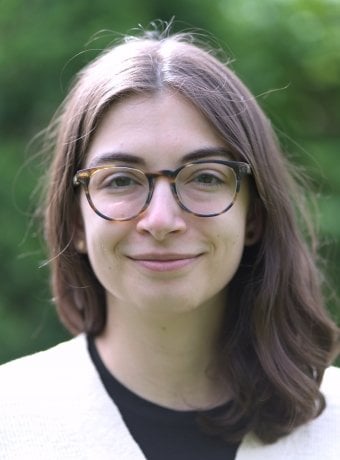
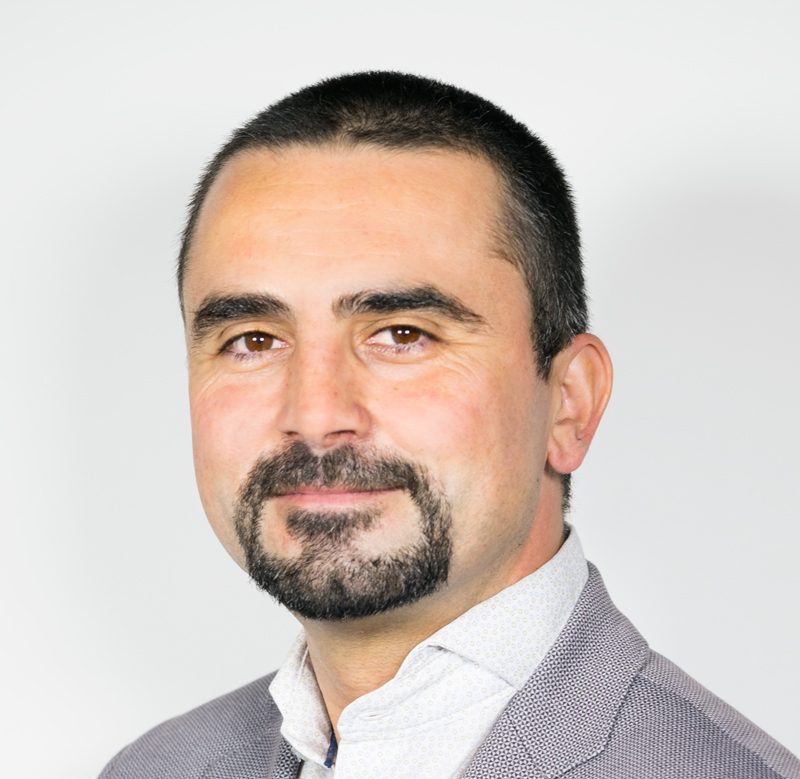
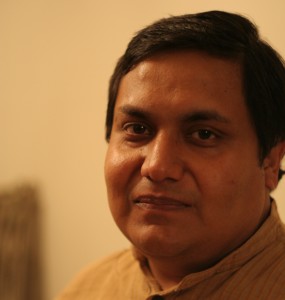
Alan Briones Delgado is a researcher at the La Salle School of Engineering , Universitat Ramon Llull , with a focus on Internet of Things , Cybersecurity , and Transport Protocols . His work spans projects funded by the European Commission and national grants, including EXCEL4HOUSING4.0 , WeB-Nimbus , and NG-SOC , addressing challenges in cloud computing education, ecological monitoring, and security operations. His research integrates Artificial Intelligence and Wireless Sensor Networks for sustainable solutions. Key research areas include Quality of Service in heterogeneous networks, Environmental Conservation via IoT, and Teaching and Learning strategies for Big Data. Projects like EcoSentinel and BTL-COP highlight his commitment to Environmental Monitoring and Community Policing applications. His collaborations extend to institutions in the UK , Albania , and Western Balkans . Contact: alan.briones@salle.url.edu
Magnus Westerlund is a Senior Lecturer in Information Technology and Director of the Laboratory for Trustworthy AI at Arcada University of Applied Sciences in Helsinki, Finland. His industry background spans telecom and information management, and he holds a doctoral degree in Information Systems from Åbo Akademi University. He actively contributes to the Z-Inspection® network, focusing on ethical AI implementation and governance. Westerlund’s research emphasizes trustworthy AI, cybersecurity, and distributed systems. Key areas include AI regulatory compliance (e.g., EU AI Act), healthcare AI applications, blockchain security, and IoT edge solutions. His work bridges academia and industry, such as the Valohai-CSC collaboration for machine learning infrastructure in Finnish academia. His publications highlight practical AI assessment methods, ethical AI integration, and decentralized technologies. Notable contributions include frameworks for sustainable AI development, privacy-preserving autonomous systems, and smart contract-based IoT security protocols. Westerlund also explores educational innovations, such as integrating large language models (LLMs) into coding education. His research consistently addresses real-world challenges like pandemic-era healthcare AI, edge computing for IoT, and cybersecurity in autonomous systems.
Roger Flage is a Professor of Risk Management at the University of Stavanger, affiliated with the Faculty of Science and Technology and the Department of Security, Economics and Planning. His research focuses on foundational and applied aspects of risk analysis, uncertainty quantification, and decision-making under uncertainty, with applications in critical infrastructure, environmental systems, and offshore energy. Roger Flage's research interests lie at the intersection of risk science, safety engineering, and decision theory. He investigates how uncertainty—especially epistemic uncertainty and assumptions—affects risk assessments, and advocates for more transparent and robust frameworks. His work spans theoretical advances, such as the treatment of 'black swan' events and the concept of 'real risk', as well as practical applications in offshore safety, power systems, and geohazards. He emphasizes the integration of data-driven methods, AI, and digital twins while critically assessing their limitations and associated security risks. His recent publications show a strong trend toward integrating dynamic, data-rich, and interdisciplinary approaches to risk analysis. Themes include the role of time in risk, AI applications, infrastructure interdependencies, and environmental risk in the oil and gas sector. He frequently publishes in top-tier journals like Risk Analysis , Reliability Engineering & System Safety , and Safety Science , often in collaboration with leading scholars such as Terje Aven and Seth Guikema. No scientific awards are mentioned in the provided text. Roger Flage has supervised or collaborated with several researchers, though no formal list of advisees is provided. His work is supported through academic collaborations and institutional affiliations rather than explicit grant mentions. He is actively involved in advancing risk science methodology, particularly in the treatment of assumptions and uncertainty, and contributes to both theoretical foundations and real-world applications in safety-critical domains. He is associated with research groups and collaborative networks at the University of Stavanger, particularly within the Department of Security, Economics and Planning. His work often involves interdisciplinary teams focusing on risk in complex engineered systems, including energy, transportation, and environmental systems.
Luciano Lavagno is a Full Professor at the Department of Electronics and Telecommunications, Polytechnic University of Turin, with over two decades of academic and research contributions. His work bridges hardware acceleration, low-power electronics, and intelligent system design. Research Focus: Hardware-accelerated machine learning, high-level synthesis (HLS) for FPGA/ASIC, heterogeneous CPU/GPU/FPGA platforms Key Projects: SPACE (predictable acceleration), REBECCA (secure AI acceleration), HPC-National Center (quantum computing), and oral history preservation via "Ti racconto una storia" initiative His recent publications analyze CNN inference optimization, subgraph isomorphism, and superword-level parallelism exploitation. Lavagno supervises multiple PhD students working on FPGA acceleration, neural network hardware, and embedded systems. As Principal Investigator for national and EU-funded projects (PRIN, JTI-ECSEL, PNRR), he drives advancements in sustainable computing infrastructure. His patented technologies include MIx&Latch timing methodology, capacitive sensing innovations, and 5G acceleration frameworks.
Anna Stuhlmacher is an Assistant Professor in the Department of Electrical and Computer Engineering at Michigan Technological University. Her research focuses on the optimization of uncertain distributed energy resources (DERs) and the coordination of the power grid with other critical infrastructure systems including water and agricultural networks. Dr. Stuhlmacher received her academic credentials from prestigious institutions: PhD in Electrical Engineering, University of Michigan MS in Electrical Engineering, University of Michigan BS in Electrical Engineering, Boston University Her research program addresses a critical challenge in modern energy infrastructure: how distributed generation, storage, and flexible loads can be optimized to provide grid flexibility while coordinating with other essential infrastructure systems. Dr. Stuhlmacher specializes in modeling and optimizing the inherent flexibility and uncertainty propagation between power systems and other infrastructure systems such as drinking water, wastewater treatment, and agricultural systems. This interdisciplinary approach is vital for improving grid reliability, particularly during periods of network stress, by increasing demand flexibility through coordinated management of multiple infrastructure systems. Dr. Stuhlmacher's publication record reveals a consistent progression from fundamental optimization techniques for water distribution networks to more complex systems involving wastewater treatment biogas and agrivoltaics. Her research demonstrates sophisticated application of advanced optimization methods including chance-constrained programming, robust optimization, and machine learning techniques like input convex neural networks to address uncertainty in coupled infrastructure systems. The majority of her work focuses on the water-power nexus, with recent expansion into agrivoltaics as renewable energy and food production compete for land resources. Her notable achievements include: Best paper award for the Electric Energy Systems Track, HICSS 2025 Dr. Stuhlmacher actively secures research funding as Principal Investigator on multiple significant grants including an NSF award focused on biogas from wastewater treatment, a PSERC award on flexible load dispatch (as Co-PI with Georgia Tech researchers), and a Michigan Tech Research Excellence Fund grant on agrivoltaics. While she indicates she is not actively seeking graduate students for the 2025-26 academic year, she remains open to working with exceptional students with strong foundations in power systems and mathematics. Her undergraduate teaching includes courses on Distributed Energy Resources, Electrical Energy Systems, and Power System Optimization, building on her previous teaching experience at the University of Michigan. Her research leverages Michigan Tech's DOE-designated Regional Test Center for Emerging Solar Technologies, particularly for her agrivoltaics research. She has established connections with national laboratories including NREL, where she interned during her PhD studies, and maintains active collaborations with researchers at institutions like Georgia Tech. Her work bridges theoretical optimization techniques with practical applications that have immediate relevance to utility companies and infrastructure operators.
Erin Bell is a Professor in the Department of Civil and Environmental Engineering at the University of New Hampshire . She holds a Ph.D. in Structural Engineering from Tufts University and has extensive experience in structural health monitoring, finite element modeling, and infrastructure sustainability. B.C.E., Georgia Institute of Technology M.S., Civil Engineering, Tufts University Ph.D., Structural Engineering, Tufts University Her research focuses on structural health monitoring, bridge condition assessment, and integrating AI techniques like artificial neural networks and deep reinforcement learning for infrastructure asset management. Recent work includes equitable maintenance strategies for aging bridges in flood-prone zones and tidal energy conversion for sustainable bridge monitoring systems. Key trends in her publications include the application of machine learning to structural analysis, finite element model calibration, and climate change adaptation in transportation infrastructure. She has led projects on deep reinforcement learning for bridge scour maintenance, modal-based uncertainty quantification, and multi-scale modeling of steel bridges. Grants and Collaborations : Erin Bell has secured funding from the National Science Foundation (NSF) , US Department of Energy (DOE) , and New Hampshire Department of Transportation . Notable projects include the Living Bridge initiative for tidal energy-powered smart infrastructure and statewide data exchange systems for bridge condition assessment.
Charbel Jose Chiappetta Jabbour is a Professeur Eminent and Head of the Systèmes d’Information, Supply Chain Management & aide à la Décision department at NEOMA Business School in France. He holds a Habilitation à diriger un doctorat from the University of São Paulo, Brazil. His research focuses on green and circular supply chains , Industry 4.0 , and sustainability integration in operations management. He has been included in Clarivate/Web of Science Highly Cited Researchers and received the British Academy of Management’s Best Paper Award (2019). Education & Career: Completed Habilitation at University of São Paulo (Brazil) International experience across Brazil, Japan, Scotland, England, and France Former Associate Editor of Journal of Cleaner Production Research Interests: His work bridges theory and practice in sustainable supply chain design, circular economy frameworks, and the human dimension of operations. He emphasizes integrating Industry 4.0 technologies with sustainability goals, and has pioneered studies on blockchain in supply chain digitalization. Grants & Projects: Principal Investigator/Co-Investigator on projects funded by Innovate UK, Midlands Engine UK, FAPESP Focus areas: Sustainable supply chain resilience, circular economy adoption Labs/Teams: Leads the Systèmes d’Information department and collaborates with global networks on sustainability initiatives.
Prof. Jörg Henkel serves as Professor and Head of the Chair for Embedded Systems (CES) at Karlsruhe Institute of Technology (KIT), Germany. Previously a Senior Research Staff Member at NEC Laboratories Princeton, he holds a PhD from Braunschweig University (Summa cum Laude) and directs major research initiatives including the DFG's SPP 1500 program on 'Dependable Embedded Systems'. Research Focus: His work centers on embedded systems dependability , low-power design , and adaptive computing architectures . Through the SPP 1500 program and TR89 Collaborative Research Center, he pioneers fault-tolerance techniques and runtime adaptation for safety-critical applications, addressing energy efficiency challenges in hardware/software co-design. Scientific Recognition: IEEE Fellow (for contributions to low-power dependable embedded systems) Multiple Best Paper Awards (DATE 2008, ICCAD 2009, Codes+ISSS 2011/2014/2015) DAC 2014 Designer Track Best Poster Award DATE 2013 Best IP Award Leadership & Service: As Editor-in-Chief of IEEE Design&Test Magazine and former ACM TECS EiC, he shapes scholarly discourse. He has chaired premier conferences (ICCAD 2012/2013, ESWeek 2016) and delivered 10+ keynotes on embedded systems reliability. His DFG-coordinated projects secure substantial funding for national collaborative research. Technical Infrastructure: Leads the Chair for Embedded Systems (CES) within KIT's Institute of Technical Informatics, driving innovation in hardware/software co-design and invasive computing through the TR89 consortium.
Ira Joseph is a Researcher at the Center on Global Energy Policy at Columbia University, where he focuses on global energy markets with particular expertise in natural gas and LNG sectors. With over 30 years of experience in the energy industry, his work bridges academic research and practical market analysis. Joseph's research interests span across Energy Markets , Natural Gas , LNG , Energy Policy , Fossil Fuels , and Global Energy Markets . His expertise particularly focuses on pricing mechanisms, market structure, and geopolitical influences on energy commodities. His research combines quantitative market analysis with geopolitical insights to understand how global events impact energy flows and pricing dynamics. His recent publications demonstrate a strong focus on the evolving dynamics of global gas markets, with particular attention to Qatar's LNG strategy, EU's potential role as a gas market regulator, and the implications of arbitration cases on LNG contracts. These works reflect current critical issues in energy transition, market volatility, and the tension between fossil fuel production and climate targets. Before joining Columbia, Joseph held significant leadership positions in the energy analytics industry. Until 2022, he served as global head of global generating fuels and electric power pricing at S&P Global Platts. Prior to that role, he was global head of Gas and Power Analytics at Platts. He joined S&P Global Platts during the acquisition of PIRA Energy Group in 2016, where he had founded the firm's European Gas and Power and Global LNG services in 1999. Earlier in his career, he worked at Energy Intelligence Group as editor in chief of World Gas Intelligence and authored key industry handbooks.
Timo Koivurova is a Research Professor at the Arctic Centre, University of Lapland. He holds visiting and adjunct professor roles at Kobe University (Japan), Riga Graduate School of Law, University of Eastern Finland, and University of Turku. His research focuses on Arctic law, international environmental law, and geopolitical dynamics in the Arctic region. He has authored over 465 publications and led 43 research projects, including major initiatives like the ICEBERG project on Arctic Ocean governance and the Co-CREATE project on solar radiation management. Key research interests include legal frameworks for indigenous peoples, climate change regulations, Arctic geopolitics, and China’s Arctic engagement. He has received awards such as the 2015 Honorable Mention for environmental policy analysis and the 2008 Nordenskiöld Stipend for Arctic legal research. Over 100 media contributions discussing Arctic policy and geopolitics. Active in 552 professional activities, including editorial roles and conference presentations. Principal Investigator for EU-funded projects like Arctic PASSION and MARCS. His work bridges legal scholarship with policy practice, addressing contemporary challenges like Arctic Council functionality post-2022 Ukraine invasion and sustainable development goals in the region.
Dr Elias Boukrami is an Associate Professor in Banking and Finance and Director (Content) of Business, Finance and Entrepreneurship at Regent’s University London. He specializes in post-Keynesian financial economics, focusing on demand-driven economic output and Business Models Innovation , particularly in financial services. As a leader in curriculum design, he integrated advanced financial technology, simulations, and experiential learning into Regent’s Finance programs. Education: PhD in Empirical Finance (Manchester Graduate Business School), MSc in Financial Services Management (University of Surrey), PGCHE (University of Westminster), BSc in Business and Finance (Ecole Supérieure de Commerce). His research spans Financial Technology , ESG Investment , and Ethical Finance , with over 30 publications including peer-reviewed journals, books, and conference papers. Recent work examines blockchain in Sukuk markets, dual financial systems regulation, and digital transformation in SMEs. He has supervised over 15 PhD theses and serves as Associate Editor for the Journal of Islamic Marketing . Scientific Awards: 2014 Trustees’ Prize for Outstanding Service to Regent’s University London 2018 Double Award: Excellence in Teaching and Learning & Leadership and Management Dr Boukrami acts as external examiner for institutions like Cranfield Business School and University of Bradford, and is a Visiting Professor at University of Lyon 3 IAE France. He has secured grants such as £14,750 from the Algerian Department of Higher Education for research on financial bubbles' impact on the global economy and holds professional affiliations including Fellow of the Higher Education Academy and Chartered Management Institute .
Mario Esteban is a Senior Fellow at the Elcano Royal Institute and Full Professor at the Autonomous University of Madrid, where he directs the Centre for East Asian Studies. His academic work spans EU-East Asia relations, China's domestic and foreign policy, and global governance dynamics. Education: Ph.D. in Political Science, Autonomous University of Madrid MSc in Asian Politics, School of Oriental and African Studies (University of London) His research focuses on international norm diffusion in China's Belt and Road Initiative, EU-China strategic trust, and global governance reforms amid US-China competition. Recent projects include analyses of China-Western aid norm interactions and climate cooperation fragmentation. Selected publications (2018–2025) reveal a trajectory in international relations theory, China's regional engagement, and EU diplomatic challenges. Key themes include normative convergence/divergence, Mediterranean geopolitics, and multilateral sanctions frameworks.
Amalia Miliou is a Professor in the Department of Informatics at Aristotle University of Thessaloniki, where she has served since 1993, progressing through the academic ranks from Lecturer to her current position as Professor since 2022. She holds a PhD in Electrical and Computer Engineering from the University of Florida (1991) with specialization in Optoelectronics, following an MSc in the same field (1988) and a Physics degree from Aristotle University (1985). Her research focuses on optical communications systems, with specific expertise in optoelectronic circuits simulation, optical switching, optical RAM development, converged fiber-wireless technology, 5G networks, and secure optical communications using chaos theory. Over her career, she has supervised numerous graduate students across these research areas, with thesis topics spanning optical memory systems, fiber-wireless integration, chaos-based secure communications, and advanced optical network architectures. Her recent publications (2021-2024) demonstrate a strong focus on next-generation optical networking solutions for 5G/6G applications, including fiber-wireless convergence, optical memory systems for high-speed networks, and innovative approaches to optical signal processing. Her work bridges fundamental photonics research with practical telecommunications applications, particularly in addressing the bandwidth and latency challenges of modern mobile networks. Professor Miliou has served as the Coordinator of the LLP-ERASMUS student exchange program at the Department of Informatics since 1997 and has held various administrative positions including membership in the University Senate and General Assembly. She has led and participated in numerous research projects, most recently focusing on technological improvements for 5G systems through optical-wireless network development (2019-2021), next-generation healthcare applications leveraging 6G networks (2023-2027), and photonic integrated circuits for random access memory (2012-2015).
Andrea Fumagalli is a Professor in the Department of Electrical Engineering at the Erik Jonsson School of Engineering and Computer Science , The University of Texas at Dallas. He earned his Ph.D. (1992) and Laurea (1987) in Electrical Engineering from Politecnico di Torino, Italy. Research Interests: All-Optical Network Architectures, Photonic Slot Routing, Wavelength Routing and Protection, Sensor Networks, Cooperative Wireless Networks, Network Optimization, Next Generation Internet (NGI), and Multi-hop Optical Networks. Education: Ph.D., Electrical Engineering, Politecnico di Torino (1992) Laurea, Electrical Engineering, Politecnico di Torino (1987) Key Research Trends: His recent publications focus on 5G networking, optical network automation, elastic optical networks, network reliability, and cross-layer optimization. He explores FPGA acceleration in 5G Low-PHY functions, live migration of containerized network components, and spectral fragmentation mitigation in EONs. Scientific Awards: Best Teaching Award, Electrical Engineering, UTD (2002) Best Thesis Award for Ph.D. Advisee Isabella Cerutti (2002) IEEE ComSoc Distinguished Lecturer Tour (2000) Best Paper Award (1999): 'An Optimal Design Algorithm for Photonic Slot Routing Networks Migrating to Optical Packet Switching' Advising and Grants: He advised Ph.D. student Isabella Cerutti. In 2001, he secured a $300,000 grant from FUNDACAO CPqD for optical network reliability research. He leads the Optical Networking Advanced Research (OpNeAR) Lab at UTD, collaborating on international projects like the Italian government-funded grid computing initiative (2002) and the OMEGA Test-bed for differentiated reliability. Laboratories and Teams: He directs the OpNeAR Lab , which develops tools for optical network emulation and reliability testing. His projects involve partnerships with institutions in Brazil (Unicamp), Sweden (KTH), Italy (Politecnico di Torino, Scuola Superiore Sant'Anna), and CNR/CNIT.
Anupam Joshi is the Acting Dean of the College of Information Technology and Engineering and Oros Family Professor of Computer Science and Electrical Engineering at the University of Maryland, Baltimore County (UMBC). He also directs UMBC’s Center for Cybersecurity and leads the National Cybersecurity FFRDC for the University System of Maryland. His research focuses on networked computing, AI-driven cybersecurity, privacy-preserving technologies, and policy-driven security frameworks. He holds a Ph.D. in Computer Science from Purdue University (1993), an M.S. (1991), and a B.Tech in Electrical Engineering from the Indian Institute of Technology, Delhi (1989). Dr. Joshi’s work spans over 400 publications with 32,650+ citations (h-index 92) and nine patents. His grants include funding from NSF, DARPA, NASA, NIST, and industry partners like IBM and Northrop Grumman. Key contributions include developing CAPD frameworks for IoT security, FABULA for automated threat intelligence, and KiNETGAN for intrusion detection through synthetic data. He is an IEEE Fellow and pioneer in applying AI to secure critical infrastructure, smart grids, and healthcare systems. His research trends emphasize AI-empowered cybersecurity, privacy compliance in data sharing (e.g., agriculture, healthcare), and mitigating attacks on smart systems. Notable projects include combating fake cybersecurity reports using provenance analysis, securing EV charging infrastructure, and enhancing smart farming resilience through policy-driven access control. Awards: IEEE Fellow Grants: Over $30M from NSF, DoD, NASA, and industry collaborations Labs/Teams: Director of UMBC Center for Cybersecurity, Cybersecurity Knowledge Graph initiatives Future work includes advancing neurosymbolic AI for cybersecurity, semantic data extraction from scientific literature, and AI ethics in healthcare applications.