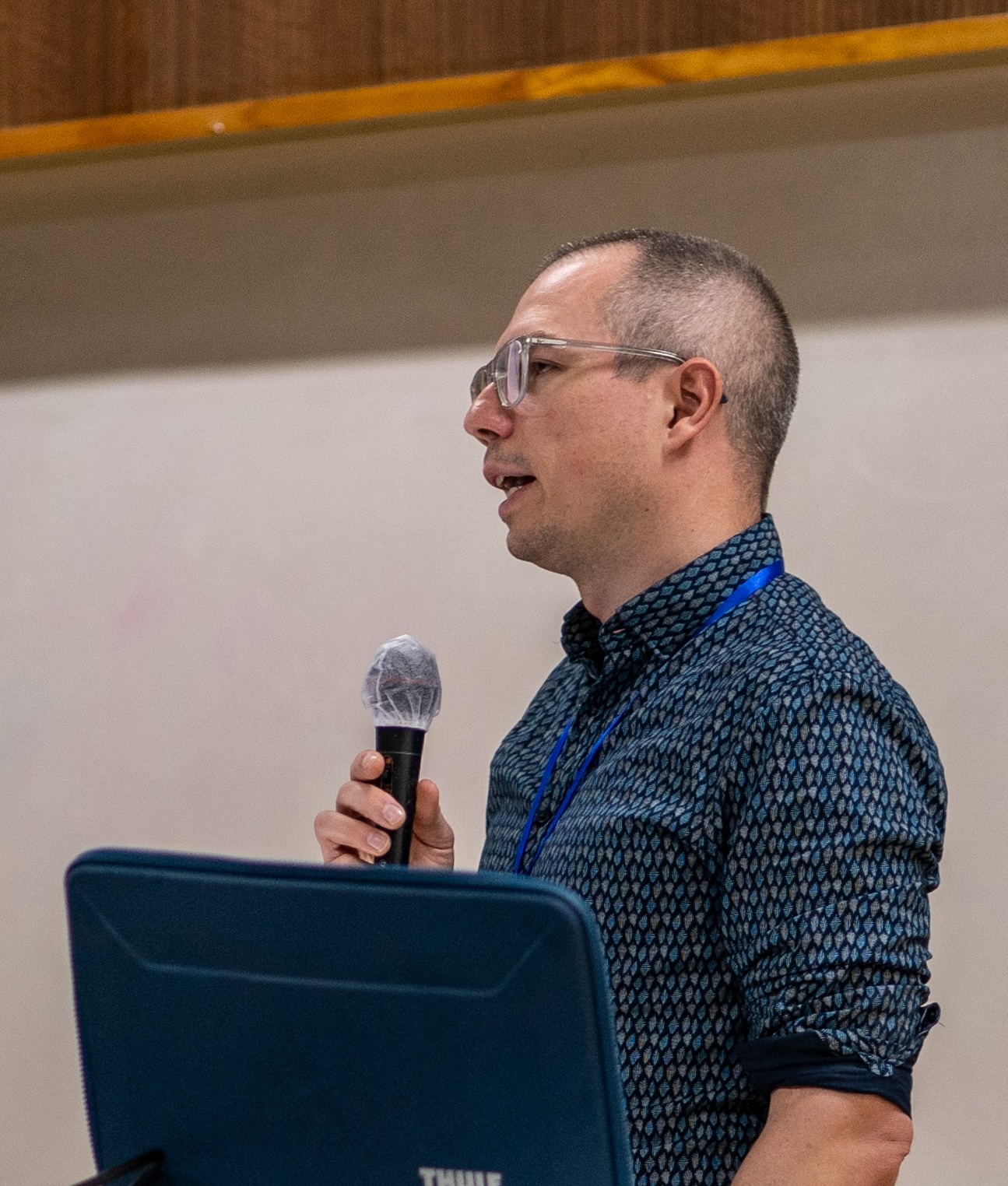
Dr Martin Elliott is a Senior Research Fellow at the Children's Social Care Research and Development Centre (CASCADE), Cardiff University, and holds roles as Research Development Adviser for Health and Care Research Wales and academic lead for the all-Wales ExChange programme. His work focuses on child welfare inequalities, poverty, secure accommodation, and services for disabled children. With 17 years in statutory children’s services, he transitioned to academia via a PhD analyzing looked-after children in Wales. He has secured £3.4M+ in research funding, including a major CASCADE partnership grant. Educated with a DipSW (1997), BA(Hons) Community Studies (1998), MSc Social Science Research Methods (2013), and PhD (2018), his expertise spans mixed-methods research. Awards include the ESWRA doctoral thesis award (2020) and BASW’s British Journal of Social Work prize (2021). His research explores socio-economic dimensions in social work practice, policy impacts, and system equity. Key grants include studies on child welfare interventions, kinship care, and secure accommodation outcomes. He leads projects analyzing Wales’ Flying Start program, workforce regulation impacts, and crisis mental health services. CASCADE collaborates internationally on child welfare systems, reflecting his strategic focus on translating research into policy. His work bridges academic inquiry with frontline practice, addressing systemic challenges in child protection and welfare delivery.
Profile Roles and Affiliations: Michael Smets is a Professor of Management at the Saïd Business School, University of Oxford. He is also a Research Fellow at Green Templeton College and a member of the Centre for Professional Service Firms. His academic contributions span institutional theory, practice theory, and strategic management. Education: Bachelor’s equivalent in Business and Economics, Cologne University, Germany MSc in Management Research, Saïd Business School DPhil in Management, Saïd Business School Postdoctoral Researcher at Saïd Business School and University of Alberta’s School of Management Research Interests: Michael’s work examines professional service firms (PSFs) through three core lenses: Global Operations: Internationalisation challenges in law, consulting, and reinsurance firms, with a focus on institutional complexity and regulatory systems. Innovation & Career Systems: How evolving career structures in PSFs can simultaneously drive innovation and address work-life balance demands. Recent studies highlight ambidextrous career paths and their strategic leverage. Methodological Innovation: Pioneering video- and team-ethnography to capture micro-level organisational practices. His ‘fly on the wall’ study at Lloyd’s of London is a landmark in this domain. Academic & Industry Impact: His research has been translated into industry-relevant outputs, including reports for the reinsurance sector and handbooks for legal firms. The 2013 ESRC Award for Outstanding Impact in Business recognises this translational work. Academically, he has received the 2012 Academy of Management Journal Best Article Award and multiple best paper awards. Teaching & Executive Education: Michael teaches strategic management, innovation, and business development in executive programmes for Commerzbank, Deloitte, and other global firms. He is Programme Director for the Oxford Leading Professional Service Firms Programme, emphasizing interactive, case-study driven pedagogy. His teaching philosophy prioritises critical thinking over rigid models, as he states: ‘It is critical to understand under which circumstances which models work, and which ones don’t.’ Labs & Collaborations: Affiliated with the Centre for Professional Service Firms and the Oxford Initiative on Rethinking Performance. He collaborates with institutions like Cass Business School and Aston Business School on ethnographic studies. His work also intersects with the Insurance Institute of London and the International Bar Association for practitioner-focused outputs.
Dr. Susana Castro-Kemp is an Associate Professor in Psychology and Human Development at University College London's Institute of Education (IOE), where she serves as Director of the Centre for Inclusive Education (CIE) since September 2023. Previously, she was a Reader in Education at the University of Roehampton for eight years. Her work focuses on inclusive education policy and practice globally, with particular expertise in special educational needs and disabilities (SEND), early childhood intervention, and mental health in schools. The IOE has been ranked number one in the world for Education for several consecutive years, providing an ideal environment for her impactful research. Dr. Castro-Kemp holds a PhD in Psychology jointly awarded in 2012 by the University of Porto (Portugal) and the University of North Carolina at Chapel Hill (USA). Her doctoral research was fully funded by the Foundation for Science and Technology/European Commission and the Global Education and Development Studies scholarships. She is a Chartered Psychologist with the British Psychological Society, a Senior Fellow of Advance HE, and a Recognised Research Supervisor by the UK Council for Graduate Education. Dr. Castro-Kemp's research centers on policy regulating education, health, and welfare services for children, particularly those with support needs. She examines inclusive education practices from users' perspectives, policy models leading to effective inclusive pedagogy, and country-level policy impacts on outcomes for children with special educational needs. Her work moves away from diagnostic labels toward engagement and civic participation as educational outcomes. She also investigates inclusion and early intervention in low- and middle-income countries, mental health in schools, and quality of early childhood education. Her recent publications reveal several key trends in inclusive education research. There's growing emphasis on understanding educational experiences through the voices of children and families rather than diagnostic labels. Much of her work examines the implementation gap between inclusive education policy and classroom practice. She has conducted significant research on how children with special educational needs experienced the pandemic, revealing both challenges and unexpected "silver linings" for some groups. Her corpus analysis of Ofsted reports shows narrow focus in early childhood education inspections, while her work on SEND policy increasingly takes an international comparative approach. Dr. Castro-Kemp has received recognition for her impactful work, including: Best Digital Humanities Project for Community Engagement Prize (2023) from the National Institute of Humanities and Social Sciences of South Africa for her project "Optimising collaborations and reducing inequalities of Early Childhood Intervention in post-Covid-19 South Africa" Dr. Castro-Kemp has secured approximately £1.3 million in research funding from various sources including ESRC, British Academy/Leverhulme Trust, European Commission, and private sponsors. Her current major project is 'ScopeSEND' (2024-2026), funded by the Nuffield Foundation (£250,000), examining international SEND policies. She has led numerous projects including "Transdisciplinary provision for children with disabilities in the Global South" (£3,500), "Optimising collaborations in South Africa" (£47,200), and "Froebel meets Ofsted" (£19,185). As a supervisor, she mentors MA/MSc and PhD students in education policy, early childhood, and inclusive education, having been nominated for student choice awards for excellent feedback and outstanding research supervision. As Director of the UCL Centre for Inclusive Education since 2023, Dr. Castro-Kemp leads a team focused on advancing knowledge exchange and research in inclusion and special needs. The Centre works with schools, educators, parents, and early years settings to translate research into practice. Her international collaborations include work with the World Health Organization as a technical advisor on the use of the International Classification of Functioning, Disability and Health (ICF) system in educational contexts. She also serves on the SEN Policy Research Forum and has provided oral evidence to the House of Commons Education Select Committee.
Dr Denitsa Dineva is a Senior Lecturer in Marketing and Strategy at Cardiff Business School , specializing in digital marketing , consumer behavior , and brand strategy . With a PhD in Digital Marketing from Aberystwyth University, she brings both academic expertise and practical experience from commercial and non-profit sector marketing roles. Her research focuses on the complexities of digital and social media , particularly examining uncivil consumer interactions , brand content moderation , and digital brand engagement . Denitsa employs mixed methods , social media text analysis , and experimental research to understand brand-consumer dynamics in digital spaces. 2025: Brand-to-brand social media engagement analysis 2025: Communication accommodation in brand communities 2025: Schadenfreude in service recovery 2024: Brand engagement typology 2023: Platform moderation strategies 2023: Brand advertising withdrawal cases She has received multiple accolades including the IAA Impact Award (2025) and SIM Conference Best Paper (2024), while also securing £133,878 in research funding across projects on digital marketing and public value initiatives. Denitsa teaches Digital Marketing modules at BSc, MSc, and executive education levels, and currently supervises PhD research related to online brand communities , social media content moderation , and consumer engagement dynamics . She serves as Senior Personal Tutor and External Examiner at multiple universities.
Professor Catherine Easton serves as Professor in Information Technology and Intellectual Property Law at Lancaster University's School of Law, with additional affiliations at Security Lancaster and the Centre for Law and Society. Her work bridges legal scholarship with practical technology implementation, focusing on digital inclusion and governance frameworks. Her research centers on internet governance, domain name regulation, intellectual property law, and accessibility for disabled users. She examines how legal frameworks interact with human-computer interaction systems, particularly in crisis response scenarios and educational technology. Her scholarship consistently addresses the tension between regulatory compliance and genuine digital inclusion, with special attention to the UN Convention on the Rights of Persons with Disabilities. Her recent publications reveal growing emphasis on autonomous systems regulation, particularly regarding disability access in driverless vehicles, and ethical frameworks for cloud-based disaster response. The scholarly trajectory shows evolution from foundational website accessibility analysis toward complex systems governance in emerging technologies. Higher Education Academy International Scholarship recipient MMU Promising Researcher Fellow (2011) Co-chair of UN Internet Governance Forum's Internet Rights and Principles Dynamic Coalition Treasurer of British and Irish Law, Education and Technology Association Guest editor for Web Journal of Current Legal Issues Disability Special Edition Professor Easton actively develops legal education technologies, having created interactive teaching resources for major textbooks and pioneered clicker technology applications in law classrooms. She leads initiatives like the National Law Student Forum and has presented extensively on MOOCs and legal pedagogy. Her Security Lancaster affiliation connects her work to broader research on information transparency and crisis response ethics, where she examines big data's implications for inclusion and human rights.
Stuart Reeves is an Associate Professor at the School of Computer Science, University of Nottingham, UK. He is a member of the Mixed Reality Lab, Horizon research institute, Centre for Doctoral Training (CDT), and Social Interaction and Technology (SIT) Special Interest Group. Reeves serves as an elected member of the University of Nottingham Senate with his term extending until 2026. His academic career spans over two decades with significant contributions to human-computer interaction, particularly focusing on social and collaborative technologies in real-world contexts. Reeves' research interests primarily focus on human-computer interaction, collaborative computing, design research, and the application of ethnomethodology and conversation analysis (EMCA) to technology studies. His work examines how people interact with diverse interactive devices and systems in real-world situations and places, with particular attention to public spaces, video gaming contexts, and collaborative work environments. Reeves has developed significant expertise in understanding spectatorship within interactive spaces and the 'work' involved in technological engagements. His publication record demonstrates consistent high-impact contributions to the field, with recent research focusing on robots and AI technologies in action, particularly examining how autonomous robots interact with humans in public streets. Reeves has received multiple prestigious awards including the HRI 2024 Best Paper Award for his work on public robot encounters and previous Best Paper Awards at CHI 2005 and CHI 2008. HRI 2024 Best Paper Award for 'Encountering autonomous robots on public streets' CHI 2015 Honourable Mention Award CHI 2008 Best Paper Award CHI 2005 Best Paper Award CHI 2012 Honourable Mention Award CHI 2020 Best Paper Award Reeves has secured substantial research funding including an EPSRC Early Career Fellowship, multiple EPSRC grants, and international collaborations. His teaching responsibilities include undergraduate and postgraduate supervision across various computer science modules, with a focus on sensor-based systems and software design principles. He maintains an active presence in the research community through publications, conference participation, and his Medium page where he shares insights on research methodology and practice.
Tara Reich is an Associate Professor in Organisational Behaviour and Human Resource Management at King's Business School, King's College London. She previously held positions at the London School of Economics (2011-2018) and the University of Surrey (2018-2019). Her research focuses on workplace relationships, particularly the psychological impacts of workplace mistreatment and observer reactions to such behaviors. She teaches core modules on the Human Resource Management & Organizational Analysis MSc and an elective on the Business Management BSc. Education: PhD in Organizational Behaviour, University of Manitoba, Canada (2011) Research Interests: Workplace mistreatment mechanisms and consequences Observer perspectives on workplace deviance Employee well-being and psychological safety Work-family interface dynamics Publications Trends: Her work consistently examines how workplace aggression, incivility, and harassment affect observers and targets, with notable contributions to understanding observer reactions to counterproductive work behavior. Recent studies explore ethical leadership's role in shaping moral identity and workplace ostracism dynamics. Advising & Grants: Currently accepting PhD students in organizational behavior and HRM. Active in securing research grants focused on workplace mistreatment and organizational psychology.
Roles and Affiliations: Davina Cooper is a Research Professor in Law & Political Theory at the Dickson Poon School of Law, King's College London. She leads the Leverhulme Major Research Fellowship on 'Gender and the Conceptual Imagination' and previously directed the ESRC-funded Future of Legal Gender project. She is a Fellow of the British Academy and Academy of Social Sciences. Education: Her academic background is rooted in legal and political theory, with a focus on conceptual innovation and transformative governance. She has held roles at Keele University and Westminster University, including Research Dean for Social Sciences at Keele (2000-2003). Research Interests: Conceptual innovation in law and politics Gender equality and legal reform Prefigurative law and municipal activism State and non-state governance models Her work bridges legal theory, political philosophy, and feminist activism, emphasizing the interplay between conceptual frameworks and transformative social change. Articles Trends: Her recent publications explore decertification of legal gender, prefigurative law strategies, and intersections of religion and disability in equality law. Themes include conceptual activism, institutional reform, and feminist methodologies. Awards: Fellow of the British Academy (2021) Fellow of the Academy of Social Sciences Grants & Advising: She led the £1.8M ESRC Future of Legal Gender project (2018-2022) and secured a Leverhulme Fellowship (2022-2024). She advises parliamentary committees and accepts PhD students in law and political theory. Labs & Teams: Co-founder of the interdisciplinary Routledge Social Justice book series and collaborator on municipal governance initiatives, including projects on BDS activism and gender policy.
Holly Branigan is a Professor of Psychology of Language and Cognition at the University of Edinburgh, affiliated with the School of Philosophy, Psychology and Language Sciences. Her research focuses on language production, dialogue, child language development, and bilingualism. She holds a Personal Chair and has led numerous grants including projects on conversational alignment in children with autism, language experience effects on development, and syntactic priming in dialogue. Her teaching includes undergraduate courses on Psychology of Language and postgraduate modules on Dialogue. She supervises PhD students in topics like syntactic processing, bilingualism, and interactional linguistics. Branigan has secured over £10M in research funding from bodies like the ESRC and EU, leading projects such as 'How does language experience support language development?' (2018–2023) and 'AThEME: Advancing European Multilingual Experience' (2014–2019). Her work explores how speakers adapt language based on social context, interlocutor traits, and cognitive factors. Key achievements include a 7-year ESRC fellowship (1999–2006), and recognition for contributions to understanding syntactic processing mechanisms. She currently leads research on child language imitation in social contexts and bilingual syntactic representation.
Professor Nicholas Pleace is a Professor of Housing and Society and Associate Dean of School for Research and Impact at the University of York's School for Business and Society. He holds a BA in Politics (Portsmouth Polytechnic) and an MA in Public Policy (University of Manchester). His research focuses on homelessness, housing exclusion, and their intersections with climate justice and urban sustainability. He leads the Centre for Housing Policy and serves on the European Observatory on Homelessness, FEANTSA, and editorial boards of journals like the European Journal of Homelessness . His work emphasizes interdisciplinary, mixed-method approaches to policy evaluation and international comparisons. Recent projects include Housing First strategies, EU homelessness policy analysis, and the INGENIOUS air quality initiative. He has advised on homelessness prevention, veterans' housing, and sustainable communities. Research interests span homelessness prevention, spatial inequalities, and climate justice. Key contributions include evaluating Housing First programs, fuel poverty impacts, and marginalized populations' needs. He collaborates globally on policy frameworks and advocates for systemic solutions to housing crises.
Peter Allen is a Professor of Optometry and Visual Science at Anglia Ruskin University, affiliated with the Vision and Eye Research Institute and directing the Vision and Hearing Sciences Research Group . His expertise spans refractive error development , vision in sports , visual stress , and physical activity’s impact on wellbeing . He collaborates internationally (UK, Australia, Netherlands, US, Germany) and serves as an assessor for the College of Optometrists . Education : PhD in Optometry (Anglia Ruskin University), BSc (Hons) in Ophthalmic Optics (City University) Research interests include myopia progression , visual function in specialist populations , tinnitus therapy , and Paralympic sports classification . Recent publications focus on myopia management , digital interventions for tinnitus , and vision-related athletic performance . Awards include the Neil Charman Medal (2013), a landmark optical research honor. Allen supervises postgraduate projects on topics like sport-specific vision classification and color optimization in cricket , with active recruitment in vision loss and depression . He has secured grants from organizations including NIHR-EME (£1.25M+) for myopia research and Agitos Foundation for Paralympic classification studies .
Professor James A. Sweeney is a faculty member at Lancaster University Law School since 2013, specializing in the aftermath of conflict and authoritarianism with primary focus on human rights, transitional justice, and refugee rights. His internationally recognized work includes expert advisory roles for the Council of Europe, UK Foreign Office, and United Nations, delivering human rights training to judicial bodies across Ukraine, Kosovo, and the former Yugoslavia. His research interests center on international and European human rights law , international refugee law , and transitional justice , with significant contributions to understanding the 'right to truth' in historical atrocities and media's role in shaping historical records during transitions. His scholarship critically examines credibility assessments in asylum claims and legal protections for failed asylum seekers, influencing jurisprudence at the UK's highest courts. Analysis of his recent publications (2025-2012) reveals persistent engagement with European Court of Human Rights jurisprudence in post-Cold War contexts, transitional justice mechanisms, and refugee rights. His work demonstrates consistent thematic focus on legal coherence during societal transitions, historical accountability, and the interplay between media narratives and truth-seeking processes in post-conflict societies. Prof. Sweeney actively supervises PhD candidates including Amelia Susserott and Andrew Walker, and has secured significant research funding such as British Academy grants for Kosovo-related media studies. His current projects include 'Strengthening European integration through the analysis of conflict discourses: revisiting the past, anticipating the future' (RePAST) and 'The Incoherence of Human Rights'. He maintains active affiliations with Lancaster's Centre for International Law and Human Rights (CILHR) and Security Lancaster, contributing to interdisciplinary research on policy, law, ethics, and sociological dimensions of security.
Dr. David Smith is a Reader in the School of Allied Health and Social Care at Anglia Ruskin University, specializing in social and health inequalities, with particular expertise in Gypsy, Roma and Traveller (GRT) communities. His work focuses on understanding social divisions, health beliefs and practices, and the internationalization of the healthcare workforce, especially concerning Filipino nurses migrating to the UK. Education: Post Graduate Certificate in Learning and Teaching (Higher Education), Canterbury Christ Church University, 2010, 2:1 PhD Social Policy, Royal Holloway College, University of London, 2003 BA (Hons) Sociology and Social Policy, Royal Holloway College, 1996, 1st class Certificate in TESOL, Trinity College London, 1996, 2:1 Dr. Smith's research interests span social theory, social and health inequalities, and the experiences of marginalized communities, with a particular focus on Gypsies, Roma and Travellers. His work examines health beliefs and practices, neighborhood dynamics, and the internationalization of the healthcare workforce, particularly focusing on the Philippines. He has extensive expertise in community-based research with working-class communities and GRT populations, especially regarding housing settlement impacts. His research often employs qualitative and ethnographic methods alongside participatory approaches to health development. Dr. Smith's recent publications reveal a strong focus on health inequalities among marginalized populations, particularly Gypsy, Roma and Traveller communities in the UK. His work consistently addresses structural barriers to healthcare access, cultural factors affecting health beliefs and practices, and the experiences of migrant healthcare workers. There's a clear progression from his early work on social exclusion and housing to more recent studies on international nurse migration and end-of-life care for minority communities. His research demonstrates interdisciplinary approaches, bridging sociology, public health, migration studies, and social policy. Scientific Awards: 2006 Social Policy Association Prize for Best New Publication (for "On the Margins of Inclusion") 2018 Emerald Literati Award for Outstanding Paper (with Dr. Zoe James) 2018 Sam Aaronovitch Memorial Prize for Winning Paper Dr. Smith has successfully secured numerous research grants totaling over £300,000 as Principal Investigator or Co-Investigator. His funding comes from diverse sources including the British Academy/Leverhulme Trust, EU Fundamental Rights Agency, Health Education England, and various university internal funds. Current projects include investigating national legislation regarding Gypsy/Traveller accommodation (2024-2026), studying UK/Philippines Migrant Nurse networks, and examining older EU migrants' access to health services post-Brexit. He supervises PhD and Master's students, particularly those researching GRT communities, working-class studies, migration, and qualitative research methods. Dr. Smith actively participates in several research networks and communities, including the European Academic Network on Romani Studies, the Working Class Studies Association, and the Network of Academic Institutions in Romani Studies where he serves as Institutional Representative. He is also Editorial Board Member of Romani Studies and Advisory Board Member of The Traveller Movement. His work extends beyond academia through his role as Trustee of Medway Plus, a registered charity.
Professor Jessica Jacobson is a leading criminologist at Birkbeck, University of London's Institute for Crime & Justice Policy Research (ICPR), where she served as Director from 2013-2024. Holding a PhD from the London School of Economics, her career spans criminal justice research from Home Office positions to independent consultancy before joining ICPR in 2011. BA (Hons) Sociology, Trinity College Dublin (1991) PhD Sociology, London School of Economics (1996) Her research focuses on prisons, sentencing, coroners' investigations, and lay participation in judicial proceedings . Employing primarily qualitative methodologies including interviews and observations, her work bridges academic rigor with practical policy impact. Recent projects examine bereaved families' experiences in coronial inquests (Voicing Loss study), problem-solving practices in youth courts, and digital evidence in fraud investigations. Her research consistently emphasizes procedural justice and victim-centered legal processes. Analysis of her recent publications reveals a sustained focus on access to justice for vulnerable populations , with increasing attention to digital-era challenges like online fraud. Her work demonstrates strong interdisciplinary connections between criminology, legal studies, and sociology, often employing comparative frameworks across jurisdictions. As Principal Investigator for major ESRC and Nuffield Foundation projects including the £780,756 Voicing Loss study, she has secured over £1.5 million in research funding. Her supervision includes doctoral researchers like Gillian Hunter (current) and Shailesh Kumar (awarded 2023). Based at ICPR, she collaborates with organizations including the Centre for Death & Society (University of Bath), Victim Support, and the Centre for Justice Innovation. Her research directly informs policy through briefings for the Ministry of Justice and UK Justice Committee.
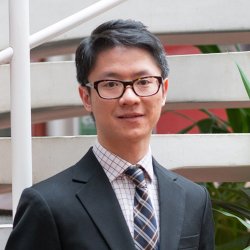
Jason Chen is an Associate Professor in Tourism and Events Management at the University of Surrey, serving as Director of Postgraduate Research in the School of Hospitality and Tourism Management. He holds a PhD in Tourism Management from The Hong Kong Polytechnic University, alongside earlier degrees in Economics (BA, 2004) and Economics and Statistics (MSc, 2007). His research focuses on tourism economics, tourist behavior, demand forecasting, and quantitative methods. Notable projects include 'Understanding the Landscape of Inbound Tourism Measurement' and collaborations with organizations on tourism impact assessments. He has secured grants, including an ESRC grant for the School, and advises on postgraduate research programs. Teaching responsibilities include modules in International Tourism Management, Consumer Behavior, and Researcher Development. His recent publications emphasize spatiotemporal models, crisis management in tourism, and pro-environmental behavior interventions. He has contributed to policy-relevant studies on tourism's economic role and sustainability challenges. Key research themes include destination resilience, electric vehicle adoption, and behavioral nudging for sustainability. His work bridges academic theory with practical applications, supporting industry and policy stakeholders.