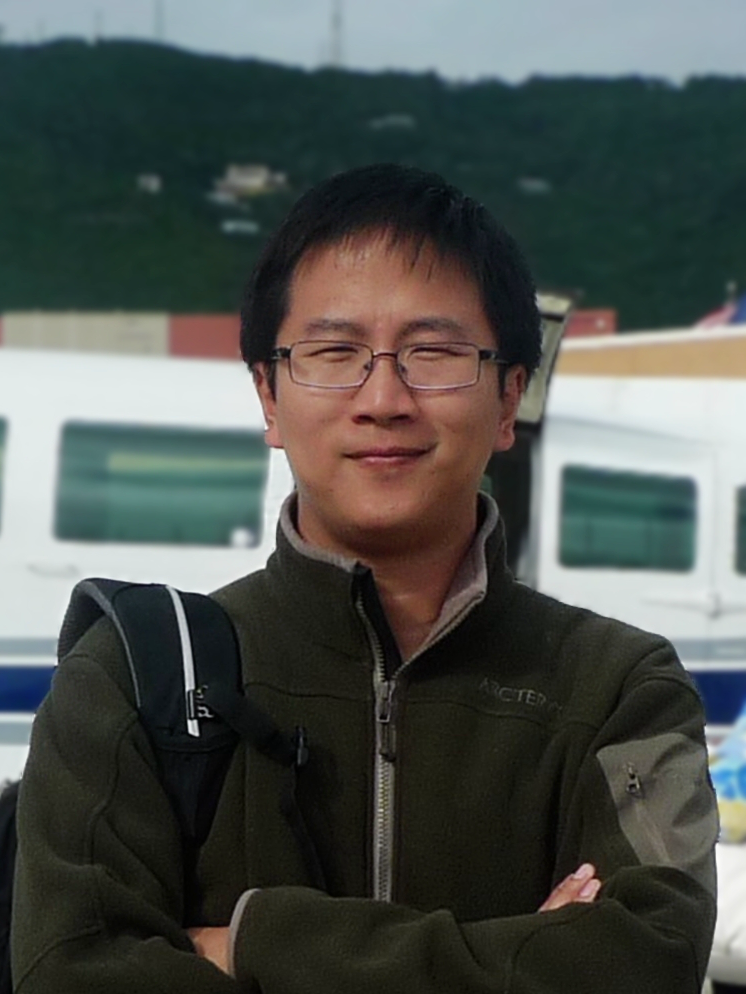
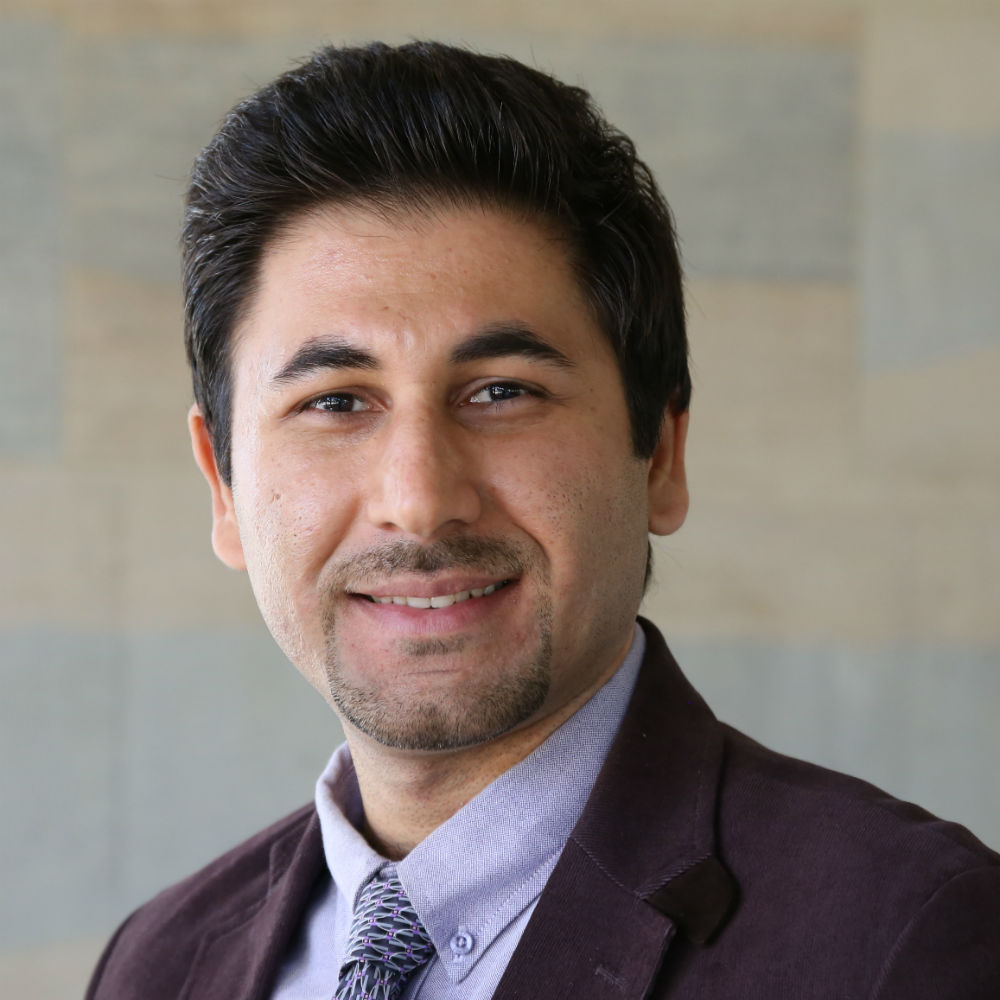
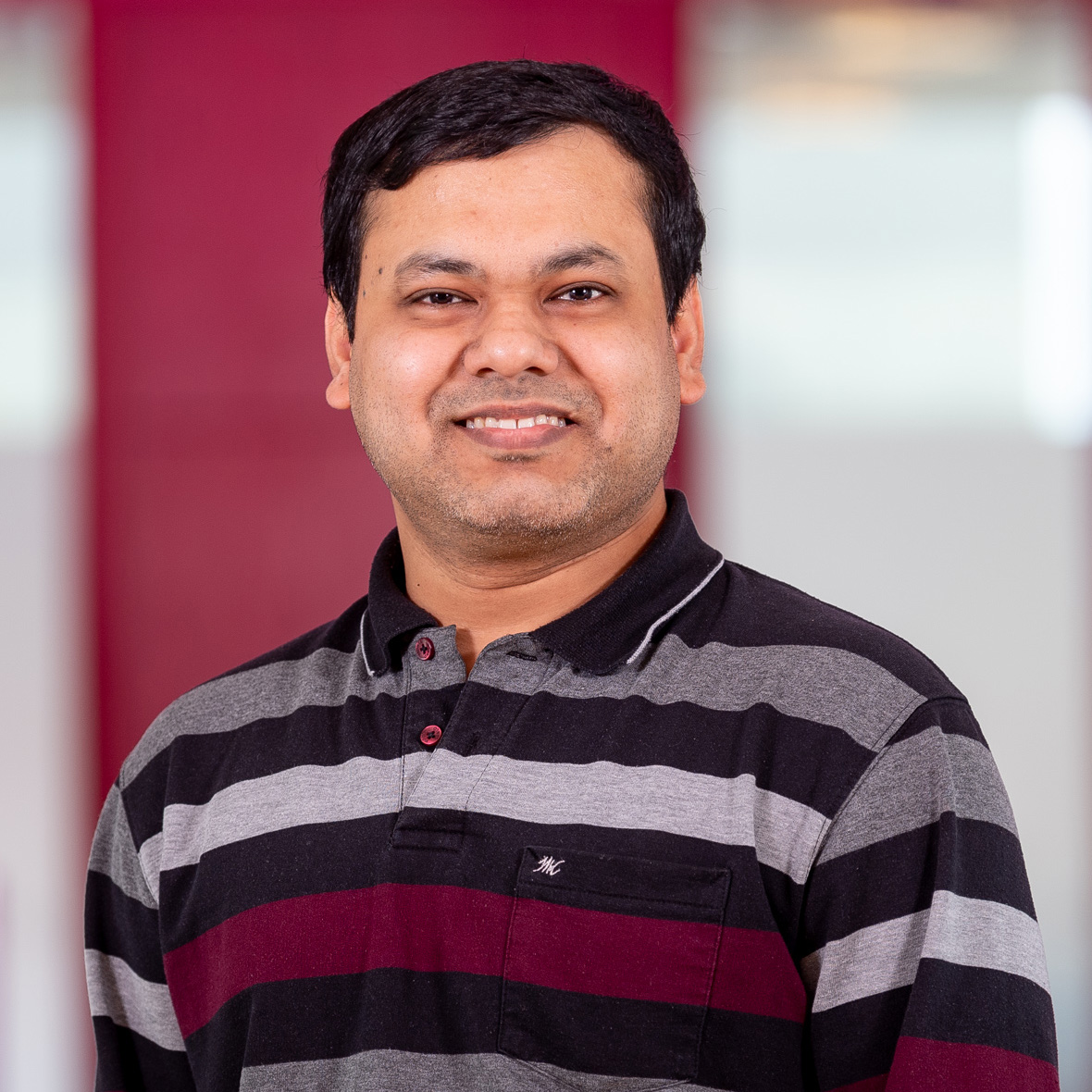
Bo Luo is a Professor in the Department of Electrical Engineering and Computer Science at the University of Kansas . He serves as Director of the High Assurance and Secure Systems (HASS) Research Center within the Institute for Information Sciences (I2S) , a National Center of Academic Excellence in Cyber Defense and Research by the National Security Agency. Education: Ph.D. in Information Sciences and Technology, Pennsylvania State University (2008) M.Phil. in Information Engineering, Chinese University of Hong Kong (2003) B.E. in Electronic and Information Engineering, University of Science and Technology of China (2001) His research focuses on security and privacy at the intersection of data science, AI/ML, IoT/CPS, and network security . Current projects include adversarial machine learning, privacy compliance in smart devices, and hardware-enabled security solutions. He leads the InfoSec Research Group , mentoring students in areas like IoT security, deep learning vulnerabilities, and cryptographic systems. Recent article trends highlight IoT device vulnerabilities (2025), privacy compliance in automotive apps (2024), adversarial AI-art detection (2024), and secure computation frameworks (2024). His work appears in top venues like ACM CCS , USENIX Security , and IEEE TDSC . Scientific Recognition: ACSAC 2021 Distinguished Paper Award ACSAC 2017 Best Paper Award CCS 2022 Best Paper Honorable Mention ICPC 2024 Distinguished Paper As Principal Investigator for the Jayhawk SFS CyberCorps Scholarship , he trains future cybersecurity professionals. His lab collaborates on cyber-physical security and AI safety , with alumni placed at institutions like Beloit College, Apple, and Amazon.
Ja-Ling Wu is a distinguished Professor in the Department of Electrical Engineering at National Taiwan University's College of Electrical Engineering and Computer Science. With an extensive publication record spanning over four decades (1984-2025), Professor Wu has established himself as a leading researcher in multimedia systems, image processing, and security technologies. His academic career demonstrates consistent productivity with 255 indexed publications showing no signs of slowing down, with numerous papers published in 2024 and 2025. Professor Wu's research interests center on image compression, cryptography, privacy-preserving systems, and machine learning applications. His work bridges theoretical foundations with practical implementations, particularly in multimedia security and efficient data representation. Over his career, he has developed innovative approaches to image and video coding, data hiding techniques, and secure computation methods that have influenced both academic research and industry applications. Analysis of his recent publications (2023-2025) reveals a strategic evolution of his research toward contemporary challenges in AI security, with increasing focus on learned image compression, privacy-preserving machine learning, and the integration of cryptographic techniques with deep learning systems. His work demonstrates a consistent ability to adapt to emerging technological landscapes while maintaining core expertise in multimedia processing. Professor Wu has mentored numerous students who have become active researchers in their own right, with many continuing to collaborate with him on cutting-edge projects. His leadership in the field is evident through his sustained publication output across top venues including IEEE Transactions, ACM Multimedia, and specialized cryptography conferences.
Massimiliano Sala is a Full Professor at the Department of Mathematics of the University of Trento. His expertise spans Algebra, Algebraic Coding Theory, Boolean Algebras, Cryptography, and Computational Algebra. He specializes in cryptographic protocols, post-quantum security, and elliptic curve cryptography. His recent work includes advancements in blockchain-agnostic multi-signature schemes, searchable encryption, and elliptic curve group structures. Research Focus: Dr. Sala's research integrates mathematical foundations with applied cryptography, emphasizing secure communication protocols, cryptographic algorithm design, and blockchain technologies. He has contributed to the analysis of Boolean functions, APN permutations, and secure multi-party computation. Recent Contributions: His 2024 publications address topics like cubic Boolean functions, blockchain-agnostic asset management, and randomized searchable encryption. He also explores post-quantum cryptographic frameworks and elliptic curve-based security mechanisms. Awards & Recognition: None explicitly listed in the provided materials. Teaching & Academic Leadership: Teaches Algebraic Cryptography at the Master's level, focusing on public-key systems and post-quantum cryptography. His academic contributions include editorial work for cryptographic journals and conference proceedings.
Dr Hossein Anisi is a Reader (equivalent to Associate Professor) and Head of the Internet of Everything (IoE) Laboratory in the School of Computer Science and Electronic Engineering at the University of Essex, UK. Recognised as the university’s Best Academic 2023 and recipient of the Best Research Impact in Enterprise and Innovation 2023 , he drives interdisciplinary research that bridges IoT, cybersecurity, energy-efficient communications and real-world applications spanning agriculture, transport and healthcare. Education & Career Path Reader (permanent faculty), University of Essex, UK (current) Senior Research Associate, University of East Anglia, UK Senior Lecturer, University of Malaya, Malaysia — awarded Excellent Service Award Research Interests Dr Anisi’s work centres on secure, resilient and energy-efficient architectures for the Internet of Things . His group designs smart sensors, UAVs, edge-cloud frameworks and AI-driven protocols for: Smart agriculture & environmental monitoring Intelligent transportation & autonomous vehicles Healthcare IoT & body-area networks 5G/6G networks & cyber-physical security Publications & Scholarly Impact With over 150 peer-reviewed articles in top-tier IEEE journals, his recent output (2023-2025) demonstrates a clear trajectory toward AI-enhanced security , 6G URLLC , post-quantum federated learning and precision agriculture . Editorial roles include Associate Editor for IEEE Transactions on Cybernetics , IEEE Transactions on Intelligent Transportation Systems and several other flagship periodicals. Scientific Awards & Recognition Best Academic 2023 – University of Essex KTP Celebration of Innovation Best Research Impact in Enterprise & Innovation 2023 – University of Essex Celebrating Excellence Awards Excellent Service Award – University of Malaya Medals for innovation at international expositions Funding & Enterprise As Principal or Co-Investigator, Dr Anisi has secured numerous Innovate UK, Royal Society and institutional grants exceeding £1 million since 2018, translating research into commercial IoT and AI systems for retail, horticulture and smart-building sectors. Teaching & Doctoral Supervision He currently teaches Mathematics for Computing and Team Project Challenge , and supervises three ongoing PhD students—Shafiq Ahmed, Aryan Morteza and Hassan Moin—while having recently graduated Han Yang, Kabo Elliot Pule and Sumit Kumar Singh. Laboratory & Collaboration: Dr Anisi directs the Internet of Everything (IoE) Laboratory , fostering industry partnerships across the UK and maintaining active memberships in IEEE, ACM, the Royal Society and the Higher Education Academy.
Anamaria Costache is an Associate Professor at the Norwegian University of Science and Technology (NTNU) in the Department of Information Security and Communication Technology. Previously, she held roles including a postdoc at Royal Holloway, University of London (RHUL), a Research Scientist at Intel AI Research, and a part-time position at Intel. She earned her PhD from the University of Bristol and undergraduate/master's degrees from the University of Warwick, focusing on number theory and algebraic structures like Brauer Groups. Her research interests center on fully homomorphic encryption (FHE), privacy-preserving machine learning, lattice-based cryptography, and post-quantum security protocols. Her work is supported by Intel, addressing challenges in secure computation on encrypted data. She has authored numerous publications in top venues like CRYPTO, PKC, and IEEE conferences, focusing on FHE optimizations, biometric systems, and cryptographic security analyses. Teaching includes courses on applied cryptography, network security, and quantum-safe encryption at NTNU. She co-chairs NIKT 2019 and the WAHC workshops (2022–2024), and serves on editorial boards for journals like IACR Communications in Cryptology. She actively participates in program committees for conferences such as MathCrypt and FHE.org. Professional service includes the Lattigo Advisory Committee and contributions to the Bristol Crypto Blog. Her current projects emphasize verifiable computation over encrypted data and resilient authentication mechanisms in biometric systems.
Professor Raylin Tso is a distinguished faculty member at National Chengchi University (NCCU), serving as a Professor in the Department of Computer Science within the College of Informatics. He also holds significant administrative positions including Vice Dean of the College of Informatics and Director of the Information Security Center. With extensive research experience spanning over two decades, Professor Tso has established himself as a leading expert in cryptography and information security. Professor, Department of Computer Science, NCCU (2020-present) Vice Dean, College of Informatics, NCCU (2024-2026) Director, Information Security Center, NCCU (2023-present) Director, Master Program in Information Security, NCCU (2023-present) Professor Tso earned his PhD in Systems and Information Engineering from the University of Tsukuba, Japan (2004-2006), following two master's degrees from the same institution in Systems Engineering (2002-2004) and Business Administration (2000-2002). He completed his undergraduate studies in Industrial Engineering at National Tsing Hua University, Taiwan (1991-1995). Professor Tso's research focuses on advanced cryptographic systems with particular emphasis on post-quantum cryptography, blockchain security, and privacy-preserving technologies. His work spans theoretical foundations of cryptographic protocols to practical implementations in real-world systems. Recent research has increasingly concentrated on quantum-resistant cryptographic schemes, secure multi-party computation, and applications of cryptography in emerging technologies like IoT and smart contracts. His research group actively explores the intersection of traditional cryptographic techniques with modern computing paradigms, addressing security challenges in cloud computing, distributed systems, and digital identity management. Analysis of Professor Tso's recent publications reveals a strong trajectory toward post-quantum cryptography and privacy-enhancing technologies. His work demonstrates increasing sophistication in addressing quantum computing threats to traditional cryptographic systems while maintaining practical efficiency. A significant portion of his recent research focuses on identity-based encryption systems, searchable encryption techniques, and secure protocols for distributed environments. The interdisciplinary nature of his work is evident in applications spanning financial technology, healthcare data security, and vehicular networks. Distinguished Professor, National Chengchi University (2022, 2024) MOST Research Award (2020-2023) Best Journal Paper Award, Algorithms and Computational Theory Society (2017) Outstanding Researcher, Korea Information Processing Society Senior Excellent Teacher Award (10 years), National Chengchi University Professor Tso has successfully mentored numerous graduate students, including PhD candidate Zi-Yuan Liu who frequently appears as a co-author on recent publications. He has secured substantial research funding from Taiwan's National Science and Technology Council (NSTC), formerly known as MOST, with multiple ongoing projects focused on next-generation cryptography, blockchain security, and privacy-enhancing technologies. His current research portfolio includes several multi-year projects totaling millions in funding, with particular emphasis on post-quantum cryptography migration, secure digital identity systems, and quantum-resistant blockchain technologies. Professor Tso leads the Information Security Center at NCCU and is actively involved with multiple research laboratories including the Blockchain Payment Network Research Lab and the Quantum Security Research Group. His team collaborates extensively with industry partners including Chunghwa Telecom Research Institute and the Financial Information Corporation, bridging academic research with practical security applications. The research group maintains strong international collaborations with institutions in Japan, South Korea, and the United States, contributing to the global advancement of cryptographic research.
Shucheng Yu is an Associate Professor in the Department of Electrical and Computer Engineering at Stevens Institute of Technology's Charles V. Schaefer, Jr. School of Engineering and Science. He holds a PhD in Electrical and Computer Engineering from Worcester Polytechnic Institute (2010). His research spans information security, applied cryptography, wireless networking, distributed trust, and machine learning, with a focus on practical IoT privacy. Recent work explores federated learning security, adversarial robustness, and encrypted geospatial search. He directs the AISecLab research cluster and is a Fellow of IEEE and AAIA. Awards include the IEEE INFOCOM 2020 Test of Time Paper Award and the Stevens Outstanding Teaching Award (2019).
Jinyuan Sun is an Associate Professor in the Min H. Kao Department of Electrical Engineering and Computer Science at the University of Tennessee, Knoxville. She joined the faculty in 2010 as an Assistant Professor and has since specialized in network and system security, wireless communications, and mobile computing. Her work emphasizes securing critical infrastructure like smart grids and cyber-physical systems against adversarial attacks and ensuring privacy in data communications. Education: She holds a BSc in Computer Information Systems from Beijing Information Technology Institute (2003), an MASc in Computer Networks from Ryerson University, Canada (2005), and a PhD in Electrical and Computer Engineering from the University of Florida (2010). Before academia, she worked as a Network Test Developer at RuggedCom Inc., Canada (2005–2006). Research Interests : Her research focuses on security and privacy in wired/wireless networks, including adversarial machine learning for cyber-physical systems, secure authentication systems leveraging user behavior, and privacy-preserving mechanisms for smart grids. She explores vulnerabilities in energy markets, deep learning-based fraud detection, and resilient communication protocols. Publications: Her recent work spans topics like constrained adversarial machine learning, secure encryption schemes for smart grids, and dynamic privilege control in authentication systems. These contributions highlight her expertise in bridging theoretical cybersecurity with practical applications in critical infrastructure. Advising & Grants: She actively seeks self-motivated PhD students to advance research in network security and mobile computing. While specific grants are not listed here, her work reflects sustained engagement with funded research initiatives in cybersecurity and smart systems.
Dr. Xiaojun Wang is an Associate Professor at the School of Electronic Engineering, Dublin City University (DCU). He holds a BEng and MEng from Beijing University of Posts and Telecommunications (BUPT) and a PhD from Staffordshire University (UK). His research focuses on energy-efficient networking, hardware acceleration for packet classification/deep inspection, and cryptography algorithms. He has been instrumental in establishing China-Ireland academic collaborations, including the China-Ireland International Conference on Information and Communications Technologies (CIICT), and coordinated a successful joint Telecommunications Engineering program with Wuhan University (2006–2012). He is also a member of DCU's Entwine Research Centre. Key roles include Head of China Affairs at DCU (2002–2007), contributing to institutional partnerships. His technical work spans green energy solutions for networks, quantum computing protocols, and hardware-software co-design for cryptographic systems. He has led projects on edge computing security, vehicular communication optimization, and blockchain-based trust frameworks. Educations: BEng in Computer & Communications, BUPT (1984) MEng in Computer Applications, BUPT (1987) PhD in Engineering, Staffordshire University (1992) Affiliations: Member of Entwine Research Centre Former Head of China Affairs, DCU His recent publications emphasize secure edge computing, quantum steganography, and 5G resource orchestration. He has pioneered energy-efficient router architectures and contributed to standards for vehicular networks and blockchain trust systems.
Dr. Yangguang Tian is a Lecturer in Cyber Security at the University of Surrey, affiliated with the Surrey Centre for Cyber Security and the Computer Science Research Centre within the School of Computer Science and Electronic Engineering. He holds a PhD in applied cryptography from the University of Wollongong, Australia, and has conducted postdoctoral research at Singapore Management University and Singapore University of Technology and Design. Prior to Surrey, he was a research-based Assistant Professor at Osaka University, Japan. His research focuses on applied cryptography, network security, blockchain technologies, and privacy-preserving systems. Recent work emphasizes policy-based cryptographic systems, chameleon hash functions for blockchain integrity, and secure authentication mechanisms for IoT and 5G environments. He has contributed to frameworks for privacy-preserving biometric authentication and blockchain redaction with accountability. Dr. Tian's publications span over 30 peer-reviewed articles, with notable work on blockchain-aided signature schemes, attribute-based encryption, and privacy-preserving protocols. His research bridges theoretical cryptography with practical applications in decentralized systems and IoT security. He currently leads projects on secure multi-party computation and blockchain forensics. No specific grants or awards are mentioned in the provided materials.
Dr. Seyed Ahmad Soleymani is a Research Fellow at the University of Surrey's Institute for Communication Systems and part of the 5G/6G Innovation Centre. His research focuses on cybersecurity, edge computing, IoT, UAV systems, and 5G/6G networks. He has contributed to secure authentication protocols for medical and industrial IoT systems, UAV-assisted edge computing optimization, and multi-target tracking algorithms using Q-learning. His work emphasizes energy efficiency, data security, and real-time applications in smart manufacturing and vehicular networks. Research interests include secure communication in UAV networks, sustainable edge node deployment, and privacy-preserving authentication schemes. He has explored applications such as flood forecasting via UAV-assisted sensors and energy-efficient building systems. His publications span IEEE journals and conferences, addressing challenges in edge computing resource allocation, intrusion detection systems, and trust management in 5G-IIoT environments. Collaborations involve institutions like the University of Electronic Science and Technology of China and Universiti Teknologi Malaysia. Notable contributions include the MI3SE encryption scheme for outdoor IIoT devices and the TRUTH trust scheme for 5G industrial IoT. His work combines machine learning (e.g., SAC, Q-learning) with network optimization to address latency, security, and scalability in modern communication systems. He has also developed frameworks for cybertwin-based 6G networking and secured target tracking in O-RAN environments.
Abir Awad serves as Principal Academic in Cyber Security within Bournemouth University's Computing Department, bringing over 18 years of international research experience in cryptographic systems and cloud security. She obtained her PhD in Cryptography from Polytech' Nantes, University of Nantes, France. Dr. Awad develops chaos-based cryptographic systems for secure communications, cloud data protection, and network anomaly detection. Her innovations include chaotic neural network encryption algorithms, secure mobile cloud storage frameworks, and self-configuring network security systems. Recent work explores AI-driven network monitoring and multi-resource optimization in virtualized environments. As co-chair of the International Workshop on Trust in Cloud Computing, Dr. Awad advances industry-academia collaboration. Her research contributes to practical security solutions including DNA-based image encryption, integrity verification protocols, and risk assessment frameworks. Dr. Awad maintains active industry connections through LinkedIn and international research partnerships, enhancing her applied cybersecurity research program.
Dr. Michael Reichle is a Researcher at the Department of Computer Science, ETH Zürich, Switzerland. His work focuses on advanced cryptographic protocols, with particular emphasis on threshold signatures, blind signatures, and privacy-preserving technologies. He is affiliated with the Professur für Informatik (Computer Science Professorship) and contributes to cutting-edge research in cryptography and information security. Reichle's research interests include lattice-based cryptography, cryptographic protocol design, and secure computation. His recent work explores efficient blind signature schemes, cryptanalysis of isogeny-based systems, and forward-secure searchable encryption. His publications span topics like threshold cryptography, zero-knowledge proofs, and privacy-preserving authentication mechanisms. He has developed innovative cryptographic primitives such as Hermes for I/O-efficient searchable encryption and the TRaccoon threshold signature framework. His contributions emphasize practicality and security under standard assumptions, often avoiding reliance on cryptographic pairings or complex algebraic structures. No scientific awards or grants are explicitly mentioned in the provided texts. His contact information includes an email address at ETH Zurich's Computer Science Institute.
Dr. Arnab Kumar Biswas is a Lecturer at the School of Electronics, Electrical Engineering and Computer Science, Queen's University Belfast. He is affiliated with the Centre for Secure Information Technologies (CSIT), an academic center of excellence for cyber security research (ACE-CSR) recognized by the UK National Cyber Security Centre (NCSC). His research focuses on securing embedded systems through hardware-software co-design, network security, and quantum/post-quantum cryptography, with applications in remote healthcare, satellite communication, and IoT. He has secured significant funding and equipment including an Impact Acceleration Account (IAA) grant for Space 2.0 research, a CHERI-enabled Morello board from ARM, and Intel's DE10Pro Stratix 10 GX/SX accelerator. He also received 12 PYNQ Z2 boards from AMD for teaching and projects. His work emphasizes secure-by-design concepts and hardware acceleration for cryptographic solutions. Biswas is actively involved in PhD supervision, offering projects in decentralized trust zones for remote health monitoring and zero-trust power management for on-chip systems. His research contributions span network-on-chip security, IP protection via timing channels, and countermeasures for wireless NoC attacks. He has been recognized with awards such as the Fredrik and Catherine Eaton Fellowship (2024) and the Richard Newton Young Fellow award (2014). Research interests: Hardware-software co-design, network security, quantum cryptography acceleration, embedded system security, IoT for healthcare Equipment: Morello board (ARM), Alpha-Data ADK-VA600, Intel DE10Pro, PYNQ Z2 boards Collaborations: CSIT, ARM, Intel, AMD
Dr. Ji-Jian Chin is a Lecturer in Computer Science at the University of Plymouth, part of the School of Engineering, Computing and Mathematics within the Faculty of Science and Engineering. He holds a Ph.D. in Cryptography from Multimedia University and has over a decade of teaching experience, previously serving as an Associate Professor at Multimedia University. His research focuses on theoretical public key cryptography, particularly entity/message authentication schemes, and practical implementations like searchable encryption and mobile device security. He is CISSP-certified and has earned accolades including the Best Thesis Award and Malaysia's top scorer in the TOPCIT ICT exam. Education: Bachelor of Science in Computer Science & Computational Mathematics (Campbell University, Magna Cum Laude) Master of Engineering Science (Multimedia University) Ph.D. in Cryptography (Multimedia University, early completion) Research Interests: Dr. Chin bridges theoretical cryptography with practical applications, specializing in certificateless authentication schemes, blockchain-based PKI, and secure cloud implementations. His work emphasizes real-world cybersecurity solutions such as mobile identity verification and adversarial machine learning defenses. Recent projects include EtherST (blockchain PKI), Sherpasec (cybersecurity training efficacy), and AI-driven driving simulators for safety education. Article Trends: His publications span cryptographic protocol design, federated learning security, and blockchain applications. Notable themes include identity-based schemes, post-quantum cryptography, and cybersecurity in emerging technologies like IoT and TensorFlow systems. Awards: Best Thesis Award in I.T. (Doctoral Studies) Certifications: CISSP, CEH, AWS Cloud Practitioner, COMPTIA CySA+ TOPCIT ICT Exam Malaysia Top Scorer (Band 3) 140+ Coursera Certifications Advising & Grants: While no specific students are listed, Dr. Chin has advised on projects such as IBI-Mobile Authentication and EtherST. His work has been supported through conference organizing roles (ProvSec 2010, MyCrypt 2016) and industry collaborations. Labs/Teams: Active in cybersecurity prototyping, including ETHST's blockchain PKI implementation and AI-enhanced driving simulators for education. Collaborates with institutions like Kyushu University and Malaysia's University Putra.