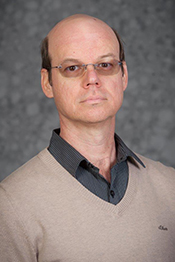
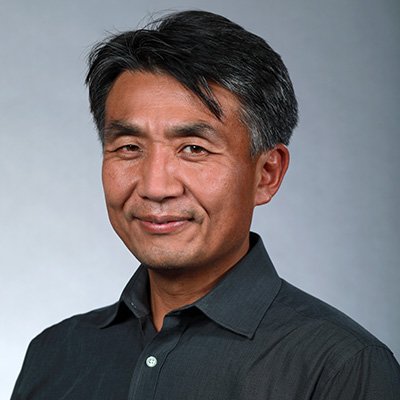
Jay Ponder is Professor of Chemistry, Biochemistry and Molecular Biophysics, and Biomedical Engineering at Washington University in St. Louis. His research develops computational methods for structural biology and protein engineering, focusing on next-generation polarizable force fields (AMOEBA) for accurate prediction of molecular structures and interactions. Research areas include molecular dynamics with multipole electrostatics, potential smoothing methods for conformational search, distance geometry algorithms for protein folding, and crystal structure prediction. The TINKER software package implements these computational approaches. Ponder's group integrates high-performance computing with advanced algorithms for large-scale biomolecular simulations and free energy calculations.
William Regli is a Professor at the University of Maryland's Clark School of Engineering, holding appointments in Computer Science, Electrical and Computer Engineering, and the Institute for Systems Research. He also directs the Applied Research Laboratory for Intelligence and Security (ARLIS), overseeing over 75 researchers focused on defense and intelligence challenges. Regli's career spans academia, government leadership (including DARPA's Defense Sciences Office), and industry, with over 250 publications and five foundational U.S. patents in 3D CAD search. His research integrates AI, robotics, and computational modeling to address interdisciplinary problems in engineering, materials science, and national security. Education: Ph.D. and B.S. in Mathematics from the University of Maryland and Saint Joseph's University, respectively. He is a Fellow of AAAS and IEEE, recognized for contributions to 3D search and intelligent manufacturing. Research interests include AI agents, cyber-infrastructure for engineering data sustainability, advanced materials design, and robotic interoperability using category theory. His recent work emphasizes applying AI to national security, including trustworthy AI evaluation and social science integration. Awards include the DARPA Meritorious Public Service Medal (2018), AAAS Fellowship (2020), and IEEE Fellowship (2017). His articles reflect a focus on multi-agent systems, robotic task planning, and formal methods in autonomous systems. He advises multiple PhD students and has spun off two tech startups. Regli's laboratories include ARLIS, where he develops solutions for defense missions, and collaborates with the Maryland Robotics Center. His work bridges academia and government, emphasizing real-world impact through innovative computing research.
Dr. Amir Atapour-Abarghouei is an Assistant Professor in the Department of Computer Science at Durham University, UK, and a Fellow of the Wolfson Research Institute for Health and Wellbeing. He leads the VIViD (Vision, Imaging and Visualisation in Durham) research group. Previously, he held roles at Newcastle University and Shahid Bahonar University of Kerman (Iran). His research focuses on machine learning, deep learning, computer vision, 3D scene understanding, and natural language processing. Notable contributions include the GANomaly anomaly detection framework, now part of Intel's AI products. Education : Ph.D., Computer Science, Durham University (UK) M.Sc., Computer Science, Universiti Teknologi Malaysia (Malaysia) B.Sc., Computer Engineering, Shahid Bahonar University of Kerman (Iran) Research Interests : His work spans machine learning, deep learning, image processing, 3D scene analysis, and robotics. Key areas include depth estimation, domain adaptation, semantic segmentation, and causal-based models for action quality assessment. Recent projects involve datasets like DurTOMD and Dur360BEV for autonomous systems and image inpainting techniques (e.g., HINT, SEM-Net). Advising & Grants : He supervises over 15 postgraduate students and has contributed to grants focused on AI-driven systems in healthcare, robotics, and computer vision. His team's work on GANomaly and neural architecture search (NAS) has been widely cited and applied in industry. Labs/Teams : Leads the VIViD Research Group and collaborates on interdisciplinary projects involving healthcare imaging, autonomous vehicles, and ethical AI. Active in organizing workshops at CVPR, IEEE BigData, and the BMVA Summer School.
Rodney Howell is an Associate Professor and Undergraduate Programs Director in the Department of Computer Science at Kansas State University (KSU). He holds a Ph.D. (1988) and B.S. (1984) in Computer Science from the University of Texas at Austin and Wichita State University, respectively. His research expertise includes Real-Time Systems, Self-Stabilization, Petri Nets, and Computational Complexity. He authored the textbook Algorithms: A Top-Down Approach (2023) and has directed seven Master’s theses. Key awards include the Kansas State Scholarship (1980–1984), McGregor Scholarship (1980–1984), and Microelectronics and Computer Development Fellowship (1984–1986). He has organized the KSU High School Programming Contest since 1992 and contributed to grants such as the NSF-funded Software Control Laboratory (1993–1995). His advising includes students like Muralidhar Venkatrao, Thiagarajan Rajagopalan, and Vineet Tadakamalla. His work spans over 30 years at KSU, including roles like Special Assistant to the Dean (2019–2020) and involvement in academic outreach.
Wajahat Ali Khan is an Associate Professor in Artificial Intelligence at the University of Derby's College of Science and Engineering. His research focuses on AI-driven solutions for healthcare informatics, cybersecurity, and data integration. He leads interdisciplinary projects involving knowledge graphs, semantic web technologies, and clinical decision support systems. Research interests include applying machine learning to healthcare challenges such as disease subtyping, health data interoperability, and personalized medicine. He also explores cybersecurity in network systems and SDN environments. Key contributions include platforms like the Ubiquitous Health Profile (UHPr) for health data interoperability and the Intelligent Medical Platform for dialogue-based healthcare services. His publications span topics from anti-DDoS models to sentiment analysis for depression detection. Collaborations with institutions like Sungkyunkwan University (South Korea) highlight global impact. Khan’s work emphasizes bridging semantic gaps in healthcare systems through adaptive mediation frameworks and data-driven knowledge acquisition methods.
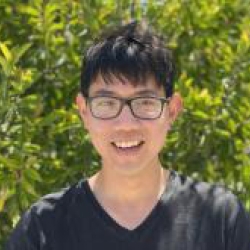
Dr. Daniel Huang is an Assistant Professor in the Department of Computer Science at San Francisco State University. His research focuses on quantum computing, probabilistic programming, machine learning, and theoretical computer science. He explores interdisciplinary areas such as hybrid classical-quantum systems, Gaussian process optimization, and computational chemistry modeling. His work bridges algorithmic design with practical applications, including quantum circuit simulation and molecular geometry optimization. Dr. Huang’s recent publications highlight advancements in GPU-based quantum computing, gradient-constrained neural networks, and probabilistic programming languages like Push. He emphasizes the integration of physical priors into machine learning models and explores disruptive technologies like quantum visualization tools. His research often involves collaborative projects, as seen in works on meta-Gaussian processes and data-parallel inference algorithms. His academic contributions span over a decade, with notable papers in probabilistic program semantics, logic in linear spaces, and compiler optimizations for probabilistic models. Though no awards or grants are explicitly listed, his active publication record reflects sustained scholarly engagement. Contact: danehuang@sfsu.edu , Thornton Hall 906.
Prof. Franziska Matthäus is a Professor at Goethe University Frankfurt and a Fellow at the Frankfurt Institute for Advanced Studies (FIAS). Her research focuses on mathematical modeling of spatiotemporal processes in biological systems, particularly cell motility, cancer migration, and developmental biology. She leads a multidisciplinary group collaborating with experimental partners to integrate data analysis, agent-based models, and partial differential equations (PDEs) into theoretical frameworks. Notable contributions include the 2020 book The Art of Theoretical Biology , which showcases visually striking scientific images from biological research, and the development of QuickPIV software for 3D particle image velocimetry. Education: PhD in Biophysics (University of Warsaw, 2005), postdoctoral work at Heidelberg University, and a junior professorship at the University of Würzburg before joining FIAS in 2016. She currently holds the Giersch Endowed Professorship. Research Interests: Agent-based modeling of collective cell behavior, reaction-diffusion systems in developmental patterning, and force inference in epithelial tissues. Her work bridges computational methods with experimental data, addressing questions in organoid morphogenesis, cancer metastasis, and embryonic development. Teaching: Offers courses in theoretical biology and bioinformatics, including modules on data analysis, mathematical modeling, and programming for biological systems. Courses are taught in German and English. Labs/Teams: Active in FIAS's Life and Neurosciences group, focusing on multiscale analyses of biological systems. Collaborates with institutions globally, including the University of Leeds and the University of Alberta.
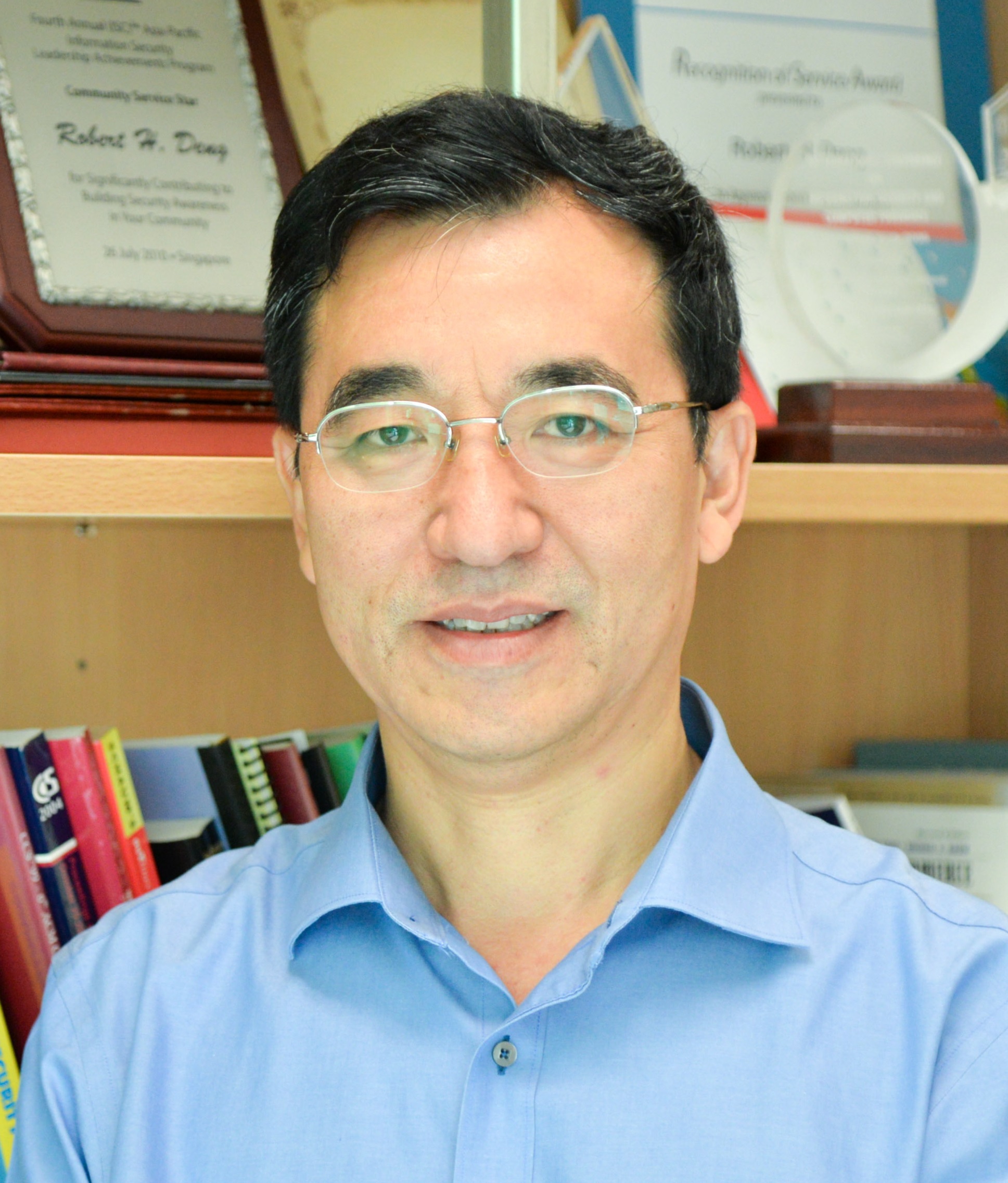
Professor Robert H. Deng is a distinguished academic and researcher at Singapore Management University's School of Computing and Information Systems, where he serves as Professor of Computer Science and Deputy Dean for Faculty & Research. With a PhD from Illinois Institute of Technology (1985), he has established himself as a leading authority in cybersecurity, data privacy, and applied cryptography. His research interests span applied cryptography, data security and privacy, mobile and wireless network security, trusted computing, and system security. Professor Deng has published extensively in top-tier security venues, with over 600 publications listed in DBLP. His work bridges theoretical foundations with practical applications, particularly in the domains of IoT security, blockchain systems, and privacy-preserving technologies. Professor Deng has received numerous prestigious awards, including the National Day Award (Public Administration Medal Silver) in 2020, the AXA Chair Professor of Cybersecurity (2017-2025), and the Lee Kuan Yew Fellow for Research Excellence at SMU in 2006. His recent publications demonstrate continued leadership in emerging areas like post-quantum cryptography, federated learning security, and hardware-assisted security systems. His research group has produced significant work on secure authentication protocols, privacy-preserving data analytics, and robust cryptographic systems for real-world applications. National Day Award, Public Administration Medal (Silver), 2020 AXA Chair Professor of Cybersecurity, AXA Research Fund, 2017-2025 Distinguished & Best Paper Awards at NDSS, ESORICS, IEEE ICPADS, etc. Asia-Pacific Information Security Leadership Achievements (ISLA), 2010 Lee Kuan Yew Fellow for Research Excellence, SMU, 2006 University Outstanding Researcher, National University of Singapore, 1999 As a research advisor, Professor Deng has mentored numerous students including SUN Bing. His active participation in the research community is evidenced by recent keynotes at major conferences including DSPP 2024 on post-quantum cryptography and ASIACCS 2024 on client-side encryption. His research group maintains strong industry connections and receives significant funding for cutting-edge security research.
Dr. Ashley Williams is a Senior Lecturer in Software Engineering at Manchester Metropolitan University. Their research focuses on software engineering practices, grey literature analysis, natural language processing applications, and cybersecurity education. They maintain an active research profile with publications spanning software engineering methodologies, NLP applications in security, and mental health game design. Key research areas include: Credibility assessment of practitioner-generated content Grey literature retrieval and mining techniques Natural language processing for cybersecurity Research-practice gaps in software engineering Therapeutic game design for mental health Their work frequently employs innovative methodologies like case survey approaches and corpus linguistics for analyzing professional knowledge sources. Recent publications demonstrate evolving interests in applied NLP for security challenges (homoglyph attacks) and expanding into interdisciplinary domains like mental health intervention design. Their cybersecurity skills gap research contributes to curriculum development and workforce planning. Dr. Williams teaches software engineering courses and supervises student research projects. They are based in the John Dalton Building and maintain office hours on Tuesdays and Thursdays.
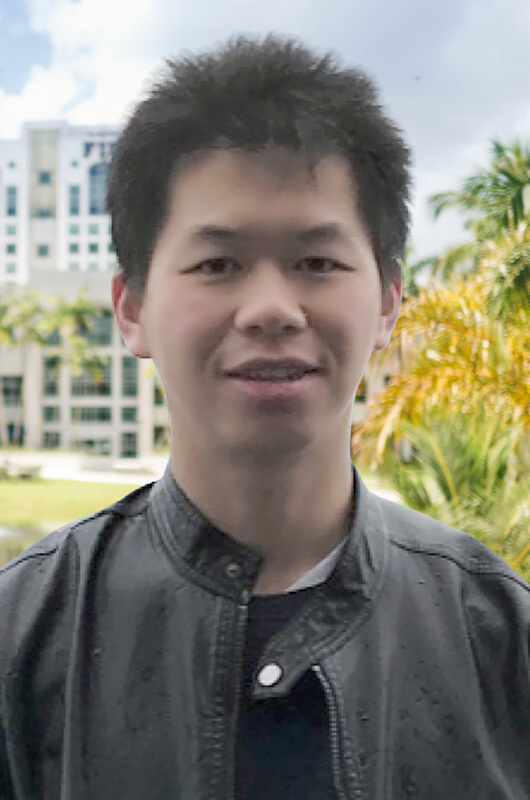
Wenbin Zhang is an Assistant Professor in the Knight Foundation School of Computing & Information Sciences at Florida International University and an Associate Member at the Te Ipu o te Mahara Artificial Intelligence Institute. His research focuses on the theoretical foundations of machine learning with societal impact, including fairness, generative AI, health informatics, and interdisciplinary applications in healthcare, digital forensics, and energy. He has received awards such as the NSF CRII Award and recognition in the AAAI’24 New Faculty Highlights. Zhang serves in organizing committees for major conferences like AAAI, WSDM, and AIES, contributing to academic leadership. Ph.D., University of Maryland, Baltimore County (2020) Research interests span societal aspects of AI, generative models, and fairness-aware machine learning. His work bridges theory and practice, addressing ethical challenges in AI deployment across domains like healthcare and cybersecurity. Key contributions include frameworks for fair graph learning, bias mitigation in LLMs, and adaptive pruning techniques for large models. Publications emphasize fairness in ML systems, digital forensics, and interdisciplinary applications. Over 50 papers span venues like FAccT, ICDM, and AAAI, with multiple best-paper recognitions. His NSF-funded research highlights innovation in fair AI and robust model adaptation. Scientific Awards: NSF CRII Award, FAccT’23 Best Paper Candidate, ICDM’23 Best Paper Academic service includes roles as Travel Award Chair (AAAI’24), Volunteer Chair (WSDM’24), and Student Program Chair (AIES’23). Teaching and mentorship are integral to his mission, fostering next-generation AI researchers through rigorous training in ethics-driven innovation. Labs/Teams: Active collaborations with the Te Ipu o te Mahara Institute, focusing on AI ethics and societal impact.
Dr Yanlong Zhang is a Senior Lecturer at Manchester Metropolitan University. He holds a PhD in Software Engineering and a PGCE in Higher Education, complemented by industry experience as an Assistant Engineer, Engineer, and Teaching Assistant. His research focuses on web engineering, including web measurement, security, and games design, with particular attention to software metrics and user interface design. Teaching responsibilities include undergraduate modules on web design and development, computer systems, game design, and human-computer interaction, as well as postgraduate courses in information systems. His work explores GUI generation using GANs, structural similarity in source code, and navigability metrics for websites. Research outputs span topics like melanoma classification via image similarity and quality analysis of software architectures. His publications demonstrate expertise in both theoretical frameworks (e.g., HASARD model) and applied systems (e.g., MEIC design). Office hours are Monday 10-11, 1-2, and Thursday 10-11. Proficient in English, Chinese, and basic Japanese/German, Dr Zhang contributes to education and industry through his roles as a Fellow and teaching-focused academic. His work bridges software engineering principles with practical web development challenges.
Prabhat Hajela is the Edward P. Hamilton Professor of Aerospace Engineering at Rensselaer Polytechnic Institute (RPI). He has held leadership roles including Provost and Vice Provost, overseeing academic strategy and undergraduate programs. His academic journey includes degrees from the Indian Institute of Technology Kanpur (B.Tech, 1977), Iowa State University (MS, 1979), and Stanford University (MS and PhD, 1981–1982). He joined RPI in 1990 and became a full professor in 1992. His research focuses on structural and multidisciplinary optimization, with applications in aerospace systems, composite materials, and uncertainty modeling. Notable contributions include over 300 publications and four co-authored books. Hajela’s administrative leadership includes expanding undergraduate research programs, international collaborations, and the CLASS initiative. He is a Fellow of AIAA, ASME, and AeSI, and received the AIAA Biennial Multidisciplinary Design Optimization Award in 2004. Education: B.Tech (Aeronautical Engineering), Indian Institute of Technology, Kanpur (1977) MS (Aerospace Engineering), Iowa State University (1979) MS (Mechanical Engineering), Stanford University (1981) PhD (Aeronautics and Astronautics), Stanford University (1982) Research Interests: Hajela’s work spans structural optimization, multidisciplinary design, computational mechanics, and aerospace systems. He pioneered methods for reliability-based design, uncertainty quantification, and evolutionary algorithms. His research addresses challenges in composite materials, aeroelasticity, and the integration of artificial intelligence in engineering design. Recent projects include virtual reality in STEM education and adaptive systems for Mars missions. Key Contributions: Developed EVOLVE, a genetic search-based optimization code Advanced methodologies for multiscale composite analysis and failure prediction Contributed to CAN-SPAM legislation as a Congressional Fellow (2003) Chaired ASME’s Aerospace Division and served on National Academies panels Awards and Recognition: AIAA Biennial Multidisciplinary Design Optimization Award (2004) Fellowships: AIAA, ASME, and AeSI Recipient of the Boeing-A.D. Welliver Fellowship (1995) Administrative Impact: Hajela led RPI’s academic innovation, including undergraduate research expansion and the implementation of living-learning communities. His focus on global education and interdisciplinary collaboration has shaped RPI’s strategic vision. Current roles include chairing the NRC Technical Assessment Board for the Army Research Laboratory.
Jeong-Hyon Hwang is an Associate Professor at the University at Albany, State University of New York , affiliated with the College of Nanotechnology, Science, and Engineering and the Department of Computer Science . As Director of the Data Management Systems (DMS) Lab, he focuses on scalable graph databases, trajectory data compression, and real-time stream processing. His work on the G* graph database system, funded by the NSF CAREER award IIS-1149372 , enables efficient storage and analysis of distributed dynamic graphs. PhD in Computer Science, Brown University (2008) MS in Computer Science, Brown University (2003) MS in Computer Science and Engineering, Korea University (2000) BS in Computer Science and Engineering and Mathematics Education, Korea University (1998, 1994) Dr. Hwang’s research spans Databases and Distributed Systems , with specific emphasis on graph database systems , trajectory data management , and fault-tolerant stream processing . His publications highlight advancements in Internet-scale data management , real-time analytics , and load balancing for dynamic environments. The 15 most recent publications reflect trends in graph algorithms , stream processing reliability , and trajectory compression . Key subfields include distributed graph storage , centrality estimation , non-relational stream models , and high-availability solutions for wide-area networks. Scientific Awards : NSF CAREER award (2012) Best Poster Award, IEEE ICDE (2014) Best Poster Runners-Up, ACM SIGSPATIAL GIS (2010) IBM Open Collaborative Faculty Award (2010) National Scholarship, South Korea (2001-2005) New Software Award, South Korea (2001) Dr. Hwang leads the DMS Lab , developing open-source systems like G* for graph storage and querying. He has authored patents, co-authored Korean translations of technical books, and contributed to foundational research in high-availability algorithms and stream processing engines .
Jamie Pringle is a Senior Lecturer and Programme Director in Ecology & Conservation at Keele University's School of Life Sciences. With a background in geology and applied sedimentology, he has developed expertise in forensic geophysics, military geoscience, and environmental geophysical techniques. Geological Society of London - William Smith Fund (2012) Committee member - Near-Surface Geophysics and Forensic Geoscience Specialist Sub-Groups Collaborations - National Crime Agency, UK Police Forces, Environment Agency, Staffs University His research focuses on geophysical methods for forensic applications, including clandestine grave detection, military complex identification, and environmental contamination analysis. He also develops educational e-gaming tools for geoscience training. Recent publications demonstrate applications of GPR, ERT, and UAVs in forensic contexts across tropical to temperate environments. His work supports law enforcement in grave location, human rights investigations, and infrastructure safety assessments. 2024: Three articles in Geology Today on land/water forensic geoscience 2024: Forensic Science International paper on clandestine complex detection 2024: Colombian tropical grave monitoring study 2023: HS2 route geophysical assessments 2022: XR virtual forensic learning environments 2022: pXRF forensic contamination analysis As a committee member with the Geological Society and educator in forensic geoscience, he bridges academic research with practical policing applications while maintaining active teaching commitments across multiple academic levels.
Prof. Kurt Rohloff is an Associate Professor in the Department of Computer Science at New Jersey Institute of Technology (NJIT). He serves as the founding director of the NJIT Cybersecurity Research Center, focusing on advanced cryptographic techniques such as homomorphic encryption, lattice-based cryptography, and secure computing. With a background in electrical engineering from the University of Michigan (Ph.D., 2004) and Georgia Tech (B.E., 1999), his career includes prior roles as a DARPA Program Investigator in industry before joining academia. His research emphasizes practical implementations of privacy-preserving technologies, including open-source libraries like PALISADE and OpenFHE , which enable secure computation on encrypted data. Key areas of contribution include FPGA-accelerated homomorphic encryption, proxy re-encryption systems, and applications in healthcare, telecommunications, and distributed computing. He has led workshops such as WAHC (Workshop on Encrypted Computing and Applied Homomorphic Cryptography), fostering interdisciplinary collaboration. Rohloff’s work bridges theoretical cryptography with real-world challenges, addressing scalability, performance optimization, and usability of secure computing frameworks. His innovations target use cases like encrypted genome analysis, privacy-preserving AI, and secure data sharing across distributed networks.