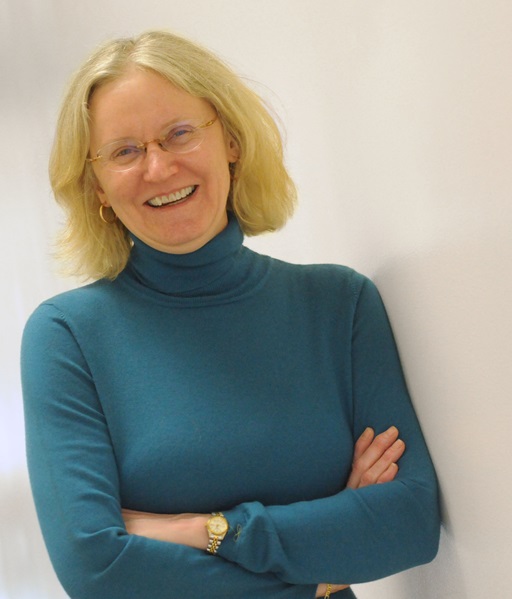
Dr. Gail Kaiser is a Professor of Computer Science at Columbia University, where she has served for 40 years. She directs the Programming Systems Lab (PSL) and is affiliated with the Software Systems Lab (SSL). Her research focuses on software systems, program analysis, testing, security, and AI-driven software engineering. She earned her PhD from Carnegie Mellon University and a BS from MIT. Education: PhD in Computer Science, Carnegie Mellon University (1985) MS in Computer Science, Carnegie Mellon University (1980) BS in Computer Science and Engineering, MIT (1979) Research & Teaching: Dr. Kaiser teaches COMS W4156 (Advanced Software Engineering) and COMS E6156 (Topics in Software Engineering). Her work spans metamorphic testing for machine learning, secure computing, and AI in SE. Notable contributions include pioneering metamorphic testing for classifiers and secure containers research. Awards & Grants: 2025 Distinguished Journal Award (ICST) NSF grants totaling over $2M for secure computing and software assurance ACM SIGSOFT Distinguished Paper Awards (2023, 2014) Labs & Collaborations: Her labs (PSL and SSL) drive innovation in program analysis and security. Collaborations include DARPA, NIH, and industry partners like IBM and Microsoft.
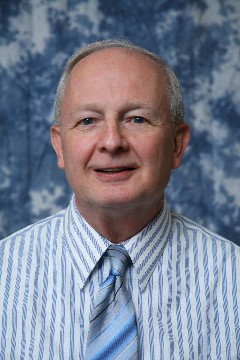
Professor Bogdan Warinschi leads research in cryptography and security at the University of Bristol's School of Computer Science. His work establishes rigorous connections between symbolic and computational security models for cryptographic protocols. Current projects focus on secure searchable encryption, authentication protocols, and privacy-preserving systems. Developed novel security frameworks for encrypted databases that reveal fundamental limitations in existing designs. Serves on program committees for top security conferences including IEEE Security & Privacy and ACM CCS. Organizes international workshops on secure key exchange and encrypted search algorithms.
Diego Klabjan is a Professor at Northwestern University within the Department of Industrial Engineering and Management Sciences. He serves as the Founding Director of the Master of Science in Machine Learning and Data Science Program and Director of the Center for Deep Learning. Ph.D. in Algorithms, Combinatorics, and Optimization from Georgia Institute of Technology (1999) B.S. in Applied Mathematics from University of Ljubljana (1994) His research focuses on machine learning, deep learning, and analytics with applications in finance, transportation, sports, and bioinformatics. Key contributions include federated learning algorithms, reinforcement learning for cryptocurrency trading, and neural network applications in impact mechanics. Recent publications highlight advancements in blockchain-based federated learning, second-order policy gradient convergence, and ensemble deep reinforcement learning. His work bridges theoretical foundations with industrial applications across diverse sectors. Preseren’s Award for the Best Undergraduate Thesis (1994) Transportation Science Section Dissertation Prize (2000) Intel's Outstanding Researcher Award (2019) Jack Meredith Best Paper Honorable Mention (2022) Klabjan has advised notable students including Luis Guimarães (2015 APDIO/IO Award winner) and Young Woong Park (2015 INFORMS Computing Society Best Student Paper recipient). His collaborations span Fortune 500 companies and startups in analytics-driven domains.
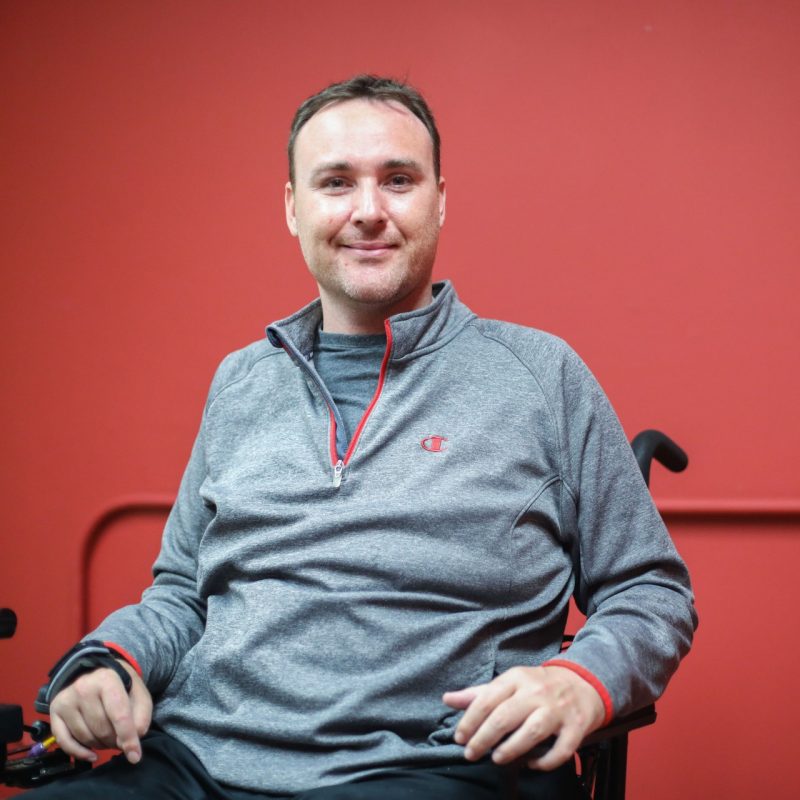
Dr. Richard Molyet is a Senior Lecturer and Undergraduate Director in the Department of Electrical Engineering and Computer Science at the University of Toledo's College of Engineering. After retiring as Associate Professor in 2002, he returned to academia in 2005 as Visiting Professor and transitioned to Associate Lecturer in 2008. Education: Ph.D. in Engineering Science (1981) from University of Toledo His research spans Automatic Control , Robotics , Smart-Grid Systems , and Biomedical Applications . Recent publications focus on deep learning for medical diagnostics and hybrid power network optimization , while earlier work explored repetitive control algorithms and microprocessor-based motion analysis . Scientific Recognition: IEEE Third Millennium Medal (2000) IEEE-USA Professional Achievement Award (2002) University of Toledo Outstanding Teacher Award (2016) Currently advising 3 PhD students and multiple Master’s candidates, Dr. Molyet has served on numerous academic committees since the 1980s. He maintains an active role in IEEE Toledo Section's executive board for 39 years .
Carlos Castillo is an ICREA Research Professor at Universitat Pompeu Fabra, leading the Social and Responsible Computing Research Group. Their work focuses on algorithmic fairness, social computing, and mitigating bias in AI systems across criminal justice, education, healthcare, and hiring. Key projects include the Horizon Europe FINDHR initiative to detect discrimination in algorithmic hiring, causal inference studies on recidivism risk prediction, and analyzing gender biases in student evaluations. Research Interests: Algorithmic fairness, bias mitigation in AI systems, social data ethics, criminal justice analytics, education technology, and health informatics. Notable contributions include the FA*IR fair ranking algorithm and foundational work on auditing algorithms in digital health. Recent Trends in Articles: Recent work emphasizes interdisciplinary applications of algorithmic fairness—e.g., improving representativeness in hiring datasets, analyzing disparities in medical AI models, and addressing bias in student satisfaction surveys. Publications also explore radicalization pathways via recommendation systems and the societal impact of algorithmic decision-making. Awards: Best Paper Awards in CIKM 2022 (Francesco Fabbri), ICAIL 2019 (Marius Miron), and ISCRAM 2013 (Muhammad Imran). Grants: Leads the Horizon Europe FINDHR project and collaborates with the European Commission on algorithmic discrimination research. Labs/Teams: Directs the Social and Responsible Computing Group, focusing on interdisciplinary projects with PhD students and industry partnerships.
Ryan K. Williams is an Assistant Professor in the Bradley Department of Electrical and Computer Engineering at Virginia Tech. His research focuses on real-time systems optimization, multi-agent robotics, and computational frameworks for autonomous systems. He holds an NSF Career Award (2021) and has contributed to advancing algorithms for resilient and efficient multi-robot coordination. His work addresses challenges in distributed systems, including scheduling, fault tolerance, and resource allocation. Key areas include probabilistic security in multi-robot teams, topology control for stable coordination, and anticipatory planning for search and rescue operations. He also explores intersections with education, such as analyzing teacher professional learning impacts on student outcomes in STEM. Awards: NSF Career Award 2021 Grants: AF: Small grants (2024, 2021), CPS: Medium grant (2019) Labs/Teams: Collaborates on multi-robot systems and computational autonomy projects
Lesley Shannon is an Associate Professor in the School of Engineering Science at Simon Fraser University (SFU), specializing in computing system design and reconfigurable computing. She leads the Reconfigurable Computing Lab (RCL), focusing on FPGA-based architectures, heterogeneous multicore systems, and CAD tools. Her academic journey includes a B.Sc. from the University of New Brunswick (1999), M.A.Sc. and Ph.D. from the University of Toronto (2001 and 2006). Her research spans FPGA CAD algorithms, Networks-on-Chip (NoCs), dynamic partial reconfiguration (DPR), and application-specific architectures. Key projects include FUSE (OS abstraction for hardware accelerators), PolyBlaze (multicore system emulation), and uROAMs (microfluidic reconfigurable devices). She has secured funding from NSERC, Xilinx, and Altera, among others. Education: B.Sc., Electrical Engineering (Computer Option), University of New Brunswick, 1999 M.A.Sc., Applied Science, University of Toronto, 2001 Ph.D., Applied Science, University of Toronto, 2006 Roles: NSERC Chair for Women in Science and Engineering (BC/Yukon) Faculty Advisor, SFU WEST (Women in Engineering, Science, and Technology) Her lab employs 5 current students and has graduated 7, including work on FPGA CAD, microfluidics, and embedded systems. Courses taught include Advanced Digital Systems Design and Real-Time/Embedded Systems. Her research emphasizes reducing design time through on-chip profiling and CAD tools, with applications in biomedical imaging and quantum computing. Awards & Grants: NSERC Discovery Grant NSERC Strategic Grant (Lead PI, 2009; Co-PI, 2010) SFU Startup Grant and President’s Research Grant Lab & Collaborations: The RCL develops silicon and non-silicon architectures, including quantum computing and microfluidic systems. Partnerships include industry collaborations and open-source tools like Odin II synthesis framework.
Charles E. Leiserson is a Professor of Computer Science and Engineering at MIT, holding the Edwin Sibley Webster Professorship in Electrical Engineering and Computer Science. He leads the Supertech Research Group and is Faculty Director of the MIT-Air Force AI Accelerator. His work focuses on parallel computing, performance engineering, and algorithms. Leiserson is renowned for co-authoring the foundational textbook Introduction to Algorithms , widely used in computer science education globally. He has pioneered technologies like the Cilk multithreaded programming language and contributed to supercomputing architectures such as the Connection Machine CM-5. His research bridges theoretical computer science with practical applications, emphasizing cache-oblivious algorithms and compiler optimizations. Leiserson has received multiple awards for his academic contributions and educational impact, including the ACM-IEEE Ken Kennedy Award and Margaret MacVicar Fellow distinction at MIT. Education: B.S., Yale University, 1975 Ph.D., Carnegie Mellon University, 1981 Research Interests: Leiserson’s work addresses performance engineering challenges in post-Moore’s Law computing. His group develops algorithms, software systems, and hardware strategies for scalable parallelism. Key areas include parallel programming frameworks (e.g., OpenCilk), cache-aware algorithms, and compiler optimizations. He emphasizes making parallel computing accessible to mainstream programmers through tools like Cilk and educational initiatives such as MIT’s Software Performance Engineering course. Projects & Leadership: Leiserson leads the Supertech Research Group and contributed to the Cilk Arts Inc. venture, acquired by Intel. He chairs the MIT Undergraduate Practice Opportunities Program (UPOP) and teaches courses on algorithms and discrete mathematics. His leadership workshops for faculty have educated hundreds worldwide on team management in academia. Awards & Recognition: 2014 ACM-IEEE Ken Kennedy Award IEEE Taylor L. Booth Education Award ACM Paris Kanellakis Theory and Practice Award Member of the National Academy of Engineering Labs & Teams: Active in MIT’s CSAIL, Leiserson collaborates through the Supertech Group and Theory of Computation communities. His current projects include Tapir compiler infrastructure, graph neural network applications for anti-money laundering, and deterministic parallel scheduling algorithms.
Siamak Ravanbakhsh is an Associate Professor at McGill University's School of Computer Science and a Canada CIFAR AI Chair at Mila. His research focuses on machine learning, particularly representation learning with an emphasis on geometry, symmetry, and probabilistic inference. He has held academic positions at the University of British Columbia and was a postdoctoral fellow at Carnegie Mellon University. Education: B.Sc. in Computer Science, Sharif University of Technology M.Sc. and Ph.D. in Computer Science, University of Alberta (supervised by Russ Greiner) Postdoctoral Fellowship at Carnegie Mellon University (with Barnabás Póczos and Jeff Schneider) His research interests span geometric deep learning, equivariant networks, reinforcement learning, and AI for scientific applications. Notable contributions include work on symmetry-aware models, diffusion processes, and equivariant representation learning. Publications highlight advancements in causal abstraction, diffusion-based anomaly detection, and equivariant architectures for crystals and hierarchical structures. His work often bridges theory and application, emphasizing symmetry principles. Advising & Grants: Supervised over 20 graduate students and postdocs, including recent PhD graduates Daniel Levy and Mehran Shakerinava Active in mentoring M.Sc. and internship students He contributes to academic leadership roles at Mila and McGill, fostering interdisciplinary collaborations in AI research.
Hande Benson is a Professor in the Department of Decision Sciences and MIS at LeBow College of Business, Drexel University. She serves as the academic director of the Business and Engineering program and teaches in undergraduate and graduate programs in Business Analytics and Operations and Supply Chain Management. Research Interests: Dr. Benson specializes in optimization, particularly addressing modeling and computational challenges in large-scale nonlinear and mixed-integer optimization. Her work includes interior-point methods, regularization techniques, and the development of optimization software such as LOQO and MILANO. Recent Research Trends: Her recent publications span decision aggregation, multi-vehicle motion planning under communication constraints, and advanced interior-point algorithms. These works reflect a strong focus on algorithmic innovation, real-world applications in robotics and supply chains, and theoretical advancements in nonconvex optimization. Scientific Awards: Outstanding STAR Mentor, Drexel University (2017-2018) Distinguished Fellow, Center for Research Excellence, LeBow College of Business (2009-2012) Excellence in Research Award, LeBow College of Business (2005) Advising and Grants: While direct student advising is not explicitly listed, Dr. Benson has led significant research projects, including Multivehicle Path Coordination under Communication Constraints (Drexel Interdisciplinary Research Grant, $15,000) and Efficient Interior-Point Methods for Mixed-Integer Nonlinear and Conic Programming (NSF, $59,960). She has also contributed to executive education and consulting in financial, industrial, and governmental sectors. Editorial and Professional Service: Dr. Benson is actively involved in the academic community as Associate Editor for several leading journals, including Computational Optimization and Applications , Journal of Optimization Theory and Applications , Mathematical Programming Computation , and Optimization and Engineering .
James R. Green is a Professor in the Department of Systems and Computer Engineering at Carleton University , where he has been a faculty member since 2005. He holds a PhD from Queen's University and is a licensed Professional Engineer (P.Eng.) and Senior Member of IEEE. His work integrates machine learning, biomedical informatics, and high-performance computing. His educational background includes: B.A.Sc. in Systems Design Engineering, University of Waterloo (1998) M.Sc.(Eng.), Queen's University (2000) PhD, Queen's University (2005) Dr. Green's research focuses on machine learning challenges in biomedical informatics , particularly class imbalance and rare event prediction. Key areas include protein structure, function, and interaction prediction; microRNA detection in unique species; non-contact neonatal monitoring; and accelerating scientific computing via parallel architectures like the Cell BE processor. His lab has developed several widely used bioinformatics tools such as PIPE, ProtDCal, and PCI-SUMO. His recent publications reflect a strong trend in computational biology and machine learning , with applications in proteomics, genomics, and medical diagnostics. He has published over 100 peer-reviewed papers and secured funding from NSERC, CIHR, CFI, ORF, OCE, MITACS, and IBM. Scientific and teaching recognitions include: Three teaching awards NSERC Best Project Award (twice: 2006-2007 and 2007-2008) Multiple student projects resulting in conference papers (e.g., CMBEC) He has supervised numerous undergraduate capstone projects in areas such as assistive technologies, robotic systems, and bioinformatics. His teaching portfolio includes courses in Pattern Classification, Machine Learning, Computer Architecture, and Biomedical Engineering. He leads an active research group that bridges computer engineering and life sciences, fostering interdisciplinary collaboration. Lab and research team initiatives include: Development of open-access web servers for protein analysis Collaborations with biologists and clinicians Integration of hardware and software for medical applications
Sriram Neelamegham is the UB Distinguished Professor of Chemical & Biological Engineering, Biomedical Engineering, and Medicine at the University at Buffalo, SUNY. His research focuses on applying engineering principles to study molecular mechanisms of blood cell interactions in diseases such as inflammation, thrombosis, and cancer. He leads the Bioengineering Laboratory within the School of Engineering and Applied Sciences. Education: PhD in Chemical/Biomedical Engineering, Rice University, 1996 B.Tech in Chemical Engineering, Indian Institute of Technology Delhi, 1991 Research Interests: Systems Glycobiology: Investigating glycan biosynthesis and its role in disease Leukocyte and Platelet Adhesion Dynamics under Fluid Flow Von Willebrand Factor (VWF) Structure-Function Relationships Engineering Glycoengineered Therapeutics and Diagnostic Tools Key Contributions: Developed computational models and experimental tools for glycosylation pathway analysis Discovered mechanisms of VWF conformational changes under shear stress Pioneered glycoengineering strategies for stem cell targeting Awards & Recognition: NIH Independent Scientist Award (2015) SUNY Chancellor's Award for Excellence (2015) AIMBE Fellow (2012) and BMES Fellow (2019) 2018 Schoellkopf Medal (ACS) Lab Activities: Recruitment of postdocs, full-time, and part-time research technicians Development of glycan-engineered technologies for drug delivery and diagnostics Collaborations with biomedical industries and academic institutions
Dana S. Nau is a Professor in the Department of Computer Science and a member of the Institute for Systems Research at the University of Maryland. He is renowned for his contributions to automated planning and game theory, including landmark algorithms like SHOP and foundational studies on game-tree pathology and strategic planning in computer bridge. With over 500 refereed publications and an H-index of 61, his work bridges theoretical computer science and practical applications in multiagent systems and evolutionary game theory. His research interests include hierarchical task network (HTN) planning, Bayesian network inference techniques, and the evolution of social norms through evolutionary game theory. Recent work focuses on spatial evolutionary games, surrogate Bayesian models, and strategic communication in multiagent environments. Awards: AAAI Fellow (202?), ACM Fellow (202?) Key Collaborations: Co-authored papers with leaders like Malik Ghallab (LAAS-CNRS), Satyandra K. Gupta (USC), and Vincent Hsiao (Bayesian networks research). Grants/Advising: Supervised students including Sunandita Patra (17+ joint papers) and Ruoxi Li, contributing to HTN planning and reinforcement learning advancements. His labs and research teams actively explore AI planning systems, probabilistic reasoning, and the intersection of game theory with social science phenomena like gossip evolution.
Emma Tolley is an Assistant Professor at EPFL, affiliated with the School of Basic Sciences (SB) and the Laboratory of Astrophysics (LASTRO) . She also holds positions in the SCITAS group and teaches through the SB-SPH and SPH-ENS departments. EPFL SB IPHYS LASTRO EPFL SB SB-SPH SPH-ENS EPFL VPA-AVP-CP SCITAS Her research bridges dark matter physics and radio astronomy , developing high-performance computing techniques to analyze data from the Large Hadron Collider and the Square Kilometer Array . She specializes in astrophysical data science and detector technology for particle astrophysics. Recent publications focus on dark matter models , next-generation radio surveys , and detector performance analysis . She mentors doctoral students in astrophysics and teaches General Physics: Mechanics and Environmental Chemistry courses.
Manos Athanassoulis is an Associate Professor in the Department of Computer Science at the College of Arts and Sciences, Boston University. He is the Founder and Director of the BU Data-intensive Systems and Computing (DiSC) lab and a member of the BU MiDAS group. His research focuses on data systems, particularly cloud data management, hybrid transactional/analytical workloads, and integration with emerging hardware such as non-volatile memory and heterogeneous computing. His educational background includes a PhD from EPFL (2014), an MSc in Computer Systems Technology, and a BSc in Informatics and Telecommunications from the University of Athens, Greece. Prior to BU, he was a Postdoctoral Researcher and Research Associate at Harvard University, supported by a SNSF Postdoc Mobility Fellowship. His research interests span data systems, database architectures, LSM trees, indexing, storage systems, and performance optimization. He explores how novel hardware can be leveraged to improve data management efficiency and scalability, especially in cloud environments. His recent publications (2021–2025) predominantly focus on LSM trees, covering topics such as compaction policies, Bloom filter tuning, DPU offloading, adversarial resilience, and sustainable caching. Earlier works include foundational contributions on access methods (RUM Conjecture) and optimal key-value stores (Monkey). The trend shows a consistent focus on data system efficiency, adaptability, and robustness under varying workloads and hardware constraints. Scientific Awards: NSF CAREER Award (2022) Facebook Faculty Research Award (2020) NSF CRII Award (2019) Best of VLDB 2017 and Best of SIGMOD 2017 SIGMOD Most Reproducible Paper Award (2017) Multiple ACM SIGMOD Distinguished PC Member recognitions (2018–2025) VLDB 2023 Best Demo Award RedHat Collaboratory Research Incubation Awards (multiple, 2021–2023) SNSF Postdoc Mobility Fellowship (2015–16) IBM PhD Fellowship (2011–12) Dr. Athanassoulis has advised numerous students and collaborators, evident from his co-authorship on works with researchers such as Niv Dayan, Stratos Idreos, and A. Ailamaki. His grants include major awards from NSF, Facebook, and RedHat, supporting research in robust data systems, hardware-software co-design, and learned cost models. He has also been recognized for teaching excellence at Harvard University. He leads the DiSC lab at Boston University, which focuses on data-intensive computing and systems research. The lab explores next-generation data architectures, particularly in cloud and hardware-aware environments. Collaborations with the BU MiDAS group enhance interdisciplinary research in data science and AI.