Lev Reyzin is a Professor of Mathematics, Statistics, and Computer Science at the University of Illinois Chicago (UIC) and Director of the IDEAL Institute. He specializes in the theory of machine learning, data science, and artificial intelligence, with affiliations to theoretical computer science and mathematical foundations. Prior roles include a Simons Postdoctoral Fellowship at Georgia Tech and an NSF Computing Innovation Fellowship at Yahoo! Research. He earned his Ph.D. from Yale University (NSF doctoral fellowship) and a bachelor’s degree from Princeton University. Research interests focus on algorithmic learning theory, computational complexity, and applications of machine learning to real-world problems. Notable work includes contributions to statistical learning algorithms, adversarial bandits, and graph theory. His research has been funded by NSF grants (e.g., ECCS-2217023, CCF-2307106), DOD programs, and others since 2015. He has received awards at leading conferences (ICML, COLT, AISTATS). Reyzin holds editorial roles, including Editor-in-Chief of Mathematics of Data, Learning, and Intelligence and Chair positions in major conferences like FOCS 2024 and ALT 2017. His leadership in academic organizations highlights his influence in shaping theoretical computer science and machine learning research.
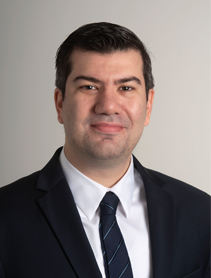
Thomas Le Barbanchon is a Full Professor of Economics at Bocconi University since 2025 and holds the Rodolfo Debenedetti Chair in Labor Economics. He received his PhD from Ecole Polytechnique (CREST-ENSAE) in 2012 and has been affiliated with institutions like CEPR, CREST, J-PAL, LEAP, BIDSA, IGIER, IZA, and IFS. His research focuses on labor economics, particularly job search mechanisms, unemployment insurance effects, gender disparities, and labor market policy evaluation. Educational background: PhD in Economics (Ecole Polytechnique), MSc in Economics (Universitat Pompeu Fabra), Diplôme d'ingénieur statisticien-économiste (ENSAE), and Diplôme d'ingénieur (Ecole Polytechnique) Research highlights include: Quantifying the impact of unemployment insurance reforms in France Analyzing gender differences in job search behavior Studying the effectiveness of hiring credits during economic crises Investigating how traditional AI improves job matching Examining migrant-native job search segregation patterns Scientific contributions appear in top journals like American Economic Journal: Applied Economics , Quarterly Journal of Economics , and Review of Economic Studies . Awards include two ERC grants (2017 & 2024) and the Bocconi Impact Award (2022). He mentors PhD students in economics and labor policy, currently serves as Director of IGIER research center, and maintains active editorial roles at Review of Economic Studies and Journal of the European Economic Association .
Nelson Nicolas Higuera Ruiz is a PreDoc Researcher at the Vienna University of Technology, affiliated with the Faculty of Informatics' Knowledge-Based Systems research group. His work bridges logic programming and deep learning for explainable AI. Research Focus: Neurosymbolic AI, Visual Question Answering (VQA), Answer Set Programming (ASP), and hybrid reasoning systems Projects: Leads optimization research in the LCS (2017–2025) project, developing neurosymbolic approaches for intelligent systems Key Contributions: Pioneering adaptive large-neighbourhood search algorithms for ASP optimization, modular neurosymbolic architectures, and contrastive explainability frameworks for VQA Collaborations: Active in international workshops and conferences including IJCAI, AAAI, and CLeaR, frequently collaborating with researchers like Thomas Eiter and Johannes Oetsch Publications: Focus on neurosymbolic integration, optimization algorithms, and explainability across AI, logic programming, and computer vision domains
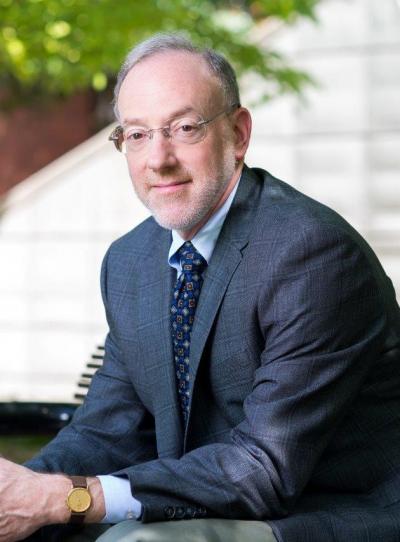
Rafail Ostrovsky is a Professor of Computer Science and Mathematics at UCLA , affiliated with the Center for Information and Computation Security at the Henry Samueli School of Engineering and Applied Science. He earned his Ph.D. in Computer Science from MIT in 1992 under Silvio Micali. Research Focus: His work spans cryptography, algorithms, and theoretical computer science, emphasizing secure multi-party computation, zero-knowledge proofs, oblivious RAM, and high-dimensional data analysis. Applications include privacy-preserving data mining, systems security, and quantum cryptography. Article Trends: Recent publications address concurrent security protocols, robust secret sharing via expander graphs, and efficient multi-party computation. Topics intersect computational complexity, cryptographic reductions, and practical security implementations. Awards: Recipient of the 2018 RSA Conference Excellence in Mathematics Award , 2017 IEEE Fellow , and multiple IEEE/ACM honors. Holds 14 U.S. patents and over 290 refereed papers. Advising: Supervised 27 Ph.D. students, many now professors at top institutions. Served on 40+ program committees, including FOCS 2011 Chair. Labs: Leads the CICS research center, fostering interdisciplinary work in information security and cryptographic systems.
Jeff M Phillips is a Professor in the Kahlert School of Computing at the University of Utah, specializing in algorithms for big data analytics, computational geometry, and machine learning. He holds a BS in Computer Science and Mathematics from Rice University (2003) and a PhD in Computer Science from Duke University (2009). He serves as Director of the Utah Center for Data Science, Director of the Data Science Program in the Kahlert School of Computing, and Faculty Co-Director of the One U Data Science Hub. His research focuses on geometric data analysis, coresets, sketches, and handling uncertainty in data. Education: BS/BA (Rice University, 2003), PhD (Duke University, 2009) CI Postdoctoral Fellow at University of Utah (2009–2011) His research interests include algorithms for big data analytics, computational geometry, machine learning, spatial statistics, and AI. He has led NSF-funded projects on spatial data analysis, cosmic origins via AI, and reactive flow data modeling. Phillips has advised numerous PhD and master’s students, contributing to topics like trajectory classification and bias mitigation in word embeddings. His publications span computational geometry, data science, and machine learning. Notable work includes coresets for kernel density estimates, bias mitigation in language models, and scalable spatial scan statistics. Phillips is also active in academic service, serving as co-PC chair for SoCG 2024 and on program committees for major conferences like NeurIPS and ICML.
Dr. Sara Ahmadian is a Researcher at the University of Waterloo's Department of Combinatorics and Optimization. She completed her Ph.D. in 2017 under the supervision of Prof. Chaitanya Swamy, earning the 2017 University of Waterloo Outstanding Achievement in Graduate Studies award. Her research focuses on designing efficient algorithms for optimization problems in machine learning and big data analysis, particularly in facility location and clustering. She has held visiting research positions at the University of Alberta, Hausdorff Research Institute for Mathematics, and École polytechnique fédérale de Lausanne. Education: Ph.D. in Combinatorics and Optimization, University of Waterloo (2017) Master's in Combinatorics and Optimization, University of Waterloo (2010) Bachelor's in Computer Engineering, Sharif University of Technology (2008) Research interests include approximation algorithms, online algorithms, and algorithmic game theory applied to clustering and facility location problems. Her work has led to advancements in k-means and k-median problems, with a notable improvement in the fundamental k-means algorithm. Scientific Awards: 2017 University of Waterloo Outstanding Achievement in Graduate Studies (Ph.D.) designation Advising and Grants: No specific advising or grant information is provided in the text. Labs/Teams: No specific lab or team affiliations mentioned.
Gita Reese Sukthankar is a Professor in the Department of Computer Science at the University of Central Florida (UCF) , where she directs the Intelligent Agents Lab . Her research focuses on activity and plan recognition , with applications in multi-agent systems, robotics, and human-robot interaction. She earned her Ph.D. from the Robotics Institute at Carnegie Mellon University and joined UCF in fall 2007. Research Interests: Her work spans activity recognition , intent inference , multi-agent coordination , and human-robot teams . She has applied these techniques to domains such as adversarial games (e.g., military simulations, Unreal Tournament), assistive technologies, and cooperative robotics. Her research integrates AI, machine learning, and probabilistic models to understand and predict complex team behaviors. Publication Trends: Her publications emphasize spatio-temporal modeling , probabilistic graphical models (e.g., HMMs, CRFs) , and multi-agent plan recognition . She frequently publishes in top venues like AAMAS, AAAI, and ICRA, with a focus on robust recognition of team behaviors, transfer learning, and real-world AI applications. Scientific Awards: NSF CAREER Award (2009) AFOSR Young Investigator (2009) ONR Summer Faculty Fellow (2008) UCF Faculty Excellence for Doctoral Mentoring (2012) CECS Dean's Research Professorship (2013) AAAI Senior Member (2021) ACM and IEEE Senior Member Advising and Grants: She mentors graduate students in AI and robotics and has led research funded by DARPA, AFOSR, and ONR. Her lab develops systems for intelligent agents that can understand and collaborate with humans. She has served on numerous program committees and editorial boards, including ACM Transactions on Autonomous and Adaptive Systems . She teaches courses such as Intelligent Systems , Robotics , and Machine Learning , and has been recognized for both research and teaching excellence. Labs and Teams: She leads the Intelligent Agents Lab at UCF, which focuses on data-driven social informatics and AI for human-agent teams. Her group collaborates with researchers in robotics, computer vision, and cognitive science to build adaptive, intelligent systems.
Hsiao-Dong Chiang is a Professor in the School of Electrical and Computer Engineering at Cornell University. He holds a Ph.D. in Electrical Engineering from the University of California, Berkeley, and has made significant contributions to nonlinear system theory and power system stability. His research spans theoretical development and practical applications in electric power systems, nonlinear optimization, and machine learning. B.S., Electrical Engineering, National Taiwan University, 1979 M.S., Electrical Engineering, National Taiwan University, 1981 Ph.D., Electrical Engineering, University of California, Berkeley, 1986 Chiang's research interests focus on nonlinear system theory , power system stability and control , nonlinear optimization , and their applications to modern power grids with high penetration of inverter-based resources. He is renowned for developing the BCU method and TRUST-TECH methodology , which have enabled fast direct stability assessment and global optimization in complex systems. His work bridges fundamental theory with industrial deployment through his companies, Bigwood Systems, Inc. and Global Optimal Technology, Inc. His recent publications (2024–2025) reflect a strong trend toward integrating machine learning and deep neural networks with power system analysis , particularly in state estimation, optimal power flow, and voltage control. There is a clear emphasis on handling uncertainty, non-convexity, and multi-scale dynamics in active distribution networks and integrated energy systems . His work increasingly focuses on resilience , real-time control , and user-centered methodologies for modern grid operations. Chiang has received numerous scientific honors, including: IEEE Fellow (1997) United States Presidential Young Investigator Award (1989) Multiple DOE Grid Optimization Challenge Awards (2020–2023) Best Paper Awards from IEEE Transactions and Conferences Outstanding Education Award, Cornell University (1990) He has successfully managed over 100 research projects and holds 28 U.S. and international patents. As the founder of Bigwood Systems, Inc., he has commercialized advanced software for utility companies across the U.S. and Japan. His team has published over 480 refereed papers and received more than 17,500 citations. He advises a large research group and leads innovations in computational methods for energy systems. His lab is actively involved in developing next-generation tools for grid security, optimization, and machine learning integration.
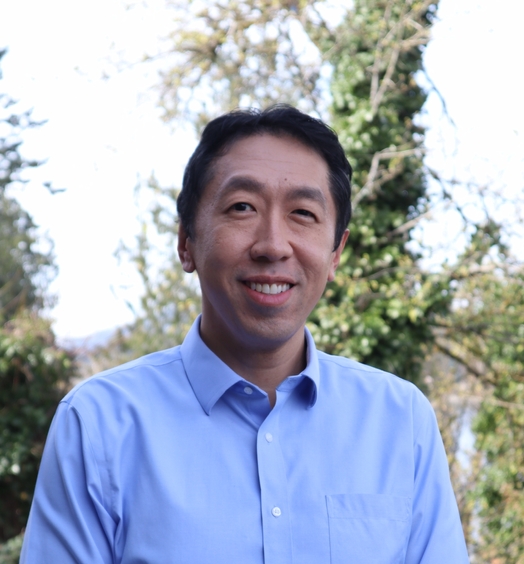
Andrew Ng is an Adjunct Professor at Stanford University's Computer Science Department and a globally recognized leader in AI. He is the Founder of DeepLearning.AI, Executive Chairman of LandingAI, General Partner at AI Fund, and Co-Founder of Coursera. His work has revolutionized machine learning and online education, with over 200 research papers in AI, robotics, and related fields. He was named to the 2023 Time100 AI list of most influential figures in AI. Ng's research focuses on machine learning, deep learning, reinforcement learning, and their applications in robotics and education. He pioneered the development of massive open online courses (MOOCs), notably through Stanford's early experiments in 2011 that attracted hundreds of thousands of learners. His contributions include foundational work in algorithms like Latent Dirichlet Allocation (LDA) for text analysis and advancements in spectral clustering and inverse reinforcement learning. His publications span topics from robotic hand design to scalable deep learning systems, emphasizing practical and scalable solutions. Ng's educational initiatives, such as the Machine Learning and Deep Learning Specializations, have educated millions worldwide. He advocates for accessible AI education and ethical AI development, emphasizing collaboration between academia and industry.
Daniel Campbell is a Lecturer in Web Development & Web AI at the Computer Science department of Edge Hill University. His work contributes to UN Sustainable Development Goals related to health and innovation. He is affiliated with the Centre for Intelligent Visual Computing and the Data and Complex Systems Research Centre. Education: He completed his Doctoral Thesis in 2018 titled 'An Ontology-Driven Approach To Personalised mHealth Application Development' under supervisors E. Pereira, G. McDowell, and C. Balakrishna. Research focuses on mHealth applications, ontology-driven frameworks, machine learning for health monitoring, and software engineering practices like bug prediction and open-source repository analysis. Recent projects include a Knowledge Exchange initiative with the water industry (2024-2026) as a Co-Investigator. His articles explore topics ranging from accelerometer-based elderly activity prediction to automated classification of software repository messages. Collaborations span institutions globally, with active engagement in topics like healthcare technology and user-centric design.
Professor Nicholas E. Jackson is an Assistant Professor of Chemistry at the University of Illinois, affiliated with the College of Liberal Arts & Sciences and the Beckman Institute for Advanced Science and Technology. He holds the Lincoln Excellence for Assistant Professors Scholar distinction. His research focuses on soft materials, quantum mechanics, and machine learning, particularly in developing coarse-grained electronic structure methods and sustainable polymer design. Education: B.A. in Physics from Wesleyan University (2011), Ph.D. in Chemistry from Northwestern University (2016). Postdoctoral work as a Named Fellow and Assistant Scientist at Argonne National Laboratory (2016–2021). Joined the University of Illinois faculty in 2021. Research interests include conjugated materials theory, electronic structure predictions, and interdisciplinary applications of machine learning in materials science. His work bridges computational chemistry, materials engineering, and AI, addressing challenges in renewable energy and sustainable materials. Recent recognition: 2025 Kavli Foundation Emerging Leader in Chemistry Award for innovative research in young scientists under 40. His contributions to AI-driven materials design and thermoset fracture modeling have been highlighted in peer-reviewed journals. Advances include novel approaches to polymer reactivity prediction, molecular-level understanding of conjugated polymers, and machine learning workflows for molten salt mixtures. His lab collaborates across disciplines to advance soft materials design and computational tools for chemistry.
Dr. Hakki Erhan Sevil is an Associate Professor in the Department of Intelligent Systems and Robotics at the University of West Florida, within the Hal Marcus College of Science and Engineering. He holds a Ph.D. in Mechanical Engineering from the University of Texas at Arlington and has extensive research experience in robotics, intelligent systems, and autonomous control. His work spans theoretical and applied domains, focusing on resilient and intelligent robotic systems. Ph.D., Mechanical Engineering, University of Texas at Arlington M.S., Mechanical Engineering, Izmir Institute of Technology B.S., Mechanical Engineering, Izmir Institute of Technology Dr. Sevil's research interests lie at the intersection of robotics, artificial intelligence, and control systems. He specializes in autonomous navigation, fault detection and isolation (FDI), multi-agent coordination, computer vision, and bio-inspired computational methods. His work emphasizes real-world implementation in unmanned and self-sustained systems, particularly in challenging environments. His recent publications and projects highlight a strong trend toward intelligent, resilient, and distributed robotic systems. Themes include entropy-based behavior modeling for UAV swarms, assistive robotics for household tasks, post-disaster damage assessment using aerial vision, and advanced guidance for GPS-denied navigation. These reflect a multidisciplinary approach combining machine learning, control theory, and robotics engineering. 2024 Faculty Excellence in Teaching Award, UWF 2024 Faculty Excellence in Undergraduate Research Mentoring Award, UWF DURIP Grant ($478,000) from ONR (with IHMC) USDA Grant ($728,000) with New Mexico State University US Air Force SBIR/STTR Grant ($110,000) with Catalano Aerospace AFWERX Funding for Distributed Behavior Research Dr. Sevil actively mentors Ph.D. and M.S. students and leads the Sevil Research Group, which has secured multiple internal and external grants from NSF, NASA, ARL, ONR, and USDA. He has served as PI and Co-PI on funded projects and advises student teams that have won national awards. His lab, the Intelligent Systems and Robotics Lab, is highlighted in university communications and national challenges. The group collaborates with IHMC, NMSU, and industry partners, fostering innovation in autonomous systems. The Sevil Research Group operates within the Intelligent Systems and Robotics Lab at UWF, conducting cutting-edge research in autonomous navigation, swarm intelligence, and resilient robotics. The lab collaborates with the Institute for Human and Machine Cognition (IHMC), New Mexico State University, and private aerospace firms. It supports student-led projects, participates in national robotics challenges, and maintains active GitHub repositories for open research dissemination.
Joel Waldfogel is a Professor and Frederick R. Kappel Chair in Applied Economics at the University of Minnesota's Carlson School of Management . He previously held positions at the Wharton School (University of Pennsylvania) and Yale University, and served as Associate Dean for MBA and MS programs at the Carlson School from 2017–2023. His academic journey began with a BA in Economics from Brandeis University (1984) and a PhD in Economics from Stanford University (1990). Education : PhD in Economics, Stanford University (1990) BA in Economics, Brandeis University (1984) Research Interests span industrial organization, law and economics, digital markets, intellectual property, and media economics. He focuses on platform economics, market efficiency in digital environments, and welfare implications of technological change, particularly in creative industries. Recent research trends include: Platform bias and regulatory frameworks (e.g., Digital Markets Act) Welfare impacts of gender-inclusive intellectual property creation Legal challenges from AI-generated content and copyright adaptation Consumer welfare in digital product markets Market structure in media and cultural industries Scientific Awards : Kaminstein Scholar at U.S. Copyright Office (2021–2022) Publications include over 80 articles in top journals like the American Economic Review and Journal of Political Economy , as well as books such as Digital Renaissance and The Tyranny of the Market . His work addresses platform power, digital regulation, and the economics of cultural goods.
Virginia Pallante is a Postdoctoral Researcher at the Netherlands Institute for the Study of Crime and Law Enforcement (NSCR) since 2020, specializing in ethological analysis of human behavior within criminological contexts. Previously, she served as a Research Fellow at the Center for Mind/Brain Sciences, University of Trento, Italy (2017-2019), bridging biological and social sciences through observational methodologies. Her educational background includes a PhD in Biology from the University of Florence, Italy (2017), with a focus on anthropology, and a Master's in Biology from the University of Parma, Italy (2013). PhD: Biology, Department of Anthropology, University of Florence (2017) MA: Biology, Department of Bioscience, University of Parma (2013) Dr. Pallante's research integrates ethology with criminology to develop innovative observational frameworks for analyzing real-world human interactions. Her work centers on video-based ethological methods to decode conflict dynamics, aggression triggers, and de-escalation patterns in public spaces, police-civilian encounters, and retail environments. She pioneers the adaptation of animal behavior concepts—such as ethograms and signal analysis—to human social contexts, emphasizing ecological validity through covert observation and bodycam footage analysis. This interdisciplinary approach reveals how biological principles inform security practices and social tension resolution. Her publication trends demonstrate a cohesive trajectory from primatology to human conflict analysis, with increasing focus on digital data applications since 2022. Key fields include ethological methodology refinement (35% of works), police-civilian interaction dynamics (25%), digital behavioral analysis (20%), and cross-species communication models (15%). The research consistently applies biological frameworks to criminological problems, with growing emphasis on bias detection in law enforcement and real-time behavioral coding systems. Dr. Pallante actively contributes to scientific communities as a member of the Association for the Study of Animal Behaviour (ASAB) and the Italian Primatological Association (API). Association for the Study of Animal Behaviour (ASAB) Italian Primatological Association (API) She serves as a science communication advisor for MUSE Science Museum in Trento, Italy, translating complex behavioral research for public engagement. Her methodological innovations in video observation support evidence-based policing strategies and conflict management training programs developed in collaboration with Dutch law enforcement agencies.
Johannes Soeding is a Research Group Leader in the Computational Biology department at the Max Planck Institute for Multidisciplinary Sciences in Göttingen, Germany. His work bridges physics, bioinformatics, and molecular biology, focusing on computational methods for biological data analysis. His research interests include computational biology, protein structure and function prediction, metagenomics, transcriptional regulation, and statistical genomics. He develops widely used software tools such as HH-suite, HHpred, MMseqs2, and Foldseek for protein sequence and structure analysis. The recent publications demonstrate a strong focus on high-throughput biological data, particularly in protein structure search (e.g., Foldseek), metagenomic gene discovery (e.g., MetaEuk), and regulatory genomics. His work combines algorithm development with deep biological insights, often published in top-tier journals like Nature Biotechnology , Science , and Nature Methods . He has been involved in significant methodological advances in sequence clustering, contact prediction, and eQTL analysis, showing a consistent trend toward scalable, data-driven approaches in genomics and proteomics. Soeding has contributed to major projects in gene regulatory networks and RNA biology, often in collaboration with experimental groups. His leadership in developing open, efficient bioinformatics tools has had a broad impact on the scientific community. He is affiliated with several graduate programs including IMPRS Physics of Biological and Complex Systems, Biomolecules: Structure - Function - Dynamics, and Genome Science, indicating active participation in training the next generation of scientists.