Simon Hewitt is an Assistant Professor in the Department of Media Studies at Maynooth University, within the Faculty of Arts and Humanities. He holds a PhD in Film Studies from King's College London, an MA in Film Studies from Columbia University, and a BA (Hons) in Screen Studies from Liverpool John Moores University. His research bridges media audiences and industries, focusing on how social media transforms audience participation and their relationship with film dynamics. Current projects include studies on intermedial labor in UK scare attractions, video game/cinematic convergence, and the financial exploitation of paratextual fan communities. Professional affiliations include being an Associate Fellow of Advance HE and a member of the Social Research Ethics Subcommittee. Hewitt supervises projects on fandom, participatory culture, marketing, and emergent technologies. His 2023 book Word-of-Mouth in Contemporary Hollywood examines audience influence on film financing, marketing, and distribution through Bourdieuean frameworks.
Iain Robert Smith is a Senior Lecturer in Film Studies at King’s College London, specializing in transnational cinemas, cult film studies, and transnational adaptation. He previously held a Senior Lecturer position at the University of Roehampton (2010–2016). His research challenges hegemonic views of cultural globalization by examining how Hollywood films are remade and adapted across cultures. He co-founded the SCMS Transnational Cinemas group and led the AHRC-funded 'Media Across Borders' research network (2012–). Smith holds a PhD and MA in Film Studies (Distinction) from the University of Nottingham and a First-Class MA (Hons) in English Literature and Film Studies from the University of Glasgow. His research interests include Transnational Cinemas post-1945, Global Hollywood, Popular Cinemas of Asia (especially India and Turkey), and Cult/Exploitation Horror Cinema. He co-edited Transnational Film Remakes (2017) and Media Across Borders (2016), and authored The Hollywood Meme (2016). Current projects include a book on global Batman adaptations and a decolonizing critique of cult film studies. Awards: AHRC/BBC New Generation Thinker (2018), Senior Fellow of the Higher Education Academy (2018) Teaching: Specializes in film history, world cinema, and cult/exploitation cinema. Organized festivals like the Turkish Film Remakes event (2022) and the Turkish Star Wars UK tour (2018). Publications: Over 30 peer-reviewed articles and edited volumes, with recent focus on global horror dynamics, decolonizing film studies, and transnational giallo remakes. He serves on editorial boards for Transnational Screens and Intensities: Journal of Cult Media , and founded the 'Remakesploitation Film Club' at The Cinema Museum. His work bridges academic research with public engagement through film screenings and director Q&As.
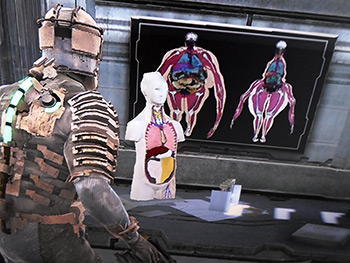
Diane Carr is a Professor of Media and Cultural Studies at the Institute of Education, University College London (UCL), where she serves as Director of the Digital Media MA Programme. Based in the Culture, Communication & Media department, Carr is an established scholar in game studies, media studies, and critical disability studies. Her work bridges academic research with practical applications in digital media education. Carr's research focuses on media studies and cultural studies perspectives on digital games and players, with particular emphasis on critical analysis, methodology, representation, and screen studies. During 2024-25, her research follows two key themes: developing ludic autoethnography to articulate real-world experiences of discrimination, and examining complicity with big tech, datafication, and AI in games and education. Her work consistently explores the intersection of disability studies with game studies, challenging normative representations of ability in digital spaces. Carr's publications reveal a sustained engagement with disability representation in games, particularly through analyses of titles like Dead Space and Deus Ex. Her research demonstrates how games function as cultural texts that both reflect and shape societal attitudes toward disability, ability, and bodily difference. She employs textual analysis and autoethnographic approaches to examine how games construct notions of normalcy and deviance. UCL Widening Participation community of practice awards (2022) ONE UCL Award for collegiality, 'Ways of Working/Working Together' (2021) UKLA Postgraduate Research Prize (2015) Carr has supervised numerous PhD students including Danielle Kleinerman (in progress), Angeliki Symeonidi (2020), Bruno de Paula (2019), and Angela Colvert (2015). Her research funding includes significant projects like 'Disability and Community: Dis/engagement, Dis/enfranchisement, Dis/parity and Dissent' (2016-2021) funded by the AHRC, 'Alternative Futures: Disability and Community' (2014-2015), and 'Digital Games: Representations of disability' (2013-2014). She has also led projects on AI education using science fiction and virtual worlds in higher education. As Director of the Digital Media MA Programme, Carr leads initiatives that connect game studies with critical media education. Her teaching includes research design and game studies on the MA Digital Media Critical Studies program. Notably, Carr is deaf, bringing lived experience to her critical disability studies work while actively contributing to academic discourse on accessibility and representation in digital spaces.
Dr Nikki Ji-Yeon Lee is a Senior Lecturer in Asian Media at Nottingham Trent University's Department of Humanities, School of Social Sciences. With prior academic appointments at Yonsei University and Korea National University of Arts in Seoul, her career bridges UK and Korean academic spheres. She co-founded the London Korean Film Festival in 2001 and maintains active industry connections as a former independent documentary filmmaker and film event interpreter. Her educational background includes: BA and MA in Sociology from Yonsei University, Seoul MA in TV Documentary from Goldsmiths College, University of London PhD in Cultural Studies from Goldsmiths College, University of London Lee's research specializes in transnational East Asian cinema with emphases on Korean and Chinese film industries, film festival circuits, and cinematic soundscapes. Her work critically examines globalization's impact on film production, auteur branding, audience reception, and co-production models, particularly investigating how cultural specificity navigates global markets. Current projects explore Korean film sound design, China-Korea media collaborations, and East Asian television drama formats. Analysis of her 2018-2025 publications reveals evolving research trajectories: early work focused on film festival politics and auteur studies (e.g., Park Chan-wook), while recent scholarship increasingly engages with sound studies and occult genres in Korean cinema. Her output consistently bridges industrial analysis with cultural criticism, demonstrating expertise in both Korean cinematic traditions and transnational media flows. Lee has significantly contributed to academic discourse through editorial projects including co-editing The Korean Cinema Book (BFI/Palgrave Macmillan) and Japanese Cinema (Routledge). Her publications in Cinema Journal and Screen establish her as a key voice in East Asian film studies, with Korea Film Council (KOFIC) recognizing her expertise through commissioned research on UK distribution patterns.
Merlin Seller is a Lecturer in Design and Screen Cultures at the University of Edinburgh's Edinburgh College of Art, appointed in 2019. They teach theory and historical/cultural context across Film, Comics, Media and Game Studies. Seller co-founded the Game Worlds research cluster within the Centre for Data, Culture and Society. Education: MA from St Andrews University MSt from Oxford University PhD from University of East Anglia (UEA) on transmedia works between film, photography and painting in interwar England Seller's research interests span Game Studies, Film Studies, Horror, Non-human theory, and Queer/Trans approaches to games. Their work explores (Post-)Phenomenology, visuality in games, and the representation of nonhuman entities in screen-based media. Seller identifies as a proudly pansexual and trans academic with a background in Art History and Visual Cultural Studies. Analysis of Seller's publications reveals a strong interdisciplinary focus bridging Game Studies with critical theory. Their work frequently examines the intersection of nonhuman perspectives, queer theory, and phenomenological experience in games and film. Recurring themes include temporal mechanics, ecological consciousness, and the materiality of digital interfaces, demonstrating a consistent engagement with contemporary theoretical frameworks in media studies. Seller supervises PhD students including Yun Lu, Trina Tian (Siyu), and Danni C. Pascuma. They also teach courses such as 'Design, Play and Games,' 'Contemporary Cinema,' and 'Introduction to Queer Studies,' while supervising Honours dissertations. Seller co-organized the 'Affecting Game Space' conference through the Game Worlds research cluster. Their creative practice includes plein air paintings of videogame environments and dark comedy comics focused on speculative futures, visible through their portfolio at dearplayer.org.
Shane Denson serves as Professor of Film and Media Studies in the Department of Art & Art History at Stanford University's School of Humanities and Sciences. He also holds courtesy appointments in the Departments of German Studies and Communication. His academic profile spans multiple disciplines with a particular focus on the evolving relationship between media technologies and cultural forms across historical periods. Denson's research interests encompass a wide spectrum of media studies topics, with particular emphasis on phenomenological and media-philosophical approaches to film, digital media, comics, games, and serialized popular forms. His scholarly work investigates how media technologies shape human perception, embodiment, and cultural production, especially in the transition from cinematic to post-cinematic media environments. He has developed significant theoretical frameworks around concepts like discorrelation, post-cinema, and digital seriality that have influenced contemporary media studies discourse. An analysis of Denson's recent publications reveals consistent engagement with the philosophical implications of emerging media technologies, particularly artificial intelligence and digital platforms. His work demonstrates a distinctive trajectory from early research on Frankenstein adaptations and serial narratives toward contemporary examinations of AI aesthetics, desktop cinema, and the phenomenology of digital interfaces. Denson's scholarship bridges traditional academic writing with innovative digital and videographic forms, reflecting his commitment to multimodal scholarly expression. Denson has established himself as a leading voice in the study of digital seriality, with numerous publications exploring how serial forms evolve across media platforms. His research demonstrates how contemporary digital media environments transform traditional narrative structures while creating new forms of community and meaning-making through serialized content. This work intersects with his broader interests in media philosophy and the embodied experience of digital interfaces. Professor Denson maintains an active scholarly practice through his personal website (shanedenson.com) and ORCID profile, where he shares his publications, videographic essays, and experimental digital projects. His work with ROMhacking.net demonstrates his commitment to digital humanities methodologies that combine code analysis with cultural critique, particularly in examining how fan communities engage with and transform established media properties through modification and reinterpretation.
Matt Denny is a Teaching Fellow in Film & Television Studies at the University of Warwick's Faculty of Arts, where he also serves as Widening Participation and Outreach Officer. He convenes core modules including Visual Cultures, Transnational Action Cinema, and Film Analysis and Methods for both undergraduate and postgraduate students, while acting as primary contact for SMLC Joint Honours students. He earned his First Class BA, MA for Research, and PhD (2016) all in Film and Television Studies from Warwick. His doctoral thesis examined film authorship and postmodern cinema, establishing foundations for his ongoing research trajectory. Denny's research centers on Film Theory with emphasis on authorship and representation, Contemporary Hollywood Cinema specializing in action genres, British Horror Cinema including folk horror and gothic traditions, and Film-Philosophy exploring post-structuralism and posthumanism. His work consistently examines intersections between genre conventions, philosophical frameworks, and contemporary socio-technological concerns. His 15 most recent publications reveal strong thematic continuity in folk horror studies, posthuman representations, and genre theory. Denny frequently analyzes how horror and science fiction reflect contemporary anxieties about technology, identity, and temporality, with recurring focus on folk horror's resurgence and AI's philosophical implications in cinema. Denny actively contributes to academic communities through memberships in The Fear Network, British Association of Film, Television and Screen Studies (BAFTSS), and International Gothic Association. His public engagement includes podcast appearances on Gender and AI, Eavesdropping at the Movies, and TRT World discussions about Scorsese and Marvel cinema. Though previously conducting research primarily in personal time without institutional funding, Denny now benefits from 10% research allocation under Warwick's new workload model. He has presented at numerous international conferences while maintaining significant teaching responsibilities across multiple course levels. Denny leads departmental outreach initiatives and collaborates with Warwick's Institute of Advanced Studies through The Fear Network. His interdisciplinary approach connects film studies with philosophy, gender studies, and emerging technologies through projects like the Genetics: Science and Society module with IATL.
Dr. Michiel Kamp is Assistant Professor of Musicology at Utrecht University's Department of Media and Culture Studies within the Faculty of Humanities. He holds a PhD from the University of Cambridge (2015) and co-founded the Ludomusicology research group. His research employs hermeneutic and semiotic approaches to analyze video game music and related audiovisual media. Key interests include musical transmediality, ubiquitous music, phenomenologies of listening, participatory culture, sound synchronization, ecological psychology, musical affordances, ludomusicality, and the aesthetics of background music. Publications focus on phenomenological approaches to game music, hermeneutic analyses of interactive soundtracks, and theoretical frameworks for understanding musical meaning across media platforms. Recent work explores VR audio experiences and historical perspectives on musical interfaces. Dr. Kamp has organized numerous international conferences on video game music and edited foundational publications in ludomusicology. His monograph Four Ways of Hearing Video Game Music presents a comprehensive theoretical framework for game music analysis.
Monica Germana is a Reader in Gothic and Contemporary Studies at the University of Westminster since 2020, with a focus on Gothic literature, contemporary fiction, Scottish culture, and fashion studies. She has previously taught at the University of Derby and Roehampton University, and was a tutor at the University of Glasgow during her PhD studies. Executive Secretary, International Gothic Association (2011–present) Member, International Association for the Study of Scottish Literatures Member, Scottish Society for Northern Studies Her research spans interdisciplinary intersections of gender, Gothic traditions, and cultural identity , including Scottish literature, Arctic narratives, and James Bond studies. She has explored hauntings in postcolonial spaces, 21st-century monsters, and the Gothic's role in environmental humanities. Recent publications analyze the James Bond franchise's gendered fashion, Gothic landscapes in Scottish and Italian cinema, and Arctic-Scottish cultural links. Her work has been recognized with the Emily Toth Award honourable mention (2020) and a shortlisting for the Allan Lloyd Smith Prize (2019). Supervision: Currently advising Valeria Ryrak (autofiction/memory) and Kevin MacNeil (Buddhism in writing) Former Students: Aisling McKeown (migrancy in Irish narrative), Kate Turner (queer Scottish fiction)
University of California , Santa Barbara (UCSB)United States
James McNamara is a Lecturer in Film and Media Studies at the University of California, Santa Barbara. He holds affiliations with UCSB's Early Modern Center (Department of English) and previously served as a Guest Artist in the Department of Theater and Dance. His academic roles include teaching courses on screenwriting, adaptation, and film analysis, such as Adaptation and Advanced Screenwriting . Ph.D. in English Language and Literature from the University of Oxford Graduate Diploma in Screenwriting from Australian Film Television and Radio School LL.B. and B.A. in English from University of Western Australia Research interests focus on adaptation studies (particularly Shakespearean screen adaptations), television narrative structures, medical humanities, and Gothic horror. His creative practice includes writing and producing acclaimed TV series like THE ARTFUL DODGER (Disney+/Hulu) and COOPER (Goalpost/Quizzical Pictures). Recent scholarly contributions include keynote presentations on Shakespeare adaptations at UCSB’s Early Modern Center conference and invited lectures on media translation. Awards include the Ian Potter Foundation Fellowship for cultural criticism and BAFTA LA recognition as an 'international rising star.' Teaching spans courses like Basic Screenwriting , Adapt Shakespeare , and Advanced Film Analysis , with terms from 2020 to 2024. He previously served as Junior Dean at Pembroke College, University of Oxford, and held a Visiting Fellowship at the University of Sydney’s Department of English.
Dr. Troy Michael Bordun is an Assistant Professor in the English Department within the Faculty of Indigenous Studies, Social Sciences and Humanities at the University of Northern British Columbia, where he teaches film and television studies. He holds a PhD in Cultural Studies from Trent University, an MA from Brock University, and a BA Honours from the University of Toronto. His academic journey includes prior teaching positions as a contract instructor at Concordia University (Film Studies, Sociology, Art History, Communication Studies), Trent University (Cultural Studies, Sociology), and Bishop's University (English and Film Studies), where he received Trent University's part-time teaching award. Dr. Bordun's research spans film and media studies, celebrity studies, porn studies, and comics studies, with particular expertise in contemporary superhero comics, continental philosophy, and online pornography. His work examines genre theory, spectatorship, and the intersections of cinema with gender, sexuality, and power structures. His scholarship demonstrates a consistent theoretical sophistication, drawing on phenomenological approaches, affect theory, and continental philosophy to analyze cinematic experiences. His publications reveal a thematic trajectory connecting extreme cinema, pornography studies, and superhero narratives. The articles show his ability to bridge theoretical frameworks with close readings of specific films, often focusing on how cinematic form engages with philosophical concepts. His work consistently addresses how film genres function as sites for ethical and political critique, particularly regarding gender representation and power dynamics. Genre Trouble and Extreme Cinema: Film Theory at the Fringes of Contemporary Art Cinema (2017) SSHRC Explore Grant recipient Research Strategic Initiatives Grant (UNBC) Editorial board member for Comics Studies: Theory and Practice and Porn Studies Co-Chair of Comics Studies Special Interest Group (Society for Cinema and Media Studies) Dr. Bordun actively supervises graduate students in English and is available as a media expert on film and television studies. His current research includes developing a manuscript linking contemporary superhero comics and continental philosophy, an edited collection about the Invincible transmedia franchise, and ongoing research on online pornography, labor, platforms, and celebrity.
Su-Anne Yeo is a Sessional Lecturer in the Department of Asian Studies within the Faculty of Arts at the University of British Columbia. Her academic profile demonstrates expertise in film and media studies with a specific focus on Asian and diasporic screen cultures. Dr. Yeo completed her PhD in Media and Communications under Professor Chris Berry at Goldsmiths, University of London in 2016. Her doctoral research has evolved into a forthcoming monograph titled Alternative Screen Cultures in Asia Pacific for Amsterdam University Press. Her research interests span film studies, media studies, and cultural studies with specialization in Asian and Asian diasporic screen cultures. Yeo's scholarly work examines screen distribution and exhibition practices across Asia Pacific, with particular attention to how cinematic traditions intersect with cultural institutions like museums. Her research bridges historical cinematic practices with contemporary media environments. Yeo's two most significant publications demonstrate her focus on alternative cinematic spaces and practices. Her work explores how film festivals serve as cultural translation sites and how early cinematic practices are remediated within museum contexts. These publications reveal her consistent interest in non-mainstream cinematic spaces and the intersection of historical and contemporary media practices. As an educator, Yeo has taught courses including Asian Horror Cinema, where she examines the ideologies, industrial histories, socio-cultural contexts, and aesthetics of horror films from various Asian cinemas. Her teaching reflects her research expertise in Asian screen cultures.
Dr. Antonia Mackay is a Senior Lecturer in Publishing and Subject Coordinator for Media Journalism and Publishing at Oxford Brookes University's School of Arts. With a PhD in postwar American Literature and Culture, her academic career spans roles as an Associate Lecturer in Fine Art, Teaching Fellow in English Literature, and Visiting Lecturer in American Theatre at Goldsmiths, London. Her research intersects American Literature, Surveillance Studies, Digital Humanities, and Maternal Healthcare. She leads a major interdisciplinary project on the digitisation of maternal healthcare during the pandemic, supported by Research Excellence Awards and the Sheila Kitzinger Programme. Key outputs include the play Three M'others (2024) and upcoming publications with Palgrave Macmillan. British Association of American Studies (BAAS) Irish Association of American Studies (IAAS) Culture of the Suburbs Society for History of Women in the Americas (SHAW) Her teaching focuses on creative industries, fashion journalism, and research methodologies, bridging theory and practice across undergraduate and postgraduate levels. She supervises postdoctoral students in Digital Humanities and gendered corporeality-related projects.
Victoria Lowe is a Senior Lecturer in Drama and Film Studies at the University of Manchester. Her research focuses on British Cinema and Television History, screen acting, intermediality, and archival methodologies. She specializes in early television, stage-screen adaptation, and the relationship between film and other arts. Her work often engages with archival materials such as the Robert Donat, Basil Dean, and Jocelyn Herbert collections. Before academia, she worked in film and television production, including roles as a script reader for BBC Wales and Film Education Manager at FACT, Liverpool. She holds a PGCE in Drama and English from Aberystwyth University. Her current research project, 'Granadaland Revisited', explores regional identity in UK broadcasting (1956-2004). Teaching includes courses on Contemporary British Cinema, Screen Acting, and film theories. She supervises postgraduate research in areas like early television and screen adaptation. Her publications analyze key figures (e.g., Robert Donat, Jocelyn Herbert) and pivotal works in British film history, emphasizing intermediality and performance authenticity. Recent works include studies on BBC’s early television drama and 1960s British cinema design.
Saige Walton is a Senior Lecturer in Screen Studies and Associate Director of the Creative People, Products and Places (CP3) research centre at UniSA Creative. She holds a dual role as Research Degree Coordinator. Her work bridges film studies, visual culture, and phenomenology, focusing on screen aesthetics, embodiment, and global art cinemas. Walton’s research explores film-philosophical frameworks, horror studies, and experimental film, with a particular emphasis on the intersection of cinema and sensory experience. Her monograph Cinema's Baroque Flesh (2016) established her as a leading voice in embodied film theory. She has edited special journal issues on topics like 'Materialising Absence in Film and Media' and 'Screening the Artist.' Walton’s teaching spans film history, genre studies, and film theory. She collaborates with institutions like the Adelaide Film Festival and serves on the Alphaville journal’s International Advisory Board. Her recent publications include analyses of Claire Denis, Sofia Coppola, and folk horror cinema, reflecting her commitment to interdisciplinary research.