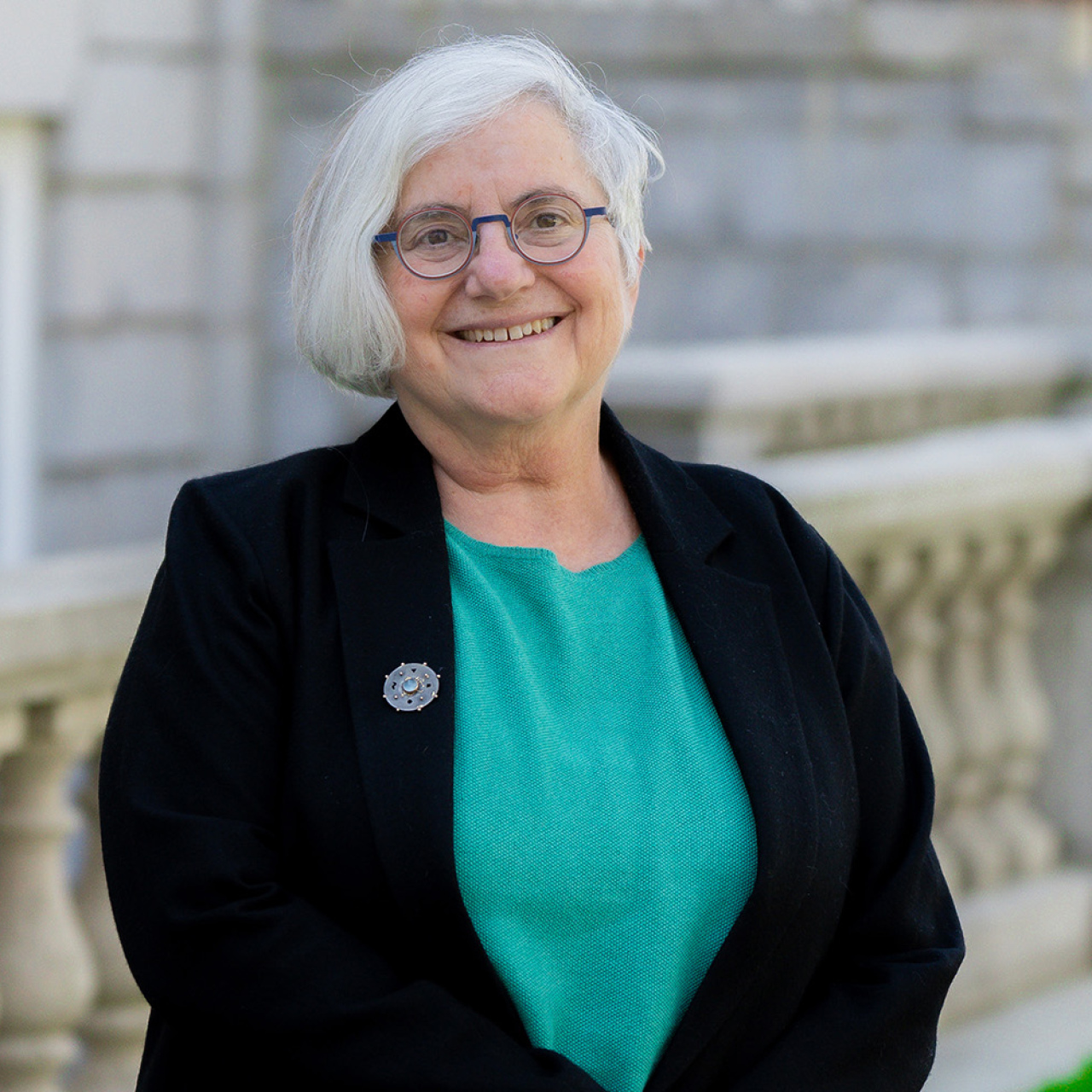
Julie A. Reuben is the Charles Warren Professor of the History of American Education and Faculty Director of the Phillips Brooks Center for Public Service at Harvard University's Graduate School of Education (HGSE). She specializes in the history of American higher education, focusing on the evolution of research universities, mid-20th century democracy-focused educational reforms, and the impact of 1960s student activism. Her work analyzes shifting university-society relationships, critiquing increasing privatization and declining public trust. She contributes to debates in Chronicle of Higher Education and other platforms. Education: PhD in American History from Stanford University (1990). Research Interests: History of university governance, moral education, and the intersection of academia with societal needs. She emphasizes how universities balance private interests with public good. Awards: Radcliffe Fellowship (2005), Choice Outstanding Academic Book Award (1997), multiple Spencer Fellowships. Leadership: Oversees the Phillips Brooks Center, promoting community engagement and public scholarship.
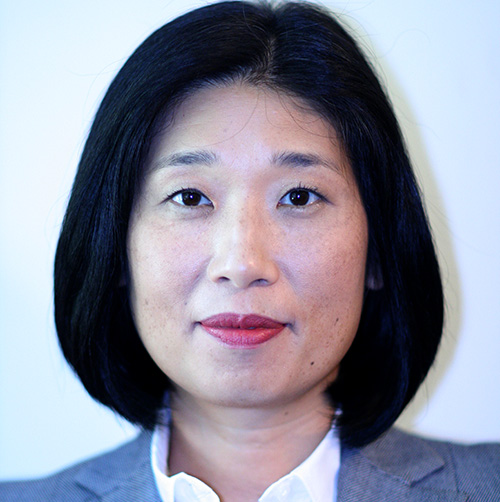
Mizuki Mazzotta is an Assistant Teaching Professor in the Department of Russian and East Asian Languages and Cultures at Emory University, where she also serves as Japanese Language Coordinator. Her academic journey includes a Ph.D. in Applied Linguistics from Georgia State University (2018) and M.A. degrees in Linguistics (McGill University) and Applied Linguistics (University of South Florida). Her research focuses on instructed second language acquisition, particularly the role of affect and sociocultural theory in L2 learning. She has extensive experience teaching Japanese language courses and mentoring students at Emory and previous institutions like Georgia State University. Education: Ph.D., Applied Linguistics, Georgia State University (2018) M.A., Linguistics, McGill University (2005) M.A., Applied Linguistics, University of South Florida (1997) B.A., English Literature, Soka University (1995) Research Interests: Instructed Second Language Acquisition Corrective Feedback in L2 Writing Sociocultural Theory in Language Education Learner Affect and Motivation Technology-Enhanced Language Learning Cultural Awareness in Language Instruction Awards & Grants: Recipient of multiple grants including the KAKENHI Grant (Japan), Mellon Humanities Pathways Grant, and Emory College Pedagogy Mini-Grant. Member of honor societies: Phi Beta Delta and Golden Key International. Service & Leadership: Executive Committee Member, Emory College Language Center Organizer of Japanese Program Guest Speaker Talks and Cultural Events Reviewer for Language Teaching Research and other academic journals Interviewer for the Japan Exchange Teaching Program Teaching & Mentorship: Instructor of Japanese language courses at Emory and Georgia State University Developer of study abroad programs in Japan and internship collaborations Mentor for Japanese interns and temporary faculty
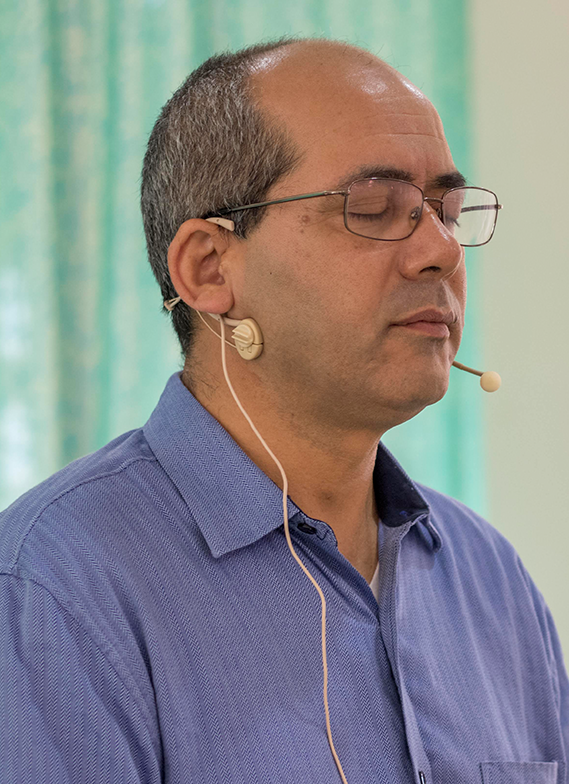
Lobsang Tenzin Negi is a Teaching Professor in Emory University’s Department of Religion and Executive Director of the Center for Contemplative Science and Compassion-Based Ethics (Emory Compassion Center). He leads initiatives integrating Tibetan Buddhist contemplative practices with modern scientific research, including developing programs like Cognitively-Based Compassion Training (CBCT®), the Emory-Tibet Science Initiative (ETSI), and the SEE Learning® framework. Born in a Himalayan region, he holds a PhD from Emory University and a Geshe Lharampa degree from Drepung Loseling Monastery. His work bridges contemplative science, education, and global ethics, emphasizing compassion as essential for human flourishing. Education: PhD, Emory University, 1999 (interdisciplinary dissertation on Buddhist and Western approaches to emotions) Geshe Lharampa, Drepung Loseling Monastic University, 1994 (highest Tibetan monastic degree) MA, Institute for Buddhist Dialectics, 1984 Research & Programs: Compassion Science: Examines compassion’s effects on mental/physical health and social well-being through CBCT®. ETSI: Develops modern science curricula for Tibetan monastics, training them as educators and researchers. SEE Learning®: Global K-12/Higher Ed framework for social, emotional, and ethical education. Mind-Body Sciences Program: Offers study abroad courses in India, integrating Tibetan Buddhism with Western science. Recent Article Trends: Focus on compassion’s applications in healthcare (PTSD, depression, HIV), education (SEL frameworks), and interdisciplinary mind-body research. Studies emphasize measurable impacts on neurology, immune response, and behavioral outcomes. Awards & Honors: While no specific prizes are listed, his leadership roles and global partnerships (e.g., with His Holiness the Dalai Lama) reflect recognition in contemplative science and intercultural education. Grants & Advising: Oversees multi-year initiatives like Tibet Week and the Emory-Tibet Partnership renewal. Advises on global compassion programs and collaborates with institutions like the Piramal Foundation in India. Labs/Teams: Directs the Emory Compassion Center and collaborates with Drepung Loseling Monastery, Emory’s Institute of Tibetan Studies, and international partners to advance compassion-based research and education.
Michael Karas is an Assistant Professor of Applied Linguistics at Brock University's Faculty of Social Sciences. He holds a PhD from the University of Western Ontario (2019). His research focuses on language teacher self-efficacy, reflective practice, and learner silence, with notable contributions to meta-analyses in language education. He teaches courses such as Second Language Acquisition (LING 3Q91) and Pedagogical Grammar (LING 5P02). Karas serves as Book Review Editor for the TESL Canada Journal and TESL Ontario Academic Coordinator, demonstrating active engagement in academic service. Education : PhD in Applied Linguistics, University of Western Ontario (2019) Research Specialization : Explores intersections between teacher proficiency, classroom dynamics, and innovative methodologies like duoethnography. His work bridges theoretical research with practical applications in teacher education and language policy. Service Contributions : Editorial roles at TESL Canada Journal (2017–present) Coordinator for TESOL Doctoral Forum (2017–2018)
James Rice serves as the Walter S. Dickson Professor of English and American History in the Department of History at Tufts University's School of Arts and Sciences. Appointed in 2016 and serving as Department Chair from 2018-2024, he holds a prominent position in early American historical scholarship. His academic credentials include a BA in History from Colorado College (1985), followed by an MA (1989) and PhD (1994) in History from the University of Maryland, College Park. Prior to Tufts, he taught at SUNY Plattsburgh, Washington College, and Tübingen University. Rice's research dismantles traditional boundaries between American history and Native American history, colonial history and prehistory, and national histories across North America. His work bridges historical scholarship with environmental studies and interdisciplinary approaches, currently focusing on two major book projects: a comprehensive synthesis of Native American environmental history spanning from Oaxaca to the Arctic since first human habitation, and a critical reassessment of England's first permanent American colony titled Founding Massacres: Violence, Ambition, and the Birth of Virginia . His publication record reveals a sustained emphasis on Indigenous perspectives in colonial America, with recurring themes of environmental change, intercultural violence, and political diplomacy. Recent works increasingly integrate environmental history frameworks with ethnohistorical methods, particularly examining Powhatan expansionism, Bacon's Rebellion, and captivity narratives within broader Atlantic World contexts. His scholarly recognition includes: OAH Binkley-Stephenson Award for best article in the Journal of American History (2015) State University of New York Chancellor’s Award for Excellence in Scholarship (2016) Professional service demonstrates significant field leadership through editorial board membership for Environmental History journal (2025-2029), prize committee roles for the American Society for Environmental History and American Society for Ethnohistory, and advisory positions including the Commonwealth of Virginia's 2019 Commemoration Historian Council and Historic Jamestowne project. His teaching portfolio at Tufts spans advanced seminars on North American history, colonial America, and environmental humanities.
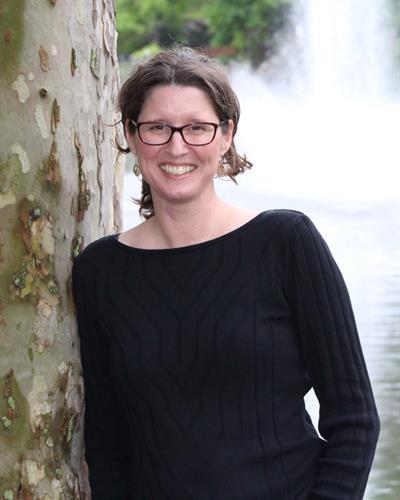
Christine McWayne is a Professor in the Eliot-Pearson Department of Child Study & Human Development at Tufts University, School of Arts and Sciences. Her work focuses on early childhood education, particularly addressing systemic barriers faced by children in poverty and culturally diverse communities. She leads the Ensuring eXperiences for Children's Early Learning Success (ExCELS) Lab and co-founded the Readiness through Integrative Science and Engineering (RISE) Project. Education: PhD in Psychology in Education (University of Pennsylvania, 2003), MS Ed in Psychological Services (University of Pennsylvania, 1998), BS in Psychology (Abilene Christian University, 1996). Research interests include culturally inclusive STEM curricula, family-school partnerships in ethnocultural communities, and strengths-based measurement development. She emphasizes leveraging community voices to inform interventions. Recent work addresses Latine families’ engagement, dual language learners, and bridging home-school divides. Her awards include the 2009 Reviewer of the Year Award. Grants and advising are central to her work, though specific student names are not listed in available materials. She collaborates extensively with community partners to design culturally responsive programs. Labs/Projects: ExCELS Lab (focusing on urban poverty and family engagement) and the RISE Project (STEM curriculum for Head Start teachers). Future work continues to prioritize equity, culturally grounded measurement, and systemic supports for marginalized children.
Ben Li is an Associate Professor in the Department of Computer Science at the University of Manitoba, Faculty of Science. His research focuses on combinatorics and theoretical computer science, including combinatorial design theory (e.g., Steiner triple systems, BIBDs, difference sets), graph theory, and algorithm design for combinatorial optimization problems. He also explores approximation algorithms for NP-Hard problems and subclasses of such problems with polynomial solutions. Dr. Li teaches a wide range of courses, including COMP 1010 (Introduction to Computer Science), COMP 2080 (Analysis of Algorithms), and advanced graduate courses like COMP 7720 on approximation algorithms and combinatorial optimization. His academic contributions span both theoretical computer science and interdisciplinary archaeological studies, as reflected in his publications. His recent work includes studies on ostrich eggshell beads' role in prehistoric social networks, archaeological site analysis in southern Africa, and medical education reforms in Canada. While his primary research aligns with computer science theory, his published articles also highlight interdisciplinary interests in anthropology, archaeology, and healthcare policy.
Dr. Laurel Young is a Professor in the Department of Creative Arts Therapies at Concordia University, specializing in music therapy with a focus on gerontology, palliative care, and neurodiverse populations. She holds certifications in the Bonny Method of Guided Imagery and Music (FAMI) and has over 23 years of clinical experience across geriatrics/dementia, oncology, HIV care, and developmental disabilities. Her roles have included Professional Leader of Creative Arts Therapies at Sunnybrook Health Sciences Centre and teaching positions at Wilfrid Laurier University and Temple University. Dr. Young’s research spans multicultural competence in therapy, ethical frameworks, and the intersection of music with health and well-being. Key themes include end-of-life care for dementia patients, singing groups for autistic adults, and bereavement support through music. She has published extensively in peer-reviewed journals and books, including editorial leadership for Barcelona Publishers’ Qualitative Inquiries in Music Therapy Monograph Series (2012–2013). Her work emphasizes bridging research and clinical practice, with a focus on marginalized groups such as older adults, individuals with disabilities, and those facing chronic illnesses. Awards include the 2014 CAMT Research & Publications Award and teaching accolades from Wilfrid Laurier and Temple Universities. Current projects explore AI-assisted therapeutic technologies and community-based music interventions.
George K. Danns is a Professor of Sociology in the Department of Sociology and Human Services at the University of North Georgia, Gainesville Campus. Holding a PhD from SUNY Stony Brook, he has received prestigious awards including the Ford Foundation Fellowship and Complete College Georgia Champion Award. His leadership roles include Chair of UNG Faculty Senate (2015-2016), former Dean of Social Sciences at the University of Guyana, and Senior Fulbright Fellow at the University of Michigan. Ph.D. in Sociology, State University of New York at Stony Brook M.A. in Sociology, State University of New York at Stony Brook B. Soc. Sc. in Social Sciences (Distinction), University of Guyana Dr. Danns specializes in Caribbean socio-political dynamics with emphasis on Guyana, examining race/ethnic relations, political leadership, national security, and community development. His research explores intersections of identity, class, and power in postcolonial contexts, addressing critical issues like environmental disasters, homicide patterns, youth vulnerability, and gender disparities. His fieldwork combines theoretical rigor with practical applications for policy development. His 15 most recent publications (2014-2020) reveal three dominant thematic clusters: Caribbean political economy (35%), diaspora/identity studies (30%), and entrepreneurship/financial literacy (35%). The work demonstrates consistent focus on Guyana while expanding to broader Latin American and Caribbean contexts, with increasing attention to youth entrepreneurship and financial inclusion in developing economies since 2017. Ford Foundation Fellowship for Doctoral Research in Latin America and the Caribbean Complete College Georgia Champion Award (2016) Senior Fulbright Fellowship Dr. Danns has mentored students through diverse sociology courses while securing consultancy grants from major international organizations including UNICEF, UNFPA, USAID, IADB, OAS, and PAHO. His funded research focuses on social policy development, with particular emphasis on youth programs, gender initiatives, and national security frameworks for Caribbean governments. As former Director of the Center for Economic & Social Research & Action (CESRA) at the University of Guyana, he led multidisciplinary teams conducting critical studies on suicide prevention, military roles in national security, and environmental disaster response. His current UNG affiliation involves collaborative research networks addressing regional social challenges through the Sociology and Human Services department.
Blaine A. Jacobs, PhD, is an Associate Professor of Pharmacology at the University of the Incarnate Word School of Osteopathic Medicine (UIWSOM), joining the faculty in June 2018. She earned her doctorate in Pharmacology from UT Health Science Center at San Antonio, supported by the Craniofacial Oral-Biology Fellowship and Council for Excellence in Women's Health Scholarship. Her research examines opioid receptor mechanisms for pain management, migraine pathology, and socioeconomic disparities in healthcare. Current projects investigate pain management inequities in San Antonio and osteopathic interventions for underserved populations. She mentors student-led research on ZIP code-based health disparities and maternal-fetal outcomes. Awards recognize her graduate research on peripheral analgesic targets. Postdoctoral work at UT Dallas involved migraine studies and pharmaceutical compound screening.
Prof. Emmanuel Kabengele Mpinga is a Professor at the Institute of Global Health (ISG) within the Faculty of Medicine at the University of Geneva. He leads the Division of Health and Human Rights, focusing on four core research areas: identifying rights violations impacting public health, clarifying the epistemology of health-human rights links, developing global surveillance indicators for health rights implementation, and designing intervention strategies. His work is part of an international network led by Harvard University and collaborates with institutions like Geneva University Hospitals (HUG). Education & Roles: Holds a Doctorate in Health Systems Policies, Masters in Public Health, and certifications in Health Administration and Human Rights. He has held an Swiss School of Public Health+ assistant professorship (2008-2012) and advises UN agencies, governments, and NGOs on human rights and public health. His research spans over two decades, addressing topics like Noma disease, economic costs of torture, and female genital mutilation. Research Interests: Interdisciplinary projects include the SNIS-funded Noma research initiative (2019-2021) to globalize Noma as a neglected disease, costing models for health rights violations, and human rights frameworks in AI-driven healthcare. His work emphasizes socio-economic impacts of health inequities and policy advocacy. Grants & Collaborations: Active in projects funded by Swiss Network for International Studies (SNIS), Northumbria University, and Danish Institute against Torture (Dignity). Collaborates with WHO, UN agencies, and global health networks. Leads training programs in health and human rights across Francophone Africa through e-learning platforms. Labs/Teams: Heads the Health and Human Rights Division at ISG, coordinating international research networks. Supervises PhD students (e.g., Krystel Ouaijan on malnutrition, Joshua Galjour on HIV/AIDS and political instability).
Azzedine Layachi serves as Professor of Government and Politics in the College of Liberal Arts and Sciences at St. John's University, with active leadership roles on the Executive Board of the American Institute of Maghribi Studies (AIMS) and the Advisory Board of the Maghreb Center (Washington, D.C.). Previously, he held presidencies at both the Northeastern Political Science Association and the New York State Political Science Association. His educational background includes: Bachelor’s Degree from Institut des Etudes Politiques, University of Algiers Master’s Degree in International Affairs, New York University Ph.D. in International Affairs, New York University Layachi’s research centers on North African and Middle Eastern political dynamics, with emphasis on economic development, political Islam, ethnic politics, and democratization processes. His work critically examines state-society relations in Algeria and Morocco, analyzing how colonial legacies, Islamist movements, and ethnic identities shape contemporary governance. He bridges academic rigor with policy relevance through frequent contributions to public discourse. His publications since the 1990s reveal a consistent focus on Maghrebi politics, evolving from structural adjustment impacts to post-Arab Spring transitions. Key themes include Islamist movement strategies, Berber ethnic mobilization, electoral politics, and colonial historical trauma. His output spans scholarly journals (e.g., Journal of North African Studies ), edited volumes, and op-eds in The Daily Star , reflecting dual engagement with academic and policy audiences. Teaching responsibilities encompass core political science subjects and specialized regional courses, including Comparative Politics, Politics of the Middle East/Africa, International Law, and Model United Nations. His curriculum emphasizes real-world applications through courses on developing-world politics, U.S. foreign policy, and nation-state dynamics.
Jordan Kidney is a Lecturer in the Department of Mathematics & Computing at Mount Royal University (MRU), where he has taught since 2011. His academic background includes a B.Sc. and M.Sc. in Computer Science from the University of Calgary (2003 and 2006, respectively). Kidney’s teaching focuses on introductory and advanced programming, systems architecture, operating systems, and web development. His research interests span Artificial Intelligence, particularly machine learning and multi-agent systems. He is recognized for contributions to educational methodologies in computer science and the development of tools like the ARES Simulator for multi-agent systems research. Education: M.Sc. Computer Science, University of Calgary (2006) B.Sc. Computer Science, University of Calgary (2003) Research Interests: Kidney’s work emphasizes AI applications, including machine learning algorithms and multi-agent systems. He explores emergent behavior testing, cooperative behavior learning, and educational frameworks for complex topics like MAS. His research often intersects with practical tools, such as the ARES Simulator, which he has refined to enhance teaching and testing methodologies. Articles Trends: His publications highlight two key areas: computer science education for non-majors and multi-agent systems research. Recent work (2018) addresses course design challenges for interdisciplinary students, while earlier contributions (2002–2006) focus on ARES-based testing and cooperative behavior analysis in MAS. His earlier studies (2003) also explored genetic algorithms and diversity-driven optimization. Grants & Advising: No advising roles or grants are explicitly listed in the provided information.
Prof. Juan Alonso is the Vance D. and Arlene C. Coffman Professor and James & Anna Marie Spilker Chair in the Department of Aeronautics & Astronautics at Stanford University. He directs the Aerospace Design Laboratory (ADL), focusing on high-fidelity computational methods for aerospace system design. His expertise spans transonic/supersonic/hypersonic aircraft, rotorcraft, and launch vehicles. Alumni include record-holding teams for human-powered watercraft and lightweight unmanned aerial vehicles. Education: PhD (1997) from Princeton University in Mechanical & Aerospace Engineering; M.A. (1993) Princeton; B.S. (1991) MIT Aeronautics/Astronautics. Research emphasizes multi-disciplinary optimization, numerical methods, and parallel computing applied to advanced aircraft design, sustainable aviation, and UAS systems. Notable contributions include computational design frameworks like SU2 and SUAVE, and initiatives in curriculum development for engineering education. Recent work focuses on: GPU-accelerated CFD solvers, multi-fidelity surrogate models (e.g., VortexNet), contrail simulation frameworks, and battery degradation modeling for electric aircraft. Active in urban air mobility and high-fidelity trajectory optimization for hypersonic systems. Labs/Teams: Aerospace Design Laboratory (ADL) leading open-source computational tools development. Involved in NASA-funded projects and industry partnerships for advanced propulsion systems.
Asu Ozdaglar is the EECS Department Head and MathWorks Professor at MIT, serving as Deputy Dean of Academics in the MIT Schwarzman College of Computing. Her research bridges optimization theory, machine learning, and network science with societal implications, focusing on AI ethics, data-driven decision systems, and strategic interactions in networked environments. Her technical contributions include foundational work on large-scale optimization algorithms (e.g., distributed methods, first-order methods), game-theoretic models for network systems, and federated learning frameworks. Recent work addresses critical societal challenges like misinformation dynamics, data market inefficiencies, and algorithmic fairness in AI systems. Publications from 2023-2025 highlight advancements in graphon-based network game analysis, privacy-preserving data mechanisms, and multi-agent learning dynamics. She co-leads initiatives in MIT's AI+D program, emphasizing interdisciplinary education and ethical AI development. Notable institutional roles include oversight of MIT's computing education strategy and contributions to pandemic-related research on infection control through testing optimization. Her work integrates technical rigor with policy-relevant insights, influencing both academic and real-world systems.