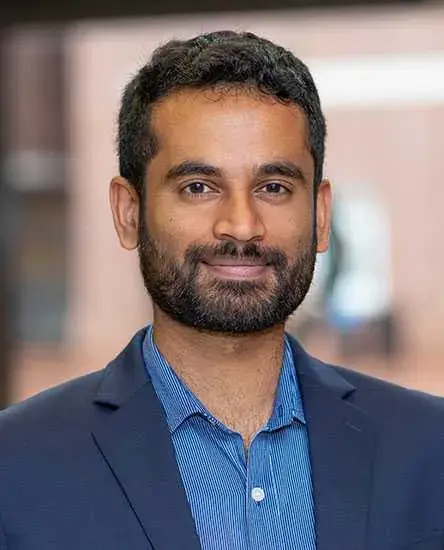
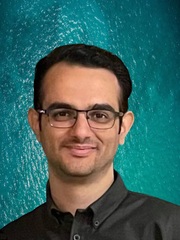
Francesco Quinzan is a Researcher at the University of Oxford's Department of Computer Science. His work focuses on advancing AI alignment, causal machine learning, and combinatorial optimization with applications in medical imaging, reinforcement learning, and fair algorithm design. He leads the ELSA project under Prof. Marta Kwiatkowska's supervision. Research interests include: Safe AI development through causal representation learning and doubly robust methods Optimization techniques for submodular functions and evolutionary algorithms Counterfactual analysis for bias detection in medical AI systems Reinforcement learning frameworks incorporating human feedback Recent publications (2020-2025) demonstrate contributions to: Causal feature selection and invariant predictors Scalable optimization methods for large-scale problems Robustness in multi-agent systems and diffusion-based models Algorithmic fairness in constrained feature selection Current projects involve: ELSA: Developing explainable and safe AI systems Optimal transport applications for domain correction Causal discovery from temporal data streams
Markus Hahn is a Professor of Electrical Engineering at Technische Hochschule Ulm (THU). He serves as a Member of the Senate and Head of the Internship Office within the Faculty of Electrical Engineering. His expertise spans AI-driven edge computing, automated driving systems, radar scene understanding, and software engineering. Hahn holds a Dr.-Ing. from Bielefeld University and has extensive industry experience with Bosch, Daimler, and Continental. His research focuses on safe autonomous systems, sensor fusion, and distributed algorithms. He has supervised four PhD students and led grants such as the BMBF-funded MIKE project. Notable awards include the DAGM Young Talent Award (2007) and CMIM 2018 Best Paper Awards. Education: PhD in Computer Science, Bielefeld University (2010) Diploma in Cognitive Robotics, Ilmenau University of Technology (2007) Research Interests: Combining edge AI with radar technology to enable real-time environmental perception for autonomous systems. Specializes in sensor fusion, radar data interpretation, and distributed software architectures. Grants: Ongoing: MIKE - Enhancing Inclusion via Edge AI Completed: AdaptIVe (EU), interactIVe (EU), UR:BAN (BMWi) Awards: Multiple best-paper recognitions at IEEE conferences and industry-driven research excellence awards.
Dan Tillapaugh is a Professor and Chair of the Department of Counselor Education in the Graduate School of Education (GSOE) at California Lutheran University. He also serves as the Associate Dean for Equity, Outreach, and Faculty Development within the GSOE. His roles include academic leadership, curriculum development, and promoting institutional equity initiatives. He holds a Ph.D. in Leadership Studies from the University of San Diego and an M.Ed. in Counseling and Personnel Services from the University of Maryland. His professional experience includes 10 years as a student affairs administrator in diverse institutional settings. Dr. Tillapaugh’s research focuses on intersectionality in higher education, college men and masculinities, LGBTQ+ issues, sexual violence prevention, and leadership development. His work emphasizes critical analyses of gender dynamics, institutional policies, and student-centered pedagogies. His publications (2024–2019) explore topics such as hegemonic masculinity, LGBTQ+ educational interventions, and trauma-informed practices. Recent trends in his work highlight systemic challenges, inclusive leadership frameworks, and the intersection of gender with student development. Awards: Emerging Scholar Designee by ACPA - College Student Educators International In teaching, he focuses on counseling theory, college student development, and organizational change. He advocates for equitable policies and inclusive campus environments through his administrative roles and research. His scholarly contributions address gaps in understanding marginalized student populations, particularly LGBTQ+ communities and male survivors of sexual violence, while advancing practical strategies for institutional reform.
Karen Griffee is a Distinguished Professor of Psychology at Concord University, affiliated with the College of Science, Mathematics, and Health and the Department of Social Sciences, Safe Zone. She holds a Ph.D., MS, and BS in Clinical Psychology from the University of New Mexico. Her career spans academia and clinical practice: she transitioned from clinical psychologist roles (1994–2010) to focus on teaching and university work. She maintains part-time clinical engagement through 2010 but prioritizes her academic role. Dr. Griffee’s research focuses on behavior analysis, clinical psychology, and human sexuality, particularly critical period learning in sexual development and familial incest dynamics. Her travel-based Cultural Psychology courses integrate experiential learning in New Mexico, Colorado, and the UK, emphasizing transformative educational experiences. She has published extensively on topics like sexual imprinting, incest risk factors, and developmental psychology. Her teaching portfolio includes courses such as Abnormal Psychology, Evolutionary Psychology, and Human Sexuality. She has led interdisciplinary research teams addressing sexual health, addiction, and family dynamics. Though no awards are explicitly listed, her prolific publication record reflects academic recognition. She advises no listed students but has mentored through course projects and research collaborations. Her professional journey combines clinical expertise with academic rigor, bridging theoretical psychology with real-world applications in education and therapeutic practice.
Dr. Deana Hays is an Assistant Professor and Undergraduate Program Director at Oakland University's School of Nursing. She has been with the university since 2008, previously serving as Director of the Nurse Practitioner Program (2011-2014) and Interim Associate Dean (2014-2017). Her clinical practice focuses on cardiology in Southeast Michigan. She teaches pharmacology and patient safety in both undergraduate and graduate nursing programs. Education: DNP – Oakland University MSN-FNP – Oakland University BSN – Valparaiso University Research interests include Quality and Safety , Just Culture , and Competency-Based Education . She emphasizes improving patient outcomes through safe clinical practices and educational frameworks. Recent work explores nursing students' perceptions of just culture in educational settings and barriers to nurse engagement in quality improvement. Professional contributions include grants totaling over $46,000 and leadership roles in organizations such as the American Academy of Nurse Practitioners and Sigma Theta Tau International. Her publications span nursing education, patient safety, and culturally-adapted healthcare interventions. Advising and Grants: Directed major curricular initiatives in HIV education and nurse practitioner training Recipient of SON Faculty Grant (2021) and HRSA-funded HIV curriculum project (2019-2022) Labs/Teams: Active in cardiology clinical practice and collaborative research with regional healthcare providers.
Dr. Christina Gray is a Senior Lecturer and Coordinator of Dance and Drama Education at Edith Cowan University's School of Education. She holds a PhD from Murdoch University (2016) and has extensive teaching experience in Australia and internationally. Her research focuses on Drama and Arts Education, Teacher Career Trajectories, and Belonging in Education. She has received the 2021 School of Education Research Award for her contributions to teacher education. Key qualifications include: Doctor of Philosophy, Murdoch University (2016) Master of Education, Edith Cowan University (2007) Bachelor of Education, Edith Cowan University (1995) Bachelor of Arts in Education (Secondary), Edith Cowan University (1991) Research Interests: Her work explores positive veteran teachers' resilience, early career challenges, rural/remote education, and arts-based pedagogy. Notable themes include teacher well-being, narrative methodologies, and social support networks. Recent projects include studies on pre-service teachers in regional schools and arts education during the pandemic. Recent Article Trends: Dr. Gray's recent publications analyze early career teacher struggles in neoliberal systems ( British Journal of Sociology of Education ), rural teacher integration ( Issues in Educational Research ), and veteran teacher retention strategies ( Teachers and Teaching ). Her work bridges theoretical frameworks with practical classroom applications. Awards: 2021 School of Education Research Award for 'overall performance in teacher education'. Grants & Supervision: Principal supervisor for projects like 'Leadership Beyond the Studio: Investigating Secondary School Dance Teachers' and co-investigator in grants focusing on rural education equity and arts-based interventions for children with disabilities. She has supervised over a dozen graduate students in education and arts-related fields. Professional Engagement: Active member of DramaWest and Drama Australia. Collaborates with Sensorium Theatre Inc. on inclusive arts education. Coordinates the Partners in Literacy and Numeracy (PLaN) program.
Ayana T. Hardaway, PhD, is an Adjunct Professor at Widener University, specializing in higher education equity and critical qualitative research. She concurrently serves as a Proposal and Contracts Manager at Stanford University, a Research Team Member with Temple University’s College Success Research Collaborative (CSRC), and a Visiting Scholar at the Samuel DeWitt Proctor Institute for Leadership, Equity, & Justice at Rutgers University. Dr. Hardaway holds a PhD and MEd in Urban Education (Higher Education focus) from Temple University and a BA in Communication Studies/Journalism from West Chester University. Her research centers Black girls and women’s experiences in educational and social contexts, critical qualitative methods, and intersectional analyses of systemic inequities. Her work has been published in the Journal of Postsecondary Student Success , Urban Education Policy Annuals , and Diverse Issues in Higher Education . She received the Rita Wolotkiewicz Prize (2019) for her dissertation on Black women’s experiences as Resident Assistants in PWIs and the Temple University Asa G. Hilliard III Research Fellowship (2018). Dr. Hardaway is affiliated with organizations like ASHE, AERA, and SRA. Her current projects explore racial and gender dynamics in HBCUs and policy reforms for inclusive educational environments.
Marta Gutierrez Sanchez is a Professor at the University of Murcia's Faculty of Education, specializing in the Department of Theory and History of Education. She holds a Doctorate from the University of Murcia, awarded in 2011 for her thesis on intergenerational programs in the Murcia region. Her research focuses on pedagogy, social inclusion, and educational methodologies, with a particular emphasis on civic education, ethical responsibility (inspired by Lévinasian philosophy), and interventions targeting marginalized populations such as the Roma community. Education Background: PhD (2011) - Universidad de Murcia. Thesis: 'Los programas intergeneracionales en la región de Murcia. Análisis de la situación y propuestas de mejora.' Research Interests: Interdisciplinary approaches to educational theory and practice Pedagogy of alterity and ethical education Civic education and social equity Methodological rigor in educational research (meta-analyses, reporting standards) Socio-educational interventions for marginalized groups Key Research Contributions: Her work explores innovative teaching methods like cooperative learning (Aronson's puzzle) and flipped classrooms. She has published extensively on meta-analyses in education, emphasizing transparency and bias reduction, and collaborates with the SAFE group (Socio-Educational Intervention) and the 'Education in Values' initiative. Recent projects include mapping non-formal civic education in Spain and evaluating the impact of intergenerational programs. Labs/Teams: Active member of the 'SAFE: Health, Physical Activity and Education Socio-Educational Intervention' research group and the 'Education in Values' academic network.
Belinda Friezer serves as an Adjunct Research Fellow in the School of Education at Charles Sturt University, Australia. A registered psychologist and art therapist, she brings 25 years of specialized experience in infant mental health (birth to five years) to her academic role. Her professional affiliations include co-founding Secure Beginnings, a private practice providing consultancy, training, and clinical supervision for early childhood professionals. Her educational background comprises a Doctor of Philosophy from Charles Sturt University (awarded 2022), Master of Arts in Psychology (Family Therapy) from University of Western Sydney (1999), Master of Arts in Art Therapy from University of Western Sydney (1997), and Bachelor of Arts in Psychology from Macquarie University (1988). Prior academic appointments include Guest Lecturer at NSW Institute of Psychiatry and Associate Lecturer in Art Therapy at University of Western Sydney. Friezer's research centers on infant social development within peer groups in early childhood settings, examining how infants build sociality and group-related sensitivity. Her methodological approach combines laboratory-based observation with real-world childcare environments, utilizing video recording and psychoanalytic observation frameworks. Current work focuses on educators' roles in facilitating infant-peer interactions and supporting transition rituals in center-based care. Her 20 most recent publications (2013-2024) reveal consistent focus on infant group dynamics, with increasing emphasis on practical applications for educators. Key trends include the development of 'group-related sensitivity' concepts, analysis of transition rituals, and exploration of nonverbal communication in infant triads and peer groups. Her work bridges developmental psychology and early childhood education practice. Charles Sturt Excellence Awards: Research (2023) Early Childhood Australia Doctoral Thesis Award (2023) Charles Sturt University Higher Degree by Research University Medal (2022) Beth Southwell Award for Outstanding Thesis, NSW Institute for Educational Research (2022) Australian Government Research Training Program Scholarship (Domestic Part Time) (2018) Friezer actively contributes to professional development through workshops like 'Big Fat Smiles - Networking Evening' and 'Safe and Secure: Group Based Transitions'. Her research directly supports UN Sustainable Development Goal 4 (Quality Education) through evidence-based approaches to early childhood care. Current activities include presenting 'The Peer Relationships of Infants and Toddlers' workshop (2024) and serving as reviewer for Frontiers in Child and Adolescent Psychiatry.
Hasan Poonawala is an Assistant Professor in the Department of Mechanical Engineering at the University of Kentucky since 2018. His research focuses on autonomy and control systems for robotic and mechanical systems, integrating artificial intelligence (AI) and machine learning (ML) for safe and stable operation in uncertain environments. Appointments: 2018–Present: Assistant Professor, University of Kentucky 2015–2018: Postdoctoral Fellow, University of Texas at Austin 2014–2015: Postdoctoral Researcher, University of Texas at Dallas Research Interests: His work emphasizes the feedback between robot dynamics and AI/ML tools, with applications in autonomous control, barrier function design, invariant set estimation, and stability verification for dynamical systems. Specific areas include ReLU neural networks, hybrid systems, and sensor-driven control. Scientific Awards: Notable recognition includes the EAGER grant for robust robotic manipulation (2023).
Arash Bahari Kordabad is a Postdoctoral Researcher at the Max Planck Institute for Software Systems (MPI-SWS) in Kaiserslautern, Germany, since May 2023. His work focuses on theoretical and applied control systems within the EU-funded SymAware project, addressing multi-agent awareness frameworks through collaborations with KTH, Uppsala University, and Siemens Digital Industries Software. His educational background spans three continents: Ph.D. in Engineering Cybernetics, Norwegian University of Science and Technology (NTNU), 2020-2023 (Thesis: "Theoretical properties of learning-based MPC") M.Sc. in Mechanical Engineering, Sharif University of Technology, Tehran (2017-2019; GPA 19.41/20) B.Sc. in Mechanical Engineering, University of Tabriz, Iran (2013-2017; GPA 18.1/20) Research centers on the convergence of Markov Decision Processes, Economic Model Predictive Control, and Reinforcement Learning for energy systems and autonomous vehicles. He pioneers probabilistic guarantees for stochastic systems under temporal logic specifications using Control Barrier Functions and distributionally robust optimization. His MPC-based Reinforcement Learning framework uniquely optimizes closed-loop performance by tuning entire MPC schemes through real-world data, bridging safe control with explainable AI. Recent publications (2022-2024) reveal accelerating focus on safety-critical applications: 75% address Signal Temporal Logic specifications for autonomous systems, 60% integrate distributionally robust methods, and 40% target energy grid applications. Key trends include formal verification of stochastic control, data-driven MPC tuning, and second-order RL algorithms for constrained environments. Scientific recognition includes: First rank in Dynamics and Control at Sharif University (2018) Top 0.25% in Iran's national university entrance exam (2013) Honorary diploma in International Mathematics Tournament of Towns (2013) Current research is supported by the European Innovation Council (SymAware project, 2023–present) and previously by the Research Council of Norway (SARLEM project, 2020–2023). He actively mentors junior researchers and collaborates with industry partners including DNV GL, Kongsberg Maritime, and Netherlands Aerospace Centre. His review work spans ACC, ECC, and CDC conferences alongside journals like Engineering Applications of Artificial Intelligence . He operates within the SymAware consortium's interdisciplinary team, developing frameworks for multi-agent awareness with partners across Europe. Current efforts integrate Wasserstein distributionally robust optimization with chance-constrained Signal Temporal Logic to enable safer autonomous maritime systems, as evidenced by his upcoming guest editorship for the Journal of Marine Science and Engineering .
Carsten Jers is a Senior Researcher at the Novo Nordisk Foundation Center for Biosustainability, Technical University of Denmark (DTU), specializing in bacterial signal transduction and enzyme engineering. His work contributes to multiple UN Sustainable Development Goals through biosustainability research. As part of the DTU Microbes Initiative, he maintains an active research profile with 44 publications and involvement in 9 research projects. Dr. Jers' research focuses on enzyme biochemistry, molecular biology, and microbiology, with particular expertise in sialidase/neuraminidase studies, protein phosphorylation mechanisms, and thermostability of enzymes. His fingerprint analysis reveals strong connections to Escherichia coli research (85%), thermostability studies (55%), protein phosphorylation (49%), and human milk oligosaccharide research (47%). His recent publications demonstrate a strong trend in enzyme engineering for industrial applications, genomic analysis of bacterial pathogens (particularly Enterococcus species), and development of bacterial systems for protein production. His work bridges fundamental molecular mechanisms with practical applications in food safety, biocatalysis, and sustainable bioproduction. Dr. Jers actively supervises multiple PhD students through the Novo Nordisk Foundation Center for Biosustainability, with current projects focusing on bacterial cell engineering, pathogen proteomics, and microbiome analysis. His research has gained significant attention, with publications mentioned by news outlets, blogged about, and shared across social media platforms including X (Twitter) and Facebook. His laboratory work centers on bacterial signal transduction mechanisms, with particular focus on developing engineered bacterial systems for industrial applications, studying microbial safety profiles, and exploring thermostable enzymes from extremophiles for biocatalytic processes.
Tichakorn Wongpiromsarn is an Assistant Professor in the Department of Computer Science at Iowa State University, where he directs the Autonomous Systems Laboratory. He also holds a Visiting Academic position at Amazon Robotics. He earned his Ph.D. in Mechanical Engineering from the California Institute of Technology (2010), focusing on formal methods and robotics. His research emphasizes formal methods, motion planning, and decision-making for autonomous systems, with applications in robotics and transportation. Affiliations: Iowa State University, Amazon Robotics Education: Ph.D. (Caltech, 2010), M.S. (Caltech, 2006), B.S. (Cornell, 2005) Research interests include formal specification and verification of autonomous systems, distributed control, and safety-critical applications. He led planning teams at nuTonomy and contributed to the 2007 DARPA Urban Challenge. Current projects address perception inconsistency in autonomous vehicles, specification formalisms for conflicting requirements, and runtime verification. Teaching includes courses on autonomous systems, motion algorithms, and algorithms design. He has secured NSF grants and industry collaborations, focusing on safe learning-enabled systems and mobility solutions.
Marlies Kustatscher is a Senior Lecturer in Childhood Studies and Director of Ethics at the Moray House School of Education and Sport, University of Edinburgh. She holds affiliations with the Institute for Education, Community & Society (IECS), Edinburgh Futures Institute (EFI), and the Centre for Research on Families and Relationships (CRFR). Her work focuses on intersectionality, children's rights, and ethical research practices, with a particular emphasis on using arts-based methodologies for social change. Dr. Kustatscher's educational background includes a PhD and MSc from the University of Edinburgh and a BA in Social Work from the Free University of Bozen-Bolzano, Italy. She has extensive experience in teaching and mentoring, including leading the BA Childhood Practice program from 2016 to 2021. She currently supervises PhD candidates researching topics such as climate justice, children's rights education, and youth participation in global contexts. Her research explores themes like childhood activism, social justice, and global education inequalities. A notable achievement is the 2016 College of Arts, Humanities and Social Sciences Award for Excellence in External Engagement, recognizing her collaborative work on childhood inequalities. Key projects include using music and arts to amplify marginalized voices in Colombia and addressing climate justice through interdisciplinary approaches. Dr. Kustatscher has secured significant funding for initiatives like the 'Sonic art for climate justice' project and 'Turning the page: youth engagement with public libraries in Cali.' She also contributes to large international collaborations, such as the Safe, Inclusive, Participative Pedagogy project in fragile contexts across multiple countries. Her work emphasizes ethical engagement, bridging academia with community needs, and fostering participatory approaches to research and policy.
Ciara Mcgrath is a Lecturer in Aerospace Systems at the University of Manchester, specializing in Astrodynamics and Space Mission Design. Her research focuses on developing sustainable space mission approaches that address environmental challenges while advancing Earth Observation capabilities. She is actively involved in teaching courses like AERO21111: Space Systems and AERO31521: Conceptual Aerospace Systems Design , emphasizing practical applications of engineering principles. Mcgrath holds a PhD from the University of Strathclyde in Analytical methods for satellite constellation reconfiguration and reconnaissance using low-thrust manoeuvres . Her expertise spans small satellite engineering, orbit mechanics, and space mission design, contributing to UN Sustainable Development Goals such as clean energy and environmental stewardship. Her research projects include collaborations with industry (e.g., Callala Ltd, Sixty7.green Ltd) and academic institutions (e.g., University of Strathclyde, Dublin Institute for Advanced Studies). Notable projects include From Launch to Business Insight (environmental cost assessment of satellite data) and Safe Passage (estuary mapping for lifeboat rescues). Mcgrath is the Associate Editor of AIAA Journal of Spacecraft and Rockets and has received the IET Young Woman Engineer of the Year 2021 award. She actively engages the public through podcasts, radio interviews, and educational talks, aiming to demystify aerospace engineering and inspire future engineers. Her work integrates technical innovation with societal impact, addressing challenges like space debris mitigation and sustainable mission design. Ongoing projects include ad-ASSTRA (sustainable space technology roadmapping) and Sustainable Futures (environmental policy frameworks for space activities).