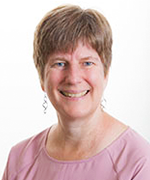
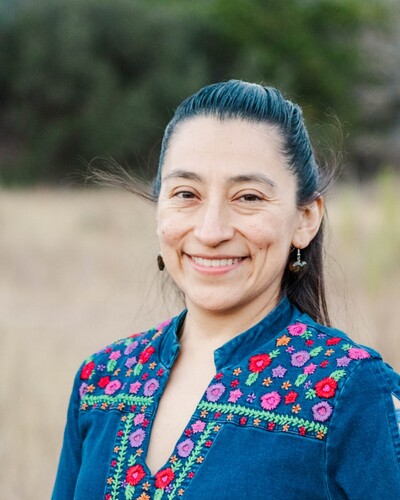
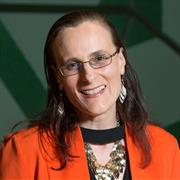
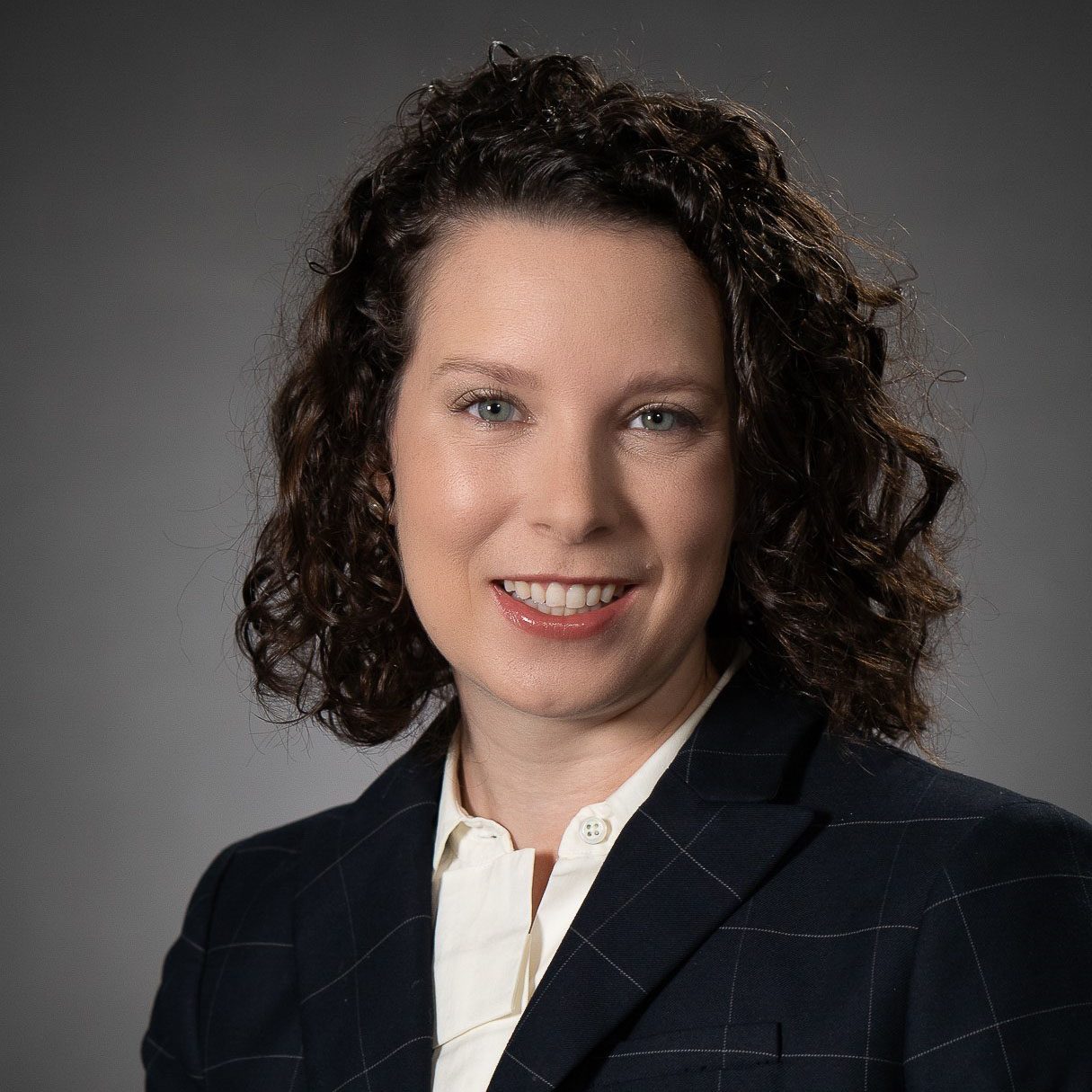
Ellen Zegura is the Stephen Fleming Chair and Professor in the School of Computer Science at Georgia Tech's College of Computing. She holds multiple degrees from Washington University in St. Louis: BS in Computer Science, BS in Electrical Engineering, MS in Computer Science, and DSc in Computer Science. Her research focuses on computer networking, social responsibility in STEM education, and computing for development. She co-founded the Computing for Good initiative, emphasizing project-based learning to address societal challenges. Zegura is an IEEE and ACM Fellow, and serves on the Computing Research Association (CRA) Executive Board. Her education spans interdisciplinary fields at Washington University, combining computer science and electrical engineering. She has held leadership roles at NSF and CRA, advocating for equitable technology policies. Notable contributions include advancing QoE metrics for video conferencing, analyzing mobile broadband infrastructure disparities, and developing ethics education frameworks for computing curricula. Research interests include network measurement, community-empowered data practices, and bridging technical innovation with social impact. Recent work examines tribal mobility during pandemics, sensor co-design with Indigenous communities, and ethical pedagogy for teaching assistants. Her labs and collaborations, such as CERCS, emphasize interdisciplinary problem-solving. Zegura’s awards reflect her dual impact in technical innovation and societal engagement.
Stacey Lowery Bretz is a Professor of Chemistry and the Dean of the Getty College of Arts & Sciences at Ohio Northern University. With over 28 years of teaching experience in general chemistry and a research focus on chemistry education, she has mentored more than 60 postdocs and students, many of whom now teach at universities or high schools. She has co-authored three chemistry textbooks published by W.W. Norton and developed pedagogy rooted in her research. Her research expertise includes designing assessments to measure student understanding in chemistry laboratories and analyzing how students interact with multiple representations of molecules and compounds. She has authored over 100 peer-reviewed articles and delivered more than 500 presentations globally. Fellow of the American Chemical Society Fellow of the American Association for the Advancement of Science 2020 American Chemical Society (ACS) Award for Achievement in Research on Teaching and Learning of Chemistry James Flack Norris Award for Outstanding Achievement in the Teaching of Chemistry Dr. Bretz has been a prominent figure in chemistry education, chairing the Gordon Conference on Chemistry Education Research and Practice and serving on the National Research Council Committee on Discipline-Based Education Research. Her work has been highlighted in media outlets like the Washington Post, and she delivered a keynote at the first joint Chinese Chemical Society/American Chemical Society webinar with over 60,000 attendees.
Dr. Martha Sidury Christiansen is a Professor of Applied Linguistics/TESOL at the University of Texas at San Antonio , where she serves in the College of Education and Human Development . She is the Principal Investigator of Project RESPETO , a NSF-funded initiative exploring racial equity in engineering education. Her work spans sociolinguistics, digital literacies, and raciolinguistic analysis, with a focus on transnational multilingual communities. Born in Veracruz, Mexico Ph.D. in Foreign/Second Language Education (Ohio State University, 2013) M.A. in English Composition (Indiana University, 2007) B.A. in English Language Teaching (Universidad Veracruzana, 2002) Her research examines how transnational youth navigate digital spaces through multiliteracies , challenges Western academic writing norms via Mexican decolonial methodologies , and investigates raciolinguistic intersections in identity formation. The 15 most recent publications reveal a strong focus on digital communication , transnationalism , and critical pedagogy across journals like TESOL Quarterly and Language@Internet . 2023-2025: Expanding raciolinguistic frameworks in digital contexts 2021-2022: Analyzing multimodal identity construction 2019-2020: Exploring Mexican bilinguals' online language use She has received multiple honors including ACUE Fellow (2023), Fulbright Scholar (2017), and Faculty Leadership Fellow (2021-2022). Her presentations at conferences like ICOLLITE and DDVM Lab highlight her expertise in critical sociolinguistic awareness and digital discourse analysis . Dr. Christiansen actively consults for nonprofits on linguistic equity and multilingual education .
Melissa Roderick is the Herman Dunlap Smith Professor at the Crown Family School of Social Work, Policy, and Practice. She co-directs the Chicago Consortium on School Research and specializes in the critical transitions from high school to college and urban education reform. Her work combines qualitative and quantitative methods to address dropout prevention, grade retention, and summer program efficacy. Focus on student transitions Co-director, Chicago Consortium on School Research Expert in mixed-methods research Grants from J. P. Morgan Chase, Spencer, and Wallace Foundations Roderick's research explores college readiness , noncognitive factors , and urban school reform . Her work emphasizes data-driven interventions and policy analysis, particularly in Chicago Public Schools. Recent publications highlight college match indicators , academic momentum , and systemic barriers in college access. Her scholarly contributions include analyses of: Advanced Placement program efficacy Noncognitive skill development Postsecondary outcomes for IB students Long-term impacts of ninth-grade interventions Scientific recognition includes: Crown Family School teaching excellence award Chicago Sun-Times '100 Most Powerful Women' (2004) Roderick has received funding from multiple foundations, including the J. P. Morgan Chase Foundation, Spencer Foundation, and Wallace Foundation. She currently chairs the board of North Lawndale College Preparatory Charter High School and has led initiatives to restructure urban school systems through longitudinal data analysis and curriculum reform.
Professor Sylvia Urban is a distinguished academic at RMIT University, serving as a Professor of Chemistry in the School of Science. She leads the Marine and Terrestrial Natural Product (MATNAP) research group and is the Program Manager for the Bachelor of Science degree, the largest and flagship program in the School of Science. Professor Urban also holds significant leadership roles including Reconciliation and Responsible Practice Facilitator in the School of Science (STEM College) and member of the Nugulu Committee at RMIT University. Her expertise spans natural products chemistry and separation science, with particular focus on chromatography for purification and instrumental analysis for structural characterisation and elucidation. Professor Urban's research interests encompass natural product chemistry isolation and structural elucidation, NMR spectroscopy and mass spectrometry for characterisation of natural products, High Performance/Pressure Liquid Chromatography (HPLC) and other chromatographic techniques for natural product purification, hyphenated spectroscopic techniques such as HPLC-NMR and HPLC-MS for natural product profiling, and biological evaluation of natural products for drug discovery applications. Her work primarily focuses on exploring the biodiversity of Australian marine and terrestrial organisms including plants, fungi, sponges, and algae to discover new compounds with therapeutic potential. She has developed various dereplication and chemical profiling strategies to expedite the discovery process. Professor Urban's publication record demonstrates a strong focus on natural products derived from Australian flora and marine organisms, with particular emphasis on their chemical characterisation and biological evaluation. Her research spans ethnobotanical studies of Indigenous Australian medicinal plants, phytochemical profiling of Australian species, anthelmintic and antimicrobial assessments of natural compounds, and development of analytical methodologies for natural product research. The interdisciplinary nature of her work connects chemistry with pharmacology, ethnobotany, and sustainable development goals related to health, education, and gender equality. STEM College Learning & Teaching Award (Award for Values in Action) 2024 STEM College Athena Swan Award 2023 Top STEM College Media Star 2022 School of Science Reconciliation Champion Award for 2021 School of Science Associate Dean's Impact Award (Applied Chemistry) for 2021 STEM Female Educator of the Year Award in the STEM College in 2021 Fellow of the Royal Australian Chemical Institute (RACI) in 2020 2019 Australian Award for University Teaching (AAUT) Citation for Outstanding Contributions to Student Learning Professor Urban actively supervises Masters and PhD students, with recent projects focusing on nanoparticle synthesis, natural product evaluation from Australian plants and marine organisms, food science applications, and biomedical imaging agents. She has received numerous teaching grants including the SteLR Grant 2017 for Pen-enabled, Real-time Student Engagement for Teaching in STEM Subjects, SteLR Plus Learning and Teaching Grant 2016 for Contextualizing Learning Chemistry, and Global Learning by Design (GLbD) Learning and Teaching Grant 2014. As the leader of the MATNAP research group, Professor Urban oversees a team focused on exploring Australian biodiversity for drug discovery. She has been instrumental in establishing the VICS Molecular Resolution Facility (chromatography node at RMIT University) as part of "The Pipeline – An Integrated Approach to Drug Design and Development." Her research involves collaborations both within and external to RMIT University, including Australian and international university and industry partners.
Allison Godwin is a Professor in the Department of Chemical Engineering at Cornell University, joining the faculty in 2023. She holds a B.S. (2011) and Ph.D. (2014) in Chemical Engineering and Science Education from Clemson University. At Purdue University, she was a tenured member of the School of Engineering Education and held a joint appointment in the Davidson School of Chemical Engineering (2020). Research Interests: Engineering identity development, particularly for underrepresented groups Inclusive pedagogies to reduce equity gaps in STEM Engineering workforce diversity and retention strategies Mixed-methods research on belonging and motivation Scientific Awards: 2023 American Institute of Chemical Engineers Award for Excellence in Engineering Education Research 2022 AERA Division I Outstanding Research Publication Award 2021 CEE William H. Corcoran Award 2017-Present NSF CAREER Award 2016 NARST Outstanding Doctoral Dissertation Award Leadership Roles: Past Chair of ASEE Educational Research Methods Division (2021-2023) Associate Editor for Chemical Engineering Education (2020-Present) Co-led Purdue’s Faculty Learning Community for inclusive teaching
Susan Jung Grant is a Clinical Associate Professor of Marketing at the Questrom School of Business, Boston University, where she teaches and innovates curriculum across undergraduate, MBA, and master’s programs. She plays a central role in the experiential Master of Science in Management Studies (MSMS) program designed for STEM graduates. Her research focuses on how marketing influences consumer cognition, with interests in innovation, evolutionary psychology, and financial decision-making. She explores how theoretical frameworks apply in real-world contexts, often in collaboration with leading companies such as AT&T, Bose, Uber, and Quintiles. The most recent publications reflect a strong emphasis on consumer psychology, pricing strategies, and new product acceptance, published in top marketing journals. Her work connects behavioral insights with strategic marketing applications. MBA Educator of Distinction Award Prize from the Society for Consumer Psychology for her dissertation She has mentored students across academic levels and partnered with corporations to develop case studies and experiential learning projects. She also worked with secondary schools to develop business curricula. Her teaching philosophy emphasizes student-driven, real-world learning over traditional lecture formats. She is actively involved in academic-professional partnerships and media commentary, appearing on NPR, Poets and Quants, The Denver Post, and Glamour, discussing marketing trends and strategies.
Professor Athina E Markaki serves as Professor of Materials & Biomedical Engineering in the Department of Engineering at the University of Cambridge, leading research in advanced biomaterials and tissue engineering solutions for regenerative medicine with emphasis on vascularization and tubular scaffold development for human conduit replacement. Her academic credentials include a Diploma in Metallurgical Engineering (8.6/10) from the National Technical University of Athens and a PhD in Materials Science from the University of Cambridge. Markaki's research program centers on vascularisation techniques for clinically relevant tissue dimensions and tubular scaffolds to replace diseased or damaged human conduits, integrating biomaterials science with regenerative medicine principles. Key applications span liver tissue engineering, neural crest-derived stem cell differentiation, and vascular graft development, with strong translational focus on orthopaedic and cardiovascular medical devices. Analysis of her recent publications reveals dominant trends in biomimetic scaffold design, particularly collagen-based tubular structures and hydrogel systems for vascularized tissue constructs. Her work demonstrates interdisciplinary convergence of AI-driven retinal assessment, glioblastoma modeling, and self-healing cementitious materials, with consistent emphasis on clinically applicable regenerative solutions for liver, bone, and neural tissues. Her distinguished scientific contributions are recognized by major awards: Rosetrees Trust 2017 Interdisciplinary Award European Research Council (ERC) Starting Grant (2010) Advanced EPSRC Fellowship (2005) De Montfort Award at SET for Britain National Event (2004) Young Scientist Prize 2003 (5th Euromech Solid Mechanics Conference) Multiple academic excellence awards from Greek foundations Markaki directs a well-funded research program including ERC and EPSRC grants, mentoring graduate students in tissue engineering while teaching core engineering curricula covering plastic deformation, fracture mechanics, and medical materials design. Her group maintains strong industry and clinical partnerships to advance regenerative technologies. Her laboratory, accessible via http://www-memti.eng.cam.ac.uk/, specializes in vascularized tissue constructs and tubular scaffolds using laser-based manufacturing, biomimetic design, and hydrogel engineering to address critical challenges in tissue replacement and disease modeling.
Dr Orin Chisholm is a program director at the Sydney Pharmacy School (University of Sydney), an Adjunct Associate Professor at UNSW Sydney, and teaches at Arizona State University. Her work focuses on regulatory science, pharmaceutical policy, and capacity-building in the therapeutics industry. BSc (Hons) in Biochemistry , University of Sydney PhD in Molecular Biology , University of Sydney Graduate Certificate in University Learning and Teaching , UNSW Sydney Her research explores regulatory frameworks for emerging therapeutics, horizon scanning of medical technologies, and competency-based education in pharmaceutical sciences. Recent projects include NHMRC Partnership Grant (2025-2028) for horizon scanning and national medicines policy reviews. Her publications analyze regulatory reforms, benefit-risk methodologies, and educational transformations in pharmaceutical medicine. Key themes include precision medicine , clinical research , and medical device regulation . TOPRA Award for Excellence in Regulatory Education (2017) Senior Fellow of the Higher Education Academy (SFHEA) (2018) Fellow of the Regulatory Affairs Professionals Society (FRAPS) (2021) Fellow of ARCS Australia (FMPP) (2025) She supervises higher-degree research students, including Owen Smith (AAV gene therapies) and Matthew Britland (Medical Affairs and Quality Use of Medicines). Grants include funding for nanoparticle immunotherapy platforms and peptide-drug conjugate manufacturing.
Yael Feldman Maggor is a Postdoctoral Fellow at KTH Royal Institute of Technology, affiliated with the Media Technology & Interaction Design Division and the Digital Futures research center. Her work bridges educational technologies, artificial intelligence, and science education, with a focus on enhancing pedagogy through innovative tools. Research Themes: Generative AI in education, self-regulated learning, learning analytics, chemistry education, and ethical considerations in AI integration. Key Projects: Contributions to the International Journal of Science Education, development of AI-driven evaluation frameworks, and pandemic-era online teaching analysis. Methodologies: Expertise in quantitative and qualitative research, educational data mining, and design of interactive learning platforms. Recent publications emphasize cross-cultural trust in AI, generative AI applications in chemistry education, and explainable AI for teacher professional development. She co-authored studies on nanotechnology courses for educators and self-regulation strategies in online learning environments.
Faith Maina is a Professor in the Department of Curriculum & Instruction at Texas Tech University (since 2015). Previously, she served as a Professor at the State University of New York, Oswego (2000–2015), where she also directed the McNair Post-Baccalaureate Program. She holds a Ph.D. from the University of British Columbia (Canada), an M.A. from Trent University (Canada), and a B.Ed. from Kenyatta University (Kenya). Her research focuses on cultural and linguistic diversity in classrooms, culturally responsive teaching, and preparing diverse learners for STEM careers. Key areas of expertise include social justice in education, multicultural curriculum integration, and teacher empowerment through action research. Maina has authored and edited works such as Nurturing Reflexive Practice in Higher Education (2014) and contributed to studies on Kenyan educational contexts, gender dynamics, and community-based research. She has received prestigious awards, including the Carnegie African Diaspora Fellowship (2018) and Fulbright Scholar (2011).
Andrew Lan is an Associate Professor in the College of Information and Computer Sciences at the University of Massachusetts Amherst, where he also serves as the CS Undergraduate Program Director. He was granted tenure by the UMass Board of Trustees in June 2025 and is currently on leave through Spring 2026. His research focuses on developing human-in-the-loop machine learning methods to enable scalable, effective, and personalized learning experiences in education. Dr. Lan received his BS in Physics and Mathematics from the Hong Kong University of Science and Technology, followed by his MS (2014) and PhD (2016) in Electrical and Computer Engineering from Rice University. He completed postdoctoral research at Rice University (2016) and Princeton University's EDGE Lab (2017-2018). His research spans artificial intelligence for education, with particular expertise in educational data mining, knowledge tracing, personalized learning systems, and human-AI collaboration in educational contexts. Dr. Lan's work leverages massive and multimodal learner and content data collected from both traditional classrooms and online learning platforms to develop systems that deliver high-quality, affordable, and personalized learning experiences. He has made significant contributions to areas including computerized adaptive testing, math word problem generation, student affect detection, and automated grading systems. His recent work increasingly focuses on leveraging large language models for educational applications while maintaining rigorous scientific validation of these approaches. Best Student Paper Award at the 2024 AIED Conference (with Alexander Scarlatos) Best Paper Nominee at LAK 2021 Best Student Paper Award at IEEE Big Data 2020 NAEP Math Automated Scoring Challenge Grand Prize Winner Dr. Lan actively mentors graduate students and postdoctoral researchers, with several of his advisees receiving recognition for their work. He has secured substantial funding from the National Science Foundation, including a $90M grant for the SafeInsights project, a secure cyberinfrastructure for educational research. His research group collaborates with institutions including Worcester Polytechnic Institute, University of Pennsylvania, and Rice University. He teaches undergraduate and graduate courses including COMPSCI 240 (Reasoning under Uncertainty) and COMPSCI 590OP (Applied Numerical Optimization), with a focus on the practical application of theoretical concepts in machine learning and artificial intelligence. His educational philosophy emphasizes bridging the gap between theoretical foundations and real-world implementation in educational technology.
Kathryn Lanouette is an Assistant Professor of Learning Sciences and Science Education at William & Mary’s School of Education. She holds faculty affiliate appointments in the Arts & Sciences (ENSP, IIC). Her research explores place-based pedagogies, emerging technologies, and their roles in fostering joyful, ethical science and data science learning for K-8 students. She collaborates with schools, museums, and youth-serving organizations to design curricula and outdoor learning experiences. Education: Ph.D. in Learning Sciences and Human Development, University of California, Berkeley (2017) M.A. in Museum and Childhood Education, Bank Street Graduate School of Education B.A. in Politics, Oberlin College Research Interests: Lanouette focuses on intersections between emotion, place, and data literacy, emphasizing participatory approaches to environmental and socio-ecological education. Her work bridges theory and practice, advocating for equitable, interdisciplinary STEM+ curricula that connect students to local ecosystems and global challenges. Recent Trends in Publications: Her articles emphasize participatory methodologies (e.g., digital mapping, data storytelling), socio-political dimensions of learning, and ethical frameworks for data science education. Recent work highlights collaborations between educators and community organizations to co-create knowledge about climate change and socio-ecological systems. Awards: Outstanding Short Paper Award (2025), International Society of the Learning Sciences NSF-funded ‘Writing Data Stories’ postdoctoral research (2017–2020) Teaching & Mentorship: Lanouette teaches courses on education research, science pedagogy, and applied conservation sciences. She mentors students through interdisciplinary projects, such as the NSF-funded ‘Writing Data Stories’ initiative and NOAA’s Teacher at Sea program. Labs/Teams: Collaborations include partnerships with UC Berkeley’s Science Education Lab, museums, and K-12 schools to develop place-responsive curricula and community-driven data projects.
Hendrik Fleischer is a Researcher at the Department of Chemistry Education within the Faculty of Natural Sciences at Leibniz University Hannover. He holds roles such as Deputy Member of the Academic Staff at the Leibniz School of Education (LSE) since 2025 and is a member of the Society for Chemistry and Physics Education (GDCP) since 2023. His primary affiliations include the Institute for Science Education, where he has served as a Research Associate since 2023 and earlier roles as a Research Assistant and student assistant. Education: Fleischer earned a Bachelor's degree in Chemistry/Biology (2017–2021) and a Master's in Secondary School Teaching (Chemistry/Biology) from Leibniz University Hannover (2021–2022). He completed his Abitur at Wesermünde Gymnasium in Bremerhaven. Research focuses on intelligent tutoring systems for stoichiometry problem-solving, analyzing protocol data, feedback mechanisms, and learner strategies. Teaching emphases include chemistry didactics fundamentals, secondary education core topics, and preparatory course design. His publications (2025) investigate scaffolding effects, cross-national problem-solving strategies, feedback dynamics, and AI-driven error classification in chemistry education contexts. His work bridges cognitive science and educational technology, emphasizing practical applications in introductory chemistry education. Current projects involve optimizing tutoring systems for conceptual learning and learner enjoyment trade-offs.
Dr. Nicholas Brake is an Associate Professor at Lamar University's Department of Civil and Environmental Engineering, focusing on reclaimed materials, wireless power transfer applications in concrete, and fatigue fracture modeling for pavements. His research spans recycled concrete aggregate, coal ash utilization, and electromagnetic cementitious composites. Education: Ph.D., M.S., B.S. in Civil Engineering from Michigan State University Awards: Anita Riddle Fellowship (2018), Lamar Merit Award (2018), Presidential Faculty Fellowship (2015), and multiple scholarships during his studies. His research emphasizes three key areas: 1) Material reclamation using recycled concrete aggregate, coal combustion residuals, and EAF slag. 2) Electromagnetic transport properties for wireless vehicle charging applications. 3) Fatigue damage modeling in concrete pavements. Through 3D printing integration and design-build-test pedagogy, he enhances student learning outcomes. Recent publications focus on international engineering education (2020), magnetic concrete composites (2019), and advanced testing methodologies for civil infrastructure (2018). His teaching innovation includes developing nine Lamar University courses with active learning strategies that improved student design confidence (p Scientific Awards: Anita Riddle Excellence in Teaching Fellowship (2018) Presidential Faculty Fellowship for Teaching Innovation (2015) Outstanding Teaching Assistant Award at Michigan State (2011) Dr. Brake mentors undergraduate and graduate researchers, including doctoral candidates Mahdi Feizbahr and Hossein Hariri Asli (2023-2024). His lab (LUMS) houses advanced testing systems like Instron 5965/8803, MTS Insight 100SL, and thermal analyzers for material characterization.