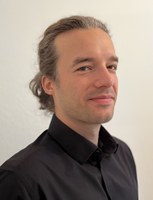
Niklas BeuterView profile
Professor
Niklas Beuter is a Professor of Artificial Intelligence and Data Science at TH Lübeck, Germany, within the Department of Electrical Engineering and Computer Science. He has been in this position since 2023, contributing to both research and education in AI and computer vision. His educational background includes a Diplom in Computer Science with a focus on robotics from Universität Bielefeld, completed with distinction, followed by a Ph.D. from the same institution in 2011. His doctoral research centered on 3D human detection and tracking for mobile robotic platforms, supporting situation awareness in dynamic environments. Beuter's research is deeply rooted in artificial intelligence, computer vision, and robotics , with a focus on dynamic 3D scene analysis, human-robot interaction, and autonomous systems . His work bridges theoretical models with real-world applications, particularly in autonomous driving and intelligent robotic perception. He has led research teams in industry, demonstrating strong leadership in applied AI. The trend in his publications reflects a consistent focus on perception systems for robots and vehicles , evolving from foundational work in 3D reconstruction and gesture-based interaction to advanced topics like pedestrian intent forecasting using deep learning. His contributions span top conferences such as IEEE ICRA, CVPR, and Intelligent Vehicles, indicating sustained engagement with the core AI and robotics communities. While no formal scientific awards are listed in the provided text, his leadership roles and publication record reflect significant professional recognition. He actively supervises student theses and invites students to register for thesis topics via email, indicating an ongoing commitment to mentoring. Although no specific grants are mentioned, his industrial and academic research leadership suggests involvement in funded projects. He is a member of research groups including CoSA and serves as Deputy Head of ISy, showing active participation in institutional research organization. His research has been conducted in collaboration with teams at Universität Bielefeld, Daimler Research Center, and Robert Bosch GmbH, reflecting a strong interdisciplinary and industry-academia network. His work continues to influence both academic research and industrial applications in AI and autonomous systems.