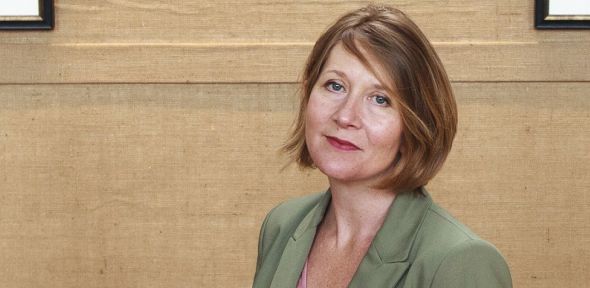
Professor Emma Widdis is a leading scholar at the Faculty of Modern and Medieval Languages and Linguistics at the University of Cambridge, specializing in the intersection of Soviet cinema, ideology, and cultural geography. Her work explores the reeducation of sensory perception through film, early Soviet urban spaces, and the construction of subjectivity via cinematic techniques. Teaches 20th-century Russian/Soviet literature, cinema, and film theory Focuses on sensory engagement, political avant-garde, and urban spatial representation Supervisor for MPhil and PhD students in Slavonic Studies Her recent book Socialist Senses (2017) examines how cinema shaped Soviet perceptions of reality. Her publications span topics like silence in sound film, set design materiality, and costume symbolism in early Soviet cinema. While no formal scientific awards are listed, her research has been supported through institutional grants and collaborations with centers like CRASSH and Cambridge Language Sciences.
Paul Dodds is Professor of Energy Systems at University College London's Bartlett School of Environment, Energy & Resources, where he holds joint appointments at the UCL Energy Institute and the Institute for Sustainable Resources. He serves as the Faculty Graduate Tutor for the Bartlett Faculty of the Built Environment, overseeing all doctoral research programs. His academic progression at UCL has been steady, moving from Research Associate (2011-2014) to Senior Research Associate (2014-2015), Lecturer (2015-2016), Senior Lecturer (2016-2018), Associate Professor (2018-2020), and finally to Professor. His educational background includes a PhD from the University of Leeds (2010) focused on climate change and agriculture in Senegal, where he developed a new crop model for adaptation research and created detailed meteorological datasets for West Africa. He also holds a Master of Natural Science (Honours) from the University of Nottingham (2000). Dodds specializes in energy systems modelling with particular expertise in hydrogen and bioenergy systems, and the importance of energy storage. His research examines the interactions between society and the environment, with a focus on energy and food systems. He has developed the UK TIMES energy systems model, which has replaced the UK MARKAL model and is now co-developed with the UK Department of Business, Energy and Industrial Strategy (BEIS). This model has provided underpinning evidence for the UK's Clean Growth Strategy and Net Zero Strategy. His methodological contributions include formalizing a theoretical approach to analyzing the evolution of energy system models using 'model archaeology'. Analysis of his recent publications reveals a strong focus on hydrogen energy systems, with multiple papers examining hydrogen trade pathways, integration methods, and environmental impacts. His work increasingly addresses the geopolitical dimensions of energy transition, as seen in studies about Russian gas pivots to Asia and global energy scenarios. He maintains expertise in energy system modeling techniques while expanding into practical applications for policy development, particularly regarding the UK's net-zero transition. Dodds has supervised 15 PhD students at UCL, with eight under his primary supervision. His professional activities include serving as the UK Alternate Delegate to IEA Hydrogen since 2017, acting as a PhD External Examiner at the University of Edinburgh, and participating in the EPSRC Peer Review College. He has contributed to multiple government initiatives, including the UKERC Future of the Gas Networks workshop and representing the UK Government at IEA ETSAP meetings. He teaches an undergraduate module on 'Energy and Environmental Systems Modelling' and guest lectures on several MSc courses. His research group focuses on energy system modeling, with particular emphasis on the UK TIMES model development and application. His work often involves collaboration with government bodies, particularly BEIS, and he has coordinated significant projects like seven reports on overshoot pathways for the UK Government.
Dr Zbigniew Wojnowski is Associate Professor in Soviet History at St Antony’s College, University of Oxford . He completed his PhD at the School of Slavonic and East European Studies, UCL in 2011, and previously held posts at Nazarbayev University (Astana) and the University of Roehampton (London), joining Oxford in 2022. Education: PhD, School of Slavonic and East European Studies, University College London, 2011 Research Interests: Dr Wojnowski is a historian of Ukraine, Russia, and Central Asia whose work explores interethnic relations , imperial dynamics and identity politics in the USSR. His first monograph, The Near Abroad: Socialist Eastern Europe and Soviet Patriotism in Ukraine, 1956-1985 , traces how cross-border flows of people and ideas shaped Ukrainian and Soviet identities after Stalin. Current projects extend this focus into the 1980s-1990s, examining the collapse of the USSR through the prism of Soviet and post-Soviet show business , and an environmental history of late-twentieth-century Kazakhstan . Research Keywords: Cold War, Soviet bloc, systemic transformation, popular music, Ukraine, Kazakhstan, USSR, Central Asia, East-Central Europe. Publications Trends: Across more than twenty peer-reviewed articles and essays, Wojnowski’s scholarship bridges Soviet cultural policy , popular music industries , nationality politics and post-socialist transition . Recurring themes include the emotional and cultural dimensions of late socialism, the role of music and media in identity formation, and the legacies of 1956, 1968 and 1989 in Soviet borderlands. Current & Future Projects: Book project: From Red Stars to Pop Empires: Show Business and the Collapse of the USSR Environmental history of Kazakhstan in the late Soviet period Supervision of doctoral research on non-Russian Soviet republics, systemic transformation and USSR-Cold-War intersections Laboratory / Research Groups: While no formal lab is listed, Dr Wojnowski is embedded within Oxford’s vibrant Russian and Eurasian Studies community at St Antony’s College and welcomes prospective graduate students interested in late-Soviet and post-Soviet history.
Professor Andy Byford is a Professor and Director of Research at Durham University’s School of Modern Languages and Cultures. His work focuses on the history of science, education, and human-animal relations in Russia and the USSR. He leads research projects on Soviet primate studies, child science, and the intelligentsia’s role in academic institutions. His research spans interdisciplinary topics such as the historical construction of animal mentality, the rise of child studies in Russia, and the intersection of science with socio-political changes. He has authored books like *Science of the Child in Late Imperial and Early Soviet Russia* and edited volumes on transnational Russian studies. Publications highlight his expertise in Soviet-era pedagogy, child welfare policies, and the legacy of repressed sciences like pedology. Recent work addresses the implications of Russia-Ukraine tensions on academic fields. He supervises PhD students in Russian history and culture, emphasizing topics like human-animal relations and Soviet-era education systems. His contributions include over 30 journal articles and book chapters, exploring themes such as eugenics, Cold War science, and migrant communities. While no formal awards are listed, his extensive scholarly output underscores his influence in Russian studies.
Dr. Petar Bankov is a Lecturer in Political & International Studies at the University of Glasgow. His research focuses on comparative party politics, political participation, populism, and Central and Eastern European politics. He employs mixed methods including regression analysis, survey experiments, and qualitative approaches (interviews, document analysis). He is Communications Officer for the PSA Left Radicalism Specialist Group and a member of the editorial team of dVERSIA , a Bulgarian left-wing magazine. His work emphasizes improving citizen-party relations to enhance political participation. Education: BA in International Relations, University of Sofia (Bulgaria) Joint International Master’s in Russian, Central, and East European Studies from University of Glasgow and Jagiellonian University (Poland) PhD research on electoral geographies of the European radical left Research Interests: Comparative politics, left-wing politics, political geography, and populism. His work explores party organization dynamics in post-communist contexts, electoral behavior, and democratic resilience. Grants: €10,000 from Friedrich Ebert Foundation-Bulgaria (2022) €3,000 Advanced Postdoctoral Fellowship (Babeș-Bolyai University, 2021) £3,500 Overseas Fieldwork Allowance (ESRC/SGSSS, 2017) Erasmus Mundus Master’s Scholarship (€20,000, 2012–2014) Teaching: Undergraduate: Politics 1B (Liberal Democracy), Politics 2B (Comparative Politics), Central and East European Studies modules Honours: Qualitative Methods in Social Sciences, Politics of the European Left Postgraduate: Qualitative Research Methods Labs/Teams: Part of the PSA Left Radicalism Specialist Group and dVERSIA editorial board. Engaged in non-formal education promoting intercultural exchange.
Dr. Alexandra Smith is Reader in Russian Studies at the University of Edinburgh's School of Literatures, Languages and Cultures, where she has been teaching since 2007 and was promoted to Readership in 2008. She previously held academic positions at the University of Essex, University of Bristol, University of Canterbury (New Zealand), and the University of Sheffield. Dr. Smith is an active researcher, supervisor, and member of numerous editorial boards, including The Dostoevsky Journal and Experimental Poetics and Aesthetics . Her research spans Russian literature from the 19th through 21st centuries, with particular focus on literary and film theory, critical theory, comparative literature, émigré writing, and the relationship between literature and other arts. Dr. Smith has published extensively on Russian modernism, particularly on Marina Tsvetaeva, Pushkin reception, and Soviet-era literature. Her work demonstrates a consistent interest in canon formation, memory studies, and intermediality, examining how literary works interact with other art forms like theater, film, and visual culture. Dr. Smith's scholarly output reveals a trajectory from early work on Tsvetaeva and Pushkin toward broader examinations of canon formation, national identity, and post-Soviet cultural memory. Her recent publications increasingly address contemporary Russian literature and film, examining how modern Russian writers and filmmakers engage with historical trauma, national mythology, and cultural memory. This evolution reflects both her deepening expertise in Russian literary history and her responsiveness to contemporary cultural developments in Russia. Alexander Nove Prize (2022) for Poetic Canons, Cultural Memory and Russian National Identity after 1991 Co-winner of ASEES's Pushkin Prize contest for 'The Poetics of Expressiveness and Some Aspects of Non-Verbal Communication in Pushkin's Work' Dr. Smith has supervised an impressive number of graduate students, including 12 completed PhD theses and several current projects across Russian Studies, Comparative Literature, and European Theatre. She has secured significant research funding, including a major £450,757 AHRC grant for 'Reconfiguring the Canon of Twentieth-Century Russian Poetry, 1991-2008' and multiple smaller grants for conferences and workshops on Russian literature and culture. Her knowledge exchange activities extend beyond academia through media appearances, public lectures, and collaborations with theater companies, including translating Russian plays for the National Theatre of Scotland. As an active member of the academic community, Dr. Smith serves on numerous committees at the University of Edinburgh, acts as External Examiner for several institutions, and participates in professional organizations including BASEES, AATSEEL, and ASEEES. Her work bridges traditional literary scholarship with contemporary cultural analysis, making significant contributions to our understanding of Russian literature's evolution and its ongoing relevance to questions of national identity and cultural memory.
Jim Berryman is an Affiliate in Information Studies at the University of Glasgow's School of Humanities. His research spans art history, cultural studies, and social theory, with a focus on the intersection of art, technology, and historical narratives. He explores topics such as AI-generated art, Marxist critiques of art history, and the role of documentation in conceptual art. Berryman has conducted extensive work on Australian cultural history, including studies of national identity, colonial legacies, and the historiography of art. His research interests include the social origins of art, the ethics of cultural repatriation, and the application of digital methods to art analysis. Berryman has collaborated with institutions like the University of Melbourne on projects involving Robert Menzies’ collections and has contributed to debates around museum ethics and the representation of human remains. His interdisciplinary approach bridges art history with philosophy, sociology, and technology studies. Key Themes: AI in Art, Marxist Art Theory, Australian Cultural History, Art Documentation Publications: Over 29 peer-reviewed articles and book chapters since 2012 Collaborations: Caitlin Stone on Menzies collections, studies of Robert Hughes and Bernard Smith Berryman’s recent work examines the implications of generative AI for artistic creativity and critiques traditional historiographical frameworks. His analysis of Arnold Hauser’s theories demonstrates a commitment to reinterpreting foundational art historical narratives through contemporary lenses.
Dr. Catherine Brown is the Assistant Dean for Humanics and Associate Professor of English at Northeastern University London, where she leads the English program and focuses on 19th- and 20th-century literature, comparative studies (particularly Anglo-Russian), and veganism in literature. She holds a PhD in English and Russian Literature from the University of Cambridge and has taught at institutions including the Universities of Oxford, Cambridge, and Greenwich. Her research includes a major project on the intersection of torture and fiction, emphasizing contemporary democratic practices. Dr. Brown’s educational background includes a BA in English Literature (University of Cambridge, 1998), an MSc in Russian and Post-Soviet Studies (London School of Economics, 1999), an MA in Comparative Literature (University College London, 2003), and a PhD (Cambridge, 2008). She is a Senior Fellow of the Higher Education Academy and serves as Vice President of the D.H. Lawrence Society, directing its London reading group. Her research interests span George Eliot, D.H. Lawrence, ecocriticism, and vegan theory. Recent work explores themes of modernism, cultural identity, and the body in literature. She has published extensively, including co-editing Journal of DH Lawrence Studies and The Reception of George Eliot in Europe . Dr. Brown has received the Academic Podcaster of the Year award (University of Oxford, 2012). She advises on academic programs, contributes to global university partnerships, and serves as an external examiner for Edinburgh Napier University and Blackpool and the Fylde College. Her advocacy extends to mental health and academic outreach, and she actively participates in committees for international D.H. Lawrence conferences.
Dr Dusan Radunovic is an Associate Professor and Director of Studies (Russian) at the University of Durham's School of Modern Languages and Cultures. His research focuses on Critical Theory (Bakhtin, Formalism, Shpet's Circle), Russian, Georgian and Eastern European cinemas, and transnationalism studies. He leads the World Cinema and Cosmopolitics research group. Research Interests - Critical Theory (with focus on Bakhtin, Russian Formalism) - Soviet and post-Soviet cinema (Georgian, Russian, Eastern European) - Transnational cinema and national identity formations - Film semiotics and aesthetics Recent Scholarship Trends His 2024 work explores decolonial aesthetics in Georgian cinema and Eisenstein's Battleship Potemkin's evolving interpretation. Recent articles analyze post-Soviet transnational cinema, memory in documentary film, and the avant-garde's cultural impact. He frequently publishes in Slavic and East European Journal , Cinema Journal , and Apparatus . Student Supervision George Bocean (PhD) Ran Wei (PhD) Stepan Kachalin (PhD) Labs/Teams - World Cinema and Cosmopolitics research group
Professor Scott Newton is affiliated with the School of Law at SOAS University of London. His research focuses on critical and decolonial approaches to international law, constitutionalism, Soviet legal systems, and post-communist transitions. He has published extensively on topics such as spatial theory, Cold War division spaces, and Central Asian constitutionalism. Primary Affiliation: School of Law, SOAS University of London Academic Rank: Professor Newton's research bridges legal philosophy, historical analysis, and geopolitical studies, often reworking archaic legal concepts through contemporary critical theory. His work explores the interplay between law, power, and spatiality in post-Soviet, Cold War, and postcolonial contexts. Recent publications highlight trends in comparative constitutional analysis , critical international law , and post-ideological legal frameworks . His scholarship spans book chapters, journal articles, and monographs addressing legal transitions in diverse regions including Central Asia, Rwanda, and Soviet states. As an advisor, Professor Newton supervised P. Ntephe's thesis on Sub-Saharan legal alterity. He is a leading voice in Soviet legal historiography and post-colonial constitutional theory, contributing to debates on authoritarianism, development law, and spatial determinism.
Professor John W. Cairns is a distinguished academic at the University of Edinburgh's School of Law, where he holds the Chair of Civil Law since 2012. Previously, he served as Professor of Legal History from 2000, and has held various academic positions including Reader, Senior Lecturer, and Lecturer in Law at Edinburgh, as well as Lecturer in Jurisprudence at Queen's University, Belfast. He has been a Visiting Professor at law schools of Miami, Southern Methodist University, and École normale supérieure in Paris. His research focuses on Scottish legal history, particularly the role of Roman or Civil Law in Scotland, with special interest in the position of enslaved individuals in eighteenth-century Scotland. He also studies the legal histories of Louisiana and Quebec, European legal history, and eighteenth-century legal studies. His scholarly work spans comparative legal history, legal humanism, and the intersection of slavery and law. Analysis of his recent publications reveals a consistent focus on the historical relationship between civil law and common law traditions, with increasing attention to the history of slavery in Scotland and its legal implications. His work demonstrates expertise in European legal traditions, particularly French and Scottish jurisprudence, and shows how historical legal concepts continue to influence contemporary legal systems. Fellow of the Royal Society of Edinburgh (F.R.S.E.) Honorary Doctorate (LL.D. h.c.) Professor Cairns has served as Associate Dean (Postgraduate) and Director of the Graduate School in Law from 2000-2003. He has supervised numerous successful PhD and LL.M. research theses and continues to accept PhD students. He has served on editorial boards of the Edinburgh Law Review, Law and History Review, and Journal of Legal History, and was Chairman of the Council of the Stair Society and President of the Eighteenth-Century Scottish Studies Society.
Dr. Graham Melling is a Lecturer at Northumbria Law School, Northumbria University, where he joined in April 2020. He holds a Ph.D. in Public International Law from the University of Reading and an LL.M. in International Law from the University of Sheffield. His academic profile includes visiting positions at South China University of Technology and the Open University of Tanzania. His research centers on Public International Law , particularly the regulation of the use of force, the development of international legal norms, and the role of the United Nations in addressing mass atrocities. He is recognized for his interdisciplinary approach, integrating human rights principles into the international legal order. His recent publications reflect a strong focus on the prohibition of the use of force , the Responsibility to Protect (R2P) , and the evolution of Security Council mechanisms in response to contemporary conflicts like the war in Ukraine. His work frequently appears in leading journals such as the Journal on the Use of Force and International Law and the Indian Journal of International Law . Graham actively contributes to the academic community through peer review for major journals and publishers, including Cambridge University Press. He is also engaged in doctoral supervision and welcomes new PhD proposals in his areas of expertise. Ph.D., Public International Law, University of Reading LL.M., International Law, University of Sheffield He has been commended by the International Law Association for his research on the development of international legal rules. His scholarly output demonstrates a consistent and evolving engagement with the normative foundations of international peace and security. While no formal scientific awards are listed, his work has significant policy and academic impact, particularly in debates surrounding humanitarian intervention and UN institutional responses to aggression. He continues to be an active researcher and educator in the field of international law.
Dr. Amanda McCrory is an Associate Professor in Science Education at University College London's Institute of Education (IOE), Department of Curriculum, Pedagogy & Assessment. She serves as research lead for the UCL IOE Science Special Interest Research Group (400+ global members) and Co-Convenor of the BERA STEAM SIG. With over 20 years in education, her career spans leadership roles in UK schools and higher education. She holds a PhD and MA (Distinction) in Science Education from UCL Institute of Education and is fluent in French and Russian. Her research focuses on ethics in science education, STEAM approaches, socioscientific issues, and equity/diversity in STEM. She investigates how educators foster ethical reasoning and scientific literacy in formal/informal learning environments, often through qualitative methodologies. Recent work emphasizes COVID-19's impact on pedagogy, race/ethnicity in science education, and early-years biology learning. McCrory's publications demonstrate strong thematic consistency in science ethics and pedagogy, with recent expansions into equity-focused research. Her 2023 book The Place of Ethics in Science Education marks a significant contribution to the field. Conference outputs frequently address racial equity and doctoral mentorship. Awards & Honors: Senior Fellowship, Higher Education Authority (2019) Fellow, Chartered College of Teaching (2017) As Departmental Graduate Tutor, she mentors doctoral students and early-career researchers, supporting conference presentations (BERA, ESERA) and publications. She leads multiple research projects with industry/school partners and serves as External Examiner for international universities. Institutional roles include UCL Ethics Reviewer, Dignity Advisor, and Mental Health First Aider.
Dr. Viktoria Ivleva is an Associate Professor in the School of Modern Languages and Cultures at Durham University. Her research focuses on 18th-century Russian literature, dress culture, and gender studies, particularly examining how clothing and material culture shaped social and political dynamics under figures like Peter I and Catherine II. She is known for analyzing sartorial practices as tools of power and identity formation, with a focus on gendered representations and cultural globalization. Her work bridges literary analysis and material culture studies, addressing topics such as silk trade in early modern Russia, uniform production under Peter the Great, and the role of fashion shops in 18th-century literature. She has been recognized for her contributions, including the 2024 ADH Book of the Year Award and the 2017 BASEES Women's Forum Prize. Dr. Ivleva also engages in public scholarship through BBC radio discussions and podcasts on figures like Pushkin and Catherine the Great. Her teaching excellence has been acknowledged through the Durham Students' Union 'Closing the Loop' Award (2014). She supervises postgraduate research, including student Stepan Kachalin, and contributes to interdisciplinary initiatives exploring the intersection of global and local cultural practices.
Lizabeth Hannaford is a Lecturer at Manchester Metropolitan University, combining her extensive background in broadcast journalism with a focus on evolving media technology. Formerly a BBC World Service journalist with 15 years of experience across news and current affairs in Europe and the Former Soviet Union, she transitioned into academia emphasizing digital and data journalism skills. She holds an MSc in Education with Technology (Edinburgh Napier University), a PG Certificate in Academic Practice (University of Salford), and a BA in Russian (University of Sheffield). Her research interests center on integrating technology into journalism education and practice, reflected in her leadership of Manchester's Hacks/Hackers chapter—a global initiative bridging journalists and technologists. Teaching prioritizes interactive, collaborative learning to prepare students for emerging journalistic roles. She maintains a professional website highlighting her non-technical journey into technical journalism. No specific scientific awards or grants are documented. Her teaching focuses include radio journalism, digital storytelling, and media technology applications. No listed advisement of formal research students.