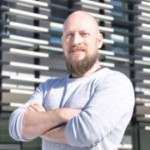
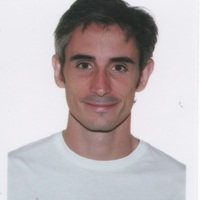
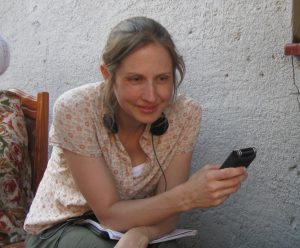
Drue Coles serves as Professor of Computer Science in the Department of Mathematics, Computer Science, and Digital Forensics at Commonwealth University of Pennsylvania, Bloomsburg campus. His teaching responsibilities include: CMSC 120: Object-Oriented Programming with Java CMSC 130: Graphical User Interfaces in Java CMSC 345: Mobile Device Application Development CMSC 370: Analysis of Algorithms CMSC 380: Operating Systems Holding a Ph.D. in Computer Science from Boston University, his academic focus integrates theoretical and applied computing disciplines. His teaching methodology emphasizes creative implementation through projects like the Java Cats initiative, where students develop artistic graphics using JavaFX/Swing. Research interests span foundational computer science domains with practical applications: Object-oriented design patterns and implementation Mobile ecosystem development frameworks Operating system architecture and functionality Algorithmic complexity analysis Computational graphics programming Software engineering pedagogy Dr. Coles maintains an active personal pursuit in long-distance running, having completed a symbolic circumnavigation of Earth (24,901.6 miles) between September 25, 2010 and March 20, 2024, documented through his Equator Run project.
Prof. Dr. rer. nat. Andreas Weiler holds the Associate Professorship of Theoretical Particle Physics at Colliders at the Technical University of Munich (TUM), affiliated with the Department of Physics under the TUM School of Natural Sciences . He joined TUM in 2015 after a career at CERN and DESY. Weiler's research focuses on physics beyond the Standard Model , addressing problems like electroweak symmetry breaking , dark matter , and Higgs boson properties . His work bridges collider phenomenology with astrophysical implications, including axion production in supernovae and baryogenesis via domain walls . Recent publications explore light scalar effects in neutron stars and fermionic Higgs portal signatures at colliders. His research activity shows a strong emphasis on Electroweak symmetry breaking dynamics Axion and dark matter phenomenology Collider signatures of new physics Quantum and post-quantum correlations Heavy baryon spectroscopy Weiler has received prestigious awards including the Max Planck Fellow (2021), CERN Fellowship (2008-2011), and Martin and Beate Block Award (2009). He teaches graduate-level courses in Quantum Field Theory and Current Topics in Beyond Standard Model Physics .
Dr. Marie-Theres von Schickfus serves as Research Associate and Deputy Head of the ifo Center for Energy, Climate and Resources at the ifo Institute, affiliated with Ludwig Maximilian University of Munich. Her work bridges academic research and policy implementation in climate economics, with expertise in sustainable finance, flood risk management, and climate policy impacts on financial markets. She leads multiple federally funded research projects and contributes to high-impact policy debates through the ifo Institute's evidence-based platforms. Her educational background includes: PhD in Economics, Ludwig Maximilian University of Munich (2015-2021, summa cum laude) Research stay at Grantham Research Institute, London School of Economics (2019) Diplom-Volkswirtin (Diploma in Economics), University of Tübingen (2004-2012) Magistra Artium (MA) in Modern and Contemporary History, University of Tübingen (2005-2013) von Schickfus' research centers on climate policy design and implementation, with particular focus on market-based mechanisms. Her recent work analyzes behavioral responses to flood insurance policies, sustainable finance effectiveness, and stranded asset risks using advanced econometric techniques. She examines how climate policies influence investor expectations and corporate decision-making, with strong emphasis on policy relevance and real-world applicability. Analysis of her 15 most recent publications reveals consistent focus on climate risk economics, with growing emphasis on flood adaptation (40% of 2023-2025 work) and sustainable finance (30%). Methodologically, she combines survey experiments with computational modeling, increasingly incorporating behavioral economics perspectives. Her research shows strong policy engagement, with 60% of recent outputs being policy briefs or government-commissioned studies. Her scientific recognition includes: ETH Zurich Prize for Best Contribution by a Young Economist (2018) German National Academic Foundation Scholarship (2005-2011) Bavarian Talent Promotion (2004-2010) As Deputy Head of the ifo Center, she manages a team of 15 researchers across three major projects funded by the German Federal Ministry of Education and Research (BMBF) and Federal Ministry of Finance. Her current grants total approximately €2.3 million, with active projects running through 2025 focusing on climate adaptation finance and sustainable banking regulation. She maintains strong international collaborations, including ongoing partnerships with the London School of Economics and ETH Zurich. The ifo Center for Energy, Climate and Resources operates as an independent research unit within the ifo Institute ecosystem, combining academic rigor with direct policy outreach. Under von Schickfus' leadership, the center has expanded its focus to include behavioral dimensions of climate policy and sustainable finance innovation, while maintaining strong quantitative analysis capabilities through its specialized econometrics team.
Professor Leigh Shaw-Taylor is a leading scholar in economic and social history at the University of Cambridge, affiliated with the Faculty of History and the Cambridge Group for the History of Population and Social Structure . Her work focuses on long-run economic developments in England, particularly occupational structures and transport improvements during the Industrial Revolution. She directs the Occupational Structure of Britain project and collaborates internationally through networks like INCHOS and AFCHOS. Research Interests include: Quantitative reconstruction of occupational structures (1379–1911) Comparative economic development across regions and countries Transport infrastructure's role in industrialization Demographic and social changes linked to agrarian capitalism Her recent publications analyze transport networks' economic impacts, occupational shifts during industrialization, and health trends in pre-modern societies. Teaching includes British economic history and quantitative methods, with supervision opportunities for students exploring occupational structure datasets. Contact : lmws2@cam.ac.uk
Jérôme Koral is a Postdoctoral Fellow at Université Jean Monnet (Saint-Etienne, France), affiliated with the [PAF] research team. His work bridges exercise physiology, neuromuscular fatigue, and training optimization. Education PhD in Exercise Physiology (Spain, 2016) Doctorate in STAPS (France, 2005) Diploma in National Triathlon Coaching (Spain, 2014) Diploma in National Weightlifting/Bodybuilding (Spain, 2017) Research Focus spans strength training, cardiovascular adaptation, rehabilitation, and neuromuscular fatigue. He investigates how sprint interval training, trail running, and thermal stress impact physiological recovery and performance metrics. Publications emphasize sprint interval training, trail running fatigue, and hypoxia adaptation. His work appears in journals like Med Sci Sports Exerc and Br J Sports Med , often analyzing muscle dynamics, recovery mechanisms, and training prescriptions. Team Affiliation includes the [PAF] group at Université Jean Monnet, where he explores performance training and thermal stress projects. His prior roles as Senior Lecturer in STAPS (Spain, 2010–2018) and Performance Director (France/Spain) inform his applied research approach.
Marc Patrick Brag Klemp is an Associate Professor at the Department of Economics, University of Copenhagen, with affiliations at Brown University's Population Studies and Training Center and the Center for Economic Policy Research (CEPR). He holds a PhD in Economics from 2013 and has contributed extensively to long-term economic development, demographics, and health. University of Copenhagen (2022-present): Associate Professor Brown University (2023-present): Visiting Researcher CEPR (2017-present): Research Affiliate Research Themes: Population Diversity: Investigates how ancient migration patterns shape modern economic, political, and social outcomes using genetic diversity metrics from human migration out of Africa. Demographic Dynamics: Studies fertility decisions, quantity-quality tradeoffs in children, and historical population control mechanisms using Quebec and English genealogies (1608-1800). Health Impacts: Collaborates on glaucoma diagnostics, brain responses to sensory stimulation, and male fertility effects from androgen abuse. Economic Transitions: Examines historical shocks, resource access, and market conditions in pre-industrial societies, challenging traditional Malthusian narratives. Publications & Collaborations: His work spans econometrics (Econometrica), ecology (Nature), health policy (PLOS ONE), and historical economics. Key collaborations include Oded Galor (Brown University) and medical researchers in Denmark.
Shen Wang is a Postdoctoral Associate at the Massachusetts Institute of Technology 's Center for Energy and Environmental Policy Research (CEEPR). His work focuses on energy transition strategies through Power resource planning Electricity market design Hydropower optimization for decarbonization in Northeastern North America. Academic background includes: PhD in Energy Economics & Management, Johns Hopkins University MS in Applied Mathematics, Johns Hopkins University MSE in Environmental & Health Engineering, Johns Hopkins University Research interests integrate policy analysis with technical optimization of energy systems, particularly examining Quebec hydropower's role in climate change mitigation. Despite publishing extensively in particle physics ( Google Scholar ), current work emphasizes environmental policy frameworks rather than fundamental physics.
Bodo Ziegler is a Professor at the Department of Astrophysics, Faculty of Earth Sciences, Geography and Astronomy, University of Vienna . His research focuses on galaxy clusters, stellar mass distribution, star formation, and metallicity studies, with a particular emphasis on high-redshift protoclusters and their evolution. Recent research trends highlight his work on molecular gas reservoirs in forming galaxy clusters (COALAS II project), stellar kinematics in NGC 4030, and scaling relations in disk galaxies. He is currently leading the Wide-Field Spectroscopic Telescope (WST) project, which runs until 2028. Collaborations span institutions using facilities like the Very Large Telescope, with co-authors including H. Dannerbauer, M. D. Lehnert, and T. Kodama. His work has been presented at international conferences and peer-reviewed through journals such as Monthly Notices of the Royal Astronomical Society and Astronomy and Astrophysics .
Eduardo José Fernández Ozcorta is a Professor at the University of Huelva, Spain, working in the Department of Integrated Didactics within the Faculty of Education, Psychology and Sports Sciences. His academic work focuses on the intersection of physical education, sports psychology, and emotional intelligence, with particular emphasis on body expression didactics and motor skills development. His research interests include physical education methodology, emotional intelligence in sports contexts, health-related physical activity, and the psychological aspects of motor learning. He has published extensively on topics ranging from emotional dependency in adolescent relationships to pacing strategies in marathon running, demonstrating a broad interdisciplinary approach to sports science and education. His recent publications (2023-2025) show a shift toward more specialized topics including nautical activities in education, UEFA Champions League passing patterns, and detailed analyses of motor task performance. His work often employs rigorous experimental designs and contributes significantly to both theoretical understanding and practical applications in physical education. Professor Fernández Ozcorta completed his PhD at the University of Huelva in 2013 with a thesis on motivational factors and their relationship with physical activity practice among university students. His academic journey reflects a commitment to understanding how psychological factors influence physical performance and educational outcomes in sports contexts.
Andrea Cereatti is a Full Professor in the Department of Electronics and Telecommunications (DET) at the Polytechnic University of Turin and a member of the Interdepartmental Center PolitoBIOMed Lab - Biomedical Engineering Lab. With over 20 years of experience, he specializes in developing engineering methods to improve insights on the human locomotor system and offers innovative technological solutions to enhance physical performance and autonomy through wearable technology. His research spans biomechanics, human movement analysis, joint modeling, rehabilitation technologies, and wearable sensors. Dr. Cereatti's work focuses on the intersection of engineering, technology, and healthcare, with applications in clinical movement analysis, neuromuscular disorders, and sports science. His research interests align with Sustainable Development Goals 3 (Good health and well-being), 9 (Industry, Innovation, and Infrastructure), and 11 (Sustainable cities and communities). Dr. Cereatti's recent publications demonstrate a strong focus on telerehabilitation systems, gait analysis in real-world scenarios, fall prevention for elderly populations, and advanced techniques for motion tracking during daily activities and sports performance. His work combines signal processing, sensor technology, and clinical applications to develop practical solutions for healthcare challenges. AIIC Award (2022) Best methodological paper award at the XXIV National Congress SIAMOC (2013) National Research Award of the Autonomous Region of Sardinia (2012) Italian National Bioengineering PhD thesis award "Alberto Mazzoldi" (2007) Dr. Cereatti serves as Scientific Project Evaluator for the Italian Ministry of Education, University and Research and as Associate Editor for the journal SENSORS. He has reviewed for over 20 internationally acclaimed scientific journals and is the current President of the Italian Society of Clinical Movement Analysis, having previously served as Vice-President (2021-2023) and as a Fellow of the Technical Group on 3-D Analysis of Human Movement of the International Society of Biomechanics (2014-2018). He leads research in the PolitoBIOMed Lab focusing on clinical studies, human motion analysis, and assistive and rehabilitation technologies for neuromuscular disorders. His current projects include SAS - Smart Assessment of Spasticity (2024-2025) and VISIONARY - Advanced VISual feedback for neurorehabilitation systems (2023-2025), among others that address real-world healthcare challenges through engineering solutions.
Palle Torsson is a Senior Lecturer in Art at Konstfack – University of Arts, Crafts and Design in Stockholm. As an artist, hacker, and programmer, he operates at the intersection of digital technology and artistic practice through his running of a hackerspace and mixed reality lab. Research Focus: Collaborative hacker-art practices Projects: Piratbyrån (2004-2010), Sparvnästet (2012-2016), CryptoParty (2013-2017) Artistic Approach combines AI-enhanced visual journeys , sculptural confluence of textile art and physics , and immersive VR-gaming environments . His works often challenge societal norms through digital subversion while exploring pattern recognition , authorship concepts , and network culture implications . Notable Techniques include: 3D model repurposing from public repositories Game engine manipulation for artistic expression Real-time data visualization through network surveillance Physical-digital hybrid installations His practice bridges media freedom activism with experimental digital art through platforms like Sketchfab and Half-Life 2's physics engine.
Thomas Osinga MSc is a Researcher and Teacher in the Wildlife Ecology group within the Department of Biology at Utrecht University's Faculty of Science. As a PhD candidate in the Wildlife Ecology and Nature Restoration Group, he combines research and educational responsibilities. His research focuses on ecological modeling and data analysis, particularly examining mammal distributions and the effects of habitat and climate on wildlife populations. Specializing in movement ecology, he develops statistical frameworks that integrate GPS-based tracking data with stationary camera trap observations to improve estimates of habitat use, activity patterns, and population dynamics. His publication record shows a concentrated research trajectory in wildlife ecology, with his 2023 article in Wildlife Biology examining how snow conditions limit polecat distribution in Sweden. This work demonstrates his methodological approach of combining field data with statistical modeling to address conservation challenges. As an educator and researcher, Osinga contributes practical tools for wildlife management while addressing limitations in current monitoring methods. His work bridges theoretical ecological modeling with real-world conservation applications, particularly focused on mammal-human interactions including crop damage, traffic accidents, and disease transmission. Outside his academic pursuits, Osinga maintains an active outdoor lifestyle with through-hiking, distance running, and early morning wildlife observation.
Jeppe Druedahl is an Associate Professor at the Department of Economics, University of Copenhagen, specializing in macroeconomics with a focus on heterogeneous agent models, consumption-saving decisions, and computational methods. His research bridges micro-level data with macroeconomic questions through advanced modeling techniques. PhD in Economics (2015), MA in Economics (2013), BSc in Economics (2010) – all from University of Copenhagen Research areas include life-cycle models, income dynamics, and non-convex optimization in economic behavior His 15 most recent publications span topics such as: 2024: Fiscal multipliers in small open economies with heterogeneous households 2023: Feminist perspectives in mainstream economics 2022: Long-run saving responses to inheritances and intertemporal consumption patterns 2021: Computational tools for non-convex models and unemployment-risk channels in business cycles He actively develops open-source computational toolboxes including ConSav and EconModelTools , and maintains close collaborations with researchers like Thomas Jørgensen and Anders Munk-Nielsen.
Dr. Timothy Exell is a Senior Lecturer in Biomechanics and Rehabilitation Science at the University of Portsmouth , School of Psychology, Sport and Health Sciences. With a PhD in Biomechanical Asymmetry from Cardiff Metropolitan University (2010) and postdoctoral experience at the University of Southampton (EPSRC-funded), he bridges academic roles with practical applications in sports performance and rehabilitation. PhD: Biomechanical Asymmetry in Maximal Velocity Sprint Running (Cardiff Met, 2010) BSc: Sport and Exercise Science (Cardiff Met, 2006) His research focuses on biomechanical asymmetry and strength imbalance , examining their effects on sports performance , injury risk , and rehabilitation . Recent work includes collaborations with University of Lincoln and University of Ostrava on ACL reconstruction rehabilitation, and breast movement asymmetry studies with implications for sports bra design. 2024-2025 Research Trends span cutting-edge biomechanical modeling (e.g., breast motion during running), 3D force estimation using smart insoles, and Paralympic athlete kinematic analysis. His 2024 Attractor Dynamics study in Sports Biomechanics reveals complex movement patterns in elite gymnasts. Scientific Awards Fellow of International Society of Biomechanics in Sports (2018) Multiple PlumX Metrics citations As Associate Editor for Journal of Sports Sciences and board member of Sports Biomechanics, he shapes academic discourse while supervising PhD students in asymmetry research. Teaching roles include MSc Physiotherapy leadership and biomechanics modules across all academic levels.
Thera Marie Crane is an Academy Research Fellow at the Department of Languages, Faculty of Humanities, University of Helsinki. She serves as a supervisor in the Doctoral Program in Linguistics and is affiliated with the African and Middle Eastern languages division and the Institute of Sustainability Science (HELSUS). Her research focuses on the semantics and pragmatics of underdescribed Bantu languages, with particular interest in expressions of tense, aspect, and modality. Her educational background includes: PhD in Linguistics from University of California, Berkeley (2011) MA in Linguistics from University of California, Berkeley (2007) Dr. Crane's research primarily centers on the semantics and pragmatics of underdescribed Bantu languages, both within particular languages and as typological and contact phenomena. She has particular interest in expressions of tense, aspect, and modality. As a field linguist, she has conducted fieldwork in Namibia, Zambia, and South Africa, and has worked extensively with African linguists and speakers of African and other minority languages. Her dissertation focused on the temporal and extra-temporal functions of tense and aspect marking in Totela, a Bantu language of Zambia. Her recent publication record shows significant activity in Bantu linguistics, with a strong emphasis on Southern Bantu languages like Totela, isiNdebele, isiZulu, and related languages. Her work spans descriptive linguistics, semantic analysis, and language documentation, with increasing focus on multilingualism and language contact phenomena in recent years. The publications demonstrate methodological diversity, including fieldwork-based analyses, comparative studies, and dataset creation for linguistic research. Her notable recognitions include: Academy Research Fellow position funded by the Academy of Finland Editor-in-Chief of the Nordic Journal of African Studies (since 2022) Dr. Crane serves as a supervisor in the Doctoral Program in Linguistics at the University of Helsinki and has acted as an opponent for doctoral defenses. She leads major research projects funded by the Academy of Finland, including her current project "Accommodating Linguistic Diversity in Conversation: Modal Expressions and Multilingualism in South Africa" running through 2026. Her collaborative network extends across Finland, South Africa, and international institutions, reflecting her commitment to interdisciplinary and cross-cultural linguistic research. Her research activities maintain strong connections between the University of Helsinki and field sites in Southern Africa, where she conducts linguistic documentation and analysis of endangered languages. She collaborates with researchers across the Nordic countries and internationally on projects related to Bantu linguistics, language documentation, and multilingualism.