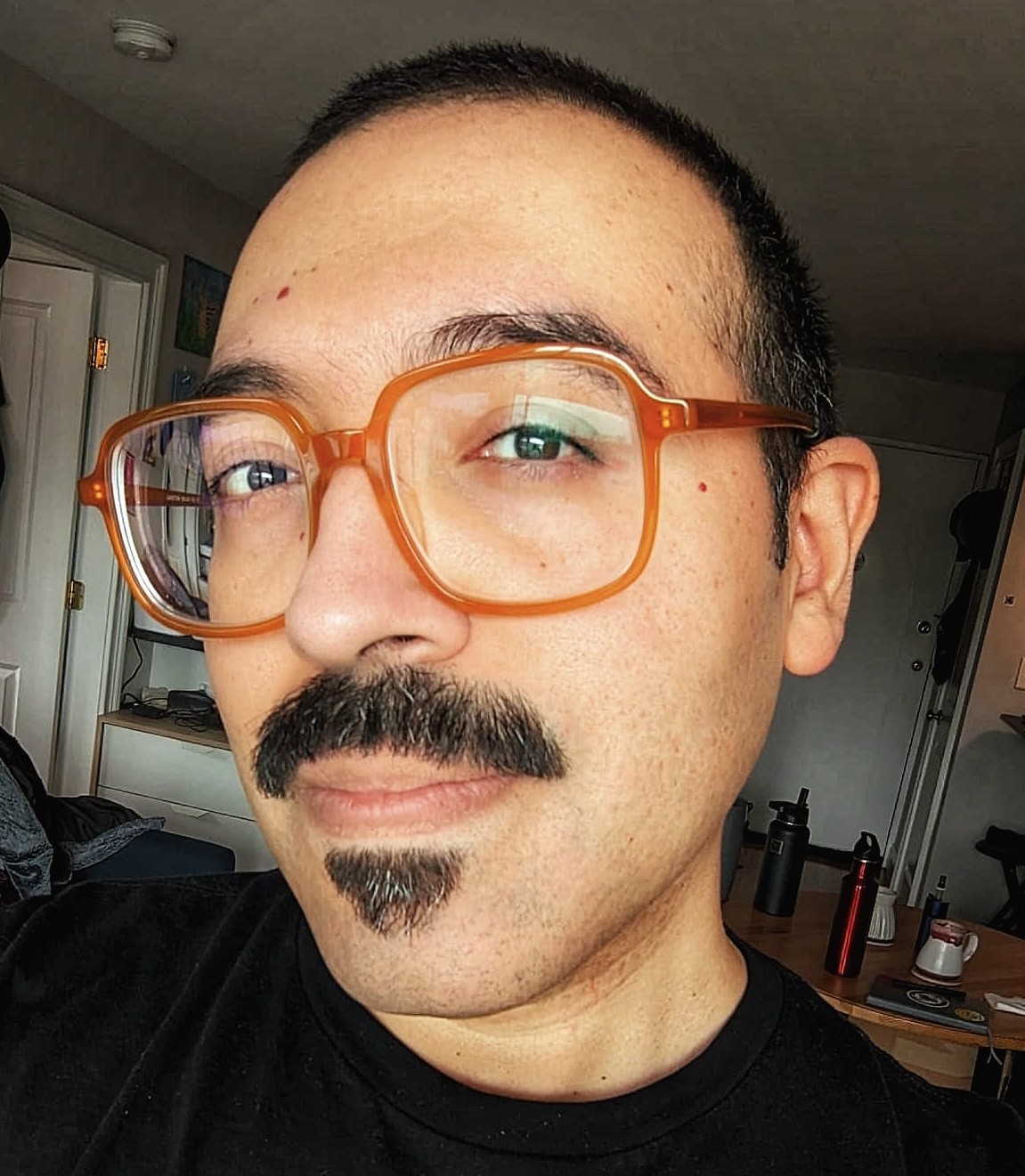
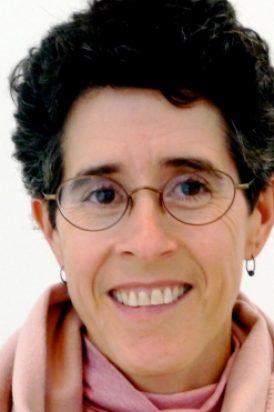
José Angel Araguz is an Assistant Professor of English at Suffolk University, specializing in creative writing and literary studies. His research focuses on Latinx poetics, poetic forms, and experimental literary genres. He holds a PhD from the University of Cincinnati, an MFA from New York University, and a BA from the College of Santa Fe. Dr. Araguz is deeply involved in literary publishing, serving as Editor-in-Chief of Salamander , a member of The Cincinnati Review’s Strategic Board, and an advisory board member for SWING literary journal. He also leads editorial roles at Airlie Press and Right Hand Pointing. His creative work spans poetry, nonfiction, and hybrid genres, with a focus on Latino/a identity, speculative elements, and formal innovation. Major publications include Ruin and Want (2023), La esperanza espera (2023), and Rotura (2022). His research explores blackout poetry, microcuentos, and the intersection of creative writing with cultural critique. He teaches courses like Latinx Literature, Creative Writing, and Poetry Workshops. Office hours are Fridays 10:30 a.m.–1:30 p.m. or by Zoom appointment.
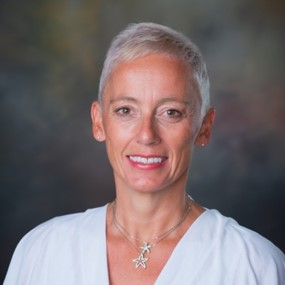
Anna Chiafele is an Associate Professor of Italian in the Department of World Languages, Literatures and Cultures at Auburn University. Her research examines ecocriticism, ecological disasters, and climate change fiction within Italian literature. Chiafele received the 2022 Italian Prose in Translation Award for her co-translation of Silvana La Spina's 'Penelope'. Her scholarly publications analyze representations of waste, toxicity, and environmental crisis in contemporary Italian fiction. Recent work explores climate fiction narratives and ecological dystopias. Chiafele's research methodology combines environmental humanities with literary analysis to address pressing ecological concerns. She teaches Italian language and literature courses while maintaining active translation projects. Her academic background includes a PhD from University of Toronto and degrees from Università Cattolica del Sacro Cuore and University of Virginia.
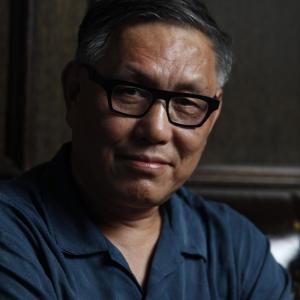
Wu Hung is the Harrie A. Vanderstappen Distinguished Service Professor at the University of Chicago, affiliated with The College , the Department of Art History , and the Department of East Asian Languages and Civilizations . He serves as Director of the Center for the Art of East Asia and Consulting Curator at the Smart Museum of Art .
University of California, Los AngelesUnited States
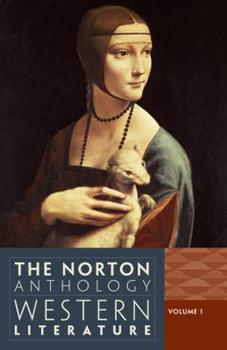
Barbara Fuchs is a Professor in the Department of English at the University of California, Los Angeles, specializing in early modern European literature across Spanish, English, French, and Italian traditions from the 15th to 17th centuries. Her work emphasizes transnational contexts, theater and performance studies, and cultural production within imperial frameworks, with significant contributions to Mediterranean and transatlantic studies. Education Ph.D. in Comparative Literature, Stanford University (1997) B.A./M.A. in Comparative Literature (English, French, Spanish), summa cum laude, Yale University (1992) Research Interests Professor Fuchs' scholarship centers on transnationalism in early modern literature, examining how theater and performance negotiated imperial identities across Mediterranean and transatlantic contexts. Her work critically engages with race and religion in the early modern world, picaresque traditions, and Cervantes studies, revealing how cultural encounters shaped literary production. She bridges historical analysis with contemporary relevance through public humanities initiatives focused on classical Hispanic theater. Publication Trends Her recent publications demonstrate interdisciplinary innovation, merging literary analysis with performance studies and material culture. Recurring themes include transnational exchange mechanisms, racial formation processes, and textual materiality, while recent work addresses pandemic-era digital performance and modern adaptations of classical works. This trajectory highlights her commitment to connecting historical scholarship with current social and artistic practices. Scientific Awards Premio Ñ from the Instituto Cervantes (inaugural award) for promotion of Spanish language and culture Advising and Leadership Professor Fuchs mentors undergraduate and graduate students in early modern studies, translation, and performance. She leads the UCLA "Diversifying the Classics" initiative and LA Escena festival, securing institutional support for these collaborative projects. Her editorial leadership includes serving as articles editor for Renaissance Quarterly and co-editing the Norton Anthology of World Literature , demonstrating field-wide influence. Projects and Teams She directs the "Diversifying the Classics" initiative, which collaborates with theater professionals to adapt Hispanic classical works for contemporary Los Angeles audiences, and founded LA Escena—the biennial festival of Hispanic classical theater. These projects unite scholars, artists, and communities to explore historical texts through modern performance lenses, emphasizing accessibility and cultural relevance.
Kirsten Weld is a Professor of History at Harvard University, affiliated with the Faculty of Arts and Sciences. Her work focuses on modern Latin America, particularly struggles over inequality, justice, historical memory, and social inclusion. She holds a BA from McGill University and a PhD from Yale University. Her research has been recognized with prestigious awards, including the WOLA-Duke Human Rights Book Award (2015) and the Latin American Studies Association’s Best Book Award (2016). Her first book, *Paper Cadavers: The Archives of Dictatorship in Guatemala* (2014), examines the role of archives in shaping historical narratives during Guatemala’s civil war. Her current project, *Ruins and Glory: The Long Spanish Civil War in Latin America*, explores the war’s legacies in the Americas. She teaches courses on Latin American history, U.S.-Latin American relations, archival theory, and historical methods. Weld’s publications span journals like *Hispanic American Historical Review* and *Dissent Magazine*, addressing topics such as Cold War dynamics, memory politics, and surveillance. Her work bridges historical scholarship with activism, emphasizing archives as tools for justice and accountability. Her awards reflect her contributions to human rights scholarship and historical methodology. Weld’s research often intersects with contemporary issues, including post-conflict justice and the ethical use of archival materials.
Erika Naginski is the Robert P. Hubbard Professor of Architectural History at Harvard University’s Graduate School of Design (GSD), Department of Architecture. She is affiliated with the Aga Khan Program for Islamic Architecture. Prior to joining the GSD, she taught at MIT and the University of Michigan, and held fellowships at Harvard’s Society of Fellows, the Radcliffe Institute, and the Clark Art Institute. Her research explores Baroque/Enlightenment architecture, early modern aesthetic philosophy, and public space theories. Key projects include analyzing the intersection of architecture with art history, the philosophical foundations of medium studies, and the socio-political dimensions of public art during revolutionary periods. Recent work focuses on eighteenth-century conceptions of history and archaeology. Naginski’s courses include Architecture and its Texts (1650-1800) , The Shapes of Utopia , and The Ruin Aesthetic , emphasizing critical discourse and historical methodologies. She has published extensively on topics such as Piranesi’s influence, utopian spatial concepts, and the role of ruins in architectural thought. Awards: Guggenheim Fellowship (2007) for her study on architecture, archaeology, and historical conception. Editorial Roles: Serves on the editorial board of Res . Labs/Teams: Active in the Aga Khan Program’s interdisciplinary initiatives on Islamic architecture.
Macarena Gomez-Barris is the Timothy C. Forbes and Anne S. Harrison University Professor of Modern Culture and Media at Brown University, serving as Chair of the Modern Culture and Media Department and Director of the Center for Environmental Humanities. Her research focuses on decolonial environmental humanities, extractivism, media environments, and the intersection of cultural theory with artistic practice. She holds affiliations with the Brown Arts Institute and leads the Elemental Media Lab. Education : - PhD in Modern Culture and Media, University of California Santa Cruz (2004) - MA in Modern Culture and Media, University of California Santa Cruz (1999) - MA in Comparative Literature, University of California at Berkeley (1997) - BA in Literature, University of California, San Diego (1992) Her work explores themes such as colonial oceanic transits, racial ecologies, and the role of art in political resistance. She is the author of four books, including At the Sea’s Edge (forthcoming) and The Extractive Zone (2017). Her teaching spans courses like Racial Ecologies and Decolonial Futurities . Leadership & Initiatives : - Director of the Elemental Media Lab - Series Editor for Dissident Acts (Duke UP) - Member of the Social Text Collective
Min Seong Kim is an Associate Professor in the Department of Economics at the University of Connecticut, affiliated with the College of Liberal Arts and Sciences. His research focuses on econometrics, particularly panel data analysis, bootstrap methods, and cross-sectional dependence. He earned his Ph.D. in Economics from UC San Diego in 2011. His contact information includes email: min_seong.kim@uconn.edu , and office location Oak Hall 330. Education: Ph.D., Economics, UC San Diego, 2011 Research Interests: Econometric theory and applications Bootstrap methods and robust inference Panel data models with cross-sectional dependence Time series analysis and spatial econometrics Publications highlight his contributions to econometric methodology, including robust inference techniques for panel data models, bootstrap methods, and policy analysis. Recent work addresses cross-sectional dependence in large panel models and diffusion index forecasts. No scientific awards are explicitly listed. Advising and grant details are not provided in the text. His research is supported through standard academic channels, and he maintains a professional website at http://minseongkim.weebly.com .
Jaime Rodriguez Matos is an Assistant Professor in the Department of Modern and Classical Languages and Literatures at California State University, Fresno, where he has been employed since 2018. His academic career includes prior roles as Lecturer at Fresno State (2016-2018) and Assistant Professor at the University of Michigan (2007-2016). Education: Ph.D., Spanish and Portuguese, Columbia University M.Phil., Spanish and Portuguese, Columbia University M.A., Spanish and Portuguese, Columbia University B.A., Spanish Language and Literature, University of New Hampshire Rodriguez Matos specializes in Latin American poetry, nihilism, infrapolitics, and temporal theory. His work interrogates the intersections of philosophy and literary form, particularly focusing on the deconstruction of time in works by José Lezama Lima, Eduardo Lalo, and Álvaro García Linera. Current research explores neo-revolutionary rhetoric and anarchic political thought in Latin America. His published and forthcoming articles address themes such as Lacanian critiques of hegemony, the ontologies of the present, and the formless in Caribbean politics. Rodriguez Matos has presented at international conferences including the Latin American Studies Association and the University of California, Irvine Humanities Commons cluster. Selected Publications: Writing of the Formless: José Lezama Lima and the End of Time (Fordham University Press, 2017)
David Kazanjian is a Professor of English and Comparative Literature at the University of Pennsylvania's School of Arts & Sciences. He serves as Graduate Chair for the Comparative Literature and Literary Theory program (2024-25, 2026-2028), and has held prestigious fellowships including the Institute for Advanced Study (Princeton, 2026), Vartan Gregorian Center (NYPL, 2025), and Berlin Prize. His scholarship bridges transnational American studies, Armenian diaspora studies, political philosophy, and postcolonial theory. PhD in Rhetoric, University of California, Berkeley M.A. in Critical Theory, University of Sussex B.A. in Modern Thought and Literature, Stanford University Kazanjian's research examines dispossession through legal archives, transnational Armenian cultural politics, and 19th-century social movements. His work spans early American literature, Latin American colonialism, trauma theory, and Marxist analysis of freedom discourses. Recent publications address dispossession in colonial New England/Yucatán, Armenian diaspora representation, and improvisational freedom practices in the Atlantic world. His editorial roles include co-editing NYU Press's America and the Long 19th Century series and Social Text journal. 2022 Penn Provost's Award for Outstanding Mentorship of Ph.D. Students Berlin Prize, American Academy of Berlin As co-director of the Tepoztlán Institute for Transnational History of the Americas (2017-19) and affiliations with Penn's Gender & Sexuality Studies, Latin American Studies, and Middle East Center, Kazanjian fosters interdisciplinary scholarship. He teaches courses on capitalism theories, early American literature, and critical theory. His lab and collective work includes the Tepoztlán Institute and Social Text editorial collective, focusing on transnational historical methods and diasporic cultural analysis.
Julia Hell is a Professor in the Department of Germanic Languages and Literatures at the University of Michigan. She holds affiliations with the Center for European Studies and the Weiser Center for Europe and Eurasia. Her research focuses on German culture, particularly post-fascist and post-communist literature and visual arts, imperial studies, and the aesthetics of ruins. She has authored influential works such as Post-Fascist Fantasies (1997) and The Conquest of Ruins (2019), and co-edited Ruins of Modernity (2010). Hell has organized international conferences on topics like 'Ruins of Modernity' and has been a visiting scholar at the Institute for Advanced Study (Princeton). Education : Ph.D., German Literature, University of Wisconsin-Madison (1989) Her research interests span ruin studies, imperium studies, and political theory, with a focus on the intersections of art, politics, and history. Recent projects include analyses of Las Vegas as a 'ruinopolis' and the ethics of scenes of execution in Peter Weiss’s works. Hell has received awards including the MLA’s Scaglione Prize and ACLS Fellowship. Her articles explore themes like imperial decline, post-Communist subjectivity, and the Holocaust’s cultural legacy. She teaches courses on German literature, philosophy, and colonialism.
Salomé Aguilera Skvirsky is an Associate Professor in the Department of Cinema and Media Studies and The College at the University of Chicago, with affiliated appointments in the Center for Latin American Studies and the Center for the Study of Race, Politics, and Culture. She earned her Ph.D. from the University of Pittsburgh and serves as co-editor at Critical Inquiry. Her research pioneers the concept of the “process genre”—a transmedial category depicting step-by-step production processes that aestheticize labor as skilled and artisanal across ideological spectrums. She employs hemispheric frameworks to analyze race, labor, and “the people” in Latin American political cinema, Third Cinema, and nonfiction media, revealing how representations intersect with power structures and historical trauma. Recent publications examine police representation in “Filming the Police,” domestic labor in Roma, and the legacy of The Battle of Chile. Her work spans Cinema Journal, Journal of Latin American Cultural Studies, and The Routledge Companion to Latin American Cinema, demonstrating methodological rigor in visual analysis and political theory. Major recognitions include: Best First Book Prize (Society for Cinema and Media Studies, 2021) PROSE Book Awards Finalist (Media and Cultural Studies, 2021) Kraszna-Krausz Moving Image Book Award shortlist (2021) She teaches advanced seminars on Latin American Documentary, Cinema/Labor, and Filming the Police, mentoring students in critical media analysis while advancing her book project on police representation across televisual and digital platforms.
Rochester Institute of Technology (RIT)United States
Sarah Thompson is an Associate Professor in the School of Art at the College of Art and Design, Rochester Institute of Technology. Her research focuses on Gothic architecture, medieval design processes, and the historiography of architectural heritage. She holds a BA from the University of California, San Diego, and MA/PhD from the University of California, Santa Barbara. Her work examines topics such as the cultural significance of Gothic ruins, the role of Saint-Denis as a French national monument, and postmedieval visual representations of medieval structures. She co-edited *The Long Lives of Medieval Art and Architecture* (2019) and is currently working on a book analyzing Gothic architecture's visual legacy. Thompson has presented at major conferences including the International Congress on Medieval Studies and the College Art Association Annual Meeting, focusing on themes like medieval architectural restoration, digital heritage, and early modern travel literature.
Helmut Puff serves as the Elizabeth L. Eisenstein Collegiate Professor of History and Germanic Languages at the University of Michigan, Ann Arbor, with joint appointments in the Department of History, Germanic Languages and Literatures, Women's and Gender Studies, and History of Art. His interdisciplinary scholarship bridges historical, literary, and visual studies with a focus on early modern European cultural formations. Education: Ph.D. in German and History from the University of Basel Professor Puff specializes in gender studies, the history of sexuality, and media history within late medieval and early modern German contexts. His foundational work on sodomy during the Reformation era expanded into broader investigations of visual culture, particularly Albrecht Dürer's art and the semiotics of ruins. Current research explores intersections of textuality, visuality, and spatiality through three-dimensional city models spanning the 16th to 21st centuries, revealing enduring cultural patterns in representing destruction and memory. His publication trajectory demonstrates a methodological evolution from historical analysis of sexuality toward interdisciplinary cultural studies, consistently connecting early modern phenomena with contemporary theoretical frameworks. Works like Miniature Monuments (2014) and After the History of Sexuality (2012) exemplify his approach to material culture and Foucauldian genealogies, while book chapters on Dürer and ruins establish critical links between artistic production and historical trauma across centuries. Academic leadership includes serving as North American co-editor of Gender and History (2002-2005), co-directing the international 'Global Turns and Gender Returns' initiative with Nancy Hunt, and a five-year term on the MLA's Divisional Committee for German Literature prior to 1700. He directed the 2011-12 Academic Year in Freiburg exchange program between the University of Michigan and Albert-Ludwigs-Universität. Through the 'Global Turns and Gender Returns' program, Puff fostered transnational scholarly networks connecting gender researchers across geographical and disciplinary boundaries, emphasizing comparative methodologies in transcultural intellectual history.
Virginia Young is the Cecil J. and Ethel M. Nesbitt Professor of Actuarial Mathematics at the University of Michigan's Department of Mathematics, within the College of Literature, Science, and the Arts. She holds a Ph.D. from the University of Virginia (1984). Her research focuses on actuarial and financial mathematics, particularly decision-making processes for individuals and insurance companies in financial and insurance contexts. This includes topics like optimal reporting strategies, reinsurance mechanisms, and risk management under uncertainty. Her work addresses modern challenges such as defined contribution pension plans and strategic insurance product design. Key research areas include stochastic control theory, game-theoretic models in insurance markets, and optimization under model ambiguity. She explores how insurers and individuals make decisions under risk, with applications to annuities, reinsurance chains, and lifetime financial planning. Recent studies investigate Stackelberg games in reinsurance, optimal deductible insurance, and minimizing lifetime ruin probabilities through strategic annuitization. Virginia Young has no listed scientific awards in the provided texts. She advises no formally documented students, though her role likely involves mentoring within the Mathematics Department. Her work contributes to both theoretical advancements and practical applications in actuarial science and financial risk management.