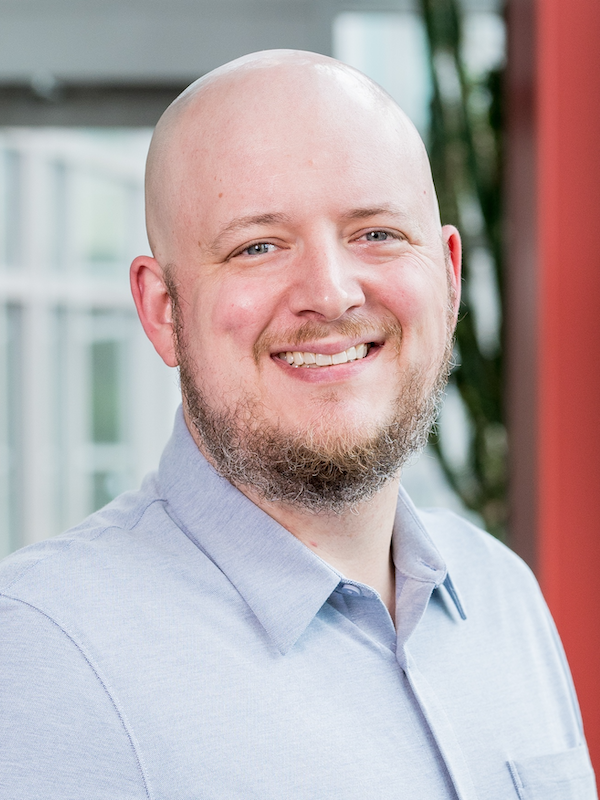
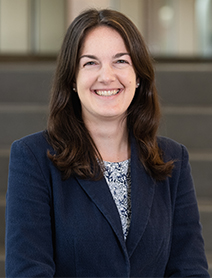
Gene Tsudik is the Peter & Lois Griffin Professor at the University of California, Irvine (UCI), affiliated with the School of Information and Computer Sciences. His research focuses on cryptography, computer security, privacy, and applied cryptographic protocols. He has authored over 300 publications in top-tier venues, addressing challenges in secure communication, key management, privacy-preserving technologies, and network security. Key research areas include group key agreement, secure data possession, privacy-preserving protocols, and mobile agent systems. His work has influenced foundational aspects of computational grid security, cloud storage integrity, and post-quantum cryptography. Collaborations include prominent institutions like KAIST, University of Surrey, and NYIT. His publications span topics from theoretical cryptographic proofs to practical system implementations, reflecting a balance between academic rigor and real-world applicability.
Joseph Heath is a Professor in the Department of Philosophy at the University of Toronto and a Sessional Lecturer at the Munk School of Global Affairs & Public Policy. His academic work spans critical social theory, political philosophy, business ethics, rational choice theory, and action theory, rooted in the Frankfurt School tradition. Education: Bachelor of Arts (1990), McGill University, studying under Charles Taylor Master of Arts and Doctor of Philosophy (1995), Northwestern University, under Thomas A. McCarthy and Jürgen Habermas Heath’s research focuses on critical theory, moral philosophy, and institutional design. His books, including The Rebel Sell and Enlightenment 2.0 , address consumerism and modern democratic challenges. His recent op-ed in the Globe and Mail (2021) critiques the BIPOC acronym in the Canadian context. Scientific Awards: Pierre Elliott Trudeau Foundation Fellowship (2012) Royal Society of Canada Fellowship (2013) Shaughnessy Cohen Prize for Political Writing (2014) Heath’s publications, such as The Efficient Society and Morality, Competition, and the Firm , reflect interdisciplinary engagement with ethics, economics, and policy. He teaches PPG2011H Ethics and the Public Interest at the Munk School.
Andreu Sansó Rosselló is a Full Professor of Applied Economics at the University of the Balearic Islands (UIB), where he is affiliated with the Faculty of Economics and Business and the Department of Applied Economics. He previously served as Head of the Department of Applied Economics (2003-2007) and Dean of the Faculty of Economics and Business (2013-2020). He has also held significant positions outside academia, including General Director of Economy for the Government of the Balearic Islands (2007-2011) and Director of the Institute of Statistics of the Balearic Islands (2008-2011). His educational background includes a Degree in Economics and Business from the University of Barcelona (1992) and a PhD in Economics from the University of Barcelona (1996). He previously held academic positions as assistant professor and associate professor at the University of Barcelona, associate professor at UIB, and Professor-tutor at the Open University of Catalonia. Professor Sansó Rosselló's research focuses primarily on econometrics, with specializations in economic statistics and economic time-series analysis. His work spans multiple disciplines including tourism economics, health policy, energy economics, and public finance. He has published extensively in top-tier journals such as Journal of Econometrics, Journal of Business and Economic Statistics, and Tourism Management. His recent work demonstrates a strong interdisciplinary approach, connecting econometric methods with practical applications in tourism, healthcare, and environmental economics. His publications reveal a consistent focus on applying advanced statistical techniques to real-world economic problems, particularly in tourism (7 of his 15 most recent articles) and methodological econometrics (5 articles), with additional contributions to health economics, energy economics, and public finance. Professor Sansó Rosselló leads multiple research initiatives as Main researcher for the Econometrics and Data Science (ECD) Consolidated R+D+I Group and the Economics and Data Science (UECD) R+D+I Unit, while also serving as a Member of the Topological Models for Fuzzy Information Processing (MOTIBO) Consolidated R+D+I Group. He teaches Econometrics, Statistical Learning and Decision-Making, and supervises Final Degree Projects across multiple undergraduate and master's programs at UIB, including the Degree in Business Administration, Double Degree in Business Administration and Law, Double Degree in Business Administration and Tourism, and Master's programs in Big Data Analysis and Data Analytics.
Diogo Oliveira e Silva is an Associate Professor in the Department of Mathematics at Instituto Superior Técnico, Lisbon, and holds an Honorary Senior Research Fellow position at the University of Birmingham. His academic journey includes a PhD from UC Berkeley under Michael Christ (2012), a Habilitation at Universität Bonn (2017), and prior roles at Bonn and Berkeley. His research focuses on harmonic analysis, particularly sharp inequalities, oscillatory integrals, Fourier restriction theory, uncertainty principles, and nonlinear Fourier analysis. Education: PhD in Mathematics (2012, UC Berkeley), Habilitation (2017, Universität Bonn) Affiliations: Instituto Superior Técnico (current), University of Birmingham (honorary), former positions at Bonn and Berkeley His work explores Fourier restriction theory , symmetry breaking phenomena , spherical packings , and sharp inequalities across geometric and analytic contexts. Recent publications address dimension-free estimates , stability of extremizers , and sign uncertainty principles , often leveraging collaborations with researchers like R. Mandel, G. Negro, and R. Quilodrán. Grants from EPSRC , DFG , NSF , AIM , and FCT have supported his work. He has been actively involved in international conferences and lecture series , including events in Rwanda, Germany, Brazil, and Japan. Teaching roles span complex analysis, Fourier analysis, and PDE courses at IST and Birmingham.
Monika Maurhofer is a Professor at the Department of Environmental Systems Science, ETH Zurich , specializing in multitrophic interactions within the rhizosphere. Her research bridges plant pathology, microbial ecology, and biological control of plant diseases and insect pests. 1988: Dipl. sc. nat., ETH Zurich 1993: Dr. sc. nat., ETH Zurich Research focuses on biocontrol pseudomonads and their molecular interactions with plants, fungi, and insects. Key projects include: Understanding Pseudomonas protegens mechanisms in rhizosphere colonization Comparative genomics of entomopathogenic bacteria Developing disease-suppressive compost diagnostics Investigating microbial consortia for pest control 2024-2025 publications highlight her work on entomopathogenic pseudomonads and nematode-bacteria symbiosis , with applications in sustainable agriculture. She received the Golden Owl Award for teaching excellence in 2014 and 2017. Current collaborations include Syngenta Crop Protection and interdisciplinary teams at University of Zurich and University of Basel.
József Garay is a Senior Research Fellow at the ELTE-MTA Theoretical Biology and Evolutionary Ecology Research Group, part of the Department of Plant Systematics, Ecology and Theoretical Biology at Eötvös Loránd University in Budapest, Hungary. His research spans evolutionary biology, mathematical ecology, and game theory, with a particular focus on evolutionary stable strategies and their applications to biological systems. Dr. Garay received his M.Sc. in Biology from Eötvös University (1981-1986), followed by postgraduate studies in Mathematics (1985-1989). He completed his PhD at the Hungarian Academy of Science in 2004, after doctoral studies in the Department of Plant Taxonomy and Ecology (1990-1994) and a summer school on Evolutionary Models of Cooperation in Seewiesen, Germany (1994). Garay's research interests center on evolutionary game theory and its applications to biological systems. He has made significant contributions to understanding evolutionarily stable strategies (ESS) in sexual populations, the evolutionary roots of morality, and the mathematical foundations of population dynamics. His work bridges theoretical mathematics with practical ecological applications, particularly in areas like optimal foraging, habitat selection, and the evolution of cooperation. A key aspect of his research involves extending classical game theory concepts to more complex biological scenarios, including multi-species systems and time-constrained evolutionary processes. His work on the evolutionary stability of self-sacrificing behavior and the relationship between individual fitness and group survival has provided important insights into the evolution of altruism and social behavior. Analysis of Garay's recent publications reveals a consistent focus on evolutionary game theory applied to biological systems, with increasing sophistication in modeling approaches. His work has evolved from foundational studies on evolutionarily stable allele distributions (ESAD) to more complex applications in areas like cannibalism dynamics, predator-prey interactions, and kin selection. There's a clear trajectory toward more integrative models that combine mathematical rigor with biological realism, often addressing questions at the intersection of evolutionary theory, ecology, and behavior. Notably, his research increasingly incorporates mathematical modeling techniques to analyze complex ecological phenomena, demonstrating the power of theoretical approaches to address empirical biological questions. Dr. Garay has received several prestigious awards and fellowships throughout his career: Juhász-Nagy Pál junior fellowship at Collegium Budapest Institute for Advanced Study (1999-2000) NATO research fellowship at Wilfrid Laurier University, Waterloo, Canada (2002) Research fellowship at Konrad Lorenz Institute, Austria (2005) Bolyai János fellowship of the Hungarian Academy of Sciences (2006-2008) While specific information about his advising activities is limited in the provided materials, Garay's extensive publication record spanning over three decades suggests he has likely mentored numerous graduate students and early-career researchers. His collaborations with colleagues like Zoltán Varga, Manuel Gámez, and Tomás Cabello indicate a strong network of research partnerships. Garay has secured multiple research grants supporting his work, including the Bolyai fellowship and international research opportunities that have enabled him to extend his theoretical models to practical ecological applications. His work on ecological monitoring systems demonstrates how theoretical frameworks can be applied to real-world environmental challenges. Garay is a core member of the HAS Theoretical Biology Group at Eötvös Loránd University, where he contributes to a vibrant research environment focused on mathematical approaches to biological problems. His work intersects with several research teams studying evolutionary ecology, population dynamics, and mathematical biology, creating opportunities for interdisciplinary collaboration on complex biological questions that require both theoretical insight and empirical validation. The group's research has significant implications for understanding fundamental biological processes and developing more effective conservation and management strategies.
Daniel Barreto is a Professor at Edinburgh Napier University , specializing in Discrete Element Method (DEM) simulations and soil mechanics . His research emphasizes particle shape and size distribution effects on granular material behavior, with applications in permeability estimation, liquefaction mitigation, and nature-inspired ground engineering. Education : PhD in Soil Mechanics (Imperial College London, 2010), MSc in Soil Mechanics and Engineering Seismology (Imperial, 2005), Civil Engineering (Universidad de los Andes, 2003). Research : Focuses on DEM, grading entropy theory, and particle-scale interactions in sand-rubber mixtures, with implications for seismic isolation and sustainable soil stabilization. Awards : Royal Academy of Engineering Leverhulme Trust Fellowship COST Action Chair for Open Network on DEM Simulations (ON-DEM) Emeritus Member of Royal Society of Edinburgh Young Academy of Scotland Publications : Pioneering studies on DEM-based critical state behavior, particle breakage quantification, and permeability models for granular soils, with a 2023 Transportation Geotechnics paper on hydraulic radius applications. Collaborations : Leads ON-DEM, a global network advancing open-source DEM tools, and contributes to interdisciplinary projects involving synthetic root mimics and microbial soil interactions.
Leif A. Carlsson is the J.M. Rubin Foundation Professor in the Department of Ocean and Mechanical Engineering at Florida Atlantic University. His research focuses on composite materials, sandwich structures, solid mechanics, and finite element analysis. He holds a Ph.D. from Chalmers University of Technology. His work emphasizes fracture mechanics in composite materials, moisture effects on polymers, and structural integrity of aerospace and marine composites. Key research areas include honeycomb core mechanics, face/core interface fracture, and environmental degradation of materials. Recent studies explore water diffusion in polymers, thermal effects on composites, and failure modes under various loading conditions. His contributions span over 50 peer-reviewed articles since 2009, with a focus on advancing composite material design and durability. Notable projects include the analysis of single-face honeycomb sandwich structures (2025), geometrical imperfection sensitivity in honeycomb cores (2023), and low-temperature fracture characterization of foam cores (2020). His work bridges experimental testing and computational modeling to address real-world challenges in aerospace and marine engineering applications.
Maxim L. Yattselev is a Professor in the Department of Mathematical Sciences at Indiana University–Purdue University Indianapolis (IUPUI) . He has held prior positions as a Visiting Assistant Professor at the University of Oregon and a Visiting Scholar at Vanderbilt University. Education: Ph.D. and M.S. in Mathematics from Vanderbilt University (2007, 2004), M.S. and B.S. from Dnepropetrovsk National University (2001, 2000). Research Interests focus on meromorphic approximation, orthogonal polynomials, integrable systems, random polynomials, and spectral theory. He explores connections between these areas and applications to Painlevé equations, random matrix theory, and convergence of rational approximants. Publications highlight advancements in strong asymptotics for Angelesco systems, spectral theory of Jacobi matrices on trees, universality in random polynomial roots, and convergence properties of Padé and Hermite–Padé approximants. His work often employs Riemann–Hilbert techniques and potential theory. Advising: Mentored Ph.D. students Hanan Aljubran and Ahmad Barhoumi on random polynomials and multiple orthogonal polynomials. Teaching includes advanced courses in complex analysis, real analysis, orthogonal polynomials, and differential equations at IUPUI, University of Oregon, and Vanderbilt University.
Alix Vidal is an Assistant Professor in Soil Biology and Operations Manager at an unspecified institution, focusing on soil biogeochemistry and earthworm ecology. Their research integrates plant-microbe-soil interactions, mineral weathering, and sustainable agricultural practices. Key roles: Academic research, project supervision, and soil operations management Research interests: Soil organic matter dynamics, carbon sequestration, earthworm-driven processes, and circular food systems Recent work emphasizes earthworm activity quantification, struvite-P uptake mechanisms, and protein upcycling from agricultural waste. They collaborate on projects addressing climate mitigation through soil carbon management and mineral weathering enhancement. Supervises PhD candidates in topics like regenerative systems, earthworm ecology, and circular food systems Active in international collaborations studying soil properties across diverse environments Publications span 33 peer-reviewed articles, with a focus on applied soil science and environmental sustainability. Their research bridges laboratory experiments and field applications to address global challenges in agriculture and climate change.
Christopher Hughes is an Associate Professor in the Department of Mathematics at the University of York, where he has served since 2007. He holds the position of Chair of the Graduate Research School Committee and is recognized as a Senior Fellow of the Higher Education Academy, reflecting his contributions to academic leadership and pedagogy. His academic journey began with a PhD from the University of Bristol in 2001 under Jon Keating and Neil O'Connell, followed by teaching roles at the University of Michigan and postdoctoral positions at Tel Aviv University, the American Institute of Mathematics, and Cambridge's Newton Institute. This diverse background informs his interdisciplinary research approach. Professor Hughes specializes in the profound connections between number theory and random matrix theory, particularly using characteristic polynomials of random matrices to model L-function distributions. His work explores the Riemann zeta function's value distribution, extreme values, and moments, with applications spanning mathematical physics, combinatorics, and probability. As an active member of York's Number Theory Research Group, he bridges theoretical mathematics with real-world phenomena through innovative probabilistic frameworks. Analysis of his 15 most recent publications (2008-2025) reveals a sustained focus on zeta function derivatives, discrete mean-value theorems, and Gram's law probabilistic models. While predominantly centered on number theory, his 2018 educational research on cyber-university learning demonstrates versatility. The trajectory shows increasing sophistication in hybrid analytical-random matrix techniques for tackling classical number theory problems. His scientific recognition includes: Senior Fellowship of the Higher Education Academy (HEA) Christopher Hughes currently supervises PhD candidates Solomon Lugmayer and Ben Durkan on projects involving zeta function extrema and random matrix applications. His research is supported by collaborative grants reflected in 29 recent activities including 8 international invited talks. He actively shapes graduate education through committee leadership while maintaining a robust publication pipeline, with his 2025 work on local extrema moments representing cutting-edge advances. As a core member of York's Number Theory Research Group, Hughes collaborates globally on projects connecting random matrices to L-functions. His current work focuses on extreme value distributions and derivative behaviors, with future research poised to deepen understanding of the Riemann hypothesis through novel matrix-theoretic approaches and interdisciplinary applications in quantum chaos and statistical mechanics.
Professor Edward D Burton is a Professor (Research Scholar) in the Faculty of Science and Engineering at Southern Cross University, where he leads the Environmental Geochemistry & Mineralogy research group. His work integrates laboratory experiments, field studies, and synchrotron-based X-ray techniques to investigate metal(loid)-mineral-microbe interactions across diverse environments including acid sulfate soils, contaminated lands, and mine sites. His educational background includes a BSc(Hons) and PhD from Griffith University, establishing his foundation in earth sciences and geochemistry. Research focuses on Environmental Geochemistry and Mineralogy with emphasis on arsenic/antimony speciation , iron mineral transformations , and heavy metal dynamics in contaminated systems. His group pioneers synchrotron-based approaches to decipher contaminant retention mechanisms, particularly in acid sulfate soils and mine drainage environments, directly informing remediation strategies for water quality protection. Recent publications reveal intensifying research on climate-hydrological interactions affecting contaminant mobility, with dominant themes in antimony-arsenic co-behavior in iron mineral systems and advanced applications of X-ray spectroscopy. This reflects his strategic shift toward interdisciplinary solutions for complex environmental contamination scenarios. Key scientific awards include: Future Fellowship (Professorial Level) from Australian Research Council (2020-2024) Vice-Chancellors' Excellence in Research Award from Southern Cross University (2015) 5 Year Australian Research Fellowship from Australian Research Council (2011-2015) 3 Year Post-Doctoral Fellowship from Australian Research Council (2007-2010) Professor Burton has supervised 14 PhD students and 11 postdocs to completion, currently mentoring 5 PhD candidates, 1 MSc student, and 2 postdocs. His research is funded by 5 ARC Discovery Projects ($1.51 million), 7 ARC Linkage Projects ($2.72 million as Chief Investigator), and $2.66 million in-kind from ANSTO for synchrotron projects over the past five years. The Environmental Geochemistry & Mineralogy group operates as a multidisciplinary hub specializing in cutting-edge synchrotron techniques, with active collaborations across government agencies, mining industries, and international research institutions to address critical environmental contamination challenges.
Adam Bates is an Associate Professor at the University of Illinois at Urbana-Champaign, with affiliations in the Department of Computer Science and the Electrical & Computer Engineering Department. His research focuses on data provenance, cybersecurity, and secure system design. He received his PhD from the University of Florida under Professor Kevin Butler, collaborating with the Florida Institute for Cybersecurity Research. His work addresses security challenges in SSL/TLS, cloud computing, USB attack vectors, and telephony infrastructure, with notable contributions to provenance-aware systems. Education: PhD in Computer Science (University of Florida, advised by Kevin Butler) Research Interests: Secure data provenance systems Endpoint detection and response Privacy in smart homes and IoT Serverless computing security USB and cloud security Scientific Awards: NSF CISE Research Initiation Initiative (CRII) Award (2017) NSF CAREER Award (2018) Labs & Teams: Principal Investigator at the STS Lab
Femke Ongenae is an Associate Professor at Ghent University's Faculty of Engineering and Architecture within the Department of Information Technology . She leads research at the IMEC postdoctoral level in areas bridging eHealth, predictive healthcare, and knowledge graph technologies . Her work focuses on context-aware systems, stream reasoning, and hybrid AI for healthcare and smart infrastructure applications. Key research domains: Artificial Intelligence , Health Informatics , Knowledge Graphs Leadership roles: Digital Innovation for Man and Society research unit, eBehaviourChange group Her recent publications (2023-2025) highlight advancements in: Semantic rule mining for decision support systems Anomaly detection in healthcare and water networks Context-aware machine learning for COPD and migraine monitoring Knowledge graph embeddings for industrial process monitoring Collaborative projects involve: Developing INK framework for knowledge graph rule mining Building DIVIDE system for adaptive IoT querying Creating MASSIF platform for semantic IoT services Advancing stream reasoning for real-time healthcare applications
Emily Tucker is an Assistant Professor in the Department of Industrial Engineering at Clemson University's College of Engineering, Computing and Applied Sciences. Her research bridges operations research, stochastic modeling, and healthcare logistics to address critical societal challenges. Education: Ph.D. in Industrial and Operations Engineering, University of Michigan (2020) M.S.E. in Industrial and Operations Engineering, University of Michigan (2017) B.S. in Industrial and Systems Engineering, North Carolina State University (2013) Her research focuses on stochastic optimization, quantum computing applications, supply chain resilience, and healthcare policy. Recent work includes geopolitical impacts on pharmaceutical supply chains, equitable urban planning through optimization, and pandemic response strategies. Key publication trends show integration of stochastic modeling with healthcare operations (2020-2025), quantum optimization advancements, and resilience frameworks for disaster relief and global health equity. Her work spans theoretical algorithm development and real-world implementation in public health and supply chain domains. Professional Affiliations: Senior Member, Institute of Industrial and Systems Engineers (IISE) Member, Institute for Operations Research and the Management Sciences (INFORMS) She teaches graduate courses in transportation engineering, optimization theory, and uncertainty modeling. Research emphasizes policy-driven supply chain solutions and social good applications of operational research.