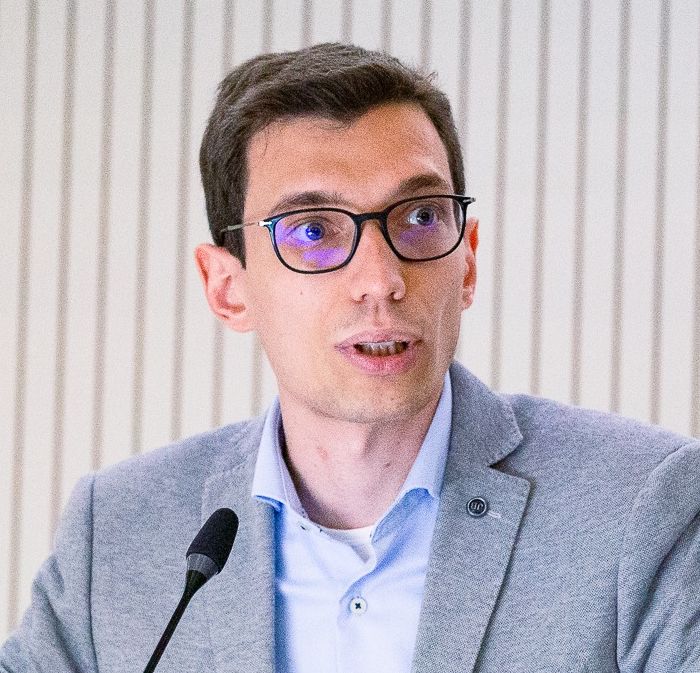
Piotr Koniusz is a Principal Research Scientist at Data61/CSIRO and an Honorary Associate Professor at the Australian National University (ANU), with an Adjunct role at UNSW. He holds a PhD in Computer Vision from the University of Surrey (2013) and a BSc from Warsaw University of Technology (2004). His research focuses on Foundation Models, Representation Learning, and Few-shot Learning, with contributions to Graph Neural Networks and Adversarial Robustness. Key roles include Program Chair for NeurIPS’25, Senior Area Chair for ICML’25 and ICLR’25, and Workshop Co-Chair for WWW’25. Awards include the Sang Uk Lee Best Student Paper (ACCV’22) and recognition as an Outstanding Area Chair (ICLR 2021–2023). Research interests span Vision-Language Models (VLMs), Generative Adversarial Networks (GANs), and Domain Adaptation. He supervises PhD students at ANU and collaborates with industry on projects like traffic forecasting and ecotoxicology prediction.
Professor Brian C. Williams is a leading academic at the Massachusetts Institute of Technology (MIT) , holding the position of Professor of Aeronautics and Astronautics and directing the Autonomous Systems Laboratory (ASL) . He is also a member of the Computer Science and Artificial Intelligence Laboratory (CSAIL) and the Space Systems Laboratory (SSL) . His work focuses on advancing model-based autonomy, enabling robots to operate independently in extreme environments such as space, underwater, and urban traffic. His contact details include email williams@csail.mit.edu and phone 253-2739 . Education : S.B., S.M., and Ph.D. in Computer Science and Electrical Engineering from MIT (1989). Williams' research spans risk-bounded decision making , collaborative robotics , and neural-symbolic learning . He has pioneered systems like Remote Agent, which demonstrated autonomous self-repair in NASA's Deep Space One mission, and Geordi, a risk-aware driver assistant. His work integrates symbolic reasoning, probabilistic methods, and machine learning to create resilient robotic systems for space exploration, manufacturing, and transportation. The most recent publications highlight trends in risk-aware planning , multi-agent robotics , and stochastic control . Key innovations include tube-based trajectory optimization, conflict-directed task allocation, and theory-of-mind guided interventions, reflecting his focus on robustness in uncertain environments. Scientific Awards : NASA Space Act Award (1999), AAAI Fellow, and multiple best paper awards from AAAI, IJCAI, ICAPS, CDC, HRI, and ECAI. Williams leads the Model-Based Embedded and Robotics Systems Group at CSAIL, collaborating with institutions like NASA's Jet Propulsion Laboratory. His projects include ASIST (Artificial Social Intelligence for Teams), RADMAX (Risk and Deadline Aware Planning), and Uhura (risk-aware personal assistants), addressing challenges in health care, manufacturing, and defense applications.
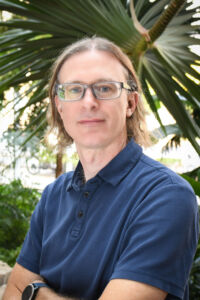
Thomas Berger is a Professor at the University of Hohenheim , affiliated with the Faculty of Agricultural Sciences and leading the Department of Economics of Land Use . He also contributes to the Computational Science Hub and Hohenheim Tropics initiatives. Focus Areas: Climate change adaptation, land-use modeling, biodiversity-productivity trade-offs, agent-based simulation, and machine learning in agricultural systems. Key Projects: Simulation frameworks for smallholder resilience in Ethiopia, bioeconomic modeling in the Amazon, and hybrid intelligence applications in European agricultural policy. Recent Publications: 2025 study on climate change effects on insecticide reduction in Germany, 2024 work on reconciling biodiversity with productivity via hybrid models, and 2023 methodological contributions to surrogate modeling and seasonal forecast integration. Research Trends: Interdisciplinary integration of climate science, agricultural economics, and computational modeling, with increasing emphasis on AI-assisted decision support systems and sustainability policy validation. Teaching & Outreach: Offers Agricultural Economics seminars and Hohenheim Tropics discussions, requiring advance email registration for office hours.
Lorenzo Baraldi is an Associate Professor at the University of Modena and Reggio Emilia, where he leads research in deep learning, vision-language integration, and multimodal AI systems. He serves as an ELLIS Scholar and Coordinator of the Modena ELLIS Unit, and has held the position of deputy director at the Interdepartmental Center on Digital Humanities since 2021. Previously, he worked at Facebook AI Research laboratory in Paris in 2017, developing video-matching algorithms for content moderation. His research spans multiple areas including Vision-and-Language integration, Multimodal Retrieval, Image and Video Captioning, Visual-Semantic alignment, Large-Scale model development, High Performance Computing, and Embodied AI. With over 120 publications in international journals and conferences, his work demonstrates consistent contributions to advancing multimodal AI capabilities. He has served as an Associate Editor for Computer Vision and Image Understanding and Pattern Recognition, and as Area Chair for major conferences including ICCV, WACV 2026, and ACM Multimedia 2025. His recent publication record shows significant impact in the field, with multiple papers accepted to top-tier conferences in 2024-2025 including CVPR, ICCV, BMVC, ICLR, ECCV, and NeurIPS. Notably, his paper "Hyperbolic Safety-Aware Vision-Language Models" was selected as a highlight paper at CVPR 2025. His research often involves collaboration with Rita Cucchiara and other researchers at his institution. ELLIS Scholar and Coordinator of the Modena ELLIS Unit Associate Editor for Computer Vision and Image Understanding Area Chair for ICCV and major multimedia conferences Highlight paper at CVPR 2025 Professor Baraldi teaches courses in Computer Vision and Cognitive Systems, Scalable AI, and Computer Architecture for the Artificial Intelligence Engineering and Computer Engineering programs. His teaching spans both undergraduate and graduate levels, with a focus on providing students with both theoretical foundations and practical implementation skills. He has developed educational materials including Deep Learning tutorials for classroom instruction.
Ningyuan Cao is an Assistant Professor in the Department of Electrical Engineering at the University of Notre Dame, College of Engineering. He leads the Circuit and System Intelligence Research Lab , focusing on the intersection of advanced hardware design and real-time/low-power machine learning applications. Education : Ph.D., Electrical and Electronics Engineering, Georgia Institute of Technology (2020) M.S., Electrical Engineering, Columbia University (2015) B.S., Electrical and Electronics Engineering, Shanghai Jiao Tong University (2013) His research investigates custom analog/mixed-signal circuits , digital architecture , and micro-system design for machine learning acceleration, distributed intelligence, and data-driven IC design automation. Key application domains include Internet-of-Everything, tactile internet, and mixed reality systems. Recent publications highlight work on Bayesian neural networks , privacy-preserving bio-signal encoders , transformer-based surrogate models , and compute-in-memory architectures . Technical themes span neuromorphic computing, uncertainty quantification, and hardware security.
Anming Zhang serves as a Professor in the Operations and Logistics Division of UBC's Faculty of Commerce and Business Administration, holding the prestigious Vancouver International Airport Authority Professorship in Air Transportation. His academic foundation includes a B.Sc. from Shanghai Jiao-Tong University and M.Sc./Ph.D. degrees from the University of British Columbia. Education : B.Sc. (Shanghai Jiao-Tong University), M.Sc. & Ph.D. (University of British Columbia) His research focuses on Transport Economics and Policy , Air Cargo Logistics , and Industrial Organization , with particular expertise in air-rail competition dynamics, pandemic impacts on aviation, and infrastructure economics. Zhang employs advanced methodologies including spatial econometrics and complex network analysis to examine transportation systems. Analysis of his 2024-2025 publications reveals three dominant trends: (1) Resilience of global air networks against pandemics and geopolitical conflicts, (2) Economic implications of urban air mobility integration, and (3) Non-aeronautical revenue optimization in airport management. His work increasingly bridges transportation economics with environmental sustainability concerns. Zhang actively supervises graduate students in Transportation & Logistics MSc and PhD programs within Business Administration, teaching undergraduate courses including Logistics and Operations Management and Air Transportation. He maintains strong institutional ties through the Center for Transportation Studies and collaborates extensively with international researchers on aviation policy challenges.
George Kesidis is a Professor in Computer Science and Engineering and Electrical Engineering at Penn State University. His research spans deep learning security, virtual reality optimization, and cloud computing. College of Engineering (Penn State University) Research Focus: Backdoor Attacks, DNN Robustness, Edge Caching Active in NSF and U.S. Navy-funded projects (2022-2026) His work addresses backdoor data poisoning , test-time evasion attacks , and DNN overfitting mitigation . He develops techniques like activation clipping, perturbation analysis, and statistical defense models. Recent projects include edge caching systems for VR and security-driven AI frameworks. Key article trends reveal expertise in adversarial deep learning, immersive media delivery, and cloud resource optimization. Current grants focus on multi-user VR, GPU scheduling, and serverless-cloud hybrid architectures. He collaborates extensively with researchers like David J. Miller and Xinyu Li, particularly on cloud-based adversarial defense mechanisms and VR streaming benchmarks.
Shutao Ma is a Professor and Doctoral Supervisor at Shandong University's School of Pharmaceutical Sciences, serving as Director of the Department of Medicinal Chemistry since 2009. He has received the Special Government Allowance from China's State Council since 2002 and the seventh youth award of Shandong province for his contributions to medicinal chemistry. His academic credentials include: Ph.D. in Pharmaceutical Sciences, Shandong University (2004-2007) M.Sc. in Pharmaceutical Sciences, Shandong Medical University (1988-1991) B.Sc. in Pharmaceutical Sciences, Shandong Medical University (1981-1986) Professor Ma's research pioneers innovative strategies against antibiotic-resistant bacteria through three interconnected pillars: 1) Designing FtsZ/AcrB-targeted small molecules to disrupt bacterial cell division and efflux mechanisms; 2) Structural optimization of macrolides, glycopeptides, and lipopeptides to overcome resistance; 3) Total synthesis and mechanistic studies of marine-derived antibacterial natural products. His work bridges synthetic chemistry with microbiological validation to develop next-generation antimicrobials. Analysis of his 15 most recent publications (2014-2016) reveals a dominant focus on antibacterial drug discovery (87% of works), particularly FtsZ inhibitors (33%) and macrolide derivatives (27%). Emerging themes include quorum sensing modulation (7%) and antiviral/anticancer applications (13%), demonstrating strategic expansion while maintaining core expertise in resistance mechanisms. His scientific recognition includes: First prize of Shandong science and technology progress award (2000) Special government allowance from the State Council (2002) The seventh youth awards of Shandong province (2002) As a Doctoral Supervisor, Professor Ma mentors the next generation of medicinal chemists while directing a robust research program funded by 12 major grants. His National Natural Science Foundation portfolio (2004-2020) spans antibacterial discovery, while Shandong Provincial grants (2006-2017) and China-Australia collaborations (2014-2017) support translational development of resistance-breaking agents. Leading the Department of Medicinal Chemistry, he oversees a multidisciplinary team integrating synthetic chemistry, microbiology, and computational modeling to advance antibacterial drug candidates from concept to preclinical validation, with particular emphasis on FtsZ-targeted therapeutics and macrolide engineering.
Alessandro Rigolon is an Associate Professor and MCMP Program Coordinator in the Department of City and Metropolitan Planning at the University of Utah, where he has been on the faculty since 2019. A dual-PhD scholar (Design & Planning, University of Colorado Denver; Architecture, University of Bologna), he is internationally recognized for research on environmental justice, green-space equity, and the public-health consequences of urban greening. Education: Ph.D. in Design and Planning, University of Colorado Denver (2015) Ph.D. in Architecture, University of Bologna, Italy (2012) B.Arch. & M.Arch. in Architecture and Urban Design, University of Bologna, Italy (2007) Research Interests: Rigolon’s work sits at the intersection of environmental justice, urban planning, and public health. He investigates four interconnected themes: (1) policy drivers of inequity in green-space provision; (2) the mechanisms and resistance to green gentrification; (3) green infrastructure’s role in equitable climate adaptation; and (4) health impacts of urban nature on marginalized communities. His studies span multiple scales—from census microdata in Miami-Dade County to machine-learning analyses across 263 Chinese cities—deploying mixed-methods, spatial analytics, and community-engaged research. Publications & Impact: Across 89 peer-reviewed outputs, recent work (2024-2025) reveals complex pathways by which gentrification both precedes and follows greening, quantifies disparities in park access among racial/ethnic groups, and evaluates policies aimed at achieving green-space equity. Collectively, these studies highlight the need for fine-scale spatial data, intersectional analyses, and robust procedural justice when designing equitable greening interventions. Scientific Awards & Recognition: Stanford/Elsevier Top 2 % Scientist (2024) Clarivate Highly Cited Researcher (2024) APA-Utah High Achievement Award (2022) Urban Studies Editor’s Featured Articles (2021) University of Utah Celebrate U Researcher Honoree (2020) Arnold O. Beckman Award (2019) Grants & Advising: Rigolon currently leads or co-leads six funded projects totaling over one million dollars from the Center for Equitable Transit-Oriented Communities, Center for Climate Smart Transportation, Prevention Institute, and University of Illinois. These grants support interdisciplinary teams examining transit-oriented green gentrification, climate adaptation for active transportation, and equitable park policy implementation. Graduate students and post-docs are active collaborators on all projects. Teaching & Community Engagement: He teaches graduate courses including Design Ecologies , Plan Making , Professional Project Studio , and Research Design . Through studio courses, students partner with local governments (South Salt Lake City, Liberty Wells Community Council) to produce actionable plans advancing environmental justice.
Uwe Zdun is a Professor at the Faculty of Computer Science, University of Vienna, where he serves as Vice-Director of Studies for Computer Science and Head of the Research Group Software Architecture. His teaching portfolio includes core courses such as Software Engineering 2, Advanced Software Engineering, and Practical Software Courses for Bachelor's and Master's theses across multiple semesters (2024W-2025S). His research spans software architecture with emphasis on microservices, cloud computing, and DevOps. Key focus areas include architectural design decisions, infrastructure-as-code conformance, security in distributed systems, and the integration of machine learning operations (MLOps/RLOps). He investigates cognitive aspects of architecture practices through controlled experiments and develops model-driven approaches for quality assessment in complex systems. Recent publications (2024-2026) reveal three dominant trends: (1) Security and coupling analysis in infrastructure-as-code deployments, (2) MLOps/RLOps integration for Industry 4.0 cyber-physical systems, and (3) Performance optimization patterns for CI/CD pipelines and autoscaling. His work bridges theoretical architecture models with industrial practice, particularly in microservice ecosystems and reinforcement learning applications. Professor Zdun leads the Research Group Software Architecture at the University of Vienna's Faculty of Computer Science. The group focuses on empirical validation of architectural patterns, tool development for conformance checking, and advancing design decision methodologies in cloud-native and AI-driven systems.
Jim Luedtke is a Professor in the Department of Industrial and Systems Engineering at the University of Wisconsin-Madison. His research focuses on operations research, integer programming, and stochastic optimization methods for solving discrete and uncertain decision problems. Educational Background: BS in Industrial Engineering from University of Wisconsin-Madison MS in Operations Research from Georgia Institute of Technology PhD in Industrial and Systems Engineering from Georgia Institute of Technology Postdoctoral Research at IBM T.J. Watson Research Center His work spans applications in power systems optimization, healthcare analytics, and network design, with particular emphasis on developing cutting-edge algorithms for chance-constrained and multistage stochastic programming problems. Recent publications demonstrate strong focus on Benders decomposition techniques, Lagrangian dual methods, and distributionally robust optimization frameworks. Scientific Awards: NSF CAREER Award (2010) for "Risk Management via Stochastic Programming: Models, Computation, and Applications"
Christian Coester is an Associate Professor of Computer Science at the University of Oxford and a Tutorial Fellow at St Anne's College. His research focuses on theoretical computer science, particularly in the design and analysis of algorithms for problems involving uncertainty and incomplete information. His primary research areas include: Online algorithms, with groundbreaking work on the k-server problem (including refuting the randomized k-server conjecture, which earned the STOC 2023 Best Paper Award) Learning-augmented algorithms (algorithms with predictions) that leverage machine learning predictions while maintaining robustness guarantees Fundamental problems such as the k-taxi problem, metrical task systems, and online shortest paths Coester's theoretical work aims to develop algorithms with provable performance guarantees, particularly focusing on competitive ratios that measure worst-case performance against optimal offline solutions. His research often addresses problems that are 'simple to state and hard to solve,' leading to techniques with broad applicability across theoretical computer science. His publications span top venues including STOC, FOCS, SODA, and ICML, showing consistent contributions to both classical online algorithms and the emerging field of learning-augmented algorithms. The publications reveal a strong focus on metric spaces, competitive analysis, and the integration of prediction models into traditional algorithmic frameworks. Coester has received significant recognition including the STOC 2023 Best Paper Award and a substantial ERC Starting Grant (EUR 1.5M) for 'Challenges in Competitive Online Optimisation' (2025-2029). He actively supervises PhD students and welcomes inquiries from mathematically skilled candidates interested in theoretical computer science.
Biyun Xie is an Assistant Professor in the Department of Electrical and Computer Engineering at the University of Kentucky's Stanley and Karen Pigman College of Engineering. Her research focuses on kinematically redundant robots, fault-tolerant robotics, and human-robot interaction, with applications in dangerous environments and collaborative systems. Education : Ph.D. in Electrical Engineering from Colorado State University (2019), Ph.D. in Mechanical Engineering from Beijing University of Technology (2015), and B.S. in Mechanical Engineering and Automation from Beijing University of Technology (2009). Research Interests : Kinematically Redundant Robots Fault Tolerant Robots Collaborative Robots Human-Robot Interaction Publications (2025–2023) highlight advancements in real-time fault-tolerant motion planning for redundant robots, neural network-based motor health monitoring, human-like motion algorithms, and collision-free trajectory optimization. These works intersect robotics, artificial intelligence, and mechanical/electrical engineering. Contact : Biyun.Xie@uky.edu | 859-562-2557
Benoît Sagot is a Senior Researcher in Natural Language Processing and Computational Linguistics at Inria , currently holding the 2023-2024 Informatics and Digital Sciences Annual Chair at Collège de France. He directs the ALMAnaCH research team and contributes to the PRAIRIE Institute for AI research. Research Focus: His work spans neural language models, machine translation, text simplification, multimodal NLP, and lexical resource development for French and low-resource languages. He explores computational morphology, etymology, and historical linguistics, with applications in opinion mining and computational oenology. Recent Articles emphasize language model interpretability, cross-lingual transfer, and multimodal integration (speech, image). Tools & Resources: He has developed morphological lexicons (Le fff, Alexina), corpora (OSCAR, CAMEMBERT), and parsing pipelines (SxPipe). Projects: Involved in initiatives like ANR BASNUM (Furetière's dictionary digitization) and 3IA PRAIRIE (AI research). His career combines foundational work in syntactic analysis with evolving deep learning approaches.
Freda Shi is an Assistant Professor at the David R. Cheriton School of Computer Science, University of Waterloo, and a Faculty Member at the Vector Institute. She holds a Canada CIFAR AI Chair. Her research focuses on computational linguistics, natural language processing (NLP), and grounded language learning, with emphasis on multilingualism and spatial reasoning in vision-language systems. She earned her Ph.D. in Computer Science from the Toyota Technological Institute at Chicago (2024), advised by Karen Livescu and Kevin Gimpel, supported by a Google Ph.D. Fellowship. Her undergraduate degree is from Peking University (2018), with a minor in Sociology. Her academic career includes affiliations with the CompLING Lab at Waterloo and contributions to major conferences like ACL and NAACL. She has organized tutorials on NLP grounding and is actively involved in research on model robustness and cognitive insights. Awards include the Google Ph.D. Fellowship and Best Paper Nominations at ACL 2024 and EMNLP 2021, alongside her Thesis of Distinction. She teaches courses such as CS 784 (Computational Linguistics) and CS 486/686 (Artificial Intelligence), emphasizing both theoretical and applied aspects of NLP. Research trends in her articles highlight advancements in vision-language spatial reasoning, multilingualism, and model interpretability. Her work bridges cognitive science and computational methods, exploring how human language mechanisms inform the design of more trustworthy AI systems. Scientific Awards: Google Ph.D. Fellowship Best Paper Nominee (ACL 2024) Best Paper Nominee (EMNLP 2021) Thesis of Distinction (2024) Advising and Grants: As an advisor, she encourages prospective students to review her guidelines. Her grants include support from the Canada CIFAR AI Chair program and the Vector Institute. She collaborates in labs such as CompLING at Waterloo and co-organizes events at NAACL and ICLR. Labs/Teams: She leads the CompLING Lab at the University of Waterloo, affiliated with the Vector Institute. Her work integrates interdisciplinary teams focusing on grounded learning and multilingual NLP challenges.