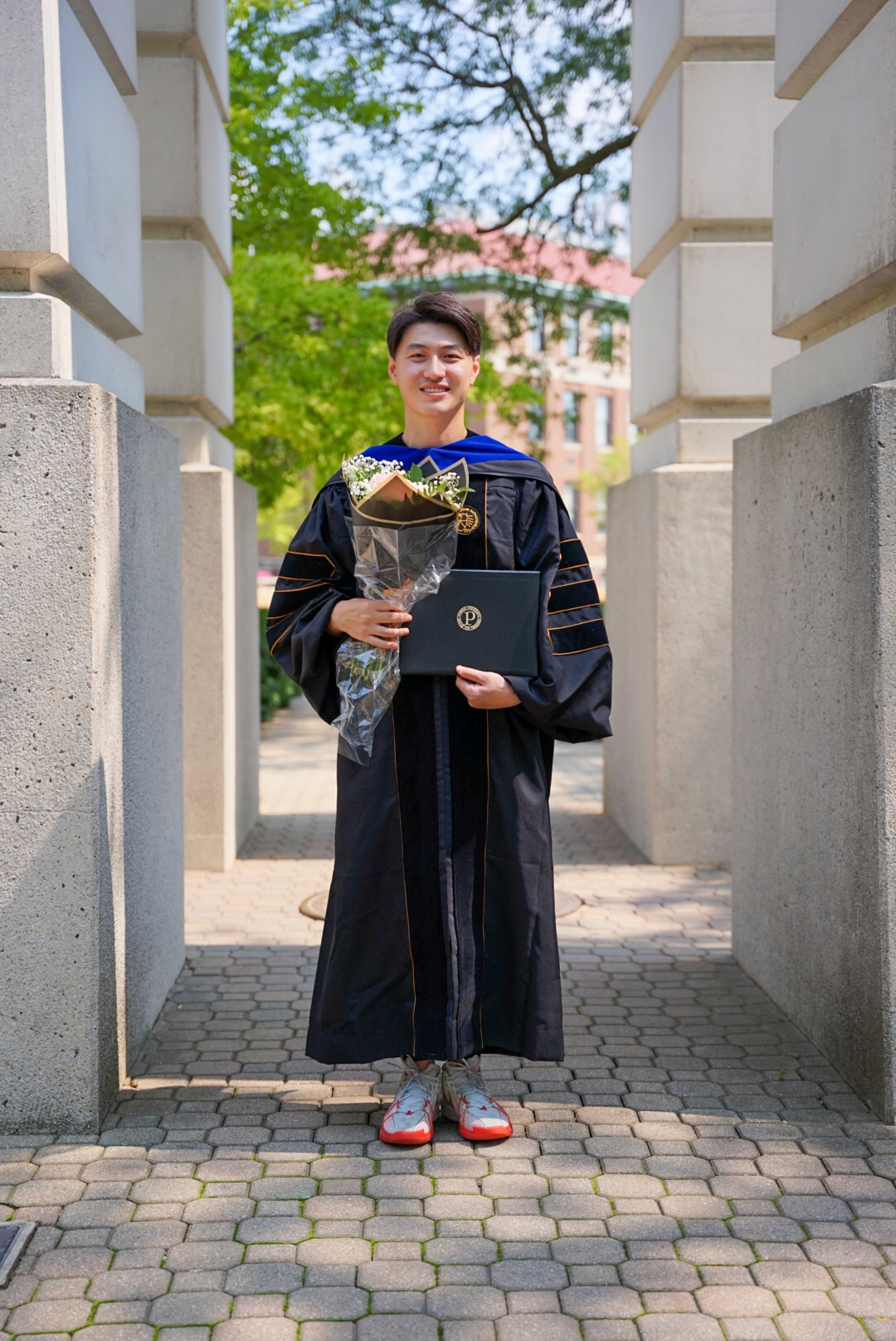
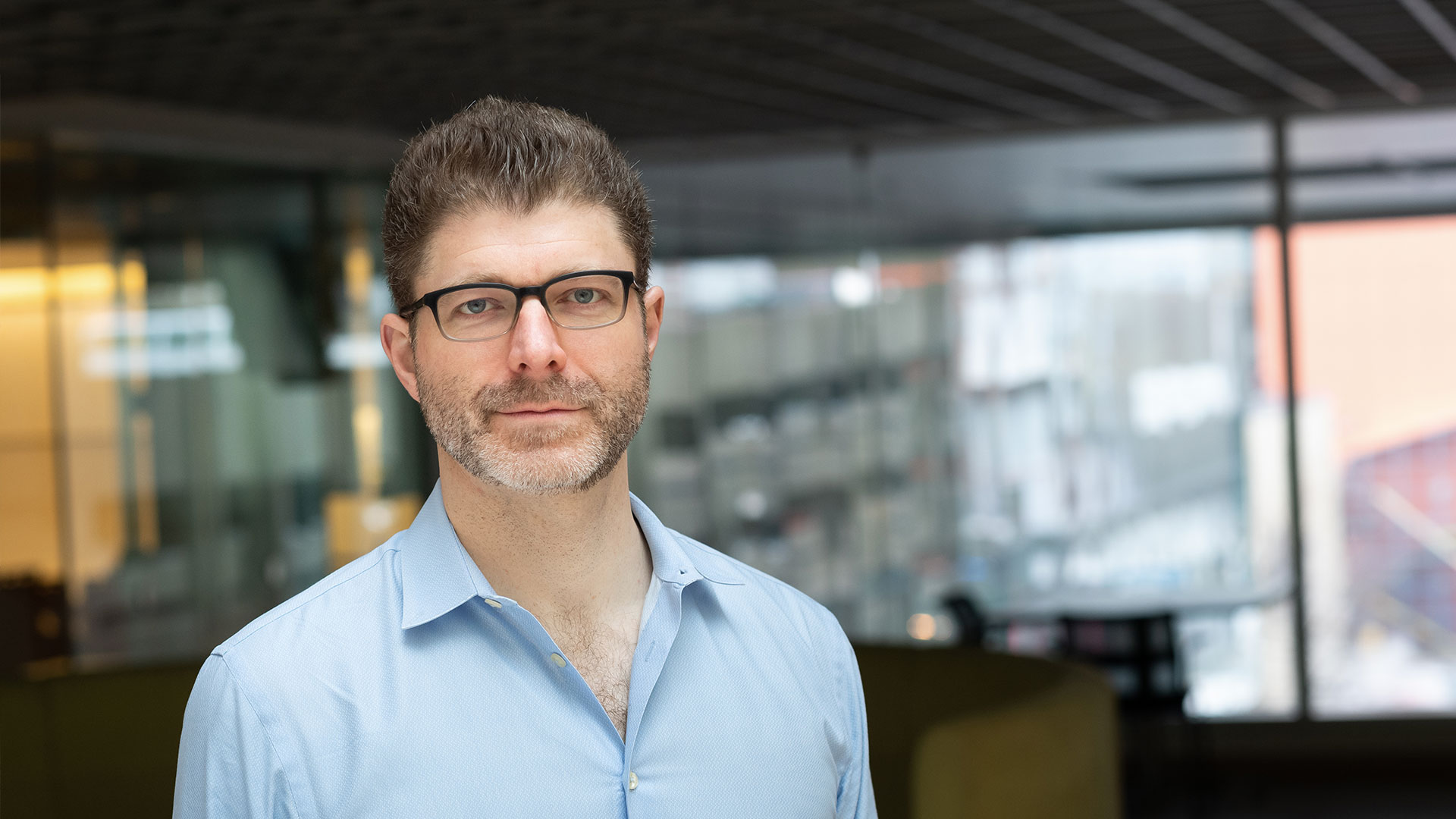
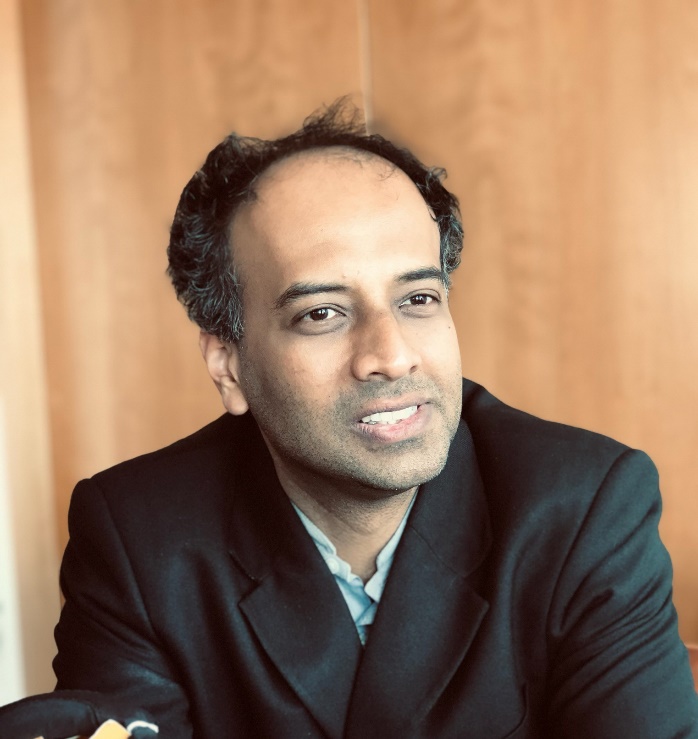
HaoYu Wang is an Assistant Professor of Computer Science at SUNY Albany. His research focuses on parameter-efficient and data-efficient deep learning, particularly in natural language processing and machine learning, aiming to democratize AI access. He holds a Ph.D. from Purdue University's School of Electrical and Computer Engineering, a B.Eng. from the University of Electronic Science and Technology of China, and an MS from SUNY Buffalo. His work includes innovations like RoseLoRA (sparse low-rank adaptation for knowledge editing), LightLT (lightweight quantization for long-tail data), and FedKC (federated knowledge composition for multilingual NLU). He has received awards such as the Future Leaders in Data Science (2024) and Bilsland Dissertation Fellowship. Key research areas include parameter efficiency, cross-lingual NLU, and model fairness. Recent publications span topics like federated learning optimization, robust retrieval-augmented generation, and mitigating token overfitting in LLMs. He advises students on Ph.D. and intern roles, emphasizing CVs and research interests in applications.
Jennifer Dy is a Distinguished Professor at Northeastern University with joint appointments in Electrical and Computer Engineering and Khoury College of Computer Sciences. As Director of AI Faculty at the Institute for Experiential AI, she leads research in machine learning, computer vision, and explainable AI. Her work spans biomedical applications (COPD phenotyping, neuroimaging) and fundamental algorithms (active learning, continual learning). She holds a PhD from Purdue University and is an AAAI Fellow. Research Focus: Dy develops methodologies for robust and interpretable machine learning, including techniques for model stability in continual learning, dependency-aware active learning, and axiomatic explanation frameworks. Her applied research advances diagnostic tools using Raman spectroscopy, CT imaging, and multi-omics biomarker discovery. Awards: Recognized with the NSF CAREER Award, Faculty Research Team Award, and AAAI Fellowship for contributions to unsupervised learning and medical AI. Publication Trends: Recent articles demonstrate strong cross-disciplinary integration, combining theoretical advances in explainability/robustness with applications in healthcare, wireless systems, and particle physics. Methodological themes include optimal transport theory, probabilistic modeling, and transformer architectures.
Francis Y. Yan is an Assistant Professor of Computer Science at the University of Illinois Urbana-Champaign (UIUC), holding an affiliate appointment in Electrical & Computer Engineering within the Grainger College of Engineering. He leads the Illinois Networked Systems and AI (NSAI) research group, focusing on building intelligent networked systems that are safe, robust, and performance-optimized through practical machine learning integration. Prior to joining UIUC in January 2025, he served as a Senior Researcher at Microsoft Research Redmond under Victor Bahl. His educational background includes: Ph.D. in Computer Science from Stanford University (2020), advised by Keith Winstein and Philip Levis B.S. in Computer Science (Yao Class) and B.A. in Economics from Tsinghua University (2015) Additional undergraduate studies at MIT Yan's research adopts a holistic approach to practical machine learning for networked systems, emphasizing judicious application rather than indiscriminate use. He builds real-world systems and research platforms to lay ML foundations, devises deployable algorithms using domain insights, and validates performance through extensive empirical evidence. His work consistently addresses operator concerns regarding ML deployment—focusing on safety, robustness, generalization, and efficiency—while strategically combining ML with classical networking and systems techniques. Analysis of his 15 most recent publications (2023-2025) reveals dominant themes in resource allocation for microservices (DeDe, Autothrottle), real-time video optimization (Mowgli, GRACE), and LLM-driven network algorithm design. His work bridges theoretical advances with industrial deployment, evidenced by platforms like Puffer (400,000+ users) and OpenNetLab that have become community standards for validating congestion control algorithms. His research has been recognized with top honors: USENIX NSDI Outstanding Paper Award (2024) for Autothrottle APNet Best Paper Award (2022) IRTF Applied Networking Research Prize (2021) USENIX NSDI Community Award (2020) USENIX ATC Best Paper Award (2018) for Pantheon Yan actively recruits master's and undergraduate researchers for his NSAI group, prioritizing self-motivated students for projects in networked systems and AI. His research is supported by industry collaborations (notably Microsoft) and manifests in deployable platforms like Puffer—which has enabled award-winning research at NSDI and SIGCOMM—and OpenNetLab for real-time communications. His work directly impacts production systems including Microsoft Teams and Bing. He founded and directs the Illinois Networked Systems and AI (NSAI) research group, which operates critical infrastructure including Puffer (a live TV service and research platform) and OpenNetLab. These platforms facilitate community-wide validation of novel algorithms, with Puffer alone supporting multiple best-paper awards at top conferences. Current workstreams span cloud resource management (Teal, Autothrottle, DeDe), low-latency video (Puffer, Tambur, Mowgli), and LLM-augmented systems (Nada, Designing Network Algorithms via LLMs).
Yang Kaidi is an Assistant Professor in the Department of Civil and Environmental Engineering at the National University of Singapore (NUS), affiliated with the Institute of Operations Research and Analytics (IORA) within NUS’s Smart Nation Research Cluster. Their research focuses on intelligent transportation systems, traffic control, shared mobility, and machine learning applications in mobility. Key interests include connected and automated vehicles, privacy-preserving data sharing, and reinforcement learning for traffic optimization. Research highlights include developing parameter privacy-preserving strategies for mixed-autonomy platoons, enhancing safety in autonomous driving via transformer-based trajectory prediction, and optimizing traffic signal timing using connected vehicle data. Their work bridges theoretical control systems with practical urban mobility challenges, addressing issues like ridesourcing-public transit integration, modular transit service operations, and weaving section management in mixed traffic environments. Recent publications emphasize real-time control frameworks, cooperative safety mechanisms, and data-driven solutions for urban and highway systems. Yang’s interdisciplinary approach integrates robotics, optimization, and cybersecurity to advance smart transportation infrastructure. Their contributions are particularly notable in privacy-preserving techniques for traffic state estimation and federated learning applications. While no specific awards or grants are listed, their research aligns with Singapore’s Smart Nation initiatives through IORA’s strategic focus areas. Yang’s work has implications for future traffic management systems, autonomous vehicle coordination, and sustainable urban mobility solutions.
Muhamet Yildiz is a Professor of Economics at the Massachusetts Institute of Technology (MIT), affiliated with the Department of Economics within the School of Humanities, Arts, and Social Sciences. His research focuses on Economic Theory, Game Theory, and Microeconomics, with significant contributions to strategic communication, bargaining, and higher-order uncertainty. He teaches advanced courses such as Microeconomics III, Game Theory, and Advanced Topics in Game Theory. Yildiz’s research explores foundational questions in economic theory, including how communication, beliefs, and strategic interactions shape outcomes in uncertain environments. His work has addressed topics like the fragility of Bayesian learning, reputation dynamics in repeated games, and the implications of optimism in bargaining scenarios. Key contributions include analyses of global games, common belief foundations, and the impact of information structures. He has published extensively in top journals such as Econometrica , Journal of Economic Theory , and Review of Economic Studies . His recent work includes studies on equilibrium shifts in crises and the theoretical underpinnings of communication with unknown perspectives. Yildiz advises on graduate and advanced undergraduate courses, maintaining a strong commitment to academic mentorship. His office is located in E52-522, and his assistant is Kim Scantlebury.
Sandra Paterlini is a Full Professor in the Department of Economics and Management at the University of Trento, Italy. She holds academic roles including Co-Chair of the ERCIM Working Group on Optimization Heuristics and Vice-Chair of the IEEE Task Force on Portfolio Optimization. Her career includes visiting positions at institutions such as the University of Minnesota and Ludwig-Maximilians-Universität München. She earned a PhD in Computational Methods for Financial and Economic Decisions from the University of Bergamo, an MSc in Financial Mathematics from the University of Warwick, and a Laurea in Economics from the University of Modena and Reggio E. Her research focuses on quantitative finance, risk management, portfolio optimization, and network analysis, with applications to ESG, systemic risk, and financial stability. Key research contributions include methodologies for sparse graphical modeling, systemic risk analysis, and ESG scoring frameworks. She has received multiple awards for research excellence and serves on editorial boards of journals like Computational Statistics & Data Analysis and Frontiers in Applied Mathematics and Statistics . Her work bridges academia and policy, with contributions to the European Central Bank’s Financial Stability Directorate and involvement in global conferences on computational finance and econometrics.
Dr. Olga Vysotska is a Researcher affiliated with the Professorship for Robotic Systems at ETH Zurich's Department of Mechanical and Process Engineering. Her work focuses on advancing robotic systems through research in sensor-based navigation, SLAM (Simultaneous Localization and Mapping), and autonomous systems. She holds a doctoral degree and is based in Zurich, Switzerland. Her email is olga.vysotska@inf.ethz.ch. Research Interests: Olga's research spans robotics, computer vision, and autonomous navigation. She specializes in LiDAR-based place recognition, SLAM algorithms, and cross-modal localization using 3D scene graphs. Her work addresses challenges such as environmental changes, sensor fusion, and data association in dynamic environments like agriculture and underground exploration. Key themes include robust localization, loop closure detection, and adaptive algorithms for real-world robotic applications. Publications Overview: Olga's recent work emphasizes diffusion-based LiDAR place recognition (2025), 4D spatial-temporal mapping for agricultural robots (2023), and SceneGraphLoc for cross-modal localization (2024). Her research trends highlight innovation in sensor integration, algorithmic robustness, and practical applications in challenging environments. Earlier contributions include exploration of catacombs with mobile robots (2013) and SLAM enhancements using public map data (2017). Grants & Advising: While specific grants or student advisement details are not listed, her active publication record suggests involvement in funded research projects. Her work often collaborates with industry and academic partners to advance robotic autonomy in complex scenarios. Labs/Teams: As part of the Robotic Systems Professorship, she likely contributes to ETH Zurich's robotics labs focused on SLAM, sensor systems, and autonomous navigation. Her projects may intersect with the Department's broader initiatives in mechanical and process engineering.
Can Firtina is a Lecturer at ETH Zurich's Department of Information Technology and Electrical Engineering and a Senior Researcher in the SAFARI Research Group. His research focuses on accelerating genome analysis through algorithm-architecture co-design, particularly leveraging hardware-software integration for bioinformatics workloads. He holds a PhD in Electrical and Computer Engineering from ETH Zurich and degrees from Bilkent University. As of Fall 2025, he will join the University of Maryland, College Park (UMD) as an Assistant Professor of Computer Science. Education: PhD in Electrical and Computer Engineering (D-ITET), ETH Zurich MSc in Computer Engineering, Bilkent University BSc in Computer Engineering, Bilkent University Research Interests: His work bridges bioinformatics and computer architecture, emphasizing real-time, accurate, and energy-efficient genome analysis. Key areas include raw nanopore signal processing (e.g., RawHash, Rawsamble), hardware-software co-design for bioinformatics, and scalable metagenomic analysis. His algorithms address noise mitigation and accelerate applications like assembly polishing (Apollo) and alignment remapping (AirLift). Labs & Collaborations: He leads research within the SAFARI Group, collaborating with institutions like NVIDIA, AMD, and Huawei. His contributions span tools like GenASM (approximate string matching) and BLEND (fuzzy seed matching). He also organizes workshops on bioinformatics acceleration and serves on review boards for venues like ISMB and RECOMB. Future Directions: Future work includes end-to-end raw signal analysis without basecalling, reference-free genome assembly, and leveraging emerging hardware for real-time field applications. He will expand these efforts at UMD, hiring students in Fall 2025.
Lei Lei is an Associate Professor at the University of Guelph, specializing in Computer Engineering. Her research focuses on Machine Learning/Deep Reinforcement Learning, Internet of Things (IoT)/Internet of Vehicles (IoV), Mobile Edge Computing, and Smart Grid Optimization. She explores cutting-edge applications in energy-efficient systems, autonomous vehicles, and intelligent transportation networks. Her work integrates advanced AI techniques with real-world challenges in communication and control systems. Key research areas include optimizing electric vehicle charging schedules using hierarchical deep reinforcement learning and enhancing vehicular networks through 6G communication protocols. She has pioneered methods for joint communication-control systems, securing federated learning models, and developing robust resource allocation strategies in IoT and edge computing environments. Lei Lei’s publications emphasize interdisciplinary solutions, bridging computer science, electrical engineering, and transportation systems. Her recent work addresses challenges in smart grid security, multitimescale control systems, and the application of AI tools like ChatGPT in connected vehicles. She is affiliated with the AI Affiliated Faculty at the University of Guelph, reflecting her contributions to artificial intelligence research.
Baoyu Zhou is an Assistant Professor of Industrial Engineering at Arizona State University (ASU), School of Computing and Augmented Intelligence. He holds a PhD in Industrial and Systems Engineering from Lehigh University (2018–2022), an M.S. in Industrial Engineering from Lehigh University (2016–2018), and a B.E. in Mechanical Engineering from Shanghai Jiao Tong University (2012–2016). His research focuses on developing efficient algorithms for large-scale, stochastic, and constrained optimization problems, with contributions to sequential quadratic programming, nonsmooth optimization, and derivative-free methods. Before joining ASU, Zhou was a postdoctoral researcher at the University of Michigan (Department of Industrial and Operations Engineering) and the University of Chicago (Booth School of Business). He has received the Van Hoesen Family Best Publication Award and the Elizabeth V. Stout Dissertation Award. His work bridges optimization theory and practical applications, emphasizing scalability and robustness in complex systems. Zhou teaches courses such as IEE 470: Stochastic Operations Research at ASU and has guest-lectured at the University of Michigan. He actively contributes to the academic community through organizing conference sessions, reviewing for top journals, and participating in workshops at NeurIPS and SIAM. His group currently advises three PhD students focusing on optimization algorithms and their applications. Key research areas include large-scale continuous optimization, constrained stochastic optimization, and derivative-free methods. His publications span journals like SIAM Journal on Optimization and INFORMS Journal on Optimization, addressing challenges in nonlinear systems, variance reduction, and algorithmic convergence.
Josh McDermott is a Professor in the Department of Brain and Cognitive Sciences at MIT and an Associate Investigator at the McGovern Institute. He holds roles as Associate Department Head and Principal Investigator of the Laboratory for Computational Audition. His work bridges psychology, neuroscience, and engineering to study auditory perception, with a focus on sound interpretation, hearing impairment treatments, and machine hearing systems. Education includes a B.A. from Harvard (summa cum laude), an MPhil from University College London, and a PhD from MIT. Postdoctoral training included NYU and the University of Minnesota. Research interests encompass computational principles of sound perception, natural sound statistics, music cognition, and machine hearing. Key areas include sound localization, auditory scene analysis, and the role of generative models in perception. Recent publications highlight advancements in auditory neural networks, cross-cultural music perception, and noise schema processing. Awards include the Troland Research Award, BCS Excellence in Advising, and NSF CAREER Award. Advising includes over 20 graduate students and postdocs, with notable contributions to auditory neuroscience and machine learning. Major grants support projects on auditory models and sensory systems. The lab develops tools like cochleagram generation and headphone screening software. The Laboratory for Computational Audition operates at MIT, focusing on biological and computational approaches to hearing. Collaborations span engineering, psychology, and neuroscience to advance understanding of auditory processing.
Roummel F. Marcia is a Professor and current Chair of the Department of Applied Mathematics at the University of California, Merced, within the School of Natural Sciences. He received his Ph.D. from UC San Diego under Professor Philip Gill and previously held postdoctoral positions at the San Diego Supercomputer Center and University of Wisconsin-Madison, as well as a research scientist position in electrical engineering at Duke University. His research spans multiple areas in optimization and its applications, with a focus on signal processing, data science, machine learning, linear algebra, and mathematical biology. Dr. Marcia's work has significant interdisciplinary impact, particularly in biomedical imaging, computational biology, and quantum computing applications. His research methodology often combines theoretical optimization approaches with practical applications in data-intensive fields. Dr. Marcia's recent publications demonstrate a strong trend toward integrating optimization theory with deep learning architectures, particularly in applications requiring sparse data handling, biomedical imaging, and quantum computing. His work shows increasing focus on developing novel optimization algorithms specifically designed for machine learning contexts, including quasi-Newton methods adapted for deep learning and specialized techniques for handling non-convex optimization problems. School of Natural Sciences Faculty Award for 'Developing or Improving Academic Programs and Tracks' (2021-22) Leadership roles in SIAM Activity Group on Applied Mathematics Education Recognition as a Math Alliance Mentor for supporting underrepresented students Dr. Marcia has successfully mentored numerous doctoral students to completion, with graduates moving to positions at Meta, Johns Hopkins University Applied Physics Laboratory, Lawrence Livermore National Laboratory, and other prestigious institutions. His research has been consistently funded by major agencies including NSF (with grants IIS 1741490, DMS 1840265, DMS 2229495, CCF 2343610), DARPA, and ARPA-E. As the current graduate chair of the Applied Math Graduate Program, he plays a key role in shaping the next generation of mathematical scientists. His work with the SMaRT (Scientific Mathematics Research and Training) team demonstrates his commitment to collaborative, interdisciplinary research.
Krishna Jagannathan is a full-time Professor in the Department of Electrical Engineering at the Indian Institute of Technology Madras (IIT Madras), India. He specializes in stochastic modeling, communication networks, information theory, and queuing theory. He obtained his B.Tech from IIT Madras in 2004, followed by S.M. and Ph.D. degrees from MIT in 2006 and 2010, respectively. After post-doctoral positions at Caltech and MIT, he joined IIT Madras in 2011. Education: B.Tech in Electrical Engineering, IIT Madras (2004) S.M. in Electrical Engineering and Computer Science, MIT (2006) Ph.D. in Electrical Engineering and Computer Science, MIT (2010) Research Interests: His research focuses on stochastic modeling and analysis of communication networks , information theory , and queuing theory . He has made significant contributions to understanding network performance, resource allocation, and risk-aware decision-making in complex systems. He leads the Networks and Stochastic Systems lab at IIT Madras, mentoring a large cohort of Ph.D. and M.S. students working on cutting-edge problems in networking, optimization, and stochastic systems. Scientific Awards: Best Paper Award at WiOpt 2013, Tsukuba, Japan Young Faculty Recognition Award for Excellence in Teaching and Research, IIT Madras (2014) Teaching & Mentorship: He has taught a wide range of courses including Probability Foundations , Stochastic Modeling and Queuing Theory , Convex Optimization , and Signals & Systems , consistently receiving high teaching evaluations. He has supervised over 15 Ph.D. and M.S. students to completion and continues to guide several active researchers.
Golnoosh Farnadi is an Associate Professor at the Department of Computer Science and Operational Research at the University of Montreal and an Assistant Professor at the School of Computer Science at McGill University. She holds a Canada-CIFAR Chair in Artificial Intelligence and serves as a Senior Academic Member at Mila - Quebec Institute for Artificial Intelligence. Her interdisciplinary work bridges computer science, operations research, and ethical AI considerations. Her educational background includes a Ph.D. in Computer Science from KU Leuven and Ghent University (2017), followed by postdoctoral positions at the University of Montreal/MILA (2018-2020) and the University of California, Santa Cruz (2017-2018). Her research focuses on algorithmic fairness, responsible AI, deep learning, and probabilistic models, with applications spanning healthcare, recommender systems, and public policy. Farnadi's recent publications demonstrate a strong emphasis on addressing fairness in machine learning systems, with particular attention to cultural diversity in recommender systems, fairness in healthcare optimization (particularly kidney exchange programs), and mitigating hallucinations in large language models. Her work consistently combines theoretical rigor with practical applications, often employing novel mathematical frameworks to tackle complex ethical challenges in AI. Among her notable recognitions are the Google Scholar Award (2021), Facebook Research Award (2021), Google Award for Inclusion Research (2023), and being named one of the 100 Brilliant Women in AI Ethics (2023). She was also recognized as a Rising Star in AI Ethics in 2021. Farnadi supervises numerous graduate students through her EQUAL Lab (EQuity & EQuality Using AI and Learning algorithms), which focuses on developing AI systems that promote fairness and equity. Her teaching includes courses on Responsible AI, Machine Learning, and Trustworthy Machine Learning at both McGill University and HEC Montreal.
Aleksandr (Sasha) Aravkin is Associate Professor in the Department of Applied Mathematics and Adjunct Associate Professor of Health Metrics Sciences, Mathematics, and Statistics at the University of Washington. He serves as Director of Mathematical Sciences at the Institute for Health Metrics and Evaluation (IHME), where he leads the Mathematical Sciences and Computational Algorithms team and contributes to strategic direction for applying mathematical sciences to analytic challenges. Dr. Aravkin earned his PhD in Mathematics (Optimization) and MS in Statistics from the University of Washington in 2010, following a BSc in Mathematics and Computer Science in 2004. His educational background forms the foundation for his interdisciplinary research approach. His research expertise spans large scale optimization, machine learning, data science, convex and variational analysis, algorithm design, robust statistics, inverse problems, and uncertainty quantification . These methodologies are applied across diverse domains including health metrics, computational medicine, tracking and navigation, seismic imaging, computational finance, and neuroscience. Dr. Aravkin has pioneered approaches for fusing physics-based and data-driven models, enabling innovative solutions to complex problems. Dr. Aravkin's publication record demonstrates a strong focus on health metrics and Global Burden of Disease studies, with recent work emphasizing meta-analytic approaches for risk-outcome relationships. His research spans epidemiological modeling, health effects of various exposures, and forecasting disease burden across populations. The publications reveal a consistent pattern of high-impact work in top journals including The Lancet and Nature Medicine, often addressing critical public health questions through rigorous statistical and mathematical frameworks. At IHME, Dr. Aravkin has led significant projects including the Burden of Proof Studies (2019-2024) which analyzed 153 risk-outcome pairs, and COVID-19 Modeling (2020-2023) where his team developed forecasting models and excess mortality estimation methods. He has also been instrumental in developing the Evidence Score model, requiring novel algorithmic approaches. His work bridges theoretical mathematical sciences with practical applications to improve global health policy and practice.