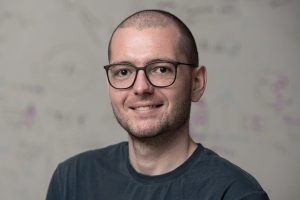
Sohag Kabir is an Associate Professor in the School of Computer Science, Artificial Intelligence, and Electronics at the University of Bradford. He leads the MSc Big Data Science and Technology, MSc Artificial Intelligence and Machine Learning, and MSc Applied Computer Science and Artificial Intelligence programs. He holds a Ph.D. in Computer Science from the University of Hull (2016), an M.Sc. in Embedded Systems, and a B.Sc. in Computer Science and Engineering. Dr. Kabir's research focuses on safety, reliability, and security assurance of cyber-physical autonomous systems. His work includes model-based safety analysis, probabilistic risk assessment, dynamic reliability analysis, and stochastic modeling. Current projects address IoT security, machine learning certification for automotive systems, and dependability frameworks for complex systems. His publications demonstrate consistent focus on developing integrated frameworks for system dependability, with recent work emphasizing IoT security, autonomous vehicle safety, and AI certification challenges. Dr. Kabir has contributed to multiple EU-funded projects including DEIS (Dependability Engineering Innovation for Cyber-Physical Systems) and MAENAD (Model-based Analysis & Engineering of Novel Architectures for Dependable Electric Vehicles).
Dr. Randa Herzallah is an Associate Professor at the University of Warwick with interdisciplinary expertise spanning control systems, quantum engineering, and machine learning. Her research develops probabilistic frameworks for complex systems control. Research interests focus on probabilistic control methods applied to energy grids, quantum systems, and biomedical applications. Recent work integrates machine learning with control theory for smart grid optimization and quantum system management. Publication analysis shows consistent focus on probabilistic control frameworks, with recent expansion into quantum applications and deep learning for industrial applications. Research funding includes EPSRC and Leverhulme Trust grants supporting quantum control and energy systems projects. Leads research in probabilistic control methodologies with industrial applications.
Jun Zhou is Professor and Deputy Head of School (Research) at Griffith University's School of Information and Communication Technology. His research specializes in hyperspectral imaging, computer vision, and pattern recognition with applications in agriculture, environmental monitoring, and remote sensing. Zhou leads significant projects including the ARC Research Hub for Driving Farming Productivity and Disease Prevention. His work develops innovative computer vision systems for agricultural automation, environmental conservation, and industrial quality control. He has received the ARC Discovery Early Career Researcher Award and secured extensive research funding from ARC, CSIRO, and industry partners. Zhou's publications demonstrate consistent contributions to hyperspectral image analysis, object tracking, and deep learning applications. As Deputy Director of the ARC Industrial Transformation Research Hub, he coordinates multi-institutional research teams developing AI-powered solutions for farming productivity and disease prevention.
Sagar Samtani is an Associate Professor and Weimer Faculty Fellow at the Kelley School of Business , Indiana University. He serves as Director of the Kelley’s Data Science and Artificial Intelligence Lab (DSAIL) . His research focuses on Artificial Intelligence for Cybersecurity , including cyber threat intelligence, deep learning, and dark web analytics. He holds a PhD from the University of Arizona (2018), and has received prestigious awards such as the Indiana University Outstanding Junior Faculty Award (2023) and IEEE Big Data Security Junior Research Award (2023). Education : PhD in Information Systems, University of Arizona, 2018 MSMIS, University of Arizona, 2014 BSBA, University of Arizona, 2013 Research Interests : Samtani’s work addresses cybersecurity challenges through AI, including proactive threat detection, vulnerability assessment, and healthcare analytics. He emphasizes explainable AI (XAI) for transparency in cybersecurity systems. Grants & Awards : NSF Grant: CyberCorps SFS Program ($2.3M, 2020–2025) NSF Grant: AI4Cyber Research Education ($300K, 2020–2022) Multiple teaching awards, including the Trustees Teaching Award (2023) and recognition as one of Top 50 Undergraduate Professors (2022) Labs & Teams : Leads the DSAIL lab, focusing on AI-driven solutions for business and cybersecurity. Collaborates with NSF-funded initiatives on cyber AI education and threat intelligence.
Roles: Prof Peter Bell holds a personal chair in speech technology at the University of Edinburgh's School of Informatics and is a core member of the Centre for Speech Technology Research (CSTR). His primary research focus is automatic speech recognition (ASR), particularly in cross-domain adaptation, lightly supervised training, and minority language systems. He teaches the Automatic Speech Recognition course and advises multiple PhD students. Research Interests: Prof Bell's work spans ASR system development for diverse domains, audio-visual integration, end-to-end models, and under-resourced languages. His projects include the CoG-MHEAR healthcare initiative and the Unmute project addressing language marginalization. He has pioneered techniques for speaker adaptation, raw-waveform modeling, and multi-task learning. Commercial Activities: He advises industry on speech tech adoption, co-founded Quorate Technology (acquired by LSEG), and provides consultancy to firms developing speech solutions. His work bridges academic research with commercial impact through projects like the BBC's MGB Challenge and EU-funded SUMMA platform. Grants & Projects: Leads EPSRC-funded CoG-MHEAR and Unmute initiatives, collaborates on IARPA MATERIAL for low-resource ASR, and contributed to the SpeechWave waveform-based ASR project. His research has been supported by Bloomberg, Ericsson, Samsung, and Toshiba. Labs & Teams: Active in CSTR, leading teams in speech representation learning, adaptation techniques, and multi-modal ASR. His lab supports interdisciplinary work with NLP, HCI, and biomedical engineering groups. Personal: A passionate hillwalker, he explores Scottish Highlands and Corbetts. Previously active in Edinburgh University Hillwalking Club, his outdoor pursuits reflect his disciplined approach to research exploration.
Luca Sterpone is a Full Professor at the Department of Control and Computer Science (DAUIN), Politecnico di Torino. He serves as Head of the Control and Computer Engineering Department (2023-2027), coordinates the Aerospace and Safety Computing Lab, and is a member of the Academic Senate and Power Electronics Innovation Center (PEIC). His research spans reconfigurable computing, fault tolerance, and radiation effects analysis in electronic systems. Professor since 2021 Department Head (DAUIN) since 2023 Coordinates international collaborations with ESA, AMD Xilinx, NVIDIA, and Thales Alenia Space Develops radiation-hardened FPGA tools (SETA, VERI-Place, PyXEL) 2007 EDAA Outstanding Dissertation Award and 2005 IEEE Best Paper Award Research Focus : Designing radiation-tolerant systems for aerospace, including fault-tolerant AI accelerators, FPGA reliability, and software-based error mitigation. He investigates soft error propagation in nanoscale circuits and develops tools for radiation sensitivity analysis in VLSI. His work integrates hardware-software co-design for mission-critical applications. Awards : EDAA Outstanding Dissertation Award (2007) IEEE European Test Symposium Best Paper (2005) SMACD Best EDA Tool Award (2018) ARC Best Paper candidate (2018) Teaching : He leads courses in Reconfigurable Computing (PhD level), GPU Programming , and Operating Systems . He has formal responsibility for teaching roles across 9 bachelor's and 7 master's years, and mentors multiple PhD students. Collaborations : Coordinates with the European Space Agency (ESA), University of Bielefeld, Universidad de Sevilla, and industrial partners like AMD Xilinx, NVIDIA, and General Motors. He leads projects such as RESCHIP4EU, VEGAS, and TERRAC for radiation-hardened computing solutions.
Bahman Rostami-Tabar is Professor of Analytics and Decision Sciences at Cardiff Business School, Cardiff University, UK. He is the founder and director of the Data Lab for Social Good and the founder and chair of the Forecasting for Social Good (F4SG) initiative sponsored by the International Institute of Forecasters. He also leads the 'Uncertainty & the Future' theme at the Digital Transformation Innovation Institute. His research spans probabilistic forecasting, operational research, and data science with applications in healthcare, humanitarian logistics, and sustainable development. Research Interests: His work emphasizes transforming data into insights for decision-making under uncertainty. His research is structured into three pillars: (1) Conceptual work on forecasting for social good and the UN Sustainable Development Goals; (2) Methodological innovations in temporal aggregation, hierarchical forecasting, and machine learning for time series; and (3) Applications in healthcare operations, global health, and humanitarian supply chains. He has collaborated with organizations such as the NHS, USAID, ICRC, and JSI. Publication Trends: His recent publications (2023–2025) focus on probabilistic forecasting in healthcare (e.g., emergency department arrivals, trauma networks), hybrid machine learning models for humanitarian demand, and the societal role of forecasting. There is a strong emphasis on real-world impact, with applications in public health, supply chain resilience, and data-driven policy. Scientific Awards: Goodeve Medal, Operational Research Society, UK (2024) Fellowship, Institute of Advanced Studies, Montpellier, France (2024) Public Value Fellow, Cardiff Business School (2021) Associate Fellow, NHS-R community (2021) MIM best paper award (IFAC, 2013) Best Track Paper Award, International Symposium on Industrial Engineering and Operations Management (2017) Supervision and Grants: He actively supervises PhD students in forecasting, healthcare systems, and supply chains. He leads the 'Democratising Forecasting' project, delivering free R-based forecasting training in developing countries. He also chairs the F4SG Research Grant program, awarding $5,000 to researchers in low- and lower-middle-income countries for socially impactful forecasting research. Labs and Teams: He founded and directs the Data Lab for Social Good at Cardiff Business School and leads the international Forecasting for Social Good network, which includes learning labs, hackathons, and a forecasting book club to foster global collaboration.
Cheng Han is a tenure-track Assistant Professor in the School of Science and Engineering at the University of Missouri -- Kansas City (UMKC), where he conducts research in adaptable and sustainable intelligence, focusing on efficient AI systems and parameter-efficient fine-tuning methods for large-scale models. Ph.D., Rochester Institute of Technology (RIT) M.S., Pennsylvania State University (PSU) B.S., Tianjin University (TJU) His research interests center on creating energy-wise AI systems that empower communities and address environmental and social challenges. He focuses on multimodal and visual prompt tuning, transfer learning, and robust AI. His work bridges theoretical innovation with real-world deployment, particularly in efficient adaptation of vision and language models. His recent publications span top venues like NeurIPS, ICCV, CVPR, ICLR, EMNLP, and IEEE TPAMI. The research trends highlight a strong focus on parameter efficiency , prompt engineering , model robustness , and multimodal understanding . He investigates when and why prompt tuning outperforms full fine-tuning and develops novel frameworks like E^2VPT and M^2PT for efficient adaptation. Cheng Han actively contributes to the academic community as a reviewer and committee member. Program Committee, AAAI (2023–present) Program Committee, SIAM SDM (2024) Reviewer for NeurIPS, ICLR, CVPR, ICML, ICCV, TPAMI, TMLR, and others He advises Ph.D. students and teaches courses such as Deep Learning (COMP-SCI 5567). He has given invited talks at ICLR, ICCV, and seminars at NSF and Naval Research Laboratory. His research is supported by academic collaborations and likely grant funding, given his active publication and service profile. He leads a research group focused on sustainable and efficient AI, with code available on GitHub.
Maxime CORDY is a Research Scientist at the Interdisciplinary Centre for Security, Reliability and Trust (SnT) , University of Luxembourg, within the Security, Design and Validation group (SerVal) . He holds a PhD from the University of Namur (Belgium, 2014) and specializes in software engineering, applied artificial intelligence, and cybersecurity. His work focuses on adversarial machine learning, deep learning robustness, and model checking for critical systems. Research interests include adversarial attacks on tabular data , energy system optimization , code understanding models , and software quality assurance . Recent projects address challenges in secure AI deployment, automated test generation, and fault detection in large language models. Publications emphasize empirical studies on adversarial defenses, data augmentation for code models, and energy consumption forecasting. He contributes to tools like Daedalux (variability-aware model checking) and benchmarks like Tabularbench for adversarial robustness evaluation. Current affiliations include leadership within the SerVal group and collaborations on interdisciplinary projects such as MALETSQUE (Machine Learning Techniques for Software Quality Evaluation). His work bridges theoretical computer science with practical applications in energy systems, medical imaging, and space program design.
Mehrtash Harandi is an Associate Professor in the Department of Electrical and Computer Systems Engineering at Monash University. He joined Monash in 2018 after five years at Canberra Research Laboratory-NICTA working with Prof. Richard Hartley and Prof. Fatih Porikli, and earlier at Queensland Research Laboratory-NICTA with Prof. Brian Lovell. His research focuses on machine learning, computer vision, and geometric learning with applications in medical imaging and diffusion models. Recent Research Trends (2025): 3D Gaussian splatting compression, diffusion transformers for visual correspondence, hyperbolic geometry in hierarchical structures, and robust learning from noisy labels. Scientific Awards: Outstanding Reviewer, CVPR'21 Advising Highlights: Mentored students contributing to papers at ICCV'24, CVPR'25, ICLR'25, and Nature Machine Intelligence. Labs & Teams: Collaborates with Data61-CSIRO, ARC, and US Air Force Research Laboratory.
Dr. Andy Nguyen is a Senior Lecturer in Structural Engineering at the University of Southern Queensland, within the School of Engineering. He is an active researcher and educator, specializing in the Structural Health Monitoring (SHM) of critical civil infrastructure such as bridges, buildings, and transport tunnels. Bachelor of Engineering (BEng), NUCE, 1999 Master of Engineering (MEng), NUCE, 2003 Doctor of Philosophy (PhD), Queensland University of Technology (QUT), 2014 Dr. Nguyen's research is at the forefront of integrating advanced technologies into civil engineering. His primary focus is on developing and deploying sophisticated SHM systems that utilize sensors, data analytics, and machine learning to provide real-time insights into the structural integrity of ageing infrastructure. His work aims to enable proactive maintenance, extend the lifespan of structures, and enhance public safety. He has successfully implemented monitoring systems on major bridges and high-rise buildings in Queensland and New South Wales, with systems capable of even detecting distant earthquake events. His research interests span Structural Health Monitoring, Machine Learning for Engineering, Damage Detection, Finite Element Model Updating, Sustainable Building Materials like bamboo, and the application of AI for automated condition assessment of transport infrastructure. The analysis of his recent publications reveals a strong and consistent research trajectory centered on the application of data-driven and AI methods to solve practical problems in civil infrastructure. His work frequently combines signal processing techniques (like Stockwell Transform) with deep learning models for tasks such as crack detection in concrete and pavement. He also conducts significant research on model updating for complex structures like cable-stayed and arch bridges, using vibration data and optimization algorithms. The integration of machine learning for overload classification and the development of cost-effective, automated monitoring systems are key trends in his recent output. Advanced Queensland Fellow (2024-2027) Dr. Nguyen is actively involved in research supervision and collaboration. He is currently supervising several postgraduate students on projects related to AI-powered condition assessment, bamboo as a sustainable building material, and railway track design. He receives research funding from the Queensland Government through his Advanced Queensland Fellowship. His research has direct practical applications, as evidenced by his public engagement, such as writing for The Conversation on safeguarding ageing bridges, and his work with the Australian Network of Structural Health Monitoring. Dr. Nguyen's work embodies the development of a next-generation 'Living' Laboratory for engineering education, where research, teaching, and real-world infrastructure monitoring are integrated. His current projects involve creating smart, automated fault detection systems and advancing 'digital twin'-based monitoring platforms for infrastructure.
Farhad Javanmardi is a Researcher at Aalto University within the Department of Information and Communications Engineering. His work focuses on applying advanced computational methods to speech and biomedical signal analysis. Research Interests: Speech processing, voice disorders, machine learning, deep learning, biomedical signal processing, computational linguistics, and health informatics. His recent research trends emphasize the use of transformer-based models and wav2vec2 for robust detection of heart failure and voice pathologies in telephony environments. He investigates database-independent approaches, severity classification, and data augmentation techniques to improve model generalizability. Publications appear in journals like Speech Communication and Computer Speech and Language , as well as conferences including ICASSP and INTERSPEECH .
Mathias Unberath is the John C. Malone Associate Professor in the Department of Computer Science at Johns Hopkins University, with secondary appointments in Ophthalmology and Otolaryngology—Head and Neck Surgery at the School of Medicine. He is a core faculty member of the Laboratory for Computational Sensing and Robotics (LCSR) and the Malone Center for Engineering in Healthcare, and affiliate faculty at the Institute for Assured Autonomy and Data Science and AI Institute. Education: PhD in Computer Science from Friedrich-Alexander University of Erlangen-Nürnberg (2017), MSc in Optical Technologies (2014), BSc in Physics (2012) His research focuses on computer-assisted medicine, integrating computer vision, machine learning, and medical robotics to develop human-centered solutions through mixed reality and embodied technologies. His work addresses surgical phase recognition, explainable AI, and digital twin representations for clinical workflows. Unberath's 15 most recent publications demonstrate expertise in surgical AI (7/15), medical imaging (12/15), and mixed reality (8/15), with specific subfields including segmentation frameworks (3 papers), cognitive load estimation (4 papers), and surgical robotics (5 papers). NSF CAREER Award NIH NIBIB Trailblazer R21 Google Research Scholar Award Inaugural DSAI Junior Faculty Award IPCAI 2025 Best Paper Award He teaches graduate courses in machine learning, AI system design, and interpretable machine learning. His group, the ARCADE Lab, develops technologies for computer-assisted interventions, emphasizing robustness, explainability, and human-AI collaboration in clinical settings.
Dr. Hongsheng Hu is currently a Lecturer in the School of Information and Physical Sciences at the University of Newcastle, Australia, specializing in the Data Science and Statistics focus area. Prior to this position, he served as a Postdoc Research Fellow at CSIRO's Data61 from October 2022 to August 2024. His academic journey includes a Doctor of Philosophy in Computer Systems Engineering from the University of Auckland in New Zealand, establishing his foundation in advanced computing systems. Dr. Hu's research centers on enhancing the trustworthiness of machine learning systems, with particular emphasis on identifying critical privacy vulnerabilities within machine learning models and developing robust defensive strategies. His work spans several key domains including adversarial machine learning (30% focus), statistical data science (30% focus), and data and information privacy (40% focus). He investigates membership inference attacks, machine unlearning techniques, and privacy-preserving mechanisms in federated learning environments. His research addresses fundamental challenges in AI security, exploring how machine learning models can be compromised through sophisticated privacy attacks and developing methods to mitigate these vulnerabilities while maintaining model utility. Analysis of Dr. Hu's publication record reveals a strong research trajectory focused on machine learning security and privacy. His work consistently addresses vulnerabilities in machine learning systems, particularly examining membership inference attacks, machine unlearning mechanisms, and privacy-preserving techniques in federated learning. The research spans top-tier venues including IEEE Security & Privacy, USENIX Security, NDSS, NeurIPS, IJCAI, AAAI, and WWW, demonstrating both technical depth and recognition by the research community. His publications show an evolving focus from foundational privacy attacks to developing more sophisticated unlearning techniques and robust defense mechanisms, with increasing citation counts indicating growing impact in the field. Active Program Committee member for USENIX Security, NDSS, ICLR, IJCAI, WWW, ICDM, ECML, and PKDD Invited reviewer for IEEE Transactions on Information Forensics and Security (TIFS), IEEE Transactions on Dependable and Secure Computing (TDSC), IEEE Transactions on Pattern Analysis and Machine Intelligence (IPAMI), and ACM Computing Surveys (CSUR) Dr. Hu currently serves as Course Coordinator for STAT6020 and STAT2020 Predictive Analytics at the University of Newcastle. As an academic supervisor, he co-supervises one PhD student working on 'Identifying and Mitigating Vulnerability in Recommender Systems' at Macquarie University. His research collaborations span multiple countries, with significant publication counts in Australia (18), China (12), New Zealand (10), and the United States (7), reflecting an active international research network focused on AI security challenges.
Jes Frellsen is an Associate Professor at the Department of Applied Mathematics and Computer Science (DTU) since 2016. Previously, he held academic positions at the IT University of Copenhagen (2016-2019), postdoctoral roles at University of Cambridge (2013-2016) and University of Copenhagen (2011-2013). Education: PhD in Bioinformatics (2011), University of Copenhagen MSc in Bioinformatics (2007), University of Copenhagen BSc in Mathematics and Computer Science (2005), University of Copenhagen EAP Exchange at University of California, Santa Cruz (2004-2005) Research Focus Jes Frellsen specializes in statistical machine learning , particularly generative AI and deep generative models with applications in bioinformatics . His work integrates Bayesian inference , directional statistics , and Markov chain Monte Carlo methods to address challenges in macromolecular structure prediction and missing data imputation . Recent efforts explore uncertainty quantification in image segmentation and generative modeling for materials science. Advising & Collaborations He actively supervises PhD students and postdoctoral researchers in projects spanning news recommendation systems , medical imaging , and 3D structure generation . Collaborations include work with Zoubin Ghahramani (Cambridge) and Thomas Hamelryck (Copenhagen), with contributions to protein structure prediction and statistical methods in structural bioinformatics .