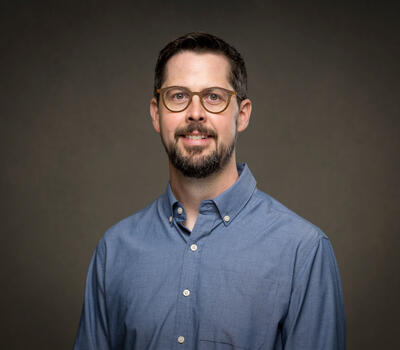
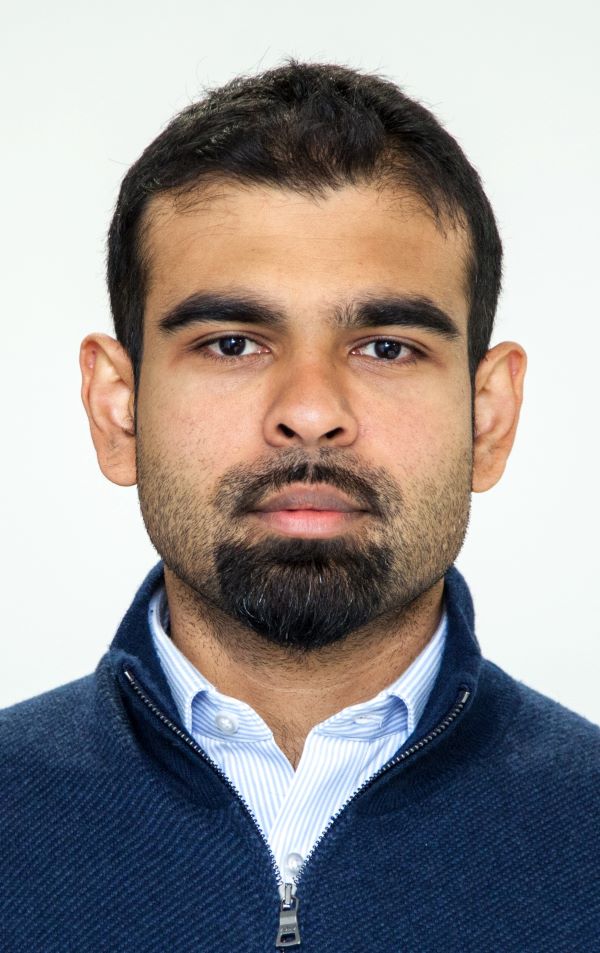
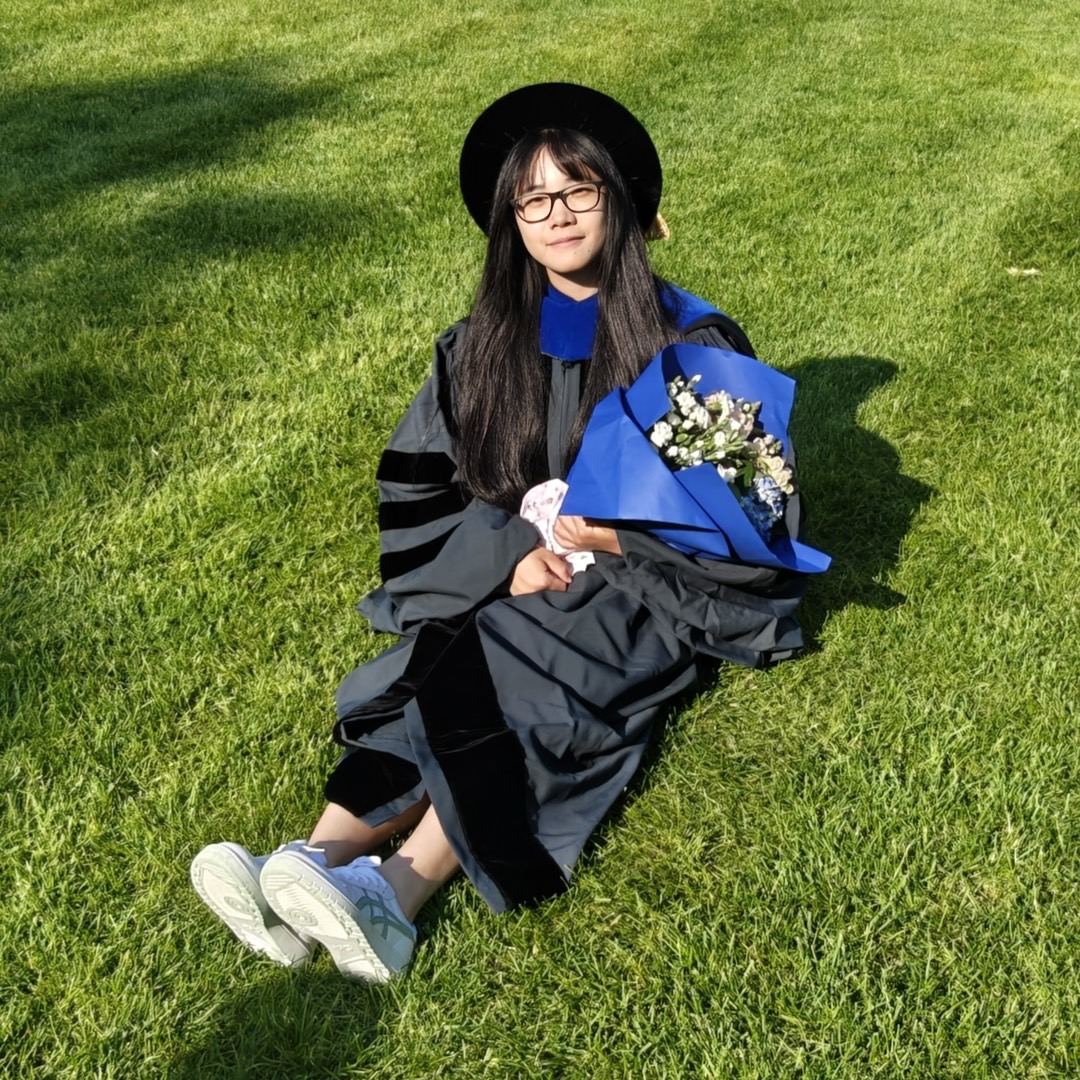
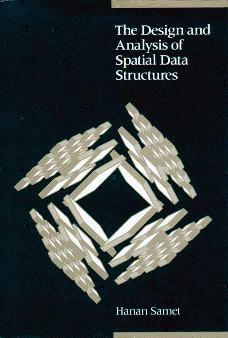
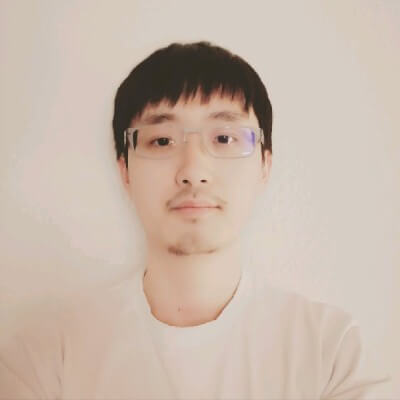
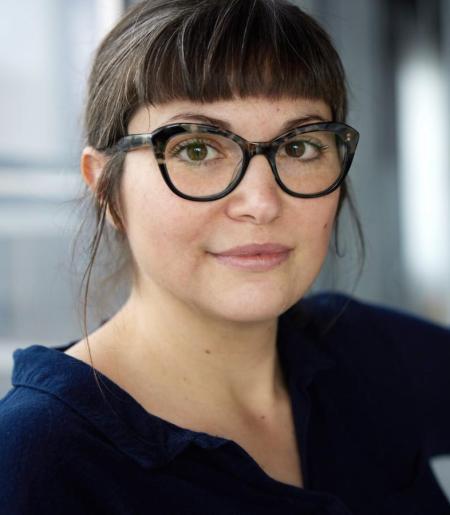
Dr. Juan Jose Acosta is an Associate Professor at North Carolina State University's Department of Forestry and Environmental Resources , where he also serves as Director of Camcore . His work focuses on genetic improvement of forest trees through advanced genomic and quantitative genetic methods. Expertise in Tree Genetics and Genomic Selection Key research in Pine and Acacia Hybridization Pioneer in Robotic Pollination Technologies Recent publications analyze: Genomic prediction in Pinus taeda trials Pedigree reconstruction in Acacia crassicarpa Wood density phenotyping innovations Hybrid dynamics across multiple genera
Matthew Johnston is an Associate Professor in the School of Electrical Engineering and Computer Science at Oregon State University. His research focuses on integrating sensors with CMOS circuits, stretchable electronics, and bio-energy harvesting. He holds a B.S. from Caltech and a Ph.D. from Columbia University. Prior to academia, he co-founded Helixis, a biotech instrumentation startup, and worked in venture capital. His awards include the 2020 SRC Young Faculty Award and 2021 Teaching Excellence Award. Education : B.S., Electrical Engineering, California Institute of Technology, 2005 M.S., Electrical Engineering, Columbia University, 2006 Ph.D., Electrical Engineering, Columbia University, 2012 Research Interests : Johnston explores lab-on-CMOS platforms, stretchable sensor systems, and energy harvesting for low-power applications. His work bridges electronics engineering with biomedical and environmental fields, emphasizing practical applications through interdisciplinary collaboration. Awards : 2020 Semiconductor Research Corporation Young Faculty Award 2021 Oregon State University Teaching Excellence Award 2021 Provost Fellowship Advising & Grants : Johnston’s research is supported by grants from industry and federal agencies. His lab, the SIM Lab, develops innovative electronic systems for healthcare and environmental monitoring. Labs & Teams : He leads the SIM Lab , focusing on interdisciplinary projects in integrated circuits and biomedical applications.
Alan Fern is a Professor of Computer Science and Robotics in the School of Electrical Engineering and Computer Science at Oregon State University. He leads research in artificial intelligence, focusing on reinforcement learning, planning, and robotics applications like humanoid robotics and agricultural AI. His work includes co-directing the Dynamic Robotics Lab and leading the AgAID National AI Institute for agricultural solutions. Fern holds a Ph.D. from Purdue University and has contributed to over 100 publications. His recognitions include the NSF CAREER Award and multiple best paper awards. Education: B.S., Electrical Engineering, University of Maine (1997) M.S. & Ph.D., Computer Engineering, Purdue University (2000 & 2004) Research Interests: His research spans machine learning, planning, and robotics. Key areas include: AI for humanoid robotics (e.g., bipedal locomotion on Cassie) Reinforcement learning algorithms and applications Agricultural AI for specialty crops Explainable AI and anomaly detection Awards: 2017 College of Engineering Research Collaboration Award 2013 AAAI Outstanding Paper Award 2006 NSF CAREER Award Advising & Labs: Supervised over 50 students. Key collaborations include the Dynamic Robotics Lab (with Jonathan Hurst) and AgAID. His teams address challenges like robot navigation, policy learning, and AI ethics. Labs/Teams: Dynamic Robotics Lab, AgAID National AI Institute, and contributions to computational sustainability initiatives.
Christiane Woopen is a Professor for Ethics and Theory of Medicine at the University of Cologne , where she serves as Executive Director of the Cologne Center for Ethics, Rights, Economics, and Social Sciences of Health (ceres) . Her leadership extends to roles such as Head of the Research Unit Ethics and former Vice-Dean for Academic Development and Gender at the Medical Faculty, University Hospital Cologne. Educational Background: Medical degree from the University of Bonn, followed by specialization in gynecology and obstetrics before transitioning to bioethics. Her research focuses on ethical dimensions of reproductive medicine, neuroethics, personalized medicine, genome editing, and health in the digital age . She leads international projects addressing aging, health literacy, and AI governance. Recent publications emphasize genome editing policy, AI in healthcare, and ethical challenges of deep brain stimulation , reflecting her interdisciplinary approach to bioethics. Scientific Awards: Federal Cross of Merit 1st Class (2018) Member, European Academy of Sciences and Arts (2014) She has held advisory roles in national and international ethics bodies, including the European Group on Ethics in Science and New Technologies and UNESCO's International Bioethics Committee. Her leadership in ceres involves fostering research on aging, health literacy, and digital transformation, with a commitment to public engagement and interdisciplinary collaboration.
Dr. Hung Cao is an Assistant Professor of Computer Science at the University of New Brunswick, where he directs the Analytics Everywhere Lab. His work focuses on interdisciplinary research in Cyber-Physical Systems (CPS), IoT, Edge/Fog/Cloud Computing, and Explainable AI, addressing societal challenges through data-driven solutions. Prior roles include PostDoc Fellow and Data Scientist at the People in Motion Lab, UNB, and Lecturer/Researcher at Vietnam National University. He holds a Ph.D. in Geomatics Engineering (specializing in Data Science) from UNB (2020), an M.Sc. in Computer Science from University College Dublin (2015), and a B.Eng. from Vietnam National University (2011). Research interests span Smart Cities, Embedded AI, TinyML, Federated Learning, and Real-time Systems. He has led projects with Cisco, NB Power, and other industry partners to develop scalable analytics frameworks for IoT applications. Dr. Cao actively contributes to technical communities (IEEE Smart City, Edge Computing, etc.), serving as a reviewer for journals and conferences, and a Topic Editor for Electronics Journal . His innovations include the Analytics Everywhere framework for spatio-temporal data analysis, MACeIP platform for smart cities, and energy-efficient IoT systems for environmental monitoring. Current work emphasizes human-centered AI for healthcare diagnostics and industrial inspection systems.
A. Stephen Morse is the Dudley Professor of Electrical & Computer Engineering at Yale University. He has been affiliated with Yale since 1970 and holds memberships in prestigious organizations such as the National Academy of Engineering and the Connecticut Academy of Science and Engineering. His research focuses on control systems, including hybrid systems, network science, multi-agent coordination, and sensor networks. He has received numerous awards, including the Bellman Control Heritage Award (2013) and the IEEE Technical Field Award (1999). Morse earned his BSEE from Cornell University, MS from the University of Arizona, and PhD from Purdue University. His work emphasizes logic-based switching, vision-based control, and distributed algorithms for autonomous systems. He has contributed to foundational papers on multi-agent consensus and formation control, as well as sensor network localization. Current projects include swarming dynamics and reactive control strategies for autonomous vehicles. His scientific contributions span over 200 publications, with recent work addressing distributed control algorithms, climate impact modeling, and game-theoretic network analysis. Morse advises graduate students like Ming Cao and Jia Fang, and his research group explores cutting-edge topics in systems theory and robotics.
Dr. Shakir Jiffri is a Lecturer in Aerospace Engineering at Swansea University's School of Aerospace, Civil, Electrical and Mechanical Engineering. His research focuses on Linear and Nonlinear Structural Dynamics, Aeroelasticity, and Active Control methods, particularly in flutter suppression and non-smooth systems. He has contributed to experimental studies on feedback linearisation and nonlinear control strategies, with applications in aeroelastic systems and robotics. Teaches modules including Strength of Materials, Engineering Mechanics, and Aerospace Control. Supervised PhD and MSc students in active control methodologies and inertial amplifier concepts. Research interests include: Aeroelasticity, Nonlinear Control, and Structural Dynamics. Recent work addresses composite panel optimization and vibration control in robotic systems. His publications span journals like Journal of Guidance, Control, and Dynamics and Mechanical Systems and Signal Processing, emphasizing experimental validation of control strategies.
Dr. Cheng-Chew Lim is a Professor in the School of Electrical and Mechanical Engineering at the University of Adelaide. He specializes in control theory, autonomous systems, and multi-agent reinforcement learning. His research focuses on trusted autonomous systems, secure cyber-physical networks, and decentralized decision-making models. He has published over 300 articles and supervised 50+ PhD and master’s students. Dr. Lim teaches courses in control systems, autonomous systems, and engineering project management. He has held editorial roles, including Associate Editor for IEEE Transactions on Systems, Man, and Cybernetics, and is actively involved in professional associations like the IEEE Control and Aerospace Electronic Systems Joint Chapter. His current projects include physics-informed neural networks for medical imaging, secure distributed autonomous systems, and resilient formation control under cyberattacks. Dr. Lim has secured research grants from ARC and industry partnerships, emphasizing practical applications in robotics, cybersecurity, and smart systems.
Luyang Zhao is an incoming tenure-track Assistant Professor in the Department of Electrical and Computer Engineering at Clemson University (starting August 2025). He earned his PhD in Computer Science and double undergraduate degrees in Computer Science and Mathematics from Dartmouth College and the University of Minnesota respectively. Academic Affiliation : Clemson University (Assistant Professor) Education : PhD in Computer Science (Dartmouth College), BS in Computer Science & Mathematics (University of Minnesota) His research focuses on Robotics , particularly soft robotics, modular systems, and bio-inspired designs. Key areas include: Large Language Models for robotic design automation Modular tensegrity systems for self-assembling structures Swarm coordination strategies Multi-environment adaptability (land/aquatic/aerial) Simulation tool integration for design optimization Recent publications highlight his work on SoftSnap modular platforms, LLM-driven swarm intelligence, and bioinspired dolphin robots. He received the Neukom Outstanding Graduate Research Prize for his contributions. Industry Experience : Research internships at Amazon Robotics and TuSimple Mentorship : Advised 6+ graduate/undergraduate researchers Open-Source Contributions : Developed SoftSnap platform for rapid prototyping Academic Service : Workshop co-organization (IROS 2023), peer reviewing (RA-L, ICRA, IROS, RoboSoft, BioRob)
Hanan Samet is a Distinguished University Professor at the University of Maryland's Computer Science Department, affiliated with the Institute for Advanced Computer Studies (UMIACS) and the Center for Automation Research. He holds a Ph.D. from Stanford University (1975) and specializes in spatial databases, data structures, and geographic information systems. His research bridges computer science and geospatial analytics, with applications in image databases, computer vision, and spatio-temporal data management. Education: Ph.D., Computer Science, Stanford University, 1975 Research Interests: Focuses on spatial data structures, GIS, spatio-textual systems like NewsStand and CoronaViz, trajectory analysis, and metric indexing. His work emphasizes scalable algorithms for spatial networks and multimedia databases. Notable Projects: CoronaViz : Tracks disease spread via spatio-temporal data visualization NewsStand : Maps news articles geospatially SAND: Spatial browser for digital government Awards: ACM Paris Kanellakis Award (2014), IEEE McDowell Award (2015), UCGIS Research Award, and Fellowships in ACM/IEEE/AAAS. Recognized for advancing spatial database theory and practice. Grants/Advising: Leads NSF-funded projects on spatio-textual extraction and similarity search. Advises graduate students (e.g., Nicole Schneider, Montana Hoover) and undergraduate researchers. Labs/Teams: Active in UMIACS and the Center for Automation Research, collaborating on projects like VASCO (spatial visualization tools) and MARCO (image database systems).
Alberto Azara is a Researcher at the University for Foreigners of Perugia, affiliated with the Department of International Human and Social Sciences (SUSI), where he conducts research in the field of Private and Civil Law. He has held this position since 1 March 2024 under a fixed-term contract pursuant to Italian Law 240/2010. He obtained national scientific qualification for the role of Full Professor in the disciplinary sector IUS/01 (Private Law) on 12 December 2023, reflecting his strong academic standing. His educational background includes a cum laude law degree from Luiss Guido Carli (2009) and a PhD in Contract Law and Business Economics from Sapienza University of Rome (2013). He has served as a Research Fellow at both Luiss Guido Carli (2014–2017) and Sapienza University of Rome (2022–2023), contributing to research projects on private autonomy in business crises and civil liability in sports wrongdoing. His research interests span a wide range of topics in private law, including inheritance law, contract interpretation, civil liability, sports law, consumer protection, and the legal implications of artificial intelligence and digital assets. He has published extensively, including three monographs and numerous peer-reviewed articles in leading Italian legal journals and edited volumes. His recent work explores the evolving nature of legal personhood in the digital age, tokenization, and the integration of ethical clauses in contracts. The analysis of his recent publications reveals a consistent focus on doctrinal and interpretive aspects of civil law, with increasing engagement with digital technologies and interdisciplinary themes. His work bridges traditional legal scholarship with contemporary challenges in sports, finance, and digital innovation. Qualified for Full Professor in IUS/01 (2023) Author of monographs on inheritance agreements, credit transfer, and sports liability Published in journals such as Nuovo Diritto Civile , Dir. succ. fam. , and Rivista di diritto sportivo Alberto Azara teaches undergraduate courses in LAW AND PROTECTION OF MADE IN ITALY and PRIVATE INFORMATION AND COMMUNICATION LAW at the University for Foreigners of Perugia. He has no listed scientific awards or student advisees in the provided materials. His research is supported through institutional affiliations and prior research fellowships, though specific grant funding is not detailed. He does not appear to lead any formal research labs or teams, but his contributions are integrated within national legal research networks and academic conferences.
Emilia Barakova is an Associate Professor at the Industrial Design Department of Eindhoven University of Technology. She leads the Social Robotics Lab and Transdisciplinary Research & Design cluster, focusing on robotics for autism intervention and cognitive assistance. PhD in Mathematics & Natural Sciences (University of Groningen, 1999) MSc in Electronics & Automation Engineering (Technical University of Sofia, Bulgaria) Her research merges robotics, cognitive science, and AI to develop embodied agents for social skills training in autistic children and well-being enhancement for people with disabilities. She co-developed the TiViPE programming environment for customizable robot therapy scenarios. Key publication trends show emphasis on: Human-robot interaction for autism therapy Emotion recognition via movement analysis Visual programming frameworks for robot customization Multi-agent systems in social training She serves as Associate Editor for journals including International Journal of Social Robotics and Transactions of Human-Machine Systems , and has held academic positions at RIKEN Brain Science Institute and German-Japanese Robotics Research Lab.
Yan Zhang is a scientific leader at Meshcapade and a guest lecturer at ETH Zurich's Computer Vision and Learning Group (VLG). He previously served as a postdoctoral researcher at ETH Zurich (2020-2023) and research intern at Max Planck Institute for Intelligent Systems (2018-2020). His research focuses on generative human foundation models, human motion and behavior synthesis, 3D human perception, and applications in AR/VR, embodied AI, and interactive avatars. He has pioneered methods for scene-conditioned motion generation, contact-aware reconstruction, and egocentric interaction modeling. His recent publications (2025-2020) span Real-time motor models for avatars (PRIMAL, ICCV'25) Diffusion architectures for motion (RoHM, CVPR'24) Scene-population algorithms (Odysseus, CVPR'22) Physics-aware reconstruction (EgoHMR, ICCV'23) Whole-body grasping models (SAGA, ECCV'22) Multi-modal datasets (EgoBody, ECCV'22) Scientific recognition includes the Qualcomm Innovative Fellowship Europe 2023 . He organized workshops at CVPR'25, ECCV'24, and ECCV'22, and served on senior program committees (AAAI'26) and area chairs (CVPR'25). As co-supervisor, he mentored student projects on diffusion-based hand motion capture, 3D pose estimation, body-scene interaction, and mixed reality navigation at ETH Zurich (2020-2023). His work bridges computer vision, machine learning, and computer graphics to advance human-centric AI systems.
Dr. Eng. Katarzyna Jasińska is affiliated with the Department of Management and Entrepreneurship at Wrocław University of Economics. Her work focuses on Industry 4.0, ICT sector dynamics, project management, and digital transformation. She has conducted extensive research on topics such as robotic process automation (RPA), AI implementation, and organizational adaptation to technological changes. Her research interests span across: Industry 4.0 adoption and its implications for businesses Digital transformation challenges in service and manufacturing sectors Project management methodologies in ICT enterprises RPA and AI integration in organizational processes Key contributions include case studies analyzing Polish companies' adaptation to Industry 4.0 post-pandemic challenges, cybersecurity frameworks, and innovative project management approaches. Her work emphasizes bridging the gap between technological innovation and practical implementation in real-world business contexts.
Karen Levy is an Associate Professor in the Department of Information Science at Cornell University, with affiliate roles in Cornell Law School, Sociology, Science and Technology Studies, Media Studies, and Data Science. She holds a PhD in Sociology from Princeton University and a JD from Indiana University Maurer School of Law. Her research focuses on the legal, organizational, and ethical dimensions of data-intensive technologies, particularly their impact on work, marginalized communities, and intimate relationships. Education: PhD in Sociology, Princeton University Juris Doctor (JD), Indiana University Maurer School of Law Her research interests include workplace surveillance, AI governance, algorithmic fairness, and the intersection of technology with privacy and social control. She critiques how data collection and monitoring disproportionately affect vulnerable populations, such as low-wage workers and victims of domestic abuse. Her 2022 book, Data Driven: Truckers, Technology, and the New Workplace Surveillance , examines surveillance practices in the trucking industry. Awards & Fellowships: New America Fellow Fellow, Canadian Institute for Advanced Research (CIFAR) Her work bridges sociology, law, and computer science, often analyzing how technologies reconfigure power dynamics. Current projects explore AI in public decision-making, algorithmic labor platforms, and the ethical implications of automated systems in healthcare and sports.