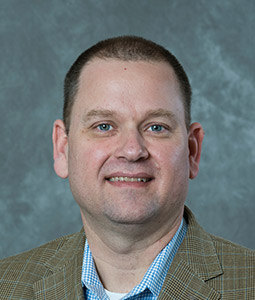
Mark Maltarich is an **Associate Professor of Management** at the Darla Moore School of Business, University of South Carolina. He serves as the Ph.D. Program Coordinator and focuses on team dynamics, organizational behavior, and multilevel research methodologies. His work examines how to form effective teams, manage conflict, and address turnover challenges. Education: Ph.D. in Business (2009), University of Wisconsin-Madison MBA (1998), DePaul University B.A. in Psychology (1994), Northwestern University Research Interests: Multilevel theories, team processes, human capital resources, and compensation strategies. His work appears in top journals like Journal of Applied Psychology and Academy of Management Journal . Awards: Academy of Management Journal Best Reviewer Nomination (2019) Outstanding Reviewer Award, OB Division (2014) Henry C. Naiman Excellence in Teaching Award (2007) Grants & Service: Serves on the editorial board of the Journal of Applied Psychology . Active in academic service, including faculty senate roles and doctoral student mentorship. Labs/Teams: Affiliated with the Center for Executive Succession. Collaborates with researchers on team dynamics and organizational change projects.
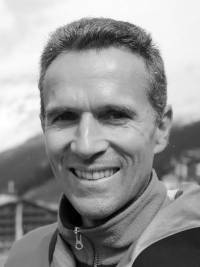
Justus Piater is a Professor of Computer Science at the University of Innsbruck, serving as the Head of the Digital Science Center and an ELLIS Fellow. His primary affiliation is the Department of Computer Science within the Faculty of Mathematics, Computer Science and Physics. He has held academic roles since 2002, including Assistant and Associate Professorships at Université de Liège before joining the University of Innsbruck in 2010. His research focuses on robot learning, perception, and manipulation, emphasizing how robots can learn to perceive and act with understanding. Notable projects include the EU-H2020 IMAGINE project and the Euregio International Project Network OLIVER. Education includes a Ph.D. in Computer Science from the University of Massachusetts Amherst (2001), complemented by earlier studies in Germany and Belgium. His service roles include Dean of the Faculty of Mathematics, Computer Science and Physics (2014–2017) and Vice Chair of the Department of Computer Science (2014–present). His research outputs span robotics, AI, and interdisciplinary education, with a strong emphasis on autonomous systems and cognitive development.
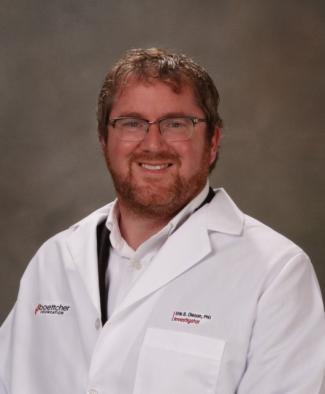
Erik B. Oleson is an Associate Professor in the Department of Psychology at the University of Colorado Denver, College of Liberal Arts and Sciences. His research focuses on neurochemical mechanisms underlying motivation and addiction, with emphasis on dopamine systems and endocannabinoid modulation. Research interests span behavioral neuroscience, neuropharmacology, and the neurobiology of reward processing. Key areas include dopaminergic regulation of motivated behavior, cannabinoid interactions with neural circuits, and neuroadaptations in substance use disorders. Publication analysis reveals consistent focus on dopamine dynamics, with recent studies examining cannabinoid-opioid interactions, fear extinction mechanisms, and behavioral economics of addiction. Methodological approaches include neurochemical measurements in animal models and translational clinical frameworks. Awards: No significant awards documented Advising/Grants: Active research lab investigating neural basis of addiction; no specific grants or students listed Labs/Teams: Leads research on dopamine signaling and addiction neurobiology at University of Colorado Denver
Fernando Cadaveira Mahía is a Professor of Psychobiology at the University of Santiago de Compostela (Spain), affiliated with the Department of Clinical Psychology and Psychobiology and the NECEA research group. His academic roles have included serving as Vicerrector of Academic Organization, Dean of the Faculty of Psychology, and Head of his department. He holds a PhD in Psychology from the University of Santiago de Compostela. His research focuses on neurocognitive consequences of alcohol binge drinking in youth, electrophysiological markers of addiction vulnerability, and visual attention processes using EEG. He has led long-term follow-up studies on alcohol use predictors and neurofunctional connectivity in university students. He has coordinated the Cognitive Neuroscience Research Network and served as President of the Spanish Society of Cognitive and Affective Neuroscience. His work integrates clinical psychology, neuroimaging, and cognitive neuroscience to address alcoholism and aging-related cognitive changes.
Nicole Mead is Associate Professor of Marketing at York University's Schulich School of Business, where she directs the Well-Being Research Lab (WiRL). Her research investigates how psychological processes influence consumer behavior, leadership, and sustainability practices. Research focuses on power dynamics, self-control mechanisms, and sustainable consumption patterns. Mead examines how social contracts influence environmental behaviors and how financial illusions impact savings. Her lab employs experimental methods to study decision-making frameworks. She maintains the 'Happy Consumer' Psychology Today blog and has published award-winning articles in top journals. Research trends indicate strong focus on behavioral interventions for financial well-being and environmental sustainability. Recent experimental work includes multi-site studies on ego depletion and neuroendocrine influences on leadership behaviors. Her research bridges psychological theory with practical applications in marketing and public policy.
Paula G. Williams, Ph.D., is a Professor in the Department of Psychology at the University of Utah. Her research focuses on individual differences in risk and resilience for adverse mental and physical health outcomes, particularly examining the interplay between personality, cognitive functioning, and psychophysiological factors like respiratory sinus arrhythmia (RSA). She has a dual emphasis on stress regulation (exposure, reactivity, recovery, restoration) and the health impacts of aesthetic engagement (art, nature, beauty). Education: Ph.D., University of Utah (Clinical Psychology, 1995) M.S., Illinois State University (Clinical Psychology, 1988) B.S., University of Illinois (Psychology/Genetics and Development, 1986) Internship & Postdoctoral Fellowship, Duke University Medical Center (Clinical Psychology, 1993–1996) Research Interests: Williams investigates how personality traits (e.g., Openness to Experience), executive functioning, and RSA interact to influence stress regulation and health outcomes. Her work bridges clinical psychology and health psychology, with recent trends focusing on: Phenotypic and endophenotypic characteristics of habitual short sleepers Individual differences in aesthetic engagement and their relationship to awe, stress resilience, and growth orientation Psychosomatic pathways linking sleep quality to telomere length and cardiovascular risk Article Trends: Her recent publications emphasize: Multidisciplinary methods combining actigraphy, fMRI, and self-report Perinatal sleep patterns and emotional dysregulation Personality facets as mediators in insomnia and bedtime procrastination Functional connectivity in aesthetic experiences and stress resilience Biopsychosocial models of sleep health and aging Advising & Collaborations: Williams actively mentors graduate students including Steven Carlson, Tuan Cassim, and Kimberley Johnson. She collaborates with researchers like Yana Suchy, Timothy W. Smith, and Brian R. W. Baucom, spanning projects on neural reward processing, executive functioning, and pandemic-related coping mechanisms.
Fei Miao is a Pratt & Whitney Associate Professor at the School of Computing, University of Connecticut, and a courtesy faculty member of the Department of Electrical & Computer Engineering. She serves as Director of the Miao Embodied AI Lab and is affiliated with the Institute for Advanced Systems Engineering. Previously, she was a postdoc researcher at the GRASP Lab and PRECISE Lab with Professors George J. Pappas and Daniel D. Lee at the University of Pennsylvania. Dr. Miao received her PhD in Electrical and Systems Engineering from the University of Pennsylvania in 2016, where she also earned a dual Master's degree in Statistics from the Wharton School. She completed her undergraduate studies at Shanghai Jiao Tong University, earning a Bachelor's degree in Automation with a minor in Finance in 2010. Her research focuses on developing the foundations for the science of Embodied AI, with emphasis on assuring safety, efficiency, robustness, and security of cyber-physical systems through the integration of learning, optimization, and control. Her technical expertise spans multi-agent reinforcement learning, robust optimization, uncertainty quantification, control theory, and game theory. These methods are applied to connected and autonomous vehicles, intelligent transportation systems, transportation decarbonization, smart cities, and power networks. Her work involves both theoretical development and practical implementation, including system modeling, theoretical analysis, algorithmic design, and experimental validation using real urban transportation data, simulators, and small-scale autonomous vehicles. Dr. Miao's publication record reveals a strong focus on robustness in AI systems for transportation applications, with recent work emphasizing uncertainty quantification, safety guarantees, and multi-agent coordination. Her research demonstrates a clear trajectory from foundational theoretical work to practical implementations in real-world transportation systems. Her notable awards include the prestigious NSF CAREER Award (2021) for "Distributionally Robust Learning, Control, and Benefits Analysis of Information Sharing for Connected and Autonomous Vehicles," a Best Paper Award at ICCPS'21 for "DeResolver: A Decentralized Negotiation and Conflict Resolution Framework for Smart City Services," and the "Charles Hallac and Sarah Keil Wolf Award for Best Doctoral Dissertation" during her PhD studies. Dr. Miao has secured significant research funding, including a $509,573 NSF CAREER Award (2021-2026) and a $2.3 million NSF collaborative grant as PI of UConn (2020-2023). She has also received multiple NSF grants for projects related to electric vehicle fleets, vehicular sensing, and control for smart city systems. She actively collaborates with researchers across institutions and has given talks at leading universities and industry research labs including CMU, Microsoft Research, Northeastern, Caltech, UCLA, USC, UCSD, Facebook FAIR, Lawrence Berkeley National Lab, UC Berkeley, Nvidia, Stanford, Princeton University, Columbia University, Waymo, and New York University.
Madhu Kannan, PhD, is an Assistant Professor in the Department of Orthopedic Surgery at the University of Minnesota. Their research focuses on neuroscience, neurobiology, and neurotechnology, with a particular emphasis on dopamine signaling, neuronal dynamics, and advanced imaging techniques. Key areas of investigation include the interplay between dopamine and memory systems, voltage imaging in behaving mammals, and the development of novel genetic tools for studying neuronal activity. Research interests span cellular neuroscience, neurophysiology, and neurotechnology, with contributions to understanding axon growth mechanisms, ubiquitin ligase pathways in neuronal survival, and the impact of environmental factors on neural development. Dr. Kannan’s work bridges molecular biology, biophysics, and behavioral studies, aiming to uncover fundamental mechanisms underlying neural function and disease. Publications highlight advancements in voltage-sensitive indicators, dual-polarity imaging systems, and insights into neurodegenerative processes. The research trajectory demonstrates a strong focus on translational neurobiology, combining cutting-edge imaging technologies with molecular and genetic approaches. No scientific awards or grants are listed in the provided information. No advisees or students are explicitly mentioned in the text.
Prof. Dr. Tobias Glasmachers is a Full Professor at the Institut für Neuroinformatik , Ruhr-Universität Bochum, Germany, specializing in the Theory of Machine Learning . He leads the Optimization of Adaptive Systems group and holds appointments in both Computer Science and Interdisciplinary AI research. Key Research Areas : Optimization algorithms, evolutionary computation, reinforcement learning, supervised learning, and neural networks Technical Focus : Gradient-based methods, support vector machines, and adaptive coordinate descent Applications : Robotics, waste sorting facilities, 3D game environments (e.g., Doom/Minecraft), and human-centered AI design Notable Contributions : Development of LM-MA-ES evolution strategy, Hessian Estimation Evolution Strategy, and tachAId tool for ethical AI design. His work bridges theoretical analysis with practical implementations across diverse domains. Teaching : Offers courses in Informatik 1 - Programmieren, Machine Learning: Supervised Methods, and Evolutionary Algorithms. Supervises numerous Bachelor's and Master's theses on AI/ML applications.
Leonidas Doumas is a Senior Lecturer in Psychology at the University of Edinburgh’s School of Philosophy, Psychology and Language Sciences. He holds a PhD in Cognitive and Developmental Psychology from UCLA and has held academic positions at Indiana University and the University of Hawaii before joining Edinburgh in 2013. His research focuses on relational reasoning, analogy, cognitive development, and computational modelling, particularly exploring how distributed systems like neural networks represent and generalize relational concepts. He teaches courses in developmental science, cognitive science, and statistics, and actively supervises PhD students in these areas. Dr. Doumas’s work combines empirical studies with computational models to investigate topics such as cross-domain generalization, relational learning in children and adults, and the role of structured representations in cognition. His research also employs neuroscientific techniques like EEG and TMS to understand cognitive processes. He is a core member of the Edinburgh Cognitive and Neuroethology Lab (CNE) and leads initiatives in immersive virtual reality (VR) for neuropsychological assessment, such as the Virtual Reality Everyday Assessment Lab (VR-EAL). His educational background includes a PhD under John Hummel, Keith Holyoak, and Cathy Sandhofer at UCLA, followed by postdoctoral training in Linda Smith’s lab at Indiana University. His current projects emphasize the intersection of symbolic and connectionist approaches to cognition, with a focus on how structured representations emerge through experience. Research Interests: Relational learning, analogy, cognitive development, computational modelling, neural networks, and VR applications in cognitive science Teaching: Year 1/2 Psychology courses, Cognitive Science, and advanced options on neural networks and induction Advising: Open to PhD/MSc students interested in relational cognition, computational models, or VR applications Publications span topics from neural network limitations in language processing to mechanisms of hierarchical linguistic structure, with a focus on bridging computational and empirical cognitive science.
Yisong Yue is a Professor of Computing and Mathematical Sciences at the California Institute of Technology (Caltech). He holds a B.S. from the University of Illinois (2005) and a Ph.D. from Cornell University (2010). His research focuses on machine learning, neurosymbolic AI, autonomous systems, and applications in robotics, science, and healthcare. Key affiliations include advisory roles at Asari AI and CaineX, and leadership roles in ICLR (Board Member, 2024–present; General Chair, ICLR 2025). Yisong's work bridges theory and practice, emphasizing deployable AI solutions. Notable contributions include Neurosymbolic Programming, AI-driven protein optimization, and safety-critical control systems. His research has led to impactful applications in robotics, medical coding automation, and molecular engineering. He has advised numerous students, including Jennifer Sun (Ph.D., Cornell), Yujia Huang (Citadel Securities), and Guanya Shi (CMU faculty). Awards include the Best Paper Award at ICRA 2020 and Okawa Foundation Grant recognition. His lab explores frontiers in adaptive experiment design and human-AI collaboration. Yisong has collaborated with institutions like NASA (MLNav for Martian navigation) and Disney Research (behavior modeling). His work appears in top venues like NeurIPS, ICML, and Science Robotics.
Dr. Guanglin Zhou is a Postdoctoral Research Fellow at the School of Electrical Engineering and Computer Science, part of the Faculty of Engineering, Architecture and Information Technology at The University of Queensland. He holds a Doctor of Philosophy in Electrical Engineering and Computer Science from the University of New South Wales. His research focuses on machine learning, causal inference, and domain adaptation, with applications in healthcare, recommendation systems, and computer vision. Key research interests include developing counterfactual learning frameworks, enhancing model robustness through causal methods, and advancing domain generalization techniques. His work bridges causal theory with deep learning, particularly in generating clinically realistic data and improving foundation models' adaptability to distribution shifts. Dr. Zhou's publications span topics like contrastive visual prompting for domain adaptation, cycle-balanced representation learning for causal inference, and deep reinforcement learning in recommender systems. He is available for supervision and has contributed to interdisciplinary projects combining knowledge graphs with spatio-temporal analysis for urban congestion prediction.
Professor Muireann Irish is an ARC Future Fellow and Professor of Cognitive Neuroscience at the University of Sydney's School of Psychology within the Brain & Mind Centre. Her research program focuses on cognitive neuroscience approaches to neurodegenerative disorders, with particular emphasis on frontotemporal dementia and Alzheimer's disease. She leads investigations into memory systems, social cognition, and motivational impairments across the dementia spectrum. Her research examines neural substrates of cognitive functions using multimodal neuroimaging approaches, with core interests in autobiographical memory, future thinking, and the breakdown of semantic knowledge in dementia syndromes. Current work explores how disruptions in large-scale brain networks contribute to cognitive and behavioral changes in neurodegenerative conditions. Analysis of Professor Irish's recent publications reveals consistent themes in dementia research: innovations in cognitive assessment tools, longitudinal characterization of disease trajectories, neural correlates of memory impairment, and cross-cultural investigations of dementia phenotypes. Her work integrates neuropsychological testing with advanced neuroimaging to identify early biomarkers of neurodegeneration. Professor Irish has received significant recognition including: ARC Future Fellowship Fellow of the Royal Society of New South Wales (FRSN) She currently supervises doctoral candidates and leads NHMRC-funded projects on early FTD diagnosis. Her laboratory at the Brain & Mind Centre collaborates internationally to translate basic neuroscience findings into clinical applications for dementia diagnosis and management.
Daniel Pearson is a cognitive psychologist at the School of Psychology, University of Sydney , where he has been a faculty member since 2023. His research focuses on how learned experiences and reward-related stimuli (e.g., monetary, food-related, or drug-related cues) influence perception, selective attention, and cognitive control. Education: Bachelor of Advanced Science (Psychology), UNSW Sydney, 2011 Master of Psychology (Clinical), UNSW Sydney, 2019 PhD in Psychology, UNSW Sydney, 2019 His work employs behavioral, eye-tracking, and electrophysiological techniques to investigate the cognitive and neural mechanisms of visual cognition, with applications in real-world contexts (e.g., designing alerts and warnings) and psychopathology (e.g., substance use disorders, compulsive behaviors). Recent research highlights interactions between reward processing, attentional capture, and decision-making, particularly in anxiety and schizophrenia. Scientific Awards: Combined PhD/Clinical Masters Thesis Prize, UNSW, 2019 Dean's Award for Outstanding PhD Thesis, UNSW, 2019 Faculty of Science Writing Scholarship, UNSW, 2019 School of Psychology Award, Postgraduate Research Competition, UNSW, 2017 Research Training Program Scholarship, 2015-2019 Academic Achievement Award, UNSW, 2008 Current research students: Amy CHONG’s project explores the relationship between attention and psychological disorders using a transdiagnostic approach. Dr. Pearson has received the 2023 New Academic Hire Start Up Funding to support his research at the University of Sydney.
Dr. Martina Vecchi is a Lecturer in the Department of Economics at the University of Southampton, UK, affiliated with the School of Economic, Social and Political Science (ESPS). She holds a Ph.D. from the University of Edinburgh and conducted her final doctoral research at the European University Institute. Previously, she served as an Assistant Professor at The Pennsylvania State University. Her research focuses on applied behavioral economics, particularly decision-making related to health, environmental sustainability, and food economics. She employs experimental methods—both field and lab—to study diverse populations, including low-income mothers, farmers, and children. Key research themes include environmental determinants of choices, the role of stress in dietary decisions, and the impact of digital advertising on youth. Dr. Vecchi is a member of the Centre for Behavioural Experimental Action and Research (C-BEAR). Her work bridges economics with psychology, neuroscience, and biology, emphasizing interdisciplinary collaboration. Recent publications (2021–2024) explore topics such as pandemic-driven food preferences, maternal stress effects on children’s diets, and experimental protocols for decision-making analysis.