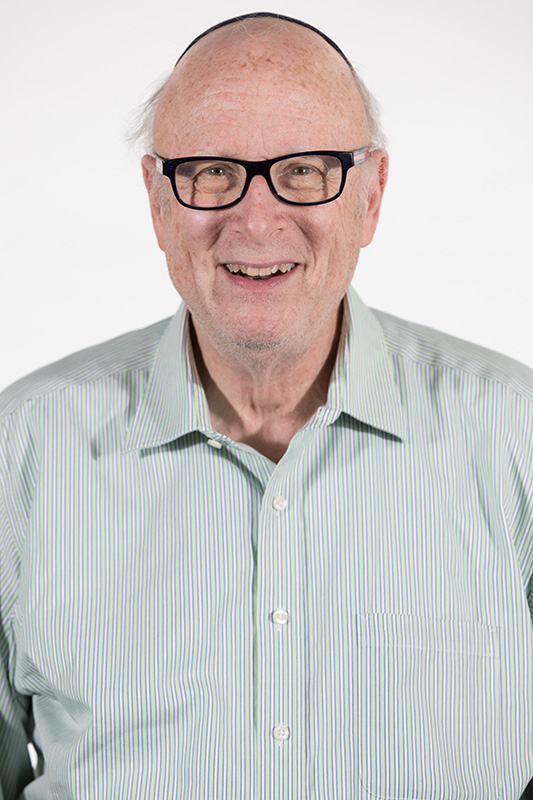
Dr. Kenneth Chelst is a Professor in the Department of Industrial and Systems Engineering at Wayne State University , where he directs the Engineering Management Program. His work bridges operations research with engineering management and K-12 mathematics education . A Rabbinic Ordination holder from Yeshiva University, he combines analytical rigor with pedagogical innovation. Educational Background: Ph.D., M.S. in Operations Research from MIT B.A. in Mathematics and Physics from Yeshiva College His research focuses on structured decision-making , OR applications in emergency services , and math curriculum development . The NSF-funded Project MINDSET ($3.3 million) and Project MEDeATe highlight his efforts to integrate OR into high school education. His From Percentage to Algebra middle school book and Ford-funded workshops have impacted hundreds of teachers. Scientific Awards: INFORMS President's Award (2011) for K-12 OR outreach Edelman Prize Laureate (2000) for Ford's OR application Multiple teaching awards from Ford Motor Company Dr. Chelst consults with Urban Science Applications Inc. and previously led the INFORMS Roundtable. His courses include Decision and Risk Analysis and Leadership Projects in Engineering Management , emphasizing corporate partnerships and immediate ROI.
Ashish Thatte serves as Associate Professor of Operations Management at Gonzaga University, teaching undergraduate courses including Operations Management (OPER 340), Lean Thinking (OPER 347), and Supply Chain Management (OPER 489), alongside graduate courses such as Global Operations (MBUS 640), Lean Thinking (MBUS 648), and Supply Chain Management (MBUS 699). His industry background encompasses manufacturing management and supply chain/logistics roles in multinational corporations. His academic credentials feature a Ph.D. and M.S. from the University of Toledo, complemented by an M.B.A. and B.E. from the University of Pune (India), plus APICS CPIM certification: CPIM, APICS Ph.D., University of Toledo M.S., University of Toledo M.B.A., University of Pune (India) B.E., University of Pune (India) Dr. Thatte's research centers on supply chain responsiveness, competitive advantage, and information systems in operations, with significant extensions into consumer behavior (particularly Gen Z purchasing in beauty care) and healthcare operations (emergency department efficiency and medical procedure cost analysis). His work bridges theoretical frameworks with practical applications across manufacturing, retail, and healthcare sectors. Analysis of his 15 most recent publications reveals three dominant research trajectories: (1) Supply chain responsiveness mechanisms and their competitive impact through supplier networks and modular manufacturing; (2) Cross-cultural consumer behavior examining regional variations in brand perception; (3) Healthcare operations optimization in emergency departments and procedural cost-effectiveness. His interdisciplinary approach connects operations theory with real-world business challenges across automotive, sports analytics, and global consumer markets. No scientific awards were documented in the available information. While the provided materials confirm his teaching responsibilities and publication record, specific details regarding student advisement, research grants, or laboratory affiliations remain undisclosed in the source materials.
Rachee Singh is an Assistant Professor of Computer Science at Cornell University, leading the sysphotonics research group. She concurrently serves as an Amazon Scholar within the SageMaker Hyperpod teams, specializing in large-scale machine learning infrastructure development for cloud environments. Her research focuses on photonic interconnect systems for server-scale, rack-scale, and long-haul communication networks, targeting performance optimization for distributed machine learning and planet-scale cloud workloads. Key specialties include optical network design, fault-tolerant WAN architectures, and energy-efficient datacenter interconnects, with strong emphasis on practical deployment in real-world systems. Her group bridges theoretical networking principles with applied AI infrastructure challenges. Recent publications demonstrate concentrated innovation in photonic network optimization for ML workloads, particularly in wavelength management, collective communication algorithms, and chip-to-chip photonic fabrics. This work spans optical physics, distributed systems, and machine learning, revealing a trajectory toward sustainable, high-performance AI infrastructure. Scientific recognition includes: Amazon Research Award (2023) Cisco Research Award Dr. Singh actively mentors graduate researchers including Jonathan Aimuyo, Byungsoo Oh, and Arjun Devraj, whose co-authored publications form the core of her group's output. Research funding is secured through competitive grants from the NSF (including a $1M award for chip-to-chip photonic fabrics), SRC/DARPA JUMP 2.0 program, Cisco, and Cornell's Atkinson Center for Sustainability. The sysphotonics group operates as Cornell's hub for photonic network systems research, developing programmable integrated photonics solutions and collaborating with Amazon on SageMaker Hyperpod for next-generation ML infrastructure.
Professor Jing Meng is a leading academic at University College London's Bartlett School of Sustainable Construction, holding the position since 2023 after progressing from Lecturer (2019-2021) to Associate Professor (2021-2023). She concurrently serves as a fellow at the Cambridge Centre for Environment, Energy and Natural Resource Governance and maintains active editorial roles as Executive Editor of the Journal of Cleaner Production and Associate Editor for Journal of Geophysical Research: Atmospheres. Her research spans three interconnected domains: Energy Transitions and Technology Innovation (examining cost forecasts and structural emission declines in China), Climate Change Policies (analyzing South-South trade effects and multinational enterprise emissions), and Emission-Health-Socioeconomics Nexus (assessing air pollution impacts and integrated co-mitigation strategies). This interdisciplinary approach is reflected in her publication record across Nature family journals and PNAS. Analysis of her recent publications reveals a consistent focus on global carbon accounting methodologies, with increasing attention to subnational (city-level) analyses, health co-benefits of climate policies, and technological innovation pathways for hard-to-abate sectors. Her work frequently employs multi-regional input-output modeling to trace emissions through complex supply chains. AGU Global Environmental Change Early Career Award (2023) MIT Technology Review Innovators Under 35 Asia Pacific (2022) Clarivate Highly Cited Researcher (2020-2024) Nature Communications Top 50 Earth Sciences Article (2018) MDPI Emerging Sustainability Leader Award (2020) Environmental Research Letters Best Early Career Article (2017) Professor Meng has secured substantial funding from diverse sources including NERC, the British Council, Quadrature Climate Foundation, The Royal Society, and UCL internal grants. She leads an interdisciplinary research group focused on technology innovation and climate policy, with particular emphasis on China's role in global emissions systems. Her work directly supports Sustainable Development Goal 13 (Climate Action) through actionable policy insights.
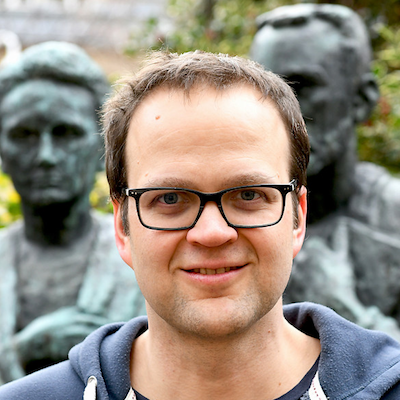
Benoit Combemale is a Full Professor of Software Engineering at the University of Rennes , currently on leave as Research Director at Inria . He is affiliated with the DiverSE research team (joint between IRISA and Inria) and the SM@RT team at IRIT. He serves as Editor-in-Chief of the Springer-Nature journal Software and Systems Modeling (SoSyM) and holds leadership roles in academic conferences like ACM SIGPLAN Intl. Conference on Software Language Engineering and MODELS . Education : Habilitation (2015) and PhD (2008) in Software Engineering from University of Rennes and University of Toulouse, respectively. Research : Focuses on Model-Driven Engineering , Digital Twins , and ICT for Sustainability , with applications in cyber-physical systems, scientific computing, and industrial systems. Recent Publications highlight trends in digital twin modeling, energy-aware software engineering, polyglot programming, and formal verification for heterogeneous systems. His scientific awards include: Editor-in-Chief of SoSyM Steering Committee member of ACM SIGPLAN Intl. Conference on Software Language Engineering General Chair for ICT4S 2023 and MODELS 2016 PC Chair for MODELS 2024, ECMFA 2019, and SLE 2014 Coordinator of Dagstuhl Seminars and Bellairs workshops Advising includes 30+ students in topics ranging from digital twin engineering to software testing and language design. He leads the GEMOC Initiative and contributes to projects like SciHook and GEMOC Studio .
Dominik Roeser is a Professor and Associate Dean of Research Forests & Community Outreach at the University of British Columbia's Faculty of Forestry, Department of Forest Resources Management. With over 21 years of experience in forest research and innovation, he has built a comprehensive forest operations research program since joining UBC in 2018, following his tenure as Senior Director at FPInnovations where he managed multidisciplinary teams focused on improving forest sector competitiveness and wildfire management solutions in Western Canada. Professor Roeser's research interests center on sustainable forest management and the bioeconomy, with specific expertise in forest bioproduction, supply chain design, steep slope harvesting, and biomass operations. His work through the Forest Action Lab applies diverse research methods including productivity studies, field trials, and modeling to address sustainability challenges across different operational environments. His research portfolio spans sustainable forest biomass utilization, harvesting in difficult terrain, innovative forest planning tools, operational productivity, carbon management, and community sustainability impacts from reforestation. His publication record shows a strong focus on practical applications of forest science, with recent work emphasizing wildfire management, remote sensing technologies for precision forestry, biomass energy systems, and the socio-ecological dimensions of forest management. His research increasingly integrates advanced technologies like LiDAR and drone-based systems with traditional forest operations to address contemporary challenges in sustainable forest management. Roeser has received the Recognition Award from the Canadian Forest Service (2017) for his contributions to forest science and innovation. His work demonstrates significant impact on both academic understanding and practical implementation of sustainable forest operations across North America and Europe. As an educator, Professor Roeser teaches several key courses including FOPR 264 Introduction to Forest Operations, FOPR 362 Harvesting systems and forest access, FOPR 464 Operational planning and management, and FRST 452 Coastal field school. He considers educating the next generation of forestry professionals one of his passions, bridging theoretical knowledge with practical industry applications. The Forest Action Lab, led by Professor Roeser, represents a multidisciplinary research hub applying diverse methodologies to address forestry stakeholders' needs across British Columbia, Canada, and globally. The lab's work connects academic research with industry implementation, focusing on practical solutions for sustainable forest utilization in varied operational environments.
Professor David Taubman is a distinguished academic serving as Professor and Deputy Head of School (Research) at the School of Electrical Engineering and Telecommunications (EE&T) at the University of New South Wales (UNSW) in Sydney, Australia. He is also co-director of Kakadu Software Pty. Ltd. and its affiliates Kakadu R&D and Kakadu GPU. With a career spanning over three decades, Professor Taubman has made significant contributions to the field of image and video compression, most notably as the author of the EBCOT coding algorithm adopted in the JPEG2000 international standard. Professor Taubman earned his B.Sc. in Mathematics and Computer Science (1986) and B.E. (Medal) in Electrical Engineering (1988) from the University of Sydney, followed by an M.Sc. (1992) and Ph.D. (1994) in Electrical Engineering from the University of California at Berkeley. His professional journey includes engineering work at the Electricity Commission of N.S.W. (1988-1990), research positions at Hewlett-Packard Laboratories in Palo Alto (1994-1998), and an academic career at UNSW where he progressed from Senior Lecturer (1998-2003) to Associate Professor (2004-2009) and finally to Professor (2009-present). He has held various leadership roles including Head of the EE&T Telecommunications Research Group (2003-2014), Head of the EE&T Signal Processing Research Group (2014-present), Director of Research for the School of EE&T (2011-2016), and Deputy Head of School (Research) since 2017. Professor Taubman's research interests center on image and video compression, with particular expertise in JPEG2000 standards and implementations. His work spans signal processing, wavelet transforms, scalable video coding, motion modeling, and multimedia systems. He has pioneered numerous compression algorithms and frameworks, including the EBCOT coding algorithm that became central to the JPEG2000 standard. His recent research focuses on efficient motion modeling with cuboidal partitioning, learned lifting-based transform structures, and high-throughput implementations of JPEG2000 for video applications. His work bridges theoretical foundations with practical implementations, as evidenced by the commercially successful Kakadu Software tools that have garnered around 500 commercial licensees. Analysis of Professor Taubman's recent publications reveals a consistent focus on advancing compression technologies with particular emphasis on scalability, efficiency, and adaptability. His work spans traditional image compression (JPEG2000 extensions), video coding (cuboid-based partitioning for UHD/360-degree video), and emerging applications (nanopore sequencing data compression). A notable trend is the integration of machine learning techniques with traditional compression frameworks, as seen in his work on learned lifting-based transform structures. His research maintains strong connections to real-world applications across diverse domains including medical imaging, astronomical data processing, and genomic sequencing. IEEE Fellow Engineers Australia Fellow (by invitation) Professor Taubman has served as Associate Editor for the IEEE Transactions on Image Processing for two four-year appointments (2003-2005 and 2010-2013). He has been actively involved in numerous research grants focused on image and video compression technologies, particularly those related to the JPEG2000 standard and its extensions. His work has received significant industry support, reflected in his consultancy with various U.S., Japanese, and Australian corporations. He has also contributed to international standards development as a member of Standards Australia Technical Committee MS-065 (mirroring ISO TC42 on Digital Photography) and as a constitutional member of Standards Australia Technical Committee IT-029 (Coded Representation of Picture, Audio and Multimedia/Hypermedia Information). Professor Taubman co-directs Kakadu Software Pty. Ltd. and its research affiliates Kakadu R&D and Kakadu GPU, which have developed the commercially successful Kakadu Software tools for JPEG2000. His research group at UNSW focuses on advanced image and video compression techniques, with particular expertise in wavelet-based methods, scalable coding, and motion modeling. The group maintains strong industry connections and has contributed significantly to the development and standardization of image compression technologies worldwide.
Gianfranco Chicco is a Full Professor at the Politecnico di Torino , Italy, within the Department of Energy (DENERG). He serves as Scientific Director of the Electrical Power Systems research group and the Turin unit of the ENSIEL Consortium. A Fellow of IEEE (since 2018), he has held editorial leadership roles as Editor-in-Chief of Sustainable Energy, Grids and Networks and Subject Editor of Energy , while chairing major conferences like IEEE ISGT Europe 2017 and UPEC 2020. Education : Laurea (cum laude) in Electrical Engineering (1987), Ph.D. in Electrical Engineering (1992), Doctor Honoris Causa (2017, Polytechnic University of Bucharest; 2018, Technical University 'Gheorghe Asachi' of Iasi). Research Interests : Focus on power transmission and distribution systems , distributed energy resources , and multi-energy smart grids , with applications in artificial intelligence , load management , and power quality . His work addresses technical, economic, and environmental aspects of distributed generation and smart grid sustainability . Publications Trends : Recent articles emphasize photovoltaic power optimization , dynamic grid modeling , and multi-energy system coordination , reflecting expertise in renewable integration , clustering algorithms , and adaptive control . Key subfields include voltage stability , load forecasting , and blockchain for energy trading . Awards : IEEE Fellow (2018-) Best Paper Awards at SEST (2018, 2020) Doctor Honoris Causa (2017, 2018) 'Giancarlo Vallauri' Degree Prize (1988) Advising and Grants : Supervises PhD students in power converters , renewable integration , and high-voltage measurement methodologies . Leads European projects like H2020 MIGRATE and OSMOSE, focusing on grid resilience , clustering-based network planning , and multi-energy sustainability .
Thomas Walter is a Professor at Mines ParisTech and Director of the Centre for Computational Biology (CBIO) , a research group affiliated with the Institut Curie and INSERM . His work focuses on applying Machine Learning and Computer Vision to biomedical image analysis, particularly in high-content screening and computational pathology . He also serves as Deputy Director of the Computational Oncology (U1331) unit and leads the Statistical Learning and Modeling of Biological Systems team. PhD in Medical Image Analysis (2003, Mines ParisTech) Postdoctoral work at EMBL (European Molecular Biology Laboratory) Director of CBIO since 2018 Holder of a PRAIRIE Chair (Paris Artificial Intelligence Research Institute) since 2019 Dr. Walter's research bridges biomedical imaging , machine learning , and cancer genomics . Key areas include: Statistical reconstruction of biological networks Prediction of tumor progression at genomic/transcriptomic levels Development of deep learning methods for cell cycle analysis Integration of multi-omics data for precision oncology Tools for spatial transcriptomics (e.g., autoFISH, RNA2seg) Recent publications highlight his work in spatial transcriptomics , immunotherapy outcome prediction , and deep learning for digital pathology . His team has developed open-source tools like FISH-quant and pyHiM for single-molecule RNA imaging analysis. Scientific Honors: PRAIRIE Chair (2019) for AI research in life sciences Dr. Walter actively contributes to teaching deep learning for image analysis in multiple graduate programs across France, including courses at Mines ParisTech , Université Paris-Saclay , and Institut Curie . His software tools (FISH-quant, pyHiM) and methodological frameworks (e.g., Cut-Detector, PointFISH) have become standard resources in bioimage informatics.
Barbara Penner is Professor of Architectural Humanities at University College London's Bartlett School of Architecture, where she serves as Co-Director of the MA Architectural History program and supervises PhD students. Her academic appointments include Senior Lecturer positions at UCL since 2000 and previous roles at University of East London, Middlesex University, and Chelsea College of Art. Her educational background comprises a PhD from Birkbeck College (2003), MSc from University College London (1996), and BA from McGill University (1994). Penner's research focuses on the social and cultural dimensions of everyday spaces, examining how domestic environments, urban infrastructure, and commercial architecture shape social identities. Her interdisciplinary approach integrates architectural history with anthropology, literary theory, and cultural studies, particularly exploring gender dynamics in spaces like bathrooms, kitchens, hotels, and housing. Her publications reveal consistent engagement with themes of gender, domesticity, and infrastructure across historical periods. Key works include Bathroom (2013), Newlyweds on Tour (2009), and co-edited volumes on public toilets and gender. Recent scholarship examines social scientific research in home design, urine diversion systems, and historical housing models. RIBA President’s Award for Outstanding University-Located Research (2014) Leverhulme Major Fellowship (2021-2023) Provost Teaching Award, UCL (2013) Council of Editors of Learned Journals Best New Journal Award (2009) Penner actively supervises doctoral research on topics including Billy Butlin’s holiday camps and Gulf female shoppers' impact on London retail. She has completed twelve PhD supervisions and examined nearly thirty theses internationally. Her professional activities include serving on the Architectural Association Publications Committee, as North American Editor for Architectural History, and as External Examiner at University College Dublin. She participates in the 'Insurgent Domesticities' research group at Columbia University and contributes to Places Journal as a contributing editor.
Elliot J. Crowley is a Senior Lecturer (Associate Professor) at the School of Engineering, University of Edinburgh, where he co-leads the Bayesian and Neural Systems research group. He serves as Programme Manager for Electronics and Electrical Engineering and has developed a comprehensive machine learning course for 4th year electronic engineering students at the University of Edinburgh. Dr. Crowley's research focuses on simplifying machine learning systems with specific expertise in automated machine learning, low-resource deep learning, and engineering applications of machine learning. His work bridges theoretical advances with practical implementations, particularly in neural architecture search and computer vision applications, with emphasis on making complex ML systems more accessible and efficient. His recent publications demonstrate significant contributions to neural architecture search spaces, training-free instance segmentation, and state space models for visual recognition, appearing in top venues including NeurIPS 2024, BMVC 2024, and AutoML 2025. These works show a consistent focus on developing practical ML solutions that can operate effectively in resource-constrained environments. Selected awards and grants: EPSRC New Investigator Award Investigator on the dAIEdge Horizon Network Co-investigator on the EPSRC AI Hub for Causality in Healthcare AI Dr. Crowley currently supervises several researchers including Postdoc Linus Ericsson and PhD students Miguel Espinosa, Shiwen Qin (with Shay Cohen), and Cameron Barker (with Henry Gouk). His former students include Chenhongyi Yang (now a Research Scientist at Meta) and Jack Turner (now a Software Engineer at Qualcomm). He actively seeks new PhD students with strong research proposals and available funding for UK students through CDTs. His research group, the Bayesian and Neural Systems group, focuses on developing practical machine learning solutions that can be deployed in resource-constrained environments, with particular emphasis on making complex ML systems more accessible to engineers and practitioners.
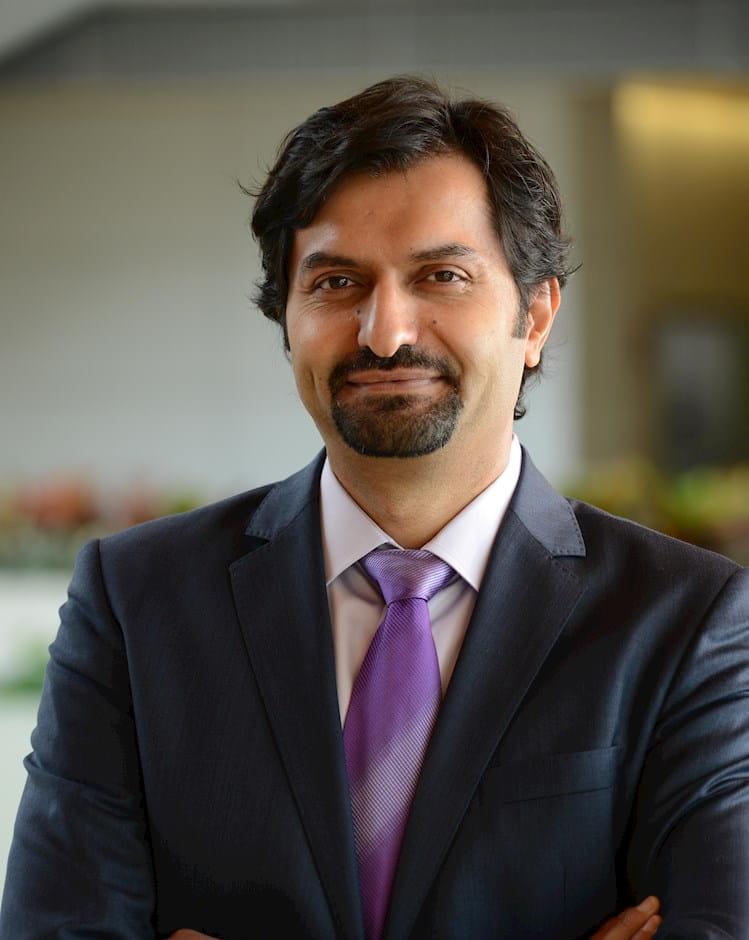
Baris Ata is the Sigmund E. Edelstone Distinguished Service Professor of Operations Management at the University of Chicago Booth School of Business. His work bridges theoretical operations management with practical applications, focusing on dynamic decision-making under uncertainty. Research Interests Ata’s research spans stochastic networks, manufacturing/service operations, healthcare delivery, and social sector innovation. Recent projects address high-dimensional stochastic control, xenotransplantation candidate selection, criminal justice logistics, and last-mile delivery challenges in Africa. Scientific Awards Best Paper in Service Science Award, INFORMS (2009) William Pierskalla Best Paper Award, INFORMS (2015) Wickham Skinner Best Paper Award, POMS (2019) Manufacturing and Service Operations Management Young Scholar Prize, INFORMS (2015) Emory Williams MBA Teaching Award (2021) Recent Publications Ata’s recent work includes topics in dynamic pricing, stochastic control, and healthcare logistics. His papers examine congestion-based pricing strategies, equilibrium analysis in queues, and policy design for organ transplantation. Broad disciplines include operations management, stochastic modeling, and healthcare analytics.
Professor Marios C. Angelides is a full-time faculty member at Brunel University London , serving as Professor of Computing and Divisional Lead within the College of Engineering, Design and Physical Sciences . He leads the Creative Computing Research Group under the Institute of Digital Futures and contributes to the Digital Media department at Brunel Design School. BSc (First Class Honours) and PhD in Computing from the London School of Economics (LSE) Chartered Engineer (CEng) and Chartered Fellow of the British Computer Society (FBCS CITP) His research focuses on Creative Computing , specifically applying Machine Learning , Serious Gaming , and Cognitive Modeling to develop Smart IoT Applications . His work spans autonomous drone fleets for environmental monitoring, cybersecurity middleware for Android systems, wearable technology for lifestyle recommendations, and historical analysis of Alan Turing’s legacy in modern AI. Recent publications highlight trends in deploying Machine Learning for: IoT systems optimization Autonomous aerial/underwater vehicle coordination Deepfake detection using Turing’s Imitation Game Energy allocation in CubeSats via gaming mechanics Scientific recognition includes being Deputy Editor of The Computer Journal and runner-up for the 2016 Oxford University Press Wilkes Award . He has supervised PhD students in topics like Smart Android Middleware for Cybersecurity and Wearable Recommendation Systems , with active involvement in editorial boards and international conferences.
Inseok Hwang is the Paul Stanley Professor of Aeronautics and Astronautics at Purdue University's School of Aeronautics and Astronautics. He earned his Ph.D. from Stanford University, specializing in multiple-vehicle control systems. His research focuses on hybrid systems, air traffic control, unmanned systems, and cybersecurity of cyber-physical systems. He leads the Flight Dynamics and Control/Hybrid Systems Laboratory and has received numerous awards, including the NSF CAREER Award and AIAA Associate Fellow designation. His work spans theoretical advancements in control theory and practical applications in aerospace systems. He has over 150 peer-reviewed publications and actively collaborates with industry and government agencies like NASA and the FAA. Education: B.S. (Seoul National University, 1992), M.S. (KAIST, 1994), Ph.D. (Stanford, 2004). Professional memberships include AIAA and IEEE. Research Interests: Hybrid systems analysis, air traffic surveillance and control, fault detection and isolation, spacecraft control, and cybersecurity for autonomous systems. His lab develops algorithms for safe and efficient operation of networked systems, including UAS traffic management and resilient control protocols against cyberattacks. Awards: NSF CAREER (2008), AIAA Associate Fellow (2012), University Faculty Scholar (2017), C.T. Sun Award (2019), multiple Seed for Success Awards (2020–2024), and Paul Stanley Professorship (2024). Grants and Collaborations: Active projects funded by NSF, NASA, FAA, and industry partners. Focus areas include resilient navigation, anomaly detection in air traffic systems, and cyberattack mitigation for autonomous vehicles.
Walid G. Aref is a Professor of Computer Science at Purdue University since Fall 1999. His research focuses on database systems, spatial and spatio-temporal data management, query processing, and indexing. He has led projects funded by NSF, NIH, and industry partners. Aref is a Fellow of the IEEE and has received awards including the NSF CAREER Award (2001) and VLDB’s Ten-Year Best Paper Award (2016). He serves as Editor-in-Chief of ACM Transactions on Spatial Algorithms and Systems and has authored numerous influential papers. Education: BSc/MSc from Alexandria University (Egypt), PhD from University of Maryland (1993). Research Interests: Extending database functionality for emerging applications like spatial, graph, and sensor databases. Notable contributions include the Chameleon project, AQWA system for big spatial data, and privacy-preserving Casper framework. Selected Projects: NSF-funded work on multi-predicate spatial queries, in-memory graph relational systems, and adaptive spatio-textual processing. Systems like Tornado (spatio-textual streams) and LocationSpark (distributed spatial data) exemplify his contributions. Awards: Multiple best paper awards, IEEE Fellow, and leadership roles in ACM SIGSPATIAL.