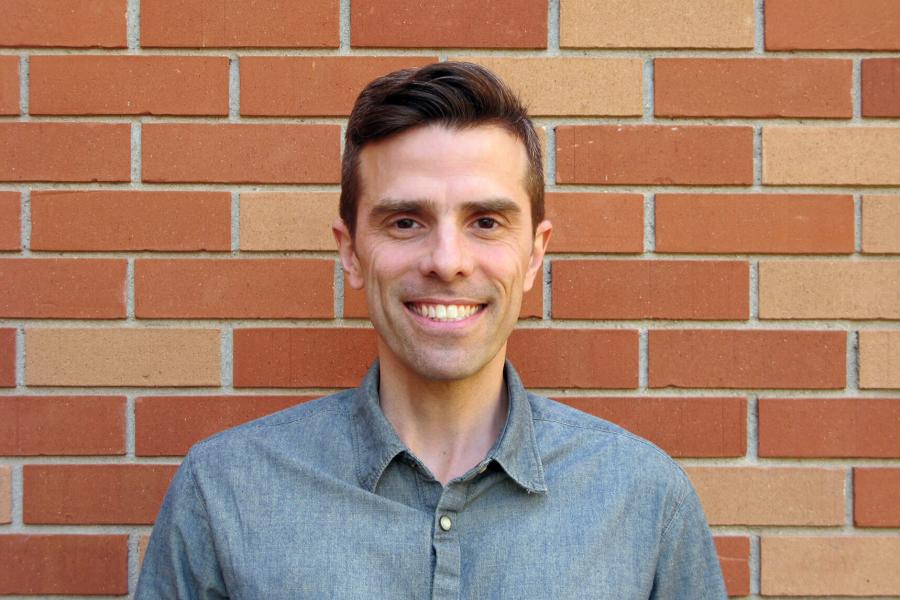
Liam Riley is an Adjunct Professor at the Balsillie School of International Affairs (Wilfrid Laurier University). His research focuses on urban food security, gender dynamics, and development challenges in African cities. PhD in Geography (2013), Western University His work combines participatory GIS and mixed-methods fieldwork in Malawi, Cameroon, South Africa, and Botswana to analyze: Gendered household food strategies Political economic dimensions of urban food security Informal settlement food environments Secondary city food systems Liam leads the SSHRC-funded project Mapping African Urban Foodscapes and contributes to Consuming Urban Poverty 2 and the Hungry Cities Partnership . His publications examine urban poverty, corruption perceptions, and cross-cultural food security comparisons. Scientific awards include: SSHRC Impact Award (Talent Competition): Finalist Banting Postdoctoral Fellowship SSHRC Postdoctoral Fellowship African Geographical Review Paper of the Year Joseph-Armand Bombardier CGS Doctoral Award International Development Research Centre Doctoral Research Award As Co-Editor of the Hungry Cities Partnership reports, he produces open-source information for Global South practitioners and researchers.
Maurizio Ramanzin is a Full Professor at the University of Padova , affiliated with the School of Animal Science and Department of Agronomy, Animals, Food and Natural Resources (DAFNAE) . His research focuses on Agricultural Sustainability , Environmental Impact Assessment , and Precision Livestock Farming . Academic Field : AGR/19 Email : maurizio.ramanzin@unipd.it Address : Agripolis - Viale dell'università, 16 - Legnaro (Padova) – ITALY His work explores the interactions between livestock systems and ecosystem services in mountainous regions, with emphasis on: Grazing Management and biodiversity conservation Life Cycle Assessment (LCA) of dairy and beef systems Climate Change Adaptation in Alpine ungulates Animal Welfare in small-scale farms Technological Tools (GPS, NIRS) for monitoring grazing behavior Key trends in his recent publications include: Quantifying environmental drivers of wolf predation on livestock Developing low-cost biologging systems for dairy cows Analyzing social-ecological trade-offs in mountain agriculture Assessing microbial dynamics in alpine soils
Valerie Good serves as an Assistant Professor in the Department of Marketing and Transportation at the Walton College of Business, University of Arkansas, where she contributes to academic research and teaching in marketing disciplines. Her research spans critical domains including: Sales Management : Investigating salesperson well-being, motivation, and digital transformation impacts Retail Marketing : Analyzing online retail formats and product sales dynamics B2B Marketing : Exploring brand leverage and end-user engagement strategies Corporate Social Responsibility : Examining CSR's role during economic recessions Analysis of her 15 recent publications (2021-2025) reveals three dominant trajectories: (1) Human elements in sales processes, including resilience, loneliness, and purpose-driven motivation; (2) Digital transformation effects on retail formats, lead quality, and sales arrangements; (3) Strategic applications of corporate social responsibility during economic volatility. Her work consistently bridges theoretical rigor with practical sales and marketing applications, demonstrating increasing focus on psychological factors within commercial contexts.
Ali Akhavan is an Assistant Professor at the Faculty of Engineering and Science , Aalborg University, specializing in Electric Power Systems and Microgrids . His work focuses on grid-connected inverters, microgrid stability, and advanced control algorithms. Research Interests: Control systems for power electronics, stability analysis in asymmetrical grids, passivity-based control, and harmonic compensation. Projects: Participated in CROM (Villum Foundation), SYNCHRONY (private funding), and ASSET (Horizon Europe) to develop high-performance converter systems for renewable energy integration. Scientific Awards: Recipient of the Best Paper Award (May 2021). Email: alak@energy.aau.dk Publications Trend: 15 recent works emphasize grid-forming inverters, harmonic voltage compensation, and stability analysis in renewable energy systems. Key subfields include power quality, passivity enhancement, and dynamic response optimization.
Jingrui He is a Professor and MSIM Program Director at the School of Information Sciences, University of Illinois Urbana-Champaign. She holds multiple faculty affiliate positions including with the Department of Computer Science, National Center for Supercomputing Applications (NCSA), Illinois Informatics, Center for Digital Agriculture (CDA), and Mayo Clinic Arizona. Her research spans machine learning with applications in diverse domains including healthcare, agriculture, security, and finance. Dr. He received her PhD in Machine Learning from Carnegie Mellon University in 2010. Her research focuses on heterogeneous machine learning, active learning, neural bandits, and self-supervised learning. She addresses complex data challenges where multiple types of heterogeneity coexist, developing methods for exploring, understanding, characterizing, and predicting real-world data through statistical machine learning techniques. Her recent publications demonstrate a strong focus on graph learning, federated learning, fairness in AI, and neural bandit algorithms. She has developed innovative approaches for class-imbalanced graph learning, Byzantine-robust federated learning, and privacy-preserving graph machine learning. Her work bridges theoretical foundations with practical applications across multiple domains. Her scientific awards include the Amazon Research Award (2025), ACM Distinguished Member (2023), AAAI Senior Member (2023), FAccT Distinguished Paper Award (2022), NSF CAREER award (2016), and multiple IBM Faculty Awards. She has been recognized as an excellent teacher and received Best Paper awards at major conferences including ICDM and SDM. Dr. He directs the iSAIL Lab and leads several major research projects including the AI Institute for Future Agricultural Resilience Management and Sustainability (AIFARMS). She has successfully mentored numerous doctoral students who have become co-authors on her publications. Her research has been funded through prestigious grants including the NSF CAREER award and IBM Faculty Awards.
Waël Jaafar is a Professor in the Department of Software Engineering and IT at École de technologie supérieure (ETS), a constituent school of the Université du Québec system in Montreal, Canada. His research spans multiple critical domains in modern communications and computing infrastructure, with a particular focus on next-generation wireless networks and intelligent systems. Dr. Jaafar holds a B.Eng. from Sup'Com Tunisie, and both M.Sc.A. and Ph.D. degrees from Polytechnique Montréal. His academic background provides a strong foundation for his interdisciplinary research that bridges theoretical concepts with practical engineering solutions. His research interests center around wireless communications systems, with particular emphasis on 5G/6G networks, UAV communications, space telecommunications, and machine learning applications for networking. He has developed significant expertise in federated learning techniques for distributed networks, cybersecurity applications for next-generation mobile systems, and edge computing architectures. His work frequently explores the intersection of communication theory, artificial intelligence, and network security, with applications ranging from industrial IoT to public safety communications. Analysis of his recent publications reveals a strong trend toward integrating artificial intelligence with wireless networking infrastructure, particularly focusing on UAV-assisted communications, federated learning approaches for distributed networks, and security enhancements for 5G/6G systems. His research demonstrates increasing emphasis on practical implementation challenges including energy efficiency, communication overhead reduction, and reliability in non-ideal network conditions. As an academic supervisor, Dr. Jaafar actively mentors numerous graduate students across various projects. He currently supervises doctoral candidates working on blockchain-enhanced security for 5G networks, green network slice orchestration, and federated learning approaches for Open RAN architecture. His master's students are engaged in diverse topics including LiDAR-based power line monitoring, multimodal behavioral authentication, and 5G/6G security using AI techniques. Dr. Jaafar is affiliated with two prominent research laboratories at ETS: LASI (Computer System Architecture Research Laboratory) and LACIME (Communications and Microelectronic Integration Laboratory). At LASI, he contributes to research in AI-based systems engineering, resource orchestration in edge/cloud environments, and intelligent network design. Through LACIME, he engages with broader communications research spanning from microelectronic components to complex communication systems, with particular focus on wireless networks and signal processing applications.
Akhtar Hussain serves as an Assistant Professor in the Department of Electrical and Computer Engineering at Laval University, Quebec. His research centers on AI-driven optimization of power and energy systems, with emphasis on microgrid resilience, distributed energy resource integration, and electric vehicle-grid interactions. He actively contributes to advancing grid reliability through innovative resource allocation and consumer satisfaction frameworks. Ph.D. in Electrical Engineering, Incheon National University, South Korea (2019) M.Sc. in Electrical Engineering, Myongji University, South Korea (2014) B.Sc. in Electrical Engineering, National University of Sciences and Technology, Pakistan (2011) Dr. Hussain's research spans power systems resilience, smart grid technologies, and equitable energy access. His work integrates artificial intelligence with traditional power engineering to address challenges in microgrid operation, electric vehicle integration, and renewable energy management. Key focus areas include developing algorithms for optimal resource utilization, enhancing grid stability during contingencies, and designing frameworks for fair energy distribution in diverse communities. His recent publications (2023-2025) reveal a strong trajectory toward AI-enhanced grid management, with recurring themes of resilience optimization, equity-focused resource allocation, and electric vehicle-grid synergies. The research demonstrates increasing sophistication in handling uncertainty through machine learning while addressing socio-technical dimensions of energy transition. Dr. Hussain currently supervises one Master's student and has guided five Ph.D. candidates to completion. His research is funded by a Natural Sciences and Engineering Research Council of Canada (NSERC) Discovery Grant ($160,000/year) for the project 'Grid Condition and Resilience-Aware Incentivization and Deployment of Distributed Energy Resources' (2024-2029), supplemented by a Springboard to Discovery award ($40,000) for 2024-2025. As an IEEE member, he collaborates with industry partners on real-world grid modernization initiatives, focusing on practical implementation of resilience strategies through microgrids and mobile energy resources.
Karen Abbott is a Professor and Associate Chair in the Department of Biology at Case Western Reserve University, specializing in theoretical population and community ecology. Her research employs mathematical modeling to investigate species distributions, abundance fluctuations, and ecological pattern formation. Her primary research interests include: Theoretical Population and Community Ecology Spatial Synchrony in Forest Insect Outbreaks Plant-Herbivore Dynamics and Inducible Defenses Evolutionary Responses to Climate Change Invasive Species Spread Mechanisms Ecological Time Series Analysis Recent publications (2023-2025) reveal strong emphasis on spatial ecology, transient dynamics, and network theory applications. Key trends involve modeling synchrony in ecological oscillators, life history effects on consumer-resource systems, and environmental stochasticity impacts on population cycles. Her work frequently addresses how new biologically-motivated models improve understanding of unexplained ecological phenomena. Scientific awards: None mentioned in provided text. Research funding includes the eMB Collaborative Research project (2023) on mathematical approaches for spatial synchrony in ecology. While specific student advisees aren't listed, her faculty role suggests graduate and undergraduate mentoring. Her lab maintains active research in theoretical ecology as evidenced by continuous publication output. She leads the Abbott Lab (https://abbottlab480702554.wordpress.com/), which focuses on mathematical modeling of ecological systems, investigating spatial synchrony, plant-herbivore interactions, climate change effects, and transient dynamics in population cycles.
Rafail Ostrovsky is the Norman E. Friedman Chair in Knowledge Sciences at UCLA Samueli School of Engineering, where he serves as a Distinguished Professor of Computer Science and Mathematics. He also directs the Center for Information and Computation Security at UCLA. His academic leadership extends to his role as a foreign member of Academia Europaea and his fellowship in multiple prestigious organizations including the National Academy of Inventors, AAAS, ACM, IEEE, and IACR. Professor Ostrovsky's research spans multiple domains in theoretical computer science, with primary focus on cryptography, secure computation, and algorithms. His work on garbled circuits, zero-knowledge proofs, and private information retrieval has had significant theoretical and practical impact. He has pioneered research in secure multi-party computation, oblivious RAM, and cryptographic protocols that maintain privacy while enabling complex computations on sensitive data. His research bridges theoretical foundations with practical applications in secure systems, ranging from database security to hardware-based cryptographic primitives. Ostrovsky's publication record shows a consistent trajectory of innovation in cryptographic theory and its applications. His recent work focuses on optimizing secure computation protocols for efficiency while maintaining strong security guarantees, with particular attention to communication complexity, round complexity, and practical implementations. He has made significant contributions to homomorphic encryption, non-malleable commitments, and zero-knowledge proofs, often developing techniques that transform theoretical constructs into practically viable solutions. 1993 Henry Taub Prize 2017 IEEE Computer Society Edward J. McCluskey Technical Achievement Award 2018 RSA Award for Excellence in Mathematics (RSA Prize) 2022 W. Wallace McDowell Award (highest award from IEEE Computer Society) Fellow of National Academy of Inventors, AAAS, ACM, IEEE, and IACR Foreign member of Academia Europaea With over 350 peer-reviewed publications and 16 issued USPTO patents, Professor Ostrovsky has significantly shaped the field of cryptography and secure computation. His mentorship has cultivated numerous students and postdocs who have gone on to make their own contributions to the field. His editorial roles on prestigious journals including Journal of ACM and Algorithmica reflect his standing in the theoretical computer science community. His leadership extends to chairing major conferences including FOCS 2011 and serving on over 40 international conference program committees. As Director of the Center for Information and Computation Security at UCLA, Professor Ostrovsky leads a team focused on advancing the theoretical foundations and practical applications of secure computation. His center serves as a hub for interdisciplinary research connecting cryptography with systems security, network protocols, and hardware security. The center's work spans from foundational cryptographic primitives to real-world applications requiring privacy-preserving computation.
Colin M. Ramsay is a Professor in the Department of Finance at the Edwin J. Faulkner College of Business, University of Nebraska-Lincoln. His expertise lies in actuarial science, focusing on risk theory, pensions, health and disability insurance, and micro-insurance applications. B.Sc., City University, London M.Math. and Ph.D., University of Waterloo Ramsay’s research integrates economic principles into actuarial science, addressing challenges like the annuity puzzle, moral hazard, and adverse selection in insurance markets. He also explores peer-to-peer insurance and food security in developing regions. Recent publications highlight innovative annuity designs, LTC funding strategies, and stochastic modeling of insurance risks. His work spans theoretical advancements in ruin probability calculations and practical applications in funeral insurance and agricultural sustainability in the Caribbean. Ramsay teaches graduate and undergraduate courses in life contingencies and pension mathematics, emphasizing probabilistic models and actuarial assumptions.
Dr. Ryan Cardwell is a Professor in the Department of Agribusiness and Agricultural Economics at the University of Manitoba, within the Faculty of Agricultural and Food Sciences. His office is located in the Agriculture Building on the Fort Garry campus in Winnipeg, Manitoba. Dr. Cardwell teaches courses including Agricultural Policy and Economics of Food Policy, and has established himself as a leading researcher in agricultural economics with particular expertise in food policy and international trade regulation. Dr. Cardwell's educational background includes: PhD in Agricultural Economics (2005) from the University of Saskatchewan, Canada MA in Economics (1997) from the University of British Columbia, Canada BA (Hons.) in Economics (1996) from the University of Saskatchewan, Canada Dr. Cardwell's research focuses on the economics of food and agricultural policies, international trade regulation, and foreign aid. He examines how vested interests shape policy-making processes and generate unintended consequences and distributional effects. His current research projects include international food aid policies, understanding public support for government policies, international trade disputes, and Canadian agricultural policies, particularly supply management systems. His work often combines theoretical economic analysis with empirical evidence from Canadian and international contexts. Dr. Cardwell's scholarly output demonstrates consistent focus on agricultural policy analysis, particularly regarding Canada's supply management regime, international trade agreements, and food security issues. His research shows increasing attention to how political risk affects policy persistence, the intersection of trade policy and food security, and the economic implications of international food assistance programs. Recent work has also addressed the impacts of the COVID-19 pandemic on agricultural and food systems. Dr. Cardwell has received several prestigious awards for his contributions to economics and education: Canadian Economics Association (2015) - Vanderkamp Prize for best paper in Canadian Public Policy journal (with Chad Lawley & Di Xiang) North American Colleges and Teachers of Agriculture (2018) - Teaching Award of Merit University of Manitoba (2019) - Community Outreach Award Agricultural & Applied Economics Association (2020) - Lead article in American Journal of Agricultural Economics (with Pascal L. Ghazalian) As an educator, Dr. Cardwell has supervised numerous graduate students in the Department of Agribusiness and Agricultural Economics, though specific student names are not provided in the available information. His teaching portfolio includes undergraduate and graduate courses on agricultural policy, reflecting his expertise in this domain. While specific grant information is not detailed in the provided texts, his extensive publication record suggests successful research funding throughout his career. Dr. Cardwell maintains an active research profile as evidenced by his recent publications and contributions to special journal issues, particularly those addressing contemporary challenges in agricultural economics such as the impacts of the COVID-19 pandemic on food systems and trade. His work appears in leading agricultural economics journals and he collaborates with researchers across Canada and internationally.
Heather Miller is a tenure-track Assistant Professor in the Software and Societal Systems Department within Carnegie Mellon University's School of Computer Science. Her academic journey includes prior roles as an Assistant Clinical Professor at Northeastern University's College of Computer and Information Science and as Executive Director of the Scala Center at EPFL. Miller's research centers on distributed and concurrent computation through the lens of programming languages, with particular emphasis on data-centric systems, big data processing, and edge computing. A defining theme throughout her work is composability - enabling construction of complex distributed systems through composition of components that are correct by construction. Her projects span distributable closures, flexible serialization techniques, futures and promises for asynchronous programming, and deterministic concurrent dataflow models. Her recent publications demonstrate strong trends in applying programming language theory to practical distributed systems challenges, with increasing focus on WebAssembly instrumentation, microservice resilience, and language model pipelines. This evolution reflects her commitment to bridging theoretical foundations with real-world system requirements. Dahl-Nygaard Junior Prize (2023) Mentorship forms a significant component of Miller's academic work. She actively supervises multiple PhD, MS, and undergraduate researchers at CMU, including Christopher Meiklejohn, Matthew Weidner, Huairui Qui, Ria Pradeep, and Luke Dramko. Her service contributions span numerous top-tier conferences including PLDI, SPLASH, ECOOP, and ICSE where she has served as committee member, chair, and keynote speaker. Miller co-founded the Curry On conference to foster industry-academia dialogue, hosting successful editions in Prague, Rome, Barcelona, Amsterdam, and London. She leads research groups focused on distributed programming models and maintains strong industry connections through Two Sigma, where she holds an affiliation. Her work consistently emphasizes practical open-source implementations, primarily within the Scala ecosystem where she's been a core contributor since 2011.
Husheng Li is a Professor of Aero and Astro Engineering at Purdue University's School of Aeronautics and Astronautics. He holds a PhD in Electrical Engineering from Princeton University and bachelor's and master's degrees in Electronic Engineering from Tsinghua University. Education: PhD in Electrical Engineering, Princeton University BS and MS in Electronic Engineering, Tsinghua University Research Interests: Dr. Li's work focuses on autonomous and connected systems , UAV sensing and communications , and joint design of control and communication systems . His research integrates cyber-physical systems , statistical signal processing , and wireless communications , with recent emphases on integrated sensing and communications (ISAC) , MIMO systems , and waveform optimization . His innovations span OTFS modulation , secure ISAC networks , and multi-functional waveform design . Publications: His articles explore cutting-edge topics like waveform sensitivity analysis , spectral efficiency in ISAC , and secure communication protocols . His work bridges theoretical information theory with practical system implementations , often validated through experimental demonstrations. Grants & Advising: While specific grants or student advisees are not detailed here, his research aligns with major trends in autonomous systems and 6G communication technologies . His lab likely contributes to Purdue's broader efforts in smart infrastructure and cyber-physical systems .
Junjie Qin is an Assistant Professor of Electrical and Computer Engineering at Purdue University’s Elmore Family School of Electrical and Computer Engineering. His research focuses on control systems, optimization, market design, and data analytics applied to power systems and the energy-transportation nexus. He explores challenges in distributed energy resource management, smart grid technologies, and the integration of renewable energy sources. His work addresses issues such as scheduling under limited observability, neural risk-limiting dispatch, and joint optimization of transportation-energy systems through electric vehicle charging strategies. Key research areas include power system stability, inverter-dominated grid dynamics, and machine learning applications in energy systems. He investigates topics like real-time charging control for electric roadways, loss function selection in learning-based optimal power flow, and pricing mechanisms for workplace EV charging. His contributions span theoretical frameworks and practical algorithms, emphasizing data-driven solutions and system-level optimization. While no awards or grants are explicitly listed, his publications reflect a strong focus on advancing smart grid technologies and sustainable energy systems. His advising activities are not detailed here, but his research group likely engages in cutting-edge projects at the intersection of control theory and energy infrastructure.
Prof Justin Seymour is a Professor in the Climate Change Cluster (C3) at the University of Technology Sydney (UTS). He leads the Ocean Microbiology Group, focusing on microbial ecology and oceanography. His research explores microbial roles in ocean ecosystems, spanning from ocean-basin dynamics to microscale interactions between microbes and marine organisms. He supervises Masters and PhD students, teaches Microbial Ecology (91170), and advises on courses like Ocean Systems and Climate Change (91156). Education: Not explicitly listed, but his academic role implies advanced degrees in microbiology or marine science. Affiliations: Faculty of Science, UTS Climate Change Cluster (C3) Research Interests: His work addresses microbial contributions to ocean biogeochemistry, including interactions between microbes and corals, fish, seagrasses, and harmful pathogens. Key themes include: Microbial Oceanography Marine Microbial Ecology Climate Change Impacts on Microbiomes Articles Trends: Recent publications emphasize climate-driven shifts in microbial communities, pathogen dynamics linked to oyster mortality, and chemotaxis mechanisms in marine bacteria. Research highlights include the role of Vibrio species in disease outbreaks and the influence of marine heatwaves on microbiology. Awards: ARC Discovery Projects (DP240100370, DP230100127, DP210101610) UTS Chancellor's Research Fellowship Gordon and Betty Moore Foundation Grant Advising & Grants: Active in securing funding (e.g., ARC, NSW Government, Fisheries grants) for projects like oyster disease resilience and microbial contamination studies. Supervises interdisciplinary teams addressing climate change and marine health challenges. Labs/Teams: Leads the Ocean Microbiology Group, collaborating internationally on microbial ecology, coral restoration, and aquaculture.