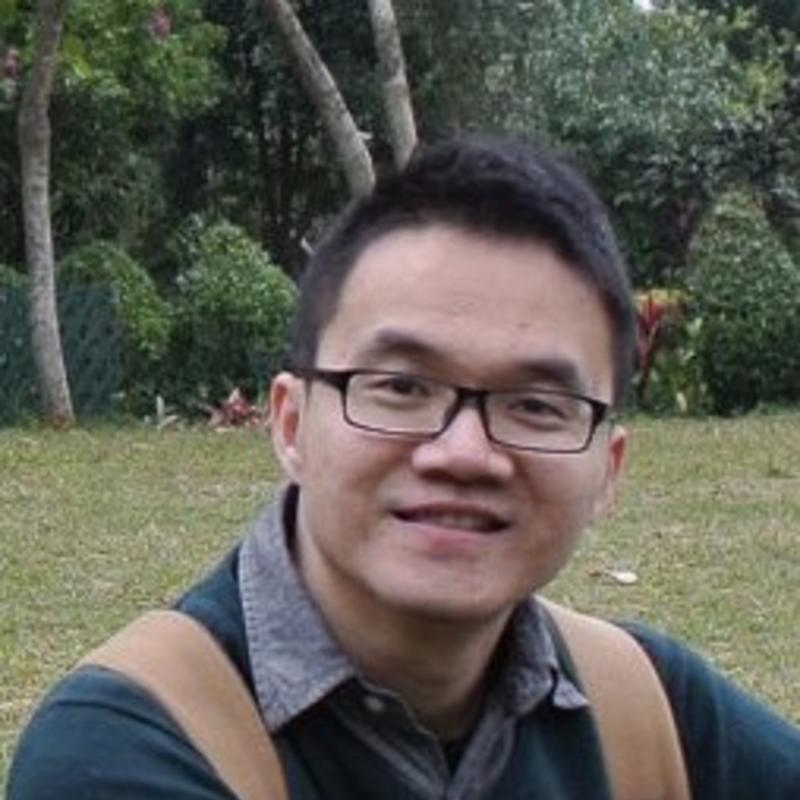
Max Lau is an Assistant Professor in the Department of Biostatistics and Bioinformatics and the Department of Epidemiology at Emory University. His research focuses on integrating machine learning and computational methods with epidemiological and genomic data to study infectious disease dynamics. He teaches courses such as BIOS 790R (Advanced Seminar in Biostatistics) and DATA 534 (Applied Machine Learning). Dr. Lau's work emphasizes scalable Bayesian inference, graph neural networks, and stochastic modeling to address challenges in disease transmission, outbreak control, and pathogen evolution. His recent research includes developing tools like ScITree and Epilearn, and he has contributed to understanding measles dynamics, tuberculosis treatment, and livestock disease management. His academic contributions span over 30 publications since 2010, with a particular focus on phylodynamics, epidemic modeling, and vaccine strategy evaluation. His interdisciplinary approach bridges computational methods with public health applications, aiming to enhance disease prediction and intervention efficacy.
Alan Grafen is an Honorary Fellow at Jesus College, University of Oxford, and holds Tutorial Fellow roles at St John’s College in Quantitative Biology. His primary affiliation is the University of Oxford’s Faculty of Biology and Medicine. He is a leading evolutionary biologist specializing in mathematical and logical models of evolutionary processes. Research Interests: Grafen’s work focuses on evolutionary theory, particularly the formalization of Darwinism, inclusive fitness, signal evolution, and sexual/kin selection. He leads the Formal Darwinism Project to mathematically formalize natural selection’s role in evolution. His models include the mathematical underpinning of Zahavi’s handicap principle and advancements in reproductive value theory. Key Contributions: Published influential works like Modern Statistics for the Life Sciences (2002) and co-authored analyses of Richard Dawkins’ evolutionary ideas. His recent articles (2018–2024) explore natural vs. sexual selection distinctions, kin recognition stability, and extensions to Fisher’s fundamental theorem. Awards and Grants: Not explicitly listed, but his work has shaped evolutionary theory. His research spans theoretical models in Nature -level journals and interdisciplinary collaborations with statisticians and biologists. Labs/Teams: Directs the Formal Darwinism Project and collaborates with evolutionary theorists globally. His work bridges mathematics and empirical biology, influencing both academic and popular science discourse.
Matthew Wills is Professor of Evolutionary Palaeobiology in the Department of Life Sciences at the University of Bath. He is affiliated with the Milner Centre for Evolution and the Centre for Mathematical Biology, where he leads research into macroevolutionary processes using fossil and molecular data. His work integrates phylogenetics, morphological disparity, and stratigraphic congruence to understand large-scale evolutionary patterns. His research interests focus on the role of fossils in building phylogenies, the evolution of morphological complexity, and the testing of macroevolutionary trends such as early high disparity and increasing complexity. He investigates how developmental shifts underpin major evolutionary transitions and how fossilization biases affect our understanding of the Tree of Life. His lab conducts projects on arthropod supertrees, molluscan ontogeny, and the phylogeny of Eumalacostraca using molecules, morphology, and fossils. His recent publications reveal a strong focus on quantifying morphological complexity, vertebral evolution in mammals, species richness in birds, and the impact of boundaries on trait evolution. These works frequently appear in high-impact journals like Nature Communications and Nature Ecology & Evolution , indicating a trend toward integrative, data-rich evolutionary analyses combining paleontological, morphological, and phylogenomic approaches. Principal Investigator, Biodiversity and The Sixth Mass Extinction (Royal Commission for the Exhibition of 1851) Principal Investigator, Susceptibility to Mass Extinctions: Ammonites as a Case Study (NERC) Principal Investigator, PLUTO Project (BBSRC) Principal Investigator, Arthropod Supertree of Life (BBSRC) He has supervised 17 research students and contributes to public discourse through platforms like The Conversation . His work supports UN Sustainable Development Goals related to life on land and climate action through deep-time biodiversity research.
Prof. Dr. Gerold Alsmeyer is a faculty member at the Institute of Mathematical Stochastics, Department of Mathematics and Computer Science, University of Münster. He is an active researcher with a focus on stochastic processes, particularly stochastic fixed-point equations and iterated function systems. His work is supported by his role as an Investigator in Mathematics Münster in the project EXC 2044 - C1: Evolution and asymptotics. His primary research interests include the theory of stochastic processes, branching processes, Markov random walks, renewal theory, and the asymptotic analysis of random structures such as random trees and polytopes. He has made significant contributions to the understanding of fluctuation theory, perpetuities, and the smoothing transform. His recent publications (2017–2023) reveal a sustained focus on theoretical probability, with recurring themes in random difference equations, iterated function systems, and limit theorems for stochastic processes. The work spans pure mathematical theory and applications in mathematical biology and combinatorics, indicating a broad yet deep research profile. Prof. Alsmeyer has supervised numerous doctoral and master’s students, including Viet Hung Hoang, Christopher Eick, Philipp Godland, and Fabian Buckmann, whose dissertations cover topics in branching processes, random walks, and stochastic fixed-point equations. He has no listed scientific awards in the provided texts. He teaches courses in probability theory, mathematical statistics, branching processes, and stochastic recursion equations, demonstrating a strong commitment to academic mentoring and education.
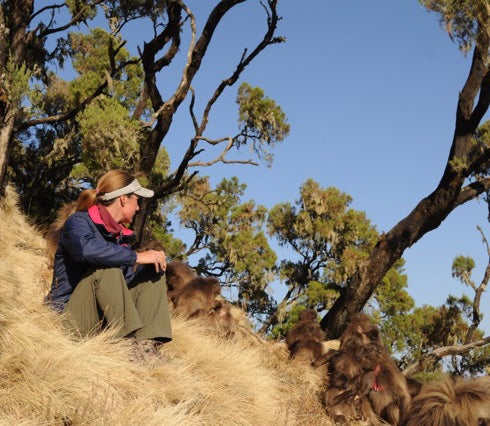
Dr. Jacinta C. Beehner is an Associate Professor in the Department of Anthropology & Psychology at the University of Michigan. Her research focuses on sexual conflict theory, reproductive strategies in primates, and the physiological and behavioral mechanisms underlying these dynamics. She directs the Core Assay Facility/Beehner Endocrine Laboratory and co-directs the Simien Mountains Gelada Research Project, Capuchins at Taboga, and the Evolution and Human Adaptations Program. Her work examines non-human primates like geladas, capuchins, and baboons in natural African and American habitats. Key themes include infanticide avoidance, hormonal responses to environmental stress, and the evolutionary implications of reproductive trade-offs. Recent studies highlight the impact of climate change on primate health, the role of social status in parasite resistance, and hormonal adaptations to high-altitude environments. Beehner has contributed to over 60 peer-reviewed articles since 2015, spanning topics from primate social networks to genomic adaptations. Her fieldwork emphasizes integrative methods combining endocrinology, genetics, and behavioral observation. She has presented at international forums like the National Geographic Explorer’s Festival and collaborates across disciplines to advance primate conservation and evolutionary biology.
Dr. Silu Wang is an Assistant Professor in the Department of Biological Sciences at the University at Buffalo. Her research focuses on speciation, adaptation, and forest evolutionary genomics, particularly in avian species. She leads the Forest Speciation Lab, studying the genomic and ecological mechanisms underlying species divergence in North American and global forest ecosystems. Her work integrates field studies, genomic analyses, and computational modeling to address biodiversity conservation challenges under climate change. Education: BS in Behavior Genetics and Neurobiology, University of Toronto MA in Ecology, Evolution and Behavior, University of Texas, Austin PhD in Zoology, University of British Columbia Postdoctoral Research at University of California Berkeley and UC Davis Research Interests: Dr. Wang investigates how hybridization, climate adaptation, and reproductive isolation shape avian biodiversity. Her lab uses old-growth forest bird species as models to study early-stage speciation processes, including mate choice, genetic incompatibilities, and mitochondrial-nuclear interactions. Key themes include understanding organismal responses to environmental changes and developing genomic tools for conservation prioritization. Lab and Teams: The Forest Speciation Lab collaborates with institutions globally, focusing on fieldwork in temperate and tropical forests. Current projects include studies on warbler hybrid zones, tinamou speciation, and the genomic architecture of mitonuclear coevolution. Teaching: Dr. Wang teaches courses on Speciation, Tropical Ecology, and Evolutionary Biology, emphasizing hands-on research training for students.
Barbara A. Knuth is a Professor Emerita at Cornell University's College of Agriculture and Life Sciences, Department of Natural Resources and the Environment. She previously served as Dean of Cornell's Graduate School (over 10 years), Vice Provost/Senior Vice Provost (8 years), and Senior Associate Dean in CALS (3 years). Her academic career began with a PhD in Fisheries and Wildlife Sciences from Virginia Tech (1987), making her the first woman in tenure-track faculty at Cornell's Department of Natural Resources. Education: Ph.D., Fisheries and Wildlife Sciences (Virginia Tech) M.En., Environmental Science (Miami University) B. Phil. & A.B., Zoology/Environmental Studies (Miami University, Phi Beta Kappa) Research Interests: Focuses on ecosystem-based management in Great Lakes/marine systems, risk communication around chemical contaminants in fish, and environmental stewardship. Also studies equity/inclusion in graduate education. Key themes include: Social science integration in natural resource policy Health benefits/risk trade-offs in fish consumption Community-based conservation strategies Outreach: Advises state/tribal agencies on fishery management and public health. Led initiatives improving graduate education through professional development, mental health support, and faculty mentoring programs. Awards: Debra W. Stewart Award (2019) Fellow, American Fisheries Society (2015-) Council of Graduate Schools Recognition Multiple teaching/research awards (1999-2006) Grants & Funding: Supported by NSF, Sea Grant, EPA, Sloan Foundation, and others for projects on Great Lakes management, educational equity, and contaminant risk communication. Labs/Teams: Affiliated with Cornell's Center for Conservation Social Sciences. Collaborated with Ecologists Without Borders, Great Lakes Fishery Commission, and National Academies Ocean Studies Board.
Dr. Peter Bartsch serves as curator of the fish collection and construction project officer at the Museum für Naturkunde (MfN), Leibniz Institute for Evolution and Biodiversity Science, which is affiliated with Humboldt University Berlin. With expertise in ichthyology, embryology, and comparative anatomy, Dr. Bartsch has been instrumental in the museum's collection management and building renovation projects since joining the institution as a research associate before becoming curator in 2000. Dr. Bartsch received his academic training in ichthyology, embryology, and comparative anatomy at the University of Cologne. His academic career includes positions as a research assistant at the University of Tübingen and a postdoctoral fellowship at the Natural History Museum in Stockholm before joining the Museum für Naturkunde. Dr. Bartsch's primary research focuses on the evolution and systematics of major groups of bony fishes (Osteichthyes), with particular emphasis on primitive ray-finned fish lineages. His work integrates morphological analysis of both fossil and extant species to understand evolutionary relationships. A significant portion of his research centers on the developmental biology of ancient fish groups, especially the Polypteridae (bichirs), examining embryonic development, skeletal formation, and sensory systems. More recently, his interests have expanded to include the logistics and optimal management of research collections, reflecting his administrative responsibilities at the museum. Analysis of Dr. Bartsch's recent publications reveals a consistent focus on fish morphology, evolution, and development, with particular attention to primitive actinopterygian lineages. His work spans both systematic taxonomy and functional morphology, with increasing attention to museum collection management challenges. The publications demonstrate expertise in comparative anatomy across diverse fish groups including chondrichthyans (sharks, rays, and chimaeras) and basal actinopterygians. Recent work shows integration of molecular phylogenetic approaches with traditional morphological analysis. Dr. Bartsch has held significant administrative roles at the Museum für Naturkunde, serving as head of the collections department from 2011 to 2013. He was responsible for the museum's construction program for the east wing reconstruction, completed in 2010, which created modern facilities for the storage and scientific processing of the museum's wet collections. Currently, he manages the second phase of the building's renovation that began in 2011 and participates in planning for the future development of the museum's facilities. The Museum für Naturkunde houses extensive ichthyological collections that form the basis for Dr. Bartsch's research. His work involves close collaboration with various research teams within the museum, particularly in the areas of molecular phylogenetics, collection preservation, and paleontological research. The museum's facilities include specialized laboratories for morphological analysis, molecular studies, and collection management that support his research activities.
Lonny R. Levin is a Professor of Pharmacology at Weill Cornell Medical College , where he has worked since 2009. Collaborating extensively with Dr. Jochen Buck, he pioneered research on bicarbonate-regulated soluble adenylyl cyclase (sAC) , a critical enzyme in cAMP signaling. Education : B.S. from Cornell University (1983), Ph.D. from State University of New York at Stony Brook (1989) His research focuses on: cAMP signaling microdomains in mammalian cells Mitochondrial metabolism and pH sensing Sperm capacitation and energy regulation Nonhormonal contraceptive development via sAC inhibition Recent publications (2025-2023) highlight: Structural insights into sAC activation Metabolic adaptations during sperm capacitation Emerging role in corneal endothelium signaling Drug discovery for on-demand male contraception Grants from NIH (NIAID, NICHD) support his work on: Intravaginal rings for dual HIV/herpes prevention and contraception Metabolic communication in reproductive systems Signalosome regulation in mitochondria He maintains collaborations with institutions like EMD Millipore Corporation and co-founded Sacyl Pharmaceuticals, Inc. , holding proprietary interests in sAC-related intellectual property.
Philippe Christe is an Associate Professor in the Department of Ecology and Evolution at the University of Lausanne (UNIL), Faculty of Biology and Medicine. His research centers on host-parasite interactions, with a focus on bats, birds, and their ectoparasites, integrating behavioral, physiological, and genetic approaches. He leads the Christe Group, which investigates evolutionary and ecological dynamics in host-parasite systems, particularly avian malaria and bat-mite relationships. He is actively involved in conservation initiatives, including the Jorat Peri-Urban Nature Park, and collaborates with KORA on human-wildlife interactions. Bachelor's degree in biology, UNIL (1989) PhD in Zoology and Animal Ecology, UNIL (1994) Philippe Christe’s research interests lie at the intersection of parasitology, evolutionary ecology, and conservation biology. He investigates how host defenses evolve in response to parasitic pressures, examining trade-offs between immunity and life history traits such as reproduction and survival. His work often integrates field studies with experimental and molecular techniques. Key model systems include Parus major (great tit) and Culex pipiens in avian malaria, and bat species with their ectoparasitic mites. He also explores broader ecological interactions, including predator-prey dynamics and wildlife conservation in human-modified landscapes. His recent publications reflect a strong emphasis on disease ecology, wildlife conservation, and molecular methods. Articles span topics such as avian malaria transmission, lynx population dynamics, snow leopard behavior, and habitat fragmentation effects on insects. These works employ advanced techniques like DNA metabarcoding, spatial modeling, and long-term monitoring, demonstrating a trend toward interdisciplinary, data-driven ecological research with direct conservation applications. Dubois Foundation Prize for an educational CD-Rom on bats (2004) Communication Award from the Faculty of Biology and Medicine of UNIL (2017) Philippe Christe has supervised numerous PhD and Master’s students, contributing significantly to training the next generation of ecologists and evolutionary biologists. His group collaborates widely with institutions such as the Museum of Zoology in Lausanne and KORA, and participates in large-scale conservation projects involving snow leopards, lynx, and bats. He has been involved in research grants related to host-parasite coevolution, wildlife monitoring, and conservation strategies. His leadership in establishing the Jorat Peri-Urban Nature Park and involvement in the UNIL Interdisciplinary Center for Mountain Research highlight his commitment to applied science and environmental stewardship. He leads the Christe Group, which conducts research on host-parasite coevolution, with a focus on bats and their ectoparasites, and birds affected by avian malaria. The group combines fieldwork, laboratory experiments, and molecular analyses, and includes post-docs, PhD students, and technical staff. Collaborations extend to researchers in Bern, Paris, and Spain, fostering an international and interdisciplinary research environment.
Alex Liu is a Researcher at the Department of Earth Sciences within the University of Cambridge. He specializes in palaeobiology , focusing on the origin and early evolution of animals, particularly the Ediacaran biota (~579–539 million years ago), and their co-evolution with Earth's environment. Research Focus: Refines understanding of animal body plan evolution, taphonomy, sedimentology, and macroevolutionary trends. Methodologies: Combines fieldwork, experimental studies, petrology, phylogenetics, and big-data analyses. Collaborations: Works with international museums and research teams on fossil sites in Namibia, Canada, and Brazil. Additional Interests: Explores meiofaunal evolution, paleogeography, paleoclimate, and conservation paleobiology. He supervises Cambridge NERC Doctoral Landscape Awards (DLA) projects and welcomes student contributions to taxonomic, paleoecological, and analytical studies.
Kelsey Swingle is an Assistant Professor of Bioengineering at Rice University, where she leads the Swingle Lab at the intersection of biomaterials science, immune engineering, and reproductive biology. Her research focuses on engineering therapeutic and vaccine technologies with translational potential. Ph.D. in Bioengineering from the University of Pennsylvania B.S.E. in Biomedical Engineering from Case Western Reserve University Dr. Swingle’s research explores the design of lipid nanoparticles (LNPs) and nucleic acid therapeutics for women’s health applications, including pre-eclampsia, preterm birth, and gynecologic cancers. Her work integrates bioengineering principles with immune modulation strategies to develop targeted therapies. The trends in her publications highlight advancements in LNP elasticity optimization for placental mRNA delivery, targeted systemic RNA delivery to the brain, and in utero gene editing applications. Her lab prioritizes interdisciplinary approaches to overcome biological barriers in women’s health. 2025 Solomon R. Pollack Award for Excellence in Graduate Bioengineering Research 2024 Muriel Joan Drew Hege Award for Women in Cellular Immunotherapy Research 2024 Penn Engineering Outstanding Teaching Award 2023 Gordon Research Conference Travel Award 2022 Society for Biomaterials STAR Award 2020 NSF Graduate Research Fellowship The Swingle Lab collaborates with the Texas Medical Center to develop precision nanomedicines. Her team employs in vitro, ex vivo, and in vivo models to study biomaterial interactions with female-specific tissues, emphasizing translational research and inclusive scientific communication.
Naomi Rogers, Ph.D. (She/Her) is Professor of the History of Medicine in the Section of the History of Medicine and the Program in the History of Science and Medicine at Yale University. She holds courtesy appointments in the History Department and the Women's, Gender and Sexuality Studies Program, and serves on Yale's Dean's Advisory Council for LGBTQI Affairs. Professor Rogers teaches undergraduate, graduate, and medical students, regularly lecturing on the history of AIDS, reproduction, health economics, eugenics, nutrition, disability, and health activism. Professor Rogers' educational background includes: PhD in History from University of Pennsylvania (1986) MA from University of Pennsylvania (1986) BA in Music from Melbourne University (1980) BA with Honors from Melbourne University (1979) Her research focuses on 20th and 21st century history of medicine with emphasis on health inequities and social justice. Professor Rogers' historical interests span gender and health, disease and public health, disability studies, feminism, alternative medicine, health policy, and health activism. Her work critically examines the intersection of medical practices with social movements, particularly how marginalized communities have challenged medical orthodoxy throughout American history. She has published extensively in journals such as American Journal of Public Health, Bulletin of the History of Medicine, Journal of Medical Humanities, Radical History Review, Social History of Medicine, and Women and Health. Professor Rogers' recent scholarship demonstrates a consistent focus on the historical dimensions of contemporary health issues, particularly vaccine politics, abortion history, and community health activism. Her publications reveal patterns of resistance to medical authority, the role of race and gender in shaping health outcomes, and the historical roots of current health justice movements. Her work bridges academic history with public engagement, as evidenced by her frequent media commentary on COVID-19 and other health issues in outlets including BBC Radio, CNN, Huffington Post, National Public Radio, New York Times, Wall Street Journal, and Washington Post. Among her notable recognitions: AAHN's Lavinia L. Dock Award for Exemplary Historical Research for 'Polio Wars: Sister Kenny and the Golden Age of American Medicine' (2014) Presenter of the AAHM's Garrison Lecture: 'Radical Visions of American Medicine: Politics and Activism in the History of Medicine' (2017) Professor Rogers has been actively involved in academic leadership and mentoring. She has served as Director of Graduate Studies for the 2022-23 academic year, Chair of the Women's Faculty Forum, and Liaison to the Committee on Status of Women in Medicine. Her service extends to editorial boards including the Journal of the History of Medicine and Allied Sciences since 2018. She has also contributed to public understanding of medicine through consultations for documentaries including 'The Polio Crusade' (PBS), 'On the Basis of Sex' (Focus Features), and 'War on Science' (in process). Currently, Professor Rogers serves on the Medical School's OBGYN 'Dobbs' Sessions Planning Committee, which has organized webinars for the Yale community, and was co-organizer of the history-themed session 'Rooted in History: Abortion, Law and American Health Care.' She is working on her book project 'Health Radicalism and the Humanization of American Medicine' (under contract with Oxford), examining critics of medical orthodoxy since 1945 including civil rights, consumer, and feminist activists. She also conducts ongoing research on antisemitism in American medicine in the decades before and after World War II.
Gabriele de Seta is a researcher at the University of Bergen's Department of Linguistic, Literary and Aesthetic Studies, leading the ALGOFOLK project funded by the Trond Mohn Foundation (2024-2028). A sociologist by training with a PhD from Hong Kong Polytechnic University, he previously served as postdoctoral fellow at Academia Sinica (Taipei) and on the ERC-funded Machine Vision in Everyday Life project. Department of Ethnology, Academia Sinica (postdoctoral fellow) Department of Linguistic, Literary and Aesthetic Studies, University of Bergen (researcher) His research focuses on algorithmic folklore, synthetic ethnography, and Chinese digital culture. He examines how digital technologies and creative practices mutually shape each other, particularly in China's sociotechnical landscape. Key areas include platform governance, machine vision, algorithmic accountability, and digital vernaculars. Recent publications analyze TikTok/Douyin's infrastructural role, deepfakes, QR codes as globalized gateways, and Chinese internet vulgarity. His work combines theoretical frameworks from STS, media studies, and digital anthropology with fieldwork on Chinese digital practices. Trond Mohn Foundation Starting Grant ERC-funded research As educator, he designed the Machine Vision module for Bergen's Critical Approaches to Technology and Society course and taught Key Theories in Digital Culture. He supervises multiple MA/PhD students including co-supervision of Hanna Lauvli. Through his blog and podcast, he promotes public engagement with digital research.
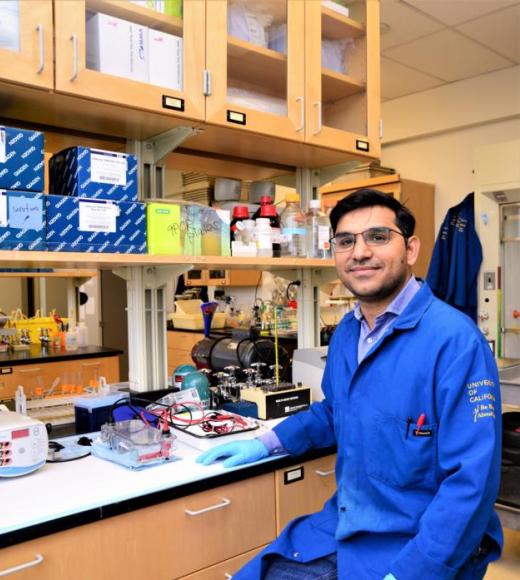
Shahid Siddique is an Associate Professor in the Department of Entomology and Nematology at the University of California, Davis. His research focuses on understanding molecular and applied aspects of plant-parasitic nematode interactions with host plants. He aims to develop sustainable strategies to mitigate nematode-induced crop losses through genetic, biochemical, and biotechnological approaches. His lab is particularly interested in host resistance mechanisms, nematode effector proteins, and biocontrol solutions. Education: MSc, Bahauddin Zakariya University, Multan, Pakistan PhD, University of Natural Resources and Life Sciences, Vienna, Austria Habilitation, University of Bonn, Germany Research Interests: Siddique’s work bridges basic and applied research, including cell surface signaling in plant-parasitic nematode interactions, functional characterization of secretory proteins, molecular diagnostics for nematodes, and biocontrol strategies. Current projects explore recombination hotspots in nematode genomes, CRISPR-based resistance engineering, and redox signaling mechanisms. Teaching: General Plant Nematology (NEM100) in Spring 2020 Labs/Teams: The Siddique Lab focuses on translating molecular discoveries into practical pest management solutions. Collaborations involve genomic analysis, proteomics, and field trials to address global agricultural challenges.