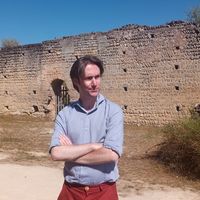
Stanislas BOSSARDView profile
Lecturer
Stanislas Bossard serves as a Lecturer (ATER) in Roman Archaeology at Nantes University's Faculty of History, History of Art and Archaeology within the Department of History of Art & Archaeology. He maintains a dual affiliation with the CReAAH Research Center (UMR 6566) and previously held a postdoctoral position at Sorbonne Université (2022-2023) through the 'Ancient religious landscape of Île-de-France' program. His academic journey includes: Doctorate in Archaeology (2021, Nantes University): 'Cults and sanctuaries in Lyonnaise Gaul, from Gallic antecedents to the end of the gods (2nd century BC – 5th century AD)' Master 2 Research (2015, Nantes University): 'Iron Age underground structures in Brittany and Lower Normandy' Master 1 Research (2014, University of Rennes 2): 'Gallo-Roman sanctuaries and their Latenian antecedents in the Diablintes territory' Bossard's research centers on material evidence from Western Gaul spanning the Iron Age to Roman Antiquity's end. He specializes in religious landscapes (sanctuaries, cult practices), settlement patterns, food storage systems, and Celtic coinage, employing interdisciplinary analysis to decode cultural transitions during Romanization. His methodological approach combines field archaeology with material culture studies to interpret societal changes through physical evidence. His publication trajectory shows progressive specialization, evolving from 2016 journal articles on sanctuary excavations to the 2020 monograph on Iron Age storage structures, culminating in two major 2024 works: a comprehensive study of Lyonnaise Gaul religious landscapes and new findings from the Diablintes sanctuary at Fermerie. These publications consistently focus on religious continuity, material culture analysis, and regional case studies in Western Gaul. His scientific recognition includes: Prix Yves Burnand (2022) for outstanding contributions to Gallo-Roman archaeology Bossard actively secures research funding through collaborative projects, currently coordinating the 'Cherré site' excavation while contributing to the Île-de-France religious landscape program and Le Mans Roman enclosure study. Though his temporary position may limit formal student supervision, he provides hands-on research opportunities through these field projects. As a CReAAH Research Center member, he operates within a dynamic interdisciplinary network supporting archaeological fieldwork, laboratory analysis, and academic exchange in ancient and medieval studies.